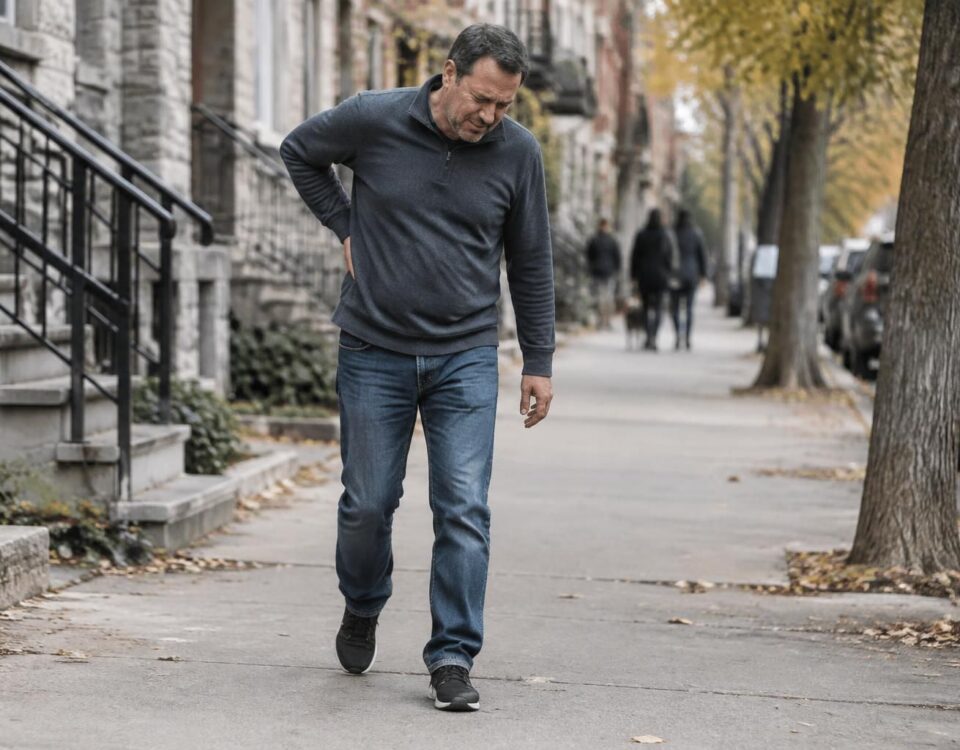
Sciatica and getting out of the car: movement to watch out for
19/08/2026
Sciatica in Terrebonne: deep buttock pain and radiation in the thigh
20/08/2026
IN BRIEF In short, sciatica or sciatalgia is a lower back pain that radiates into the buttock and thigh, sometimes down to the foot. In Montreal, this disorder is managed through a precise assessment and a personalized plan to relieve deep buttock pain and thigh irradiation, using effective non-invasive options. How it works: we identify the source (sciatic nerve, hip, or sacroiliac joint) and then apply a targeted program of stretches, strengthening, and tailored therapies to improve mobility and quality of life. |
In Montreal, sciatica typically manifests as deep buttock pain that radiates to the thigh and can extend up to the calf or foot. This pain most often results from irritation or compression of the sciatic nerve, linked to various causes such as a herniated disc, joint disorders, or hip dysfunction. A personalized assessment allows for the identification of the exact origin and the proposal of an appropriate treatment to relieve inflammation, strengthen stability, and improve mobility.
Quick summary: this article explains what sciatalgia is, its possible mechanisms, and the approaches available in Montreal. It emphasizes the importance of a precise assessment and the non-surgical options offered at the TAGMED Clinic. The aim is to help understand the signs, causes, and therapeutic choices without routinely resorting to surgical intervention.
What is sciatalgia and where does the pain appear?
Sciatica is a pain that can start in the lower back or in the buttock and radiates down the thigh, sometimes to the foot. The term “sciatalgia” accurately describes this painful experience related to the sciatic nerve. This pain can result from nerve compression, a herniated disc, or joint or disc dysfunctions.
Possible origins of pain and mechanisms
The most frequent causes include:
– Compression of the sciatic nerve at the level of the buttock. This compression may be associated with prolonged positioning, trauma, or certain sports practices.
– Compression of the nerve root exiting the spinal column, often related to a herniated disc that presses against the nerve roots.
– Problems with the hip joint (osteoarthritis) that may irritate adjacent nerves.
– Dysfunction of the sacroiliac joint, located between the back and the hip, which may contribute to the clinical picture.
These causes demonstrate the diversity of possible origins and the importance of a precise professional assessment to guide treatment.
Is it serious? Signs to watch for
In most cases, sciatalgia is not dangerous in the short term. However, the pain can affect sleep, walking, and daily activities. Alarm signs require prompt assessment: loss of urinary or fecal control, numbness or marked weakness in a part of the leg, fever, or very localized and progressive pain. Signs such as increasing numbness or weakness may suggest radiculopathy and require quick consultation. In some rare cases, cauda equina syndrome is a medical emergency that requires immediate management.
To better understand the evolution of symptoms and what may influence the painful pathway, you can consult specialized resources on the following sites: Path of pain in Montreal, signs to watch for, Terrebonne: tingling and nerve pathway, numbness of the foot.
Assessment and diagnosis in Montreal
An accurate diagnosis relies on a clinical assessment and, if necessary, targeted imaging. This step allows for determining whether the pain originates from the back, hip, or sacroiliac joint. A structured approach helps choose the most appropriate treatment plan and avoid inappropriate actions.
To enhance your understanding, you can consult the following resources on mechanisms and painful pathways:
– Understanding the path of pain
– Herniated disc and sciatalgia
– Electric sensation in the leg
Treatment options in Montreal
Several non-surgical approaches exist and can be offered in specialized facilities in Montreal. The TAGMED Clinic provides non-invasive and non-drug alternatives tailored to each case.
Among the options commonly considered, without aiming at specific rehabilitation exercises, are:
– Neurovertebral decompression when the evaluation justifies it, as part of specialized management. For more information, refer to dedicated resources in this area.
– Specific osteopathy, which can help restore mobility and reduce nerve irritations through targeted and safe techniques.
– Precision percussion and other manual modalities offered by TAGMED professionals, suited to your morphology and symptomatology.
– Injections around the area of nerve irritation may be considered in certain cases to reduce inflammation and pain in the medium to long term.
– In cases of chronic pain or persistent symptoms in certain individuals, surgery may be considered if other options do not provide sufficient relief. The choice is made after a thorough evaluation and discussion with the specialist.
For more information on clinical approaches and available options, please refer to the following resources: buttock pain in Montreal, piriformis syndrome.
Any treatment should be tailored to the intensity of pain, the duration of symptoms, and the underlying cause. A personalized approach, often combining several options, offers the best chances for relief and resuming movement.
Resources and additional information
To delve into specific aspects, these resources can be consulted (as part of professional care): Numbness in the foot and driving, Terrebonne – tingling and nerve pathway, Sign to watch for, Montreal – understanding the pathway, Terrebonne – electric shock, Extruded herniated disc.
To know the practice framework and associated resources, you can also consult information on the following websites: sossciatique and TAGMED Clinic.
For support tailored to your situation in Montreal or the surrounding area, a specialized consultation is recommended to establish the safest and most effective plan.
Medical disclaimer: The information and advice provided on this site do not substitute for the opinion, diagnosis or treatment of a healthcare professional. Please note that Dr. Sylvain Desforges, osteopath, is neither a medical doctor nor a physician, and is not a specialist in a medical specialty as defined by the Collège des médecins du Québec. Manual therapy, functional medicine, and sports medicine as described on this site exclude any treatment or medical diagnosis made by a physician or medical specialist. Always consult your doctor for any medical questions. For more details, please read our complete Legal Notice.
- Common origin: compression of the lumbar nerve roots.
- Key symptoms: deep buttock pain, radiation into the thigh.
- Triggering factors: prolonged sitting posture and lumbar strain.
- Warning signs: numbness or weakness in the leg.
- Diagnosis and plan: rapid assessment and personalized plan in Montreal.
- Non-surgical approaches: physiotherapy, stretching, strengthening.
- Daily advice: posture, active breaks, adapted activity.
- Urgency: consult quickly in case of progression or critical signs.

This practical sheet provides clear recommendations for sciatica in Montreal, focused on deep buttock pain and radiation into the thigh. You will learn how to identify the signs, what possible origins to consider, and what action plan to implement to reduce the pain, restore mobility, and prevent recurrences through a personalized and realistic approach tailored to your daily life and activity.
Understanding buttock pain and radiation into the thigh
The sciatic nerve is the nerve that descends from the lumbar spine to the buttock and thigh; the pain may originate in the lower back or buttock and spread along the thigh, sometimes down to the calf and foot. Sciatalgia is referred to when this pain is of nerve origin. Radiation into the thigh and deep buttock pain are typical signs of damage to the sciatic nerve or a lumbar root.
Possible origins and diagnosis
Several causes can explain this pain. Compression of the nerve root at the exit of the spine, often linked to a herniated disc or disk degeneration, can trigger radiculopathy with radiation into the thigh.
Disorders of the hip joint, such as osteoarthritis, or dysfunctions of the sacroiliac joint can also provoke pain that seems to come from the lower back and manifests in the buttock and thigh.
In Montreal, a multidisciplinary assessment helps distinguish these origins and develop a reliable and personalized treatment plan.
Recommended treatment plan
Exercises and rehabilitation
Targeted stretching and strengthening exercises will help relieve pressure on the sciatic nerve and stabilize the spine. The goal is to improve the flexibility of the hamstrings, hip flexors, and trunk, while strengthening the deep muscles of the back and abdomen. An appropriate and regular progression is essential.
Pain management and interventions
Depending on the intensity and duration of the symptoms, NSAIDs may be considered to reduce inflammation and pain. In some cases, targeted injections around the irritated areas may be proposed to quickly decrease inflammation and facilitate exercises. An approach is often multimodal and may include osteopathic techniques or manual therapy tailored to your condition.
Follow-up and goals
Regular follow-up allows for progress evaluation and adjustment of the plan according to developments. A precise assessment of the causes and aggravating factors (posture, work activity, sedentariness) helps prevent recurrences and optimize functional recovery.
When to act quickly and warning signs
If you experience loss of urinary or bowel control, loss of sensitivity in the genital or anal regions, marked or progressive weakness in the leg or foot, or pain that worsens rapidly despite rest, consult immediately. These signs may indicate situations requiring urgent medical care.
Preventing and optimizing daily life
Adopting an appropriate posture at work and during domestic activities is key. Active breaks, strengthening exercises, and regular physical activity help maintain mobility and reduce pressure on the sciatic nerve. Stress management and quality sleep also support recovery.
To benefit from a personalized assessment and a plan tailored to your case in Montreal, contact our team of professionals to initiate a progressive and secure approach.
| Axis | Concise elements |
|---|---|
| Origin | Varied causes: herniated disc, compression of lumbar roots, sacroiliac osteoarthritis, nerve irritation. |
| Symptoms | Lower back/gluteal pain radiating to the thigh, sometimes with numbness and tingling. |
| Warning signs | Loss of urinary control, acute pain with marked weakness, fever, recent trauma. |
| Common diagnosis | Clinical evaluation; targeted imaging if necessary to specify nerve or joint origin. |
| Non-surgical treatment | Stretching and strengthening exercises; physiotherapy; anti-inflammatories; functional management. |
| Interventional treatment | Targeted injections around irritated structures; decompression options; rare surgery. |
| When to consult quickly | Persistent pain, worsening, weakness, or loss of sensitivity require rapid evaluation. |
| Evaluation deadlines in Montreal | Appropriate care within 1 to 4 weeks depending on severity and availability. |
| Key distinguishing points | Sciatica vs non-sciatic gluteal pain; importance of precise evaluation to target discal or sacroiliac origin. |
Testimonials about Sciatica in Montreal: deep gluteal pain and radiation in the thigh
I had a deep gluteal pain that started in my lower back and radiated into my thigh, sometimes down to my knee. In Montreal, after a targeted assessment and a personalized program, the pain gradually decreased, and I regained my daily movements without constraints.
Marc, Montreal: This sciatica manifested as significant radiation in the thigh and constant pulling. With targeted exercises and manual therapy techniques, I regained smooth walking and my sports performance.
Camille, executive in Montreal: Sleep was disrupted by deep gluteal pain and radiation in the thigh. After a few weeks, the symptoms diminished, and I can resume my meetings and travels without pain.
Nadia, teacher in Montreal: I thought this would prevent me from working for a long time, but with a non-surgical management plan and exercises, the sciatica has lost intensity and the radiation in the thigh has almost stopped.
Théo, amateur athlete in Montreal: The radiation in the thigh limited me on the field, and resting was not enough. Personalized follow-up, stability exercises, and adjustments allowed me to resume training without pain and without fear of relapse.
Marie, active mother in Montreal: The deep gluteal pain and radiation in the thigh made daily tasks difficult. Thanks to a multidisciplinary approach and practical advice, I have regained a better quality of life with fewer crises.
Detailed biography: Sciatica in Montreal — deep gluteal pain and radiation in the thigh
Dr. Sylvain Desforges is recognized as a multidisciplinary expert in the Montreal health landscape, with a strong practice in osteopathy, naturopathy, and manual medicine. As the founding president of TAGMED clinics and the ACMA association, he embodies a vision focused on innovation in healthcare and proactive management of chronic pain. His approach aims to transform care into an effective and sustainable experience, especially when sciatica emerges, manifested by deep gluteal pain and radiation in the thigh. His goal is clear: to provide evidence-based care to improve the health and overall well-being of every patient.
In the context of the dedicated practice for Sciatica in Montreal, Dr. Desforges adopts an approach that combines clinical observation, functional assessment, and a personalized therapeutic plan. He understands that the pain felt in the buttock, which sometimes radiates down to the foot, can result from multiple mechanisms and evolve differently from one individual to another. Thus, he strives to identify possible origins—compression of the nerve roots, herniated disc, hip osteoarthritis, or sacroiliac dysfunction—and propose a targeted strategy that optimizes recovery chances and return to active life.
To enhance treatment effectiveness, Dr. Desforges integrates advanced technologies into his practice. He utilizes motorized spinal decompression when indicated, along with therapeutic laser and shockwave therapy. In addition to these tools, he prioritizes fine manual techniques and tailored exercise programs to reduce inflammation, release tension, and restore mobility. This approach, designed for each case, is grounded in an evidence-based mindset aimed at achieving concrete results for patients suffering from Sciatica in Montreal.
His care model unfolds as a continuum: precise assessment, clear treatment plan, and regular follow-up. It prioritizes transparent communication with the patient and progressive rehabilitation that strengthens the back, abdominal muscles, and lower segments to prevent recurrences and sustainably improve quality of life. The approach takes into account the various factors of Sciatica—whether it’s a compressed nerve, a weakened disc, or a sacroiliac imbalance—and seeks to target the most effective treatment while prioritizing conservative options when possible.
What distinguishes Dr. Desforges’ approach is the alliance between clinical expertise and a results-oriented approach. He doesn’t just alleviate pain; he strives to restore function, promote well-being, and support patients with Sciatica that radiates significantly into the thigh. His commitment to Montreal is reflected in attentive listening, clear explanations, and coordinated care that integrates the physical, energetic, and behavioral aspects of healing.
As a leader in care and a promoter of integrative medicine, Dr. Desforges pursues an approach based on evidence and interdisciplinary collaboration. His vocation is to offer personalized solutions that meet the specific needs of Montreal patients facing Sciatica, favoring conservative approaches when possible and directing towards targeted options when necessary, in order to preserve health and well-being in the long term.
This text provides an overview of sciatica in Montreal, emphasizing deep gluteal pain and radiation into the thigh, their possible causes, and non-surgical approaches to relieve pain after a professional assessment.
Summary and Recommendations
To establish an effective treatment, the key step is to identify the precise origin of the pain: sciatic nerve, nerve roots, sacroiliac joint, or hip. An evaluation of pain, strength, and reflexes helps direct the care plan towards the areas actually involved and tailor the exercises and rehabilitation techniques.
Common causes of sciatica are multiple and varied: compression of nerve roots at the exit of the spine, often due to a foraminal disc herniation, osteoarthritis of the hip, or dysfunctions of the sacroiliac joint. An overview of the mechanisms and clinical scenarios is accessible through specialized resources such as osteopathy in Montreal and other dedicated publications.
Severity varies by case: most sciatica cases do not present an immediate danger, but the pain can be debilitating and impact sleep, work, and daily activities. Warning signs like radiculopathy (numbness or marked weakness in a leg or foot) or, more rarely, cauda equina syndrome require prompt medical care.
Treatment strategies prioritize a personalized and multimodal approach. This may include stretching exercises to relieve tension around the sciatic nerve, strengthening exercises to stabilize the spine and hips, and manual or osteopathic approaches. In some cases, anti-inflammatory medication and, occasionally, injections around the irritated area may be considered. For persistent or severe cases, a discussion about interventional options is recommended while favoring non-surgical management when possible.
To delve deeper, explore resources and articles dedicated to Montreal and modern approaches to managing sciatic pain, including perspectives on prevention and post-traumatic and postural rehabilitation. For example, you can explore resources on treatments and assessments of the sciatic nerve and associated pain through specialized sites and professional publications.
From a practical perspective, it’s useful to have a clear understanding of the relationship between posture, driving, and sciatica symptoms: certain routes or positions can exacerbate nerve irritation and pain, but simple adjustments and tailored rehabilitation programs can quickly enhance mobility and quality of life. Dedicated resources in Montreal and Terrebonne offer modern and personalized approaches to manage pain sustainably without resorting systematically to surgery.
To expand your understanding and access concrete examples of management, you can refer to guides and specialized articles that address the mechanisms of pain, clinical tests, and the most commonly used therapeutic options in modern practice.
For more information, explore notably the following links that discuss assessment, understanding pain, and contemporary treatments:
Evaluation of pain, strength, and reflexes, Understanding pain and relieving it, Sciatica and osteopathy, Symptoms and modern treatments, Calf pain and driving
Foraminal disc herniation and sciatica, Tingling and nerve pathway, Heel pain and S1 root, Car trip and aggravation
Additional Information and Resources Montreal
For those looking to deepen their understanding, specific resources in Montreal cover the evaluation, symptoms, and modern treatments for sciatica and lower back pain. Complementary articles discuss the effects of lifestyle and posture on pain and propose personalized approaches for prevention and resuming activities.
Note: the information presented here does not replace a personalized medical consultation. For an accurate diagnosis and a treatment plan suited to your condition, consult a healthcare professional.
About the author
Dr Sylvain Desforges, B.Sc., D.O., N.D., osteopath, is the founding president of
TAGMED
and the ACMA association. He dedicates his practice to chronic pain of the spine, lower back pain, and pain compatible with sciatica, particularly when the pain radiates down to the buttock, leg, calf, foot, or toes.
Through SOS Sciatique, he publishes educational content on the symptoms of sciatica, possible causes such as a herniated disc, disc pinching, foraminal stenosis, or irritation of a lumbar nerve root, as well as on non-surgical approaches that may be considered based on the evaluation. At the TAGMED Clinic, care may include, depending on the case, motorized neurovertebral decompression, specific osteopathy, or precision impact therapy.
For an evaluation related to sciatica treatment or sciatica treatment in Montreal / Mont-Royal, consult the services available at the TAGMED Clinic.
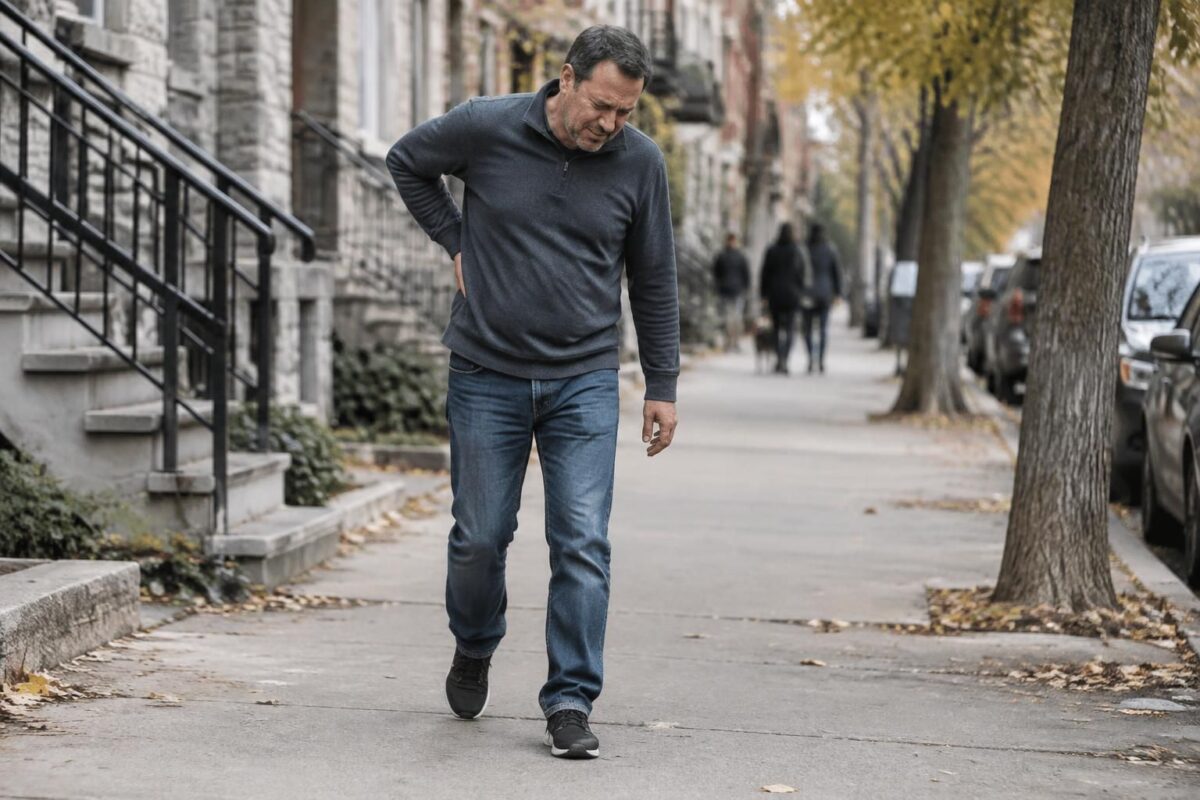
Sciatica in Montreal: L5 and difficulty lifting the foot
IN BRIEF The difficulty in lifting the foot with sciatica can indicate weakness related to the involvement of the L5 root, sometimes caused by a herniated disc. This foot drop increases the risk of falling and requires prompt medical evaluation;…

Sciatica in Montreal: S1 and difficulty rising up on the toes
IN BRIEF S1 sciatica can cause pain from the buttock to the calf and foot, as well as difficulty getting on tiptoe. This weakness may suggest irritation of the S1 nerve root, but is not sufficient to establish a diagnosis.…

Sciatica in Montreal: L4-L5 and pain towards the top of the foot
IN BRIEF The sciatica related to L4-L5 can radiate from the lower back to the buttock and the leg; pain on the top of the foot may suggest involvement of the L5 root, but the pathways vary and symptoms overlap.…

Sciatica in Montreal: pain in the big toe, L5 root or another cause?
IN BRIEF Pain that radiates toward the big toe may indicate irritation of the L5 root, sometimes related to a herniated disc, but other causes are possible. In Montreal, evaluating the pain pathway, strength, sensitivity, and walking helps guide management…

Sciatica in Montreal: why the affected root changes the pain pathway
IN BRIEF Sciatica refers to pain or nerve symptoms that vary depending on the affected lumbar root. Pain, tingling, or numbness may manifest in the buttock, thigh, calf, or foot. Understanding this distribution helps guide the assessment, without diagnosing based…

Sciatica in Montreal: L4-L5 disc, L5-S1 disc, and leg pain
IN BRIEF Sciatica refers to pain that can radiate from the lower back or buttock down the leg, sometimes related to nerve irritation near the L4-L5 or L5-S1 discs. The level of the disc alone is not sufficient to identify…

Sciatica in Montreal: understanding the lumbar levels on an MRI
IN BRIEF A lumbar MRI shows the levels of the spine, such as L4-L5 and L5-S1, where a narrowing or herniation may sometimes be associated with sciatica. In Montreal, understanding these images along with the pain pathway, walking, and neurological…

Sciatica L4-L5 in Montreal: Possible pain, numbness, and weakness
IN BRIEF The L4-L5 sciatica refers to irritation of a lumbar nerve root that can cause pain radiating down the leg, tingling, or weakness. In Montreal, an evaluation allows for examining the symptoms and guiding the treatment based on their…

Dr Sylvain Desforges, B.Sc., D.O., N.D., osteopath, is the founding president of TAGMED and of the ACMA association. He dedicates his practice to chronic spinal pain, low back pain and symptoms compatible with sciatica, particularly when pain radiates toward the buttock, leg, calf, foot or toes.
Through SOS Sciatique, he publishes educational content on sciatica symptoms, possible causes such as disc herniation, disc narrowing, foraminal stenosis or irritation of a lumbar nerve root, as well as non-surgical approaches that may be considered according to the evaluation. At Clinique TAGMED, care may include, depending on the case, motorized neurovertebral decompression, specific osteopathic care or precision percussion.
For an evaluation related to sciatica treatment in Montreal / Mount Royal or sciatica treatment in Terrebonne, please consult the services available at Clinique TAGMED.
Medical disclaimer
The information published on SOS Sciatique is provided for educational purposes only and does not replace a consultation, diagnosis, opinion or treatment provided by a physician or another authorized healthcare professional. The author of this article is neither a medical doctor nor a specialist in a medical specialty recognized by the Collège des médecins du Québec. The osteopathic, manual medicine or functional support approaches described on this site do not constitute medical acts and are not intended to replace medical follow-up.
Consult a physician or emergency service in cases of loss of bladder or bowel control, anesthesia in the saddle area, significant or progressive weakness in the leg or foot, fever, recent trauma, severe pain or rapid worsening of symptoms. For more details, please read our Legal Notice.