


Sciatica: why the pain pathway helps to identify the cause
15/07/2026
Sciatica in Terrebonne: understanding the path of pain before taking action
16/07/2026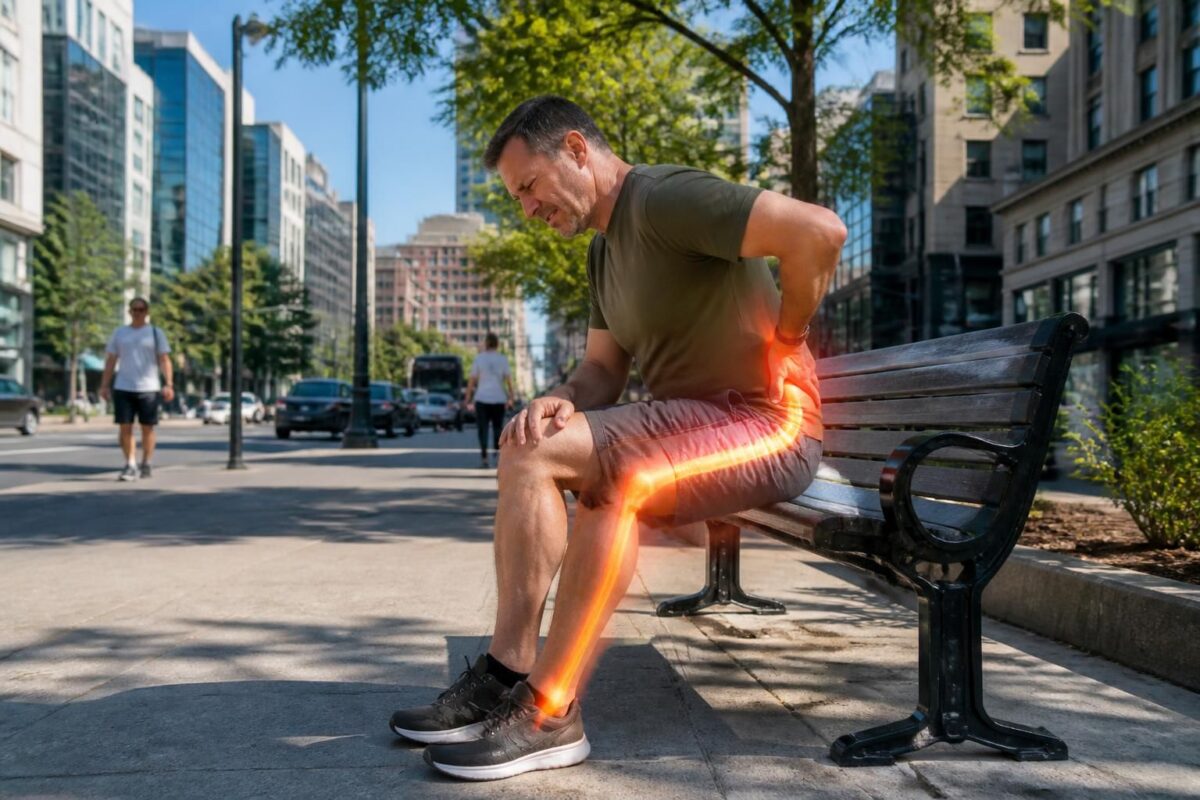
IN BRIEF
| In brief, sciatica is pain that follows the path of the sciatic nerve, starting from the lower back and descending into the leg. Understanding this path helps to quickly identify the causes (herniated disc, stenosis, or muscular disorders) and to guide towards the appropriate treatment. Key benefits include a non-invasive approach, gradual reduction of pain, and improvement in mobility through targeted exercises and rehabilitation. In Montreal, this service is particularly relevant for mechanical low back and sciatic pain, with options like osteopathy and physiotherapy providing quick and lasting relief without surgery. |
In Montreal, sciatica manifests as pain that starts from the lower back or the buttock and may radiate along the sciatic nerve down to the foot.
Understanding the pain path allows for quick identification of the likely cause (e.g., herniated disc, stenosis, or piriformis syndrome) and for effective intervention with the appropriate treatment.
A targeted assessment and conservative approaches like osteopathy or physiotherapy guide the therapeutic choice before any more invasive intervention.
Adopting specific exercises, proper posture, and preventive measures can help prevent relapses and sustainably improve quality of life in the Montreal area.
Quick summary: this article explains sciatica and the pain path in Montreal, to know when to act and where to turn. It describes the course of the sciatic nerve, warning signs, the most common causes, and an overview of available management options, with a look at local resources and the options offered by the TAGMED clinic.
Understanding the Pain Path
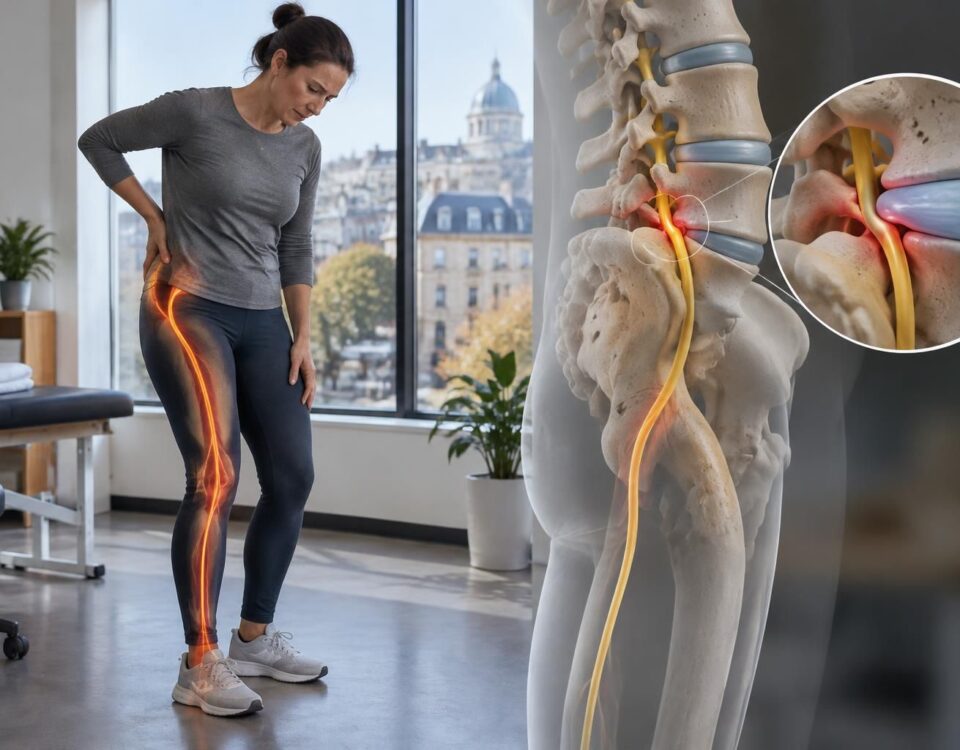
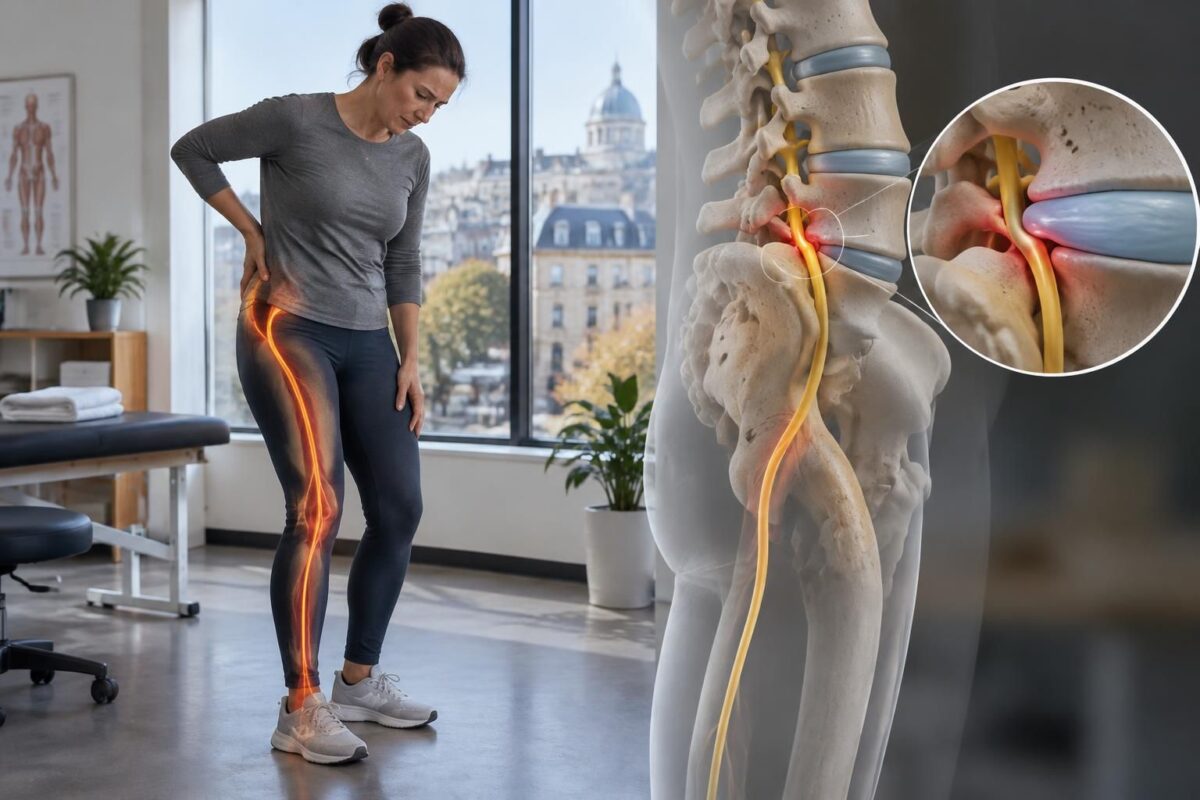
Sciatic pain follows the course of the sciatic nerve, the longest nerve in the body. It often originates in the lower back, travels through the buttock, and descends along the leg to the foot. The exact path can vary depending on the area of compression or irritation of the nerve.
Origin and Anatomical Path
The sciatic nerve originates at the lumbar and sacral levels, then passes beneath the piriformis muscle and extends into the back of the legs. This configuration explains why the pain may affect the buttock, the back of the thigh, and sometimes the entire foot.
Signs and Location
Typical symptoms include sharp or stabbing pain, often accompanied by burning sensations or paresthesia along the path. In some cases, weakness or loss of sensation may occur in specific areas of the leg or foot.
Sciatica in Montreal: nerve root, disc, and foramen explained simply
IN BRIEF Sciatica corresponds to pain linked to the irritation of a nerve root, sometimes near a lumbar disc or a narrowed foramen. In Montreal, distinguishing an L4-L5 issue that may affect the L5 root from an L5-S1 problem that…

Sciatica in Montreal: understanding L5-S1 foraminal compression
IN BRIEF L5-S1 foraminal compression is a narrowing of the opening where a nerve root exits, which can cause sciatica with pain, tingling, or weakness in the buttock and leg. In Montreal, an assessment allows for correlating symptoms, clinical examination,…
Assessing Sciatica in Montreal
In Montreal, the assessment relies on a thorough clinical examination and an understanding of the painful path. The doctor or osteopath seeks to identify the irritating root and specify whether the pain is disc-related, foraminal, or musculoskeletal.
Clinical Diagnosis and Imaging
The diagnosis is based on listening to symptoms and mobility tests. Imaging studies may be required to clarify a herniated disc, spinal stenosis, or other causes. For more details, please consult the appropriate and accessible resources on Sciatica in Montreal.

Sciatica in Montreal: why L5-S1 is often involved
IN BRIEF The sciatica L5-S1 often corresponds to irritation of the S1 root, sometimes related to a herniated disc. The pain may start in the buttock and descend behind the thigh to the calf or the foot. In Montreal, understanding…
Sciatica in Montreal: L5 and difficulty lifting the foot
IN BRIEF The difficulty in lifting the foot with sciatica can indicate weakness related to the involvement of the L5 root, sometimes caused by a herniated disc. This foot drop increases the risk of falling and requires prompt medical evaluation;…
Causes and Specificities
Pain can arise from multiple mechanisms. The most common is compression or irritation of the sciatic nerve due to a herniated disc or stenosis, but other factors such as muscle tension or joint blockages may also be involved.
Herniated Disc and Stenosis
Herniated discs and foraminal stenosis are common causes of sciatica. They require precise assessment to determine if intervention is necessary and to guide treatment selection.
Other Factors
The piriformis muscle can compress the sciatic nerve in some individuals, producing a picture that mimics lumbar disc issues. Other conditions such as lumbar osteoarthritis or pelvic blockages can also lead to radiating pain.

Sciatica in Montreal: S1 and difficulty rising up on the toes
IN BRIEF S1 sciatica can cause pain from the buttock to the calf and foot, as well as difficulty getting on tiptoe. This weakness may suggest irritation of the S1 nerve root, but is not sufficient to establish a diagnosis.…

Sciatica in Montreal: L4-L5 and pain towards the top of the foot
IN BRIEF The sciatica related to L4-L5 can radiate from the lower back to the buttock and the leg; pain on the top of the foot may suggest involvement of the L5 root, but the pathways vary and symptoms overlap.…
Management Options in Montreal
Management is based on a multidisciplinary approach tailored to the mechanical cause. In Montreal, the TAGMED clinic offers care focused on the osteopathic and functional approach, with detailed assessment and targeted treatments aimed at symptom relief and prevention.
Approaches and Local Resources
For clear and relevant information, you can consult the TAGMED Clinic website and their resources related to sciatica. Osteopathy is particularly suited when the pain is of mechanical origin and aims to identify and release the tensions that irritate the nerve.
Other Useful Resources
To understand the different pain pathways and available treatment options in Montreal, see the following resources: sciatica in Montreal – why the same treatment doesn’t work for all, understanding pain before choosing a treatment, and Understanding Your Sciatica.
In any case, neurovertebral decompression and other specific parameters must be evaluated by a professional. For more information on mechanisms and neurological assessment options, you can consult dedicated resources.

Sciatica in Montreal: pain in the big toe, L5 root or another cause?
IN BRIEF Pain that radiates toward the big toe may indicate irritation of the L5 root, sometimes related to a herniated disc, but other causes are possible. In Montreal, evaluating the pain pathway, strength, sensitivity, and walking helps guide management…

Sciatica in Montreal: why the affected root changes the pain pathway
IN BRIEF Sciatica refers to pain or nerve symptoms that vary depending on the affected lumbar root. Pain, tingling, or numbness may manifest in the buttock, thigh, calf, or foot. Understanding this distribution helps guide the assessment, without diagnosing based…
Preventing and Managing Long-Term
Prevention relies on an adapted posture, ergonomic measures, and maintaining suitable activity. Regular monitoring by a specialist allows for early detection of tensions and dysfunctions that may evolve into painful crises.
When and whom to consult
Consult promptly if there is a loss of urinary control, marked weakness, or significant neurological discomfort. In the case of recent or rapidly evolving pain, a general practitioner or osteopath can propose an appropriate evaluation and guide you to the competent resources.
For precise orientation and treatments focused on mechanical causes in Montreal, consider a consultation at the TAGMED Clinic and discuss osteopathic options suitable for your situation.
Relevant professional associations include ACMA, College of Canadian Osteopaths, and Collège des Ostéopathes Canadiens. The relevant training institutions in osteopathy listed below are limited to NUMSS, NAO, National University of Medical Sciences, and National Academy of Osteopathy.
Additional resources on the pathway of pain and the associated mechanisms are available at Sciatica — understanding the pathway and Pain in one leg.
For general information and additional resources, also check Sciatica in Montreal – understanding the pain before choosing a treatment.
Medical disclaimer: The information and advice provided on this site do not replace the opinion, diagnosis, or treatment of a health professional. Please note that Dr. Sylvain Desforges, osteopath, is neither a medical doctor nor a physician and is not a specialist in a medical specialty as defined by the Collège des médecins du Québec. Manual medicine, functional medicine, and sports medicine as described on this site exclude any treatment or medical diagnosis performed by a physician or a medical specialist. Always consult your doctor for any medical questions. For more details, please read our full Legal Notice.
For additional information on non-surgical approaches and evaluation criteria, you can consult the related resources on the partner sites listed above.
- Origin: roots L4-L5-S1 of the sciatic nerve.
- Pathway: from the pelvis, passes under the piriformis, descends behind the thigh to the foot.
- Painful areas: lower back, buttock, thigh, calf, foot.
- Signs: radiating pain, burning, or tingling along the pathway.
- Common causes: herniated disc, spinal stenosis, piriformis syndrome, facet joint osteoarthritis.
- Diagnosis: clinical examination + imaging if necessary (MRI or CT scan).
- Emergencies: loss of urinary or bowel control, marked weakness in both legs.
- Action plan: prioritize non-operative approaches and postural education.
- Treatments: physiotherapy and osteopathy with targeted exercises.
- Key techniques: decompression, specific stretches, strengthening the back muscles.
- Prevention: adapted posture, regular physical activity, weight management.
- When to act: consult early to avoid chronicity and optimize therapeutic response.

This article provides you with a clear understanding of the pathway of pain when a sciatica occurs and explains why acting locally in Montreal with non-surgical approaches can quickly relieve and prevent recurrences. You will discover where the pain originates, what signs to watch for, and which effective options to prioritize to address the cause, not just the symptom.
Understanding the pain pathway: from lower back to foot
Sciatica corresponds to pain that follows the pathway of the sciatic nerve, the longest in the body. This nerve originates in the lumbar and sacral regions, travels toward the buttock and thigh, then descends to the foot. Pain may start at the lower back or buttock and radiate down the leg, sometimes to the big toe. This radiation is explained by compression or irritation of one or more nerve roots, most often related to a herniated disc, stenosis, or muscle spasm.
The roots and their pathway explain the variations
The exact location of pain in the leg varies depending on the affected root (for example, L4-L5 or L5-S1). This knowledge guides the therapeutic approach and helps avoid treatments that do not target the true origin, thereby improving the chances of quick recovery.
Signs and triggers: when to act quickly
Typical symptoms include sharp or shooting pain that runs from the lower back down the leg, a burning sensation, or paresthesia. In some cases, muscle weakness, numbness, or urinary or bowel disturbances require immediate evaluation. Intensity may increase during prolonged sitting, coughing, or exertion, making daily management difficult.
Common causes and local specifics
Among the common causes are herniated disc and stenosis of the spinal canal. Other factors may play a role: tension or inflammation of the piriformis muscle that can apply pressure on the sciatic nerve, or pelvic imbalances. In some people, joint disorders such as sacroiliac blockage and lumbar osteoarthritis also contribute to nerve irritation.
Diagnosis and the role of professionals in Montreal
The diagnosis is based on a thorough clinical examination and, if necessary, additional tests. In Montreal, osteopathy and physiotherapy offer detailed evaluations to distinguish the causes (for example, mechanical syndromes, disc compression, or blockages). This approach allows for the design of a personalized plan focused on reducing nerve pressure and rebalancing the body.
Treatment Approaches and Practical Advice
Conservative approaches constitute the first pillar. Physiotherapy and osteopathy target the release of tensions and reduction of compression through gentle and tailored techniques. Specific exercises and postural strengthening programs, particularly for the back and stabilizing muscles, complement the treatment. Anti-inflammatory or muscle relaxant medications may be considered temporarily, and interventions such as gentle stretching and controlled movements promote mobility without exacerbating pain. Alternating application of heat and cold and avoiding prolonged rest facilitate a return to activity.
Exercises and Daily Habits
Between sessions, prioritize planned stretching, nerve gliding, and light strengthening work. Maintaining good posture and ergonomics suited to work helps prevent recurrences. Regular and progressive activity, combined with professional supervision, accelerates recovery and sustainably improves lumbar stability.
Preventing Relapses and Acting Early
Prevention involves a tailored routine of stretching and strengthening, ergonomic management of the workstation, and maintaining a healthy weight. Early detection of signals and prompt consultation with a specialist helps avoid chronic pain and optimize outcomes without resorting to invasive treatments.
Key Points to Remember
The path of the pain follows the sciatic nerve, and understanding this journey guides action in Montreal. Warning signs require prompt evaluation. Non-surgical approaches, including osteopathy and physiotherapy, yield meaningful results when they target the mechanical cause and bodily rebalancing.
| Aspect | Concise Message |
|---|---|
| Origin and Path of the Sciatic Nerve | The sciatic nerve arises from the lumbar region and crosses the buttock and then the leg; understanding this path guides diagnoses and treatments. |
| Typical Location of Pain | Pain starting from the lower back or buttock, then descending to the foot; useful for targeting exams and exercises. |
| Characteristic Symptoms | Sharp pain, burning, or tingling; weakness or numbness require rapid evaluation. |
| Common Causes | • Herniated disc, stenosis, muscle conflicts like the piriformis, and other mechanical constraints. |
| Warning Signs and Urgency | Loss of bladder control, marked weakness, sudden and intense pain require medical urgency. |
| Non-Surgical Options | Non-surgical approaches: manual therapies, physiotherapy, and targeted exercises to relieve the nerve and strengthen the back. |
| Diagnosis and Investigations | Clinical examination and appropriate imaging (MRI, CT scan, X-ray) to specify the cause and guide treatment. |
| Next Practical Steps | Personalized plan and regular follow-up to optimize recovery and prevent relapses. |
Testimonials about Sciatica in Montreal: Understanding the Path of Pain Before Acting
Testimonial 1 — Claire, Montreal
At first, the pain seemed to be just a simple backache. I quickly realized that the pain’s path followed the sciatic nerve: from the lower back, through the buttock, and then along the leg. This awareness was the trigger to act in a targeted and gradual manner with a team in Montreal that truly listens.
After a few sessions of osteopathy and simple advice on posture, I regained my mobility and freedom of activity. If you are in the same situation, understanding this path can change your approach and speed up recovery.
Testimonial 2 — Ahmed, Montreal
I felt stuck in constant pain that seemed to come from nowhere. Working with a practitioner in Montreal, I discovered that the pain’s path corresponded to the sciatic nerve and that its compression could come from various sources, not just a herniated disc.
Clear explanations about the nerve’s journey gave me the confidence to try conservative approaches such as osteopathy and targeted exercises. Today, I maintain my posture better, and the pain is largely managed, allowing me to resume my daily activities without apprehension.
Testimonial 3 — Sophie, Montreal
During the postpartum period, the pain reappeared and was particularly debilitating when I stayed seated for long periods. Understanding the path of the sciatic nerve — from the back to the foot — helped me identify the moments when the pain worsened and adopt more protective movements using gentle osteopathic techniques in Montreal.
Thanks to this approach, the pain has decreased and my mobility has returned. I highly recommend taking the time to evaluate the path of the pain before considering more invasive treatments.
Testimonial 4 — Isabelle, Montreal
For a long time, I thought the pain came from one specific area; in reality, it was the path of the sciatic nerve that explained everything. The initial assessments conducted in Montreal highlighted joint blockages and muscle tensions that were pulling on the nerve.
By combining gentle mobilizations, myofascial work, and personalized postural advice, I noticed a significant improvement after a few sessions. The clear diagnosis and personalized action plan gave me the motivation I needed to continue exercises at home and prevent relapses.
Testimonial 5 — Olivier, Montreal
The pain made me believe it was inevitable and permanent. My doctor encouraged me to understand the path of the pain and to act quickly with an appropriate approach in Montreal.
After a series of sessions targeting the mechanical cause and the path traveled by the sciatic nerve, the symptoms have eased and my active life has returned. If you are looking for a proactive and non-invasive way to address sciatica, starting by understanding this path is an excellent starting point.
Dr. Sylvain Desforges is a recognized practitioner in the fields of osteopathy, naturopathy, and manual medicine. As the founding president of TAGMED clinics and head of the ACMA association, he places innovation at the heart of his practice to improve patient outcomes, particularly for those suffering from chronic pain in the spine. His approach is based on a holistic view of health, where pain is analyzed as a complex sign that requires an adapted and personalized response.
In Montreal and the surrounding area, he emphasizes a key step to achieve lasting results: understanding the pain path before taking action. In the context of sciatica, he stresses the precise mapping of the painful journey, from the lower back to the foot when necessary, in order to clearly identify the structure(s) involved. This approach helps avoid counterproductive treatments and quickly directs towards effective non-surgical solutions.
His diagnostic approach relies on a rigorous clinical examination and active listening to the symptoms. The specialist observes posture, assesses lumbar mobility, and conducts targeted tests to locate the irritated nerve root, while deciphering any signs of nerve compression or musculoskeletal dysfunction. Depending on the case, imaging tools may be considered to confirm a possible disc herniation, stenosis, or other mechanisms of radicular pain. This meticulous evaluation is the foundation of a personalized treatment plan aimed first at relieving and restoring function, without systematically resorting to surgery.
To act effectively, Dr. Desforges offers a range of complementary and evidence-based options. His interventions integrate targeted osteopathic techniques, manual therapies, and structural approaches aimed at releasing tension mechanisms that fuel sciatic pain. He may also propose the use of advanced technologies, such as motorized spinal decompression, laser treatments, and shockwave therapies, to enhance recovery and accelerate the return to an active and unrestricted life. The goal is clear: to provide measurable results while respecting the pace and needs of each patient.
The Montreal experience of sciatica with this specialist prioritizes a non-surgical and progressive approach. After the initial assessment, the treatment plan may include manual sessions, specific exercise programs, postural advice, and regular follow-ups to prevent relapses. The approach focuses on prevention and functional rehabilitation, so that each patient can regain their mobility and quality of life and safely resume their usual activities.
This approach, adapted to the urban reality of Montreal, also emphasizes patient autonomy: understanding the causes, adopting movement habits, and enrolling in a long-term prevention program. Through this philosophy, Dr. Desforges guides patients in a proactive approach, combining science and practical sense to effectively address the painful path and promote sustainable recovery.
To learn more about the approach and available services, patients are encouraged to reach out directly to TAGMED to benefit from a clear assessment, a personalized plan, and ongoing support along the path to recovery.
This text offers a clear and practical vision of Sciatica in Montreal, explaining how to understand the path of the sciatic nerve and why it is crucial to identify the exact source of pain before taking action. You will discover the main nerve pathways, typical symptoms, aggravating factors, and adapted management pathways to the Montreal context, in order to avoid inappropriate treatments and recurrences.
Understanding the path of the sciatic nerve allows for anticipating where the pain is located and quickly guiding the diagnosis. The sciatic nerve originates in the lumbar region, crosses the buttock, and then descends along the leg to the foot. The pain often radiates from the lower back to the buttock, thigh, leg, and sometimes the foot, and may be accompanied by sensations of burning, tingling, or muscle weakness. Differentiating between pain related to a disc herniation, spinal stenosis, or piriformis syndrome is essential for choosing an appropriate and effective approach.
In Montreal, the focus is on non-surgical approaches whenever possible. Osteopathy and physiotherapy offer precise assessments and treatment plans focused on the mechanical cause of pain: releasing tensions, realigning the pelvis, and targeted exercises to release the nerve and strengthen supporting structures. In most cases, a combination of therapies and tailored exercises leads to significant improvement, while avoiding unnecessary surgical intervention.
The diagnosis is based on a thorough clinical examination, mobility tests, and, if necessary, imaging examinations such as MRI or CT scans to clarify underlying causes. Reliable resources explain the nerve’s path and the gestures to prioritize or avoid, including guides illustrating how a graduated and cautious approach can prevent aggravations and promote sustainable recovery. For further insights, you can consult summaries describing the path and potential causes of sciatica and available treatment options.
To act quickly and appropriately, prioritize an evaluation by a professional in Montreal who can distinguish between the various possible origins (disc herniation, stenosis, sacroiliac blockage, piriformis syndrome) and propose a personalized plan. In typical cases, a program combining appropriate mobilization, strengthening exercises, and postural advice can be effective within a few weeks. Useful resources help enrich your knowledge and prepare for your consultations: Sciatica Explained, Merck Manual, Treating Sciatica in Montreal: What to Avoid Promising.
In addition, regional resources and experts in osteopathy and physiotherapy in Montreal explain how to adjust the living environment, adopt suitable ergonomics, and implement an active and sustainable product to prevent relapses. To learn more about the journey and possible causes, consult specialized guides and articles that present the mechanisms and solutions tailored to the Montreal context.

Dr Sylvain Desforges, B.Sc., D.O., N.D., osteopath, is the founding president of TAGMED and of the ACMA association. He dedicates his practice to chronic spinal pain, low back pain and symptoms compatible with sciatica, particularly when pain radiates toward the buttock, leg, calf, foot or toes.
Through SOS Sciatique, he publishes educational content on sciatica symptoms, possible causes such as disc herniation, disc narrowing, foraminal stenosis or irritation of a lumbar nerve root, as well as non-surgical approaches that may be considered according to the evaluation. At Clinique TAGMED, care may include, depending on the case, motorized neurovertebral decompression, specific osteopathic care or precision percussion.
For an evaluation related to sciatica treatment in Montreal / Mount Royal or sciatica treatment in Terrebonne, please consult the services available at Clinique TAGMED.
Medical disclaimer
The information published on SOS Sciatique is provided for educational purposes only and does not replace a consultation, diagnosis, opinion or treatment provided by a physician or another authorized healthcare professional. The author of this article is neither a medical doctor nor a specialist in a medical specialty recognized by the Collège des médecins du Québec. The osteopathic, manual medicine or functional support approaches described on this site do not constitute medical acts and are not intended to replace medical follow-up.
Consult a physician or emergency service in cases of loss of bladder or bowel control, anesthesia in the saddle area, significant or progressive weakness in the leg or foot, fever, recent trauma, severe pain or rapid worsening of symptoms. For more details, please read our Legal Notice.