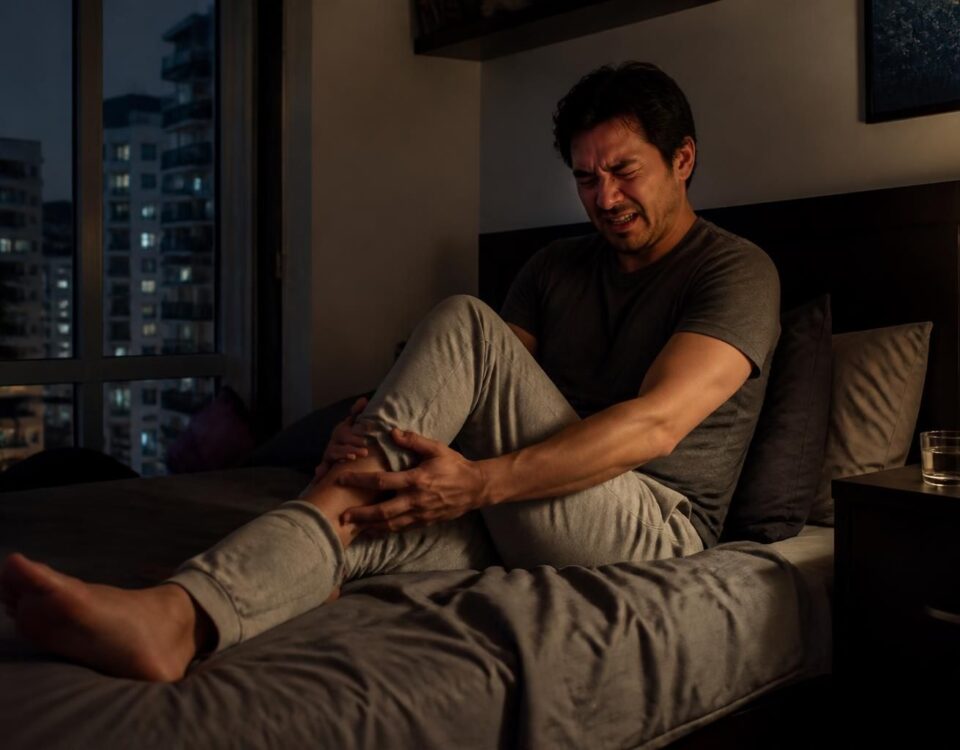
Causes of sciatica: Understanding why pain descends into the leg
29/06/2026
Sciatica in Terrebonne: Understanding pain before choosing treatment
29/06/2026
In short
| In short, the sciatica is pain related to irritation or Compression of the sciatic nerve. At Montreal, understand the cause and plan a treatment Adapted makes it possible to quickly reduce pain and regain mobility. What is it? It is a pain that follows the path of the sciatic nerve, often due to a slipped disc, a Foraminal stenosis or a Piriform Syndrome. How does this treatment work? A medical evaluation guides a personalized plan that combines physiotherapy, targeted exercises and techniques of decompression To relieve and prevent recurrences, without immediate surgery. |
At Montreal, the sciatica May cause severe pain that rises from the lower back to the leg. Before choosing a treatment, it is essential to Understand the pain and its possible causes, such as The disc herniation, a stenosis Or sciatic nerve irritation, as well as the impact on everyday life. The diagnosis is based on a clinical examination and, if necessary, a imagery to identify the exact source. non-invasive solutions, such as physiotherapy and targeted exercises, can make it possible to Reduce the pain and regain mobility quickly. The treatment plan should be personalized and discussed with a health professional to optimize recovery and prevent recurrences.
This article, written by a health professional and expert, presents the mechanisms of the sciatic pain and explains how to understand these signs before deciding on treatment. In Montreal, it is essential to assess the causes, diagnosis and options available. The objective is to allow an informed choice, by favoring non-surgical solutions and approaches practiced in the TAGMED clinic when relevant.
Understanding sciatic pain
The sciatica is a pain that follows the path of the sciatic nerve. This pain may arise from compression or a irritation Lumbar nerve roots. Common causes include disc herniation, foraminal narrowing or muscle tension around the pelvis. The pain often manifests in the lower back and can radiate into the buttocks, thigh or leg. Understanding this course helps to identify aggravating factors and guide treatment.
Diagnosis and warning signs
The diagnosis is based on a clinical examination and, if necessary, imaging examinations. The location, intensity and evolution of symptoms are assessed, as well as movements that trigger or aggravate pain. Warning signs require an urgent medical assessment, including loss of urinary or fecal control, significant weakness, or pain associated with fever. An accurate diagnosis guides the choice of treatment and avoids delays.
Support options in Montreal
Several approaches can be proposed for sciatica, with priority given to non-surgical treatments when appropriate. theClinical analysis And listening to the symptoms guide the choices. Possible solutions include manual approaches, conservative measures and non-invasive treatments offered in the TagMed Clinic. In some cases, the use of the neurovertebral decompression Can be considered as a non-surgical option to reduce nerve pressure and alleviate pain.
For people looking for non-drug alternatives to pain, specialized resources and centers in Montreal offer relevant options. The use of pain professionals and recommended clinics can help establish an effective and safe treatment plan. More information on these approaches can be found on the websites of partner organizations and local clinics.
Neurovertebral decompression and non-surgical alternatives
Neurovertebral decompression is an innovative approach aimed at reducing the pressure exerted on discs and nerve roots. This method can be considered when sciatica is linked to specific structural factors. In the expert environment, we discuss the clinical indications and the course of treatment with the patient. In this context, exchanges with the TagMed teams make it possible to assess the potential benefits and to organize the necessary follow-up. For more information, consult the dedicated resources on the specialized sites mentioned below.
Many patients find it useful to exchange with specialists on the mechanisms of pain and the options available. Reliable online resources explain basic concepts and treatment choices, while emphasizing the importance of accurate diagnosis and a clear plan. Some local communities and clinics in Montreal offer comprehensive assessments and appropriate rehabilitation plans.
Treatment planning and patient engagement
A treatment plan begins with a detailed consultation. The doctor or osteopath assesses the impact of pain on daily life and identifies the underlying causes. A program may include simple home measures, manual interventions, and non-surgical options offered in the TagMed Clinic. The objective is to reduce pain, improve mobility and prevent recurrences through a structured and adapted approach.
Modification of the work environment and the adoption of ergonomic gestures are an integral part of the plan. Appropriate physical activity, stress management and relaxation techniques can also contribute to long-term healing and prevention. Patient information and education play a key role in adherence to treatment and their effectiveness. For further details, see the resources offered in the links below.
Useful links and recommended resources: Neurovertebral decompression and sciatic pain – alternative to drugs, SCIATICITY SOLUTION – CLINIC TAGMED, Neurovertebral and sciatic decompression – Relieve without surgery.
For more information on modern mechanisms and approaches, you can consult additional resources on specialized sites in related domains.
Prevent recurrences and practical questions
Prevention requires correct posture, active breaks and regular physical activity adapted to the condition. Ergonomic advice and targeted exercises can support spinal stability and nerve function. It is important to discuss what movements should be preferred and avoided with your health professional and to adjust the plan according to the evolution of the symptoms. Useful links offer clear explanations and concrete advice.
If you are looking for a specialized assessment, contact recognized clinics in Montreal that specialize in sciatica and column disorders. Professional partners and approved associations guide the practice to safe and effective standards.
To deepen issues related to pain and treatment, these resources can be consulted: Sciatica and lumbar spinal stenosis, Movements to avoid, Sciatica: plan your treatment effectively.
For additional information on modern symptoms and treatments, see Additional Resources and Educational Pages from Authorized Domains.
Medical Disclaimer: The information and advice provided on this site does not replace the health professional’s diagnosis or treatment. Please note that Dr. Sylvain Desforges osteopath is neither a doctor of medicine nor a doctor, and is not a specialist in a medical specialty as defined by the Collège des Médecins du Québec. Manual medicine, functional medicine and sports medicine as described on this site exclude any medical treatment or diagnosis made by a doctor or specialist doctor. Always consult your doctor for any medical questions. For more details, please read our full legal notice.
- Sciatica Refers to pain that follows the path of the sciatic nerve, often linked to a slipped disc or a stenosis.
- Before any choice : Understand the causes and diagnosis to guide treatment.
- Evaluation Symptoms rapid: location, intensity and frequency to guide the next step.
- clear diagnosis Based on a clinical examination and, if necessary, appropriate imaging.
- Warning signals: loss of urinary/anal control or rapid limb weakness; emergency recommended.
- Non-invasive options Adapted: physiotherapy and targeted exercises, with possible decompression as appropriate.
- Custom Plan Combining movement, manual therapy and education to avoid recurrences.
- pain management with drugs under proper medical supervision.
- Active maintenance: Walk and gentle activities to preserve mobility and traffic.
- Meeting Montreal : oriented towards a specialized clinic for an accurate diagnosis and a clear plan.

This article helps you understand Sciatica in Montreal and to choose your treatment knowingly. It focuses on precise evaluation, non-invasive options and the need for a personalized course before any major medical decision. The objective is to help you act quickly, in an informed way and adapted to your situation.
Understanding sciatic pain in Montreal
Sciatic pain follows the path of the sciatic nerve, the longest in the body, and can radiate from the lower back to the foot. It may result from disc herniation, narrowing of the spinal canal, piriformis syndrome or other nerve irritations. Understand the character unilateral, sensations (burning, throbbing pain, tingling) and temporal evolution is key to directing the treatment. In Montreal, this pain is often treated with multidisciplinary approaches that take into account posture, activity and lifestyle.

Sciatica in Montreal: heavy leg or painful leg?
IN BRIEF In brief, sciatica is pain that radiates along the sciatic nerve, starting from the lower back or buttock down to the leg. In Montreal, this service is particularly suitable for mechanical or postural sciatica and relies on a…

Sciatica in Montreal: nighttime pain in the leg
IN BRIEF In brief, nocturnal sciatica is a root pain in the lower back that irritates the sciatic nerve and worsens when lying down, causing nighttime awakenings. In Montreal, this service offers a non-surgical approach focused on posture, bedding, and…
Evaluation and diagnosis: asking the right questions
Before any treatment, a Medical assessment complete is essential. The doctor or osteopath analyzes the intensity, frequency and impact on daily activities, checks the trigger movements and looks for warning signs. Specific clinical tests and, if necessary, imaging examinations can be proposed to identify the exact cause and refine the therapeutic plan. The objective is to identify the aggravating factors (posture, work, charges) and to assess the risks of recurrence.

Sciatica in Montreal: pain from the lower back to the calf
IN BRIEF In brief, sciatica is a pain that starts in the lower back and can radiate down to the calf, caused by irritation or compression of the sciatic nerve. In Montreal, this service offers a personalized evaluation and non-surgical…

Sciatica in Montreal: hip pain or true nerve radiation?
IN BRIEF Sciatica is a nerve pain that follows the path of the sciatic nerve and can radiate from the buttock to the foot, which can be perceived as pain in the hip. Lower back pain, on the other hand,…
Treatment options before any surgery
Non-invasive approaches
physiotherapy and Adapted exercises Play a central role in relieving pain, strengthening the back and improving flexibility. Manual techniques and targeted stretching programs can release tension and promote better posture. Alternating heat and cold use can provide temporary and additional relief. Appropriate drug management can be considered depending on the tolerance and recommendations of the health professional.
Specialized solutions and technologies
Innovative methods, such as neurovertebral decompression, can be discussed as non-surgical options to reduce pressure on nerve roots and improve mobility. The choice of these approaches depends on your precise situation and the diagnosis established during the initial evaluation.

Sciatica pain in Montreal: incomplete journey, should we be concerned?
IN BRIEF In brief, sciatic pain is a lumbar nerve-origin pain whose pathway may be incomplete and may not reach the foot. In Montreal, the evaluation clarifies the pathway, strength, and function, and determines if imaging can change the approach.…
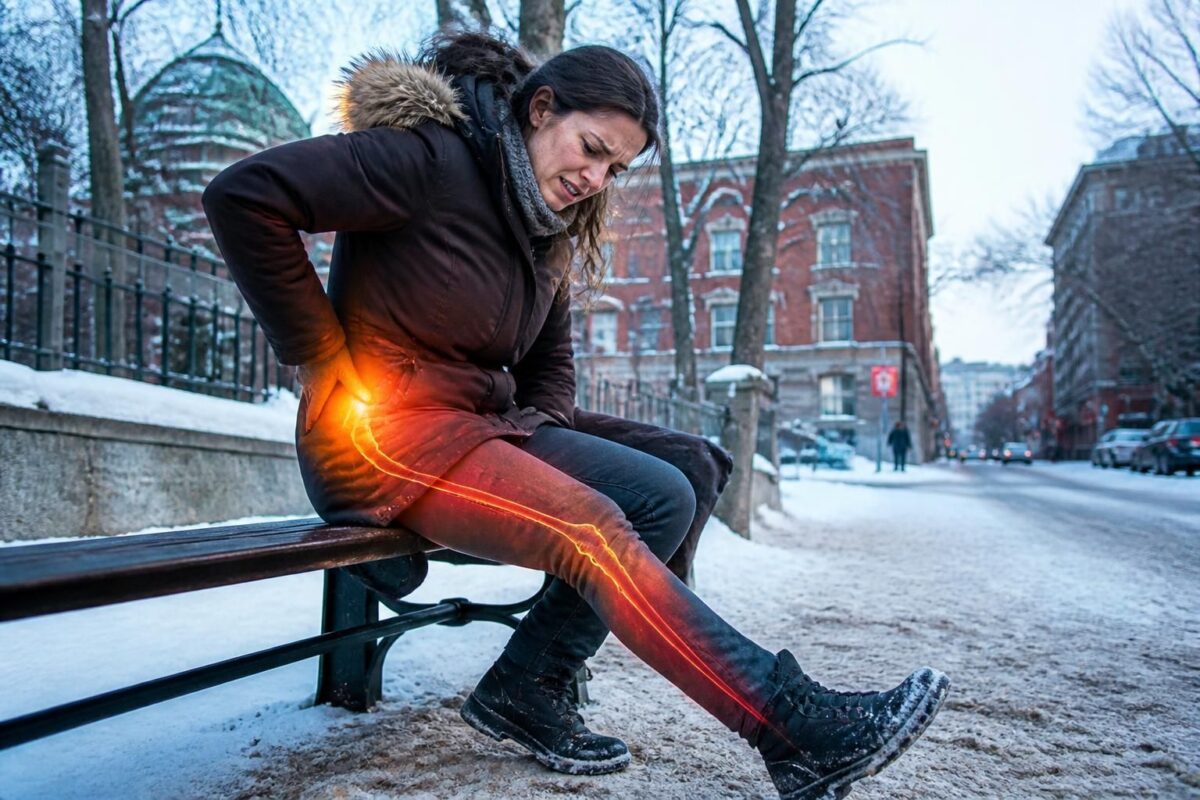
Sciatica in Montreal: pain towards the little toe and S1 root
IN BRIEF Sciatica is pain radiating along the path of the sciatic nerve, typically from the lower back to the leg and down to the little toe when the S1 root is irritated or compressed. In Montreal, this phenomenon is…
Planning a personalized care pathway
The key to effective treatment lies in a Multidisciplinary care adapted to your needs. This involves collaboration between doctors, osteopaths, physiotherapists and other professionals, in order to build a coherent plan: pain education, progressive exercises, ergonomic advice at work and adjustments to the personal environment. Regular monitoring allows for progress to be assessed and the treatment to be adjusted to limit recurrences.

Sciatica in Montreal: pain towards the top of the foot and L5 root
IN BRIEF Sciatica in Montreal with pain in the top of the foot and a possible involvement of the L5 root is a lumbar radiculopathy where the pain follows the path of the sciatic nerve to the dorsum of the…

Sciatica in Montreal: pain radiating to the outer edge of the foot
IN BRIEF In brief, sciatica is pain that follows the path of the sciatic nerve, starting from the lower back and extending down to the foot, often radiating to the outer edge of the foot. In Montreal, this condition is…
Warning and emergency signals: when to consult quickly
Some situations require urgent management: loss of urinary or fecal control, extremely severe pain associated with marked weakness, fever or pain after significant trauma. These signs, also called “warning signals”, require immediate medical evaluation in order to rule out any serious complications and quickly guide the treatment.
What to remember to act in Montreal
Before opting for a radical solution, favor a complete evaluation and a progressive and personalized treatment plan. A structured approach, centered on movement, posture and collaboration between professionals, offers the best chances of lasting relief and rapid resumption of daily activities without immediately resorting to heavy interventions.
| parts | What this implies for you |
|---|---|
| clear diagnosis | clinical evaluation and, if necessary, imaging to identify the cause and guide treatment |
| Emergencies to monitor | Warning signals: loss of urinary control, progressive weakness, febrile pain |
| Common causes | lumbar disc herniation, ductus stenosis, piriformis syndrome |
| Characteristic symptoms | Pain radiating from lower back to leg, numbness, tingling, unilateral weakness |
| Non-invasive approaches | Physiotherapy, targeted exercises, posture and ergonomics, heat/cold, appropriate medication |
| Invasive approaches | Neurovertebral decompression or surgery if necessary after medical evaluation |
| Role of the movement | osteopathy and physiotherapy complete the diagnosis; Personalized approach with the doctor |
| Practical advice | Breaks, regular walking, stretching, ergonomics at work, hydration, avoid prolonged rest |
| Background Montreal | Access to specialized clinics and integrated and rapid care |
Testimonials in Montreal: Understanding pain before choosing treatment
Marie, 46 — Montreal
“Above all, my pain was omnipresent and I thought it all came from a simple back pain. I was helped to understand that the sciatica May come from nerve irritation and precise diagnosis opens the way to an informed choice. After a full assessment, I opted for a program focused on physiotherapy, drill targeted and postural advice. Result: the pain subsided and mobility returned without immediately having to resort to surgery. »
Samuel, 39 — Montreal
“I had the impression that my pain was inevitable and that everything would go through medication. My doctor took the time to explain possible causes like herniated disc or stenosis and showed me the real options for Montreal. understanding the mechanisms and associating sessions of physiotherapy In appropriate exercises, I was able to choose a proactive treatment and limit the risk of recurrence. »
Claire, 54 — Montreal
“I learned to read my signals and distinguish the pain associated with the sciatica other lower back pain. Thanks to a structured approach and clear explanations, I favored manual therapies and progressive exercises rather than surgery. Today, the quality of life is much better and I feel like an actor in my recovery. »
Antoine, 32 years old — Montreal
“By understanding the possible causes and the course of care, I chose an approach that focuses on movement and pain education. The treatment began with a precise evaluation and continued with targeted sessions which allowed me to resume my daily activities and my sport without putting all the risk on my spine. »
Fatima, 60 — Montreal
“My entourage and I preferred a multidisciplinary approach. I was explained the different treatment pathways, including non-invasive solutions such as adapted exercises and ergonomic advice at work. The journey offered me a better understanding of pain and concrete tools to manage my sciatica On a daily basis, without waiting for a miracle solution. »
At the gates of Montreal, the sciatica Most often manifests itself in pain that starts from the lower back and follows the path of the sciatic nerve to the foot. Understanding this pain, its origins and its manifestations is the first step in avoiding hasty decisions and choosing a suitable treatment. A recognized practitioner in the field working at TagMed and ACMA stresses the importance of establishing an accurate diagnosis and distinguishing possible causes, such as herniated disc, foraminal stenosis or piriformis syndrome, in order to propose a strategy personalized and effective.
In the Montreal context, most sciatic pain does not require immediate surgery. The process begins with a complete assessment: detailed anamnesis, targeted physical examination and, if necessary, imaging examinations to confirm the location and extent of nerve compression. This step makes it possible to assess the impact on daily life, mobility and professional activities, and to identify aggravating factors such as poor postures, lack of physical activity or stress.
The diagnosis made, the treatment is organized around a progressive and multidisciplinary plan. Non-invasive approaches form the basis of current management: physiotherapy and targeted exercises to strengthen the back and deepen flexibility, adapted manual therapies and gentle stretching programs, supplemented by drug prescriptions when necessary to control pain and inflammation. The heat and the cold also play a soothing role by relaxing the muscles and promoting better mobility, while limiting the risks of recurrence when the activity is gradually resumed.
For those who suffer from chronic or recalcitrant sciatica, Montreal offers more specific and innovative solutions. Protocols like neurovertebral decompression and associated techniques can help reduce pressure on nerve roots and restore better spinal dynamics. complementary options, such as therapies laser And shockwave treatments also enter the offer, aimed at accelerating recovery, improving circulation and reducing radiant pain.
Beyond techniques, the approach focuses on education and self-management. It is a question of learning to recognize the triggers and to adapt its environment: ergonomic chair, adjusted workstation, and active breaks during prolonged sitting periods. Daily exercises, regular walking and appropriate activities like swimming or yoga can prevent tension and promote resilience of the nervous and musculoskeletal system.
The ideal care pathway combines a rigorous medical evaluation, precise planning of conservative treatments and regular monitoring of progress. The patient is invited to actively participate in each step, in order to adjust daily gestures and exercises according to clinical feedback. In this context, technologies and non-surgical methods, used with discernment and on the basis of evidence, today offer clear perspectives to improve the comfort, mobility and quality of life of Montrealers facing sciatica.
this quick position on the sciatica at Montreal Helps to understand pain, its causes and criteria for choosing a suitable treatment. It summarizes common mechanisms, non-invasive approaches and available resources to prepare an informed and effective approach. To learn more, see the Complete guide to sciatica.
For Understand the pain and preparing the choice of a treatment, it is necessary to identify the mechanisms and possible causes: slipped disc, Foraminal stenosis, Piriformis muscle syndrome, and other factors. A reliable diagnosis is based on a clinical examination deepened and, if necessary, a MRI or other imaging, in order to locate the compression and assess its impact on daily life.
At Montreal, an approach multidisciplinary and personalized favors non-invasive solutions such as the physiotherapy, targeted exercises and adapted manual therapies. options such as neurovertebral decompression Or osteopathic techniques can help relieve pain without having to resort to surgery. To learn more, see the Complete guide and local resources like Tagmed Clinic.
An effective treatment plan combines Strengthen and reinforcement exercises, techniques of relaxation, and advice ergonomic to adapt the working and daily living environment. Simple measures such as heat/cold alternation and regular walking can quickly reduce discomfort and reduce the risk of recurrence. Practical resources are available on sciatica and walking and Typical duration of sciatica.
It is crucial to know the warning signs that require urgent assessment, including loss of urinary or fecal control, rapid limb weakness or pain associated with fever. If in doubt, quickly contact a health professional and follow the regional councils. To learn more about misconceptions and treatment realities, refer to reliable resources such as Myths and realities in Quebec.
To guide your journey in Montreal, you can rely on reference centers and local guides, including Sciatica – Clinic Tagmed, and the site SOS SCIATIC which offers additional resources.

Dr Sylvain Desforges, B.Sc., D.O., N.D., osteopath, is the founding president of TAGMED and of the ACMA association. He dedicates his practice to chronic spinal pain, low back pain and symptoms compatible with sciatica, particularly when pain radiates toward the buttock, leg, calf, foot or toes.
Through SOS Sciatique, he publishes educational content on sciatica symptoms, possible causes such as disc herniation, disc narrowing, foraminal stenosis or irritation of a lumbar nerve root, as well as non-surgical approaches that may be considered according to the evaluation. At Clinique TAGMED, care may include, depending on the case, motorized neurovertebral decompression, specific osteopathic care or precision percussion.
For an evaluation related to sciatica treatment in Montreal / Mount Royal or sciatica treatment in Terrebonne, please consult the services available at Clinique TAGMED.
Medical disclaimer
The information published on SOS Sciatique is provided for educational purposes only and does not replace a consultation, diagnosis, opinion or treatment provided by a physician or another authorized healthcare professional. The author of this article is neither a medical doctor nor a specialist in a medical specialty recognized by the Collège des médecins du Québec. The osteopathic, manual medicine or functional support approaches described on this site do not constitute medical acts and are not intended to replace medical follow-up.
Consult a physician or emergency service in cases of loss of bladder or bowel control, anesthesia in the saddle area, significant or progressive weakness in the leg or foot, fever, recent trauma, severe pain or rapid worsening of symptoms. For more details, please read our Legal Notice.