


Sciatica and lumbar spinal stenosis: when the lumbar canal becomes too narrow
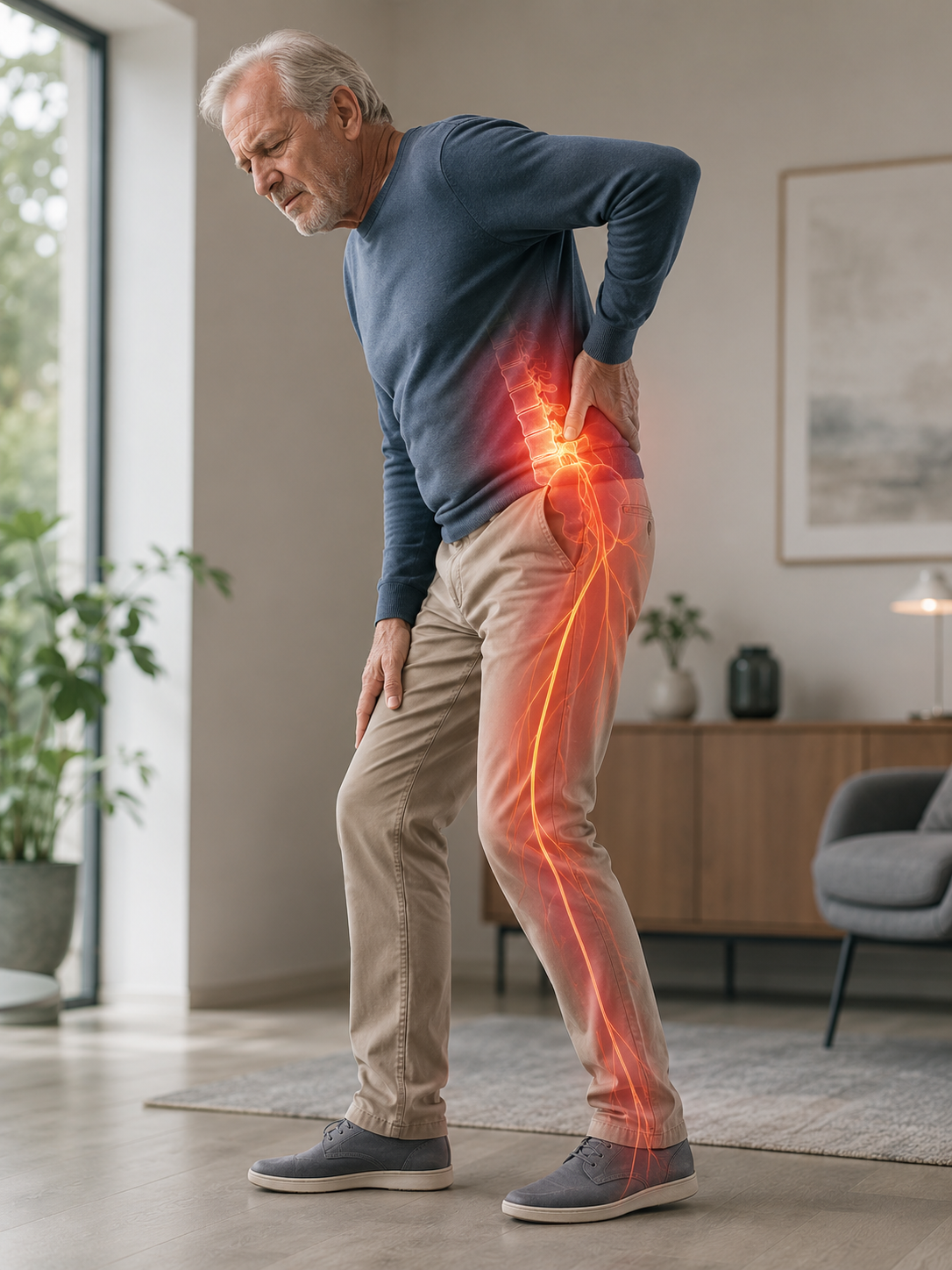
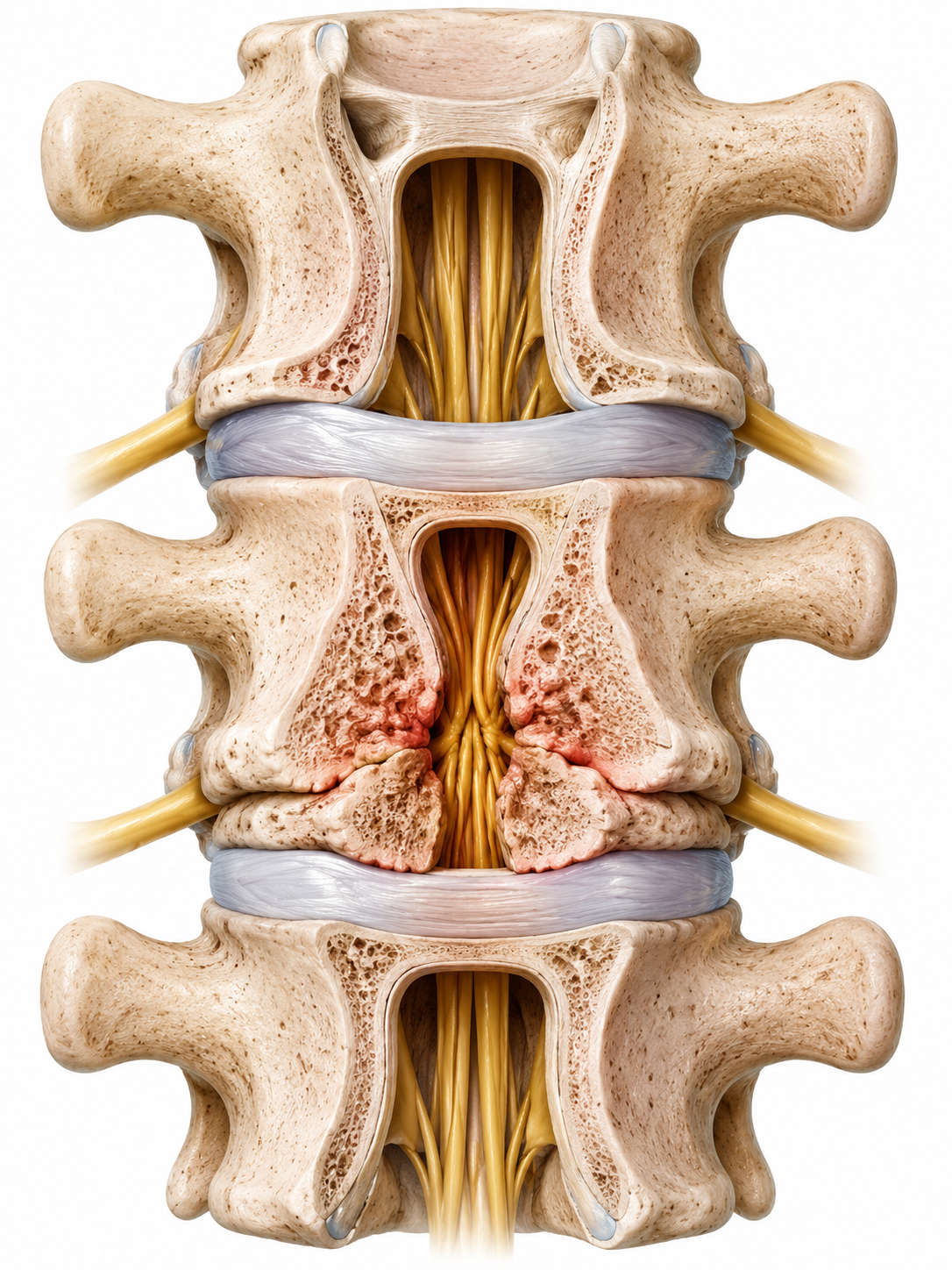
Lumbar spinal stenosis corresponds to a narrowing of the spinal canal in the lower back. When this canal becomes too narrow, several nerve roots may lack space, become irritated and cause pain in the buttocks, thigh, calf or foot.
Unlike sciatica linked to a single disc herniation, spinal stenosis can sometimes affect several roots at once. It can cause pain, heaviness, numbness, weakness or difficulty walking which varies depending on the posture, walking distance and back position.
Why can the lumbar duct become too narrow?
The lumbar canal can shrink gradually with some mechanical and degenerative changes. Osteoarthritis of the posterior joints can thicken the structures around the canal. The ligaments can also become thicker. Discs can lose height, bulge or form a protrusion. All of these can reduce the available space.
Spinal stenosis is often different from simple sciatica linked to a single root. It can create a more diffuse picture, sometimes with pain in both legs, heaviness when walking, need to stop or relative improvement by sitting or leaning slightly forward.
| Possible cause of shrinkage | Possible effect | Why is it important |
|---|---|---|
| Lumbar osteoarthritis | Thickening or modification of the posterior joints. | Can reduce space around the canal and foramen. |
| Thickened ligaments | Less space available in the spinal canal. | May contribute to root compression or irritation. |
| disc pinch | Decrease in disc height and change in mechanical space. | Can influence the canal and forams. |
| Protrusion or bulge disc | disc protrusion to the lateral channel or recess. | Can add constraint to an already narrow channel. |
| spondylolisthesis | Sliding of a vertebra modifying the alignment. | May reduce available space for nervous structures. |
What symptoms can accompany lumbar spinal stenosis?
Lumbar spinal stenosis can cause symptoms in one leg or in both legs. Symptoms may vary depending on posture, walking, standing, sitting, and severity of shrinkage.
walking pain
The pain may appear or increase after a certain walking distance, then decrease at rest.
Heaviness in the legs
Some people describe fatigue, pressure or heaviness that limits walking.
Numbness
A numbness can affect the thigh, calf, foot or both legs depending on the roots involved.
Weakness
A progressive weakness, difficulty walking or a gripping foot should be assessed quickly.
Bilateral pain
Spinal stenosis can sometimes cause symptoms on both sides, unlike several unilateral disc sciatica.
Bending relief
Some people better tolerate sitting or leaning forward, but it is not universal.
Spinal stenosis, nerve roots and pain in the legs
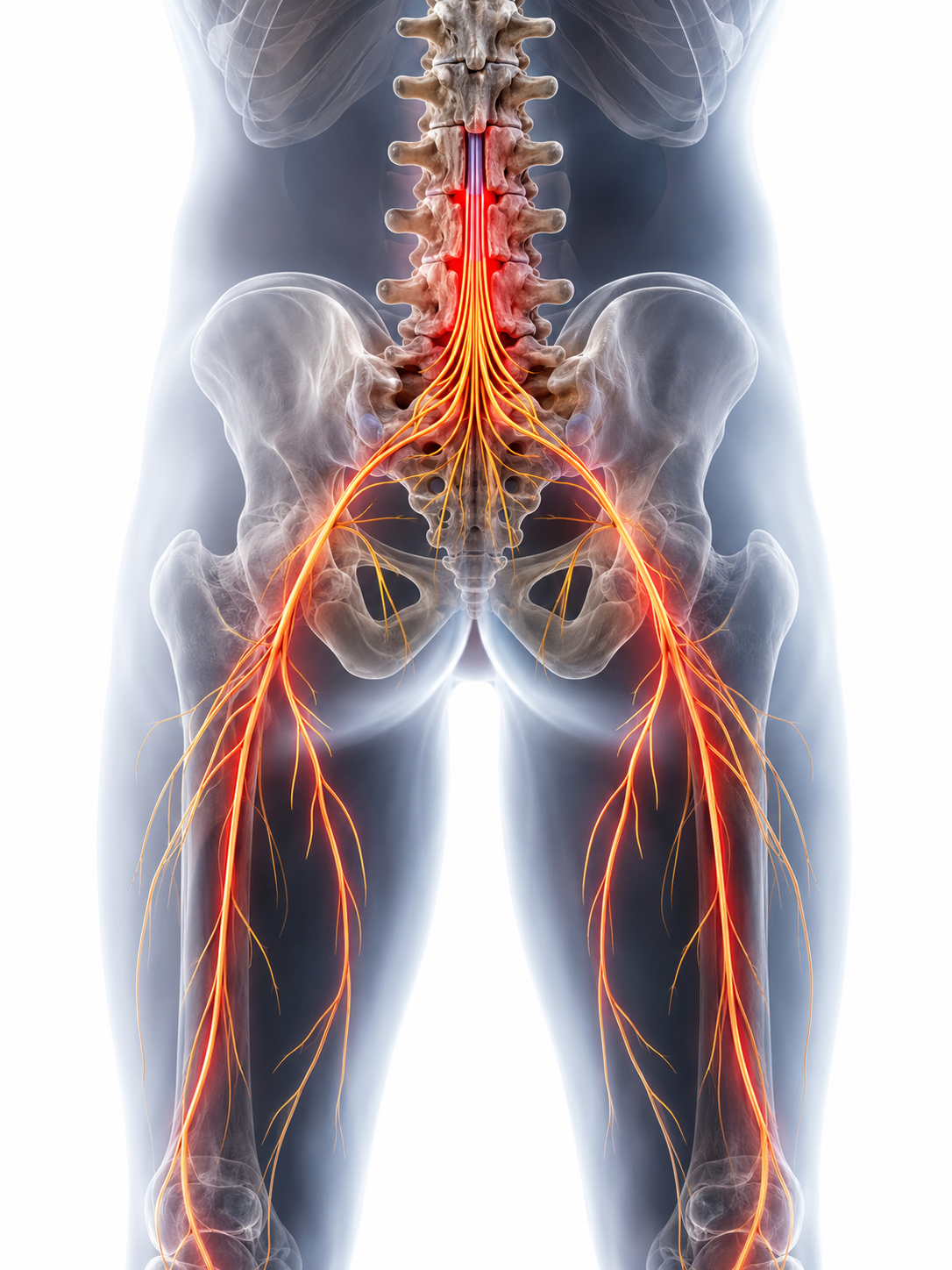
In a foraminal stenosis, the narrowing mainly concerns the passage of exit from a nerve root. In spinal stenosis, the problem is more in the central canal or in areas near the canal. Several roots can therefore be irritated simultaneously or in a variable way.
This difference explains why spinal stenosis can give a less clear picture than classic L5 or S1 sciatica. The patient may feel pain in the buttocks, thigh, calf, feet, or rather overall heaviness in the legs. Walking distance and standing tolerance then become very important information.
- Pain or heaviness that increases when walking.
- sometimes bilateral or alternating symptoms.
- Numbness in one or two legs.
- Possible improvement in sitting or slightly bent position.
- Weakness, loss of function or progressive aggravation to be assessed quickly.
Spinal stenosis or foraminal stenosis: what is the difference?
These two terms are often confused. They both describe a narrowing of the available space around the nerve structures, but they do not affect exactly the same anatomical region.
| Term | Area concerned | Possible symptoms |
|---|---|---|
| Lumbar spinal stenosis | central channel or areas close to the channel. | Pain, heaviness, numbness or weakness sometimes in both legs. |
| Foraminal stenosis | foramen, i.e. the exit passage from a nerve root. | Pain more localized in the territory of a root, often on one side only. |
| Lateral recess stenosis | Passing area of a root before exiting the canal. | Descending pain in one leg, sometimes close to a classic sciatica chart. |
| Mixed stenosis | central channel, foramens and lateral recesses. | More complex picture, sometimes with several painful territories. |
Why personalized evaluation is essential
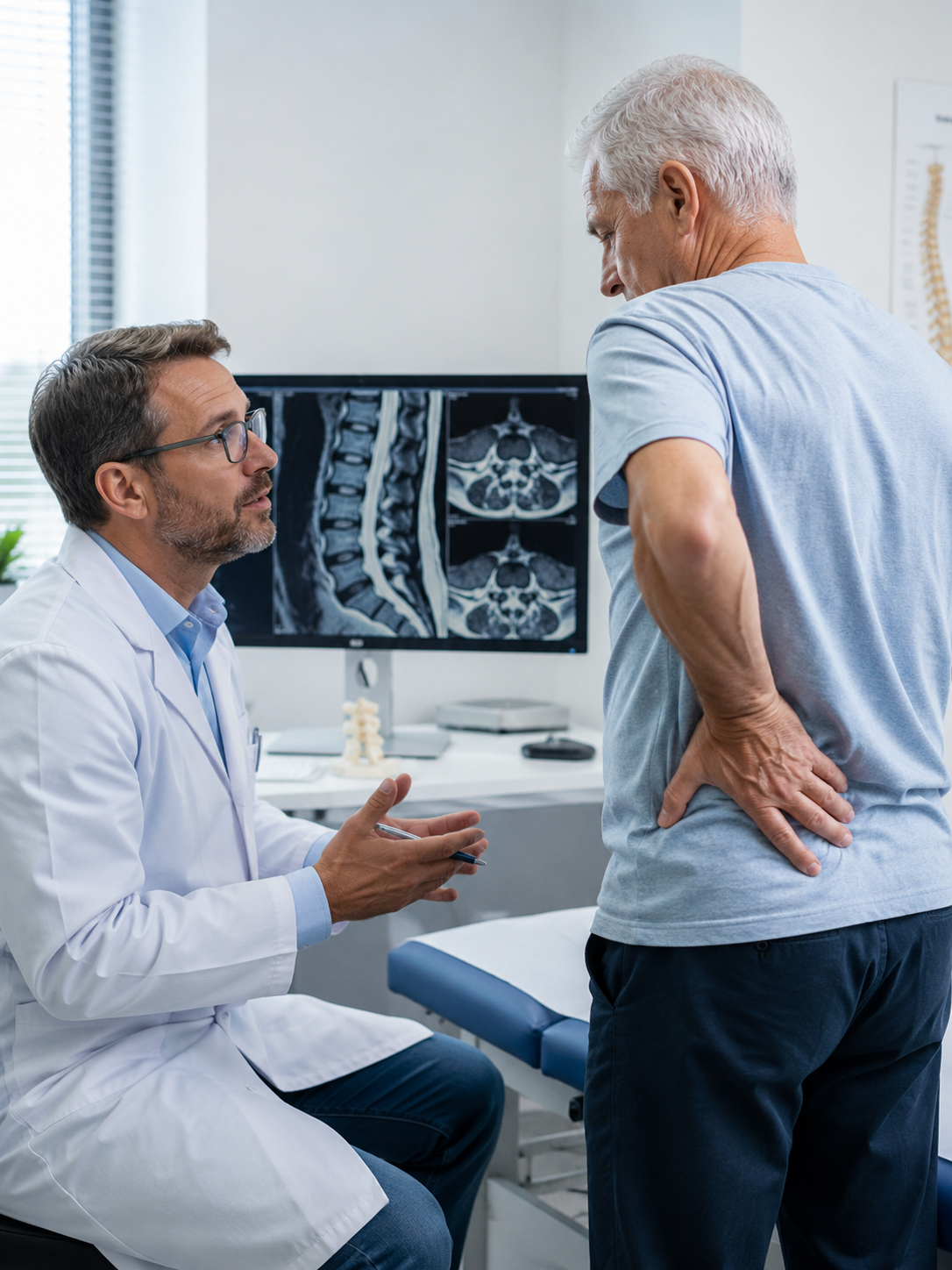
Two people may have a visible spinal stenosis on MRI, but have very different symptoms. One can walk for a long time without significant pain, while another may be limited after a few minutes. The image alone is therefore not enough to guide the action to be taken.
At TagMed Clinic, the assessment aims to link imaging ratio, walking distance, leg pain, heaviness, numbness, muscle strength, posture, standing tolerance and warning signs. This approach makes it possible to determine whether a non-surgical and non-invasive approach may be relevant or whether a medical orientation is preferable.
function on walking
The walking distance, the need to stop and the relief at rest are key elements.
Neurological signs
Strength, sensitivity, balance and evolution should be verified with caution.
What options should be considered for sciatica related to spinal stenosis?
The choice of an approach depends on the severity, duration, walking, strength, sensitivity, imaging and tolerance of the patient. Spinal stenosis should not be approached as a simple lumbar pain or as classic disc sciatica.
According to the evaluation, certain non-surgical and non-invasive approaches can be discussed, including neurovertebral decompression motorized, specific osteopathy or the precision striker. In some cases, a medical reference or specialized assessment may be more appropriate, especially if the symptoms progress.
| Approach | Possible role | When to consider it with caution |
|---|---|---|
| Motorized neurovertebral decompression | Reduce certain mechanical stresses on discs, foramins and certain nervous structures. | Profile compatible with mechanical irritation, without sign of urgency or progressive deficit. |
| osteopathy specific | Adapt the interventions to the patient’s restrictions, compensation and tolerance. | Pain associated with stiffness, mobility limitation or mechanical overload. |
| Precision striker | Instrument assisted intervention, targeted and low amplitude. | Accurate mechanical dysfunction depending on the assessment and tolerance. |
| Medical reference | Orientation when the situation is beyond the scope of a conservative approach. | Progressive weakness, loss of function, uncontrollable pain or significant neurological signs. |
Sciatica, spinal stenosis and Tagmed clinic
Tagmed Clinic receives patients with pain consistent with lumbar nerve irritation, especially when imaging reports mention lumbar spinal stenosis, foraminal stenosis, disc, protrusion or lumbar osteoarthritis.
The typical rate is $140 per consultation or treatment. The services are not covered by the RAMQ, but osteopathy receipts may be provided and are eligible for reimbursement by several private insurance plans according to your contract.
For a local appointment, the main conversion pages should be hosted on the TagMed Clinic website to avoid SEO cannibalization with SOS Sciatica educational pages.
Tagmed Terrebonne Clinic
1150 rue Lévis, Suite 200
Terrebonne, QC, J6W 5S6
Phone: 450-704-4447
Days: Monday, Wednesday and Friday
Clinic Tagmed Montreal / Mont-Royal
1140 Avenue Beaumont
Mount Royal, QC, H3P 3E5
Phone: 1-877-672-9060
Days: Tuesday and Thursday
Frequently asked questions about sciatica and lumbar spinal stenosis
What is lumbar spinal stenosis?
This is a narrowing of the lumbar spinal canal. When the space becomes too limited, the nerve roots can be irritated and cause pain, heaviness, numbness or weakness in the legs.
What is the difference between spinal stenosis and foraminal stenosis?
Spinal stenosis mainly affects the central canal, while foraminal stenosis affects the exit passage of a nerve root. Both can sometimes coexist.
Does spinal stenosis always cause sciatica?
No. A stenosis can be visible in imaging without explaining all the symptoms. It becomes more significant when it corresponds to the pain, walking, strength and sensitivity of the patient.
Why can walking worsen the symptoms?
Walking and standing can sometimes reduce the space around the nerve roots in some people. This can cause pain, heaviness or numbness in the legs.
Why can the sitting position relieve?
In some patients, sitting or slightly leaning forward may temporarily increase the available space in the lumbar canal. However, this relief is not present in everyone.
What signs should be consulted quickly?
Progressive weakness, loss of urinary or intestinal control, stool anesthesia, increasing difficulty walking, falls or expanding numbness should be assessed quickly.
Can spinal stenosis affect both legs?
Yes I do. As the narrowing concerns the central channel, the symptoms can sometimes be bilateral or alternate from side to side.
Can neurovertebral decompression be considered?
It can be discussed in some profiles compatible with mechanical or disc irritation associated, if the evaluation does not reveal any signs of urgency or progressive neurological deficit.
Does spinal stenosis always require surgery?
No. The decision depends on severity, function, walking, weakness, evolution and response to non-surgical approaches. Progressive or severe cases should be evaluated medically.
When should a spinal stenosis be evaluated again?
A reassessment is recommended if walking decreases, if the pain gets worse, if the symptoms affect both legs, if numbness increases or if a weakness appears.
Treatment pages by clinic
SOS Sciatique and TAGMED clinics are part of the same website portfolio.
Your report mentions lumbar spinal stenosis?
A personalized assessment can help link your imaging, walking ability, muscle strength, numbness, and the path of your symptoms to determine if a non-surgical approach may be relevant.
Dr Sylvain Desforges, B.Sc., D.O., N.D., Osteopath
Editorial information, sources and limitations
This content is intended to inform patients about sciatica, possible causes, warning signs, and care options. It does not replace an individualized assessment.
Reference sources
References are selected according to the subject of the page: guidelines, systematic reviews, then institutional resources.
- NICE NG59 – Low back pain and sciatica in over 16s — National guideline
- HAS – Management of patients with common low back pain — French national guideline
- Cochrane – Corticosteroid injections for treatment of sciatica — Systematic review
- NCBI Bookshelf – Sciatica — Clinical institutional resource
Complementary resources from the TAGMED network
These internal resources complement the clinical information and thematic linking. They do not replace national guidelines or systematic reviews.
Editorial note on decompression
Clinical resource from the TAGMED network; it does not replace national guidelines. Some guidelines use the term “traction” and recommend caution for low back pain with or without sciatica. Any decompression option should therefore be presented as an individualized clinical approach, with limitations, indications, and contraindications clearly explained.
Limitations of this information
The information on this page is general. It does not constitute a diagnosis, prescription, or guarantee of results. Pain radiating into the leg may have several causes; assessment should consider clinical history, examination findings, symptom progression, and, when appropriate, complementary tests.
When to seek urgent medical care
Seek urgent medical care if you experience loss of bladder or bowel control, saddle anesthesia, major or progressive leg weakness, unexplained fever, pain after significant trauma, or severe pain that rapidly worsens.
