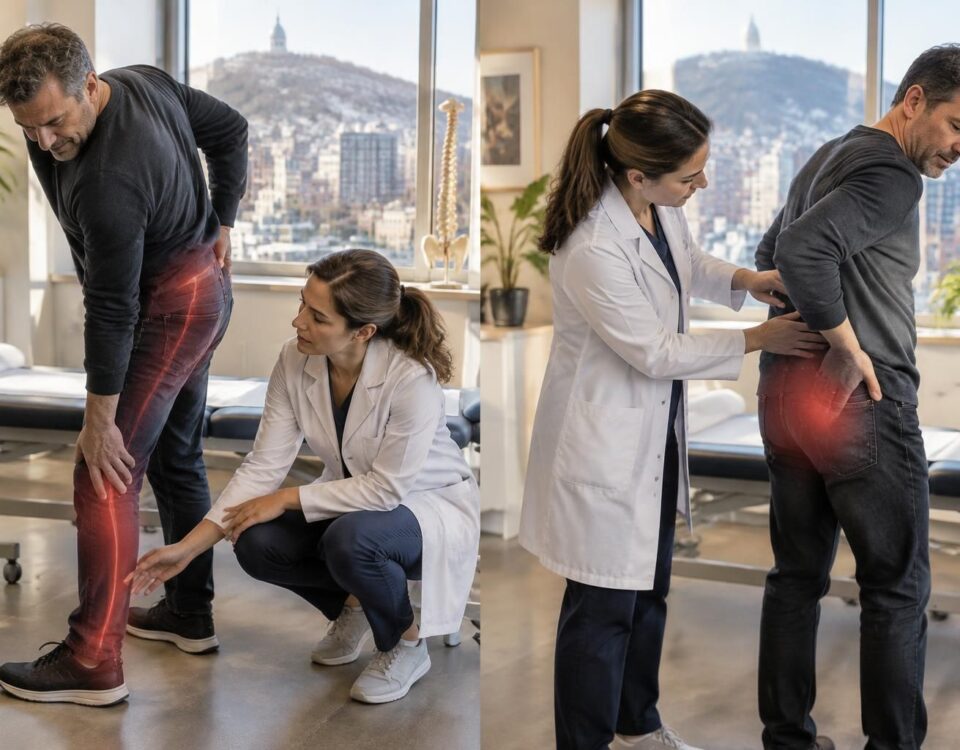
Sciatica and pain that increases after a long walk
09/09/2026
Sciatica in Terrebonne: heavy leg or painful leg?
10/09/2026
IN BRIEF
| In brief, sciatica is pain that radiates along the sciatic nerve, starting from the lower back or buttock down to the leg. In Montreal, this service is particularly suitable for mechanical or postural sciatica and relies on a personalized assessment, targeted mobilizations, and a program of exercises to be performed at home. Its main advantages: quick relief without surgery, improved mobility, and reduced associated anxiety, with support that preserves autonomy. How does it work? The evaluation identifies the cause (disc herniation, piriformis syndrome, sacroiliac blockage, osteoarthritis), then gentle techniques and adapted exercises restore movement and prevent recurrences. |
Quick summary – Sciatica in Montreal: heavy leg or painful leg?
Sciatica in Montreal most often presents as pain radiating down the leg, sometimes with burning sensations, electric shocks, or numbness. Some people also describe a heavy feeling in the leg, associated with fatigue or deconditioning.
- Painful leg: a sign of nerve irritation (nerve compressed by a disc herniation, piriformis syndrome, or other mechanical blockage).
- Heavy leg: may reflect a feeling of heaviness related to the nervous system or deconditioning; pain may be present without heaviness and often responds to non-surgical treatment.
Signs of emergency: significant loss of strength, marked difficulty walking, loss of bladder or bowel control, high fever, or major trauma. Most cases improve with a non-surgical approach and appropriate support in Montreal.
This article explains how to distinguish a heavy leg from a painful leg related to sciatica. It describes common causes, signals to watch for, and non-surgical management approaches, particularly at TAGMED clinic. It also provides guidelines to stay active and understand when to seek a quick assessment. Reliable resources are provided linked to specific symptoms and experiences in Montreal.
Typical signs of sciatica and what “heavy leg” versus “painful leg” means
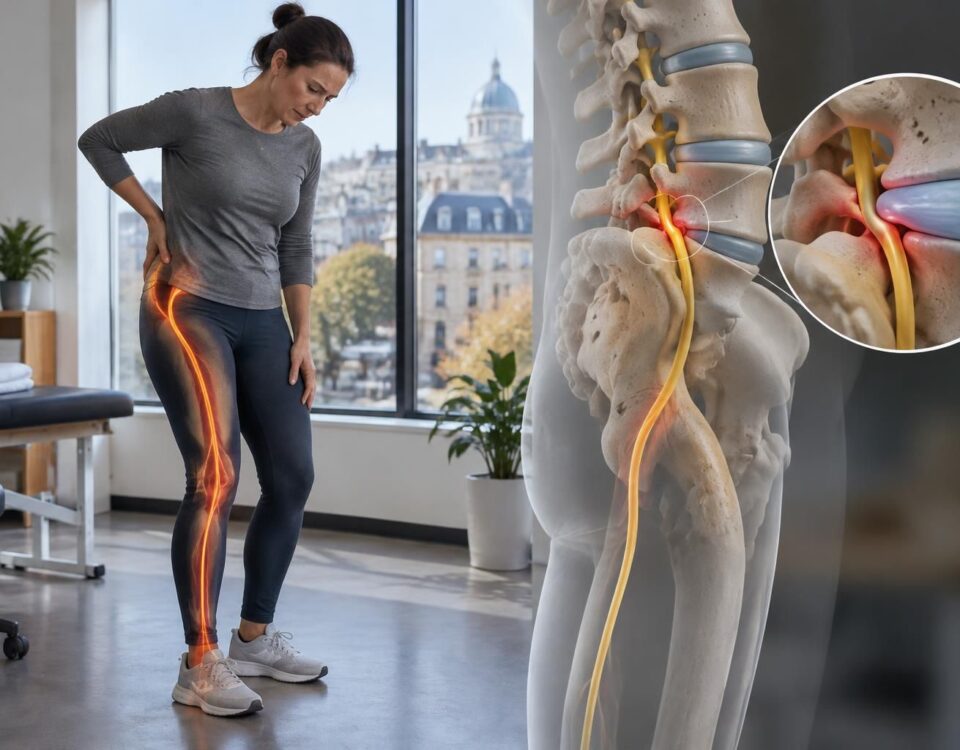
Pain can start in the lower back or buttock and follow the path of the nerve down to the foot. An electric or burning sensation is common. Tingling or numbness may appear in the leg or foot. Some people describe heaviness, a feeling of weight, or weakness in the calf. This variation may reflect nerve irritation or mechanical strain rather than a serious injury. To better understand the mechanisms and symptoms, consult the following resources:
For an explanation of nerve communication and unusual sensations in the leg, see Sciatica and sensation of heat in the leg.
If the pain is concentrated around the top of the foot and follows the path to the L5 root, you can consult Sciatica in Terrebonne.
When concern is necessary and what signs to watch for
Most sciatica is mechanical and not urgent. However, certain signals require quick assessment. Significant loss of strength in the leg, sudden difficulty walking, loss of control of the bladder or bowels, progressive weakness, feverish pain, or significant trauma require immediate attention. To learn more about signs that should raise concern, consult the following resources:
For situations where pain is associated with marked nerve symptoms, see Sciatica and numb foot — when to consult.
To understand the effects of prolonged sitting and public transport, see Sciatica and public transport.
The role of osteopathy and treatment guidelines in Montreal
In most cases, a conservative approach is sufficient. Osteopathy aims to identify the mechanical or nerve source of the pain and restore balance to the pelvis and spine. At TAGMED Clinic, care may include motorized neurovertebral decompression interventions and targeted osteopathy based on the assessment. For more information about options provided at TAGMED, see Sciatica — leg pain.
Additional resources on disc mechanisms and associated approaches can be consulted at sosherniediscale.com or sosherniateddisc.com. For questions related to neurovertebral decompression, you can also explore neurovertebral decompression.
When signs of weakness in the calf or other progressive symptoms appear, specialized resources can clarify the situation, for example: Sciatica — calf weakness and numb foot.
What imaging shows and why the human approach matters
An MRI may reveal elements such as a herniated disc, disc bulge, or stenosis. However, these findings do not always correlate with current pain and may exist without symptoms. Clinical evaluation remains central. To understand the nuances between low back pain and sciatica and their implications, refer to explanatory resources available through dedicated pages in the Montreal area.
Pain perception and maintenance of autonomy
Movement often remains beneficial. Walking and moving, adapted to your tolerance, helps reduce nerve sensitivity and promotes recovery. Tailored advice and a personalized program can limit relapses and support daily autonomy. For further insights into the links between pain, movement, and autonomy, explore the associated resources.
CONTENT ENDMedical disclaimer: The information and advice provided on this site do not replace the opinion, diagnosis, or treatment of a healthcare professional. Please note that Dr. Sylvain Desforges, osteopath, is neither a medical doctor nor a physician, and is not specialized in a medical specialty as defined by the Collège des médecins du Québec. Manual medicine, functional medicine, and sports medicine as described on this site exclude any medical treatment or diagnosis performed by a physician or specialist. Always consult your doctor for any medical questions. For more details, please read our complete Legal Notice.
Heavy leg
- Meaning heaviness and fatigue, often mild.
- Potential causes: nerve irritation or mild lumbar compression.
- Typical symptoms: heaviness that worsens with walking or at the end of the day.
- Quick actions: stay active, walk, gentle mobilizations.
- What helps: targeted exercises and appropriate posture.
- When to consult: onset of significant weakness or loss of control.
Painful leg
- Meaning pain radiating down the leg, sometimes burning or electric shock.
- Potential causes: marked nerve irritation or radiculopathy.
- Typical symptoms: pain following the path of the nerve; may worsen in sitting position.
- Quick actions: quick assessment and referral to appropriate care.
- What helps: targeted osteopathy and a progressive exercise program.
- When to consult: persistent intense pain or marked neurological signs.

This practical sheet explains why Sciatica can manifest either as a heavy leg or a painful leg in Montreal, how to recognize important signals and how an appropriate osteopathic approach can help without resorting to surgery.
Understanding the difference between heavy leg and painful leg
The heavy leg is often related to nerve sensitivity, muscle fatigue, or a joint blockage that gives a feeling of weight, slowness, or sluggishness in the leg. The radiating pain may follow the path of the sciatic nerve and manifest as a burning, electric pain or shocks that start from the lower back or buttock and descend to the calf or foot. In both cases, the brain may interpret this signal as a kind of alarm mechanism, highlighting the importance of contextual diagnosis rather than giving in to fear.
To guide care, several possible origins are often distinguished: an intervertebral disc, a tense piriformis muscle, a pelvic blockage, or joint wear. In osteopathic practice, each case is unique, and the same sensation can have different causes depending on posture, activity, and the time of day.
Sciatica in Montreal: radicular pain versus referred pain
IN BRIEF Radicular sciatica corresponds to irritation of a nerve root, while referred pain can spread to the buttock or leg without direct nerve involvement. In Montreal, distinguishing these pains helps guide the evaluation by linking the symptom route to…
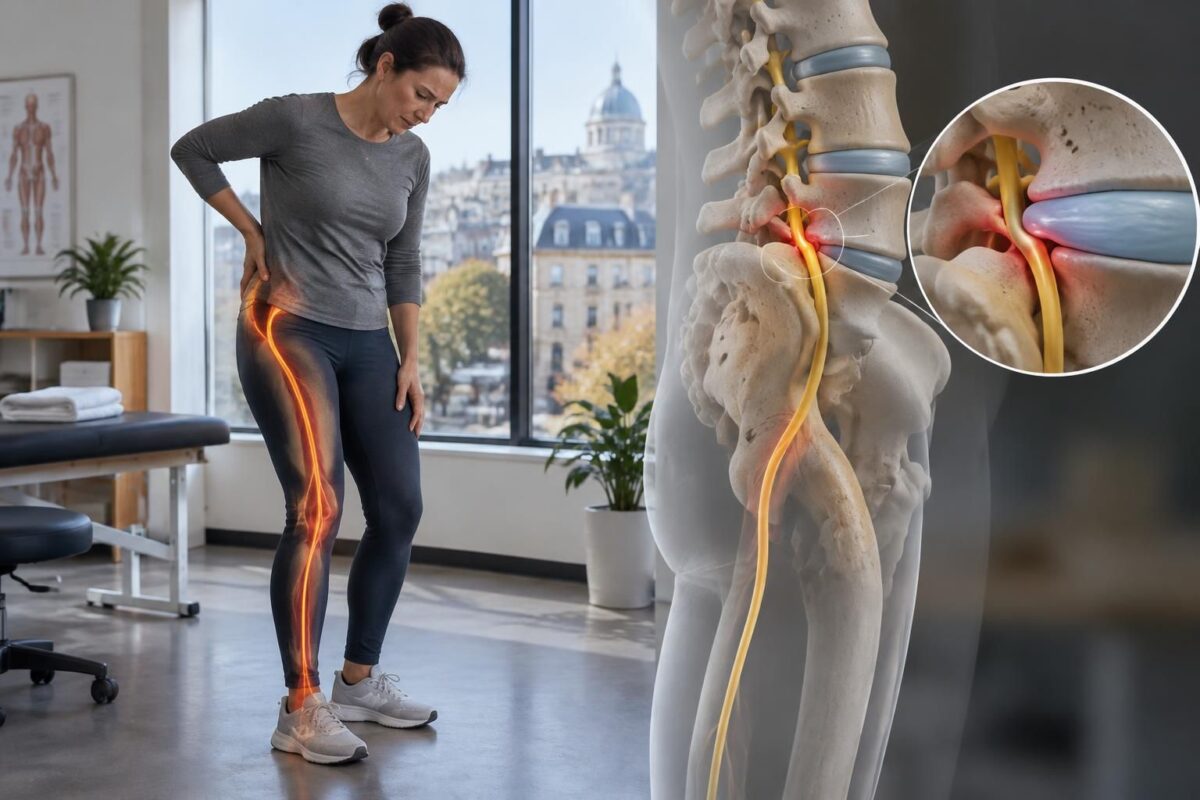
Sciatica in Montreal: nerve root, disc, and foramen explained simply
IN BRIEF Sciatica corresponds to pain linked to the irritation of a nerve root, sometimes near a lumbar disc or a narrowed foramen. In Montreal, distinguishing an L4-L5 issue that may affect the L5 root from an L5-S1 problem that…
Warning signs and practical advice
Certain situations require rapid medical evaluation, even if most sciatic cases remain benign and mechanical. Consult immediately if you observe a significant loss of strength in one leg, progressive paralysis, loss of bladder or bowel control, feverish pain, or pain associated with significant trauma. In most cases, acute sciatic pain can decrease with appropriate management and a gradual resumption of activities.
Simple and useful everyday actions: move regularly, prioritize short but repeated walks, adapt professional and domestic tasks, and avoid prolonged rest. Certain targeted exercises and localized heat can help keep the nervous system active without worsening irritation. The goal is to maintain autonomy and limit the fear of movement.

Sciatica in Montreal: understanding L5-S1 foraminal compression
IN BRIEF L5-S1 foraminal compression is a narrowing of the opening where a nerve root exits, which can cause sciatica with pain, tingling, or weakness in the buttock and leg. In Montreal, an assessment allows for correlating symptoms, clinical examination,…

Sciatica in Montreal: why L5-S1 is often involved
IN BRIEF The sciatica L5-S1 often corresponds to irritation of the S1 root, sometimes related to a herniated disc. The pain may start in the buttock and descend behind the thigh to the calf or the foot. In Montreal, understanding…
The role of osteopathy in Montreal
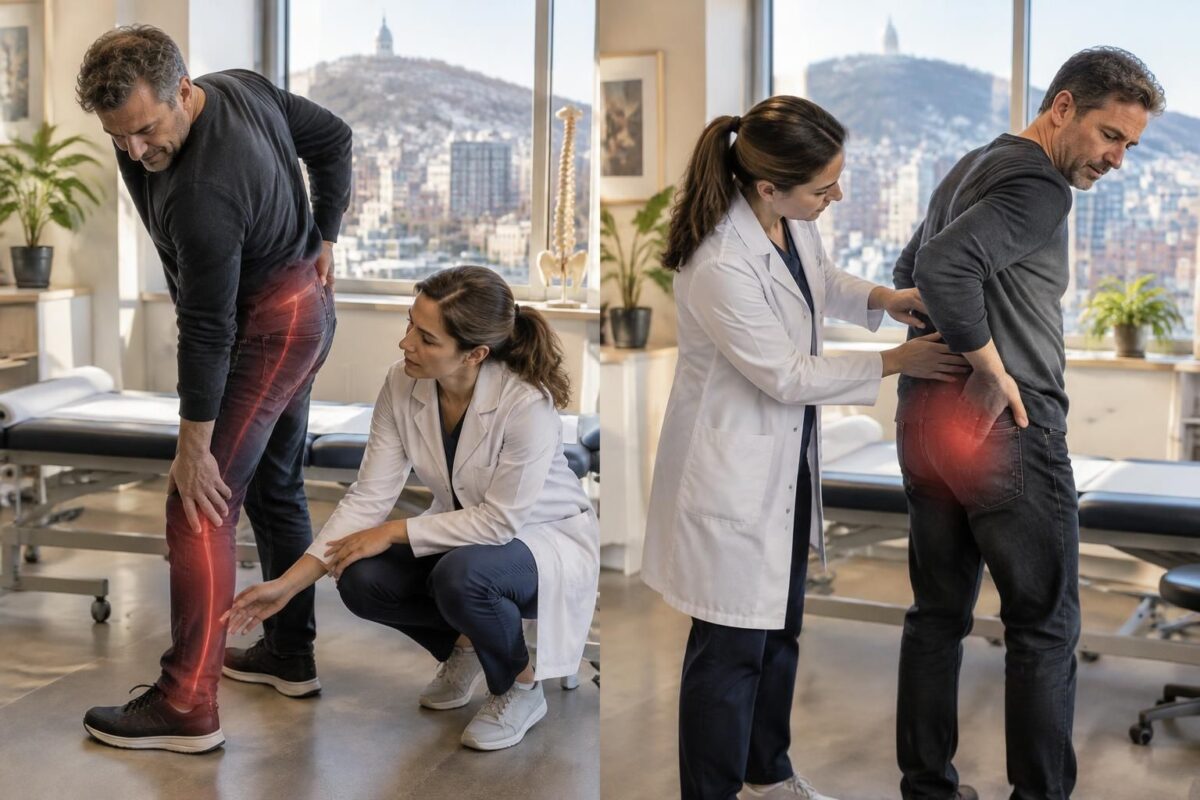
In practice, osteopathy offers a human and individualized approach to Sciatica in Montreal. The initial assessment allows for identifying the mechanical areas involved: lumbar, sacrum, pelvis, gluteal, and pelvic girdle. The techniques used may include gentle spinal mobilization, targeted releases of the piriformis muscle, and myofascial work on the lumbar chains and hamstrings. The aim is to release the constraints that irritate the nerve roots and to rebalance the pelvis to reduce pressure on the root.
A personalized exercise program is often proposed between sessions to increase effectiveness and prevent recurrences. Sessions may range over several weeks to several months depending on the chronicity and response to treatment. Osteopathy emphasizes movement, adaptation of activities, and strengthening stabilizing muscles to promote sustainable recovery without surgery.
| Aspect | Interpretation and action (summary) |
|---|---|
| Type of sensation | Heavy leg : heaviness; painful leg : stabbing or electric pain following the path of the nerve. |
| Location and path | Pain starts from the lower back or buttock and follows the lumbar path to the foot according to the root. |
| Strength and weakness | Loss of strength or noticeable weakness → red flag for rapid assessment. |
| Numbness | Numbness or paresthesias present; critical loss of sensitivity → emergency. |
| Aggravation | Pain worsens during sitting, coughing, or exertion; moving within tolerance helps recovery. |
| Signs of emergency | High fever, loss of urinary or fecal control, marked neurological pain → emergency. |
| Duration and evolution | Acute for a few days may improve; chronic pain requires evaluation and treatment plan. |
| Context / common causes | Mechanical causes such as herniated disc, piriformis issues, or sacroiliac blockage; the assessment guides the techniques. |
| Recommended action | Consult an osteopath for rapid assessment; in the presence of emergency signs, go to the emergency room. |
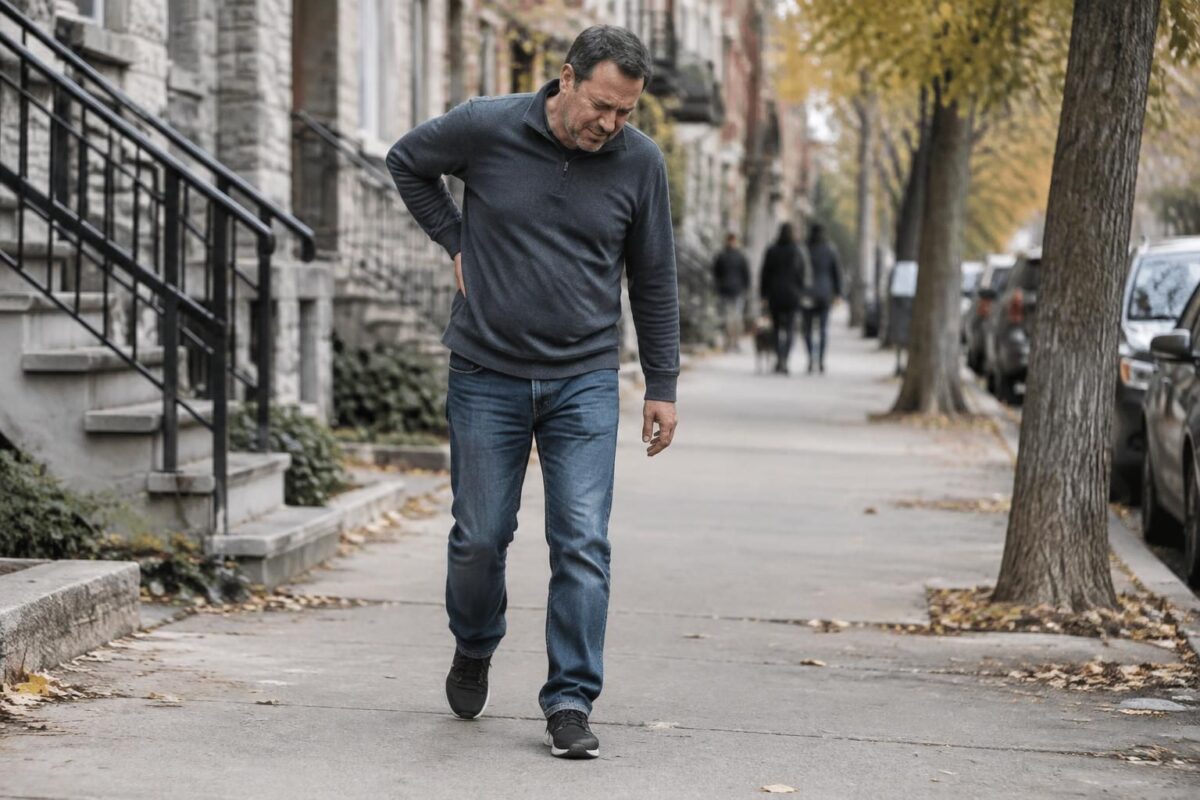
Sciatica in Montreal: L5 and difficulty lifting the foot
IN BRIEF The difficulty in lifting the foot with sciatica can indicate weakness related to the involvement of the L5 root, sometimes caused by a herniated disc. This foot drop increases the risk of falling and requires prompt medical evaluation;…

Sciatica in Montreal: S1 and difficulty rising up on the toes
IN BRIEF S1 sciatica can cause pain from the buttock to the calf and foot, as well as difficulty getting on tiptoe. This weakness may suggest irritation of the S1 nerve root, but is not sufficient to establish a diagnosis.…
Testimonials on Sciatica in Montreal: heavy leg or painful leg?
“In Montreal, my Sciatica manifested as a heavy leg and pain that extended to my hip. After a thorough assessment in osteopathy and a personalized plan, the pain dissipated and I regained my daily mobility.”
“My painful leg was pulling down to my calf and foot; the diagnosis was clear and an exercise and mobilization program was implemented. Within a few weeks, the light returned, and I was able to resume my activities without fear.”
“I was afraid of a medical emergency because of stories about Sciatica, but the human and gradual support changed my perception. No surgery, just gentle techniques and helpful advice, and here in Montreal, I regained my autonomy.”
“The path involved controlled movements and exercises to do at home. Thanks to this, my heavy leg transformed into a smoother and less tiring walk.”
“After several sessions, I resumed my favorite activities and was able to return to work pain-free. The targeted approach addressed the mechanical cause and prevented relapses.”
“If you suffer from Sciatica in Montreal, don’t hesitate to consult. An osteopathic assessment can clarify the origin and propose a clear plan to regain a light and pain-free leg.”
Dr. Sylvain Desforges, a specialist in osteopathy, naturopathy, and manual medicine, is the founding president of the TAGMED clinics and the ACMA association. With a career dedicated to innovation in healthcare, he has specialized in management of chronic pain and the integration of advanced technologies to optimize the health and well-being of his patients. In Montreal, his approach is based on evidence-based care, designed to provide lasting relief and a tailored return to everyday movement for everyone.
In the context of sciatica in Montreal, Dr. Desforges addresses the heavy or painful leg as an experience that deserves a precise understanding of its causes and evolution. He emphasizes the importance of demystifying pain and distinguishing between mechanical mechanisms and nerve irritations. His goal is to eliminate the fear that often accompanies these symptoms while guiding the patient towards non-invasive, effective solutions that align with their lifestyle. For him, the majority of sciatica cases are temporary and reversible phenomena when education, controlled movement, and appropriate management are combined.
The assessment framework he favors begins with a comprehensive and rigorous evaluation. The detailed medical history, postural examination, lumbar mobility, and palpation of tense areas allow for accurately locating the source of pain—whether it be a herniated disc, piriformis syndrome, sacroiliac blockage, or facet joint osteoarthritis. This approach avoids hasty conclusions and aligns with pertinent clinical decisions centered on the patient and their daily life.
The techniques used by Dr. Desforges are based on gentle, targeted principles. These include gentle spinal mobilizations to relieve joint blockages and release pressure on nerve roots, myofascial releases to improve circulation and reduce nerve irritation, as well as work on the pelvis to restore postural balance and load distribution on lumbar discs. Home exercises and postural advice accompany each session to speed up the return to walking and work without aggravation.
For comprehensive management of sciatica in Montreal, the use of advanced technologies is a major asset. Neurovertebral decompression can provide dedicated space around nerve roots when necessary, laser offers targeted anti-inflammatory effects, and shock wave therapy can promote tissue recovery. These options, offered in conjunction with manual techniques and the exercise program, enable rapid and lasting results without systematically resorting to surgery.
In Montreal, patients benefit from an interdisciplinary framework and facilitated access within the TAGMED Clinic. Dr. Desforges prioritizes a personalized approach centered on patient autonomy and gradual resumption of activities. He proposes a path that combines precise evaluation, tailored joint treatments, and exercise programs adapted to each individual’s pace, in order to prevent relapses and support lasting improvement in mobility and quality of life.
For those suffering from Sciatica in Montreal—heavy leg or painful leg—a bones assessment offers a clear explanation and a realistic action plan focused on rapid recovery and anxiety reduction related to pain. Dr. Desforges invites everyone to discover a proven and personalized approach that gets the body moving again and restores confidence in one’s abilities.
This text is a clear, practical presentation on sciatica in Montreal, quickly distinguishing between heavy leg and painful leg, the mechanisms underlying them, and the non-surgical approaches suited to restore autonomy and movement.
The difference between a sensation of heavy leg and a painful leg can guide the evaluation and treatment differently. Sciatica is often linked to a long nerve pathway and simple or temporary mechanical causes, not necessarily to an emergency. To better understand why the pain may be stronger in the leg than in the back, refer to specialized sources such as those explaining the link between radiating pain and nerve irritations in Montreal: why the pain may be stronger in the leg.
In osteopathic practice, the approach aims to identify the structure compressing or irritating the nerve and to restore movement and balance of the pelvis and spine. Management involves a precise assessment, gentle techniques, and a tailored exercise program to avoid inactivity and deconditioning that can worsen nerve sensitivity. For additional explanations and advice on the course of the sciatic nerve and possible causes, consult specialized resources in Montreal such as Sciatic Pain and the dedicated pages of local clinics: osteopathy and sciatica in Montreal or Sciatica – heavy leg.
In most cases, a sciatica does not require surgery. A conservative approach, combining controlled movement, targeted osteopathic techniques, and home exercises, often allows for significant and lasting improvement. For cases where pain becomes more intense in the leg than in the back, specific online resources address signs that require quick verification and explain typical trajectories: pain becomes stronger in the leg than in the back, and pain towards the little toe and root S1.
In addition to the osteopathic evaluation, useful information about symptoms and care pathways is available on resources dedicated to Terrebonne and Montreal, which describe when irradiation in the leg may be concerning and when it may improve over time with movement: incomplete pathway and necessary attention in Terrebonne, and numbness and checks in Montreal.
For a broader and practical view of the osteopathic approach in managing sciatica, professional guides and analyses available online can complement the clinical assessment: pain in the foot crescendo while sitting (Terrebonne) and pain in the buttocks after a long sitting position.
For concrete clinical services in Montreal and Laval, our approach is based on a comprehensive assessment, gentle mobilizations, and personalized exercise advice. Practical options also exist through specialized clinics such as Montreal – osteopathy and sciatica and Sciatica – heavy leg, supplemented by online resources for children and adults to prevent recurrences and promote active recovery.

Sciatica in Montreal: L4-L5 and pain towards the top of the foot
IN BRIEF The sciatica related to L4-L5 can radiate from the lower back to the buttock and the leg; pain on the top of the foot may suggest involvement of the L5 root, but the pathways vary and symptoms overlap.…

Sciatica in Montreal: pain in the big toe, L5 root or another cause?
IN BRIEF Pain that radiates toward the big toe may indicate irritation of the L5 root, sometimes related to a herniated disc, but other causes are possible. In Montreal, evaluating the pain pathway, strength, sensitivity, and walking helps guide management…

Dr Sylvain Desforges, B.Sc., D.O., N.D., osteopath, is the founding president of TAGMED and of the ACMA association. He dedicates his practice to chronic spinal pain, low back pain and symptoms compatible with sciatica, particularly when pain radiates toward the buttock, leg, calf, foot or toes.
Through SOS Sciatique, he publishes educational content on sciatica symptoms, possible causes such as disc herniation, disc narrowing, foraminal stenosis or irritation of a lumbar nerve root, as well as non-surgical approaches that may be considered according to the evaluation. At Clinique TAGMED, care may include, depending on the case, motorized neurovertebral decompression, specific osteopathic care or precision percussion.
For an evaluation related to sciatica treatment in Montreal / Mount Royal or sciatica treatment in Terrebonne, please consult the services available at Clinique TAGMED.
Medical disclaimer
The information published on SOS Sciatique is provided for educational purposes only and does not replace a consultation, diagnosis, opinion or treatment provided by a physician or another authorized healthcare professional. The author of this article is neither a medical doctor nor a specialist in a medical specialty recognized by the Collège des médecins du Québec. The osteopathic, manual medicine or functional support approaches described on this site do not constitute medical acts and are not intended to replace medical follow-up.
Consult a physician or emergency service in cases of loss of bladder or bowel control, anesthesia in the saddle area, significant or progressive weakness in the leg or foot, fever, recent trauma, severe pain or rapid worsening of symptoms. For more details, please read our Legal Notice.