
Sciatica and bus: vibrations, seating, and sciatica pain
31/08/2026
Numbness in the leg and sciatica in Terrebonne: what should you check?
01/09/2026
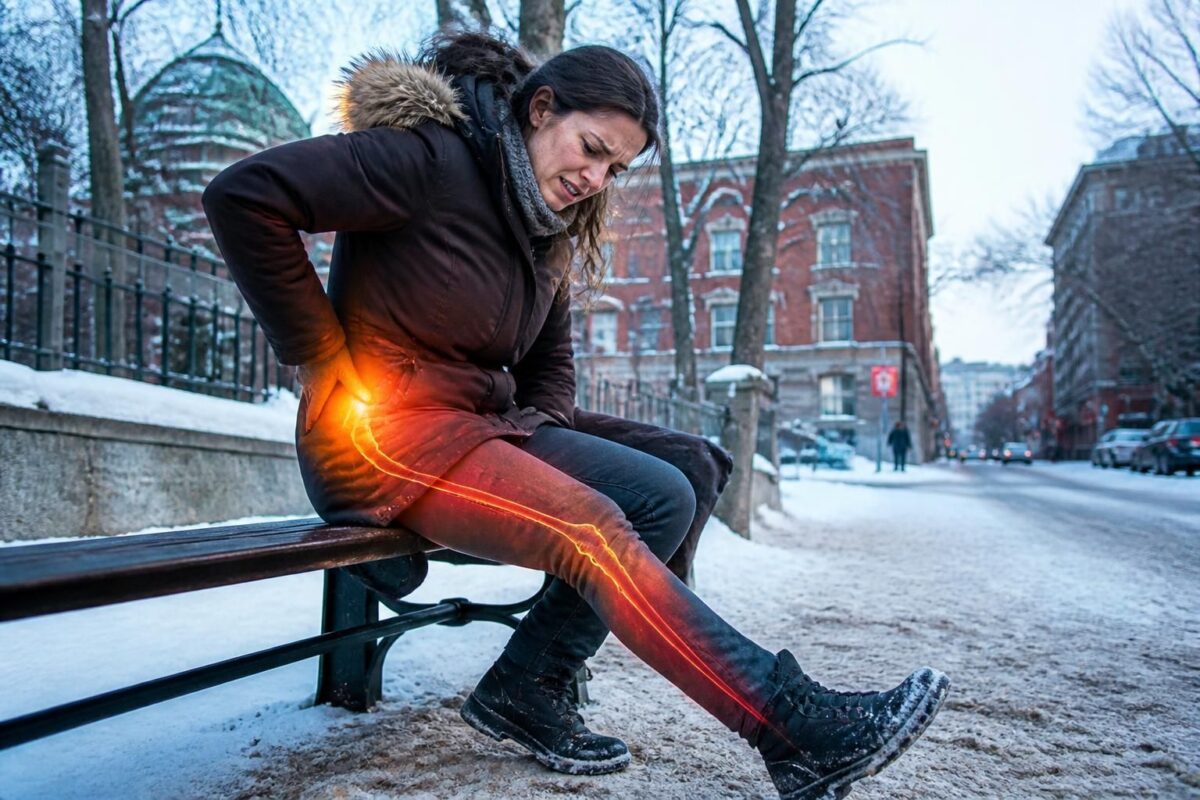
IN BRIEF The numbness of the leg and sciatica describe sensations altering sensitivity along the nerve pathway, often linked to a lumbar or peripheral origin. In Montreal, this quick assessment verifies the origin, urgency, and action level to guide towards an active plan, prioritize conservative treatment, and avoid unnecessary examinations. Functioning relies on a precise history, neurology, and a clinical examination; imaging is not systematic but can be useful if it alters the management. The main advantage is to regain mobility, sleep, and daily activities with as little pain as possible. Accessible in Montreal, this service is aimed at those who want pragmatic and personalized care. |
Numbness of the leg and sciatica in Montreal: what needs to be checked?
- Probable origin: check if the tingling comes from a spinal origin (lumbar nerve) or a peripheral or vascular cause.
- Territory and duration: precise location, duration, provoking or relieving factors, and impact on walking and sleep.
- Neurological elements: assess strength, sensation, reflexes, and the presence of a motor or sensory deficit.
- Emergency signs: foot drop, progressive weakness, saddle anesthesia, urinary/intestinal changes, cold/pale limb, chest pain, or sudden symptoms.
- Action plan and follow-up: establish a graduated assessment, a baseline measurement, and reassessment criteria; know when imaging or urgent referral may be necessary.
- Imaging and tests: not systematic; useful only if they can alter the management in the presence of red flags or before a targeted procedure.
- Functional approach: measure the impact on work, activity, and daily activity, aiming for functional and lasting improvement.
- Therapeutic strategy: prioritize a gradual and conservative management approach, with controlled progression and clear follow-up.
This article, written by a healthcare professional specialized in osteopathy, explains what to check in the face of numbness of the leg and sciatica in Montreal. It clarifies the possible causes, the signs that require rapid evaluation, and the elements to discuss during a consultation. The aim is to guide towards appropriate care, prioritizing a structured and active approach.
Understanding numbness and sciatica
A numbness of the leg, foot, or toes can arise from a lumbar root, a peripheral nerve, neuropathy, a vascular issue, or another condition. Its location alone is not enough to determine the cause. The duration, territory, provoking factors, strength, reflexes, walking, and general symptoms guide the level of urgency and relevant examinations.
A useful approach connects imaging, symptoms, function, and examination. This information is educational and does not replace a medical consultation. Some external resources may be indicated for informational purposes.
Warning signs and urgency
Some situations require urgent evaluation: foot drop, progressive weakness, saddle anesthesia, urinary or intestinal changes, cold or pale limb, chest pain, or sudden symptoms.
How to evaluate and distinguish the origins
The L4, L5, and S1 dermatomes overlap and vary among individuals. A numb big toe may suggest L5 but also a neuropathy, a compressive shoe, or a peripheral origin.
Walking, the color and temperature of the limb, pulses, distribution, strength, and metabolic factors help differentiate a spinal origin from a peripheral or vascular cause.
What to check during your consultation
History and examination should connect the onset, territory, and modifying factors. The assessment includes strength, sensation, reflexes, and neurological function, as well as impact on sleep and activities. Imaging and ancillary tests are not systematic; they become useful if they can alter management in the presence of a deficit, a red flag, or before a targeted procedure.
The initial plan should aim to preserve function and limit over-medicalization. Persistent or atypical symptoms require targeted diagnostic revision and verification of another cause or precise indication.
When and how to act in Montreal
The therapeutic decision relies on the mechanical or vascular profile and functional assessment. Neurovertebral decompression and other options may be considered based on the evaluation. In some cases, conservative management is prioritized before any interventional act.
For those living in Montreal or the surrounding area, care at the TAGMED Clinic offers structured evaluation and tailored options. Learn more about the proposed approaches and conditions related to sciatica at Numbness leg and sciatica.
Useful links and resources
To better understand the mechanisms and common issues surrounding numbness and sciatica, you can consult these resources:
- Sciatica and low seat
- Sciatica and getting into the car
- Tingling upon waking
- Cold sensation in the foot
- Numbness of the leg – TAGMED Clinic
- Sciatica pain in Montreal
- Tingling in the heel
- Sciatica — leg weakness
- Tingling upon waking
- Sciatica and lumbar radiation
To delve into the technical aspects of neurovertebral decompression and other options, you can visit decompressionneurovertebrale.com.
Medical Disclaimer: The information and advice provided on this site do not replace the opinion, diagnosis, or treatment of a healthcare professional. Please note that Dr. Sylvain Desforges, osteopath, is neither a medical doctor nor specializing in a medical specialty as defined by the Collège des médecins du Québec. Manual medicine, functional medicine, and sports medicine as described on this site exclude any treatment or medical diagnosis made by a doctor or medical specialist. Always consult your physician for any medical questions. For more details, please read our full Legal Notice.
Note: In articles addressing neurovertebral decompression, disc herniation, protrusion, disc bulging, foraminal stenosis, spinal stenosis, disc pinching, or disc degeneration, exercises or stretches are not suggested here.
- Onset, duration, and territory of the tingling; chronology and aggravating factors.
- Specific location and progression to the buttock, thigh, calf, or foot.
- Warning signs: foot drop, progressive weakness, saddle anesthesia, urinary or intestinal issues, acute or sudden pain.
- Relation to the back: associated low back pain and radiation; effects of positions and walking.
- Assess neuromuscular function (strength, sensitivity, reflexes), and walking.
- Impact on daily life (sleep, work, activity), and progression of the symptom.
- Diagnostic plan: observation and reassessment; imaging or targeted referral if necessary.
- Urgency and follow-up: criteria for quick referral and scheduled reassessment date.

Numbness of the leg and sciatica in Montreal: what should be checked? This article provides a clear approach to identify the origin, assess the risk, and build an active action plan. You will learn how to describe your symptoms precisely, what to examine during an appointment, and when to request a quick evaluation.
Items to check from the first appointment
To start, clarify the onset of the sensations and their extent. Note whether the numbness is localized to the leg, foot, or toes and whether it progresses to the thigh or calf. Indicate the circumstances that trigger or relieve the symptoms (prolonged sitting position, movement, effort). The analysis should link the sensory territory to a potential lumbar or peripheral origin, considering the overlaps of dermatomes and the values of strength, sensitivity, and reflexes.
Document the impact on walking, sleep, and daily activities as well. Note the precise trajectory of the symptom, and any associative signs such as low back pain, radiation to the buttock or leg, or a sensation of electric shock. The goal is to gather onset, territory, triggering factors, and function to guide the approach.
Neurological and functional elements
During the evaluation, examine muscle strength, sensitivity, reflexes, and coordination. Measure the ability to walk, climb stairs, and perform precise movements. Observe the tone of the feet and ankles, the color and temperature of the limbs. These elements help differentiate a spinal origin from a peripheral or vascular cause and guide complementary exams.

Sciatica in Montreal: nighttime pain in the leg
IN BRIEF In brief, nocturnal sciatica is a root pain in the lower back that irritates the sciatic nerve and worsens when lying down, causing nighttime awakenings. In Montreal, this service offers a non-surgical approach focused on posture, bedding, and…

Sciatica in Montreal: pain from the lower back to the calf
IN BRIEF In brief, sciatica is a pain that starts in the lower back and can radiate down to the calf, caused by irritation or compression of the sciatic nerve. In Montreal, this service offers a personalized evaluation and non-surgical…
Signs of emergency and red flags
Certain situations require immediate evaluation. A foot drop, progressive weakness, saddle anesthesia, urinary or intestinal changes, a cold or pale limb, chest pain, or acute and sudden symptoms necessitate prompt attention. If numbness is accompanied by significant loss of strength, rapid decline, or conflict in essential activities, contact a healthcare professional promptly.

Sciatica in Montreal: hip pain or true nerve radiation?
IN BRIEF Sciatica is a nerve pain that follows the path of the sciatic nerve and can radiate from the buttock to the foot, which can be perceived as pain in the hip. Lower back pain, on the other hand,…

Sciatica pain in Montreal: incomplete journey, should we be concerned?
IN BRIEF In brief, sciatic pain is a lumbar nerve-origin pain whose pathway may be incomplete and may not reach the foot. In Montreal, the evaluation clarifies the pathway, strength, and function, and determines if imaging can change the approach.…
Evaluation plan and therapeutic decision
In practice, imaging is not systematic. It becomes useful when the results could change management or in the presence of a deficit, a red flag, or prior to a targeted procedure. The working diagnosis must connect the history, the territory, and the modifying factors, then be followed by a measurable plan: functional objectives, baseline tests, re-evaluation criteria, and a date to review symptom control. A graduated approach tailored to Montreal allows for prioritizing non-surgical options when appropriate.
Sciatica in Montreal: pain towards the little toe and S1 root
IN BRIEF Sciatica is pain radiating along the path of the sciatic nerve, typically from the lower back to the leg and down to the little toe when the S1 root is irritated or compressed. In Montreal, this phenomenon is…

Sciatica in Montreal: pain towards the top of the foot and L5 root
IN BRIEF Sciatica in Montreal with pain in the top of the foot and a possible involvement of the L5 root is a lumbar radiculopathy where the pain follows the path of the sciatic nerve to the dorsum of the…
Practical Recommendations at Home and in Montreal
While waiting for a consultation, stay active as much as reasonable and adapt your activities. Avoid prolonged immobilization and favor positions that do not accentuate numbness. Gentle lumbar mobility exercises and targeted strengthening, performed under supervision, can promote recovery. Maintain good sleep hygiene, stay hydrated, and pay particular attention to your posture during daily activities. If symptoms evolve or worsen, make an appointment quickly with a specialist in Montreal for a detailed clinical assessment and the establishment of a personalized action plan.
| Element to Check | Concise Detail |
|---|---|
| Onset and Territory | Specify where the numbness extends (leg, foot, toes) and the time of onset. |
| Duration and Evolution | Duration, progression, and aggravating or relieving factors. |
| Emergency Signs | Dropped foot, progressive weakness, saddle anesthesia, urinary/intestinal issues require rapid assessment. |
| Associated Symptoms | Low back pain, radiation to the buttock or leg, electrical discharge or burning. |
| Provoking Factors | Prolonged sitting position, effort, coughing; observe effects on the symptom. |
| Clinical Examination | Documented strength, sensitivity, reflexes, gait, and balance. |
| Possible Origin | Differentiating spinal vs peripheral or vascular origin through context and examination. |
| Imaging and Analyses | Imaging is not systematic; useful if it can modify management. |
| Plan and Follow-up | Active plan with objectives, conservative options vs surgery, and planned re-evaluation. |
“In Montreal, I felt numbness descending into my leg and wondered what to check first. The professional emphasized localization, duration, provoking factors, and the impact on walking and sleep to assess urgency and guide examinations.”
“During my visit to Montreal, I was asked to describe precisely the territory and activities that aggravate the symptoms, then to measure my sleep and walking. A measurable plan and a re-evaluation date were established that guided the entire process.”
“I learned that imaging is not automatic: it only intervenes if it can change the management. In Montreal, I was explained that the goal is to prioritize conservative approaches whenever possible and to use imaging only when it helps the care plan.”
“In case of warning signs, such as a dropped foot or progressive weakness, the team shows how to react quickly and refer for urgent evaluation. In Montreal, this vigilance regarding red flags allowed me to avoid a complication and protect my mobility.”
“Finally, the follow-up was based on clear criteria: stay active, evaluate function, sensation, strength, and sleep, then revise the plan at each stage. In Montreal, I observed measurable progress and an improved quality of life without immediately resorting to surgery.”
Dr. Sylvain Desforges, an osteopath and multidisciplinary practitioner, is recognized for his integrated approach to pain and movement. Grounded in osteopathy, naturopathy, and manual medicine, he founded the TAGMED clinics and presides over the ACMA association. His practice is guided by a desire to provide evidence-based care, while prioritizing non-surgical technologies and methods when appropriate. His work aims to optimize the function and well-being of patients facing spinal-related disorders, including leg numbness and sciatica manifestations in Montreal.
Leg Numbness and Sciatica: What Needs to Be Checked?
When numbness descending along the leg is present, it is crucial to connect the onset to the affected territory and triggering factors, without settling for a simple label. The assessment should simultaneously check muscle strength, reflexes, sensation, and the ability to walk; it should also evaluate the impact on sleep and daily activities. Warning signs require prompt management: severe low back pain, progressive weakness, saddle anesthesia, urinary or intestinal issues, or a cold or pale limb.
The link between numbness and sciatica can be of lumbar or peripheral origin; the clinical examination must document the evolution of the territory and nerve pathways, lumbar mobility, and basic neurological tests. Imaging is not systematic and should only be requested when results could modify the therapeutic management or in the presence of a deficit, red flag, or targeted intervention plans.
In Montreal, the recommended approach is first conservative and functional. Action plans prioritize education, specific exercises, manual techniques, and, if necessary, adapted non-invasive modalities. All of this is framed by a precise clinical and functional evaluation and a planned re-evaluation to measure progress and adjust treatment.
In the context of care, shared decision-making and clear communication of benefits, limits, and risks are essential. The goal is to maintain activity, improve walking, sleep, and quality of life, while avoiding over-medicalization. Re-evaluation criteria and thresholds for imaging or medical referral serve as guides to make progress or change course.
This patient-centered approach allows for transforming doubt into concrete actions: starting with a robust baseline measurement, tracking progress with measures combining function and neurology, and planning a revision of the plan when results do not respond or when a red flag appears.
This article summarizes the essential checks in the event of numbness in the leg and sciatica in Montreal, focusing on the possible origin (lumbar, peripheral nerve, or other), the signs that guide the course of action, and the evaluation and treatment options suitable for the local context.
Elements to check when experiencing leg numbness and sciatica
To understand and monitor sciatica or numbness in the leg, it is first necessary to identify the exact extent of the affected area and observe the pain, strength, sensitivity, and reflexes of the limb. Note any associations with the back, movements, or exertions, as well as the effect on sleep and daily activities such as walking or working. A lumbar origin may manifest as radiation to the buttock, thigh, or calf, but it is important to ensure that the symptoms do not originate from another peripheral nerve or a vascular disorder.
Location alone is not enough to establish a diagnosis. Inspection must rely on the history (onset, duration, mechanism, aggravating factors, relief), the progression of signs, and a targeted clinical examination gathering mobility, strength, and sensitivity, as well as relevant differential diagnoses. Imaging and complementary tests are not automatic; they become useful when results could alter the course of action, in the presence of a deficit or a red flag.
For clinical evaluation and initial decisions, a measured and gradual approach is recommended: establish an initial plan with clear functional objectives, measure tolerance to effort, sleep, and walking, and then plan for a reassessment at a determined date. Practical resources and informative guides, such as those addressing numbness in the leg or signs of nerve irritation, can illuminate the pathway and therapeutic choices in Montreal. For example, local resources discuss numbness that progresses to the foot or is accompanied by tingling in the big toe and emphasize the importance of a structured path to avoid overly general treatments.
Useful links for better understanding common scenarios and warning signs include articles on numbness that progresses to the foot in Montreal, as well as dedicated guides on numbness in the leg and how to respond to sciatica and tingling in the big toe or calf. Other resources describe what it means to have pain indicating nerve irritation and how to guide management.
Warning signs and emergencies to know
Certain situations require rapid evaluation: a foot drop, a progressive weakness of the leg, a saddle anesthesia, a urinary or intestinal change, a cold or pale limb, chest pain, or sudden symptoms. If any of these signs appear, prioritize an emergency consultation, and in case of doubt, contact emergency services.
Less obvious signs can also indicate a crucial origin: numbness that occurs without an obvious cause, worsens rapidly, or is accompanied by notable weakness, loss of coordination, or functional decline. In these cases, prioritize a rapid evaluation to clarify the diagnosis and avoid potential progression. To better understand situations where quick concern is warranted, consult dedicated guides and recommended management.
For concrete benchmarks and connections with symptoms, you can consult resources on numbness and sciatica in Montreal and offer examples of clinical scenarios that frequently recur in practice.
When to consult in Montreal and which resources to use
In Montreal, a specialized evaluation can help differentiate nerve irritation from a true deficit and determine the best action plan. Articles and online resources describe situations where evaluation is appropriate and offer insights into understanding symptom progression.
For additional information and practical context, you can turn to resources such as Numbness leg sciatica – what to do?, or references dedicated to Montreal describing numbness that progresses to the foot and the signs to watch for. Local guides also explore typical sciatica scenarios and the signs of nerve irritation to prioritize during consultations.
To explore specific cases and practical advice, these links may be useful: Sciatica in Terrebonne – pain increased by coughing or exertion, Sciatica in Terrebonne – pain that descends into the leg when coughing, Numbness of the foot and sciatica in Montreal – signs to watch for, Sciatica and tingling in the big toe – root L5 possible, Sciatica – burning sensation in the calf, or general resources like Numb leg.
For an oriented evaluation tailored to Montreal, do not hesitate to consult specialized clinics and guides that emphasize the importance of a structured path, a measurable action plan, and a reassessment at scheduled intervals.
Action plan and follow-up
Start with a complete clinical assessment focusing on the region, function, pain, and relevant neurological elements. Define a starting plan with clear functional goals (walking, sleep, driving, daily activities), then schedule a reassessment after a set period. Imaging should only be considered if it can change management or if red flags appear. In case of an emergency or warning signs, one must quickly refer to an emergency medical service. For non-urgent but persistent cases, a conservative and targeted approach, combining appropriate activity, exercises, and follow-up, can lead to significant improvement without immediately resorting to surgical intervention.
A clear communication of the expected benefits, limitations, risks, and escalation criteria must be provided before the treatment begins. Follow-up combines the evolution of pain, distribution, strength, sensitivity, sleep, and participation, in order to determine whether progress is sufficient to continue, modify, or stop an intervention.
To delve into specific aspects and find additional references, please consult the resources mentioned above and the guides dedicated to leg numbness and sciatica in Montreal.

Sciatica in Montreal: pain radiating to the outer edge of the foot
IN BRIEF In brief, sciatica is pain that follows the path of the sciatic nerve, starting from the lower back and extending down to the foot, often radiating to the outer edge of the foot. In Montreal, this condition is…

Sciatica in Montreal: pain in the buttock after a long sitting position
IN BRIEF In brief, sciatalgia is pain that follows the path of the sciatic nerve, often triggered after a prolonged sitting position and lumbar irritation. In Montreal, this issue is mainly managed without surgery thanks to a careful diagnosis and…

Dr Sylvain Desforges, B.Sc., D.O., N.D., osteopath, is the founding president of TAGMED and of the ACMA association. He dedicates his practice to chronic spinal pain, low back pain and symptoms compatible with sciatica, particularly when pain radiates toward the buttock, leg, calf, foot or toes.
Through SOS Sciatique, he publishes educational content on sciatica symptoms, possible causes such as disc herniation, disc narrowing, foraminal stenosis or irritation of a lumbar nerve root, as well as non-surgical approaches that may be considered according to the evaluation. At Clinique TAGMED, care may include, depending on the case, motorized neurovertebral decompression, specific osteopathic care or precision percussion.
For an evaluation related to sciatica treatment in Montreal / Mount Royal or sciatica treatment in Terrebonne, please consult the services available at Clinique TAGMED.
Medical disclaimer
The information published on SOS Sciatique is provided for educational purposes only and does not replace a consultation, diagnosis, opinion or treatment provided by a physician or another authorized healthcare professional. The author of this article is neither a medical doctor nor a specialist in a medical specialty recognized by the Collège des médecins du Québec. The osteopathic, manual medicine or functional support approaches described on this site do not constitute medical acts and are not intended to replace medical follow-up.
Consult a physician or emergency service in cases of loss of bladder or bowel control, anesthesia in the saddle area, significant or progressive weakness in the leg or foot, fever, recent trauma, severe pain or rapid worsening of symptoms. For more details, please read our Legal Notice.