

Herniated disc and acute sciatica: common causes
23/08/2026
Sciatica in Montreal: difficulty walking on heels or toes
24/08/2026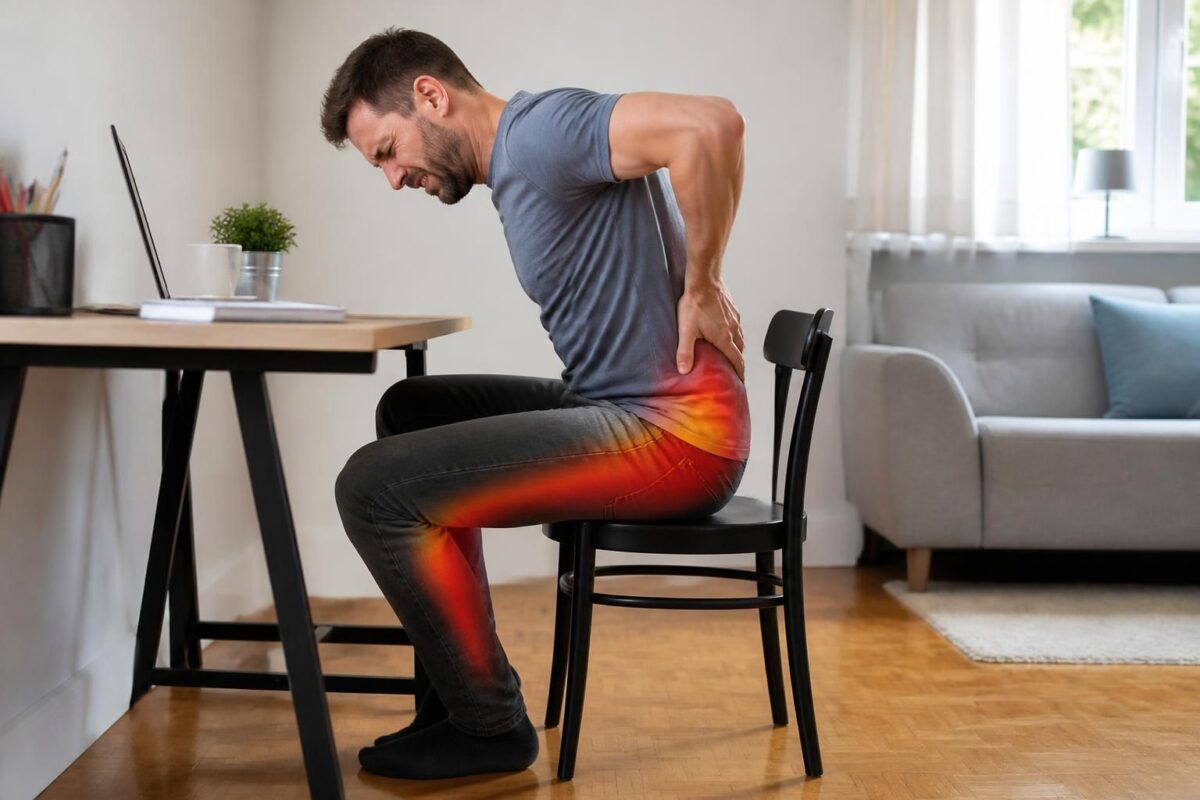
IN BRIEF
| In brief, sciatica with lower back pain and radiation is pain that follows the path of the sciatic nerve, originating from the lower back and radiating to the buttock and leg, often due to irritation or compression of a lumbar root (L5/S1). Benefits: understanding this mechanism allows for non-surgical and tailored management (physiotherapy, targeted exercises, inflammation management) while preventing recurrences. How it works: we target inflammation, restore mobility, and strengthen the core with a progressive and personalized approach; surgery remains rare and reserved for cases of neurological deficit or treatment failure. In Montreal, this service emphasizes a non-surgical and personalized approach for lower back pain with radiation. |
Sciatica is pain caused by irritation or compression of one or more lumbar roots, most often at the L5/S1 level. A seat that is too low or poorly adapted can worsen this pain by disrupting posture and increasing pressure on the lower back, with radiation to the buttock and leg, sometimes down to the foot.
Typical symptoms include lower back pain associated with radiation along the sciatic nerve, often described as burning or electric, with tingling, numbness, or possible weakness in the leg.
The diagnosis is clinical and may be supplemented by imaging if necessary. Treatment favors non-surgical approaches: adapted physical activity, physiotherapy, and analgesics/anti-inflammatories; injections may be considered if necessary. Surgery remains rare and reserved for cases with progressive neurological deficit. To prevent episodes, prioritize a correct posture, an ergonomic seat, and trunk strengthening and stretching exercises while staying active.
This article, written by a health professional and expert, explains the link between sciatica and a seat that is too low. It describes why improper chair height can lead to lower back pain with radiation, what the typical signs are, how to make the correct diagnosis, and which non-surgical options to favor, notably at the TAGMED clinic in Montreal or Terrebonne. The goal is to provide clear explanations and concrete choices to improve comfort and limit recurrences without resorting systematically to surgery.
Sciatica refers to pain that follows the path of the sciatic nerve. This nerve originates in the lower back, crosses the buttock, and descends into the leg. Lower back pain associated with radiation in the leg is common when the seat is too low. A low seat can increase pressure on the discs and promote irritation or compression of the nerve roots, particularly around the L5 and S1 levels. This dynamic can explain bar-like pain that starts from the lower back and extends to the buttock, then along the leg, sometimes as far as the foot.
Understanding the Mechanism
When sitting on a low seat, the spine is often flexed and loads can concentrate on the lumbar discs. This position can reduce the space around the nerve roots and increase irritation of the sciatic nerve. The phenomenon of radiation is pain that follows the path of the nerve down to the lower limb. The mechanism is most often related to discopathy or stenosis, but other causes exist and require appropriate assessment.
Typical Signs and Symptoms
The signs include sharp or burning pain in the lower back and clear radiation along the buttock and leg. Sensations of tingling, numbness, or muscle weakness may appear. Pain may worsen with prolonged sitting, coughing, or during exertion. Warning signs indicate the need for prompt consultation, especially loss of bladder or bowel control, perineal numbness, or progressive weakness.
Diagnosis and Assessment
The diagnosis is based on clinical examination and the history of symptoms. The physician evaluates muscle strength, reflexes, and sensations in the legs. Imaging studies, such as MRI or CT, may be requested to confirm compression or abnormality at the level of the discs or spinal canal. Electrodiagnostic studies may be useful to precisely identify the affected root and measure the severity of involvement when symptoms require it.
Treatment Options and Non-Surgical Management
The management aims to relieve pain, restore mobility, and prevent recurrences, favoring non-surgical approaches when possible. At the TAGMED clinic in Montreal or Terrebonne, several non-surgical options may be considered based on individual evaluation. Meanwhile, simple everyday measures, such as adjusting seat height and adopting protective postures, play a key role in prevention and control of symptoms.
To learn more about non-surgical options and specialized approaches, you can consult the following resources: SOS Sciatica and TAGMED. You can also inquire about decompressions or other advanced approaches available in certain situations, while remaining attentive to your practitioner’s guidance.
Comparison of Non-Surgical Approaches and Associated Options
| Therapies | Typical Indications | Points to Consider |
|---|---|---|
| Motorized neurovertebral decompression | Persistent lower back pain with radiation when imaging shows nerve compression without major motor deficit | Specialized technological approach; prior discussion with the practitioner necessary |
| Injections (epidural or local) | Inflammatory pain around the nerve root when symptoms persist | Procedure under medical supervision; discussion of benefits and risks |
| Non-surgical approaches specific to TAGMED | Personalized plan based on evaluation | Referral to treatments suitable for your situation and lifestyle |
| Surgery (rare) | Persistent cases despite well-conducted treatment or progressive neurological deficit | Option discussed only when necessary; general recovery after intervention |
For additional information on these options, see the respective dedicated resources: Sos Sciatique – electric sensation in the leg, Sos Sciatique – burning pain in the leg, and TAGMED Clinic. Other useful resources include Neurovertebral Decompression and specific guides on related conditions via SOS Sciatique.
Sciatica and piriformis stretching: useful or worsening depending on the case
IN BRIEF Piriformis-related sciatica can cause deep pain in the buttock, sometimes radiating down the back of the thigh. A gentle stretch can loosen the hip and relieve discomfort if the muscle is involved, but it can worsen symptoms if…
Prevention and practical advice related to seating
Prevention involves maintaining suitable physical activity, correct posture, and appropriate seating height. Avoid positions that increase pressure on the back and prioritize gradual transitions between sitting and standing. If episodes recur, a quick assessment allows for adjustments to the treatment plan and helps prevent complications.
For practical information on mechanisms and signs, you can consult specialized resources available on the SOS Sciatique and TAGMED sites, as well as resources dedicated to decompression or other non-surgical approaches.
If you wish to delve into the causes and symptoms, these additional resources may be helpful: MSD Manuals – Sciatica, Le Médecin – Sciatica, and Institut Parisien du Dos – Sciatica.
Warning: some public and professional resources detail advanced technical approaches. Before considering a procedure, always discuss with your doctor and prioritize a personalized clinical assessment.
For additional information on non-surgical treatments and services in Montreal and Terrebonne, you may consult the following resources:
Sos Sciatique – pain that radiates down the leg while driving, Sos Sciatique – numbness neurological sign, TAGMED Clinic.
Medical disclaimer: All articles must include, at the bottom of the page, the following text as a disclaimer:
“Medical disclaimer: The information and advice provided on this site do not substitute for the opinion, diagnosis, or treatment of a health professional. Please note that Dr. Sylvain Desforges, osteopath, is neither a doctor of medicine nor a physician and is not a specialist in a medical specialty as defined by the Collège des médecins du Québec. Manual medicine, functional medicine, and sports medicine as described on this site exclude any treatment or medical diagnosis made by a physician or medical specialist. Always consult your doctor for any medical questions. For more details, please read our complete Legal Notice.”
- Sciatica = pain related to irritation or compression of a lumbar nerve root.
- Typical pathway: lower back → buttock → leg → foot.
- Radiation: pain that follows the path of the nerve.
- Signs: sharp pain, burning or electric shocks, paresthesias.
- Associated symptoms: numbness and sometimes weakness.
- Emergency: loss of urinary or anal control, evolving neurological disorder, or unexplained acute pain.
- Management = reduce inflammation and restore mobility.
- Activity: adapted physical activity and physiotherapy.
- Medications: pain relievers and NSAIDs under supervision.
- Non-surgical approaches: targeted exercises, decompression or injections as indicated.
- Prevention: avoid strict rest, remain active according to pain and capacity.
- Surgery: rare; considered if pain persists or evolving neurological deficit.
- Good practices: correct posture and suitable lifting techniques; regular activity.

This sheet guides you on lumbar pain with radiation related to sciatica when sitting on a seat that is too low. You will discover the mechanisms, warning signs, practical advice for sitting correctly, and non-surgical management options for quick relief and reducing recurrences.

Sciatica and popular stretches: why to stay cautious
IN BRIEF Sciatica causes pain that radiates from the lower back down the leg. Popular stretches, such as the pigeon pose or hamstring stretches, are not always suitable: pulling on an irritated nerve can worsen the symptoms. Favor gentle movements,…
Understanding sciatica and radiation
Sciatica is a radiculopathy due to irritation or compression of a lumbar nerve root, most often at the L5/S1 segments. The sciatic nerve originates in the lower back, follows the back of the buttock, descends into the thigh, and extends to the foot. When irritated, the pain can travel along this pathway, giving a sensation of “band” or electric shock. A low seat can exacerbate this phenomenon by increasing flexion and pressure on the spine.

Sciatica and Pilates: movements to adapt
IN SHORT Sciatica causes pain that can radiate from the lower back down to the leg. The Pilates Reformer can promote a gradual return to movement and strengthen core control, provided that the movements, range, and resistance are adapted. Favor…
Common causes related to low seating
Typical causes include a herniated disc, lumbar osteoarthritis, or spinal canal stenosis. Inadequate seated posture, especially on a seat that does not properly support the lumbar area, can promote irritation of the nerve roots and therefore painful radiation in the buttock and leg. Other less common factors like arterial or muscular conditions may intervene but remain rarer. A low seat can thus act as a triggering or aggravating factor in the context of an existing lumbar pathology.

Sciatica and core stability: variable tolerance depending on symptoms
IN BRIEF Core strengthening in case of sciatica consists of progressively strengthening the trunk muscles. Its tolerance varies depending on pain and symptoms: suitable without worsening the pain, it can support mobility and the resumption of activities, but does not,…
Diagnosis and warning signs
The diagnosis is primarily based on clinical examination and the history of symptoms. Warning signs requiring prompt management include progressive weakness of the lower limb, urinary disturbances, or perineal anesthesia, extremely sharp pain, or rapid worsening of symptoms. In the absence of these signals, regular medical evaluation and a suitable rehabilitation plan remain sufficient to guide treatment.

Sciatica and lunges: leg pain to watch out for
IN BRIEF Sciatica is pain that starts from the lower back or buttock and radiates down the leg. If a lunge triggers or worsens this pain, stop the movement and adjust your activity: this exercise does not address sciatica. Consult…
Concrete action plan for sitting low
Posture and workspace layout
Prefer a chair that properly supports the lumbar lordosis and adjust it so that your feet rest flat on the ground, with your knees bent approximately at 90 degrees. Use a lumbar support or cushion to fill the spinal hollow if necessary. Avoid slouched positions and seats that impose excessive trunk rotation or flexion for long periods.
Habits and posture breaks
Change position regularly and take short breaks to stretch gently. If possible, alternate between sitting and standing, and prioritize activities that engage the trunk without straining the back. Prolonged sitting without proper support increases tension on the discs and nerves.

Sciatica and deadlifts: risk depending on the cause
IN BRIEF Sciatica and deadlifts are not always incompatible: the risk depends on the cause of the pain and its intensity. During acute episodes, it’s best to avoid heavy loads and seek medical or physiotherapy advice before resuming. A gradual…
Activity, physiotherapy, and self-care
Stay active within the limits of pain: regular walking and gentle core and glute strengthening exercises help stabilize the spine and reduce nerve irritation. Moderate stretching of the posterior leg muscles can be helpful after warm-up, but avoid exercises that worsen the pain. Physiotherapy and postural advice play a central role in preventing recurrences and accelerating recovery. In cases of persistent pain, non-medication options like decompression techniques or manual approaches may be considered based on the evaluation.

Sciatica and squats: why caution is needed
IN BRIEF Sciatica does not always prohibit squats, but a deep or loaded squat can aggravate symptoms, especially during a flare-up. Gradually resume with a neutral back and a comfortable range of motion, and stop if the pain travels down…
When to consider more advanced treatments
If pain persists beyond a few weeks despite appropriate management, or is accompanied by evolving neurological deficit, a specialized consultation is indicated. Non-surgical interventions may include targeted injections to reduce inflammation around the sciatic nerve. Surgery remains rare and is considered when conservative treatments do not provide improvement or in the presence of significant neurological complications, such as discectomy or decompression in specific cases.
| Element | Key points |
|---|---|
| Definition and path | Lower back pain that radiates along the sciatic nerve to the buttock and leg. |
| Common causes | Lumbar disc herniation, osteoarthritis, and spinal canal narrowing; sometimes other irritations of the roots. |
| Signs and symptoms | Sharp, burning, or electric pain, sometimes with paresthesia; possible weakness or difficulty walking. |
| Typical location and radiation | Path: lower back → buttock → back of the leg → foot; generally unilateral. |
| Diagnosis | Clinical examination; sometimes MRI or CT and neurodiagnostic tests to confirm the root. |
| Triggering factors | Prolonged sitting, exertion, coughing; movement may increase pain. |
| Non-surgical treatment | Physical therapy and rehabilitation, pain relievers/anti-inflammatories; infiltration options or non-surgical decompression as needed. |
| When to consider surgery | Surgery considered if persistent pain despite treatment or evolving neurological deficit; possible discectomy or decompression. |
| Prevention and lifestyle | Stay active, strengthen the core, maintain good posture, and engage in suitable activities to reduce recurrences. |
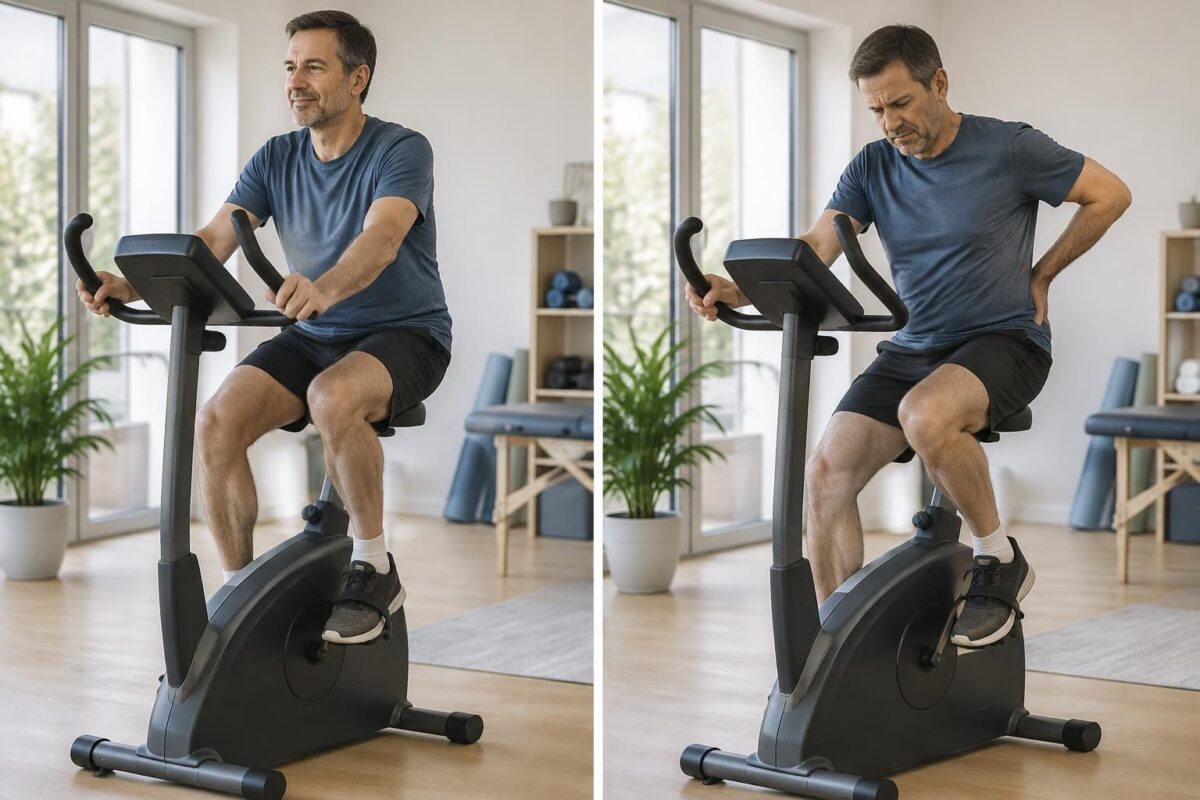
Sciatica and stationary bike: useful or aggravating depending on the case
IN BRIEF The stationary bike with sciatica can help you stay active if the pain is mild and stable. Start with a short session, at low resistance and in a comfortable position. If the pain goes further down the leg,…
Testimonials on Sciatica and low seating
Since my seat is too low, I have a sciatica that starts at the lower back and radiates to the buttock and then the leg. Every time I sit too long, the pain becomes sharp and follows the nerve path, with an electric shock sensation in the radiation of my leg. Getting up and moving helps, but the pressure on the lower back remains highly sensitive as long as the seat height is not adjusted.
At the office, sitting in a poorly adjusted chair triggers tingling and sharp pain that runs down my thigh. This lower back pain is accompanied by discomfort that sometimes extends to the foot, a clear sign of sciatica and radiation. By adjusting the seat height and using lumbar support, I have noticed a significant improvement and a reduction in painful episodes during my workdays.
I realized that the seat being too low was the primary cause of my pain. After raising the seat and adopting a more upright position, the sciatica and lower back pain decreased, and the radiation that descended into my leg became much less frequent. Rehabilitation and some maintenance exercises also helped me stabilize my posture daily.
Today, I make sure to alternate positions and take regular micro-breaks. In addition to an adjusted seat and lumbar support, these simple actions have reduced painful episodes and the associated radiation. My sciatica is better managed, and I find more comfort in my professional and personal activities.
Detailed biography: Sciatica and low seating – lower back pain and radiation
Dr. Sylvain Desforges, expert in osteopathy, naturopathy, and manual medicine, is the founding president of the TAGMED clinics and the ACMA association. His career is guided by innovation in healthcare and sharp expertise in the management of chronic pain of the spine. A specialist in lumbosacral radiculopathy, he supports patients suffering from sciatica and lumbar radiation, adopting an approach that prioritizes non-surgical options and treatment customization.
His work focuses on understanding the mechanism of pain, particularly when the sciatic nerve is irritated or compressed at the lumbar roots, often L5/S1. This irritation produces a sharp pain that originates in the lower back and radiates to the buttock, thigh, and sometimes down to the foot. Dr. Desforges emphasizes rigorous diagnosis, combining a thorough clinical examination and, when necessary, imaging elements or neurodiagnostic studies to identify the precise origin and distinguish isolated low back pain from sciatica with radicular pain. This approach aims to prevent recurrences and tailor treatments to each life path.
In practice, he prioritizes a non-surgical and progressive management. He offers osteopathy techniques and manual methods designed to relieve tensions around the nerve roots and restore spinal mobility. When symptoms persist, he integrates complementary modalities such as motorized neurovertebral decompression, laser and shockwave therapies to reduce inflammation and promote functional recovery. This approach is accompanied by a personalized rehabilitation program, home exercises, and postural advice to limit recurrences, especially in the context of poorly adapted seating or prolonged sitting.
Dr. Desforges stresses the importance of patient education and empowerment in the care process. He prioritizes transparent interaction with the multidisciplinary team to assess outcomes and adjust the therapeutic plan according to the evolution of symptoms, limitations, and personal goals. His approach is evidence-based and founded on a patient-centered philosophy of care, aiming to quickly restore mobility, reduce pain, and lower recurrence risks.
Through his work, Dr. Desforges demonstrates that low back pain with irradiation can be effectively managed through a combination of manual techniques, advanced technologies, and educational support. His commitment is to offer solutions tailored to each life context, focusing on measurable outcomes and sustainable recovery for patients suffering from sciatica and low seating.
This conclusion details the link between sciatica, low back pain, and irradiation when seating is too low, and suggests practical approaches to improve your comfort and mobility in daily life. It recalls the common causes, signs to watch for, non-surgical management options, and ergonomic strategies that help limit flare-ups and recurrences.
A seat that is too low can exacerbate sciatica by altering pelvic alignment and increasing lumbar curvature, which raises pressure on the discs and nerve roots. As a result, low back pain may radiate to the buttock and leg, sometimes down to the foot, with a burning sensation or electric shock feeling and paresthesias. To limit this mechanism, prioritize a seated position that maintains a natural lumbar curve and feet flat on the floor.
The typical clinical picture associates a “sharp” pain starting from the lower back and following the path of the sciatic nerve down to the leg. This irradiation may be accompanied by tingling, numbness, or muscle weakness that can complicate walking or maintaining stable balance, especially after long periods of sitting. If the pain worsens when sitting, coughing, or during exertion, it is a signal to take into account and discuss with your healthcare professional. To better understand these manifestations and their nuances, you can consult dedicated resources on sciatica and its symptoms, such as those described in the following sources: Doctissimo — Sciatica and Sciatica and sharp pain in the lower back with irradiation.
The diagnosis primarily relies on clinical examination and the history of symptoms, and may be complemented by imaging studies (MRI or CT) when necessary, especially to assess for possible disc herniation, stenosis, or other causes. Electrodiagnostic tests can also specify the affected root and the severity of the injury. For a general overview of mechanisms and symptoms, see the information available on specialized resources such as these: Causes, symptoms, and treatments.
The initial treatment prioritizes non-surgical measures tailored to daily life, avoiding prolonged strict rest. The goal is to reduce inflammation, restore mobility, and strengthen the trunk. This involves physiotherapy, progressive exercises, and postural advice, as well as analgesics or anti-inflammatories as per medical advice. In some cases, injections or other non-surgical approaches may be considered to allow the continuation of the rehabilitation program and delay any potential surgery. For practical scenarios and explanations, consult resources such as Sciatica in Terrebonne — pain in one leg and Physio-7 — low back pain and sciatica.
Regarding ergonomics and work life, prevention involves adjusting seating, lumbar support, and alternating between rest and activity. Simple improvements such as seat height that allows feet to be flat, a backrest that follows the lumbar curve, and regular breaks to stand and stretch can significantly reduce tensions and painful episodes. Practical resources on ergonomics and postural rest are available, including guides on postural rebalancing and low back pain prevention: Sciatica and tingling upon waking and Sciatica in Montreal — pain from the lower back to the leg.
In cases where symptoms persist beyond a few weeks despite appropriate management, or if neurological deficits progress, further evaluation may be necessary and surgery may be considered with caution. Surgical options depend on the precise cause (for example, discectomy or decompression) and generally aim to relieve pressure on the nerve root. For an overview of indications and treatments, you can refer to specialized resources such as Sciatica in Terrebonne — deep gluteal pain and irradiation and Spine Surgery Paris — causes and treatments.
At the same time, field resources and care pathways focused on a non-surgical and personalized approach exist in Montreal and elsewhere, with targeted options for functional recovery and pain episode reduction. For additional information on non-surgical management and practical steps, see dedicated resources such as Sciatica and pain in the lower back — irradiation and Sciatica in Terrebonne — pain in one leg.

Dr Sylvain Desforges, B.Sc., D.O., N.D., osteopath, is the founding president of TAGMED and of the ACMA association. He dedicates his practice to chronic spinal pain, low back pain and symptoms compatible with sciatica, particularly when pain radiates toward the buttock, leg, calf, foot or toes.
Through SOS Sciatique, he publishes educational content on sciatica symptoms, possible causes such as disc herniation, disc narrowing, foraminal stenosis or irritation of a lumbar nerve root, as well as non-surgical approaches that may be considered according to the evaluation. At Clinique TAGMED, care may include, depending on the case, motorized neurovertebral decompression, specific osteopathic care or precision percussion.
For an evaluation related to sciatica treatment in Montreal / Mount Royal or sciatica treatment in Terrebonne, please consult the services available at Clinique TAGMED.
Medical disclaimer
The information published on SOS Sciatique is provided for educational purposes only and does not replace a consultation, diagnosis, opinion or treatment provided by a physician or another authorized healthcare professional. The author of this article is neither a medical doctor nor a specialist in a medical specialty recognized by the Collège des médecins du Québec. The osteopathic, manual medicine or functional support approaches described on this site do not constitute medical acts and are not intended to replace medical follow-up.
Consult a physician or emergency service in cases of loss of bladder or bowel control, anesthesia in the saddle area, significant or progressive weakness in the leg or foot, fever, recent trauma, severe pain or rapid worsening of symptoms. For more details, please read our Legal Notice.