



Sciatica in Terrebonne: numbness progressing to the foot
23/08/2026
Herniated disc and acute sciatica: common causes
23/08/2026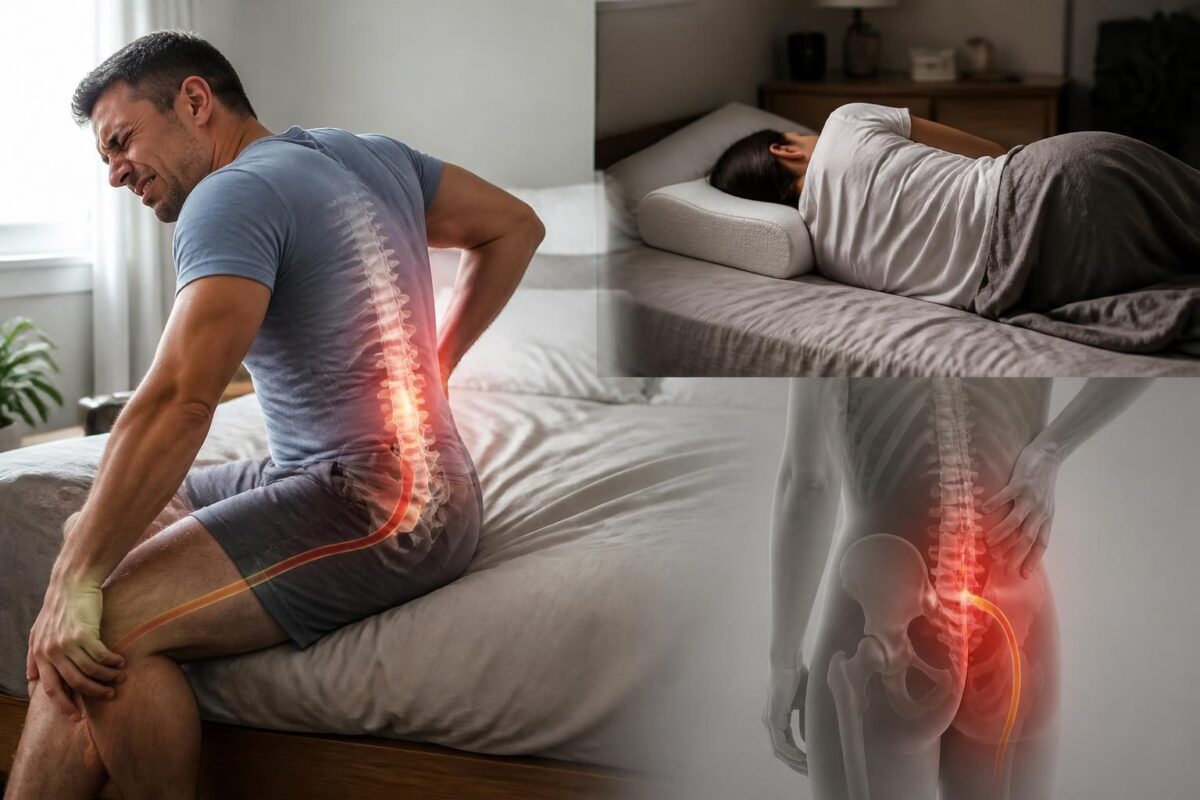
IN BRIEF in English
| In brief, sciatica and tingling upon waking correspond to tingling, burning, or numbness that travels along the sciatic nerve upon waking. What are the possible causes? The most common include a herniated disc, nerve compression, and piriformis syndrome, sometimes related to postural imbalance or thickening of the structures around the spinal canal. What are the benefits? Understanding quickly allows for a direction towards effective non-surgical approaches such as tailored physical activity, physiotherapy, osteopathy and postural advice, without prolonged bed rest. How does it work? A quick assessment identifies the precise cause and proposes a personalized plan with gentle exercises, posture advice, and manual therapies to reduce pain and regain mobility. In Montreal, this follow-up allows for a quick referral to local care and targeted rehabilitation. |
Sciatica that manifests as tingling upon waking can stem from several possible causes related to irritation or compression of the sciatic nerve during overnight rest.
- Lumbar herniated disc compressing a root.
- Narrow lumbar canal or arthrosis reducing space around the nerve.
- Piriformis syndrome with local compression.
- Factors related to sleep posture and muscle tensions.
- Effects of pregnancy or other temporary postural changes.
- Minor trauma or rare but possible spinal inflammation.
For quick guidance and personalized advice, consult a professional at the TAGMED Clinic to assess suitable non-surgical options.
This guide, written by a healthcare professional expert in spinal disorders, examines the possible causes of tingling and sciatic pain that occur upon waking. It provides clear benchmarks for quickly assessing the situation and directs towards non-surgical solutions suitable at TAGMED in Montreal and Terrebonne.
Waking with pain along the path of the sciatic nerve and tingling can stem from several mechanisms. Understanding the causes allows for quick action and avoids mismanagement errors.
Common causes of tingling upon waking
Lumbar herniated disc is a common cause when the disc nucleus compresses a sciatic nerve root. This compression can cause pain radiating to the buttock and leg, with tingling or a burning sensation.
Lumbar osteoarthritis and foraminal or spinal stenosis occur with age. Osteoarthritis can narrow nerve passages and increase pain at rest, particularly after prolonged positions in bed.
Piriformis syndrome (tight or spasmodic piriformis muscle) can compress the sciatic nerve and cause buttock pain radiating down the leg without major neurological deficits.
Temporary factors like pregnancy can lead to postural disturbances and transient sciatic pain that resolves after childbirth. Other less common mechanisms include trauma, spinal infections or, very rarely, a tumor.
In some cases, nocturnal pain may be associated with warning signs that require quick evaluation to rule out serious neurological involvement.
Warning signs to watch for upon waking
Very intense and persistent pain despite simple measures
Significant weakness or progression of weakness in a leg
Numbness of the perineum or loss of sensation in that area
Loss of urinary control or bowel movements
Fever or signs of infection associated with spinal pain
Pain accompanied by an inability to move or resting pain that does not decrease quickly
If any of these elements appear, please consult a doctor or emergency services promptly.
How to quickly assess the situation
A doctor performs a clinical examination focused on strength, reflexes, and sensitivity. The Lasègue test can help identify nerve irritation.
If symptoms persist beyond six weeks, or if there is weakness or loss of sensation, imaging tests (MRI or CT scan) and neurophysiological tests may be considered to specify the origin and extent of the involvement.
For alarming signs or rapid progression, seek medical evaluation without delay.
Management options at the TAGMED Clinic
Non-surgical approaches may be considered based on the evaluation, including:
Motorized neurovertebral decompression when indicated by the clinical evaluation.
Specific osteopathy tailored to pain and function, without prescription of mandatory general exercises.
In certain cases, the use of specialized tools offered at the TAGMED Clinic may be prioritized to reduce pain and improve function without resorting to surgery.
For appropriate guidance, TAGMED offers local solutions in Montreal and Terrebonne, prioritizing non-invasive options whenever possible.
When to consult and refer to local care
Consult quickly if the pain persists beyond six weeks despite initial measures, or if neurological or sphincter signs appear.
In the presence of emergency signs or doubt, prioritize a rapid medical evaluation to determine the origin and appropriate treatment.
In Montreal or Terrebonne, the care offered by TAGMED aims for a comprehensive and non-surgical approach when possible, with appropriate direction based on the evaluation.
Resources and Additional Readings
To delve into nighttime aspects and warning signs, you can consult the following resources:
Warning Sign – Sciatica and Permanent Numbness
Sciatica and Tingling in the Foot – Podoways
Sciatica in Montreal – Tingling and Nerve Pathway
Herniated Disc and Sciatica – Assessment
Sciatica and Pain Upon Waking – Possible Causes
Foot Weakness and Sciatica in Terrebonne – When to Consult Quickly
Pain that Wakes You Up – When to Worry
Sciatica and Numbness in the Foot While Driving
For general information on mechanisms and manifestations, you can also consult the public resources associated with TAGMED and the clinic.
About the Author
Dr. Sylvain Desforges, B.Sc., D.O., N.D., Osteopath, is the founding president of
TAGMED
and the ACMA association. He dedicates his practice to chronic pain of the spine, lower back pain, and pain related to sciatica, particularly when the pain radiates down the buttock, leg, calf, foot, or toes.
Through SOS Sciatique, he publishes educational content on the symptoms of sciatica, possible causes such as herniated disc, disc pinching, foraminal stenosis, or irritation of a lumbar nerve root, as well as on non-surgical approaches that can be considered based on the assessment. At the TAGMED Clinic, care may include, depending on the case, motorized neurovertebral decompression, specific osteopathy, or precision tapping.
For an assessment related to sciatica treatment in Terrebonne or to
sciatica treatment in Mont-Royal,
consult the services available at the
TAGMED Clinic.
Medical Disclaimer
The information published on SOS Sciatique is provided for educational purposes and does not replace a consultation, diagnosis, advice, or treatment performed by a doctor or another authorized health professional. The author of this article is neither a doctor nor a specialist in a medical specialty recognized by the Collège des médecins du Québec. The approaches of osteopathy, manual medicine, or functional support described on this site do not constitute medical acts and are not intended to replace medical follow-up.
Medical Disclaimer: The information and advice provided on this site do not replace the advice, diagnosis, or treatment of a healthcare professional. Please note that Dr. Sylvain Desforges, osteopath, is neither a medical doctor nor a physician, and is not a specialist in a medical specialty as defined by the Collège des médecins du Québec. Manual medicine, functional medicine, and sports medicine as described on this site exclude any treatment or medical diagnosis made by a physician or specialist. Always consult your doctor for any medical questions. For more details, please read our full Legal Disclaimer.
- Lumbar Herniated Disc — radicular; compression of a nerve root; pain that follows the sciatic pathway and may wake you up at night.
- Lumbar Osteoarthritis / Spinal Canal Narrowing — lumbar canal mechanism; back pain radiating into the leg and sometimes occurring at night.
- Piriformis Syndrome — compression of the sciatic nerve by the piriformis muscle; buttock pain with possible radiation.
- Inadequate Nighttime Posture and Muscle Tension — sleeping position or unsuited bed increasing tension on the nerve; improvement with support and gentle mobility.
- Pregnancy and Postural Changes — pelvic tilt and ligament relaxation that can cause temporary nighttime sciatica; often reversible after childbirth.
- Recent Trauma or Microtrauma — small shock or fall during the night or upon waking that may irritate the root; examination if severe pain or loss of function.

This guide brings together the possible causes of tingling and sciatica that manifest upon waking, with simple guidelines to guide assessment and initial actions, without delay in consulting if warning signs appear. It focuses on common mechanisms, nighttime posture factors, and non-surgical options adapted to clinical evaluation.
Common Causes Upon Waking
Lumbar Disc Herniation
The lumbar disc herniation can compress a root of the sciatic nerve and cause tingling that ascends along the leg. Upon waking, the disc may be dehydrated and the sleeping position can exacerbate pressure on the root, waking pain that radiates from the lower back to the foot.
Lumbar Osteoarthritis and Spinal Canal Stenosis
With age, wear and tear on the joints and narrowing of the spinal canal can create nerve pressure. Symptoms may be more pronounced when the body stretches out during nighttime rest, then manifest as pain and paresthesia upon rising.
Piriformis Syndrome
The piriformis muscle can become tight or spasmodic, compressing the sciatic nerve. This often results in buttock pain radiating down the leg and can awaken the person upon rising, especially with certain pelvic tilt movements.
Other Associated Factors and Causes
Factors such as nighttime postural issues, a recent or ongoing pregnancy, or minor trauma can also trigger symptoms upon waking. Less common but serious causes (fracture, infection, or tumor) should be considered if the pain is severe or associated with marked neurological signs.
Sciatica and tingling at bedtime: why does this happen?
IN BRIEF In brief, sciatica and tingling at bedtime refer to the tingling or burning sensations that travel up the leg when you lie down, related to the sciatic nerve. This can stem from structural causes such as a herniated…

Sciatica and tingling in a seated position: possible cause
IN BRIEF Definition: Sciatica with tingling in sitting position is pain that radiates from the lower back to the leg, sometimes accompanied by paresthesias, due to irritation or compression of the sciatic nerve. Benefits / Applications: identifying postures to avoid…
Why These Symptoms Occur Upon Waking
During nighttime rest, certain positions prolong pressure on the sciatic nerve or alter the posture of the pelvis and lower back. Inactivity throughout the night may numb the muscles and make tissues more sensitive, then morning movements or resuming activities trigger the tingling and pain.

Sciatica and tingling after walking: what to check?
IN BRIEF In brief, sciatica and tingling after walking describe a pain that follows the path of the sciatic nerve and may be accompanied by tingling sensations. What is it? a <strong/radiating pain related to compression or inflammation of the…

Sciatica and permanent numbness: sign to watch for
IN BRIEF In brief, Sciatica and persistent numbness describe irritation or compression of a root of the sciatic nerve, causing pain that radiates along the leg and sometimes tingling or loss of sensitivity in the buttock, thigh, or foot. Benefits:…
Warning Signs and When to Consult
Consult quickly in case of loss of urinary or fecal control, significant weakness or progression of leg weakness, extremely intense pain or onset of fever. Any sign of persistent neurological discomfort or pain that rapidly worsens requires urgent medical evaluation. In the absence of these signs, a clinical assessment may be considered after a few weeks if symptoms persist.

Sciatica and intermittent numbness: how to interpret it?
IN BRIEF In brief, sciatica and intermittent numbness describe an irritation or compression of the sciatic nerve or a lumbar root that can manifest from the buttock down to the foot. The benefits: a targeted assessment helps determine the mechanism…

Sciatica and progressive numbness: why not wait?
IN BRIEF in English In brief, sciatica and progressive numbness refer to pain and sensations that follow the route of the sciatic nerve, from the lower back to the buttock and leg, sometimes down to the foot. These symptoms can…
Assessment Elements and Non-Surgical Management
The approach begins with a clinical examination focused on muscle strength, reflexes, and sensitivity, possibly including a Lasègue test to assess nerve irritation. If symptoms persist beyond six weeks or are accompanied by a deficit, imaging (MRI) may be indicated to clarify the origin and extent of the condition. Useful non-surgical options include tailored exercises, trunk strengthening, gentle stretches, and postural advice, often combined with manual techniques such as osteopathy or targeted neurovertebral decompression based on the evaluation.
Sciatica and numbness in the leg: neurological sign
IN BRIEF The neurological sign Sciatica and numbness in the leg refers to paresthesias and pain following the course of the sciatic nerve, from the lower back to the foot. In short, it is a key indicator for identifying nerve…
Sciatica and pain in both legs: when to consult?
IN BRIEF In short, sciatica and pain in both legs is a pain that starts in the lower back and may radiate to the buttock and legs. This is often due to irritation or compression of the sciatic nerve. Benefits:…
Practical Tips and Prevention
Adopt neutral sleeping positions and vary positions throughout the day. Favor appropriate physical activity, exercises for strengthening and flexibility of the back and lower limbs, and use a suitable mattress and lumbar support. In parallel, avoid prolonged bed rest and seek personalized assessment if symptoms persist or worsen.
| Cause | Concise Description |
|---|---|
| Lumbar Disc Herniation | Radicular compression causing pain radiating from the buttock to the leg, sometimes at night. |
| Piriformis Syndrome | Tension/spasm of the piriformis irritating the sciatic nerve; buttock pain radiating without motor deficit. |
| Lumbar Osteoarthritis / Narrow Spinal Canal | Narrowing of the nerve passage; radiating pain, often while walking and sometimes at night. |
| Minor Nighttime Trauma | Microtrauma causing inflammation and radicular irritation. |
| Poor Posture and Sleep | Inadequate night position, unsuitable mattress or pillow; lumbar tension. |
| Degenerative Scoliosis | Spinal deformity leading to compression of the roots. |
| Rare Infection or Inflammation | Spondylodiscitis or other infection; fever and associated lumbar pain require evaluation. |
| Pregnancy | Ligamentous laxity and pelvic tilt; transient sciatic pain resolves after delivery. |
Testimonials: Sciatica and Tingling Upon Waking — Possible Causes
“I woke up suddenly with a burning pain following the path of the sciatic nerve, starting from the lower back and descending to the leg. My first intuition was that a nerve was irritated. After evaluation, the most likely cause was a lumbar disc herniation compressing a nerve root. With targeted exercises and appropriate care, the symptoms gradually diminished and nighttime waking became less frequent.”
“Upon waking, a dull pain followed by tingling in the buttock and thigh woke me up. A piriformis syndrome was mentioned, where the piriformis muscle compresses the sciatic nerve. Specific stretches and postural advice helped relieve the pain and prevent recurring awakenings.”
“I sometimes woke up with pain radiating up the leg, especially after simple movements in bed. The doctor highlighted spinal canal stenosis related to age as a probable cause, with more pronounced radiation after walking or at rest. Thanks to appropriate rehabilitation and monitoring, I gained mobility and comfort upon waking.”
“My sleep was regularly disturbed by pain due to poor nighttime posture and a mattress that did not provide adequate support. I was explained that the pain could be linked to mechanical factors such as inadequate pressure on the lower back and the sciatic nerve. A mattress change and postural adjustments quickly improved the situation and nighttime awakenings decreased.”
“During my pregnancy, awakenings due to sciatic pain were frequent due to postural changes and ligamentous laxity. A painful pregnant posture was identified, which slightly compresses the sciatic nerve. After a few position adjustments, tailored physical activity advice, and gentle sessions, the pain evolved favorably and subsided after delivery.”
The portrait we present here explores Sciatica and tingling upon waking, and their possible causes, based on the expertise of Dr. Sylvain Desforges. This formulation highlights how a night sensation can reveal complex interactions between the nervous system and the musculoskeletal system. Drawing on his experience, the expert emphasizes that understanding the mechanisms at play is the key to effective and tailored management in everyday life.
Among the most frequent causes, lumbar disc herniation remains one of the most widespread diagnoses: when the nucleus of the disc compresses a nerve root, pain can radiate from the lower back to the buttock and resonate down into the leg, sometimes intensely right from waking. Lumbar osteoarthritis and lumbar spinal stenosis impede the space around the nerves, causing night pain that settles with rest. The piriformis syndrome, a muscular conflict in the buttock region, can also irritate the sciatic nerve and generate paresthesias. In pregnant women, postural and ligamentous changes can trigger transient sciatic pain. In less common cases, trauma, a spinal infection, or a tumor may be responsible and require prompt and specialized evaluation.
Upon waking, symptoms often manifest after a period of inactivity or inadequate postural maintenance. Pain can follow the lumbar-buttock-leg pathway, with sensations of burning, pulling, or numbness, sometimes exacerbated by certain positions in bed or when initiating movement. Risk factors such as inadequate sleeping posture, a mattress that is too firm or too soft, and a lack of regular physical activity can exacerbate these painful awakenings. Warning signs should prompt quick consultation: progressive weakness, loss of sensation in the perineum, loss of urinary or fecal control, night pain that persists despite initial measures, fever, or back pain associated with signs of infection.
To establish a reliable diagnosis, the clinical approach begins with a detailed examination: assessing muscle strength, reflexes, sensitivity, and conducting specific tests like the Lasègue test to screen for nerve irritation. If symptoms persist beyond six weeks, or if there is weakness or loss of sensation, additional examinations such as imaging (MRI or CT) and neurophysiological tests may be considered to clarify the origin and extent of the condition. In the meantime, non-surgical management options, such as tailored exercises and targeted osteopathy, can not only relieve pain but also prevent recurrences, complemented by a gradual strengthening of the trunk and lower limb muscles.
The pathway proposed by the multidisciplinary approach promotes personalized and gradual management. Dr. Sylvain Desforges, a certified osteopath, naturopath, and manual doctor, is the originator of this initiative within TAGMED clinics and the ACMA association. His commitment to innovation in care leads him to integrate advanced technologies such as motorized neurovertebral decompression, laser, and shock wave therapies, while prioritizing evidence-based approaches. His mission is to provide care tailored to each patient, aiming to optimize health and well-being, without systematic recourse to surgery when possible. To deepen his approach and the available services, it is helpful to refer to the expertise of his clinical network and the philosophy of non-invasive and progressive care he advocates.
In this perspective, understanding sciatica as a symptom that can reflect multiple origins allows for the quick adjustment of therapeutic work and guidance towards the most effective treatments. Nighttime awakening with tingling is not a fate: a precise evaluation and a personalized plan focused on movement, posture, and adapted rehabilitation offer concrete prospects for regaining comfort and mobility and preventing future episodes.
This article details sciatica associated with tingling or itching sensations upon waking, exploring possible causes, warning signs, and evaluation pathways. It recalls that night pain can reflect varied mechanisms — structural, postural, or inflammatory — and that a progressive and tailored approach often allows for rapid symptom improvement without immediate resort to surgery. The goal is to identify possible causes and guide towards appropriate care while prioritizing non-invasive approaches when feasible.
Among the most frequent causes linking sciatica and tingling upon waking, we find lumbar disc herniation that can compress a nerve root, lumbar osteoarthritis, and spinal canal narrowing, as well as piriformis syndrome (compression of the sciatic nerve by the piriformis muscle). Other possible mechanisms include nocturnal postural factors, inflammation, or muscle tension which, at rest, exacerbate pressure on the sciatic nerve pathway.
The
specific factors can exacerbate nighttime awakenings: pregnancy can lead to temporary sciatic pain related to postural and hormonal adaptations, and rare trauma or infections may also be involved. In some cases, pain awakens or worsens at bedtime due to prolonged positioning or lack of mobility during sleep, which may promote nerve irritation during the transition between rest and activity.
Warning signs requiring prompt consultation include loss of urinary control or incontinence, marked and progressive weakness of a leg, significant paresthesias in the perineum, fever associated with signs of infection, or pain that worsens at rest and does not respond to simple measures. In the presence of these elements, urgent medical evaluation is required to rule out nerve damage or a pathology necessitating specific treatment.
Diagnosis relies on a clinical examination (assessment of strength, reflexes, and sensitivity) and may include tests like the Lasègue test. If symptoms persist beyond six weeks or are accompanied by weakness, imaging studies (MRI or CT) and neurophysiological tests may be considered to clarify the origin and extent of the condition. A non-surgical approach focused on rehabilitation, improving posture, and muscle strengthening may be contemplated based on clinical evaluation.
Practically, non-invasive therapeutic options — such as physiotherapy, osteopathy, and tailored postural advice — can help relieve and prevent recurrences when the cause is identified. The goal is to reduce inflammation and nerve compression through targeted exercises, manual techniques, and a progressive increase in activities, while avoiding prolonged bed rest that can worsen mobility and recovery.
To guide your quest for information and expertise, several resources describe the links between nighttime pain, awakening, and sciatica, and offer practical advice. You can explore articles such as those addressing the morning mechanisms of sciatic pain, the impact of vibrations and postures in the car, or the potential causes of a unilateral or bilateral pain pattern. These resources provide helpful benchmarks on when to be concerned, how to quickly assess the severity, and what steps to take before any potential imaging or targeted treatment.
Useful resources and additional readings: Sciatica upon waking: why pain is maximum in the morning and how to break this mechanism, Sciatica in the car: sitting position, vibrations, and pain in the leg, Sciatica and pain on one side: possible causes, Sciatica in Montreal: deep gluteal pain and radiating pain in the thigh, Sciatica in Terrebonne: pain that starts from the lower back to the leg, Tingling in the feet, Sciatica: causes, Sciatica and the morning: why pain is worse upon waking and how to make it disappear, Sciatica and pain in both legs: when to consult.

Dr Sylvain Desforges, B.Sc., D.O., N.D., osteopath, is the founding president of TAGMED and of the ACMA association. He dedicates his practice to chronic spinal pain, low back pain and symptoms compatible with sciatica, particularly when pain radiates toward the buttock, leg, calf, foot or toes.
Through SOS Sciatique, he publishes educational content on sciatica symptoms, possible causes such as disc herniation, disc narrowing, foraminal stenosis or irritation of a lumbar nerve root, as well as non-surgical approaches that may be considered according to the evaluation. At Clinique TAGMED, care may include, depending on the case, motorized neurovertebral decompression, specific osteopathic care or precision percussion.
For an evaluation related to sciatica treatment in Montreal / Mount Royal or sciatica treatment in Terrebonne, please consult the services available at Clinique TAGMED.
Medical disclaimer
The information published on SOS Sciatique is provided for educational purposes only and does not replace a consultation, diagnosis, opinion or treatment provided by a physician or another authorized healthcare professional. The author of this article is neither a medical doctor nor a specialist in a medical specialty recognized by the Collège des médecins du Québec. The osteopathic, manual medicine or functional support approaches described on this site do not constitute medical acts and are not intended to replace medical follow-up.
Consult a physician or emergency service in cases of loss of bladder or bowel control, anesthesia in the saddle area, significant or progressive weakness in the leg or foot, fever, recent trauma, severe pain or rapid worsening of symptoms. For more details, please read our Legal Notice.