Weakness in the foot and sciatica in Terrebonne: when to consult quickly?
17/08/2026
Herniated disc and heel pain: possible S1 root
17/08/2026
IN BRIEF in English |
In brief, sciatica and progressive numbness refer to pain and sensations that follow the route of the sciatic nerve, from the lower back to the buttock and leg, sometimes down to the foot. These symptoms can include tingling, burning, or muscle weakness. The goal is to avoid prolonged rest and to emphasize an active approach with exercises and appropriate activity to reduce pain and restore mobility while preventing recurrences. Benefits and functioning: the diagnosis is based on medical history and clinical examination, leading to a personalized action plan that reduces pain, improves mobility, and prevents recurrences. Treatment favors an active approach, with targeted exercises and progressive rehabilitation, rather than rest; in Montreal, this service allows for the quick identification of the cause and provides appropriate care to relieve pain and restore function. |
Sciatica is pain that follows the path of the sciatic nerve: lower back, buttock, back of the leg, sometimes down to the foot. It may be accompanied by numbness, tingling, or weakness in the muscles.
A progressive numbness should not be ignored: it may indicate radiculopathy. Waiting can allow the problem to worsen and become chronic. Early evaluation helps clarify the cause and initiate an active plan (targeted exercises, mobilization, appropriate activity) rather than prolonged rest.
- Common causes: lumbar disc herniation, lumbar stenosis, piriformis syndrome.
- Diagnosis: medical history and clinical examination, with imaging or additional tests if necessary.
- Treatment goals: reduce inflammation, restore function, and prevent recurrences through exercises and appropriate rehabilitation.
Warning signals requiring prompt consultation: loss of bladder or bowel control, marked weakness, pain that worsens rapidly, fever, or recent trauma.
Sciatica is pain that follows the path of the sciatic nerve. Progressive numbness may appear slowly and become more significant over time. Waiting can lead to worsening pain and loss of sensation. This article explains why early evaluation is important. It describes warning signals, simple tests, and the options available at TAGMED Clinic to act quickly and effectively.
Warning Signs and When to Consult
The typical path of the pain is from the lower back, through the buttock and back of the thigh to the leg and sometimes the foot. Numbness may accompany this pain. Tingling or a burning sensation may appear along the path.
Warning signs demand prompt consultation. Loss of bladder or bowel control, perineal anesthesia, marked or progressive weakness in a leg, pain that worsens rapidly, fever, or unexplained weight loss require urgent medical evaluation.
The Lasègue sign may be positive: pain occurs when the leg is lifted due to root irritation. Muscle weakness, especially in the calf or foot, may be present and guide the evaluation.
Rapid Diagnosis and Importance of Clinical Evaluation
The diagnosis is primarily based on medical history and clinical examination. The evaluation seeks to determine whether the numbness follows the path of the sciatic nerve and which root is affected. Additional examinations may be considered if necessary, especially when spinal surgery is contemplated or if warning signs appear.
Clarifying the cause helps guide treatment. The most common causes include lumbar disc herniation, lumbar stenosis, and piriformis syndrome. Other inflammatory or degenerative factors may also contribute.
Why Not Wait? Benefits of Prompt Management
Acting early helps reduce inflammation and pain more quickly. It also aids in restoring mobility and preventing recurrences. Early evaluation allows for quick identification of the cause and the proposal of a personalized plan.
At TAGMED Clinic, the evaluation is structured. The aim is to identify the exact cause and establish an appropriate rehabilitation pathway. The goal is a gradual resumption of activities and movement. This approach aims to avoid long-term dependence on rest and promote active rather than passive solutions.
For more information on mechanisms and non-surgical approaches, visit Lumbar Disc Herniation and Sciatica and Sciatica and Driving.
Approaches and Options at TAGMED Clinic
Care emphasizes an active approach. The goal is to clarify the cause and propose interventions that restore function. Appropriate osteopathic and manual techniques are part of the options. After a thorough evaluation, other solutions may be considered based on the diagnosis.
In some cases, specific methods such as neurovertebral decompression may be discussed after the evaluation. For general information on this type of care, you can consult dedicated resources on neurovertebral decompression.
TAGMED Clinic offers personalized plans for Montreal and Terrebonne. To learn more about available services and the care philosophy, visit TAGMED Clinic.
Practical Advice and Prevention
Stay active and follow a progressive rehabilitation program, under professional supervision. Correct postures and adapt daily activities to reduce pressure on the nerve. A combination of appropriate movement and pain management can help improve nerve tolerance and prevent relapses.
For additional resources on symptoms and causes, you can consult information such as Sciatica in Terrebonne and Pain in the big toe and sciatica. Other useful information can be found at Numb Leg, Sciatica that comes back, and Sciatica and foot pain.
Useful resources and links to relevant content
To enrich your understanding, explore the following pages on topics related to sciatica and numbness:
- Sciatica in Terrebonne
- Driving
- Chronic sciatica
- Chronic sciatica – what to do
- Untreated evolution
- Sciatica and foot pain
- Herniated disc and pain
Medical disclaimer: The information and advice provided on this site do not replace the opinion, diagnosis, or treatment of a healthcare professional. Please note that Dr. Sylvain Desforges, osteopath, is neither a medical doctor nor a physician, and is not specialized in a medical specialty as defined by the Collège des médecins du Québec. Manual medicine, functional medicine, and sports medicine as described on this site exclude any medical treatment or diagnosis performed by a doctor or medical specialist. Always consult your physician for any medical questions. For more details, please read our complete Legal Notice.
- Progressive numbness is a nerve sign to be evaluated quickly
- Pain following the sciatic pathway that may intensify
- Loss of strength or weakness in the foot
- Perineal anesthesia or sphincter disorders
- Pain that worsens when walking or sitting
- Fever or unexplained weight loss is urgent
- Quick assessment to target the cause
- Active exercise plan rather than prolonged rest
- Progressive rehabilitation and targeted mobility
- Prevention of complications and recurrences
- Targeted imaging if doubt or signs of urgency
- Multidisciplinary approach (osteopathy/physiotherapy) to activate movement

This article summarizes why it is crucial not to remain passive when experiencing progressive numbness associated with sciatica. In practice, this signal may reflect irritation or compression of the sciatic nerve, and acting quickly promotes pain reduction, preservation of mobility, and prevention of worsening. We will see how to recognize the signs, which actions to prioritize, and how to prepare a proactive assessment to obtain an active and personalized action plan.
Understanding progressive numbness and sciatica
The typical pathway of the sciatic nerve starts from the lower back, passes through the buttock, and extends along the back of the leg to the foot. When this nerve is irritated or compressed, one often experiences progressive numbness, sometimes accompanied by tingling or burning sensations. The most common causes include lumbar disc herniation, lumbar stenosis, and piriformis syndrome.
The diagnosis is primarily based on medical history and clinical examination. The physician seeks to confirm a radiculopathy and specify the affected root. Rapid diagnosis allows for organizing targeted rehabilitation and appropriate exercises, rather than passively resting on the silence of symptoms. In all cases, a progression is assessed and closely monitored in an active approach.
Why not wait: risks and benefits of quick action
Waiting may seem tempting, but a progressive numbness that spreads may indicate increasing nerve irritation. Without appropriate rehabilitation, the nerve can become less tolerant to stress, and symptoms may worsen, complicating recovery. Acting early aims to prevent chronicity and preserve function.
The benefits of early intervention include reduced pain, preserved mobility, and prevention of recurrences. A program focused on progressive exercises and postural correction helps the nerve tolerate daily movements and restore lumbar stability, while avoiding prolonged passive treatments.
Warning signs not to ignore
Signals requiring urgent evaluation: marked loss of strength in the leg, perineal anesthesia, rapidly worsening pain, fever or unexplained weight loss, or pain following trauma. If you have these symptoms, consult immediately.
Concrete actions to take now
Stay active and avoid prolonged rest. Targeted exercises and progressive rehabilitation under supervision can reduce inflammation and strengthen the trunk, pelvic girdle, and muscles around the spine. Adopt appropriate postures, improve your sleep, and manage stress to support recovery.
Incorporate manual therapies and movement advice from a qualified professional to clarify the cause and personalize the plan: osteopathy, physiotherapy, or other approaches without enforced rest. The goal is to accelerate the return to normal activity without worsening pain.
When to seek help quickly and how to prepare for the evaluation
Seek help quickly if symptoms evolve towards weakness, walking difficulties, or if numbness progresses despite initial measures. Prepare for your appointment by noting the exact path of the pain, the times it occurs, and the activities that worsen or relieve it, as well as your medical history.
During the evaluation, expect a clear clinical examination and, if necessary, additional tests to clarify the cause and guide treatment. An active and personalized action plan can then be established, with realistic goals and rehabilitation suited to your condition.
Action plan after evaluation
After the evaluation, the plan aims to reduce inflammation, restore function, and prevent recurrences through a combination of exercises, mobilization, and tools suited to your case. Approaches such as motorized neurovertebral decompression or manual techniques may be considered when the diagnosis and context allow.
The framework is always personalized and oriented towards a gradual return to activities. The goal is a quick and sustainable return to an active life without pain that hinders your daily movements.
| Element | Why not wait? |
|---|---|
| Nature of the signal (sciatic nerve) | Pain follows the nerve pathway and may include numbness, paresthesias or weakness, requiring prompt evaluation. |
| Temporal evolution | If the pain persists or worsens within several weeks, prioritize active management over prolonged rest. |
| Warning signs | Loss of bowel/bladder control, significant weakness, fever or worsening pain require emergency consultation. |
| Common causes | Lumbar disc herniation, lumbar stenosis, piriformis syndrome; differentiate to guide treatment. |
| Quick diagnosis | Anamnesis and clinical examination are sufficient in most cases; imaging is reserved for doubts or emergency signs. |
| Impact on mobility | Adapted activity and targeted exercises rather than complete rest to progress. |
| Therapeutic goal | Reduce inflammation and restore function through progressive rehabilitation. |
| Treatment profile | Multimodal approach including movement, posture, and adapted manual techniques. |
| When to consult quickly | No improvement after 4–6 weeks or appearance of emergency signs require rapid intervention. |
Testimonials: why not wait in the face of sciatica and progressive numbness
“When I felt the progressive numbness rising along my leg and the sciatic pain began to spread, I hesitated to consult. I ultimately understood that not waiting was key to preventing the situation from deteriorating. Within days, a professional evaluation and a personalized action plan began to relieve the pressure and restore my mobility.”
“I was surprised to find that progressive numbness could be a sign of radiculopathy. The team guided me through targeted exercises and progressive movements to reduce inflammation and strengthen my trunk. The result? Faster recovery and reduced pain, without enforced rest or unnecessary treatment.”
“I was afraid of a complicated diagnosis, and I waited several weeks. In the meantime, the pain intensified, and the numbness spread further. A quick consultation helped identify the cause and set up a personalized plan with tailored exercises. Today, I’m back to my daily activities, with less fear and more comfort.”
“After several months of pain and a feeling of stagnation in my leg, I decided to take action without delay. The follow-up established simple and effective measures, focused on adapted activity and progressive rehabilitation. The result: more mobility, greater confidence, and a noticeable reduction in the intensity of the sciatica.”
“If you feel sciatic pain spreading and progressive numbness, don’t let it worsen. A quick evaluation can reveal a precise cause — herniated disc, stenosis or piriformis syndrome — and guide an effective non-surgical treatment, focused on movement and targeted exercises to regain function and quality of life.”
When sciatica manifests and progressive numbness sets in, it is crucial not to postpone a specialized evaluation. The body’s message is clear: it is a warning sign from a suffering nerve that deserves an active and guided approach to prevent potential chronicity. Quick management often allows for pain reduction, restoration of mobility, and limitation of functional disabilities in daily life.
The path of the sciatic nerve extends from the lower back to the buttock, then along the back of the leg, sometimes down to the foot. When this nerve is irritated or compressed, the pain can radiate and be accompanied by numbness, tingling, or muscle weakness. What may begin as local discomfort can quickly become radiculopathy, requiring diagnostic clarification to identify the root of the problem and prevent complications. The anamnesis and clinical examination remain the cornerstones of diagnosis, supplemented as needed by imaging or functional tests to specify the exact cause.
Among the most common causes are a lumbar disc herniation, lumbar stenosis, and piriformis syndrome, which can irritate the nerve roots and cause radicular pain associated with numbness. Other factors, such as inflammatory, degenerative, or metabolic elements, can maintain or amplify symptoms. In light of these possibilities, waiting can allow time to worsen an already fragile nerve irritation and delay the benefits of targeted rehabilitation.
Why wait? Because prolonged rest and inactivity often promote stiffness, loss of tolerance to effort, and muscle deconditioning. An active approach, combining targeted exercises, therapeutic mobility, and posture correction, reduces nerve irritation, strengthens core and hip muscles, and sustainably improves function. The ideal course emphasizes progressive and adaptive rehabilitation rather than passive measures that don’t address the mechanical cause.
At TAGMED Clinic, the evaluation aims to distinguish mechanical, inflammatory, and neuropathic mechanisms to propose a personalized plan. This approach may include osteopathic techniques and adapted manual approaches, complemented by contemporary strategies such as motorized neurovertebral decompression, laser, and shock wave therapies when appropriate. The goal is to reduce inflammation, restore mobility, and prevent recurrences through active and coordinated care management.
Brief biography: Dr. Sylvain Desforges is recognized as an expert in osteopathy, naturopathy, and manual medicine. He is the founding president of TAGMED clinics and the ACMA association, and is committed to an innovative trajectory in health. His practice focuses on managing chronic pain and integrating advanced technologies, including spinal decompression, laser, and shock wave therapies, to provide evidence-based care and optimize the health and well-being of his patients. His approach emphasizes rigorous assessment, collaboration, and personalized care plans guided by the latest clinical and scientific advances. His mission is to provide an effective and lasting solution for those suffering from sciatica and progressive numbness, without waiting for the situation to worsen. Dr. Desforges offers an integrated, patient-centered approach aimed at quickly restoring mobility and quality of life.
Quick summary: Sciatica and progressive numbness following the path of the sciatic nerve require early evaluation. Waiting can allow nerve irritation or compression to worsen; rapid diagnosis based on history and clinical examination allows for prioritizing active, non-surgical management to reduce pain, restore mobility, and prevent recurrences. Warning signs, such as loss of bladder control or marked weakness, require urgent consultation. This overview highlights why early action is important and how to direct efforts toward appropriate and effective solutions.
Key Points and Practical Actions
Do not wait: a progressive numbness may reflect radiculopathy related to the sciatic nerve and may worsen if not addressed quickly. Common scenarios include a lumbar disc herniation, lumbar stenosis, or piriformis syndrome. For a better understanding of the mechanisms and courses of action, see the dedicated resources on the SOS Sciatique website and specialized guides.
Warning signs and urgency: consult quickly if you experience loss of bladder control, perineal anesthesia, significant weakness, or rapidly worsening pain. In the presence of fever or recent trauma, prioritize immediate medical attention. For accessible guidance, refer to dedicated resources such as Numbness zones and Sciatic leg numbness — what to do?.
Active approach and personalized plan: prioritize an active approach rather than prolonged rest. Targeted exercises, progressive rehabilitation, and posture corrections can reduce irritation and promote recovery. Manual approaches and movement techniques, combined with daily advice, can be helpful depending on the assessment. To explore practical options, refer to resources like Mild sciatica but painful leg and Leg numbness — cause to clarify.
Action plan and local resources: a proper evaluation can quickly identify the precise cause and propose a personalized plan to relieve pain and restore function. In Montreal, there are resources and services dedicated to sciatica available to guide this process, particularly through specialized clinics and active rehabilitation programs. For concrete cases and examples of pathways, consult the following articles and guides: pain in the buttock that radiates down the leg, pain in the foot, numbness, and tingling, and when to consult quickly for foot weakness.
Resources and useful links (practical examples): to delve deeper into the mechanisms, signs, and management options, you can consult the following resources and integrate them into your care approach. For example, Sciatica — numb foot: causes and solutions, pain after a long phone call (sitting), and leg numbness — cause to clarify.
For additional concepts and specific cases, these resources provide useful references on painful trajectories and non-surgical intervention options, while emphasizing the importance of a professional evaluation to target the cause and tailor treatment. See in particular: Sciatica in Montreal — pain in the buttock that radiates down the leg, foot pain, numbness and tingling, and persistent sciatica despite physiotherapy.
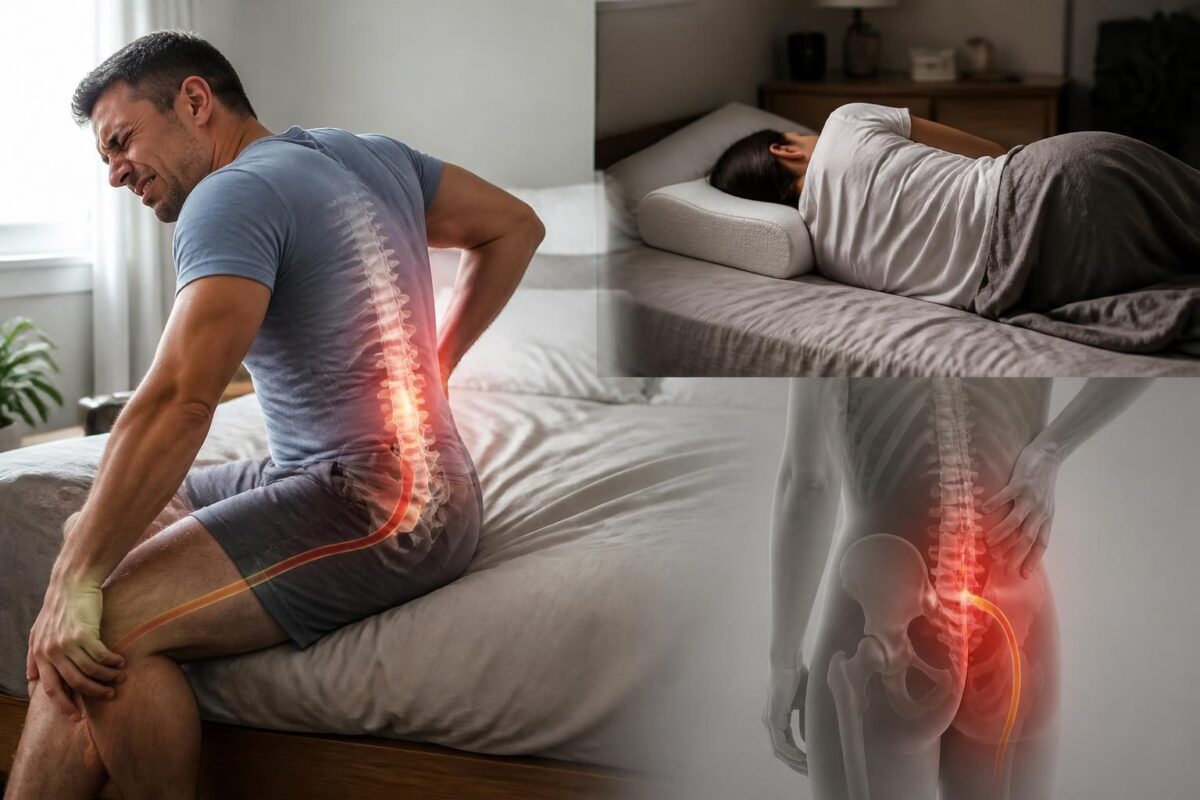
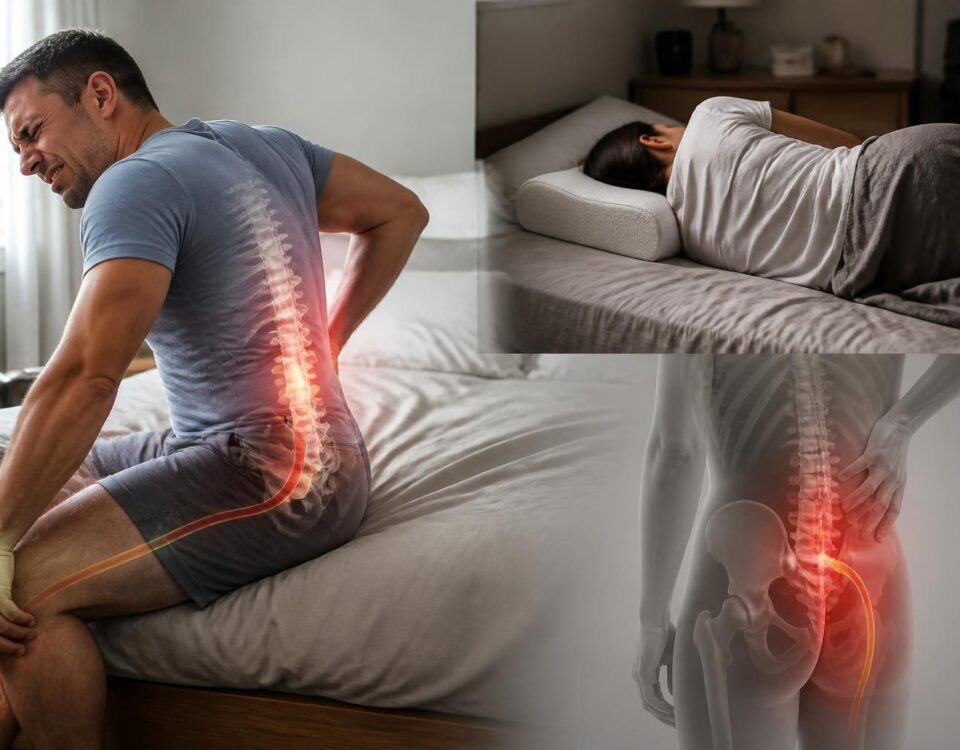
Sciatica and tingling upon waking: possible causes
IN BRIEF in English In brief, sciatica and tingling upon waking correspond to tingling, burning, or numbness that travels along the sciatic nerve upon waking. What are the possible causes? The most common include a herniated disc, nerve compression, and…

Sciatica and tingling at bedtime: why does this happen?
IN BRIEF In brief, sciatica and tingling at bedtime refer to the tingling or burning sensations that travel up the leg when you lie down, related to the sciatic nerve. This can stem from structural causes such as a herniated…

Sciatica and tingling in a seated position: possible cause
IN BRIEF Definition: Sciatica with tingling in sitting position is pain that radiates from the lower back to the leg, sometimes accompanied by paresthesias, due to irritation or compression of the sciatic nerve. Benefits / Applications: identifying postures to avoid…

Sciatica and tingling after walking: what to check?
IN BRIEF In brief, sciatica and tingling after walking describe a pain that follows the path of the sciatic nerve and may be accompanied by tingling sensations. What is it? a <strong/radiating pain related to compression or inflammation of the…

Sciatica and permanent numbness: sign to watch for
IN BRIEF In brief, Sciatica and persistent numbness describe irritation or compression of a root of the sciatic nerve, causing pain that radiates along the leg and sometimes tingling or loss of sensitivity in the buttock, thigh, or foot. Benefits:…

Sciatica and intermittent numbness: how to interpret it?
IN BRIEF In brief, sciatica and intermittent numbness describe an irritation or compression of the sciatic nerve or a lumbar root that can manifest from the buttock down to the foot. The benefits: a targeted assessment helps determine the mechanism…
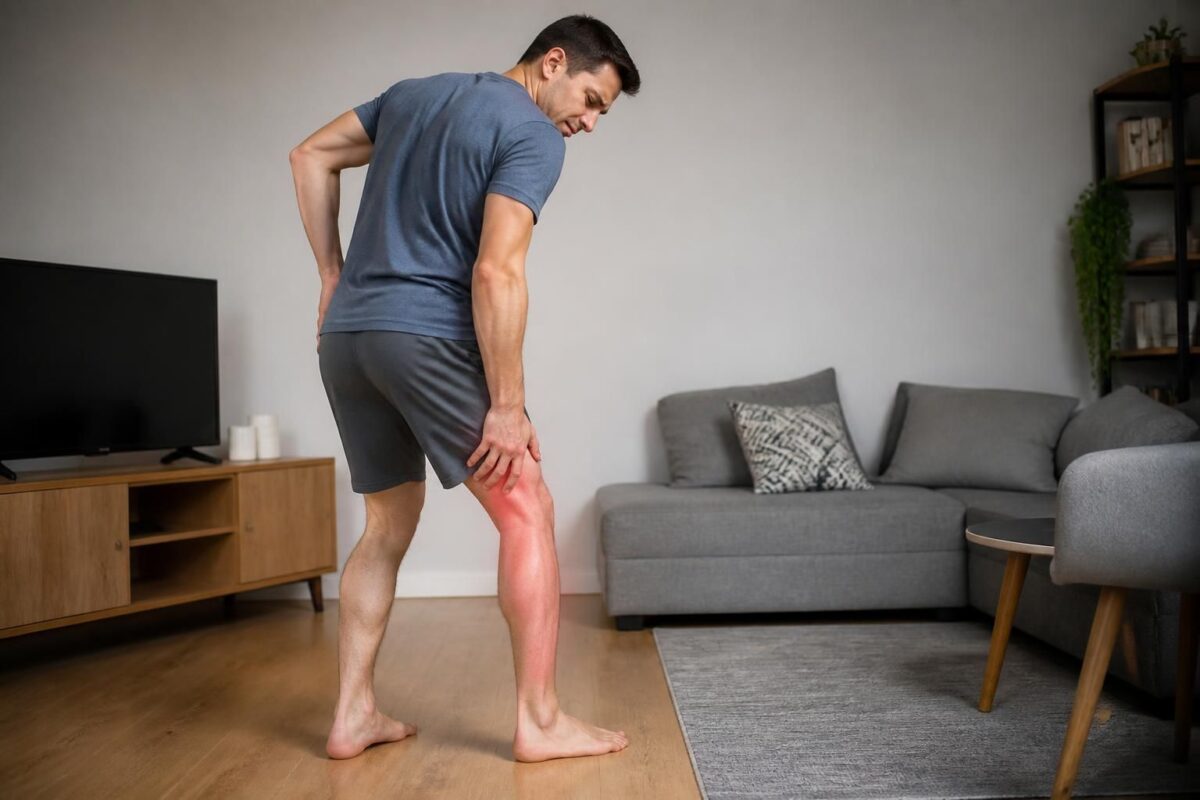
Sciatica and numbness in the leg: neurological sign
IN BRIEF The neurological sign Sciatica and numbness in the leg refers to paresthesias and pain following the course of the sciatic nerve, from the lower back to the foot. In short, it is a key indicator for identifying nerve…
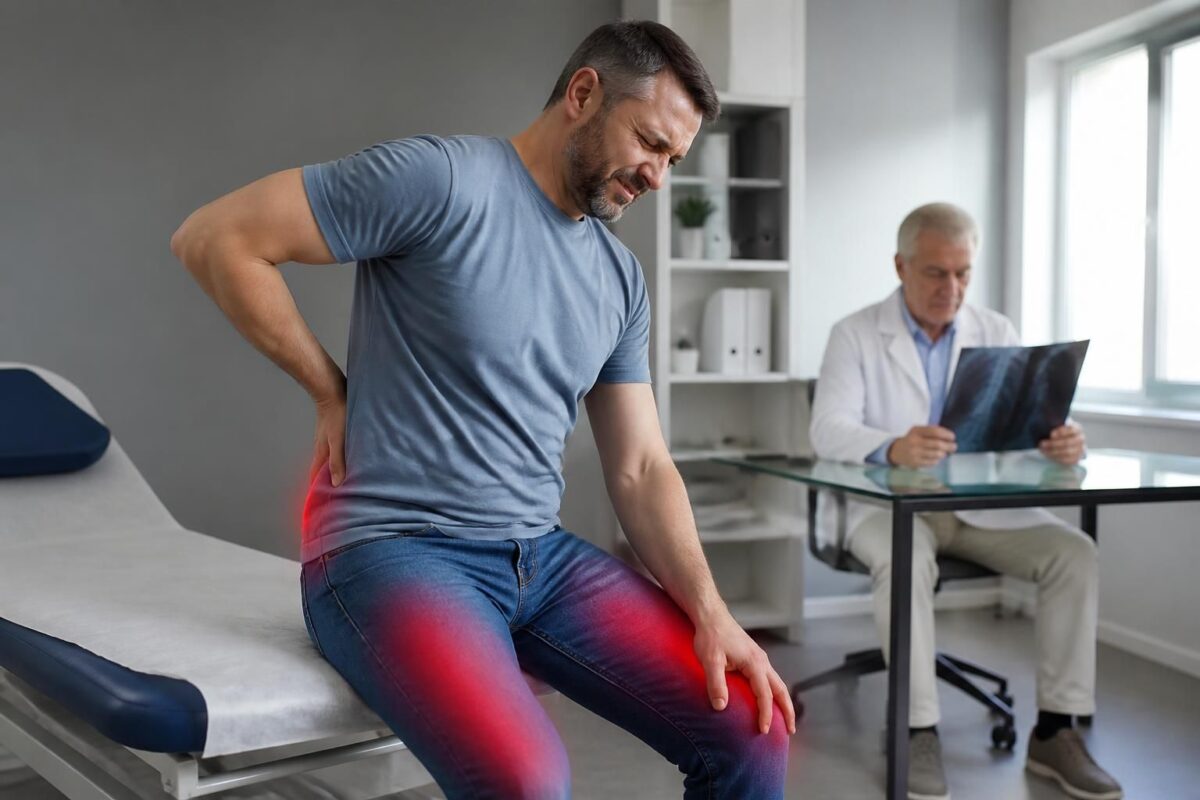
Sciatica and pain in both legs: when to consult?
IN BRIEF In short, sciatica and pain in both legs is a pain that starts in the lower back and may radiate to the buttock and legs. This is often due to irritation or compression of the sciatic nerve. Benefits:…

Dr Sylvain Desforges, B.Sc., D.O., N.D., osteopath, is the founding president of TAGMED and of the ACMA association. He dedicates his practice to chronic spinal pain, low back pain and symptoms compatible with sciatica, particularly when pain radiates toward the buttock, leg, calf, foot or toes.
Through SOS Sciatique, he publishes educational content on sciatica symptoms, possible causes such as disc herniation, disc narrowing, foraminal stenosis or irritation of a lumbar nerve root, as well as non-surgical approaches that may be considered according to the evaluation. At Clinique TAGMED, care may include, depending on the case, motorized neurovertebral decompression, specific osteopathic care or precision percussion.
For an evaluation related to sciatica treatment in Montreal / Mount Royal or sciatica treatment in Terrebonne, please consult the services available at Clinique TAGMED.
Medical disclaimer
The information published on SOS Sciatique is provided for educational purposes only and does not replace a consultation, diagnosis, opinion or treatment provided by a physician or another authorized healthcare professional. The author of this article is neither a medical doctor nor a specialist in a medical specialty recognized by the Collège des médecins du Québec. The osteopathic, manual medicine or functional support approaches described on this site do not constitute medical acts and are not intended to replace medical follow-up.
Consult a physician or emergency service in cases of loss of bladder or bowel control, anesthesia in the saddle area, significant or progressive weakness in the leg or foot, fever, recent trauma, severe pain or rapid worsening of symptoms. For more details, please read our Legal Notice.