


Herniated disc and sciatica: why assessment is important
14/08/2026
Numbness of the foot and sciatica in Montreal: signs to watch for
15/08/2026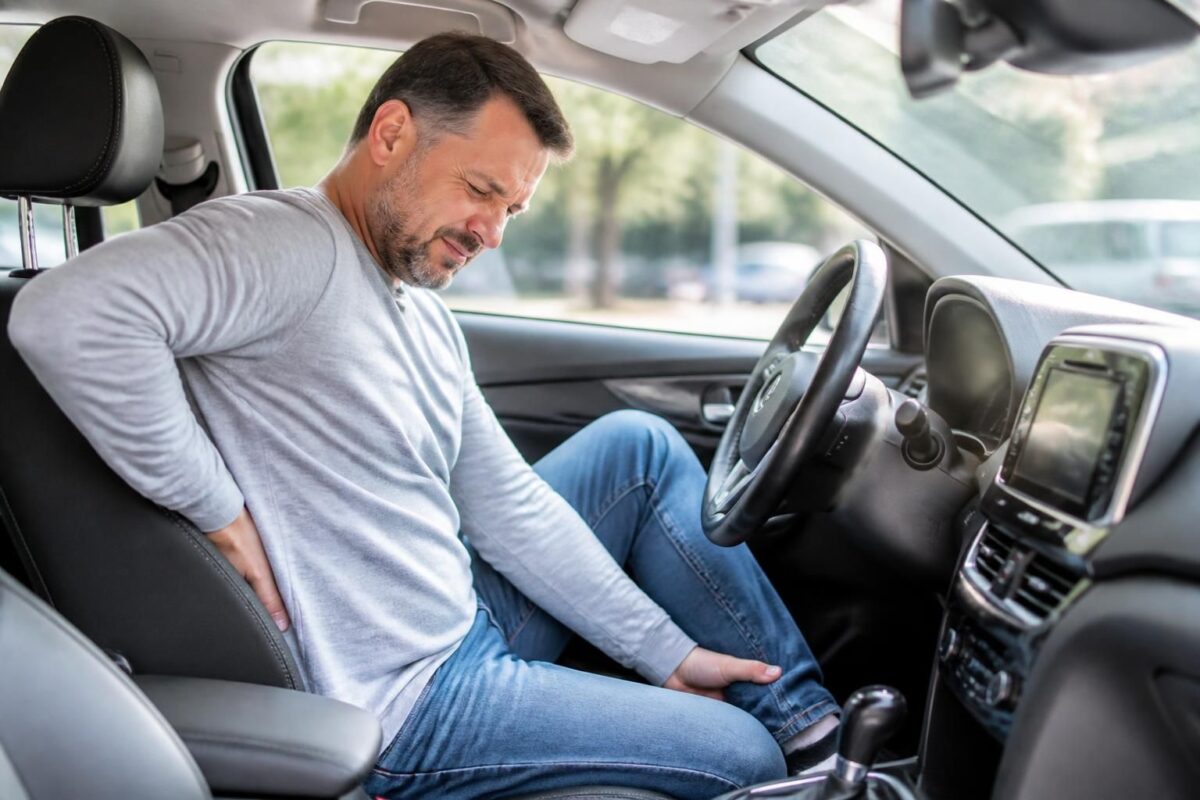
IN BRIEF In brief, sciatica and foot pain in a car refer to pain along the path of the sciatic nerve that may reach the foot, often exacerbated by prolonged sitting and road vibrations. What is it? It is pain caused by irritation or compression of the sciatic nerve, often related to a herniated disc or poor posture while driving. What are the benefits? Simple adjustments to the seat, regular breaks, and using an ergonomic cushion can help limit pressure on the pelvis and coccyx, reduce vibrations, and improve posture for more comfort. How does it work? The cushion works by slightly elevating the pelvis, relieving the coccyx, and absorbing shocks and vibrations, which decreases pressure on the sciatic nerve and the discs and promotes less painful driving on daily and long trips. |
Sciatica is pain that follows the path of the sciatic nerve, starting from the lower back and descending to the foot. In a car, it can worsen due to prolonged sitting, seat tilt, and repeated vibrations, with sensations that may manifest as an electric shock, numbness, or muscle weakness.
To drive with sciatic pain, the goal is to reduce pressure on the pelvis and coccyx, improve shock absorption, and adopt a stable posture. Adjust the seat and the backrest, keep your back well supported, and plan for regular breaks every 1 to 2 hours. An ergonomic cushion can help relieve the coccyx and limit tension while driving.
For example, the Ergoccyx Vehicles combines high-resilience foam and high-viscosity fluid to distribute pressure and absorb shocks and vibrations, while relieving the coccyx and repositioning the pelvis. Following these tips can make trips more comfortable and reduce the impact of pain on the foot.
This article, written by a health professional, explains the link between sciatica and foot pain while driving and suggests simple and safe measures to limit discomfort in the car. It describes the mechanism, aggravating factors in the vehicle, and practical advice on seat ergonomics, breaks, and using an ergonomic cushion to maintain posture and reduce pressure on the nerve.
Understanding the link between sciatica and foot pain
The sciatic nerve originates from the lower back and passes through the buttock, then down the leg to the foot. Irritation or compression can cause a pain that descends to the foot. This pain can be described as an electric shock, a burning sensation, or a dull ache, and it may be accompanied by numbness.
Driving-related factors that worsen the pain
In the car, prolonged sitting can increase pressure on the pelvis and coccyx, worsening nerve irritation. The seat tilt and the repeated vibrations from the road enhance lumbar tension and pain. An unstable posture encourages muscle compensations and can amplify discomfort.
Practical actions to reduce pain while driving
Preparing the vehicle before the trip helps limit pressure. Choose a firm seat and avoid overly cushioned seats that encourage the pelvis to sink. The backrest should be slightly tilted back to maintain a comfortable opening between the torso and legs. If lumbar support is lacking, consider a lumbar cushion or a seat cushion.
Before and during the trip, prioritize simple relaxation techniques. Slow breathing and a calming atmosphere can reduce muscle tension and irritation of the nerve.
Additionally, using an ergonomic cushion that relieves the coccyx and absorbs vibrations can improve comfort. Some models combine a suitable foam and shock-absorbing technology to reduce pressure on the nerve.
Avoid leaning forward too much. Keep your back well supported against the backrest, and if necessary, combine a lumbar support and a seat cushion to stabilize your position during the trip.
Plan regular breaks on a long trip, every 1 to 2 hours, to walk and relieve pressure on the nerve. While stopped, small movements of the feet and ankles can promote circulation and limit stiffness.
Before departure, you can apply gentle heat to relax the muscles or, if necessary, use cold to limit inflammation around the nerve. This can help make the trip less uncomfortable.
When to consult and Resources
If the pain persists or radiates down the leg, is accompanied by marked numbness or muscle weakness, consult a health professional. If in doubt, prioritize a personalized assessment as part of your care.
For further reading, consult the following resources: Sciatica and pain that travels lower – sign to watch, Sciatica and pain that wakes you up – when to worry, Neurovertebral decompression, Herniated disc and pain, Tunnels and associated pain.
Useful links and resources
For specific information on driving and sciatica, you can consult resources such as sossciatique and sossciatique – pain in the buttock and leg. Complementary approaches may be discussed in affiliated resources such as Podiatry and neuro-sciatica and Lumbago and sciatica.
Medical disclaimer: The information and advice provided on this site do not replace the opinion, diagnosis, or treatment of a health professional. Please note that Dr. Sylvain Desforges, osteopath, is neither a medical doctor nor a physician and is not a specialist in a medical specialty as defined by the Collège des médecins du Québec. Manual medicine, functional medicine, and sports medicine as described on this site exclude any treatment or medical diagnosis made by a doctor or specialist. Always consult your doctor for any medical questions. For more details, please read our full Legal Notice.
Axis 1 – Causes and triggers in the car
- Sciatica: pain that follows the route of the sciatic nerve, from the lower back to the foot.
- Prolonged sitting posture and pressure on the coccyx.
- Vibrations and shocks that worsen nerve irritation.
- Poorly adjusted seat or tilt that increases lumbar tension.
Axis 2 – Quick and practical solutions
- Adjust the seat and backrest to limit tilt and support the lower back.
- Use an ergonomic cushion to relieve the coccyx and absorb shocks.
- Plan for regular breaks (1–2 hours) to walk and relieve pressure.
- When stopped, do some simple exercises for the feet and legs to promote circulation.
- Practice relaxation techniques (breathing, relaxed shoulders) during the journey.

This article guides you on sciatica and foot pain that can occur in the car, with concrete advice to limit pressure on the back and coccyx, reduce vibrations, and improve your comfort during journeys. You will discover simple actions, appropriate equipment choices, and exercises to perform when stopped to limit pain and preserve your mobility.
Understanding pain and its impact on the foot in the car
Sciatic pain typically travels along the sciatic nerve, from the lower back to the foot. In the car, prolonged sitting can increase pressure on the pelvis and coccyx, exacerbating nerve irritation and pain down to the foot. Vibrations and bumps in the road intensify this pain signal when the torso and legs do not receive appropriate support.

Sciatica and popular stretches: why to stay cautious
IN BRIEF Sciatica causes pain that radiates from the lower back down the leg. Popular stretches, such as the pigeon pose or hamstring stretches, are not always suitable: pulling on an irritated nerve can worsen the symptoms. Favor gentle movements,…
Aggravating factors while driving
Posture and seat adjustment
A seat that is too soft or poorly adjusted encourages sinking of the pelvis and lumbar tension. The backrest should offer adequate support and be slightly inclined to keep the hips and thighs in a comfortable opening.
Vibrations and shock absorption
Bumps and road irregularities transmit vibrations that increase fatigue and pain. The goal is to relieve sensitive areas and limit shock transmission to the lower back and coccyx.
Pressure on the coccyx and sacrum
Prolonged pressure can transfer discomfort up to the back. A device that offers relief to the coccyx and appropriate weight distribution can help preserve the spine and nerves.

Sciatica and Pilates: movements to adapt
IN SHORT Sciatica causes pain that can radiate from the lower back down to the leg. The Pilates Reformer can promote a gradual return to movement and strengthen core control, provided that the movements, range, and resistance are adapted. Favor…
Reducing pain during the journey
Adjustments and starting position
Before hitting the road, adjust the seat, the backrest, and the distance from the steering wheel to limit muscle compensations and stabilize posture.
Relaxation and breathing
Stress increases muscle tension. During the journey, practice slow and deep breathing, listen to calming music, and relax your shoulders to reduce pain.
Heat or cold and targeted application
Applying a heat or cold source to the painful area can relieve muscles and inflammation. An appropriate solution can be used before the journey to prepare the back and coccyx.
Posture and lumbar support
Keep your back against the backrest and avoid leaning too far forward. A lumbar support combined with a seat cushion can improve stability and reduce tension in the lumbar and coccyx areas.
Breaks and micro-exercises
Plan breaks every 1 to 2 hours and perform simple leg movements when stopped: flexion-extension of the feet and hips to promote circulation and relieve pressure on the nerve.

Sciatica and core stability: variable tolerance depending on symptoms
IN BRIEF Core strengthening in case of sciatica consists of progressively strengthening the trunk muscles. Its tolerance varies depending on pain and symptoms: suitable without worsening the pain, it can support mobility and the resumption of activities, but does not,…
The role of an ergonomic cushion in the car
Key features
A good cushion for sciatica works on three levers: it improves posture, offers relief for the coccyx, and absorbs vibrations. The ideal model is firm, thicker at the back to compensate for the seat’s tilt, and made of a material that distributes pressure without collapsing.
The case of the Ergoccyx Vehicles
This ergonomic cushion combines high-density foam and High Viscosity Fluid technology to dampen shocks and micro-vibrations, relieving the coccyx and sacrum. Its thicker rear shape restores the pelvis and adapts to different vehicles, from personal cars to professional machines.

Sciatica and lunges: leg pain to watch out for
IN BRIEF Sciatica is pain that starts from the lower back or buttock and radiates down the leg. If a lunge triggers or worsens this pain, stop the movement and adjust your activity: this exercise does not address sciatica. Consult…
Practical advice and prevention
Incorporate these habits into your journeys: adjust your seat, prioritize regular breaks, and equip yourself with an appropriate cushion to maintain comfort and limit pain down to the foot. If pain persists or worsens, consult a health professional for personalized support.

Sciatica and deadlifts: risk depending on the cause
IN BRIEF Sciatica and deadlifts are not always incompatible: the risk depends on the cause of the pain and its intensity. During acute episodes, it’s best to avoid heavy loads and seek medical or physiotherapy advice before resuming. A gradual…
Quick comparison: Sciatica and foot pain during car rides
| Aspect | Concise description |
|---|---|
| Origin | Herniated disc or other irritation of the sciatic nerve, aggravated by prolonged sitting position. |
| Manifestation during ride | Pain that radiates along the sciatic path to the foot, sometimes with an electric shock or numbness. |
| Posture and driving | Back against the seatback; avoid leaning forward to maintain an opening between the torso and legs. |
| Seat and support | Firm seat, lumbar support, and relief for the coccyx to limit pressure. |
| Shock absorption | Absorption of vibrations and shocks to limit nerve irritations. |
| Quick relief | Use heat or cold and deep breathing to reduce tension. |
| Breaks during ride | Plan breaks every 1 to 2 hours to walk and relieve the nerve. |
| Exercises while stopped | Light flexion-extension exercises of the legs while stopped to promote circulation. |
| Useful accessories | Ergonomic cushions and support for the coccyx suitable for your vehicle. |
| When to consult | Persistent pain or progression towards the foot requires a medical consultation. |

Sciatica and squats: why caution is needed
IN BRIEF Sciatica does not always prohibit squats, but a deep or loaded squat can aggravate symptoms, especially during a flare-up. Gradually resume with a neutral back and a comfortable range of motion, and stop if the pain travels down…
Testimonials: Sciatica and foot pain in the car
“Before, every trip was a challenge because of my sciatica that went down to my foot. The poorly adjusted seat and vibrations amplified the pain. Since I adjusted the seat and installed a suitable ergonomic cushion, my posture has improved and the foot pain has significantly reduced.”
“The sciatica sent an electric shock down my leg and into my foot every time I started. The Ergoccyx Vehicles cushion, which absorbs shocks and relieves the coccyx, has allowed me to drive without the same level of pain and vibrations.”
“On long trips, the vibrations and micro-shocks would trigger my sciatica and foot pain. Since I take regular breaks and use a well-thought-out ergonomic cushion, my comfort is much better and the pain stays away.”
“I noticed an improvement by keeping my back supported and avoiding leaning forward. With lumbar support and an ergonomic cushion, the pressure on the coccyx decreases and the foot pain becomes more bearable during rides.”
“For my business trips, the secret has been a well-adjusted seat and breaks to move, complemented by the Ergoccyx Vehicles cushion. My sciatica and foot pain have significantly decreased, and I can drive longer without discomfort.”
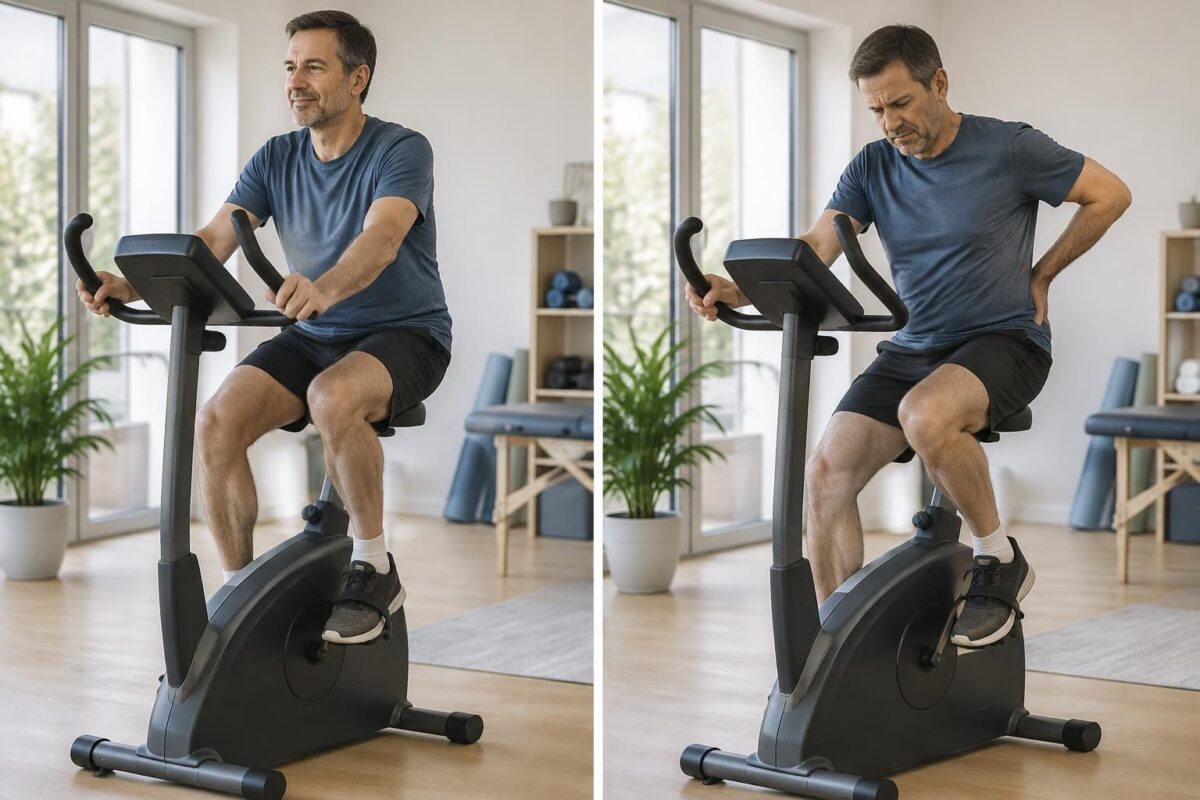
Sciatica and stationary bike: useful or aggravating depending on the case
IN BRIEF The stationary bike with sciatica can help you stay active if the pain is mild and stable. Start with a short session, at low resistance and in a comfortable position. If the pain goes further down the leg,…
Detailed biography of Dr. Sylvain Desforges and his approach to sciatica and foot pain in the car
Dr. Sylvain Desforges stands out as a multidisciplinary specialist combining osteopathy, naturopathy, and manual medicine. Founder and president of TAGMED clinics, he also plays a central role within the ACMA association. His background is rooted in a constant quest for innovation in health, with a marked interest in chronic pain management. His commitment aims to deploy evidence-based approaches to optimize the health and well-being of each of his patients, including those suffering from conditions related to lower back pain and sciatica when car rides exacerbate their symptoms.
In his practice, Dr. Desforges relies on an integrated vision that combines manual techniques, rehabilitation protocols, and advanced technologies. His areas of intervention cover the treatment of chronic pain, spinal decompression, therapies using laser and shock waves, as well as naturopathic approaches to support recovery without excessive dependence on medication. This approach aims to relieve sciatica and pain radiating to the foot while minimizing aggravating factors such as poor posture and driving-related constraints.
His action is particularly relevant for people facing foot pain and sciatica that manifests or worsens during vehicle trips. Dr. Desforges prioritizes an accurate assessment of the responsible mechanisms — posture, pelvic alignment, spinal balance, and muscular response — to propose suitable solutions. The goal is to combine individualized care with practical advice for daily life, including road travel, where maintaining an effective posture and controlling vibrations play a key role in reducing symptoms.
Operationally, his practice embodies a philosophy centered on patient education and the implementation of a coherent care plan. He sets up programs that combine targeted exercises, ergonomic adjustments, and, when necessary, technological interventions to optimize recovery and prevent recurrences. In the context of car and professional trips, he proposes simple and effective strategies to limit pressures on the pelvis and coccyx, reduce jolts, and encourage active breaks, making travel safer and less painful.
Dr. Desforges’ work thus fits into a holistic approach where sciatica and foot pain associated with driving are not only treated symptomatically but understood within their functional ecosystem. His method proposes a continuity between prevention, treatment, and adaptation of lifestyle, including car journeys, daily commutes, and professional missions that require long hours spent driving.
This text provides a practical summary on sciatica and foot pain in the car, showing how posture, seat adjustments, and breaks can reduce discomfort, while presenting ergonomic equipment options and exercise advice to perform during trips.

Sciatica and cycling: sitting, bending, and symptoms
IN BRIEF Sciatica is pain related to irritation of the sciatic nerve, which can extend from the buttock down to the leg. Cycling may sometimes be possible if symptoms are mild and stable: a comfortable seat, a less bent posture,…
Understanding sciatic pain and its impact on the foot in the car
The sciatica is a pain that follows the path of the sciatic nerve, starting from the lower back to the leg and sometimes to the foot. In a car, it can progress towards the foot when the sitting position and bumps amplify the pressure on the nerve roots.
This pain is often associated with a herniated disc or other spinal disorders, but it can also be triggered or worsened by poor posture or repeated strain during journeys.
To delve into the mechanisms and signs, you can consult dedicated resources on the causes and symptoms of sciatica, including information available on the sciatica and foot pain website.
Aggravating Factors While Driving
In a car, sciatica is often amplified by a prolonged sitting position, an inappropriate seat angle, and the repeated vibrations of the road. Transitioning from a collective sidewalk to uneven roads can reactivate the irritation of the nerve and increase pain radiating down to the foot.
The lack of lumbar support and maintaining a rigid posture increase muscle tension and strain on lumbar segments, thereby exacerbating the symptoms.
Practical Tips to Limit Pain in the Car
Before the journey, take the time to adjust your seat and backrest so that your back stays in contact with the backrest and that there is a slight gap suggested between the torso and legs. An appropriate seat depth and a slightly reclined backrest encourage better opening between the torso and legs.
Avoid overly soft seats that promote pelvis sinking; if necessary, add a lumbar cushion or a seat cushion to support the lower back and relieve pressure in the coccyx area.
Adopt simple relaxation techniques during the journey: diaphragmatic breathing, calming music, or voluntary shoulder relaxation to reduce tension and limit muscle contractions.
Before leaving, apply heat to relax the muscles or cold to reduce inflammation around the nerve, depending on what suits your pain best.
Avoid leaning too far forward while driving; keep your back supported and use lumbar support or a seat cushion to maintain a stable and comfortable position.
Plan regular breaks every 1 to 2 hours during long trips to walk, stretch lightly, and relieve pressure on the sciatic nerve.
If driving allows and only when stopped, perform gentle movements of the legs and feet to promote circulation and limit stiffness.
Choosing the Right Equipment and Ergonomics
A well-chosen ergonomic cushion can act on three levers: posture, relief of the coccyx, and vibration absorption. It should preferably be firm and have a more pronounced thickness at the back to compensate for the seat’s tilt and reposition the pelvis.
The relief of the coccyx is crucial to free the coccyx and sacrum from pressure while seated, in order to prevent it from transmitting to the back.
In automotive environments, shock and vibration absorption are essential: a model that is too soft may sink, while a model that is too firm may become uncomfortable over time. Innovative systems, for instance combining high resilience foam and high viscosity fluid technology, can offer an ideal compromise.
Specific solutions exist for journeys in cars, trucks, buses, or professional machinery, to sustainably support the spine and limit strain on the sciatic nerve.
To continue your effort, you can explore options like resources dedicated to automotive equipment and ergonomics and consider user reviews to choose the cushion suited to your vehicle.
Complementary resources and useful readings: to deepen the subject and discover other practical tips, specifically check the following pages: sciatica and pain during sitting-standing transitions, sciatica and driving, protecting your back in the car, paramedian disc herniation and possible painful journey sciatica, sciatica and foot pain, relieve sciatica pain while driving, sciatica and car, why driving can worsen the pain.

Dr Sylvain Desforges, B.Sc., D.O., N.D., osteopath, is the founding president of TAGMED and of the ACMA association. He dedicates his practice to chronic spinal pain, low back pain and symptoms compatible with sciatica, particularly when pain radiates toward the buttock, leg, calf, foot or toes.
Through SOS Sciatique, he publishes educational content on sciatica symptoms, possible causes such as disc herniation, disc narrowing, foraminal stenosis or irritation of a lumbar nerve root, as well as non-surgical approaches that may be considered according to the evaluation. At Clinique TAGMED, care may include, depending on the case, motorized neurovertebral decompression, specific osteopathic care or precision percussion.
For an evaluation related to sciatica treatment in Montreal / Mount Royal or sciatica treatment in Terrebonne, please consult the services available at Clinique TAGMED.
Medical disclaimer
The information published on SOS Sciatique is provided for educational purposes only and does not replace a consultation, diagnosis, opinion or treatment provided by a physician or another authorized healthcare professional. The author of this article is neither a medical doctor nor a specialist in a medical specialty recognized by the Collège des médecins du Québec. The osteopathic, manual medicine or functional support approaches described on this site do not constitute medical acts and are not intended to replace medical follow-up.
Consult a physician or emergency service in cases of loss of bladder or bowel control, anesthesia in the saddle area, significant or progressive weakness in the leg or foot, fever, recent trauma, severe pain or rapid worsening of symptoms. For more details, please read our Legal Notice.