Sciatica and lumbar disc herniation: understanding the link
06/08/2026
Herniated Disc and Sciatica: Why Pain Travels Down the Leg
07/08/2026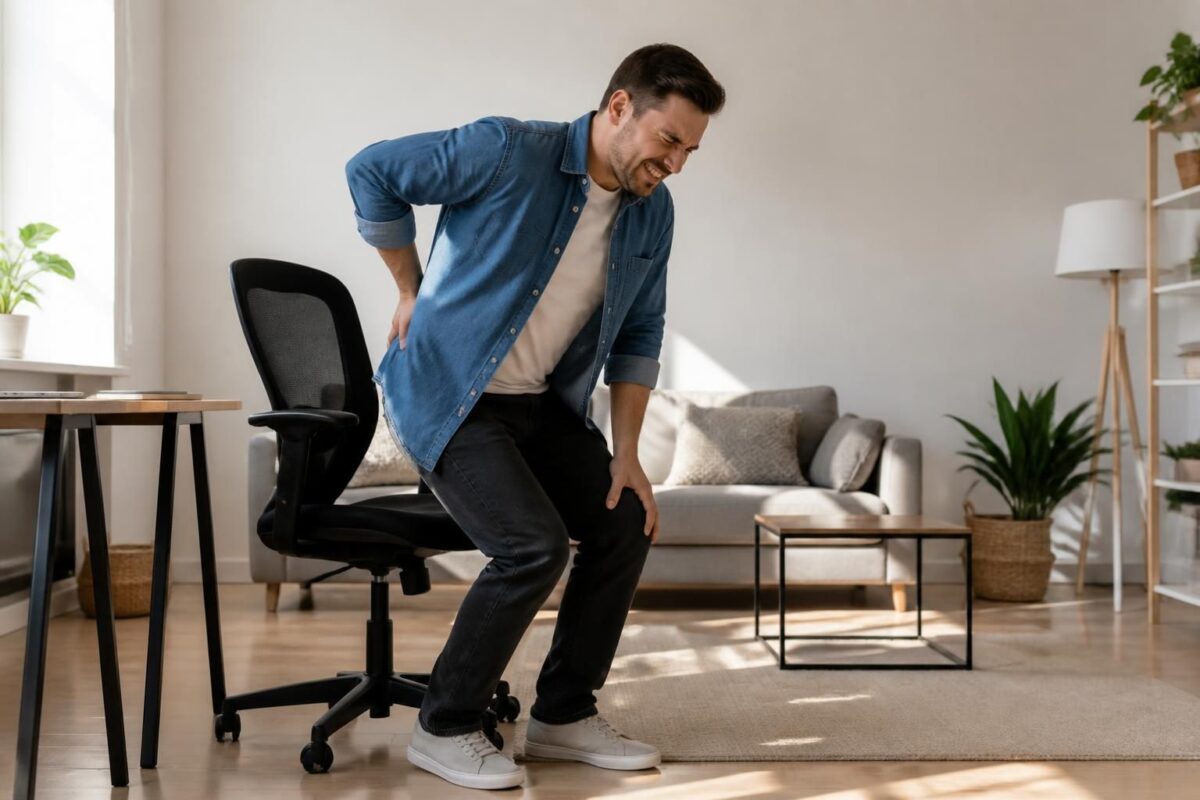
IN BRIEF
| Sciatica during sit-stand transitions is pain that occurs when moving from a prolonged sitting position to standing. This approach combines appropriate ergonomics and simple movements during transitions to reduce disc pressure and tension in the piriformis, while promoting gradual mobility. Its advantages include: decreased painful episodes, better comfort at the office and during daily activities, and prevention of flare-ups. It is easily applied: adjusting the height of the desk, practicing the 20-8-2 rule, and performing short stretches/mobilizations during transitions. In case of acute pain or concerning signs, consult a professional. |
The sciatic nerve can suffer during sit-stand transitions due to a combination of increased disc pressure when sitting and shortening of the piriformis muscle during the transition. A slumped posture and sudden movements often exacerbate the pain.
- Mechanisms: while sitting, the lumbar discs L4-L5 and L5-S1 experience more pressure; the piriformis can shorten and compress the nerve; a curved spine further increases tension.
- Role of the sit-stand desk: it reduces sitting duration and disc pressure, but is not a cure and can be counterproductive if pain worsens when standing.
- Key adjustments: while sitting, thighs horizontal, seat slightly tilted (2–3°) and lumbar support; maximum sitting duration 15–20 minutes. while standing, neutral pelvis, engaged abdominals, slightly bent knees, and weight distribution between the feet.
- Durations and progression: start with 10–15 minutes standing and gradually increase; using an anti-fatigue mat can enhance comfort.
- Practical tips: avoid leaning forward with legs straight and crossing legs; alternate weight-bearing feet and perform micro-movements during transitions; do gentle stretches during transitions (seated piriformis stretch, pelvic tilt, short walking).
- When to consult: if pain worsens when standing, or if accompanied by weakness, significant numbness, or urinary issues, seek medical advice.
This text, written by a health professional expert, explains why sciatica can hurt during sit-stand transitions and how to manage these episodes. It describes the mechanism, postural adjustments, and movements to favor, as well as errors to avoid. The goal is to learn to move and sit more safely, to reduce pain and maintain mobility in daily life.
Understanding the mechanism and triggers
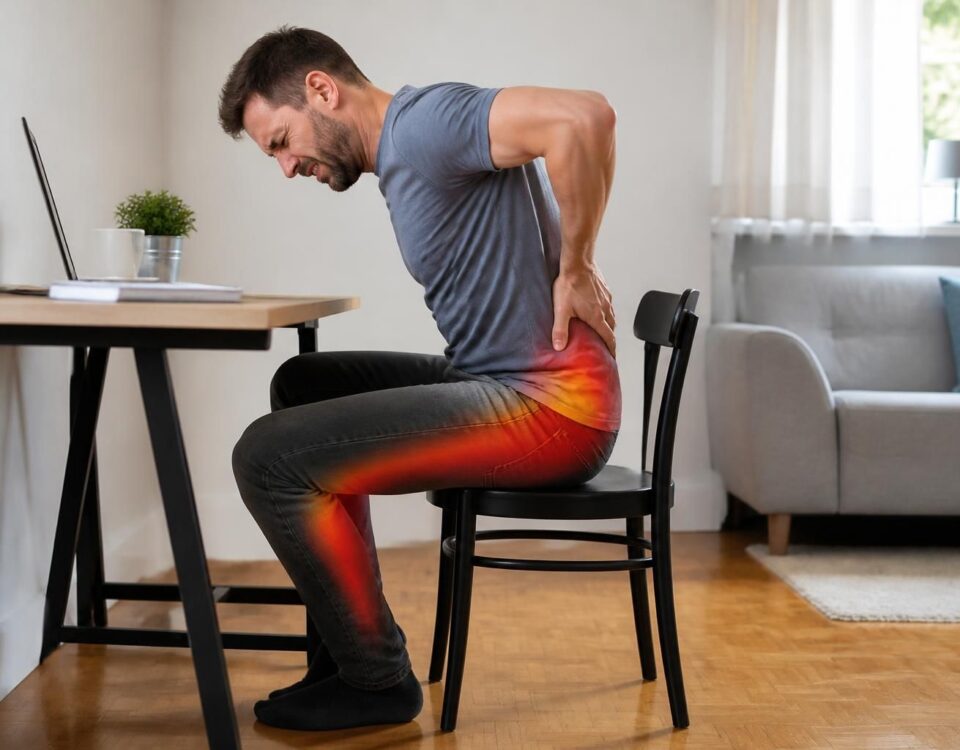
The path of the sciatic nerve begins at the lumbar roots and follows the nerve down the leg. In a sitting position, the pressure on the lumbar discs L4-L5 and L5-S1 can be greater than when standing or lying down. This increased pressure can worsen an existing herniation or irritation. The piriformis muscle can also shorten when the hips remain flexed at about 90°, and if irritated, it can directly compress the sciatic nerve. Sitting for long periods maintains this shortening and can amplify pain. Furthermore, a slumped posture increases disc compression and places more demand on the nerve roots.
For some individuals, conditions like stenosis or other variations in the spinal canal can cause standing to exacerbate symptoms. In any case, the aim is to avoid positions that aggravate the nerve and to find mechanisms that allow movement without excessive pain.
Key elements of a safe workspace and transition
A sit-stand desk is not a therapy but a postural management tool. Correct adjustments and regular alternation between sitting and standing help limit painful episodes. The principle “20-8-2” can be helpful: 20 minutes sitting, 8 minutes standing, 2 minutes of movement. This alternation reduces the duration of disc compression and gives the piriformis an opportunity to relax.
In a standing position, disc pressure is lower than when remaining seated, but it is not zero. Weight must be distributed between the feet and posture varied. An adjustable desk allows for maintaining a neutral posture and avoids leaning forward, which can compress the nerve roots.
Good practices during sit-stand transitions
Sitting position. Working with thighs horizontal or slightly lower than hips, and a backrest that provides lumbar support is essential. The seat should be slightly tilted forward (2-3°) to reduce lumbar flexion and decrease disc pressure. The maximum duration in a sitting position with pain should remain short, ideally 15-20 minutes.
Standing position. Keep forearms horizontal, shoulders relaxed. The pelvis should be neutral, abdominals slightly engaged, and knees soft, without hyperextension. Regularly change the weight-bearing foot and use a small support to slightly relieve the lumbar spine. Start with short periods and gradually increase if pain remains controlled. An anti-fatigue mat can enhance comfort during standing periods.
Common mistakes and warning signals
Avoid leaning forward with straight legs to reach something under the desk. Bend your knees instead. Avoid crossing legs while sitting and stay vigilant for pain that worsens during prolonged standing.
Avoid overly soft chairs that sag in the lower back and increase disc pressure. Do not remain still for too long while standing. If pain increases rapidly in a standing position, return immediately to a sitting position and reassess.
Stretches and mobilization during transitions
Targeted stretches and gentle movements can be done between sitting and standing periods. Among the simple gestures:
- Piriformis stretch while sitting: place the ankle of one leg on the opposite knee and lean slowly forward without forcing, feeling the tension in the buttock.
- Gentle neurodynamic mobilization: from a sitting position, activate foot movements to slowly glide the sciatic nerve along the leg.
- Light pelvic tilts and micro-tilting methods: alternate between anterior and posterior pelvic tilts to mobilize the lower back without pain.
Use these gestures 2 to 3 times a day, especially after long periods of inactivity. If a sensation increases significantly, limit the range or decrease the intensity.
When to consult and sources of information
If the pain is intense, extends beyond the calf, or is accompanied by weakness, loss of strength, or urinary problems, consult a healthcare professional promptly.
For additional information on positions to avoid and ergonomics advice, you can check specialized resources on recognized websites. For example, you can explore the following resources:
- Positions that worsen pain when sitting
- Intermittent and reassuring pain
- Pain in the buttock radiating down the leg
- Evaluations and clinical options
- Neurovertebral decompression and alternatives
For comprehensive and balanced resources, professional training and practices align with recognized poles such as NUMSS, NAO, and National University of Medical Sciences — National Academy of Osteopathy. Relevant professional associations include ACMA, College of Canadian Osteopaths, and Collège des Ostéopathes Canadiens.
To guide you in the context of comprehensive support, you can consult specialized resources on the areas mentioned above and discuss with your doctor or graduated osteopath from recognized institutions.
Also see additional information on the options and clinical approaches available on the following partner sites: sossciatique.com, sossciatique.com, sosherniediscale.com.
As part of an action plan, it is advisable to prioritize a combination of simple and regular movements, rather than intensive and sporadic exercises. A realistic routine may include one or two gestures per position (sitting, standing, lying down), for about 10 to 15 minutes, 3 to 5 times a week. The goal is to maintain mobility and limit painful episodes, without promising a quick resolution of the pain.
Medical Disclaimer: The information and advice provided on this site do not replace the opinion, diagnosis, or treatment of a healthcare professional. Please note that Dr. Sylvain Desforges, osteopath, is neither a medical doctor nor a physician and is not a specialist in a medical specialty as defined by the Collège des médecins du Québec. Manual therapy, functional medicine, and sports medicine as described on this site exclude any medical treatment or diagnosis made by a doctor or medical specialist. Always consult your doctor for any medical questions. For more details, please read our full Legal Notice.
The information contained in this article does not replace an individual diagnosis and does not constitute a medical prescription. If you have unusual or persistent symptoms, consult a healthcare professional for an evaluation appropriate to your case.
“Medical Disclaimer: The information and advice provided on this site do not replace the opinion, diagnosis, or treatment of a healthcare professional. Please note that Dr. Sylvain Desforges, osteopath, is neither a medical doctor nor a physician and is not a specialist in a medical specialty as defined by the Collège des médecins du Québec. Manual therapy, functional medicine, and sports medicine as described on this site exclude any medical treatment or diagnosis made by a doctor or medical specialist. Always consult your doctor for any medical questions. For more details, please read our full Legal Notice.”
- Transition – sciatic pain triggered during the transition from sitting to standing after a prolonged period.
- Disc pressure – increased pressure when sitting, worsening symptoms.
- Piriformis – the piriformis can shorten and compress the sciatic nerve.
- Alignment – slumped back and pelvis forward increase nerve tension.
- Managing transitions – favoring progressive cycles with small pauses and movement.
- Post adjustment – adjustable desk and lumbar support for a neutral posture.
- Rule of thumb – apply the 20-8-2 rule (20 min sitting, 8 standing, 2 moving).
- Warning signs – pain worsening when standing or loss of strength → consult promptly.
- Comfort – use an anti-fatigue mat and start standing for short durations.
- Exercises during the transition – sitting piriformis, gentle neurodynamic mobilizations, and stretched hamstrings.

The sciatic pain can intensify during sitting-standing transitions. This article provides simple guidelines to reduce pressure on the sciatic nerve, adopt neutral postures, and integrate easy movements during these transitions, without claiming to cure the condition but improving daily comfort and mobility.
Understanding the mechanism during transitions
In a sitting position, the pressure exerted on the lumbar discs is higher than when standing or lying down, which can exacerbate a herniated disc or increase nerve irritations. The piriformis muscle can shorten when the hips remain flexed, which can compress the sciatic nerve and generate pain radiating sometimes down the leg. Conversely, standing puts continuous strain on the back without completely relieving the spine; the goal is to alternate positions while avoiding segments of high compression.
Ergonomic adjustments for the sitting-standing transition
To limit aggravating factors, adjust your workstation to maintain a neutral posture. Desk height, seat inclination, and lumbar support are your primary adjustments. When seated, ensure that your thighs are horizontal or slightly downward and that the backrest provides constant lumbar support. A slight seat tilt (2-3°) helps reduce lumbar flexion and pressure on the discs.
When standing, ensure a neutral posture: stable pelvis, slightly engaged abdomen, relaxed shoulders. Change your supporting foot regularly and, if possible, use an anti-fatigue mat to reduce the load on your feet and joints. To limit lumbar stress, avoid maintaining a large extension and favor a natural weight distribution.
Time Distribution and Transitions
A practical approach is to alternate states with a movement pattern: for example, 20 minutes sitting, 8 minutes standing, then 2 minutes moving. This rule helps limit periods of disc compression and promotes regular stretching of the piriformis and activation of stabilizing muscles.
Stretching Rituals and Mobilizations to Integrate During Transitions
Incorporate simple stretches and mobilizations related to the transition. For example, a stretch of the piriformis while seated, with the ankle of the painful leg on the opposite knee, followed by a slight forward bend until you feel controlled tension in the buttock. Add gentle neurodynamic mobilizations, such as ankle and foot movements while keeping the torso stable, to slowly glide the sciatic nerve without triggering sharp pain.
Use the transitions for micro-sequences of walking or pelvic tilting. The goal is to stay connected to movement without causing violent pain. If pain increases during stretching, reduce the amplitude or return to a less demanding position, then try again later.
When to Consult and Signs to Watch For
If you experience strong radiating pain, loss of strength, or urinary issues, consult a doctor or physiotherapist. Some conditions, such as stenosis or piriformis syndrome, require individual assessment to adjust positions and exercises. Stretching and micro-mobilizations should be integrated into a comprehensive pain management approach and should not replace medical advice.
Common Mistakes to Avoid
Avoid overstretching or combining too many exercises without progression. Pain that worsens after transitions often indicates overload; adjust duration, amplitude, and frequency. Don’t hesitate to return to simpler and shorter phases for a few days to prevent flare-ups and promote a more stable return to regular activities.
| Criterion | Impact and Advice |
|---|---|
| Exposure Duration while sitting | Reduce sitting phases and apply the 20-8-2 rule to limit disc compression and facilitate position changes. |
| Disc Pressure and Position | While sitting, disc pressure is high on L4-L5/L5-S1; while standing, it decreases but persists. |
| Piriformis and Alignment | The piriformis can shorten while sitting; standing transitions and stretches promote lengthening and prevent nerve compression. |
| Posture and Slouching | A slouched posture increases compression; aim for a neutral posture and straight back. |
| Workstation Adjustment | An adjustable workstation prevents forced inclinations and helps maintain a neutral posture. |
| Transition Duration | Start with 10-15 minutes standing, gradually increase; if pain increases, return to sitting. |
| Recommended Exercises and Movements | Combine gentle stretches and neurodynamic mobilizations; aim for 30-60s per stretch and 2-3 sets per transition. |
| Useful Equipment | Anti-fatigue mats and footrests can reduce pressure and improve comfort while standing. |
| When to Consult | In case of active sciatica or persistent pain, consult; the tool is complementary and does not replace treatment. |
Testimonials on Sciatica and Pain During Sitting-Standing Transitions
“My name is Marie, I am a developer and my days are marked by Sciatica that reacts strongly during sitting-standing transitions. Each move from the chair to the desk triggers a pain that starts from the buttock and can travel up to the calf. With an adjustable desk and a neutral posture, I have learned to limit the spikes and I try to respect a short standing window followed by movement to avoid straining.”
“I am Julien, a logistics manager. At first, each transition triggered a pain that radiated down my leg. By adjusting my workstation with an adjustable desk and applying a lighter version of the 20-8-2 rule (20 minutes sitting, 8 standing, 2 moving), I noted a significant decrease in tension. I also do a little targeted stretch of the piriformis during my coffee breaks, and it makes all the difference.”
“My name is Thomas, I enjoy sports activities, but the sitting-standing transitions were problematic for me: my Sciatica would flare up and moving from one position to another became difficult. I started alternating standing on a step and doing 2 sets of 20 seconds of standing stretch during my warm-up; the tensions have become less frequent and my sprints at the end of the session are smoother.”
“I am Claire, a 52-year-old seamstress. Even though my nighttime pains have evolved differently, I have noticed that longer stretches and micro-movements during transitions allow me to move better from sitting to standing. In the evening, by staying slightly in a neutral extension and breathing calmly, the Sciatica would settle before bed, and I have gained comfort during the day when I rise and sit.”
“My name is Lucas and I am a salesman. Shifting positions tended to worsen my pain; so I prioritized simple adjustments: an adjustable desk to maintain a neutral posture, and micro-movements during transitions rather than abrupt shifts. Result: the pain during posture changes has become much more tolerable and my days go by with fewer unexpected stops.”
Biography of Dr. Sylvain Desforges and His Approach to Sciatica and Sit-Stand Transitions
Dr. Sylvain Desforges, an expert in osteopathy, naturopathy, and manual therapy, is the founding president of TAGMED clinics and the ACMA association. His journey is guided by a vocation for innovation in health care, with a strong focus on managing chronic pain and seeking integrative solutions to improve patients’ daily lives.
With a career dedicated to multidisciplinary pain management, he develops approaches that combine traditional knowledge with emerging technologies. Among these are advanced methods such as spinal decompression, laser therapy, and shock wave therapy. This combination aims to reduce symptoms, restore mobility, and promote a more functional return to everyday activities.
Regarding issues related to sciatica and, more broadly, pain associated with sit-stand transitions, Dr. Desforges prioritizes an evidence-based approach. His goal is to provide care that sustainably supports health and well-being while considering patients’ daily movements and professional constraints, particularly for those spending many hours in front of a desk.
His approach is based on a precise assessment of the mechanisms responsible for pain. He examines, for example, the effects of prolonged sitting on the lumbar and pelvic-femoral structures, the impact of ergonomic adjustments, and the importance of a progressive movement plan. This vision helps avoid aggravating postures and structures realistic routines that incorporate periods of rest, mobilization, and appropriate strengthening.
Within his clinics, the approach is decisively practical and personalized. Dr. Desforges emphasizes patient education and the co-construction of an action plan that adapts to individual life rhythms. He strives to transform pain into a useful signal to guide choices of posture, movement, and exercise, rather than making it a fatality.
Moreover, his role as a key player in TAGMED and ACMA reflects a commitment to promoting rigorous and innovative clinical practices while remaining accessible. His vision is to democratize access to evidence-based care, offering solutions that reconcile effectiveness, safety, and quality of life for patients suffering from spinal pain and sit/stand transitions.
For those looking to understand how his approach can help relieve sciatica and optimize sit-stand transitions in their professional and personal lives, Dr. Desforges invites them to explore the services offered by his network and consider a consultation that lays the groundwork for a sustainable program focused on mobility and well-being. His background illustrates a strong conviction: effective care arises from the alliance of clinical expertise and technologies serving the individual.
This text summarizes how sciatica pain can be influenced by transitions between sitting and standing positions, and how an adjustable desk, relevant adjustments, and targeted movements can help limit aggravating factors. It reminds that this setup is not a miracle cure but a tool for postural management and mobility that must be used with a precise understanding of mechanisms and individual limitations.
The logic of sit-stand transitions is based on reducing pressure on the lumbar discs and preventing shortening of the piriformis muscle. By practicing regular intervals and micro-movements, one reduces periods of compression and promotes smoother nerve activity, which can alleviate painful episodes and irritations that travel up the leg.
Workstation adjustments play a key role. A properly positioned seat – appropriately heightened, a slight tilt of the seat (about 2-3°), effective lumbar support – helps maintain a neutral posture and avoid forced bends that increase disc pressure. The practical rule to integrate is alternating positions, for example, by respecting simple and reproducible cycles throughout the day. To deepen ergonomic aspects, you can consult dedicated guides such as this ergonomic white paper.
It is essential to consider limits: although stretching and mobilizations help temporarily neutralize symptoms, they do not replace medical management when a herniated disc, stenosis, or piriformis syndrome is present. If pain persists or worsens in a standing position, the choice of workstation and consulting a professional should be re-evaluated. Specialized resources such as these local guides can help identify the precise cause.
To build an effective and realistic routine, opt for a combination of one or two stretches per position and target around 10 to 15 minutes, 3 to 5 times a week. Progressiveness is key: a pain that increases from day to day requires a reduction in amplitude or duration, followed by an adjustment in the following week. Also inform yourself about the distinctions between stretching muscles and mobilizing the nerve, to avoid confusion and inappropriate gestures. Resources such as non-surgical approaches and the link between the lumbar spine and foot pain can complement your plan.
Finally, integrating sit-stand transitions into real activities (light walking, climbing stairs, daily locomotion) prepares the body for functional loads and improves movement tolerance. For practical advice and tailored exercises, consult guides such as sciatic nerve stretches and pain that increases when sitting. These resources help you differentiate between muscle tension and nerve irritation and adjust your program accordingly.
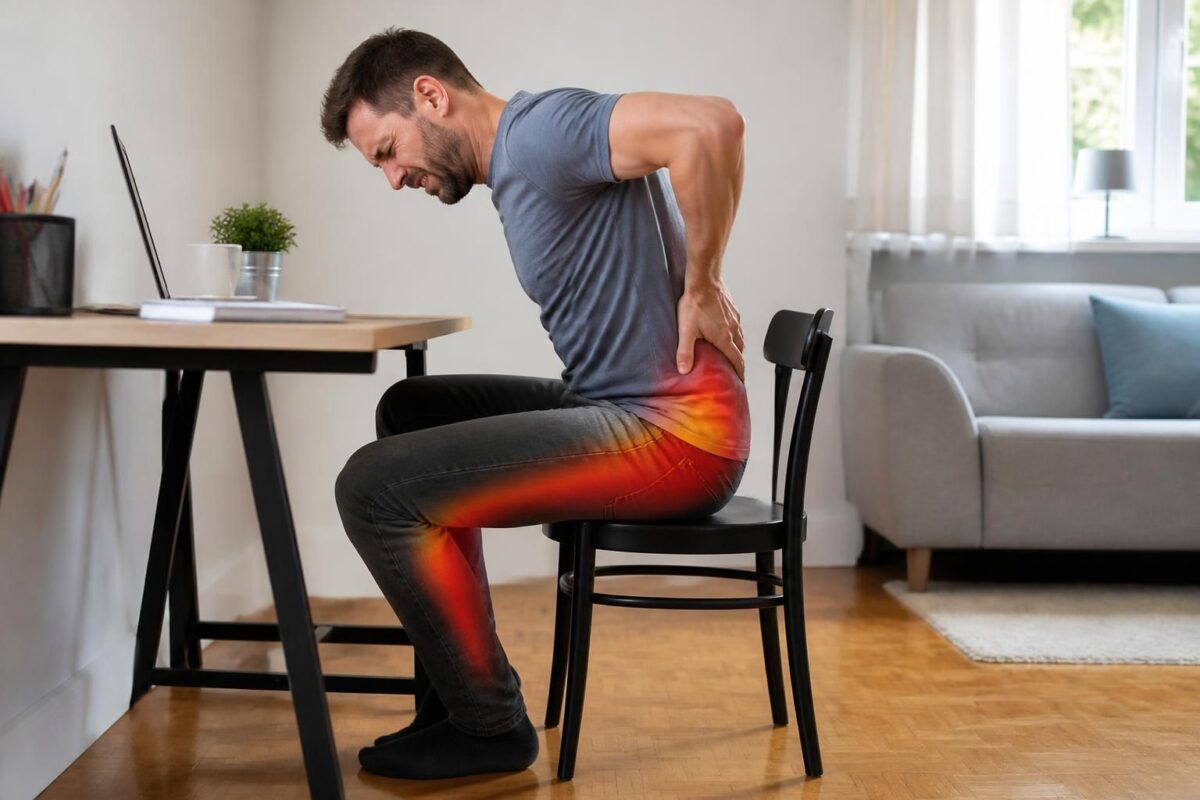
Sciatica and too low seat: lumbar pain and irradiation
IN BRIEF In brief, sciatica with lower back pain and radiation is pain that follows the path of the sciatic nerve, originating from the lower back and radiating to the buttock and leg, often due to irritation or compression of…

Sciatica and overly inclined car seat: possible effect
IN BRIEF In brief, the link between sciatica and a car seat that is too inclined can worsen pain due to an inadequate posture and increased compression of the sciatic nerve. What is this phenomenon? It is a decrease in…

Sciatica and car seat: why tilt matters
IN BRIEF In brief, car seat sciatica refers to pain related to the sciatic nerve exacerbated by poor seat tilt and vibrations that compress the nerve roots and degrade the lumbar lordosis. It is important to adjust the tilt and…

Sciatica and getting into the car: avoiding sudden twists
IN BRIEF In brief, sciatica associated with driving is pain that follows the path of the sciatic nerve and can be triggered or amplified by seated position and sudden twists when entering or exiting the car. The main benefits of…

Sciatica and getting out of the car: movement to watch out for
IN BRIEF In brief, managing sciatica when getting out of the car and the movements to monitor is a practical approach to limit pain. What is it? It is a set of gestures and postures that prevent pressure on the…

Sciatica and pain that travels down the leg in a car
IN BRIEF Sciatica and the pain that radiates down the leg when driving is a pain caused by irritation or compression of the sciatic nerve, which intensifies in prolonged sitting in a confined space like a vehicle. It’s a discomfort…
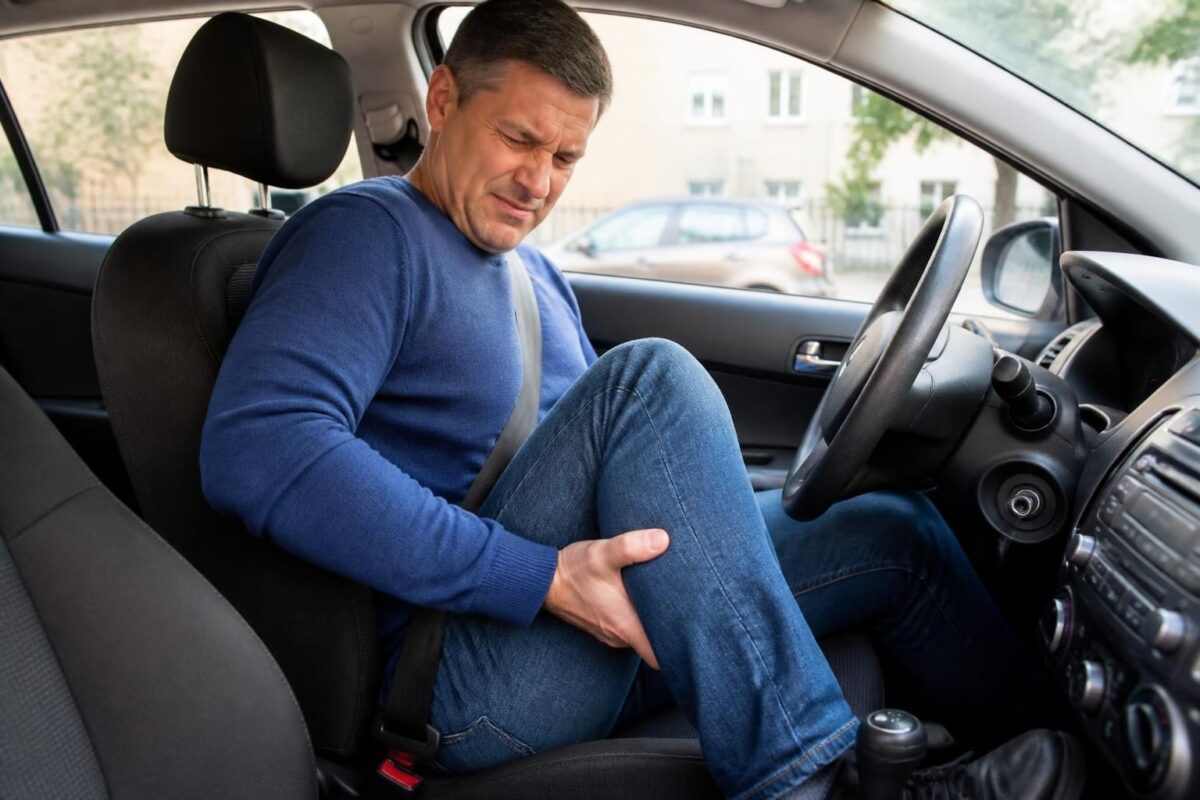
Sciatica and calf pain after driving
IN BRIEF In brief, sciatica and calf pain after driving refer to irritation or compression of the sciatic nerve that can manifest after a trip. This often occurs with prolonged sitting, vibrations, and an inadequate driving posture. Benefits: better comfort…
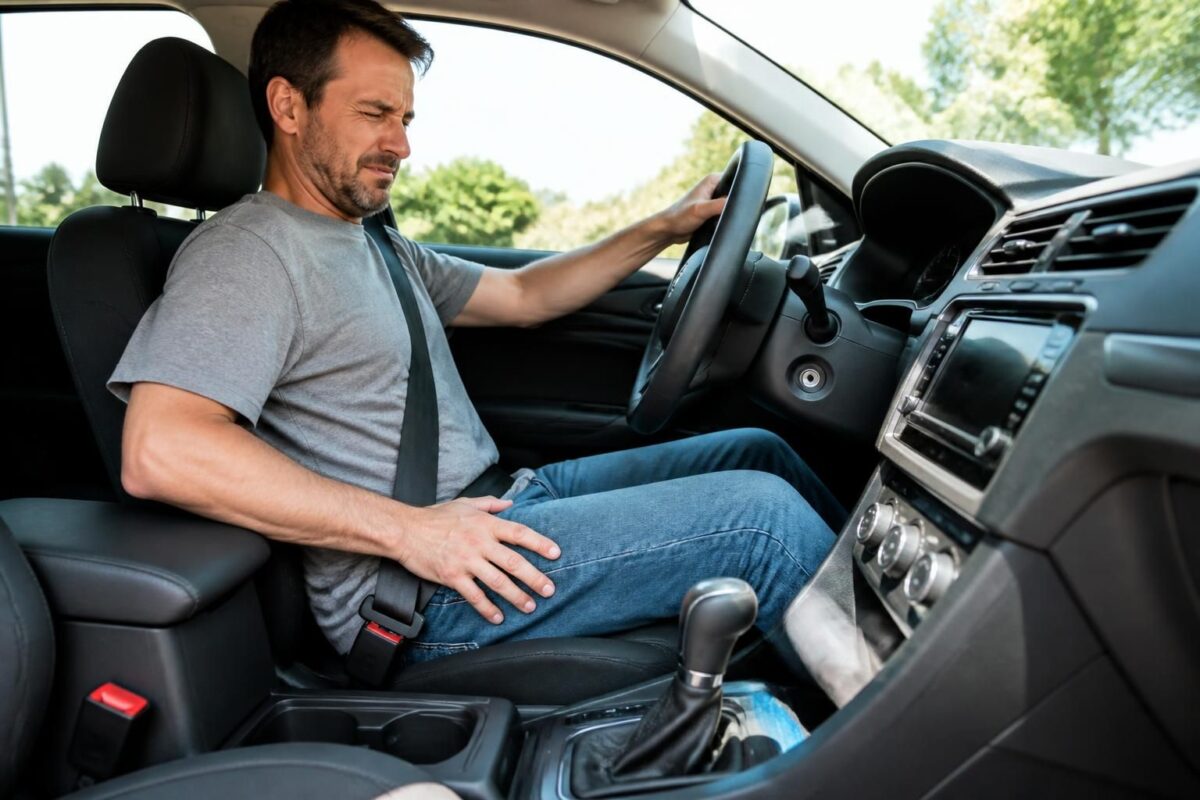
Sciatica and numbness in the foot while driving
IN BRIEF In brief, sciatica and numbness in the foot while driving describe pain and sensations of paresthesia that descend from the lower back to the foot or travel up along the nerve path during car trips. Benefits: a quick…

Dr Sylvain Desforges, B.Sc., D.O., N.D., osteopath, is the founding president of TAGMED and of the ACMA association. He dedicates his practice to chronic spinal pain, low back pain and symptoms compatible with sciatica, particularly when pain radiates toward the buttock, leg, calf, foot or toes.
Through SOS Sciatique, he publishes educational content on sciatica symptoms, possible causes such as disc herniation, disc narrowing, foraminal stenosis or irritation of a lumbar nerve root, as well as non-surgical approaches that may be considered according to the evaluation. At Clinique TAGMED, care may include, depending on the case, motorized neurovertebral decompression, specific osteopathic care or precision percussion.
For an evaluation related to sciatica treatment in Montreal / Mount Royal or sciatica treatment in Terrebonne, please consult the services available at Clinique TAGMED.
Medical disclaimer
The information published on SOS Sciatique is provided for educational purposes only and does not replace a consultation, diagnosis, opinion or treatment provided by a physician or another authorized healthcare professional. The author of this article is neither a medical doctor nor a specialist in a medical specialty recognized by the Collège des médecins du Québec. The osteopathic, manual medicine or functional support approaches described on this site do not constitute medical acts and are not intended to replace medical follow-up.
Consult a physician or emergency service in cases of loss of bladder or bowel control, anesthesia in the saddle area, significant or progressive weakness in the leg or foot, fever, recent trauma, severe pain or rapid worsening of symptoms. For more details, please read our Legal Notice.