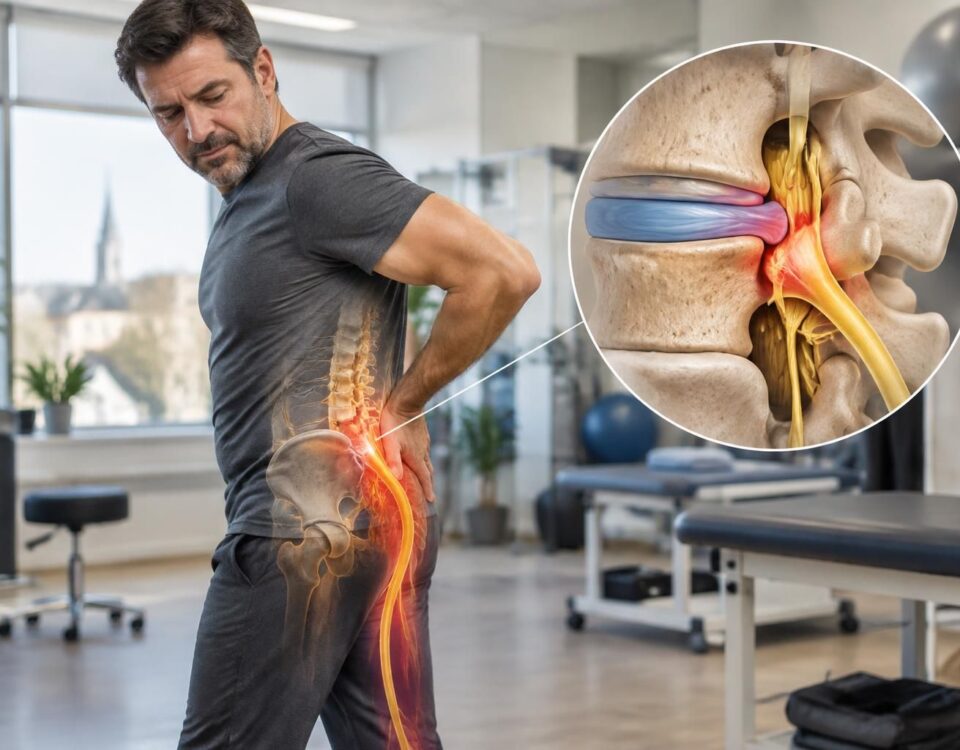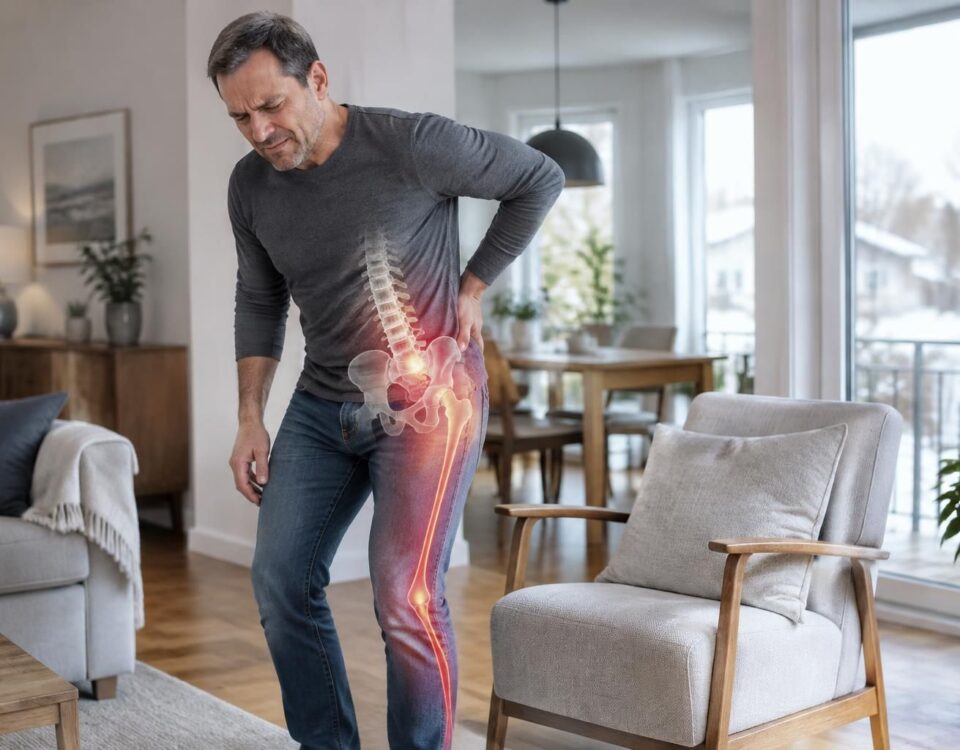
Sciatica in Montreal: pain that radiates down the leg when coughing
30/08/2026
Sciatica and burning sensation in the calf
30/08/2026
IN BRIEF
| In brief, Sciatica in Terrebonne is a radicular pain that often starts in the lower back or buttock and can cause a pain that radiates down the leg, especially when coughing. In Terrebonne, the evaluation and non-surgical solutions offered help identify the cause (disc, foraminal, or other) and propose a personalized plan including exercises, postural advice, and, if necessary, techniques for neurovertebral decompression. The main advantages include improvement in mobility, reduction of pain, and prevention of recurrences without surgery. The approach relies on accurate clinical evaluation, identification of the symptom pathway, and an adapted rehabilitation program focused on conservative options and follow-up to measure progress. |
In Terrebonne, sciatic pain can manifest as radiation down the leg and may occur or worsen when coughing. This worsening is related to an increase in abdominal pressure that can irritate a lumbar nerve root, most often associated with a herniated disc, a protrusion, or foraminal stenosis. The diagnosis is based on clinical evaluation and, if necessary, imaging studies; the management prioritizes conservative measures and progressive rehabilitation to reduce pain and restore function.
This article written by a health professional specializing in osteopathy explains sciatica in Terrebonne when the pain radiates down the leg and worsens when coughing. It describes possible mechanisms, signs that require evaluation, the non-surgical management options available in the area, and reliable resources for obtaining personalized advice in Terrebonne.
Understanding the Pain Associated with Coughing
The pain follows the pathway of the sciatic nerve. Coughing can increase pressure in the spine and intensify pain when the nerve is irritated. Typical symptoms include pain that starts in the lower back or buttock and radiates down the leg, sometimes accompanied by numbness or tingling.
Signs and Typical Pathways
The pain can follow different pathways depending on the affected root. It can travel down to the foot or remain localized behind the thigh. Neurological signs such as weakness or sensory disturbances help guide the evaluation.
Evaluation and Management in Terrebonne
In Terrebonne, a structured evaluation helps determine if the symptoms are consistent with radiculopathy. The doctor or osteopath can review the history of symptoms, mobility, and function, correlating these elements with imaging studies if needed. For a suitable non-surgical approach, options are available at the TAGMED clinic, including Treatment for sciatica in Terrebonne.
Conservative Approaches and Specialized Resources
Conservative approaches can be discussed based on the patient’s profile. This may include specific osteopathic techniques and non-surgical options offered by specialized clinics. For neurovertebral decompression or other non-surgical approaches, a targeted consultation in a suitable clinical setting may be considered. To learn more about options in Terrebonne and non-pharmacological alternatives, consult the following resources:
- Treatment for sciatica in Terrebonne
- Sciatica and Tingling in the Heel — Possible S1 Root
- Sciatica and Professional Driving — Signs Not to Overlook
- Sciatica and Getting in the Car — Avoid Sudden Twists
- Neurovertebral Decompression
- Sciatica and Tingling at Bedtime — Why This Happens
- Sciatica Pain in the Leg
When to Seek Immediate Attention
Consult urgently if you observe loss of bladder or bowel control, saddle anesthesia, significant and progressive weakness of one leg, fever, or recent trauma. Significant bilateral signs or pain that worsens rapidly justify prompt medical care.
Key Elements for Communication with Your Care Team
During the evaluation, it is helpful to describe the exact path of the pain, the times it worsens (e.g., when coughing), and the impact on walking, sleeping, and daily activities. Imaging may be considered if necessary, but the goal is to clarify the management plan and expected outcomes.
About Treatments and Local Resources
For non-surgical approaches in Montreal or Terrebonne, the TAGMED clinic offers evaluations and care tailored to each situation. In some cases, neurovertebral decompression or specific osteopathy may be part of a comprehensive plan, without resorting to surgical intervention. For more information on available options in Terrebonne, refer to:
- Sciatica treatment in Terrebonne
- Sciatica — low seat, lower back pain, and irradiation
- Professional driving and signs not to underestimate
- Getting into the car — avoiding sudden twists
Useful links and general resources
To complete your information, you can consult specialized resources on sciatica and the various mechanisms that can cause radiating pain in the leg. Associative and professional pages gather advice and practical guidelines, while remaining aligned with local clinical practices.
Medical Disclaimer: The information and advice provided on this site do not replace the opinion, diagnosis, or treatment of a healthcare professional. Please note that Dr. Sylvain Desforges, osteopath, is neither a medical doctor nor a physician and is not specialized in a medical specialty as defined by the Collège des médecins du Québec. Manual therapy, functional medicine, and sports medicine as described on this site exclude any treatment or diagnosis made by a medical doctor or specialist. Always consult your physician for any medical questions. For more details, please read our full Legal Notice.
Important information: This page provides general information and does not diagnose. An imaging anomaly may be asymptomatic, and treatment outcomes vary based on the cause, duration, neurological signs, history, and individual response to care. Emergency signs require appropriate medical evaluation.
- Key symptom: pain that starts in the lower back or buttock and radiates down the leg, exacerbated by coughing.
- Possible origins: irritation of a nerve root due to a hernia/disc or foraminal stenosis.
- Warning signs: progressive weakness, loss of urinary control, severe bilateral pain, or rapid deterioration.
- Quick assessment: trace the painful path and check neurological function.
- Immediate actions: relative rest, application of ice or heat as tolerated, avoid aggravating efforts.
- Non-surgical treatments: conservative approaches and progressive exercises, appropriate manual therapies.
- Helpful exercises: targeted stretching and gentle lumbar strengthening, tolerated and regular walking.
- Plan and follow-up: initial consultation to confirm the diagnosis and establish a rehabilitation plan, scheduled reevaluations.
- When to seek emergency care: pain that worsens rapidly, significant numbness or weakness, or urinary/rectal signs appearing.

This article summarizes the essential recommendations for sciatica in Terrebonne when the pain radiates down the leg and worsens with coughing. You will find guidelines on possible causes, signs that require evaluation, preferred self-care measures, and simple exercises to promote comfort and gradual resumption of activities, while emphasizing the importance of appropriate and personalized management.
Understanding pain that worsens when coughing
Pain that “follows” the leg during a cough may reflect irritation of a lumbar nerve root, which is called radiculopathy. The cough reflex increases pressure in the lumbar spine and can amplify pain along the path of the sciatic nerve. Possible causes include a herniated disc, disc protrusion, foraminal stenosis, or mechanical irritation of a nerve root. The path of the pain may extend from the lower back or buttock down to the calf and foot, and may be accompanied by paresthesias or weakness.
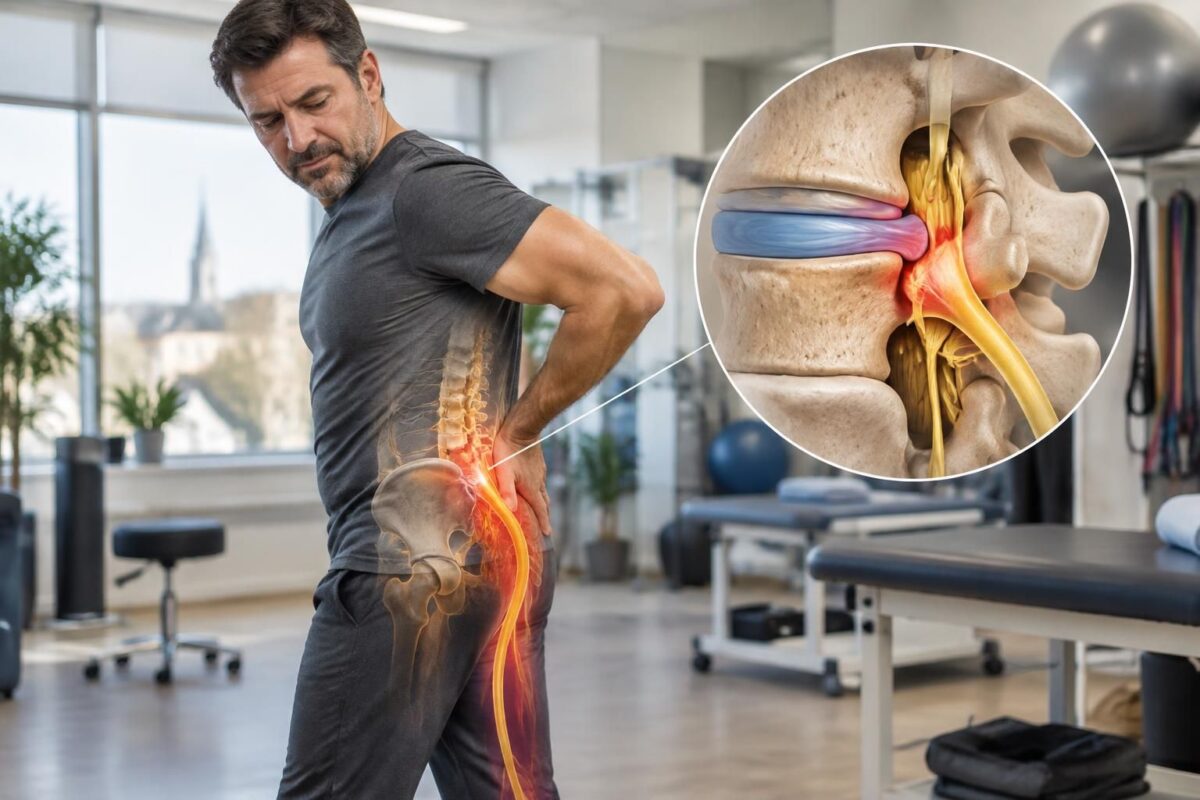
Sciatica in Terrebonne: nerve root, disc, and foramen explained simply
IN BRIEF Sciatica is pain that occurs when a nerve root in the lower back is irritated or compressed, sometimes by a disk or a narrowed foramen. Understanding these structures helps better locate the possible cause of symptoms and guide…
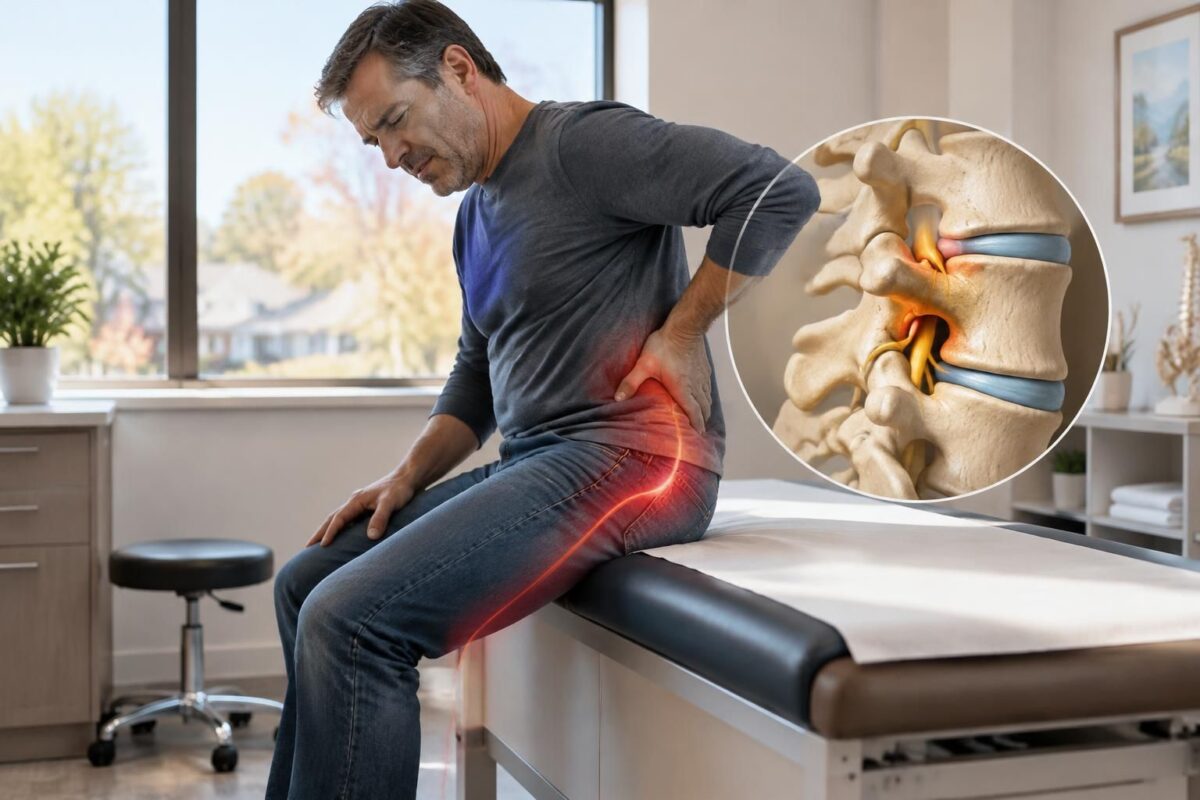
Sciatica in Terrebonne: understanding the L5-S1 foraminal compression
IN BRIEF The L5-S1 foraminal compression corresponds to a narrowing of the opening through which a nerve root passes, potentially contributing to sciatica. In Terrebonne, the assessment compares the side and course of the symptoms, neurological examination, imaging, and limited…
Warning signs and when to consult quickly
Consult quickly if you experience warning signs such as urinary or intestinal issues, saddle anesthesia, significant and progressive weakness in one leg, associated fever, recent trauma, or pain that worsens rapidly despite rest. The presence of a foot drop, significant bilateral pain, or important neurological signs requires prompt medical evaluation to rule out an emergency and adjust treatment.
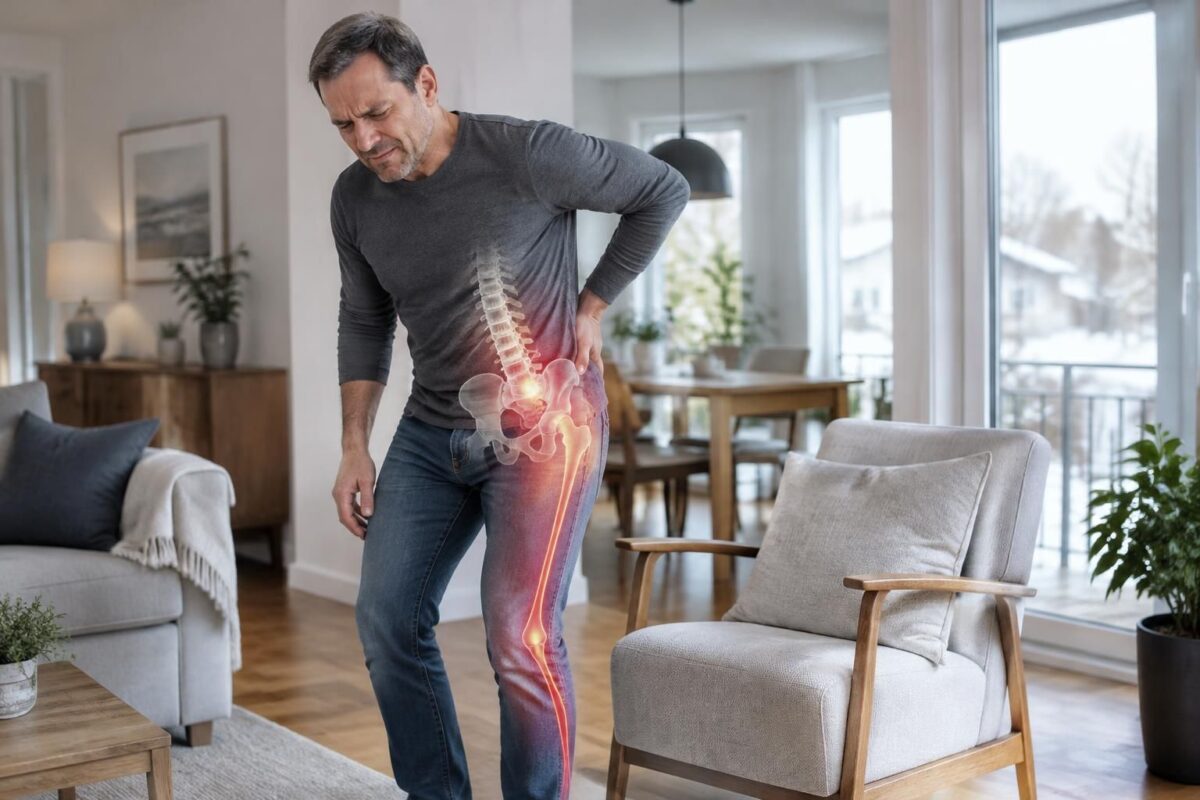
Sciatica in Terrebonne: why L5-S1 is often involved
IN BRIEF Sciatica corresponds to pain related to the irritation of a nerve root, which can extend from the buttock down to the leg. The L5-S1 level is often involved, as a disc herniation or irritation at this location can…
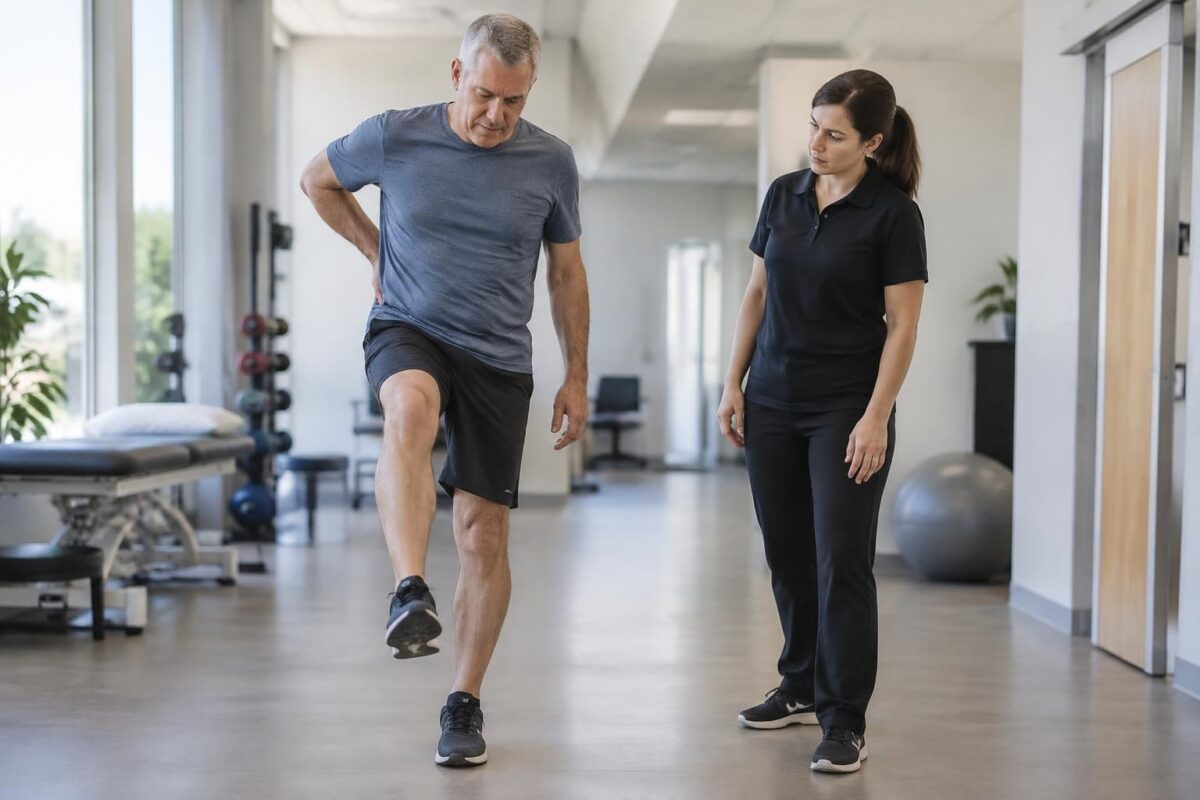
Sciatica in Terrebonne: L5 and difficulty lifting the foot
IN SHORT The L5 sciatica can cause pain or numbness on the side of the leg, the top of the foot, and the big toe, sometimes with difficulty lifting the foot. In Terrebonne, an evaluation compares strength, sensitivity, reflexes, and…
Self-care measures and home management
For initial episodes or flare-ups, prioritize comfortable positions and avoid sudden efforts. Lie down or adopt a semi-reclining position with the affected leg slightly elevated when the pain is intense. Alternately apply cold and heat according to your tolerance and muscle response. In cases of mild to moderate pain, an analgesic such as paracetamol may be helpful, following medical recommendations. Non-steroidal anti-inflammatory drugs (NSAIDs) may be considered if your doctor deems them appropriate and you have no contraindications. Note that some stronger analgesics require a prescription and an in-person consultation according to local rules. In any case, avoid prolonged rest and long periods of inactivity, which delay recovery. Finally, work to limit movements that trigger or worsen the pain, and seek to maintain adapted physical activity.
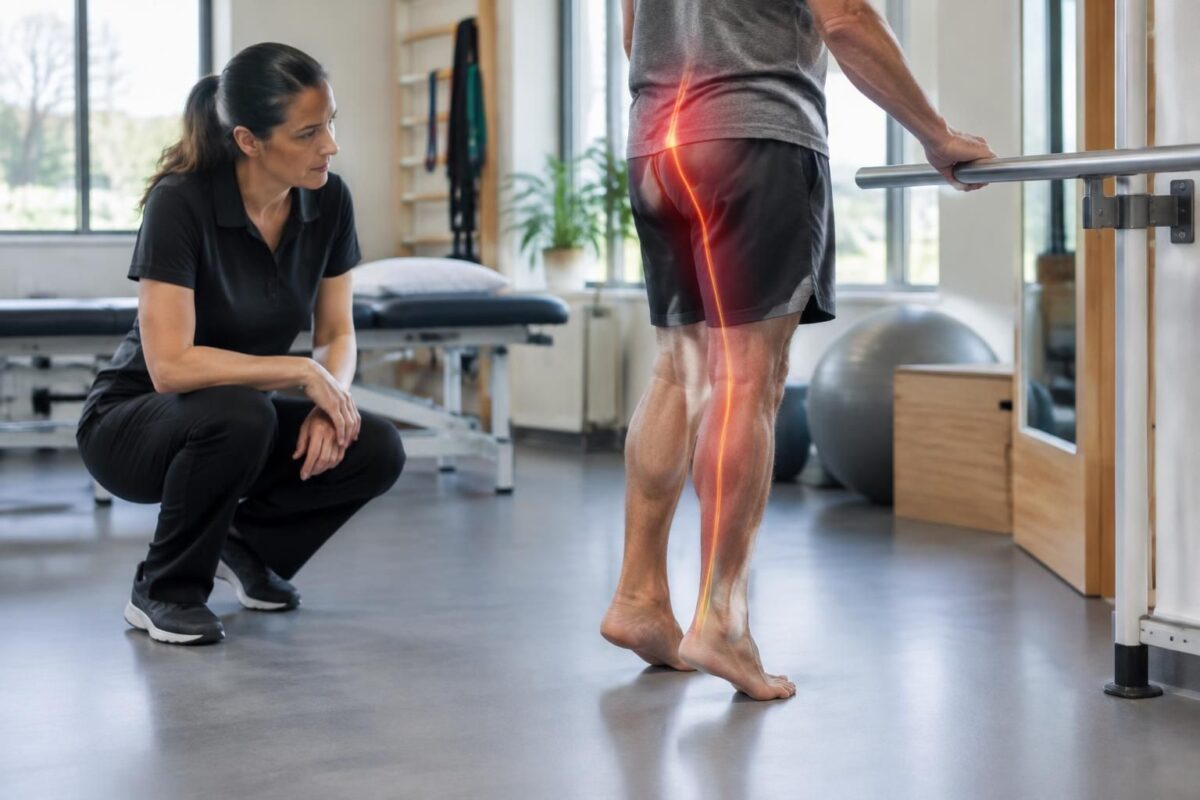
Sciatica in Terrebonne: S1 and difficulty standing on tiptoe
IN SHORT An S1 sciatica can irritate the nerve root associated with the calf and make it difficult to rise onto the balls of the feet. This sign should be evaluated with strength, sensitivity, reflexes, and walking: the pathway of…

Sciatica in Terrebonne: L4-L5 and pain towards the top of the foot
IN BRIEF A L4-L5 sciatica can radiate to the outer side of the leg and the top of the foot, sometimes reaching the big toe. This pathway can guide the assessment, though it does not suffice to confirm the cause:…
Recommended exercises and stretches
These movements, performed gently and without pain, aim to “unstick” the nerve and improve mobility. Piriformis stretch: lying on your back, legs straight, cross one leg over the other and bring the bent knee towards the ground while feeling the stretch in the buttock; hold for 1 minute then switch sides. Gluteal muscle stretch: on your back, knees bent, bring one thigh towards you and hold for 30 to 60 seconds, then do the other side. Round back: lying on your back, knees drawn towards your chest with knees wrapped against the torso to feel the stretch in the lower back; hold for 2 minutes. Repeat these exercises 2 to 3 times a day depending on your tolerance. If pain occurs, stop and seek advice from a professional.

Sciatica in Terrebonne: L5-S1 and symptoms in the calf
IN BRIEF A L5-S1 sciatica can cause pain that radiates down the calf, sometimes accompanied by tingling, numbness, or weakness. At Terrebonne, an assessment at the TAGMED Clinic helps to examine the symptom pathways, strength, and sensitivity, and then discuss…

Sciatica in Terrebonne: pain in the big toe, L5 root or another cause?
IN BRIEF Pain in the big toe accompanied by pain in the buttock or leg may be compatible with irritation of the L5 root, but other causes are possible. In Terrebonne, the evaluation notably compares strength, sensitivity, and gait to…
Activity and Rehabilitation
Maintain tolerated activity and progress slowly towards lumbar strengthening and trunk stability exercises. Regular walking can be beneficial if it remains comfortable; avoid excessive efforts, sudden twists, and positions that worsen the pain. A personalized rehabilitation program can be considered by an Osteopath or Physiotherapist in Terrebonne to identify the exact cause (disc herniation, protrusion, foraminal stenosis) and develop a gradual plan tailored to your situation.
| Item | Concise Observations |
|---|---|
| Trigger | Pain that worsens with each cough, a typical sign of radiculopathy. |
| Path | Descends into the leg according to the affected root: buttock, thigh, calf, or foot. |
| Associated Signs | Numbness, tingling, and sometimes weakness. |
| Probable Causes | Hernia/disc, foraminal protrusion, or foraminal stenosis. |
| Emergency | Loss of bladder/bowel control or rapid weakness requires urgent consultation. |
| Useful Exam | Clinical evaluation and targeted imaging if necessary. |
| First Treatment | Relative rest, tolerated activities, and analgesics as needed. |
| Terrebonne Plan | Local specialized evaluation and personalized non-surgical plan. |
Testimonials on Sciatica in Terrebonne: Pain that Descends into the Leg with Coughing
Marie, a resident of Terrebonne, describes a sciatica that mainly occurs when coughing. With each cough, the pain that descends into the leg appears, starting from the lower back and possibly radiating to the buttock and calf. After suitable evaluation and a gradual rehabilitation plan, she observes an improvement and can gradually resume her activities.
Pierre, 49 years old, from Terrebonne, shares that the pain that descends into the leg intensified with each cough, making daily tasks difficult. Thanks to conservative support, he managed to reduce the intensity of the symptoms and regain mobility without resorting to surgery.
Émilie, 34 years old, a resident of Terrebonne, specifies that the pain that descends into the leg mainly appeared during coughing episodes. Targeted stretches and posture advice provided by the local team helped her ease the symptoms and return to her sports activities.
Luc, 57 years old, living in Terrebonne, describes sharp pains that follow the path of the leg with each cough. Thanks to an adapted approach and progressive exercises, the pain has decreased and walking has become easier.
Claire, 45 years old, also from Terrebonne, shares that an accurate diagnosis and a personalized care plan enabled her to effectively manage her sciatica and the pain that descends into the leg during coughing episodes, with notable improvement and better quality of life.
Dr. Sylvain Desforges is recognized as an expert in osteopathy, naturopathy, and manual medicine. Founding president of TAGMED clinics and the ACMA association, he has dedicated his career to innovation in healthcare and improving the management of chronic pain. His work is based on an integrative approach that combines proven manual techniques with advanced technological tools to optimize the quality of life of his patients, particularly those suffering from sciatica in Terrebonne.
In cases of pain radiating into the leg, especially when coughing or a coughing fit triggers or intensifies the symptoms, his team emphasizes a precise assessment of the painful path and neurological signs. The doctor seeks to determine the nerve root involved (for example, the L4, L5, or S1 segments), the level of compression or irritation, and the functional impact on walking, sleep, and daily activities. This meticulous clinical approach helps distinguish the different potential causes and avoid unsuitable treatments, while remaining transparent about the realistic rehabilitation goals.
Management of sciatica in Terrebonne relies on personalized non-surgical protocols. Dr. Desforges prioritizes a multimodal approach that may combine osteopathy, motorized neurovertebral decompression, and complementary therapeutic measures. He also incorporates advanced technologies such as laser therapy and shock wave therapy when clinically appropriate, to reduce nerve irritation and improve mobility. Each patient benefits from a tailored care plan designed to accelerate recovery while minimizing the risk of recurrence.
At the heart of this approach, the goal is to provide evidence-based care and a deep understanding of the behavior of radicular pain. The care pathway includes a structured evaluation of pain, function, and sensitivity, relevant imaging analysis when necessary, and then the definition of measurable goals and a rehabilitation timeline. The aim is to improve mobility, reduce pain, and optimize quality of life, while providing practical advice to prevent relapses and adapt work and daily activities.
For patients located in Terrebonne, TAGMED offers specialized evaluation and conservative options tailored to each profile. The team can support individuals who experience pain that descends into the leg during efforts such as coughing, and work with them to restore normal and sustainable function. An initial consultation helps clarify the painful path, triggering factors, and management possibilities. TAGMED Clinic Terrebonne, 1150 Lévis Street, Suite 200, Terrebonne, QC J6W 5S6, welcomes patients and organizes appointments online or by phone.
To learn more about his approach and the available services, visit www.cliniquetagmed.com.
Sciatica in Terrebonne often manifests as pain radiating down the leg, and may be exacerbated by movements such as coughing. This text summarizes possible mechanisms, warning signals, management options, and local resources for an evaluation tailored to your situation in Terrebonne.
When the pain follows a nerve pathway in the leg and worsens with coughing, it may reflect irritation or compression of a lumbar nerve root, particularly the sciatic nerve. Coughing increases intra-abdominal and lumbar pressure, which can intensify pain that is already present in cases of herniated disc, disc protrusion, foraminal stenosis, or other root irritations. The result is pain that typically starts in the buttock or lower back and radiates down the leg to the foot, sometimes accompanied by burning or tingling sensations.
To clarify the situation, a local evaluation in Terrebonne can determine if the symptoms stem from a disc issue, foraminal problem, or another lumbar cause. This approach helps distinguish nerve-related pain from muscular or joint discomfort and identify the most relevant conservative options. A personalized approach may include advice on tolerated activities, progressive exercises, and manual techniques tailored to your profile, while avoiding inappropriate treatments.
Simple and progressive exercises can help “unpinch” the nerve and improve mobility without exacerbating the pain, subject to professional advice. For instance, stretches of the piriformis and gluteus maximus, as well as rounded back exercises, can be considered when the pain is controlled and tolerated, always under supervision. To understand why these painful pathways follow specific routes down the leg, you can consult specialized resources like this guide dedicated to Terrebonne, and other analyses relevant to sciatica and lumbar pathways.
Pain radiating down the leg may also be accompanied by neurological issues such as paresthesias, numbness, or significant weakness. In some situations, it may be necessary to examine the progression and assess signs requiring urgent care, notably when there is noticeable bilateral weakness, rapidly escalating pain, or abnormal urinary or fecal signs. For advice on when to act quickly in Terrebonne, refer to analyses dedicated to symptom progression as described in specialized resources on sciatica in Terrebonne.
To progress towards a faster and more sustainable resolution, an evaluation at the TAGMED Clinic or with an osteopath/physiotherapist may be considered to develop a tailored care plan. Non-surgical approaches focused on reducing nerve irritation, improving mobility, and strengthening supportive structures have proven useful for many people suffering from lumbosciatica. You can consult additional resources on how pain can radiate down the leg and the underlying mechanisms in Montreal or the region, and refer to guides dedicated to conservative assessment and treatment.
To delve into the various manifestations and possible pathways of sciatica in the leg, especially in relation to coughing and the evolution of pain, explore the following resources: sciatica in Montreal, in Terrebonne, and other useful resources on pathways and symptoms.
If you are seeking an evaluation in Terrebonne, you can also consult additional resources and guides, such as those explaining the precise pathway in the leg and the signs to watch for after walking or painful episodes (tingling and nerve irritation, Doctissimo). For a local and personalized approach, the TAGMED Clinic in Terrebonne (1150 rue Lévis, Terrebonne) can plan an evaluation suited to your situation and direct you to the most relevant non-surgical options. For more information, you can explore resources related to Terrebonne such as understanding the pathway of pain and guidelines on symptom progression. You can also consult supporting articles on mechanisms and management options proposed by healthcare professionals and recognized organizations.
For an appointment or targeted evaluation in Terrebonne, contact the TAGMED Clinic or a spinal professional to establish a personalized plan to reduce root irritation, improve mobility, and prevent recurrences. Additional resources are available to better understand the pathway and triggers of pain when it radiates down the leg and is accompanied by coughing or other neurological signs.

Dr Sylvain Desforges, B.Sc., D.O., N.D., osteopath, is the founding president of TAGMED and of the ACMA association. He dedicates his practice to chronic spinal pain, low back pain and symptoms compatible with sciatica, particularly when pain radiates toward the buttock, leg, calf, foot or toes.
Through SOS Sciatique, he publishes educational content on sciatica symptoms, possible causes such as disc herniation, disc narrowing, foraminal stenosis or irritation of a lumbar nerve root, as well as non-surgical approaches that may be considered according to the evaluation. At Clinique TAGMED, care may include, depending on the case, motorized neurovertebral decompression, specific osteopathic care or precision percussion.
For an evaluation related to sciatica treatment in Montreal / Mount Royal or sciatica treatment in Terrebonne, please consult the services available at Clinique TAGMED.
Medical disclaimer
The information published on SOS Sciatique is provided for educational purposes only and does not replace a consultation, diagnosis, opinion or treatment provided by a physician or another authorized healthcare professional. The author of this article is neither a medical doctor nor a specialist in a medical specialty recognized by the Collège des médecins du Québec. The osteopathic, manual medicine or functional support approaches described on this site do not constitute medical acts and are not intended to replace medical follow-up.
Consult a physician or emergency service in cases of loss of bladder or bowel control, anesthesia in the saddle area, significant or progressive weakness in the leg or foot, fever, recent trauma, severe pain or rapid worsening of symptoms. For more details, please read our Legal Notice.