Sciatica in Montreal: understanding the path of pain before acting
16/07/2026
Sciatica and soft chairs: why pain may increase
16/07/2026
IN BRIEF In short, sciatica in Terrebonne is pain that follows the path of the sciatic nerve from the lower back to the foot. Understanding this path allows for the interpretation of symptoms and the preference for non-surgical approaches focused on movement and posture. Key benefits include pain reduction, improved mobility, and prevention of recurrences through tailored exercises and personalized assessment. The operation relies on a clinical assessment and a personalized plan including physiotherapy and local osteopathy in Terrebonne to promote a return to activity and daily well-being, without unnecessary recourse to surgery. |
In Terrebonne, understanding the path of the sciatic nerve is the first step to effectively combat pain.
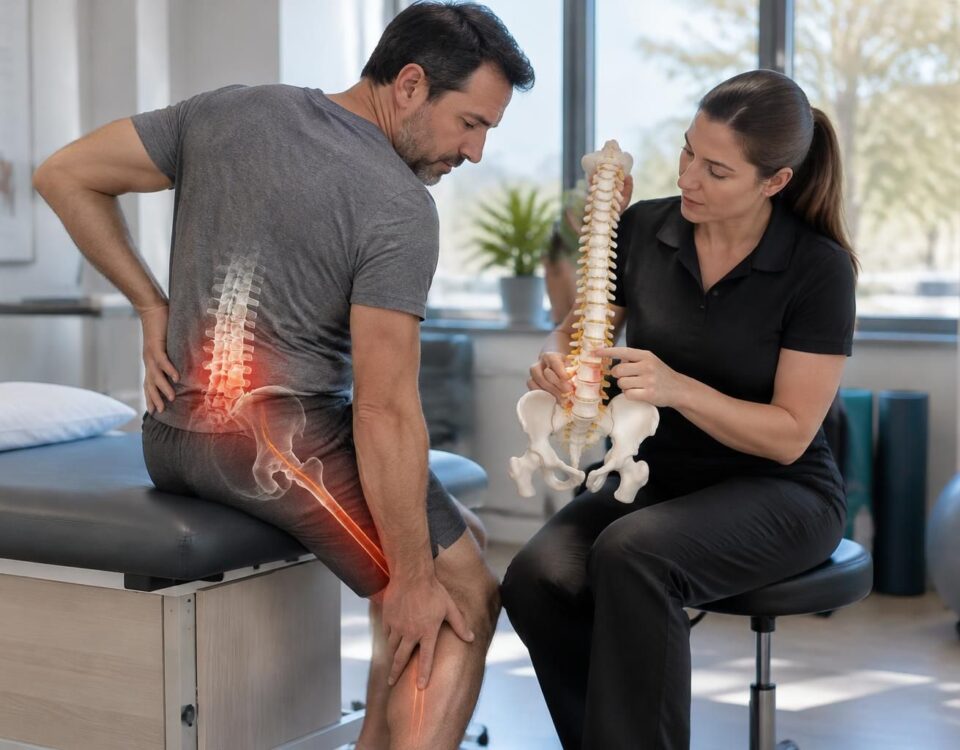
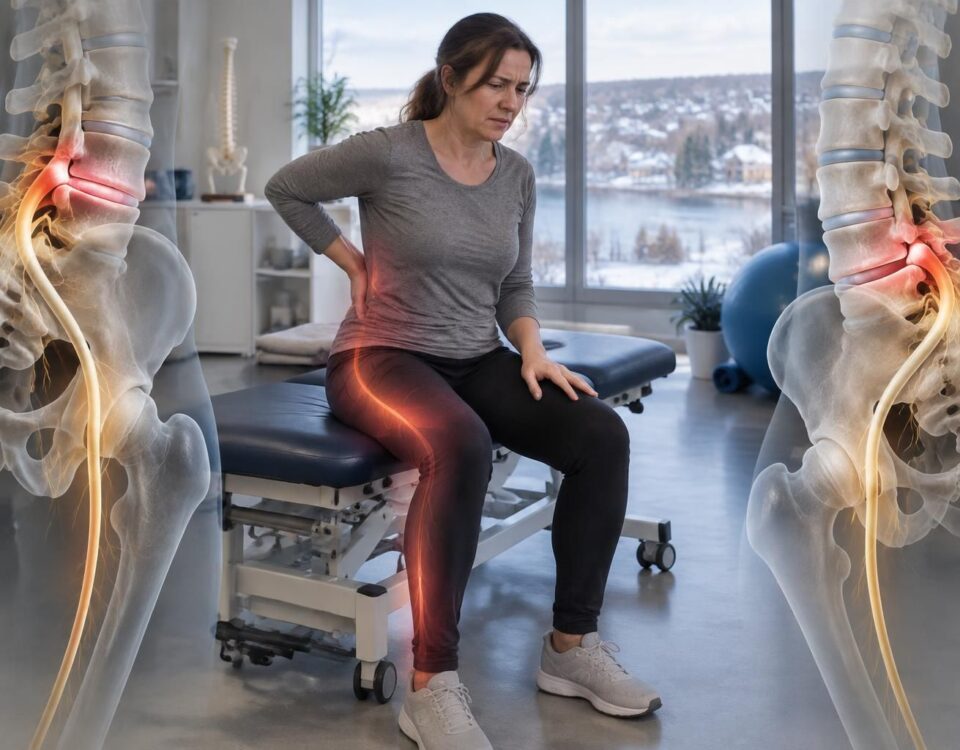
The sciatic nerve, the longest in the body, originates in the lower back and travels through the buttock before descending the leg to the foot.
Sciatic pain is often described as an electric shock or a burning sensation and commonly radiates on one side, complicating movement.
Understanding this path allows for prioritizing non-surgical and adapted approaches focused on movement, core strengthening, and targeted osteopathic treatments.
At the TAGMED Clinic in Terrebonne, a personalized assessment can guide towards appropriate care to improve mobility and reduce pain without immediately resorting to surgical intervention.
Quick summary: this article written by a healthcare professional and expert explains why understanding the path of the sciatic nerve is crucial for effective action in Terrebonne. You will discover how the pain manifests, its common causes, how the clinical assessment proceeds, and which non-surgical options to prioritize at the TAGMED Clinic.
Understanding the Path of the Sciatic Nerve
Sciatica is pain that follows the path of the sciatic nerve, the longest in the body. The pain signal originates in the lower back, passes through the buttock, and descends down the leg. The pain is most often unilateral and can manifest as an electric shock or a burning sensation. Numbness or weakness may accompany the pain.
This path explains why discomfort felt in the lower back can project down to the foot. To visualize the exact path and the innervated areas, you can consult dedicated resources on the topic.
For a clear overview of the path and its implications, see the following resources: sciatic pain that radiates down to the foot – understanding the path.
Common Causes and Risk Factors
The causes of sciatica are multiple. Some situations arise from daily actions, poor posture, or lack of activity, while others result from more serious pathologies. A lumbar disc herniation, piriformis syndrome, or foraminal stenosis can come into play.
Risk factors include sedentary lifestyle, inappropriate physical activity, diabetes, and aging. To delve deeper into the causes and manifestations, consult specialized resources such as sciatica – causes, symptoms, and treatments.
To understand the etiological framework and the elements guiding the assessment, you can also refer to complementary resources available on the referenced sites.
Symptoms and Warning Signs
Typical symptoms include radiating pain starting from the lower back or buttock and descending down the leg, sometimes associated with paresthesia and muscle weakness. The pain may increase during long periods sitting or with repeated efforts. Warning signs such as loss of urinary control or progressive neurological symptoms require urgent consultation.
Factors such as the significance of radiation and unilateral location help guide the clinical evaluation and discussions on possible treatments. For a better understanding of the manifestations, see: signs indicating a targeted treatment necessary.
Assessment and Diagnosis in Practice
The assessment relies on careful clinical examination and precise description of the painful path. The Lasègue test is a common marker to identify irritation or root compression along the path. Imaging (lumbar MRI or CT scan) is indicated if symptoms persist beyond a few weeks, worsen, or present atypical or red flags. The diagnosis mainly relies on clinical findings, supplemented by additional tests when necessary.
To learn more about the assessment associated with Terrebonne and Montreal, consult dedicated resources: sciatic assessment – Montreal.
Therapeutic Approaches to Consider in Terrebonne and at the TAGMED Clinic
The majority of cases progress favorably through conservative and tailored approaches. At the TAGMED Clinic, the focus is on non-surgical and non-invasive treatments, with a movement and function-centered approach. In certain cases, complementary options are considered based on the assessment, including targeted manual techniques and non-surgical technological solutions.
In comparison with other options, a synthetic presentation of possible therapies is provided below:
| Therapy | Goals | Relative effectiveness |
|---|---|---|
| Osteopathy and manual therapy | Improvement of mobility and reduction of tensions around the nerve pathway | Moderate to high depending on the case |
| Motorized neurovertebral decompression | Reduction of pressures on nerve structures | Proven regional effectiveness in certain cases |
| Targeted injections | Targeted pain management and reduction of local inflammation | Reserved for discussion during assessment |
| Physiotherapy and other kinesitherapies | Strengthening and functional rehabilitation | Comparative evidence shows lesser relative effectiveness |
For those seeking non-surgical alternatives, resources on non-pharmacological approaches and personalized assessments in Montreal or Terrebonne are available via the sites sciatica – understanding the pain pathway before acting and the pages of Clinique TAGMED.
Prevention and practical advice
Prevention relies on regular mobility, targeted trunk strengthening, and maintaining proper posture. Adapt your professional and home environment to limit tensions on the nerve pathway.
Practical advice:
- Encourage an ergonomic posture and suitable bedding.
- Incorporate simple and regular physical activities compatible with your condition.
- Avoid heavy loads and movements that increase tension on the sciatic nerve.
For preventive measures and personalized recommendations, consult dedicated resources on distinguishing low back pain and nerve pain – Terrebonne.
Resources and useful links
To delve deeper into the mechanisms, causes, and management options, the following resources offer relevant complementary information:
Sciatica evaluation – Montreal
Causes, symptoms, and treatments
Pain that increases while walking and possible stenosis
Signs indicating that targeted treatment is necessary
Pathway and pain that extends to the foot
Distinguish low back pain and nerve pain – Terrebonne
For anatomical details and additional explanations, also see: origin of the sciatic nerve, anatomy and pains of the sciatic nerve, and understand the pain pathway – Montreal.
Medical disclaimer: The information and advice provided on this site do not substitute for the advice, diagnosis, or treatment of a healthcare professional. Please note that Dr. Sylvain Desforges, osteopath, is neither a medical doctor nor a physician, and is not a specialist in a medical specialty as defined by the Collège des médecins du Québec. Manual medicine, functional medicine, and sports medicine as described on this site exclude any medical treatment or diagnosis performed by a physician or medical specialist. Always consult your doctor for any medical questions. For further details, please read our full Legal Notice.

Sciatica is pain that follows the pathway of the sciatic nerve, starting from the lower back and extending to the foot. Before taking action, it is crucial to understand this pathway and the mechanisms that explain the pain, in order to prioritize conservative measures suitable for Terrebonne. This article guides you step by step, from possible causes to a concrete and preventive action plan.
Understanding the pathway of the sciatic nerve
The sciatic nerve originates from the lumbar and sacral roots and runs through the pelvis, travels behind the buttock, then along the back of the thigh, branching near the knee into smaller nerves that supply the calf and foot. This trajectory explains why pain that often starts at the lumbar or buttock region can extend to the foot, in what is called referred pain.
Pain can be felt like an electric shock, a burning sensation, or a dull ache, and it is most often unilateral. Numbness, tingling, or muscle weakness may accompany the pain, altering mobility and comfort in daily life.
The concept of projected pain
Pain does not necessarily reflect the exact location of the initial irritation. The brain interprets signals according to the areas innervated by the sciatic nerve, which can lead to a painful sensation that “follows” the nerve path rather than the precise location of the irritation.
Common causes and risk factors in Terrebonne
Several origins can trigger sciatica: a lumbar disc herniation that compresses a nerve root, a piriformis syndrome, or lumbar osteoarthritis with foraminal stenosis. Factors such as sedentary lifestyle, diabetes, or aging increase the risk and wear of spinal discs.
In Terrebonne, the local approach prioritizes rapid assessment and non-surgical management when the condition allows, with complementary options tailored to your lifestyle and activities. Understanding the path of the nerve and possible causes helps target rehabilitation efforts and select appropriate therapies.
Diagnosis and therapeutic guidance
The diagnosis is primarily based on a clinical examination focused on the pain path and associated signs. Imaging tools (MRI, CT scan) may be considered if symptoms persist or worsen, in order to clarify the location of the compression and eliminate other causes.
Treatments initially prioritize conservative measures: pain control with appropriate medications, adapted physical activity, targeted physiotherapy or osteopathy, and back and stabilizer muscle strengthening programs. Local interventions or injections may be considered if pain remains debilitating, while surgery is rare and reserved for very specific cases.
Concrete actions to take in Terrebonne
Adopting a gradual and appropriate approach can help reduce pain and improve mobility. Start with activities compatible with your pain and fitness level, then gradually increase intensity and duration while ensuring not to overexert the nerve.
Incorporate targeted strengthening exercises for the trunk and glutes, gentle stretching, and core stabilization exercises. Also work on your posture daily and prioritize regular physical activity like walking or swimming, while avoiding sudden movements and heavy loads.
In practice, coordinate with a local professional in Terrebonne for a personalized assessment and a treatment plan tailored to your pain journey. The goal is to restore function without immediately resorting to surgery and to prevent recurrences through movement and posture.
Prevent recurrences and regain peace of mind
Prevention involves maintaining a correct posture, using ergonomic furniture, taking active breaks, and having a regular exercise routine. Sleep on a suitable mattress, maintain a chair with good back support, and prioritize movement periods over prolonged rest.
In Terrebonne, a multidisciplinary approach integrating physiotherapy, osteopathy, and ergonomic advice can help you maintain the benefits of rehabilitation and limit long-term risk factors.
| Element | Concise explanation |
|---|---|
| Origin | Lumbar and sacral roots L4–S3; path goes from the lower back to the leg, unilateral pain. |
| Pathway | From the pelvis behind the buttock, then down the thigh to the knee and branching to the foot. |
| Type of sensation | Pain perceived as electric shock or burning, following along the nerve. |
| Common causes | Lumbar disc herniation, piriformis syndrome, lumbar osteoarthritis; wear and posture factors. |
| Diagnosis | Clinical examination focused on the pathway and the Straight Leg Raise test; imaging if persistence or red flags. |
| Emergency signs | Loss of urinary/bowel control, marked weakness, fever, or recent trauma. |
| Non-invasive options | Adapted activity, physiotherapy, strengthening, osteopathy, and postural advice. |
| Prevention | Regular mobility, core stability exercises, and stretching; posture and ergonomics at work. |
“Before consulting in Terrebonne for my sciatica, I didn’t know that the sciatic nerve follows a specific path. Understanding this path allowed me to take action with targeted exercises, an improved posture, and adapted activity. Symptoms have decreased and my mobility has improved.” – Sophie D., Terrebonne
“The key point is the idea that pain can project along the path of the nerve. In Terrebonne, the evaluation highlighted this reality and gave me confidence to follow a non-surgical and personalized approach centered on physiotherapy and trunk strengthening.” – Éric L., Terrebonne
“I now understand why the pain goes down to the foot: the path crosses through the buttock and thigh, and the body’s response can vary. With regular sessions in physiotherapy and rehabilitation exercises, I have regained better mobility and fewer flare-ups.” – Amélie T., Terrebonne
“The diagnosis was clear: we work on the path of the sciatic nerve and not just on a localized pain. In Terrebonne, I followed postural advice and progressive exercises that allowed me to return to my usual activities without anxiety.” – Luc P., Terrebonne
“Today I advise understanding the path of the pain before taking action. In my care in Terrebonne, the non-surgical and personalized approaches helped me reduce episodes and practice adapted physical activity gently, with an effective rehabilitation program.” – Claire R., Terrebonne
Dr Sylvain Desforges, an experienced osteopath, naturopath, and specialist in manual medicine, is the founding president of TAGMED clinics and the ACMA association. His practice is guided by innovation in healthcare and a strong expertise in chronic pain, with an approach integrating advanced technologies such as neurovertebral decompression, laser, and shock waves. In Terrebonne, he offers a service focused on sciatica and sustainable improvement of mobility and patient well-being.
His philosophy regarding sciatica in Terrebonne is based on a clear and pragmatic understanding of the pain pathway: the sciatic nerve can be irritated or compressed away from the site of perceived pain. Understanding this pathway, sometimes referred to as projected pain, allows for action on the mechanisms rather than just masking the symptoms. This approach prioritizes non-invasive and progressive treatments that restore function, strengthen the body, and prepare for a return to activity without unnecessary recurrence.
In Terrebonne, Dr. Desforges’ team offers a comprehensive functional assessment, combining analysis of posture, movement patterns, and trunk control. The analysis identifies possible causes—muscle imbalances, postural habits, or radicular pathologies—and informs a personalized plan. This program, focused on movement and rehabilitation, is based on evidence-based protocols and a tailored progression to reduce pain and restore an active quality of life.
The interventions aim for minimal invasiveness while remaining effective. The approach combines osteopathy and manual techniques with targeted exercises to limit tension on the sciatic nerve and increase movement tolerance. Depending on the case, complementary solutions may enhance care: neurovertebral decompression, therapeutic laser, and shock waves to promote recovery, decrease inflammation, and accelerate the return to physical activity without medication or major surgery.
Communication with patients is at the heart of the process: Dr. Desforges clearly explains the trajectory of the nerve and the mechanisms of projected pain, so that each patient can make informed decisions. This clarity optimizes adherence to the rehabilitation program and facilitates daily adjustments to movements and activities. In Terrebonne, this educational effort translates into active collaboration between patient and therapist, with measurable goals and progress milestones.
The local practice benefits from sustainable support, with access to a multidisciplinary team and resources specialized in sciatica. The goal is to quickly restore function, improve mobility, and prevent relapses through ongoing supervision, weighed progression of exercises, and attentive listening to individual needs. Dr. Desforges ensures the harmonization of care between osteopathy, naturopathy, and manual medicine, in order to offer a comprehensive solution tailored to each patient, particularly in the context of Terrebonne.
For residents of Terrebonne seeking care focused on the nerve pathway, Dr. Desforges’ approach represents a benchmark in managing sciatica in Terrebonne. His integrated approach aims for a rapid return to activity and prevention of flare-ups, while remaining faithful to evaluated protocols and measurable results. His commitment is to sustainably improve the quality of life for patients suffering from sciatica.
This article explains how to understand the pathway of the sciatic nerve and why this understanding is key to effectively acting in Terrebonne, favoring non-surgical approaches and rehabilitation focused on movement. You will discover what sciatica is, how it follows the nerve pathway, common causes, methods of evaluation, and practical options to act before considering treatments.
Understanding the Pathway of the Sciatic Nerve
The sciatic nerve is the longest in the body, and the associated pain can follow its pathway down to the foot. This projected pain can originate in the lower back or buttock and descend along the thigh, calf, or even down to the foot, with periods of numbness or weakness. Understanding this pathway allows for a more precise evaluation of the origin and enables action measures to be adapted without waiting for an invasive intervention.
To delve deeper into the mechanism and pathway, you can consult the detailed explanation on this dedicated resource. You will find key indications on how pain can “follow” the nerve and why the diagnosis often relies on clinical signs rather than a single location of the pain. Other resources provide details on possible mechanical causes and potential non-surgical treatments in Montreal and around Terrebonne.
The mechanisms of pain can vary among individuals and movements: irritation of a nerve root, local inflammation, or increased sensitivity of the nerve pathway. To contextualize these concepts, consult the following resources: possible mechanical causes, pathway and causes of pain, and MSD Manual.
Why Terrebonne is a Relevant Action Point
In Terrebonne, as in other urban contexts, the management of sciatica can rely on non-surgical approaches centered on the nerve pathway and strengthening the muscles that support the spine. A personalized evaluation can determine whether the pain stems from a herniated disc, piriformis syndrome, or other mechanisms, and adjust the action plan without immediately resorting to surgery. For concrete examples of what can be considered when pain is more intense in the leg than in the back while in Terrebonne, consult this local resource.
When necessary, a local therapeutic approach can combine non-invasive techniques and practical advice to quickly improve mobility and reduce pain. To prepare for a first meeting in Terrebonne, you can check the questions to ask before starting treatment: questions to ask before starting treatment.
Act Before Considering Treatments: Practical Advice and Prevention
Before considering more invasive treatments, prioritize measures that target the pathway and strengthen the stability of the lumbar spine. Suitable activities, core strengthening exercises, and gentle stretches can modulate the painful pathway and promote a gradual return to mobility. To understand how these approaches fit into a comprehensive strategy, you can consult additional explanations on the symptoms and associated signs and an overview of the precise pathway in the leg.
To support understanding, here are some practical tips and useful resources: maintain an aligned posture at work and home, engage in suitable activities (walking, swimming), and limit heavy lifting and sudden twists. General resources on the mechanisms and non-surgical treatments, such as lumbar strain and sciatica, can enhance your knowledge and guide your choices. For more specific advice in Terrebonne and Montreal, explore the dedicated pages of the SOS Sciatique network and local information articles.
Useful Resources and Recommended Links
To delve deeper, these resources provide additional explanations on the pathway of the sciatic nerve, mechanical causes, and non-surgical management options:
sciatic pain that descends to the foot: understanding the pathway
sciatic treatment Montreal: understanding possible mechanical causes
sciatica in Terrebonne: when the pain is stronger in the leg than in the back
pain in the buttock without back pain: could it be sciatica?
sciatica that descends into the calf: possible lumbar causes
Terrebonne: questions to ask before starting treatment
see also: understanding the pathway
Hello Santé: sciatic nerve – pathway and causes

Sciatica L5-S1 in Terrebonne: why the pain can radiate down to the foot
IN BRIEF L5-S1 sciatica refers to pain related to irritation of a lumbar nerve root, which may start from the lower back and radiate into the buttock, leg, and down to the foot. The pathway varies: the top of the…

Sciatica in Terrebonne: painful journey according to roots L4, L5, and S1
IN BRIEF Sciatica in Terrebonne can cause pain, tingling, or weakness in the leg. The roots L4, L5, and S1 can guide the evaluation based on symptoms and changes in strength, sensitivity, or reflexes; their territories do overlap, however. Comparing…

Sciatica in Terrebonne: what does irritation of the S1 root mean?
IN BRIEF An irritation of the S1 root can cause pain of a sciatica type in the buttock, the back of the leg, and the outer edge of the foot. Tingling, numbness, or difficulty walking on tiptoes may also occur.…

Sciatica in Terrebonne: what does irritation of the L5 root mean?
IN BRIEF L5 sciatica corresponds to irritation of the L5 nerve root, often felt from the lower back and buttock down the side of the leg, to above the foot and the big toe. It can cause pain, tingling, or…

Sciatica in Terrebonne: difference between L4-L5 and L5-S1
IN BRIEF The difference between L4-L5 and L5-S1 concerns the level of the lumbar discs and the sometimes irritated nerve roots: an L4-L5 injury often affects L5, while an L5-S1 injury often affects S1. The sensory pathways overlap; thus, an…

Sciatica S1 in Terrebonne: pain towards the calf and the outer edge of the foot
IN BRIEF S1 sciatica is pain related to irritation of a lumbar nerve root, which may radiate down to the buttock, back of the calf, and the outer edge of the foot. Tingling or weakness may also occur. In Terrebonne,…

Sciatica L5 in Terrebonne: pain towards the big toe
IN SHORT L5 sciatica can cause pain or numbness that radiates to the big toe, sometimes with difficulty lifting the foot. This pathway is a clue, not a diagnosis: the examination compares strength, sensitivity, and gait, as the nerve territories…

Sciatica L5-S1 in Terrebonne: pain radiating to the heel or foot
IN BRIEF A L5-S1 sciatica often corresponds to irritation of the S1 root, which can cause pain that radiates from the buttock down to the calf, heel, or outer edge of the foot. Identifying the pathway of symptoms and changes…

Dr Sylvain Desforges, B.Sc., D.O., N.D., osteopath, is the founding president of TAGMED and of the ACMA association. He dedicates his practice to chronic spinal pain, low back pain and symptoms compatible with sciatica, particularly when pain radiates toward the buttock, leg, calf, foot or toes.
Through SOS Sciatique, he publishes educational content on sciatica symptoms, possible causes such as disc herniation, disc narrowing, foraminal stenosis or irritation of a lumbar nerve root, as well as non-surgical approaches that may be considered according to the evaluation. At Clinique TAGMED, care may include, depending on the case, motorized neurovertebral decompression, specific osteopathic care or precision percussion.
For an evaluation related to sciatica treatment in Montreal / Mount Royal or sciatica treatment in Terrebonne, please consult the services available at Clinique TAGMED.
Medical disclaimer
The information published on SOS Sciatique is provided for educational purposes only and does not replace a consultation, diagnosis, opinion or treatment provided by a physician or another authorized healthcare professional. The author of this article is neither a medical doctor nor a specialist in a medical specialty recognized by the Collège des médecins du Québec. The osteopathic, manual medicine or functional support approaches described on this site do not constitute medical acts and are not intended to replace medical follow-up.
Consult a physician or emergency service in cases of loss of bladder or bowel control, anesthesia in the saddle area, significant or progressive weakness in the leg or foot, fever, recent trauma, severe pain or rapid worsening of symptoms. For more details, please read our Legal Notice.