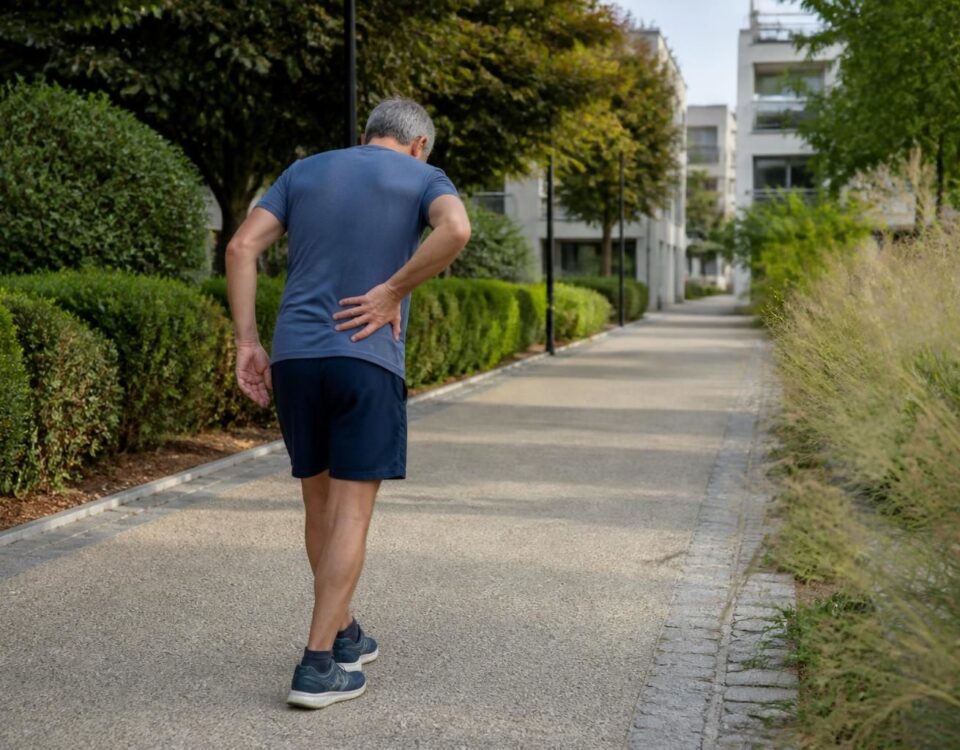


Sciatic pain in Terrebonne: calf, heel or outer edge of the foot?
25/08/2026
Herniated disc and recurrent sciatica: possible factors
25/08/2026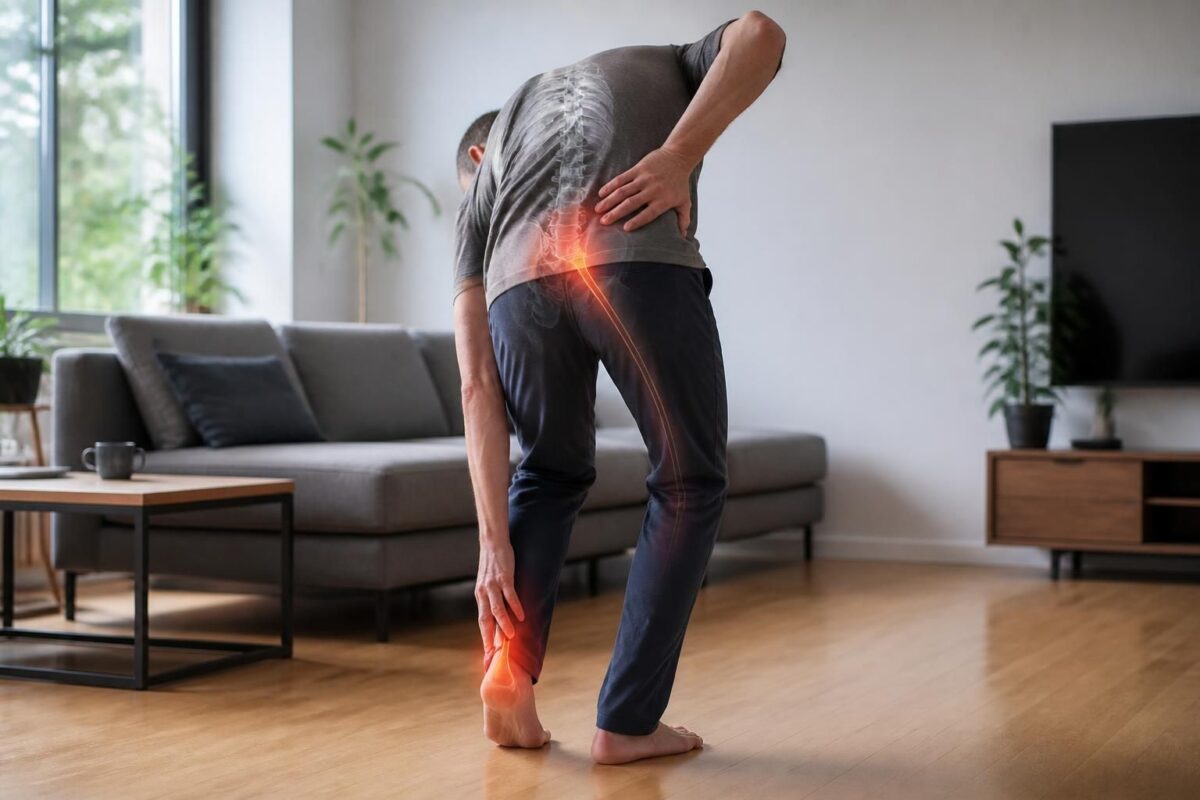
IN BRIEF
| In brief, sciatica and tingling in the heel may stem from S1 radiculopathy or a local cause of the heel (plantar fasciitis, calcaneal spur, Achilles tendinopathy, calcaneal bursitis). This distinction allows for quick diagnosis and appropriate management. The non-surgical approach relies on exercises, orthotic devices, and manual techniques, with a targeted assessment and a personalized treatment plan. The goal: to reduce pain and improve walking quickly and sustainably. In Montreal, this method is particularly recommended for achieving rapid and lasting results while remaining focused on the functional realm of the foot and back. |
- Origin: the painful heel can be of local origin (plantar fasciitis, calcaneal spur, Achilles tendinopathy, calcaneal bursitis) or may reflect S1 radiculopathy.
- Key S1 Sign: pain following the path of the sciatic nerve down to the heel and foot, sometimes accompanied by paresthesias, weakness of the toe push, and a decreased Achilles reflex.
- Local Signs: localized pain under the heel, worsening when walking on hard surfaces or upon standing, painful palpation, and sometimes swelling.
- Diagnosis: based on history and clinical examination; simple tests and imaging if there is suspicion of radiculopathy or if symptoms persist or worsen.
- Management: conservative approach with relative rest, ice application, stretching of the plantar fascia and calves, orthotics, and appropriate footwear; referral to a specialist in case of significant neurological signs or persistence > 2 weeks.
This sheet explains how S1 radiculopathy can cause tingling in the heel and how to distinguish this from a local cause of the foot. It describes the signs, diagnosis, and non-surgical approaches proposed by TAGMED in Montreal and Terrebonne to achieve quick relief and improved walking.
Pain in the heel can stem from a local cause of the foot or from an issue with the S1 root that can radiate to the heel and foot. The assessment must differentiate these origins to guide treatment.
How to Differentiate S1 from a Local Cause
Pain that follows the path of the sciatic nerve towards the heel and foot may indicate S1 radiculopathy. Motor signs such as weakness of the toe push or a decreased Achilles reflex support this diagnosis. Pain strictly localized under the heel, without radiation, suggests a local cause of the foot instead.
Typical Signs and Symptoms
For S1 radiculopathy, pain may radiate from the lower back to the heel and outer edge of the foot. Paresthesias, weakness during the toe push, and decreased Achilles reflex may be present. For local causes, pain is often centered under the heel and worsens upon bearing weight or waking up, with localized tenderness and sometimes swelling.
Common Local Causes of Heel Pain
Plantar fasciitis. Inflammation of the plantar fascia. Pain in the heel upon waking that may decrease after a few steps but then return later. Calcaneal spur. Protrusion under the heel causing central pain on hard surfaces. Achilles tendinopathy. Pain at the back of the heel, sometimes with morning stiffness. Calcaneal bursitis. Pain at the back or top of the heel with swelling and local warmth. Other less common causes may exist and require precise evaluation.
Evaluation and Diagnosis
The history and examination vet out the clues indicating S1 vs local causes. In the presence of significant neurological signs, progressive weakness, or substantial irradiation, targeted imaging and specialized referral may be recommended. The assessment focuses on the symptom trajectory, their chronology, and simple tests of nerve function.
Management Options at TAGMED
A targeted assessment and a personalized treatment plan allow for quick intervention for pain. Depending on the diagnosis, non-surgical approaches at TAGMED clinic may include, as needed, motorized neurovertebral decompression, specific osteopathy, and precision perceiver. For local pain, measures such as using orthotics and padding around the heel may be considered. Treatments take place in Montreal or Terrebonne, depending on the availability of the TAGMED Clinic.
When to Seek Prompt Attention
Seek prompt attention in case of very intense pain preventing any weight-bearing, significant numbness, progressive weakness, fever, recent trauma, or pain persisting beyond 2 weeks despite personal measures.
Resources and Helpful Links
To delve deeper into the difference between heel pain and S1 radiculopathy, see: heel pain S1 root or other cause.
For information on sciatica manifestations related to the foot and calf, consult: pain in one leg possibly sciatica.
Additional resources on disc herniations and their links to heel pain are available here: disc herniation and pain in the heel S1 root possible.
For signs to watch for in the presence of foot numbness and sciatica in Montreal, consult: foot numbness and sciatica Montreal.
If you are looking for information on sciatica and pain in both legs or consultation questions, see: sciatica and pain in both legs – when to consult.
Other useful resources related to sciatica and neurovertebral decompression can be found at: sciatica and tingling at night, TAGMED Clinic – Sciatica S1, and sciatica and pain in both legs – when to consult.
For general resources on sciatica and assessment, see: sciatica recommendations.
Medical disclaimer: The information and advice provided on this site do not replace the opinion, diagnosis, or treatment of a healthcare professional. Please note that Dr. Sylvain Desforges, osteopath, is neither a doctor of medicine nor a physician and is not specialized in a medical specialty as defined by the Collège des médecins du Québec. Manual medicine, functional medicine, and sports medicine as described on this site exclude any medical treatment or diagnosis performed by a physician or specialist. Always consult your doctor for any medical questions. For more details, please read our full Legal Notice.
- Diagnostic Axis: distinguish S1 radiculopathy from local heel origin.
- S1 Sign: pain follows the lumbar path → heel; possible toe weakness and diminished Achilles reflex.
- Local Heel Sign: pain under the heel, painful awakening, pain on palpation of adjacent tissues.
- Useful Test: SLR positive suggests radiculopathy; palpation of the plantar fascia for plantar fasciitis.
- Emergencies / Vigilance: marked weakness, sphincter disorders, fever, recent trauma.
- When to consult: pain persists >2 weeks or neurological signs appear.
- Conservative Management: ice, relative rest, stretching of the plantar fascia and calves, supportive shoes, orthotics as needed.
- Targeted Approach: treat based on origin (S1 or local) and avoid inappropriate exercises; progressive rehabilitation.
- Non-surgical Options: targeted manual therapies and rehabilitation programs for stability and function.
- Education and Prevention: posture, foot biomechanics, weight management, and suitable insole choices.
- Complementary Evaluation: targeted imaging and specialized consultation if S1 suspicion or persistent neurological signs.
- Practical Reminder: heel may be involved by S1, but the majority of heel pain remains local.

This practical guide addresses heel pain associated with possible S1 radiculopathy. It helps you distinguish a local cause of heel pain from nerve irritation along the sciatic nerve and offers clear and realistic non-surgical recommendations for quick and lasting relief.
Understanding the association between sciatica and tingling in the heel
The sciatic nerve can sometimes influence the heel when the S1 root is irritated or compressed. In this context, the pain can follow the nerve path to the heel and the outer edge of the foot, accompanied by sensorimotor signs. Conversely, the heel can also be painful for purely local reasons, without radicular irradiation. This distinction is crucial for quickly guiding management and avoiding inappropriate treatments.
Signs and symptoms: S1 radiculopathy vs local cause
Signs of S1 radiculopathy
Pain may extend from the lower back, through the buttock and calf, to the heel and the outer edge of the foot. Weakness may be observed when pushing the foot (toe), a diminished Achilles reflex, and paresthesias along the nerve path. Local improvement at rest is generally insufficient to relieve these symptoms, distinguishing nerve involvement from strictly local pain.
Signs of a local heel cause
Pain is typically focused on the heel or beneath it and worsens when walking on hard surfaces or upon waking. Pain may be felt on palpation near the heel, with swelling or stiffness of adjacent tissues. Common local causes include plantar fasciitis, heel spur, Achilles tendonopathy, and calcaneal bursitis.
Rapid diagnosis and practical assessment
To differentiate S1 from a local cause, the assessment relies on a detailed history of symptoms (path, irradiation, chronology) and a targeted examination: muscle strength of the foot, Achilles reflex, sensitivity to palpation of the heel, and simple mobility tests of the foot placement. In the presence of marked neurological signs or significant irradiation, a specialized consultation and complementary examinations may be considered to confirm radiculopathy and guide rehabilitation.
Quick measures and initial advice
Practical measures to be implemented immediately: targeted rest when necessary, ice applied for 15–20 minutes, and stretching of the plantar fascia and calves to reduce tension and promote mobility. Wear appropriate shoes with good support and consider foot orthotics if pressure distribution is inadequate. Local protections such as gel heel pads may relieve the heel while walking. If symptoms persist, specialized management may be considered to adjust the exercise program and rehabilitation.
Non-surgical treatment plan and when to consult
In cases of suspected S1 radiculopathy, prioritize a conservative and progressive approach combining targeted exercises, functional rehabilitation, and appropriate manual therapies. Complementary options such as neurovertebral decompression may be discussed for certain selected patients when discal or radicular components coexist. Consult quickly if pain persists >2 weeks, worsens despite measures, or if significant neurological signs appear (new weakness, notable numbness, urinary disorders, or marked bilateral pain).
This approach allows for the quick distinction between local heel pain and S1 radiculopathy, and to organize a personalized plan focused on pain reduction, improvement of walking, and relapse prevention, without resorting to surgical intervention when possible.
| Aspect | Concise indication |
|---|---|
| Key definition | May reflect an S1 radicular origin or a local cause of heel pain; evaluate the pathway and signs. |
| S1 radicular signs | Lumbosacral irradiation → heel, weakness of the toe and decreased Achilles reflex. |
| Local heel signs | Localized pain under the heel, worsened by walking on hard surfaces, painful palpation. |
| Typical irradiation | Pathway along the S1 sciatic nerve to the heel and outer edge of the foot. |
| Useful clinical tests | Positive SLR; assessment of foot strength and Achilles reflex. |
| Trigger factors | Mechanical overload, prolonged standing, sports overtraining. |
| Initial management | Targeted rest, ice, plantar fascia and calf stretches; suitable orthotics or shoes. |
| When to consult quickly | Persistent pain (>2 weeks) or significant neurological signs or progression. |
| Key differential diagnosis | Plantar fasciitis, heel spur, Achilles tendinopathy, calcaneal bursitis. |
Testimonials: Sciatica and tingling in the heel — possible S1 root
“My name is Claire, I’m 39 years old and I have pain in my right heel that seemed to originate in my lower back and then travel up to my heel. The team mentioned a possible S1 radiculopathy and suggested a targeted evaluation. Thanks to a conservative plan including stretches, orthotics, and postural advice, the pain quickly decreased and my walking became smooth again.”
“I am Jean, 52 years old, and my pain initially appeared as a local pain in the center of my heel, especially after long days on my feet. The evaluation helped differentiate a local heel cause from potential radicular involvement. After a few sessions and orthotic adjustments, I experienced a significant reduction in pain and improved stability while walking, even on hard surfaces.”
“My name is Marie, I’m 64 years old and my symptoms sometimes originated from my lower back and descended toward my heel, with fatigue while walking. The personalized approach confirmed S1 involvement at certain times, and the adapted rehabilitation program focused on stability and mobility allowed me to resume my daily activities without limiting my movements.”
“I am Lucas, 28 years old, an athlete, and my tingling sometimes woke me up in the morning, then traveled along the path of the sciatic nerve to the heel. The evaluation highlighted irritation of the S1 nerve. After a progressive protocol combining strengthening, targeted stretches, and biomechanical advice, I regained a normal stride and my training without significant pain.”
“I am Sophie, 41 years old, and the pain behind my heel often appeared after repeated efforts while running. The team considered S1 radiculopathy, while exploring usual local causes. The personalized treatment plan — including gentle manual techniques and functional rehabilitation — improved my recovery and reduced painful episodes, allowing me to resume my sessions more calmly.”
Detailed Biography: Sciatica and tingling in the heel — possible S1 root
Dr. Sylvain Desforges, osteopath, specialist in manual medicine and multidisciplinary practitioner, is the founding president of TAGMED clinics and the ACMA association. His professional journey is guided by innovation in health and a patient-centered approach, with strong expertise in chronic pain management and the integration of advanced technologies. His practice is based on rigorous movement assessment, understanding the underlying causes of pain, and applying non-surgical approaches tailored to complex cases. His commitment aims to optimize health and well-being for individuals suffering from musculoskeletal disorders, including manifestations related to sciatica and nerve issues that can affect the heel.
In relation to symptoms such as tingling, chaotic sensations, or pain radiating from the back to the heel, Dr. Desforges emphasizes the distinction between S1 radiculopathy and local heel causes. S1 radiculopathy may manifest as pain following the pathway of the sciatic nerve to the heel, sometimes associated with weakness of the toe or a decrease in the Achilles reflex. In contrast, local pains concern the structures of the heel itself, such as the plantar fascia, heel spur, or Achilles tendon, and are typically felt when walking or standing up. This diagnostic approach, based on history and clinical examination, allows for rapid direction towards the most relevant treatment and avoids inappropriate treatments.
Dr. Desforges’ therapeutic philosophy prioritizes non-surgical and multidisciplinary approaches. The management plan is personalized and may combine targeted exercises, plantar fascia and calf stretches, foot orthotics, and suitable shoes to redistribute pressures and support the arch. Depending on the precise nature of the pain, he proposes local protections (gel heel pads, specific supports) and strategies to reduce inflammation, while promoting a gradual return to activity. This approach aims for rapid symptom reduction and sustainable improvement in walking and functionality.
In addition to conservative measures, Dr. Desforges integrates modern technologies when relevant. He utilizes tools such as motorized spinal decompression, Laser modalities, and shockwave therapies to stimulate tissue repair and accelerate the return to mobility. His clinical framework relies on functional rehabilitation and strengthening programs suited to each profile, aiming to improve foot stability and prevent relapses. This combination of manual skills, biomechanics, and advanced technologies reflects his commitment to evidence-based care.
Dr. Desforges is also active in disseminating knowledge about sciatica and associated pathologies through educational content and training within TAGMED and its professional networks. His pedagogical approach aims to clarify the underlying mechanisms, the signals that point to a radicular origin, and the most appropriate treatment options, so that each patient can take an active role in their recovery. By working at the intersection of osteopathy, naturopathy, and manual medicine, he strives to provide an integrated and personalized vision for heel pain related to a possible S1 involvement and for the issues of low back pain radiating to the foot.
His mission is to offer evidence-based care, ensuring that each patient benefits from a clear, efficient, and respectful pathway to their biological rhythm. His approach, both therapeutic and pedagogical, is part of a logic of prevention, rehabilitation, and holistic support to optimize mobility and quality of life.
This quick summary reminds us that heel pain can stem from a local origin or an S1 radiculopathy, and that the diagnosis relies on the history, examination, and neurological signs. A non-surgical approach can offer quick and lasting results, notably through targeted exercises and orthotics, with tailored guidance in Montreal and Terrebonne.
In short, evaluation allows for the distinction between local heel pain (plantar fasciitis, calcaneal spur, Achilles tendinopathy, calcaneal bursitis) and S1 radiculopathy, in order to quickly guide toward the most suitable treatment and avoid inappropriate actions. The diagnostic scheme is based on the extent and location of the pain, motor signs, and reflexes, and the occurrence of irradiated episodes along the nerve path.
Signs that indicate S1 radiculopathy: pain radiating from the lower back or buttock down to the heel and foot, possible weakness of the toe, reduction of the Achilles reflex, and paresthesias. In contrast, strictly localized pain in the heel, particularly upon waking or when walking on hard ground, leans more towards a local cause such as plantar fasciitis or calcaneal spur. To detect these mechanisms, simple assessment and symptom screening allow for rapid guidance to appropriate options.
The preferred non-surgical approaches are based on targeted evaluation and a personalized plan: stretching of the plantar fascia and calves, orthotic devices and suitable shoes, local protection and icing, with functional progression tailored to each profile. When disc or radicular components are present, motorized neurovertebral decompression or specific manual techniques may be considered based on evaluation, while avoiding inappropriate programs. To delve deeper into these approaches and their contexts, you can consult specialized resources and clinical guides available online, particularly on Sciatica heel pain.
To broaden your understanding of the links between sciatica and heel pain, several complementary resources offer explanations and case studies: Sciatica in Montreal – tingling and nerve path, Sciatica and intermittent numbness, Sciatica and foot pain in car, and Sciatica Articles. For a European perspective on manifestations and treatments, you can also consult Sciatica – causes and treatments.
Practical resources complete this overview: to understand the interactions between symptoms and nerve paths, visit Sciatica and road vibrations – possible influence on symptoms, and for concrete cases around the heel and foot in mobility contexts, check Sciatica and foot pain in car.
These clinical landmarks and management options, offered within the resources of CLINIQUE TAGMED and the SOS Sciatica content, aim to guide you toward an appropriate and personalized approach. For more information and detailed support, do not hesitate to request a specialized evaluation when signs evolve or persist beyond two weeks, or when marked neurological signs appear.

Sciatica and weakness in the thigh: possible lumbar cause
IN BRIEF Sciatica with thigh weakness is a possible manifestation of a lumbar cause irritating a nerve root (L4-L5, L5-S1). Advantages: a quick diagnosis and a targeted treatment plan with rehabilitation to regain strength and mobility and prevent recurrences. Operation:…
Sciatica and calf weakness: what should be monitored?
IN SHORT In short, sciatica and weakness in the calf describe a lumbar radiculopathy where pain follows the path of the sciatic nerve and may reach the calf. Benefits: a targeted non-surgical management, quick relief, and an improvement in mobility…

Sciatica and difficulty walking on tiptoes: possible S1 root
IN BRIEF In brief, sciatica with difficulty walking on tiptoes may reflect an involvement of the S1 lumbar root. What is it? a radicular pain that can limit foot elevation and walking on tiptoes. What are the benefits? an accurate…
Sciatica and difficulty walking on heels: possible L5 root
IN BRIEF The sciatica associated with a difficulty walking on the heels is generally due to an involvement of the L5 root of the sciatic nerve, with a pathway that starts from the lower back, crosses the buttock, and goes…

Sciatica and difficulty lifting the foot: emergency or quick consultation?
IN BRIEF The drop foot is a weakness of the foot dorsiflexors that causes a steppage gait and may reveal sciatica with compression of the nerve in the lumbar region. When it is associated with sciatic pain and loss of…

Sciatica and loss of strength: a sign not to be taken lightly
IN SHORT In short, sciatica is pain that follows the path of the sciatic nerve. A loss of strength in the leg is a sign that should not be taken lightly. It’s a warning indicating nerve damage that may require…

Sciatica and numb foot sensation: when to consult?
IN BRIEF In brief, sciatica and numbness in the foot refer to pain that follows the path of the sciatic nerve and may be accompanied by tingling or numbness in the foot. This summary specifies when to seek consultation, distinguishing…

Sciatica and the sensation of a numb leg: what does this symptom mean?
IN BRIEF Sciatica and the sensation of a dead leg refer to pain and tingling along the path of the sciatic nerve, from the lower back to the foot. This symptom reflects nerve compression or irritation, most often due to…

Dr Sylvain Desforges, B.Sc., D.O., N.D., osteopath, is the founding president of TAGMED and of the ACMA association. He dedicates his practice to chronic spinal pain, low back pain and symptoms compatible with sciatica, particularly when pain radiates toward the buttock, leg, calf, foot or toes.
Through SOS Sciatique, he publishes educational content on sciatica symptoms, possible causes such as disc herniation, disc narrowing, foraminal stenosis or irritation of a lumbar nerve root, as well as non-surgical approaches that may be considered according to the evaluation. At Clinique TAGMED, care may include, depending on the case, motorized neurovertebral decompression, specific osteopathic care or precision percussion.
For an evaluation related to sciatica treatment in Montreal / Mount Royal or sciatica treatment in Terrebonne, please consult the services available at Clinique TAGMED.
Medical disclaimer
The information published on SOS Sciatique is provided for educational purposes only and does not replace a consultation, diagnosis, opinion or treatment provided by a physician or another authorized healthcare professional. The author of this article is neither a medical doctor nor a specialist in a medical specialty recognized by the Collège des médecins du Québec. The osteopathic, manual medicine or functional support approaches described on this site do not constitute medical acts and are not intended to replace medical follow-up.
Consult a physician or emergency service in cases of loss of bladder or bowel control, anesthesia in the saddle area, significant or progressive weakness in the leg or foot, fever, recent trauma, severe pain or rapid worsening of symptoms. For more details, please read our Legal Notice.