


Sciatica in Terrebonne: nighttime pain in the leg
09/09/2026
Herniated disc and disc disease: understanding the differences
09/09/2026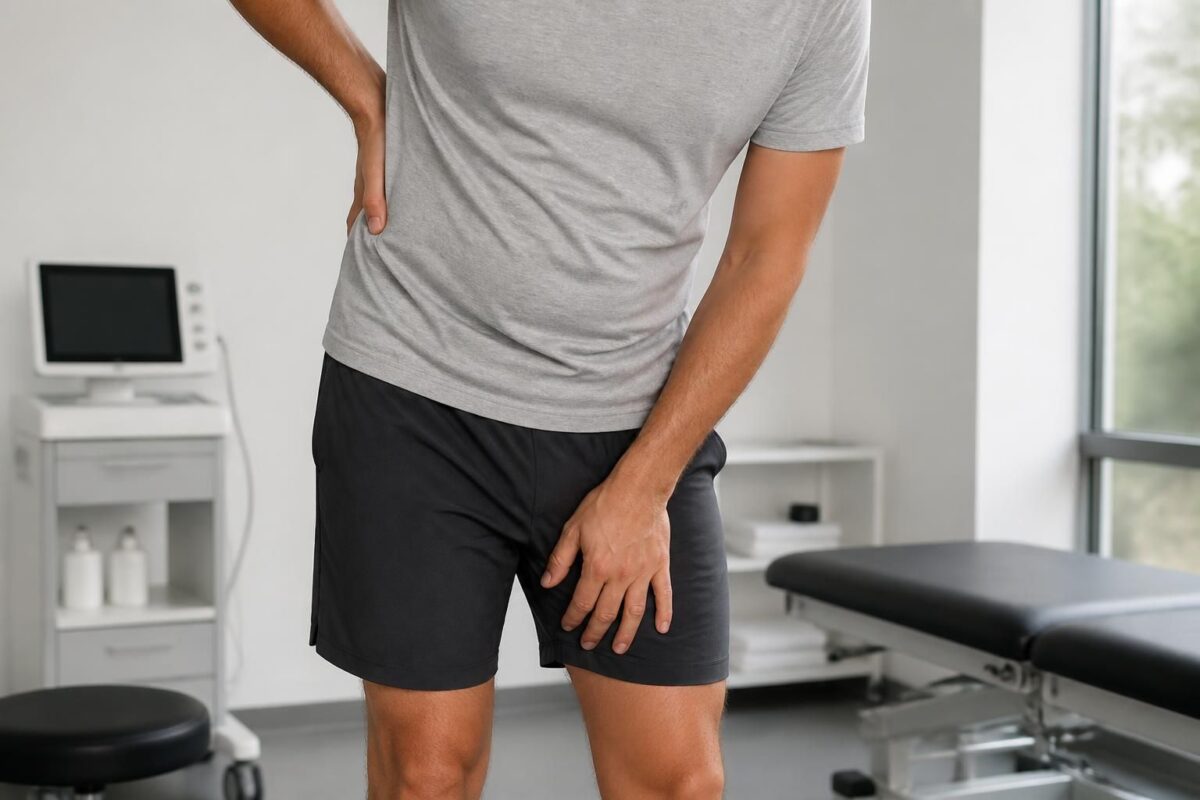
IN BRIEF Sciatica with thigh weakness is a possible manifestation of a lumbar cause irritating a nerve root (L4-L5, L5-S1). Advantages: a quick diagnosis and a targeted treatment plan with rehabilitation to regain strength and mobility and prevent recurrences. Operation: clinical assessment to identify the lumbar cause (e.g. herniated disc, lumbar stenosis), then non-invasive treatments (physiotherapy, stretching, posture) and, if necessary, infiltrations or minimally invasive surgery. In Montreal, this service is particularly useful for patients presenting this association. |
Quick summary: Sciatica and weakness in the thigh may stem from a lumbar cause. An irritation or compression of the nerve roots located at the lumbar level (for example L4-L5 or L5-S1) can transmit pain to the thigh and, depending on the level, cause localized muscle weakness.
- Lumbar disc herniation: extrusion or disc bulge that compresses a root and triggers pain radiating into the thigh with possible signs of weakness.
- Lumbar canal stenosis or degenerative disc disease: progressive narrowing that compresses the roots and increases pain when walking and weakness.
- Evaluation recommended if pain persists > 6 weeks or is accompanied by marked weakness; a lumbar MRI may be necessary to confirm the diagnosis and guide treatment.
A precise diagnosis allows for a tailored treatment — physiotherapy, targeted exercises, and appropriate interventions — to help you regain mobility and strength.
This article, written by a health professional, explains how weakness in the thigh can stem from a lumbar cause. It describes possible mechanisms, clinical signs, recommended examinations, and management options at the TAGMED Clinic. The aim is to provide clear and useful information to guide a precise medical evaluation.
The weakness felt in the thigh may reflect a lumbar condition affecting the nerve roots or foraminal compression. Lumbar radiculopathy can thus lead to a decrease in muscle strength at the thigh. This situation may accompany pain radiating along the course of the sciatic nerve or, depending on the level, localized pain in the lower back and thigh.
The most frequent lumbar causes include disc issues, foraminal or spinal stenosis, and disc degeneration. A herniated disc can compress a nerve root and cause pain that follows the path of the sciatic nerve, sometimes associated with muscle weakness. A lumbar canal stenosis can lead to pain that worsens with walking and may be associated with weakness in the thigh depending on the affected nerve territory.
In some cases, thigh weakness may also reflect involvement of the L3-L4 roots, which ensure quadriceps function. This situation may manifest as difficulty extending the knee and a decrease in strength in the thigh.
Signs and Diagnosis
Typical signs include pain that may start from the lower back and radiate into the thigh, sometimes reaching the knee. Burning sensations, tingling, or a feeling of weakness may accompany the pain. The clinical evaluation seeks to localize the pain, test muscle strength and reflexes, and reproduce the pain with certain simple movements. In case of doubt or concerning signs, imaging may be requested.
The diagnosis is based on the combination of clinical examination and symptoms. A lumbar MRI may be indicated if significant nerve compression or radicular involvement is suspected. Imaging exams are considered according to the evolution and clinical signs.
Evaluation and Management Elements
A structured approach allows for identifying the exact cause and guiding treatment. Neurovertebral decompression may be considered in some cases, especially when nerve compression is demonstrated and based on the overall assessment of the patient. Within the framework of the TAGMED Clinic, options may include techniques tailored to the spine and non-surgical interventions when appropriate.
Initial medical treatments may include analgesics and anti-inflammatories, used according to medical recommendations and individual contraindications. Targeted infiltrations may be offered when pain persists despite medical treatment. In cases of progressive radicular signs or motor deficit, specialized assessment is necessary to determine possible options, including surgical interventions in specific situations.
Long-term management is based on a precise assessment, pain treatment, and rehabilitation adapted to the clinical context. At TAGMED Clinic, care can be personalized and take into account the patient’s needs, prioritizing non-surgical approaches when possible and appropriate.
To delve deeper into the subject and compare approaches, you can consult relevant resources such as Sciatica and prolonged walking, MSD Manuals, or general information on sciatica and its origins on ToutPourMaSanté. Information related to decompression and management of herniated discs can be found on neurovertebral decompression and on specialized resources such as Sciatica in Montreal.
For information on training and professional networks in osteopathy, you can refer to the NUMSS and NAO frameworks, particularly in the context of recognized teachings in osteopathy.
CONTENT ENDAdditional resources for a general understanding of clinical patterns and related issues are available on sites like Doctissimo and MSD Manuals.
Medical disclaimer: The information and advice provided on this site do not substitute for the opinion, diagnosis, or treatment of a healthcare professional. Please note that Dr. Sylvain Desforges, osteopath, is neither a medical doctor nor a physician, and is not a specialist in a medical specialty as defined by the Collège des médecins du Québec. Manual medicine, functional medicine, and sports medicine as described on this site exclude any treatment or medical diagnosis made by a physician or specialist. Always consult your physician for any medical questions. For more details, please read our full Legal Notice.
References and additional links: Difficulty in lifting the foot, Sciatica Terrebonne, Sciatica – Causes and treatments.
Medical disclaimer: The information and advice provided on this site do not substitute for the opinion, diagnosis, or treatment of a healthcare professional. Please note that Dr. Sylvain Desforges, osteopath, is neither a medical doctor nor a physician, and is not a specialist in a medical specialty as defined by the Collège des médecins du Québec. Manual medicine, functional medicine, and sports medicine as described on this site exclude any treatment or medical diagnosis made by a physician or specialist. Always consult your physician for any medical questions. For more details, please read our full Legal Notice.
Clinical Indicators
- Lower back pain associated with weakness or motor deficit in the thigh
- Radiating pain starting from the buttock to the thigh
- Muscle weakness in the quadriceps or other thigh muscles depending on the root
- Movement-related symptoms exacerbated by exertion and sometimes relieved by rest
Possible lumbar causes
- Lumbar disc herniation compressing an L4-L5 or L5-S1 root
- Foraminal or lumbar canal stenosis leading to lumbar radiculopathy
- Degenerative disc disease with local pinching and inflammation
- Spondyloarthrosis or facet arthrosis contributing to narrowing

Quick summary: a sciatica accompanied by a weakness in the thigh may have a lumbar origin and require accurate assessment. Possible causes include a lumbar disc herniation, lumbar canal narrowing, or degenerative disc disease. What you feel may evolve depending on the affected roots, and the appropriate treatment relies on proper identification of the origin. This article provides you with guidelines to understand, diagnose, and act effectively while preventing recurrences.
Possible lumbar origins
The sciatic nerve originates at the lumbar level and can be irritated by various conditions. A lumbar disc herniation is a common cause and can compress a nerve root, causing pain and targeted weakness in the thigh or leg. Lumbar canal narrowing leads to compression of the roots while walking, with pain and sometimes progressive weakness. Lastly, degenerative disc disease can weaken the discs and promote nerve irritation. In these cases, thigh weakness may reflect involvement of the L3-L4 or L4-L5 roots and manifest as decreased strength in the front muscles of the thigh or leg.
Mechanisms and affected roots
Depending on the affected root, deficits may localize differently. Involvement of the L3-L4 roots can weaken the quadriceps and the ability to extend the knee, which is felt in the thigh. Involvement of L4-L5 or L5-S1 can alter dorsiflexion or mobility of the leg muscles, with radicular symptoms that may be associated with radiating pain. In any case, pain is often a key indicator, but the presence of weakness indicates that the corresponding motor and sensory territory related to each root should be seriously evaluated.

Sciatica and pain worsened while sitting: consider the disc?
IN BRIEF Sciatica aggravated in a seated position may be related to irritation of a nerve root, sometimes caused by a herniated disc. Remaining seated can exacerbate pain that radiates from the buttock down the leg, but this symptom alone…

Sciatica and pain relieved while seated: consider stenosis?
IN BRIEF A sciatica relieved in a seated position may suggest a lumbar stenosis and neurogenic claudication, but this sign alone is not sufficient for a diagnosis. Observing walking, weakness, and symptom evolution helps guide the evaluation and compare signs…
Signs and diagnosis to watch for
Typical signs associate a sciatic pain that follows the course of the nerve and may be accompanied by numbness or tingling. Weakness in the thigh may translate to difficulty in lifting the knee, bending the leg, or maintaining a standing posture during certain movements. Symptoms such as loss of sensation, altered reflexes, or rapid progression of weakness require prompt medical evaluation. The physician may suggest imaging like MRI when warning signs persist beyond 6 weeks or in cases of marked motor deficit.
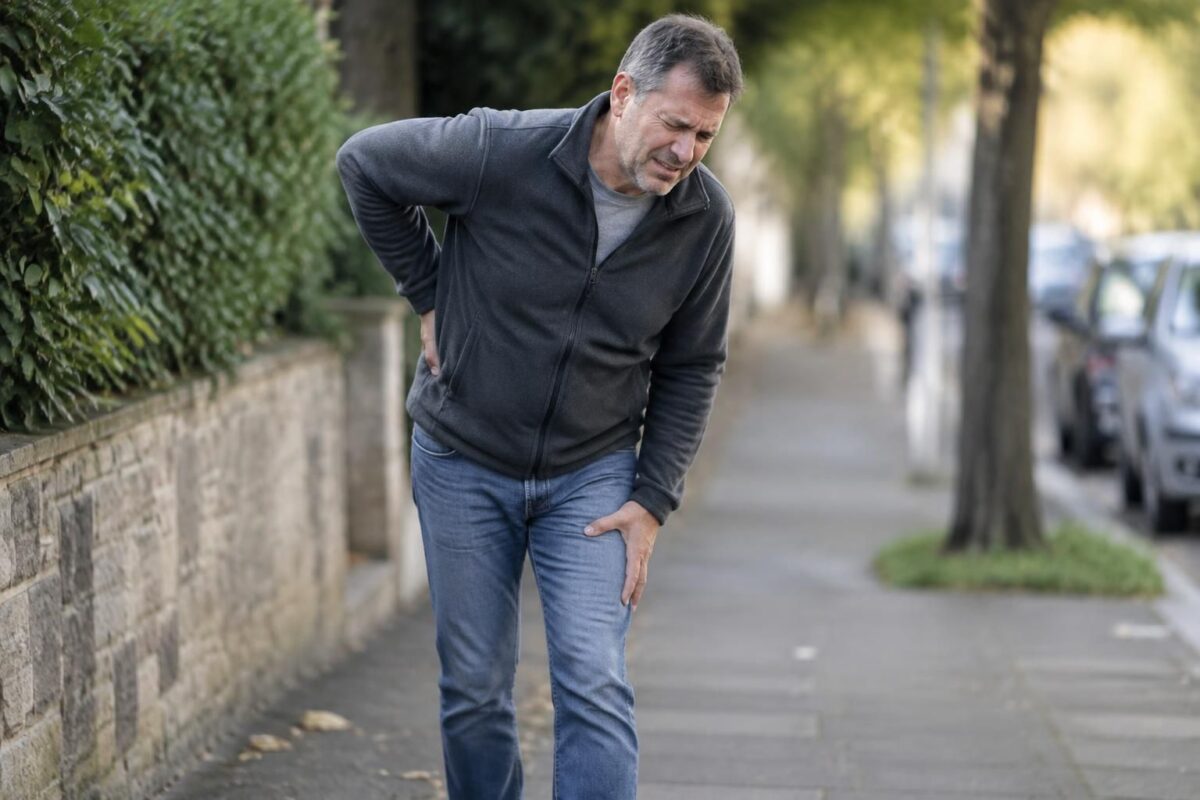
Sciatica and pain that worsens when walking
IN BRIEF A sciatica that worsens with walking is pain radiating from the buttock down the leg, exacerbated by walking. Several causes are possible: this symptom alone does not suffice for a diagnosis. Temporarily reduce walking duration, change positions, and…

Sciatica and pain that improves when walking
IN SUMMARY Sciatica is pain that radiates from the lower back or buttock down to the leg, sometimes all the way to the foot. If it decreases with walking, a gentle and regular walk can help limit stiffness and maintain…
Therapeutic approaches and practical recommendations
As a first intention, prioritize non-invasive and appropriate measures: physiotherapy and targeted rehabilitation to strengthen the trunk and involved muscles, stretch the spine, and correct postural imbalances. Gentle and progressive exercises help improve mobility and can reduce pain without excessively straining the nerve.
In cases of stubborn pain or persistent weakness, complementary options may be considered. Epidural corticosteroid injections may be proposed to reduce inflammation and facilitate rehabilitation, while anti-inflammatory treatments and muscle relaxants may help calm contractions and acute pain. The goal remains to limit functional limitations and prevent recurrences.
In rare cases where weakness progresses or is accompanied by significant motor deficit, specialized evaluation may be necessary to discuss surgical options. Whatever the chosen path, active post-treatment rehabilitation is essential to rebalance muscle chains and prevent recurrences.

IN BRIEF Sciatica is pain that often starts from the lower back or buttock and travels down the leg. Pain that worsens at the end of the day may be related to activities or prolonged positions, but it is not…

Sciatica and pain that worsens in the evening
IN BRIEF more painful sciatic pain in the evening is often related to inactivity, fatigue, and increased attention to sensations. This does not necessarily mean that the nerve is worsening. Gently changing positions, walking for a few minutes, and finding…
Preventing and daily advice
To reduce the risk of sciatica with weakness, engage in regular appropriate physical activity, pay attention to a good posture and maintain a strong back muscle system. Integrate gentle stretches and core strengthening exercises, avoid positions that worsen the pain, and favor active breaks if you work sitting for long periods. Maintaining a healthy weight and improving workplace ergonomics will also help prevent future episodes.
| Aspect | Concise Element |
|---|---|
| Origin | lumbar radiculopathy involving L2-L4, often linked to a discopathy or spinal stenosis. |
| Location and irradiation | Buttock pain sometimes radiating to the front or back thigh depending on the root. |
| Type of weakness | Weakness of the quadriceps or knee extension when L3-L4 is involved. |
| Associated signs | Tingling or paresthesias down the thigh; pain aggravated by certain movements. |
| Clinical tests | Assessment of muscle strength and patellar reflexes; reproduction of pain by simple maneuvers. |
| Useful imaging | Lumbar MRI if there is suspicion of radiculopathy with motor deficit or persistent pain; initial radiography limited. |
| Differences with cruralgia | Cruralgia affects the front of the thigh (L2-L4) and posterior sciatica; location and motility differ. |
| Initial therapeutic approach | Physical therapy, progressive exercises and anti-inflammatories; maintaining activities without forcing through pain. |

Sciatica and pain when turning in bed
IN BRIEF Sciatica can cause pain when turning in bed, as certain movements irritate the lower back or leg. Turn slowly, moving your shoulders and hips together; a cushion between the knees or under the knees can improve comfort. If…

Sciatica and pain when getting out of bed
IN BRIEF Sciatica upon getting out of bed is pain that radiates from the lower back to the buttock or leg and can be more pronounced after the night. Gradually rising, moving gently, and finding a comfortable sleeping position can…
Testimonials: Sciatica and weakness in the thigh – possible lumbar causes
“I had pain that started from the lower back, ran along the buttock and down the thigh. Additionally, there was weakness in the thigh; it was initially thought to be lumbar, but the tests suggested a possible lumbar cause for this sciatica. After appropriate rehabilitation, the pain decreased and the weakness almost disappeared, allowing me to resume my daily activities without fear of the worst.”
“The pain gradually increased, starting from the lower back and radiating toward the thigh, with a feeling of weakness when climbing stairs. The doctor suggested a Sciatica of lumbar origin as a possibility. Thanks to guided exercises and a non-surgical approach, the pain improved, and the weakness decreased over the weeks.”
“After a wrong movement, a pain that started from the lower back extended down into the thigh, accompanied by marked weakness. I was told that it might be a sciatica of lumbar origin. The treatment plan included physical therapy and core strengthening; today, the pain is under control and the weakness in the thigh is much less present.”
“I felt like the thigh was going to give out with pain that started from the lower back and told me something was wrong at the lumbar level. Work on lumbar mobility and muscle strengthening confirmed a possible lumbar cause to my sciatica. After a few weeks, the pain and weakness faded, allowing me to cautiously resume sports.”
“The episode began with pain radiating from the lumbar area to the thigh with notable weakness in that same thigh. The clinician mentioned a Sciatica of lumbar origin as a possible explanation. With progressive rehabilitation and targeted exercises, the pain eased, and the weakness subsided, allowing me to return to my usual activities without major limitations.”
Detailed Biography: Sciatica and weakness in the thigh — possible lumbar cause
Dr. Sylvain Desforges, osteopath and expert in manual medicine and naturopathy, is the founding president of TAGMED clinics and the ACMA association. His professional trajectory is marked by innovation in healthcare and a patient-centered approach aimed at sustainably improving his patients’ quality of life. A specialist in managing chronic pain of the spine and sciatica, he focuses on offering evidence-based solutions while remaining attentive to the individual needs of each patient. His commitment manifests in a desire to be both innovative and accessible, in order to optimize the health and well-being of his patients.
In the field of sciatica and symptoms of weakness in the thigh, his approach is based on a possible lumbar hypothesis as the origin of the painful signal. He considers that pain radiating toward the thigh and sometimes associated with muscle weakness may originate from lumbar nerve roots (for example, around segments L4 to S3) and that accurately identifying the cause is essential to tailor the treatment. This perspective encourages distinguishing radicular signs from other lumbar or muscular sources to avoid ineffective treatments and quickly target the responsible mechanisms.
The diagnostic journey he favors begins with a thorough interview and a meticulous physical examination. He evaluates the precise location of the pain, the strength and reflexes of the lower limbs, and looks for clinical signs that point to radicular involvement. Targeted tests may be proposed when necessary to clarify the discal involvement (hernia, degenerative discopathy), spinal stenosis, or possible compressions from other structures. This approach helps to establish a clear link between sciatic symptoms and a possible lumbar origin, in order to avoid inappropriate treatments and plan suitable rehabilitation.
On the therapeutic level, Dr. Desforges prioritizes a non-surgical, personalized, and progressive approach. His arsenal includes specific osteopathic techniques and motorized nerve decompression when indicated, as well as the use of a precision impactor to target the most tense or irritated areas. To support patients, he integrates complementary technologies such as laser therapies and shockwave treatments when appropriate. The goal is to reduce nerve compression and restore function while reassuring the patient through clear explanations of the mechanisms and steps of treatment.
In parallel, his commitment to patient education is reflected in informative content aimed at explaining the possible causes of sciatica and the non-surgical options available. This educational orientation aims to foster a better understanding of bodily signals and support patients in their care journey, with transparent communication and realistic recovery goals. His work is thus part of a care dynamic based on evidence, empathy, and long-term support.
For those seeking quality care for sciatica or thigh weakness of lumbar origin, Dr. Desforges’ approach relies on a multidisciplinary framework and expert supervision within the TAGMED Clinic. This framework allows for the articulation of clinical assessments, osteopathic treatments, and advanced technologies to provide a personalized and effective path compatible with each patient’s health and well-being objectives.
This article summarizes the links between Sciatica and thigh weakness, emphasizing a possible lumbar cause, clinical reasoning, and management pathways. It reminds that thigh weakness may reflect an involvement of the lumbar roots and not just pain radiating down the leg. For a deeper understanding of the mechanisms and causes, please refer to the dedicated resources and practice guides available online.
Summary
Sciatica corresponds to irritation or compression of the nerve running from the lumbar roots to the foot. When thigh weakness occurs in the context of sciatic pain, one must explore a potential lumbar involvement of the L2 to L4 roots or the L4-L5/S1 segments that might affect the thigh muscles. The most frequent causes remain <strong=lumber disc herniation and lumbar canal stenosis, but other mechanisms such as degenerative disc disease or piriformis syndrome may also play a role. A precise evaluation combines a medical history, neurological examination, and, if necessary, imaging (lumbar MRI, CT scan) to identify the origin and guide treatment. To better understand lumbar causes and associated mechanisms, you can consult the guide on the most frequent lumbar causes.
The diagnosis is based on the association of clinical signs and appropriate imaging. A focal weakness of the thigh may point towards an L3-L4 or L4-L5 root involvement, distinct from simple low back pain. The evaluation includes the muscle strength of the quadriceps, reflexes, and sensitivity, with particular attention to the evolution of symptoms during movements, walking, and coughing/sneezing that may exacerbate the pain in certain cases. For practical insights on diagnosis and causes, see the resources dedicated to sciatica pathology.
In terms of management, non-surgical approaches constitute the first line, combining physiotherapy, core strengthening exercises, and gentle stretching, with a progression adapted to pain and function. Injections and anti-inflammatory medications may be considered depending on the cause and response to treatment. In rare cases where weakness affects significant motor functions, surgery may be discussed after specialized evaluation. Additional resources on treatments and surgical indications are available in dedicated guides.
For a comprehensive view and practical advice, you can consult reliable resources on the causes and management of sciatica and associated symptoms, including pages dedicated to recognizing sciatica and daily management. Additional information on particular situations (for example, sciatica triggered by work or specific postures) is also available through specialized guides and reference organizations.
To enhance your understanding, here are some useful resources available online:
– guide on the most frequent lumbar causes,
– practical information for drivers and leg pain after several hours,
– and evaluation and management resources in Quebec and elsewhere.
You can also consult official sources on recognizing the symptoms of sciatica: Ameli – Recognize sciatica.
In addition, international guides describe the mechanisms and therapeutic approaches associated with sciatica and radiating pain in the thigh, offering a useful comparative perspective for both the patient and the professional.

Dr Sylvain Desforges, B.Sc., D.O., N.D., osteopath, is the founding president of TAGMED and of the ACMA association. He dedicates his practice to chronic spinal pain, low back pain and symptoms compatible with sciatica, particularly when pain radiates toward the buttock, leg, calf, foot or toes.
Through SOS Sciatique, he publishes educational content on sciatica symptoms, possible causes such as disc herniation, disc narrowing, foraminal stenosis or irritation of a lumbar nerve root, as well as non-surgical approaches that may be considered according to the evaluation. At Clinique TAGMED, care may include, depending on the case, motorized neurovertebral decompression, specific osteopathic care or precision percussion.
For an evaluation related to sciatica treatment in Montreal / Mount Royal or sciatica treatment in Terrebonne, please consult the services available at Clinique TAGMED.
Medical disclaimer
The information published on SOS Sciatique is provided for educational purposes only and does not replace a consultation, diagnosis, opinion or treatment provided by a physician or another authorized healthcare professional. The author of this article is neither a medical doctor nor a specialist in a medical specialty recognized by the Collège des médecins du Québec. The osteopathic, manual medicine or functional support approaches described on this site do not constitute medical acts and are not intended to replace medical follow-up.
Consult a physician or emergency service in cases of loss of bladder or bowel control, anesthesia in the saddle area, significant or progressive weakness in the leg or foot, fever, recent trauma, severe pain or rapid worsening of symptoms. For more details, please read our Legal Notice.


