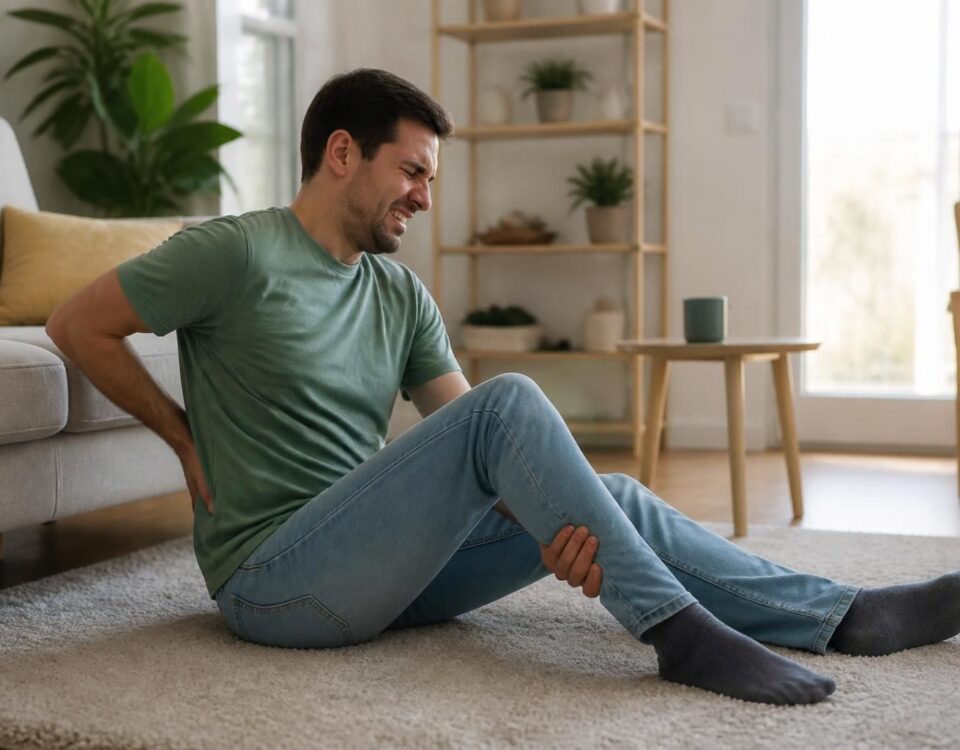
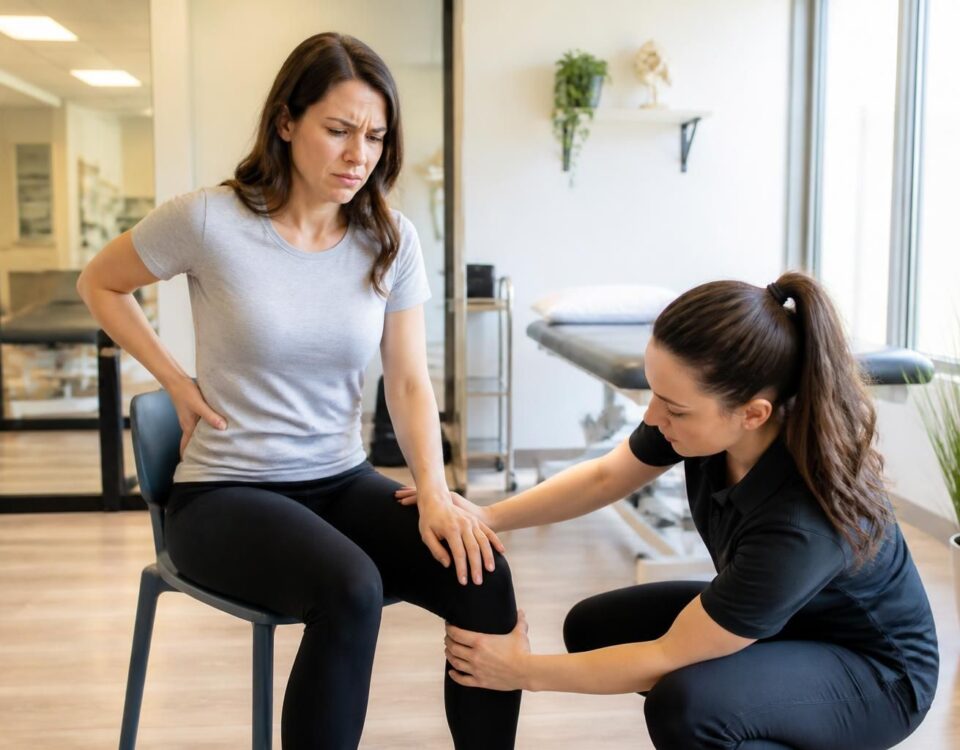
Sciatica in Montreal: nighttime pain in the leg
09/09/2026
Sciatica and weakness in the thigh: possible lumbar cause
09/09/2026
IN BRIEF
| In brief, nocturnal sciatica is a pain that starts from the lower back and radiates to the leg, sometimes waking you up at night. In Terrebonne, non-invasive management can reduce nighttime awakenings and improve sleep, while preserving mobility and avoiding surgery when possible. The approach relies on a quick assessment, postural advice, and targeted exercises, complemented by non-surgical methods to decrease pressure on the nerve root and inflammation. |
In Terrebonne, sciatica can manifest as a nighttime pain in the leg. This pain often results from irritation or compression of a lumbar nerve root and is exacerbated by nighttime immobility and increased pressure on the nerve. Simple actions of ergonomic sleeping and appropriate postures (lying on the healthy side with a cushion between the knees, on the back with a cushion under the knees, firm yet welcoming mattress) can bring quick relief and improve sleep. When the pain persists, a personalized non-invasive pathway is recommended, including physiotherapy and osteopathy as per the assessment.
This summary is aimed at anyone experiencing nocturnal sciatica in Terrebonne. It explains why the pain may intensify at night, what mechanisms are involved, and what specific actions to adopt to improve sleep and quality of life. It presents non-invasive approaches available at the TAGMED Clinic and reliable resources for understanding and acting quickly.
Increased pressure on the sciatic nerve at night results from lying positions that alter load distribution on the lumbar discs. This additional pressure can radiate pain into the leg. Nighttime immobility limits the micro-movements that allow for muscle tension release and the evacuation of irritants around the nerves, often worsening discomfort and localized inflammation.
Herniated disc remains the main cause in active adults, with a typical presentation of sharp pain radiating into the leg. Other mechanisms such as lumbar osteoarthritis, piriformis syndrome, and spinal stenosis may also contribute to pain that persists or occurs especially at night.
Patients frequently describe an “at nightfall” effect: sleep becomes hesitant, then fragmented, and awakening can be abrupt when the pain exacerbates. Several clinical observations converge on the importance of an adapted night position and effective lumbar support to limit pressure on the nerve root.
In Terrebonne, an adapted management focuses on non-invasive solutions, centered on nighttime comfort and reduced nerve irritation. For a comprehensive approach, see local resources on treatment and support available through TAGMED and our partners.
Frequent Causes and Typical Profiles
Herniated disc — 30 to 50 years, acute pain radiating to the leg, often associated with lower back pain. It is the main cause in the active population.
Lumbar osteoarthritis — 50 years and older, progressive pain with morning stiffness and limited extension.
Piriformis syndrome — 25 to 45 years, pain related to muscle contraction around the sciatic nerve.
Spinal stenosis — more common in older individuals, narrowing of the spinal canal that can increase pain during walking or at rest depending on positions.
These factors explain why nighttime symptoms may persist despite rest. Distinguishing between possible origins guides the management strategy.
Mechanical Tips for Nocturnal Sleep
To limit pressure on the nerve root at night, prioritize simple and reproducible actions in your bedtime routine.
Lateral position, on the healthy side, with a pillow between the knees, to align the hips and reduce twisting.
Supine position, with a pillow under the knees to decrease estimated disc pressure and improve trunk alignment.
Avoid positions that increase pressure on the nerve, especially lying on your stomach with legs extended, or overly curled positions that accentuate lumbar curvature.
A firm yet welcoming mattress and a suitable pillow (memory foam or latex) promote good alignment. A slight elevation of the bed’s foot can also relieve venous and lumbar compression.
“I regained my sleep by placing a pillow between my knees every night,” shares Marie D.
“After the MRI, the management confirmed the herniation, and nighttime pain decreased thanks to physiotherapy,” indicates Luc N.
Postures and Environment for Ergonomic and Comfortable Sleep
Lateral on the healthy side — Pillow between knees — Hip alignment, reduction of twisting. Used when pain is unilateral.
Supine — Pillow under knees — Estimated reduction of disc pressure by about 25%, diffuse lower back pain.
Prone, legs curled — Pillow under pelvis — Sometimes reduces nerve tension, specific case.
Prone, legs extended — Not recommended as it can increase curvature and compression. To be avoided.
For nighttime comfort, use a mattress with appropriate support and specific pillows (memory foam or latex) at an appropriate height. A slight elevation of the bed’s foot can help improve venous drainage and decrease lumbar pressure.
Additional resources and practical tips: to delve deeper, consult the following pages and related resources from local specialists:
For a non-invasive and tailored approach in Terrebonne, see the Treatment of sciatica in Terrebonne.
For information on the relationship between nighttime pain and positioning, consult Sciatica – Night and sleep.
For symptoms like the feeling of warmth in the leg associated with pain, see Sciatica and warmth in the leg.
Additional resources on neurovertebral decompression and non-surgical approaches are available through Neurovertebral Decompression.
Diagnostic pathway and management
In case of nighttime persistence, a quick clinical evaluation can help differentiate causes and guide towards suitable options. If pain persists beyond a few weeks or if neurological signs appear, a more in-depth assessment is necessary. Non-surgical approaches can be explored, considering the benefits and limitations of each option.
The TAGMED Clinic offers tailored solutions in Terrebonne, with non-invasive options and personalized assessments. To explore these possibilities, consult the treatment of sciatica in Terrebonne and associated resources.
If warning signs appear (marked loss of strength in the leg, extensive numbness, bowel and bladder issues, fever), seek prompt medical evaluation. In some cases, imaging exams and a multidisciplinary assessment are indicated to adapt the care plan.
For a general framework and additional perspectives, see the resources: Sciatica and prolonged walking and other relevant pages from SOS Sciatica.
Local resources and references: Sciatica in Terrebonne – pain in the buttocks after prolonged sitting.
For an educational framework on the mechanisms and non-invasive options, see the pages dedicated to sciatica and non-surgical treatments offered by TAGMED and SOS Sciatica.
Medical disclaimer: The information and advice provided on this site do not replace the opinion, diagnosis, or treatment of a healthcare professional. Please note that Dr. Sylvain Desforges, osteopath, is neither a medical doctor nor a physician, and is not a specialist in a medical specialty as defined by the Collège des médecins du Québec. Manual medicine, functional medicine, and sports medicine as described on this site exclude any treatment or medical diagnosis made by a physician or specialist. Always consult your doctor for any medical questions. For more details, please read our complete Legal Notice.
“Medical disclaimer: The information and advice provided on this site do not replace the opinion, diagnosis, or treatment of a healthcare professional. Please note that Dr. Sylvain Desforges, osteopath, is neither a medical doctor nor a physician, and is not a specialist in a medical specialty as defined by the Collège des médecins du Québec. Manual medicine, functional medicine, and sports medicine as described on this site exclude any treatment or medical diagnosis made by a physician or specialist. Always consult your doctor for any medical questions. For more details, please read our complete Legal Notice.”
.sciatique-nocturne-twocol { font-family: Arial, sans-serif; color: #333; }
.sciatique-nocturne-twocol h3 { margin: 0 0 8px; font-size: 1.1em; }
.grid-two { list-style: none; padding: 0; margin: 0; display: grid; grid-template-columns: 1fr; gap: 6px; }
.grid-two > li { display: grid; grid-template-columns: 1fr 1fr; gap: 14px; padding: 8px 0; border-bottom: 1px solid #eaeaea; }
.grid-two .label { font-weight: bold; align-self: center; }
.grid-two .value { align-self: center; }
@media (max-width: 600px) {
.grid-two > li { grid-template-columns: 1fr; }
}
Sciatica in Terrebonne: nighttime pain in the leg

This article presents practical recommendations for Sciatica in Terrebonne associated with nighttime pain in the leg. It explains why the pain may worsen at night, offers simple gestures to improve sleep and posture, and describes the non-invasive care pathway available locally to promote a return to more serene nights.
Understanding nighttime pain from sciatica
Nighttime pain can be explained by increased pressure on the sciatic nerve and nighttime immobility that foster stiffness and inflammation. The lack of micro-adjustments in muscle during sleep can amplify discomfort and awaken pain. The most common causes remain disc herniation, lumbar osteoarthritis, piriformis syndrome, and spinal stenosis, all of which can contribute to pain radiating down the leg.
Key factors
These are the mechanisms that fuel nocturnal pain: resting position, mattress and lumbar support configuration, and the lack of movements that maintain back and hip mobility.
Nocturnal Sleep Tips
Adopting suitable postures and a favorable environment is the first step to limit pain at night.
Postures and Positions
Encourage lying on the non-painful side with a pillow between the knees to align the hips and reduce twisting. In a supine position, placing a pillow under the knees can decrease disc pressure and provide lasting comfort. Avoid lying on the stomach with legs extended or excessively bent, as this may increase arching and pressure on the nerve.
Equipment and Setup
Choose a mattress that firmly supports while offering a soft welcome and a suitable memory foam or latex pillow. A firm knee pillow will improve alignment in the side-lying position, and a slight elevation of the bed’s foot can enhance venous comfort and limit nighttime tension.
Temperature and Environment
Maintaining a cool and well-ventilated room helps reduce spasms and muscle discomfort, contributing to better nighttime relaxation.
Exercises and Daytime Habits
The actions taken during the day complement nighttime measures and promote faster recovery.
Stretching and Strengthening
Practice a piriformis stretch for 30 seconds on each side and work on a deep trunk strengthening with exercises like the dead bug progressively. A daily walk of at least ten minutes helps stimulate circulation and reduce nerve sensitivity.
Rhythm and Routine
Incorporate a regular routine and avoid long periods of inactivity during the day; alternate light activity and active breaks if you are working seated. A progressive approach tailored to your pain level fosters recovery and prevents relapses.
Alert Signs and When to Consult
Signs such as marked loss of strength in the leg, persistent numbness, sphincter disturbances, or pain that worsens despite initial measures require rapid consultation to assess evolution and adjust the care plan.
Care Pathway in Terrebonne
For a non-invasive and personalized approach, a pathway coordinated by local professionals can be considered. Practically, this may include targeted physiotherapy, specific osteopathy, and, depending on the assessment, techniques such as motorized neurovertebral decompression or other complementary therapies. The goal is to reduce inflammation, improve mobility, and prevent relapses without systematically resorting to surgery. An initial precise assessment quickly identifies whether imaging or specialized consultation is needed and organizes a care plan tailored to your lifestyle and work, directly in Terrebonne.
| Aspect | Concise Observation |
|---|---|
| Nocturnal Involvement and Pressure | Nocturnal pain is often aggravated by immobility and increased pressure on the sciatic nerve. |
| Sleeping Position | Healthy side with a pillow between the knees, or back with knees bent, to limit pressure and alignment. |
| Mattress and Pillows | A firm mattress with a soft feel and memory/latex pillow; firm knee pillow. |
| Nocturnal Postures | Side-lying on the healthy side with a knee pillow, supine with knees under; avoid stomach and straight legs. |
| Targeted Exercises | Piriformis stretch for 30 seconds on each side and deep strengthening; light daily walking. |
| Environment and Comfort | Room with controlled temperature and appropriate humidity; soothing sleep ritual. |
| Alert Signs | Loss of strength, sphincter disturbances, or severe pain at rest require rapid consultation. |
| Non-surgical Options | Targeted physiotherapy, osteopathy, and decompression as per global assessment. |
| When to Consult | Pain lasting > 3 months or progressive neurological deficit requires assessment and a multidisciplinary plan. |
Testimonials on Sciatica in Terrebonne: Nocturnal Pain in the Leg
Marie D., Terrebonne describes a nocturnal pain related to sciatica that woke her several times during the night, radiating from the lower back to the leg. After assessment and implementation of an Ergonomic Sleep and Lumbar Support plan, complemented by a pillow between the knees and a suitable mattress, she notices a marked improvement in sleep and a decrease in awakenings.
Luc N., Terrebonne states he regained sleep thanks to a swift assessment approach and a targeted physiotherapy program. Using an adapted nocturnal posture (pillow under the knees in a supine position) decreased pressure on the nerve root and nighttime awakenings have become less frequent.
Aline G., Terrebonne testifies that switching to a firm mattress with a soft top and using a memory foam pillow or a suitable latex pillow, combined with lumbar support, has reduced awakenings and tensions around the sciatic nerve during the night.
Émile P., Terrebonne emphasizes the importance of stretching and deep strengthening as part of a daily routine; morning and evening exercises, supplemented by regular walks, have lowered nerve sensitivity and improved nighttime comfort.
Chantal R., Terrebonne shares her experience with a slight elevation of the bed’s foot and a knee cushion. She notices better circulation and a marked reduction in nighttime awakenings related to pain in the leg, allowing her to fall back asleep more quickly and wake up less fatigued.
Dr Sylvain Desforges, an expert in osteopathy, naturopathy, and manual medicine, is at the heart of the approach dedicated to sciatica in Terrebonne, especially when nighttime pain in the leg disrupts sleep. As the founding president of the TAGMED clinics and the ACMA association, he puts his experience at the service of integrated care centered on patient needs.
Focused on managing chronic pain and innovation in care, he has developed an approach that combines proven clinical tools with advanced technologies. His approach prioritizes non-invasive, evidence-based solutions, with particular attention to the nocturnal impact of pain. In this context, he maintains a multidisciplinary vision that relies on precise assessment, targeted rehabilitation, and the optimization of patient comfort during nighttime rest.
Regarding nighttime sciatica, Dr Desforges explains that pain can result from a combination of physiological and mechanical mechanisms that mainly activate during sleep. Position and nighttime immobility can increase pressure on the lumbar nerve root, especially when the body stays in non-optimal alignments. In this dynamic, he proposes a personalized analysis of sleep habits and environmental factors to identify simple actions that quickly improve comfort and sleep quality.
His nighttime program relies on practical advice for Ergonomic Sleep and Lumbar Support, tailored to each patient. He recommends safe postures such as side resting with a cushion between the knees or keeping the back slightly elevated with support under the knees. He stresses the importance of a suitable mattress, neither too soft nor too firm, and a pillow designed to maintain cervical and dorsal alignment. The goal is to ensure pressure reduction on the nerve root and decrease nighttime awakenings.
In his practice in Terrebonne, Dr Desforges combines quick evaluation and a multidisciplinary care plan. Non-surgical interventions, such as specific osteopathy, targeted physiotherapy, and, when relevant, motorized neurovertebral decompression, are part of a holistic framework aimed at restoring mobility and preventing recurrences. Simple daily adjustments and regular exercises strengthen the core and improve sleep tolerance while remaining compatible with the patient’s professional activities and lifestyle.
Patients’ feedback and the local practice in Terrebonne testify to a significant impact on nighttime experiences. The approach prioritizes attentive listening, a clear explanation of mechanisms, and active collaboration with patients to choose the best-suited options. It is part of a comprehensive offer of conservative care, often allowing for a notable reduction in symptoms and an improvement in walking and daily activities without systematic recourse to surgery. In this framework, Dr Desforges is committed to guiding each patient toward better sleep quality and a more serene daily life, relying on the resources of TAGMED and recognized expertise in lumbar pain and nighttime sciatica in Terrebonne.
His professional commitments aim to optimize the health and well-being of each individual, combining osteopathy, advanced technologies, and practical sleep advice. In the local practice, this translates into a personalized path that takes into account the intensity of symptoms, occupation, and lifestyle, to promote a quick return to mobility and nighttime comfort.
This summary recaps the issues of nighttime sciatica in Terrebonne and offers concrete actions to reduce pain in the leg during the night, improve sleep, and facilitate a quicker daytime recovery. A multimodal approach centered on alignment, posture, and adequate support often leads to significant improvement without systematic recourse to surgery.
Nighttime pain related to sciatica can be explained by a combination of mechanical and biological factors. Increased pressure on the nerve root during rest, combined with immobility that limits muscular micro-adjustments, can exacerbate symptoms and disrupt sleep. In practice, simple actions and targeted bedding adaptations can quickly alleviate discomfort and promote more restorative sleep.
Key nighttime mechanisms revolve around mechanical compression and nighttime immobility that limits tension adjustments around the sciatic nerve. Clinical resources report that lying down influences the distribution of forces on the lumbar discs and can promote pressure on the nerve, while most active lumbar pains tend to improve when appropriate measures are implemented. Common causes of sciatica during activity vary, with typical profiles including herniated discs in the active age group, lumbar osteoarthritis, and, less frequently, piriformis syndrome or spinal stenosis, factors to consider in nighttime evaluation.
To limit nighttime pressure and promote rest, the ergonomics of the bed and the choice of materials play a major role. A mattress that provides proper support and an appropriate pillow, combined with smart sleeping positions, can quickly reduce pain and improve sleep quality. Recommended practical configurations include maintaining lumbar alignment while favoring positions that decrease pressure on the nerve roots.
Nocturnal sleep advice and equipment choices are accompanied by a progression of exercises and an adapted daily routine. Targeted stretches (especially for the piriformis) and deep core strengthening help reduce nerve sensitivity and support the spine. Regular and suitable physical activity, combined with active breaks if the work is sedentary, also contributes to preventing recurrences and improving nighttime comfort.
To deepen the practical and diagnostic aspects, several local and specialized resources can be consulted. For example, information on the nocturnal mechanisms of Sciatica night sleep Terrebonne provides complementary perspectives. Resources dedicated to specific symptoms, such as burning sensation in the thigh, difficulty lifting the foot, or numb foot, offer useful guidelines for quick consultation decisions. For care pathways in Terrebonne, patients can also refer to resources like Sciatica leg pain to obtain a suitable assessment and a personalized treatment plan. Other useful links address nocturnal symptoms and pain localization, especially related to the foot and walking, and the distinction between acute and persistent pain.
In practice, a non-surgical and personalized approach is often preferred. Targeted physiotherapy, osteopathy, and, when relevant, complementary therapies such as motorized spinal decompression or gentle lumbar support techniques can reduce inflammation and accelerate recovery. To guide the journey, here are some additional resources: foot pain that increases when sitting, nocturnal leg pain in Montreal, or acute or persistent pain in Terrebonne. For an overview and self-assessment advice, resources like Why sciatica hurts more at night may be relevant.
For any local assessment and a care plan tailored to Terrebonne, consider a multidisciplinary approach prioritizing non-invasive and personalized options to restore mobility, reduce pain, and prevent recurrences. For more information and to access additional resources, you can consult dedicated pages and guides for interpreting signs to watch for, especially related to nocturnal pain and symptoms in the leg and foot.
Sciatica in Terrebonne: pain from the lower back to the calf
IN BRIEF Sciatica is pain that follows the path of the sciatic nerve, starting from the lower back and radiating down the leg to the calf or foot. In Terrebonne, local evaluation allows for quick identification of the causes and…
Sciatica in Terrebonne: hip pain or true nerve radiation?
IN BRIEF Sciatica is a pain that follows the path of the sciatic nerve, from the lower back to the foot. In Terrebonne, it can manifest as pain in the hip or as true nerve irradiation. Key benefits: pain reduction,…

Sciatica pain in Terrebonne: incomplete journey, should we be worried?
IN BRIEF The subject is sciatic pain in Terrebonne, which can follow the incomplete path of the sciatic nerve and project pain down to the foot. Key benefits: pain reduction, improved mobility, and prevention of recurrences through tailored exercises and…

Sciatica in Terrebonne: pain towards the little toe and S1 root
IN BRIEF In brief, sciatica associated with pain towards the little toe and the S1 root is a neuropathic pain that follows the path of the sciatic nerve and often results from compression or irritation of the affected lumbar root.…
Sciatica in Terrebonne: pain towards the top of the foot and L5 root
IN SHORT The Sciatica in Terrebonne with pain radiating to the top of the foot and probable involvement of the L5 root describes a radicular injury manifested by pain following the nerve path, sometimes accompanied by numbness or weakness. The…

Sciatica in Terrebonne: pain radiating to the outer edge of the foot
IN BRIEF Concise definition: Sciatic pain that reaches the outer edge of the foot follows the path of the sciatic nerve from the lower back to the foot. Benefits and applications: In Terrebonne, a conservative approach provides quick and safe…
Sciatica in Terrebonne: pain in the buttock after a long sitting position
IN BRIEF In brief, sciatica in Terrebonne with buttock pain after a long sitting position corresponds to a compression or irritation of the sciatic nerve. Main benefits: pain reduction, better mobility, and prevention of recurrences through postural education and simple…

Numbness in the leg and sciatica in Terrebonne: what should you check?
IN BRIEF In brief, leg numbness related to sciatica is a common but often benign alert. This quick guide describes what this phenomenon is, possible causes such as a compressed nerve or circulatory issues, and essential checks to perform. In…

Dr Sylvain Desforges, B.Sc., D.O., N.D., osteopath, is the founding president of TAGMED and of the ACMA association. He dedicates his practice to chronic spinal pain, low back pain and symptoms compatible with sciatica, particularly when pain radiates toward the buttock, leg, calf, foot or toes.
Through SOS Sciatique, he publishes educational content on sciatica symptoms, possible causes such as disc herniation, disc narrowing, foraminal stenosis or irritation of a lumbar nerve root, as well as non-surgical approaches that may be considered according to the evaluation. At Clinique TAGMED, care may include, depending on the case, motorized neurovertebral decompression, specific osteopathic care or precision percussion.
For an evaluation related to sciatica treatment in Montreal / Mount Royal or sciatica treatment in Terrebonne, please consult the services available at Clinique TAGMED.
Medical disclaimer
The information published on SOS Sciatique is provided for educational purposes only and does not replace a consultation, diagnosis, opinion or treatment provided by a physician or another authorized healthcare professional. The author of this article is neither a medical doctor nor a specialist in a medical specialty recognized by the Collège des médecins du Québec. The osteopathic, manual medicine or functional support approaches described on this site do not constitute medical acts and are not intended to replace medical follow-up.
Consult a physician or emergency service in cases of loss of bladder or bowel control, anesthesia in the saddle area, significant or progressive weakness in the leg or foot, fever, recent trauma, severe pain or rapid worsening of symptoms. For more details, please read our Legal Notice.