


Sciatica in Terrebonne: pain towards the little toe and S1 root
05/09/2026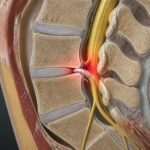
Herniated disc and nerve root inflammation
05/09/2026
IN BRIEF
| The drop foot is a weakness of the foot dorsiflexors that causes a steppage gait and may reveal sciatica with compression of the nerve in the lumbar region. When it is associated with sciatic pain and loss of strength in the foot, it is a warning sign that requires prompt consultation; urinary disturbances or an absent perineal sensation indicate a surgical emergency. The diagnosis is based on a clinical examination, followed by an MRI and possibly an EMG to specify the impairment and treatment. The benefits of early management include better recovery of strength and prevention of complications, through rehabilitation, the use of a dorsiflexion orthosis if useful, and, if necessary, a surgical intervention. In Montreal, this service is particularly recommended for individuals with loss of foot strength associated with sciatica. |
Drop foot, or steppage, is a weakness of the foot dorsiflexors that causes the foot to drag on the ground while walking and may accompany sciatica. When it is associated with a loss of strength, it indicates potentially serious nerve involvement, often related to compression of the L5 root by a herniated disc.
This episode is not just simple low back pain and constitutes a warning sign that requires a prompt consultation; in the presence of urinary disturbances, perineal anesthesia, or progressive weakness, it represents a medical emergency.
The diagnosis relies on the clinical examination and imaging (MRI), and the treatment aims to relieve compression and restore strength through rehabilitation and, depending on the case, surgery or conservative approaches. Early management significantly improves the chances of recovery.
This article, written by a healthcare professional and expert in osteopathy, explains the link between sciatica and difficulties in dorsiflexing the foot, and addresses the question: emergency or prompt consultation? The content describes the mechanism, warning signs, and management options, with practical advice on how to act quickly and optimize recovery chances.
Understanding Drop Foot and its Link with Sciatica
Drop foot is a weakness of the foot dorsiflexors. The foot remains pointed down and walking becomes a steppage gait. This gait reflects a nerve impairment, with the L5 nerve often involved. When the cause is sciatica due to a herniated disc compressing the L5 root, the nerve no longer sends the proper signal to lift the foot, and strength diminishes. This situation can be described as paralytic sciatica, a warning sign necessitating a prompt consultation.
The mechanism can be summarized as follows: L4-L5 herniated disc compresses the L5 root, which controls the foot dorsiflexors; weakened, the muscles can no longer lift the foot, causing it to drop.
For more details on the causes and mechanisms, check dedicated resources on sosherniediscale.com and sosherniatedisc.com.
Warning Signs and Emergency
A drop foot associated with sciatica may require a prompt consultation or an emergency depending on the signs. Alarm signals include a rapid loss of strength in the foot, urinary disturbances, perineal anesthesia, a sensation of weakness in both legs, or pain that worsens or does not decrease. Cauda equina syndrome is a critical situation that demands urgent attention.
For preliminary advice on when to consult, see Sciatica: when to consult.
How the Diagnosis is Made
The diagnosis is based on a clinical examination: observation of gait, strength of dorsiflexors, examination for sensitivity and reflexes, and the Lasègue sign. Depending on the context, a lumbar MRI allows visualization of a herniated disc and its level, and an EMG helps localize the nerve impairment.
Management Options and Objectives
Management depends on the cause and severity. In most cases, a non-surgical approach is preferred initially. In cases of significant compression or persistent motor deficit, neurovertebral decompression may be considered. For more information on options, discover neurovertebral decompression. At the Clinique TAGMED, tailored solutions can be proposed, including osteopathic approaches and non-invasive treatments.
For details on causes and associated treatment options, please visit sosherniediscale.com and sosherniatedisc.com.
When to Consult in an Emergency and What to Do in the Meantime
In the presence of a rapid loss of strength in the foot or ankle, urinary disturbances, or perineal anesthesia, consult the emergency services without delay. In the meantime, stay active within the limits of pain and avoid excessive efforts that worsen the pain. For general information, visit Sciatica: when to consult.
Resources and Additional Information
For further exploration, check dedicated pages on associated signs and causes, and visit the following resources on authorized sites:
Sciatica in Montreal – pain in the buttocks after a long sitting position,
Sciatica: foot weakness and possible neurological cause,
Sciatica in Montreal – low back pain with radiation into the leg,
Sciatica Montreal – calf pain, heel or outer edge of the foot,
Sciatica and tingling in the big toe – possible L5 root.
Medical disclaimer: The information and advice provided on this site do not replace the opinion, diagnosis or treatment of a healthcare professional. Please note that Dr Sylvain Desforges, osteopath, is neither a medical doctor nor a physician, and is not a specialist in any medical specialty as defined by the Collège des médecins du Québec. Manual medicine, functional medicine, and sports medicine as described on this site exclude any medical treatment or diagnosis made by a physician or specialist doctor. Always consult your doctor for any medical questions. For more details, please read our complete Legal Notice.
- Absolute urgency
- Rapid loss of strength in the foot or leg
- Urinary issues or perineal numbness
- Cauda equina syndrome — neurosurgical emergency
- Associated fever or severe low back pain waking you up at night
- Rapid consultation recommended
- Foot drop without major urgent signs
- Progressive motor deficit but not immediate
- Root pain that persists >4–6 weeks despite treatment
- No urinary issues or perineal sensitivity; planning for evaluation

This article helps you distinguish between an emergency and a quick consultation when sciatica is associated with difficulty in raising the foot, a phenomenon known as foot drop. It explains the mechanisms, warning signs, what to do immediately, and treatment options in order to limit the risks of sequelae and optimize recovery.
Emergency or quick consultation? How to distinguish
Foot drop indicates weakness in the foot’s lifting muscles and may signal a problem with the L5 nerve. When it occurs in conjunction with sciatica due to root compression, it could be a situation requiring quick evaluation. In the presence of marked and rapid loss of strength or warning signs, an emergency consultation (or visit to the emergency room) should be considered. In the absence of these elements, a quick consultation with your doctor or a specialist in the coming days is recommended to determine the cause and the course of action.

Sciatica and weakness in the thigh: possible lumbar cause
IN BRIEF Sciatica with thigh weakness is a possible manifestation of a lumbar cause irritating a nerve root (L4-L5, L5-S1). Advantages: a quick diagnosis and a targeted treatment plan with rehabilitation to regain strength and mobility and prevent recurrences. Operation:…

Sciatica and calf weakness: what should be monitored?
IN SHORT In short, sciatica and weakness in the calf describe a lumbar radiculopathy where pain follows the path of the sciatic nerve and may reach the calf. Benefits: a targeted non-surgical management, quick relief, and an improvement in mobility…
Signs and warning signals to watch for
A loss of strength in the foot associated with sciatica may be a sign of a serious motor deficit and should draw attention. Other warning signs requiring quick management include urinary or bowel issues, reduced perineal sensitivity, weakness in both legs, associated fever, or rapidly worsening low back pain. If these elements accompany the evolution, an emergency consultation should be sought, as it may indicate a cauda equina syndrome, a medical situation requiring rapid intervention.
Note that foot drop can also originate from a peripheral problem at the knee or another nerve pathway, and only a medical examination can affirm the exact origin. An accurate diagnosis involves a targeted clinical examination and, depending on the case, additional testing.

Sciatica and difficulty walking on tiptoes: possible S1 root
IN BRIEF In brief, sciatica with difficulty walking on tiptoes may reflect an involvement of the S1 lumbar root. What is it? a radicular pain that can limit foot elevation and walking on tiptoes. What are the benefits? an accurate…

Sciatica and difficulty walking on heels: possible L5 root
IN BRIEF The sciatica associated with a difficulty walking on the heels is generally due to an involvement of the L5 root of the sciatic nerve, with a pathway that starts from the lower back, crosses the buttock, and goes…
What to do now if you suspect foot drop?
If in doubt, stay active within the limits of your pain and avoid activities that worsen the issue. Contact your primary care physician quickly to arrange an evaluation and, depending on the severity of the symptoms, consider an earlier consultation or an emergency visit. Prepare useful information in advance: location and details of the pain, duration, evolution, medications taken, history of low back pain or cancer, and any urinary or sensory warning signs.
During the consultation, expect a clinical examination that will assess the strength of the foot’s lifting muscles, sensitivity, and reflexes, followed by imaging tests (mainly lumbar MRI) and possibly an EMG to specify the nerve origin and the duration of the condition. Based on the diagnosis, the doctor will guide you towards appropriate treatment and a rehabilitation plan.

Sciatica and loss of strength: a sign not to be taken lightly
IN SHORT In short, sciatica is pain that follows the path of the sciatic nerve. A loss of strength in the leg is a sign that should not be taken lightly. It’s a warning indicating nerve damage that may require…

Sciatica and numb foot sensation: when to consult?
IN BRIEF In brief, sciatica and numbness in the foot refer to pain that follows the path of the sciatic nerve and may be accompanied by tingling or numbness in the foot. This summary specifies when to seek consultation, distinguishing…
Treatment options and follow-up
Treatment depends on the cause and severity. In most cases, conservative treatment is preferred as the first-line option and may include analgesics, anti-inflammatories, and sometimes a brief course of corticosteroids, combined with targeted physiotherapy to strengthen the lifting muscles and improve walking. An ankle-foot orthosis may be proposed to secure walking while waiting for the return of strength, without curing but protecting against falls.
In the presence of a disc herniation and persistent functional incapacity, a decompression surgical intervention may be considered, most often after an evaluation of optimal medical treatment over a few weeks. The choice will depend on the location and severity of the nerve compression, as well as the clinical evolution.
In any case, emergency signs, particularly the cauda equina syndrome with urinary disturbances or perineal sensitivity, require immediate medical intervention to avoid irreversible sequelae.
| Situation / Criterion | Recommended Action |
|---|---|
| Dropping foot with sciatica | Medical emergency: contact emergency services or go to the ER |
| Urinary disturbances or loss of perineal sensitivity (cauda equina syndrome) | Absolute neurosurgical emergency within 24-48 hours |
| Progressive motor deficit or new significant motor deficit | Medical emergency: rapid evaluation and management |
| Sciatic pain with severe pain not relieved by painkillers | Rapid consultation: evaluation and appropriate treatment plan |
| Radicular pain without obvious motor deficit | Rapid consultation: follow-up and appropriate conservative treatment |
| Fever associated with lumbar pain or suspicion of infection | Medical emergency |
| Bilateral sciatica with weakness in both legs | Emergency neurosurgical evaluation needed |
| Recent trauma with lumbar pain | Rapid consultation to assess the structures |
Sciatica and dropping foot: emergency or quick consultation?
“I was walking normally and suddenly my foot caught the ground. I could no longer lift the tip and it seemed to drop with each step. It was a dropped foot related to sciatica. I understood it was an emergency and went straight to the ER. The team quickly explained that nerve compression can leave lasting effects and that rapid action maximizes recovery chances.”
“After a few days of pain, I decided to see my doctor promptly when I noticed my foot dragging. The doctor arranged for tests and a rapid consultation. Thanks to this proactive approach, I avoided surgery and started targeted rehabilitation that gradually helped me regain strength and mobility.”
“For my mother, the alert came when her foot no longer lifted and the lumbar pain increased. We insisted on a rapid evaluation. The tests showed nerve compression and management was initiated without delay: physiotherapy, foot-drop orthosis, and close follow-up. Within a few weeks, the pain decreased and strength gradually returned.”
“As a relative, I emphasize this point: facing a sciatica with a dropped foot, one should not wait. An emergency can be avoided through early consultation which allows for rapid sorting between conservative management and necessary intervention.”
Dr Sylvain Desforges, osteopath and experienced practitioner, is recognized for his integrated approach to pain and neuro-musculoskeletal dysfunction. Experts in osteopathy, manual medicine, and naturopathy, he presides over TAGMED clinics and the ACMA association, with a commitment to sustainably improving patient health. In his practice, he combines rigorous assessment with advanced technologies to optimize recovery, especially in cases of sciatica and dropped foot.
Sciatica is classic in the painful path of the sciatic nerve, but when a dropped foot or weakness of the foot dorsiflexors occurs, the mechanism becomes complicated: significant nerve damage can manifest as a loss of strength that hinders the ability to lift the foot. This situation is often related to the L5 root compressed by a lumbar disc herniation (commonly at L4-L5). The nerve, responsible for the dorsiflexor muscles of the foot, may then relay a faulty message, leading to a steppage gait, increasing the risk of falls and functional impairment.
To distinguish between an emergency and a necessary quick consultation, it is important to identify warning signs. In cases of rapid loss of strength in the foot, in the presence of urinary disturbances, perineal anesthesia (numbness around the perineum), or progressive weakness in both legs, one should consider a neurosurgical emergency. In the absence of these red flags, a rapid consultation with a specialist can guide the diagnosis and treatment without unnecessary delay.
The diagnostic pathway relies on a closely collaborative approach. The clinical examination assesses gait, dorsiflexor strength, and sensitivity in the radicular territory. The lumbar MRI is the reference examination to visualize any herniation and root compression, while EMG specifies the location and age of the nerve damage. The doctor may also rule out other peripheral or central causes that may mimic sciatica.
On the treatment side, most cases of sciatica evolve favorably with conservative management within 4 to 6 weeks. The program includes adapted physiotherapy, strengthening of the deep back and abdominal muscles, postural correction, and gradual resumption of activities. When the cause is a disc herniation compressing the L5 root, some patients may benefit from options such as neurovertebral decompression, sometimes combined with microsurgical techniques, to release the nerve root and allow for faster recovery of strength. In parallel, symptomatic measures target pain and inflammation (NSAIDs, corticosteroids if necessary, adapted physiotherapy).
As part of his mission, Dr. Desforges emphasizes an evidence-based approach, integrating technologies such as motorized neurovertebral decompression, laser and shockwave therapy when appropriate. His goal is to provide personalized solutions that ensure safe walking, promote functional recovery, and prevent recurrences. When a dropped foot is associated with sciatica, it is a warning signal that deserves rapid and coordinated evaluation to avoid potential neurological sequelae and optimize recovery chances.
For patients seeking specialized support, TAGMED Clinic offers multidisciplinary expertise and a structured approach focused on patient education, gradual pain control, and appropriate rehabilitation. This alignment allows for anticipating needs, quickly assessing the necessity of imaging, and guiding towards the most effective therapeutic choices according to each situation.
Quick summary: the sciatica associated with difficulties lifting the foot (dropped foot) may signal serious nerve compression, usually of the L5 root, often due to a disc herniation. This requires a rapid medical evaluation rather than passive waiting, to avoid sequelae and optimize recovery chances. In the presence of additional warning signs such as urinary disturbances or perineal anesthesia, this constitutes an emergency or urgent care.
Summary and recommendations
The dropped foot is a weakness of the foot’s dorsiflexor muscles that leads to a steppage gait and increases the risk of falling. When it accompanies sciatica, it generally points to compression of the L5 nerve root, most often related to a lumbar disc herniation at L4-L5. It is not an isolated pain: it is a warning signal requiring rapid medical evaluation to preserve nerve function and optimize recovery.
In a mild sciatica, relative rest, physiotherapy, and painkillers are often sufficient to improve symptoms within a few weeks. However, a loss of strength in the foot associated with sciatica warrants a quick consultation and appropriate medical referral, as it indicates more pronounced and potentially progressive nerve damage.
The diagnosis relies on a thorough clinical examination and additional tests. The lumbar MRI accurately visualizes the compressed discs and roots, while the EMG specifies the location and chronicity of the lesion. The doctor then determines the origin: spinal (L5), peripheral, or other, to guide treatment.
Management often combines the prevention of nerve damage with functional rehabilitation. The rehabilitation aims to strengthen the dorsiflexors of the foot and optimize walking, sometimes assisted by a dorsiflexion orthosis to secure walking while waiting for strength to improve. Depending on the cause and progression, epidural injections may be considered, and surgery may be proposed in cases of persistent disc herniation with motor deficits despite optimized treatment.
Warning signs that necessitate emergency include rapid loss of strength in the foot or ankle, urinary disturbances, perineal anesthesia, or bilateral sciatica with weakness in both legs. The cauda equina syndrome is a critical situation requiring rapid medical intervention (generally within 24 to 48 hours) to prevent irreversible sequelae.
To delve deeper into warning signs and the steps to take in case of high-risk sciatica, you can consult specialized resources that detail the recognition of emergencies and care pathways. For example, articles and online guides discuss emergency signs and situations where a quick consultation is recommended. Other resources address alert signs, Sciatica: when to consult, or strength loss to monitor. These resources provide practical advice on the steps to follow and emergency criteria.

Sciatica and the sensation of a numb leg: what does this symptom mean?
IN BRIEF Sciatica and the sensation of a dead leg refer to pain and tingling along the path of the sciatic nerve, from the lower back to the foot. This symptom reflects nerve compression or irritation, most often due to…

Sciatica and burning sensation in the toes
IN BRIEF In brief, sciatica is pain that follows the path of the sciatic nerve and can manifest as a burning sensation in the toes. This pain can radiate from the lower back to the leg and foot. The most…

Dr Sylvain Desforges, B.Sc., D.O., N.D., osteopath, is the founding president of TAGMED and of the ACMA association. He dedicates his practice to chronic spinal pain, low back pain and symptoms compatible with sciatica, particularly when pain radiates toward the buttock, leg, calf, foot or toes.
Through SOS Sciatique, he publishes educational content on sciatica symptoms, possible causes such as disc herniation, disc narrowing, foraminal stenosis or irritation of a lumbar nerve root, as well as non-surgical approaches that may be considered according to the evaluation. At Clinique TAGMED, care may include, depending on the case, motorized neurovertebral decompression, specific osteopathic care or precision percussion.
For an evaluation related to sciatica treatment in Montreal / Mount Royal or sciatica treatment in Terrebonne, please consult the services available at Clinique TAGMED.
Medical disclaimer
The information published on SOS Sciatique is provided for educational purposes only and does not replace a consultation, diagnosis, opinion or treatment provided by a physician or another authorized healthcare professional. The author of this article is neither a medical doctor nor a specialist in a medical specialty recognized by the Collège des médecins du Québec. The osteopathic, manual medicine or functional support approaches described on this site do not constitute medical acts and are not intended to replace medical follow-up.
Consult a physician or emergency service in cases of loss of bladder or bowel control, anesthesia in the saddle area, significant or progressive weakness in the leg or foot, fever, recent trauma, severe pain or rapid worsening of symptoms. For more details, please read our Legal Notice.