


Sciatica in Terrebonne: pain from the lower back to the calf
08/09/2026
Herniated disc and annular tear: possible pain
08/09/2026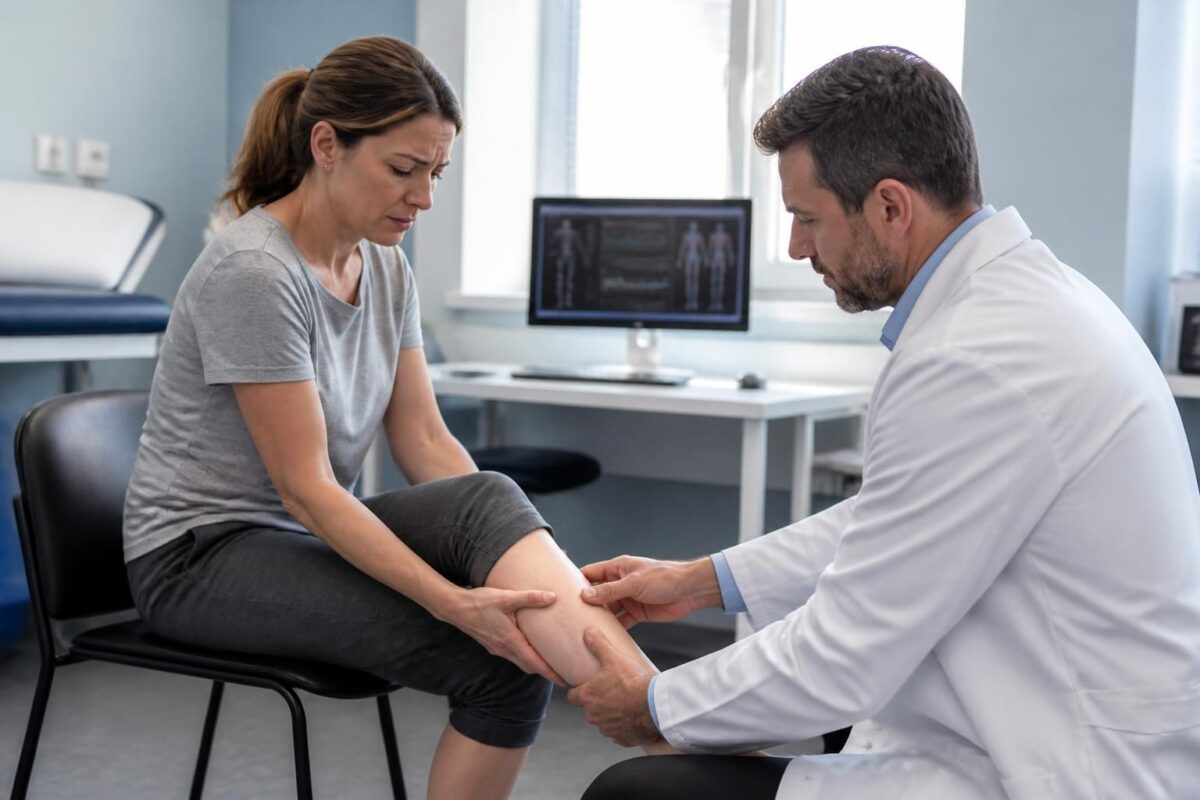
IN SHORT In short, sciatica and weakness in the calf describe a lumbar radiculopathy where pain follows the path of the sciatic nerve and may reach the calf. Benefits: a targeted non-surgical management, quick relief, and an improvement in mobility through a personalized plan including exercises and postural advice. How it works: a simple clinical assessment to locate the source, followed by an adapted multimodal treatment (physiotherapy, targeted osteopathy, gentle exercises, and postural corrections). Monitor for warning signs such as loss of urinary control or progressive motor deficit. If pain persists beyond a few weeks or symptoms worsen, consider imaging and re-evaluation. In Montreal, this service is particularly recommended for sciatic pain radiating to the calf to achieve effective relief while avoiding unnecessary interventions. |
Sciatica may present as pain following the path of the sciatic nerve and reaching the calf. When weakness of the calf appears, certain signs should be monitored to distinguish nerve damage and guide appropriate management.
- Unilateral pain starting from the lower back or buttock and radiating to the calf and foot.
- Presence of tingling, numbness, or weakness of the foot or calf.
- Pain worsens with exertion, coughing, or sneezing and may worsen after prolonged sitting.
- Warning signs to watch for: loss of urinary control or saddle anesthesia, progressive motor deficit of the lower limb.
- If symptoms persist for more than 6 weeks or are accompanied by motor deficits, a medical evaluation and imaging may be indicated; non-surgical options (physiotherapy, osteopathy, and adapted exercises) aim for relief and postural improvement.
This article, written by a healthcare professional and expert, describes what to monitor when sciatica is accompanied by calf weakness. It specifies the path of the sciatic nerve, warning signs, possible causes such as herniated disc and spinal canal stenosis, the diagnostic process, and non-surgical options offered at the TAGMED Clinic in Montreal and Terrebonne. The aim is to help quickly identify important signals and guide management towards appropriate solutions.
Understanding the path of the sciatic nerve and signs of weakness
The sciatic nerve is the longest in the body and originates from the lumbar roots L4 to S3. It runs through the lower back, the back of the thigh, and then down to the calf and foot. When irritated or compressed, pain can follow this path and be accompanied by paresthesias, numbness or weakness in the calf or foot. A radicular pain can be felt on one side and may worsen with exertion, coughing, or sneezing. To deepen the link between pain and nerve origin, see the article “Sciatica – possible nerve origin”.
For more information on calf pain related to sciatica, refer to this content: Sciatica: pain in the calf and possible nerve origin.
Signs and warning signals to monitor
Watch for the following signs: unilateral pain starting from the buttock, radiating to the calf and foot; paresthesias, numbness or weakness of the foot; pain that worsens with exertion, coughing or sneezing. Warning signs require prompt evaluation: loss of urinary or sphincter control (cauda equina), very severe low back pain, or progressive motor deficits, fever, or suspicion of infection. To better understand variations in pain pathways, refer to resources related to sciatica in Terrebonne or Montreal.
Possible causes of calf weakness of sciatic origin
Among the most common causes: lumbar disc herniation and radicular compression of the L5-S1 or L4-L5 roots; spinal canal stenosis and foraminal stenosis; piriformis syndrome that may compress the sciatic nerve; and other conditions like spondylolisthesis. Less common causes may include infections or inflammatory conditions. In pregnant women, postural changes can also temporarily influence nerve pain. For concrete examples, see resources related to sciatica in Montreal and Terrebonne.
Recommended diagnosis and evaluation
The diagnosis is primarily based on a clinical examination that assesses strength, reflexes, and sensations, with specific tests like the Lasègue sign. If symptoms persist beyond six weeks or if there is a motor deficit, imaging such as MRI or CT scan may be considered to precisely locate the affected root. Electrodiagnostic tests may also be used depending on the context. For non-surgical approaches available at your clinic, refer to local resources associated with TAGMED.
Management and non-surgical options at TAGMED
At TAGMED Clinic, non-surgical options may be considered when appropriate. These include motorized neurovertebral decompression, specially tailored osteopathy, and precision percussion, tailored to the clinical evaluation and the current case. For more information on these approaches, visit the relevant pages on TAGMED Clinic. In some cases, and after evaluation, other non-surgical options may be discussed, particularly related to resources for neurovertebral decompression.
When to seek prompt consultation and warning signals
Consult without delay if there is a progressive motor deficit, loss of urinary or bowel control, extremely severe lower back pain, or associated fever; these elements require urgent evaluation. In case of doubt, a quick medical assessment is recommended to differentiate purely muscular pain from nerve-related pain.
Prevention and practical advice
To reduce the risk of recurrence, maintain suitable physical activity and a correct posture during daily activities and at work. Simple measures like regular walking and trunk strengthening can help, while avoiding prolonged bed rest. For additional resources and advice, you can consult the content dedicated to sciatica on Sciatica in Montreal and other relevant pages on Terrebonne.
To delve deeper into aspects related to sciatica and calf pain of nerve origin, you can also consult the following resources: Sciatica Montreal, Calf pain and possible nerve origin, and Terrebonne – changing course. For general information on sciatica and non-surgical options, also check the dedicated pages on Sciatica Montreal and Sciatica Terrebonne.
Advancing towards decompression and related technologies is possible through dedicated resources on neurovertebral decompression and the TAGMED Clinic.
Medical disclaimer: The information and advice provided on this site do not replace the opinion, diagnosis, or treatment of a healthcare professional. Please note that Dr. Sylvain Desforges, osteopath, is neither a medical doctor nor a physician and is not specialized in a medical specialty as defined by the Quebec College of Physicians. Manual therapy, functional medicine, and sports medicine as described on this site exclude any medical treatment or diagnosis made by a physician or medical specialist. Always consult your physician for any medical questions. For more details, please read our complete Legal Notice.
Useful resources and additional links: Sciatica in Montreal – pain increased by sneezing or effort, Pain in the calf and possible nerve origin, Sciatica – pain that changes course in Terrebonne.
Medical disclaimer: The information and advice provided on this site do not replace the opinion, diagnosis, or treatment of a healthcare professional. Please note that Dr. Sylvain Desforges, osteopath, is neither a medical doctor nor a physician and is not specialized in a medical specialty as defined by the Quebec College of Physicians. Manual therapy, functional medicine, and sports medicine as described on this site exclude any medical treatment or diagnosis made by a physician or medical specialist. Always consult your physician for any medical questions. For more details, please read our complete Legal Notice.
- Sciatica and path: pain starting from the lower back, rising into the buttock and leg to the calf
- Sensory signs: tingling, numbness, or paresthesias in the calf or foot
- Weakness: difficulty lifting the foot or pushing on the toes
- Worsening pain: with effort, coughing, or sneezing
- Warning signs: loss of urinary or sphincter control, acute lower back pain, or rapid motor deficit
- Quick assessment: strength, reflexes, and specific tests (Lasègue) to locate an affected nerve root
- Imaging: MRI/CT if symptoms persist >6 weeks or motor deficit
- Active monitoring: consult quickly in the presence of warning signs
- Non-surgical approach: targeted physiotherapy, osteopathy, and strengthening and posture exercises
- Activity and posture: prioritize suitable activity and regular walking, avoid prolonged rest
- Options depending on the cause: decompression or other therapies based on the evaluation

Quick summary: sciatica can present with calf weakness, a sign potentially related to a nerve root involvement. It is crucial to monitor warning signs, the persistence of symptoms, and the evolution of weakness, in order to prioritize suitable non-surgical management and prevent exacerbations. This article guides you on what to monitor, alert signals, and follow-up options to preserve mobility and quality of life.
Understanding the link between sciatica and calf weakness
The sciatic nerve is the longest in the body and arises from the lumbar roots. When it is irritated or compressed, it can trigger pain that follows its path, from the lower back to the calf, and sometimes to the foot. This pain may be accompanied by muscle weakness in the calf, a sign of potential nerve root involvement. The most common causes are a lumbar herniated disc or narrowing of the lumbar canal, but piriformis syndrome or muscle tension can also play a role. Understanding this link helps to direct towards targeted, non-surgical therapies.

Sciatica and pain worsened while sitting: consider the disc?
IN BRIEF Sciatica aggravated in a seated position may be related to irritation of a nerve root, sometimes caused by a herniated disc. Remaining seated can exacerbate pain that radiates from the buttock down the leg, but this symptom alone…

Sciatica and pain relieved while seated: consider stenosis?
IN BRIEF A sciatica relieved in a seated position may suggest a lumbar stenosis and neurogenic claudication, but this sign alone is not sufficient for a diagnosis. Observing walking, weakness, and symptom evolution helps guide the evaluation and compare signs…
Signs and symptoms to monitor
Pain is most often unilateral and can present as a burning sensation or an electric shock along the leg to the calf. Paresthesias (tingling), numbness, or weakness in the calf or foot may accompany this pain. The pain can worsen with effort, coughing, or sneezing. Increasing weakness in the calf can limit walking and stability. In the presence of marked neurological signs, a rapid evaluation is recommended to avoid delaying diagnosis and treatment.
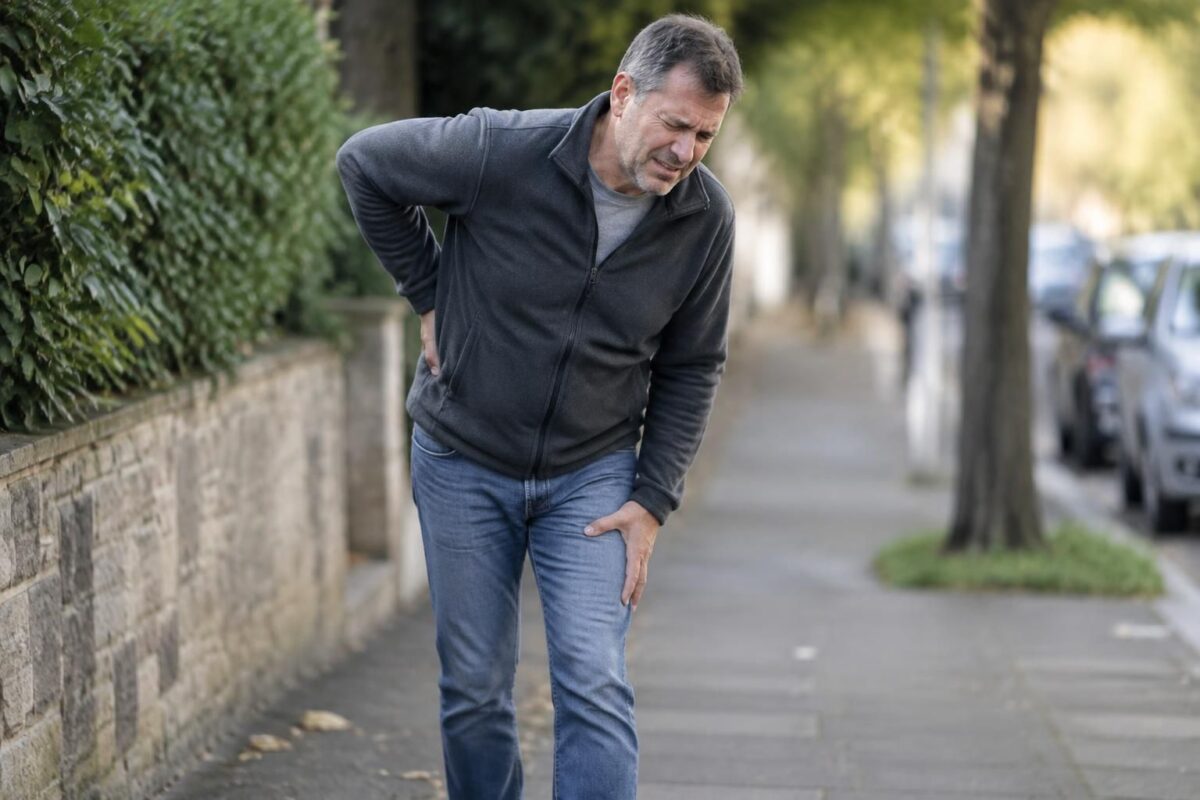
Sciatica and pain that worsens when walking
IN BRIEF A sciatica that worsens with walking is pain radiating from the buttock down the leg, exacerbated by walking. Several causes are possible: this symptom alone does not suffice for a diagnosis. Temporarily reduce walking duration, change positions, and…

Sciatica and pain that improves when walking
IN SUMMARY Sciatica is pain that radiates from the lower back or buttock down to the leg, sometimes all the way to the foot. If it decreases with walking, a gentle and regular walk can help limit stiffness and maintain…
When to Seek Immediate Attention and Warning Signs
Emergency Signs
If you observe loss of urinary or sphincter control, saddle anesthesia, or significant progressive motor weakness, seek urgent medical evaluation.
Signs Needing Rapid Evaluation
Acute low back pain associated with calf weakness, pain at rest that does not subside, fever or signs of infection, or persistence of symptoms beyond six weeks despite initial measures, warrant a specialized consultation to evaluate radiculopathy and adjust the treatment plan.

IN BRIEF Sciatica is pain that often starts from the lower back or buttock and travels down the leg. Pain that worsens at the end of the day may be related to activities or prolonged positions, but it is not…

Sciatica and pain that worsens in the evening
IN BRIEF more painful sciatic pain in the evening is often related to inactivity, fatigue, and increased attention to sensations. This does not necessarily mean that the nerve is worsening. Gently changing positions, walking for a few minutes, and finding…
Diagnosis and Monitoring
Clinical Evaluation
The doctor will assess muscle strength, reflexes, and perform specific radicular tests (for example, tests that reproduce pain along the nerve path). This assessment helps localize the affected root and differentiate nerve pain from purely muscular pain.
Imaging and Complementary Tests
Imaging may be considered if symptoms persist beyond six weeks or if there are neurological deficits: an MRI or CT scan can locate the irritated root and clarify the cause. Electrodiagnostic tests may be used in some cases to assess the extent of nerve damage.

Sciatica and pain when turning in bed
IN BRIEF Sciatica can cause pain when turning in bed, as certain movements irritate the lower back or leg. Turn slowly, moving your shoulders and hips together; a cushion between the knees or under the knees can improve comfort. If…

Sciatica and pain when getting out of bed
IN BRIEF Sciatica upon getting out of bed is pain that radiates from the lower back to the buttock or leg and can be more pronounced after the night. Gradually rising, moving gently, and finding a comfortable sleeping position can…
Non-Surgical Approaches and Prevention
Targeted Exercises and Posture
A personalized plan may include trunk strengthening, gentle stretching exercises, and postural advice to reduce pressure on the nerve roots and optimize mobility. Progression of the exercises should be adapted to tolerance and symptom evolution to avoid painful flare-ups.
Manual Options and Physical Therapies
Non-invasive approaches such as targeted physiotherapy and osteopathy, combined with gentle decompression techniques when relevant, can relieve pain, improve function, and prevent recurrences. The goal is to restore mobility, correct postural dysfunctions, and encourage a gradual return to usual activities.
| Axis | Elements to Monitor and Actions |
|---|---|
| Neurological Warning Signs | Loss of urinary or sphincter control, saddle anesthesia, progressive weakness of the foot; seek urgent care. |
| Location and Progression | Pain radiating from the lower back to the calf; check for unilateral and the sciatic nerve path. |
| Rest and Night Pain | Persistent pain at rest or at night; requires rapid evaluation in the presence of neurological signs. |
| Motor Weakness | Weakness or difficulty lifting the foot; alert signal and requires rapid management. |
| Abnormal Sensations | Paresthesias/numbness in the calf or foot; note location and evolution. |
| Triggers and Aggravators | Coughing, sneezing, or exertion worsen pain; monitor variability and triggering factors. |
| Useful Clinical Examinations | Assessment of strength, reflexes, and Lasègue’s test; results guide radicular evaluation. |
| Imaging and Indications | MRI/CT scan considered if persistent >6 weeks or motor deficit. |
| Approaches and Recommended Actions | Adapted activity, targeted physiotherapy/osteopathy, anti-inflammatories as indicated; avoid prolonged rest; urgent care if warning signs present. |
Testimonials: Sciatica and Weakness in the Calf – What to Watch For
In these testimonials, patients describe how a Sciatica can manifest as pain radiating to the calf, and what they watch for to act quickly and avoid complications.
Marie, 46: “I thought the pain came from a muscle. The Sciatica manifested as pain starting from the lower back and going up the back of the thigh to the calf. What alerted me was the weakness in my foot and the persistent tingling. I monitored for signs such as pain worsening with walking and potential loss of urinary control. After evaluation and a personalized plan, I followed targeted exercises and postural advice that allowed me to regain mobility without surgery.”
Julien, 38: “The path was clear: buttock → leg → calf. I monitored the alarm signals: pain increasing with exertion or coughing, paresthesia or numbness, and weakness in the calf that prevented me from lifting my foot. When these signs appeared, I consulted quickly, and we prioritized a non-surgical approach with an assessment and dedicated exercises.”
Sophie, 52: “After an acute episode, the pain radiated to the calf with paresthesia. I learned to monitor for neurological signs and the progression of weakness. If the pain worsens at rest or if symptoms like loss of sensation appear, one should consult quickly.”
Ahmed, 60: “The pain follows the path of the sciatic nerve to the calf, and I noted weakness in my foot. Warning signals include loss of urinary control or progressing weakness; in case of doubt, urgent evaluation is recommended. The team guided me towards non-surgical solutions and adapted exercises, which improved my function and mobility.”
Dr Sylvain Desforges, osteopath and manual medicine expert, is the founding president of TAGMED clinics and the ACMA association. With a career dedicated to health innovation, he specializes in the management of chronic spinal pain and the integration of advanced technologies such as motorized neurovertebral decompression, laser, and shock therapies. His approach is evidence-based and patient-centered, aiming to improve the quality of life for individuals suffering from Sciatica and calf weakness. He offers effective and personalized non-surgical care tailored to each profile.
From a monitoring perspective, he emphasizes the importance of early diagnosis when Sciatica and calf weakness occur. Calf weakness may signal radicular involvement, with the sciatic nerve following a path from the lower back down to the calf. His simple yet rigorous clinical evaluation allows for distinguishing a nerve origin from purely muscular or vascular pain. Paresthesias, numbness, or motor weakness can strengthen suspicion of radiculopathy and guide therapeutic decisions toward relevant and appropriate options.
The diagnosis relies on a thorough clinical examination and, when necessary, imaging tools. The Lasègue sign and assessment of strength and reflexes help localize the affected root. In cases of symptom persistence beyond six weeks or neurological deficit, additional explorations like MRI or CT may be recommended to clarify the etiology and guide treatment. Dr. Desforges prioritizes a multidisciplinary approach, combining targeted osteopathy, physiotherapy, and postural advice to reduce pain and restore function sustainably.
In his practice, the care plan is personalized and progressive. He favors, when possible, non-surgical interventions: motorized neurovertebral decompression, specific osteopathic techniques, and precision tools to relieve nervous tensions without resorting to surgery. Tailored exercises focused on strengthening the core and improving posture complement the treatment and aim to reduce pressure on the lumbar roots. Postural advice and daily adjustments are integral to the journey, aimed at achieving quick relief and regained mobility.
Monitoring and warning signs remain central to the approach. Dr. Desforges reminds that elements such as loss of urinary or sphincter control, saddle anesthesia, rapid or progressive weakness of the leg or foot, fever, or recent trauma require prompt and appropriate evaluation. If the pain ascends toward the calf and is accompanied by marked neurological signs, appropriate investigations or interventions may be considered, while remaining guided by the safety and well-being of the patient.
His commitment is to reduce invasive actions by prioritizing conservative, effective, and evidence-based solutions. This philosophy reflects the alliance between science, manual expertise, and a compassionate approach to the patient. By evaluating Sciatica and calf weakness within a personalized plan framework, he aims to quickly restore mobility, improve posture, and prevent relapses within the TAGMED clinics and the ACMA association.
This conclusion briefly presents key points on sciatica associated with calf weakness and what to watch for. It reminds that pain may follow the path of the sciatic nerve and that muscle weakness in the calf may reflect radicular involvement, frequently associated with a herniated disc or spinal canal stenosis. Clinical evaluation remains the pivot of management, with a guided progression toward non-surgical measures aimed at improving mobility and posture while clearly indicating when imaging or medical emergency may be necessary. For further details, specialized resources and appropriate approaches are available, particularly in Montreal and surrounding areas.
In the context of sciatica associated with calf weakness, carefully monitor the progression of symptoms and signs that may indicate more significant nerve involvement. A unilateral pain extending from the buttock to the calf may signify radiculopathy; the presence of tingling, numbness, or foot weakness reinforces the necessity to precisely evaluate the affected root. If the pain is accompanied by a loss of urinary or bowel control, saddle anesthesia, or rapid and progressive weakness, urgent consultation is required.
The diagnosis is primarily based on a thorough clinical examination (strength, reflexes, sensitivity, and tests such as Lasègue). Imaging (MRI or CT) or electrodiagnostic tests may be necessary when symptoms persist beyond six weeks or if there is a motor deficit. This approach not only allows for identifying the radicular origin but also guides a suitable treatment strategy, prioritizing non-surgical options whenever possible.
Effective management often combines conservative and personalized measures: physiotherapy, targeted osteopathy, gentle exercises, and work on posture, strengthening the core and involved muscle chains, as well as practical advice on daily activities. Prolonged rest is generally counterproductive; on the contrary, adapted and progressive activity helps to reduce pressure on the roots and restore function. In cases of persistent neurological deficit or non-response to treatment, further evaluation and complementary options may be considered.
To prevent recurrences and optimize recovery, it is helpful to incorporate activities such as walking, swimming, or gentle trunk strengthening, while ensuring a correct posture and ergonomics at work. A multidisciplinary and personalized approach increases the chances of lasting relief and improved functional tolerance in daily life. For further exploration, you can consult the following resources:
Sciatica in the calf – causes, symptoms, and when to consult,
Sciatica in Montreal – pain towards the top of the foot and root L5,
Sciatic pain in Terrebonne – incomplete path,
Sciatica – when to consult,
Pain in the hip or true nerve radiation,
Pain in the buttock after a long sitting position,
Sciatic pain,
Sciatica and burning sensation in the calf,
Sciatica – additional resources.

Dr Sylvain Desforges, B.Sc., D.O., N.D., osteopath, is the founding president of TAGMED and of the ACMA association. He dedicates his practice to chronic spinal pain, low back pain and symptoms compatible with sciatica, particularly when pain radiates toward the buttock, leg, calf, foot or toes.
Through SOS Sciatique, he publishes educational content on sciatica symptoms, possible causes such as disc herniation, disc narrowing, foraminal stenosis or irritation of a lumbar nerve root, as well as non-surgical approaches that may be considered according to the evaluation. At Clinique TAGMED, care may include, depending on the case, motorized neurovertebral decompression, specific osteopathic care or precision percussion.
For an evaluation related to sciatica treatment in Montreal / Mount Royal or sciatica treatment in Terrebonne, please consult the services available at Clinique TAGMED.
Medical disclaimer
The information published on SOS Sciatique is provided for educational purposes only and does not replace a consultation, diagnosis, opinion or treatment provided by a physician or another authorized healthcare professional. The author of this article is neither a medical doctor nor a specialist in a medical specialty recognized by the Collège des médecins du Québec. The osteopathic, manual medicine or functional support approaches described on this site do not constitute medical acts and are not intended to replace medical follow-up.
Consult a physician or emergency service in cases of loss of bladder or bowel control, anesthesia in the saddle area, significant or progressive weakness in the leg or foot, fever, recent trauma, severe pain or rapid worsening of symptoms. For more details, please read our Legal Notice.


