

Sciatica in Montreal: pain in the buttock after a long sitting position
02/09/2026
Sciatica and the sensation of a numb leg: what does this symptom mean?
02/09/2026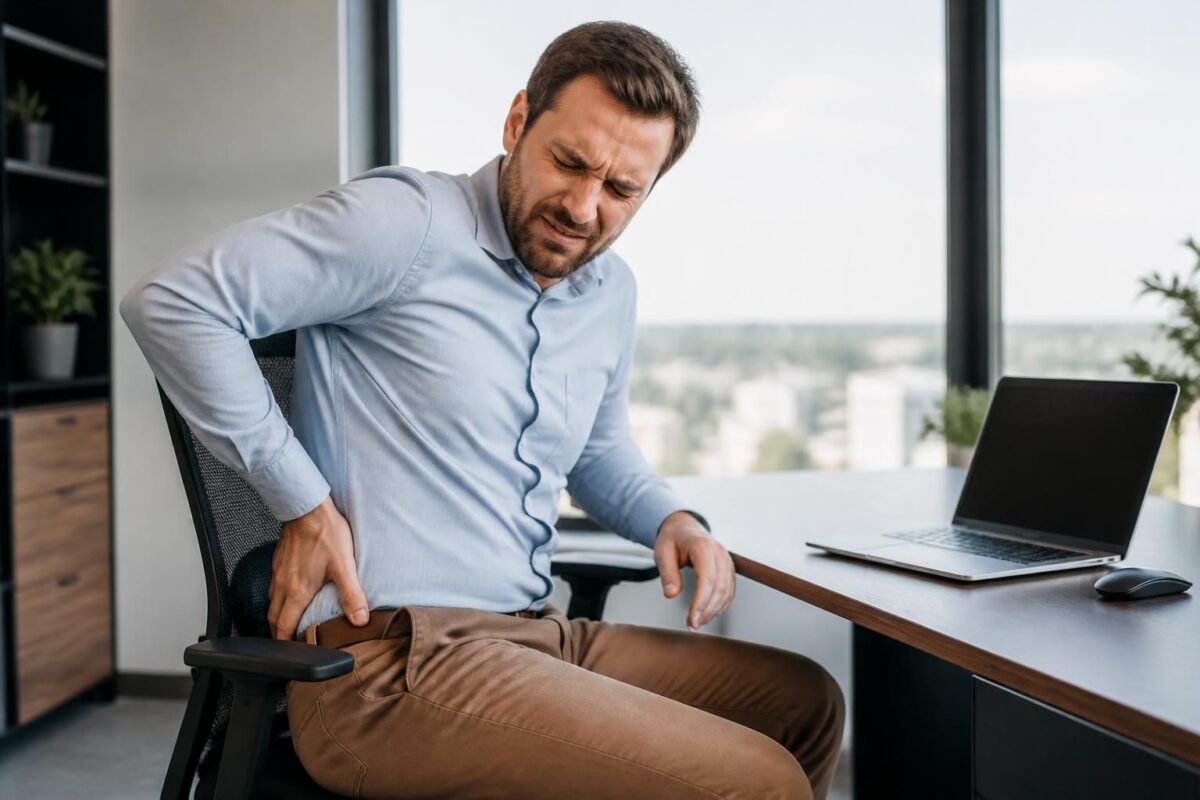
IN BRIEF
| In brief, sciatica in Terrebonne with buttock pain after a long sitting position corresponds to a compression or irritation of the sciatic nerve. Main benefits: pain reduction, better mobility, and prevention of recurrences through postural education and simple adjustments (sciatic cushion, lumbar support, appropriate chair height). How does it work? We act on ergonomics and posture (straight back, knees ~90°, feet flat), redistributing pressures and scheduling regular breaks and walks, without invasive approaches. In Terrebonne, this service is particularly useful for individuals who sit for long periods at work or home. |
In Terrebonne, sciatica can manifest as pain in the buttock after a long sitting position. It results from irritation or compression of the sciatic nerve, often exacerbated by inadequate ergonomics.
Common causes: herniated disc, muscle tension in the pelvis, piriformis syndrome.
Practical and effective solutions: take breaks every 30 to 40 minutes to walk or move; improve ergonomics (height-adjustable chair, lumbar support, sciatic cushion); adopt a proper posture with a straight back, knees at about 90°, feet flat; practice gentle stretches of the glutes and maintain light activity.
If pain persists, consult a health professional for an accurate diagnosis and a tailored plan.
This article, written by a health professional and expert in osteopathy, describes Sciatica in Terrebonne: pain in the buttock after a long sitting position. It explains possible mechanisms, signs to watch for, and practical measures to relieve and prevent recurrences, focusing on ergonomics, breaks, and non-invasive approaches available at Clinique TAGMED.
Causes and Possible Mechanisms
Buttock pain after a long sitting position may result from irritation or compression of the sciatic nerve. The most common mechanisms involve the nerve running from the lower back down the leg, and areas of compression around the gluteal muscles. Piriformis syndrome and other pressure points in the pelvic region may be involved. Certain situations worsen the pain when sitting for long periods, particularly postures that strain the lower back or poorly fitting chairs. To understand the mechanisms, you can consult dedicated resources on the causes and pathways of the sciatic nerve and areas of compression: Sciatica and pain in the buttock while sitting.
In some cases, differing diagnoses may exist, such as piriformis syndrome or other non-lumbar causes that radiate to the buttock. A professional evaluation can identify the precise cause and adjust treatment accordingly. For additional information on non-surgical approaches and available options, see the resources associated with TAGMED.
Signs and Aggravating Factors
Typical signs include a burning or stabbing pain in the buttock, sometimes accompanied by tingling sensations, and potentially radiating to the back of the thigh. The pain typically worsens with prolonged sitting positions and can limit the ability to sit for long periods. Aggravating factors include an unsuitable chair, a hunched posture, or prolonged periods without breaks to move or walk. Useful resources on the links between sitting position and sciatica pain are available at Sciatica and pain in the buttock while sitting.
Diagnosis and When to Consult
An accurate diagnosis requires evaluation by a health professional. The doctor or osteopath can distinguish lumbar sciatica from a gluteal syndrome, such as piriformis or other causes. Symptoms that persist, worsen, or are accompanied by weakness, sensory disturbances, or loss of control require prompt consultation. Additional resources on non-surgical management options and examinations can be accessed via TAGMED’s dedicated sites and associated resources.
Practical Management and Ergonomic Advice in Terrebonne
Management relies on simple daily measures that do not involve invasive procedures. Adopt appropriate ergonomics at work and while moving:
- Use a height-adjustable chair with lumbar support and, if needed, a sciatic cushion to reduce pressure on the nerve pathway.
- Keep knees at about 90 degrees and feet flat; use a footrest if necessary to maintain alignment.
- Avoid prolonged static positions; take micro-pauses and walk briefly every 30 to 40 minutes.
- Alternate activities and favor simple, regular movements rather than staying in the same posture for extended periods.
- If pain persists, consider a specialized evaluation and discuss relevant options with your health professional. Resources on ergonomics and postures in the workplace and at home are available via Sciatica and bottlenecks: immobile position and nerve pain and Clinique TAGMED – Sitting post.
For general insights on non-surgical approaches and treatment options to consider at TAGMED in Terrebonne, see the associated resources. Additional information on the mechanisms and contexts of sciatic nerve irritation can be found at Sciatica and pain in the buttock while sitting and Sciatica and public transport – prolonged sitting position.
Therapeutic Options and Resources to Consult
As part of a multidisciplinary examination, certain non-invasive approaches may be considered at the TAGMED Clinic, notably adapted osteopathic techniques and ergonomic measures at the workstation. For more information on general options and intervention referrals at TAGMED, you can consult TAGMED Clinic – Sciatica and Sitting Position.
Supplementary resources on causes and non-surgical management are available at Sciatica in Terrebonne – Pain in the Buttock and Down the Leg and Sciatic Pain in Montreal – Calf, Heel, or Outer Edge of the Foot. For information on neurovertebral decompression and other complementary approaches, see Neurovertebral Decompression and other resources such as Sos Herniated Disc.
To learn more about the anatomical mechanisms and potential compression areas in the buttock region, specialized resources may be helpful, particularly those related to the piriformis and internal obturator. General guides and exercises can be consulted through the associated resources, while remaining cautious about individual adaptation and symptom progression.
Useful links to delve into ergonomics and everyday practices are available at Ergonomics and Sitting Position.
About the author
Dr. Sylvain Desforges, B.Sc., D.O., N.D., osteopath, is the founding president of
TAGMED
and the ACMA association. He dedicates his practice to chronic pain of the spine, lower back pain, and pain associated with sciatica, particularly when the pain radiates toward the buttock, leg, calf, foot, or toes.
Through SOS Sciatique, he publishes educational content on sciatica symptoms, possible causes such as herniated disc, disc pinching, foraminal stenosis, or irritation of a lumbar nerve root, as well as non-surgical approaches that may be considered based on evaluation. At TAGMED Clinic, care may include, depending on the case, motorized neurovertebral decompression, specific osteopathy, or precision percussion.
For an evaluation related to sciatica treatment in Terrebonne or at sciatica treatment in Montreal / Mont-Royal, check the services available at the
TAGMED Clinic.
Medical Disclaimer
The information published on SOS Sciatique is provided for educational purposes and does not replace a consultation, diagnosis, advice, or treatment performed by a physician or other licensed healthcare professional. The author of this article is neither a doctor nor a specialist in a medical specialty recognized by the Collège des médecins du Québec. The osteopathic, manual medicine, or functional support approaches described on this site do not constitute medical acts and are not intended to replace medical follow-up.
Consult a physician or emergency service in case of loss of urinary or intestinal control, anesthesia in the saddle area, significant or progressive weakness in the leg or foot, fever, recent trauma, severe pain, or rapid deterioration. For more details, please read our
Legal Notice.
Medical Disclaimer: The information and advice provided on this site do not replace the opinion, diagnosis, or treatment of a healthcare professional. Please note that Dr. Sylvain Desforges, osteopath, is neither a medical doctor nor a physician, and is not a specialist in a medical specialty as defined by the Collège des médecins du Québec. Manual medicine, functional medicine, and sports medicine as described on this site exclude any treatment or medical diagnosis made by a physician or specialist physician. Always consult your physician for any medical questions. For more details, please read our full Legal Notice.
Axis: Concrete Actions for Sciatica in Terrebonne While Seated
- Symptoms: buttock pain after prolonged sitting, sometimes radiating.
- Ergonomics: adjustable chair, lumbar support, sciatica cushion, knees at 90°, feet flat.
- Active breaks: get up and walk every 30-40 minutes.
- Pressure reduction: use footrests and lumbar support to maintain curvature.
- Posture: straight back, neutral pelvis, avoid crossing legs.
- Mobility: small movements and gentle stretches of the glutes and piriformis.
- Sleep: neutral posture, sleep on your back or side with a pillow between knees.
- Alert signs: weakness, significant numbness, or urinary/fecal issues; consult quickly.
- When to consult: physio/osteo for assessment and tailored non-invasive plan, especially in Terrebonne.

This recommendation is aimed at anyone in Terrebonne suffering from Sciatica that manifests as pain in the buttock after prolonged sitting. It offers simple and non-invasive measures to relieve and prevent irritation of the sciatic nerve, relying on ergonomics, active breaks, and gentle exercises tailored to daily life.
Understanding Buttock Pain After Prolonged Sitting
The Sciatica that radiates to the buttock may result from irritation or compression of the sciatic nerve in the pelvis or the gluteal pathway. The pain can originate from the lower back and spread to the buttock and sometimes the thigh. Prolonged sitting increases pressure on the lumbar discs and the nerve, explaining the onset or worsening of symptoms when sitting. Possible causes include muscle tension around the pelvis, mechanisms related to the piriformis, or anatomical variations that heighten pressure on the nerve. A clear diagnosis helps guide the recommended actions.

Sciatica in Terrebonne: nighttime pain in the leg
IN BRIEF In brief, nocturnal sciatica is a pain that starts from the lower back and radiates to the leg, sometimes waking you up at night. In Terrebonne, non-invasive management can reduce nighttime awakenings and improve sleep, while preserving mobility…
Sciatica in Terrebonne: pain from the lower back to the calf
IN BRIEF Sciatica is pain that follows the path of the sciatic nerve, starting from the lower back and radiating down the leg to the calf or foot. In Terrebonne, local evaluation allows for quick identification of the causes and…
Daily ergonomic measures in Terrebonne
Adapting your workstation is the first step to reducing buttock pain. Choose an adjustable chair for height and depth, with solid lumbar support to maintain the natural curve of the spine and avoid pelvic sagging. Your knees should form about a 90° angle, with feet flat and, if necessary, a footrest to maintain alignment. Use a sciatic cushion to redistribute pressure around the nerve and pair it with an appropriate lumbar support. Avoid seats that are too low or too soft, which encourage pelvic tilt and increase pressure on the lumbar discs and the nerve.
Sciatica in Terrebonne: hip pain or true nerve radiation?
IN BRIEF Sciatica is a pain that follows the path of the sciatic nerve, from the lower back to the foot. In Terrebonne, it can manifest as pain in the hip or as true nerve irradiation. Key benefits: pain reduction,…

Sciatica pain in Terrebonne: incomplete journey, should we be worried?
IN BRIEF The subject is sciatic pain in Terrebonne, which can follow the incomplete path of the sciatic nerve and project pain down to the foot. Key benefits: pain reduction, improved mobility, and prevention of recurrences through tailored exercises and…
Breaks and mobility: simple habits to adopt
Avoid prolonged static positions by taking micro-breaks every 30 to 40 minutes to walk or move slightly. These breaks help relieve lumbar tension and stimulate circulation, reducing the risk of pain after long periods of sitting. In addition to walking, simple movements like gentle trunk rotations, light bends, and stretches targeting the gluteal and piriformis muscles can be done on the spot without special equipment. Adopting these habits promotes a more resilient back and better mobility.

Sciatica in Terrebonne: pain towards the little toe and S1 root
IN BRIEF In brief, sciatica associated with pain towards the little toe and the S1 root is a neuropathic pain that follows the path of the sciatic nerve and often results from compression or irritation of the affected lumbar root.…
Sciatica in Terrebonne: pain towards the top of the foot and L5 root
IN SHORT The Sciatica in Terrebonne with pain radiating to the top of the foot and probable involvement of the L5 root describes a radicular injury manifested by pain following the nerve path, sometimes accompanied by numbness or weakness. The…
Activity and gentle exercises to relieve the buttock
Incorporate gentle exercises to maintain mobility and prevent recurrences. For example, gentle stretches of the piriformis and gluteal muscles, light strengthening of the lumbar and gluteal muscles, and pelvic stability exercises. Start slowly and progress gradually according to your comfort. Regular walking is recommended as a key activity: it improves circulation, decreases stiffness, and supports the sciatic nerve without aggression. If pain persists, prioritize sessions with a professional (osteopath or physiotherapist) to tailor exercises to your body type and daily life.

Sciatica in Terrebonne: pain radiating to the outer edge of the foot
IN BRIEF Concise definition: Sciatic pain that reaches the outer edge of the foot follows the path of the sciatic nerve from the lower back to the foot. Benefits and applications: In Terrebonne, a conservative approach provides quick and safe…

Numbness in the leg and sciatica in Terrebonne: what should you check?
IN BRIEF In brief, leg numbness related to sciatica is a common but often benign alert. This quick guide describes what this phenomenon is, possible causes such as a compressed nerve or circulatory issues, and essential checks to perform. In…
When to consult in Terrebonne
Consult promptly if the pain in the buttock is associated with significant numbness, progressive weakness in the leg, or if urinary or bowel disturbances occur. If pain persists despite ergonomic adjustments and exercises, seek a professional evaluation to identify a specific cause (e.g., piriformis syndrome, nerve compression, or other). An osteopath or physiotherapist can propose a personalized plan of non-invasive treatments and postural education to help you regain an active and pain-free daily life in Terrebonne.
Comparative table: Sciatica and buttock pain in a sitting position in Terrebonne
| Analysis axis | Concise statement |
|---|---|
| Origin and mechanisms | Sciatic nerve irritated by disc pressure or muscle tensions; prolonged sitting worsens it. |
| Typical manifestation | Buttock pain that may radiate to the thigh, worsened in a sitting position. |
| Aggravating factors | Static posture, unsuitable chair, absence of active breaks. |
| Recommended ergonomics | Adjustable chair, lumbar support, sciatic cushion, and footrest; straight back. |
| Daily management | Break and walk every 30–40 minutes; gentle stretching. |
| Non-invasive approaches | Postural education and manual therapies tailored based on assessment. |
| Warning signs | Significant numbness, weakness, loss of bowel/bladder control, fever. |
| Key differential diagnoses | Piriformis, obturator internus, disc herniation, foraminal stenosis. |
| When to consult | Pain persists despite adjustments or neurological signs; consult. |
Testimonials in Terrebonne: Sciatica and buttock pain after long sitting
“I live in Terrebonne and after long hours of sitting, the pain in my buttock became unbearable. I was recommended a simple ergonomic adjustment and regular short breaks. Within a few weeks, the pain had almost disappeared and my mobility returned.”
“As a driver, staying sitting for long periods triggered buttock pain in Terrebonne. With advice on the importance of breaks every 30–40 minutes and using a sciatic cushion and lumbar support, I regained pain-free driving and better concentration at work.”
“I am a developer and spend hours in front of the screen. In Terrebonne, an adjustment of my chair and the use of a footrest transformed my comfort. The buttock pain related to sciatica is now just a memory after several weeks of postural hygiene and gentle exercises.”
“By changing positions and moving every 30–40 minutes, I managed to limit the flare-ups. The sciatic cushion really relieved me when I am sitting to work on my files in Terrebonne. I highly recommend this type of approach to anyone suffering from sciatica and buttock pain related to prolonged sitting.”
“After a long period of sitting, the buttock pain was constant. Thanks to a targeted evaluation and ergonomic advice in Terrebonne, I established simple habits (suitable chair, knee height, walking breaks) and regained an active life without pain in my daily activities.”
Dr Sylvain Desforges, an expert in osteopathy, naturopathy, and manual medicine, is the founding president of TAGMED clinics and the ACMA association. His career is marked by an innovative approach to healthcare, with a strong specialization in managing chronic pain and integrating advanced technologies such as motorized spinal decompression, laser, and shockwave therapy. His mission is to provide evidence-based care to optimize the health and well-being of his patients. This approach is particularly applicable in Terrebonne, where many patients suffer from sciatica after long periods of sitting.
In this dynamic region, Dr. Desforges supports active adults—drivers, office workers, traveling professionals—who experience recurrent buttock pain during prolonged sitting. This pain, often related to irritation or compression of the sciatic nerve, can radiate from the lower back to the buttock and thigh. For each individual, he offers a multimodal assessment that takes into account ergonomics, postural habits, and pain factors specific to Terrebonne and the patient’s lifestyle.
The therapeutic framework favored by Dr. Desforges is based on an alliance of posture, movement, and non-invasive technologies. Postural education and simple adjustments to the workstation form the bedrock of care, using tools such as lumbar supports, sciatic cushions, and seat risers to restore a natural alignment of the spine and reduce pressure on the nerve. At the same time, gentle and progressive exercises, tailored to daily life in Terrebonne, aim to maintain mobility, strengthen postural muscles, and prevent recurrences.
Beyond ergonomic advice, Dr. Desforges can utilize non-invasive technologies to address the root causes of pain. Motorized spinal decompression can help relieve tension on the nerve structures, while laser and shockwave therapies target inflammation and tissue recovery. This integrated approach allows addressing pain in the buttock without immediately resorting to surgical interventions, offering a pragmatic and reliable path for the residents of Terrebonne.
His philosophy is simple and effective: listen to the patient, diagnose accurately, and implement a treatment strategy that combines education, manual therapy, and current technologies. The goal is clear: to reduce pain, restore mobility, and enable everyone to return to an active and unencumbered life in both professional and personal environments. Within the context of Terrebonne, this personalized approach is based on a thorough understanding of the trajectories of the sciatic nerve and a proactive approach to preventing relapses.
For those suffering from sciatica and buttock pain after long sitting periods in Terrebonne, Dr. Desforges offers comprehensive and tailored care based on simple daily actions and non-invasive solutions, all within a sustainable perspective of well-being and quality of life.
This text provides a clear summary of Sciatica in Terrebonne, focusing on buttock pain after long sitting and on the non-invasive solutions that allow for rapid relief while preventing recurrences through better ergonomics and simple actions.
Buttock pain after a prolonged sitting position most often reflects irritation or compression of the sciatic nerve. In the Terrebonne region, it can occur when posture remains fixed and pressure on the lumbar spine increases. The symptom typically manifests as a burning sensation or shooting pain in the buttock, potentially radiating to the thigh, and may worsen after long periods of sitting. Understanding this nerve pathway and the postural factors allows for quickly directing proven measures without resorting to invasive procedures.
To act effectively and sustainably, prioritize an ergonomic approach and active breaks. Set up an adjustable chair with lumbar support and, if possible, a sciatic cushion to redistribute pressure along the nerve pathway. Use a footrest if necessary and maintain a straight-back posture with knees at about 90 degrees and feet flat. Avoid static positions and crossed legs, and plan for breaks every 30 to 40 minutes to walk or move slightly. These simple adjustments facilitate circulation, reduce pressure on the nerve, and prevent painful flare-ups.
In Terrebonne, local support can fit into a broader non-invasive approach. The team at Clinique TAGMED – Terrebonne offers tailored assessments and treatment options aimed at reducing pressure on the sciatic nerve and restoring lumbar alignment. Depending on the evaluation, approaches such as targeted osteopathy or motorized neurovertebral decompression may be considered for lasting relief. To enhance your understanding, you can also explore resources on the best positions to adopt or avoid and helpful stretches, such as practical tips and simple and effective stretches.
It is essential to differentiate the potential causes of buttock pain related to sciatica. The differential diagnosis may involve conditions such as piriformis syndrome or obturator internus syndrome; an accurate diagnosis guides treatment and avoids inappropriate actions. Specialized resources and practical guides can help understand the mechanisms and non-surgical options available within a professional follow-up.
When to consult in case of persistence: if the pain persists beyond a few days, is accompanied by progressive weakness of the leg, significant numbness, or urinary or intestinal issues, it is recommended to seek a medical or osteopathic evaluation for a clear diagnosis and a personalized treatment plan. To guide your approach around Terrebonne, you can refer to local resources such as Clinique TAGMED – Terrebonne.

Dr Sylvain Desforges, B.Sc., D.O., N.D., osteopath, is the founding president of TAGMED and of the ACMA association. He dedicates his practice to chronic spinal pain, low back pain and symptoms compatible with sciatica, particularly when pain radiates toward the buttock, leg, calf, foot or toes.
Through SOS Sciatique, he publishes educational content on sciatica symptoms, possible causes such as disc herniation, disc narrowing, foraminal stenosis or irritation of a lumbar nerve root, as well as non-surgical approaches that may be considered according to the evaluation. At Clinique TAGMED, care may include, depending on the case, motorized neurovertebral decompression, specific osteopathic care or precision percussion.
For an evaluation related to sciatica treatment in Montreal / Mount Royal or sciatica treatment in Terrebonne, please consult the services available at Clinique TAGMED.
Medical disclaimer
The information published on SOS Sciatique is provided for educational purposes only and does not replace a consultation, diagnosis, opinion or treatment provided by a physician or another authorized healthcare professional. The author of this article is neither a medical doctor nor a specialist in a medical specialty recognized by the Collège des médecins du Québec. The osteopathic, manual medicine or functional support approaches described on this site do not constitute medical acts and are not intended to replace medical follow-up.
Consult a physician or emergency service in cases of loss of bladder or bowel control, anesthesia in the saddle area, significant or progressive weakness in the leg or foot, fever, recent trauma, severe pain or rapid worsening of symptoms. For more details, please read our Legal Notice.