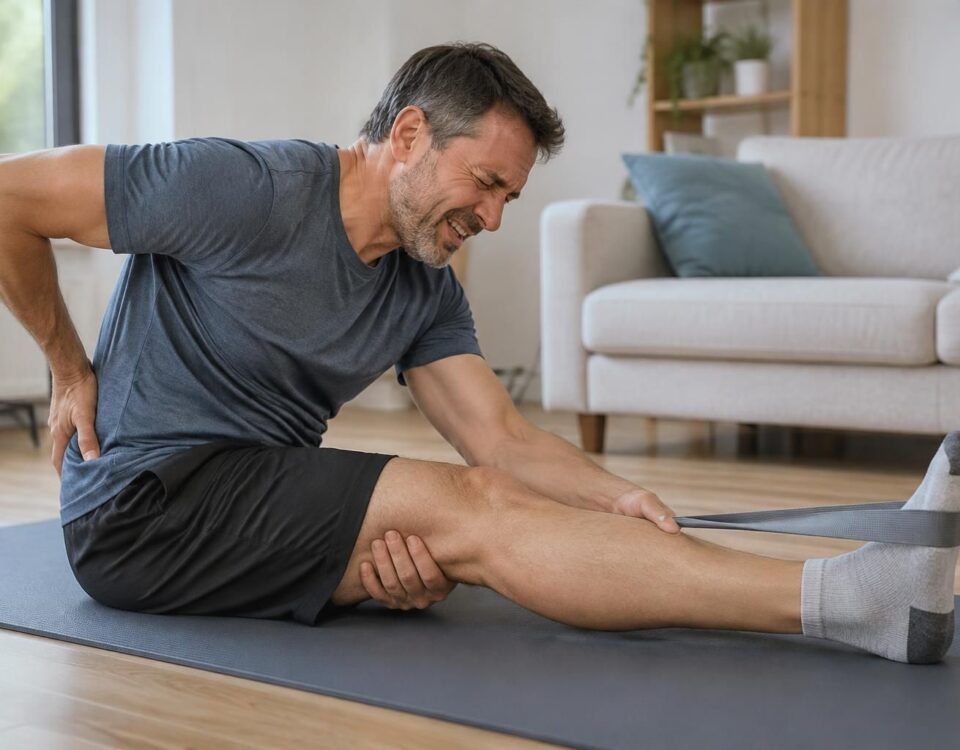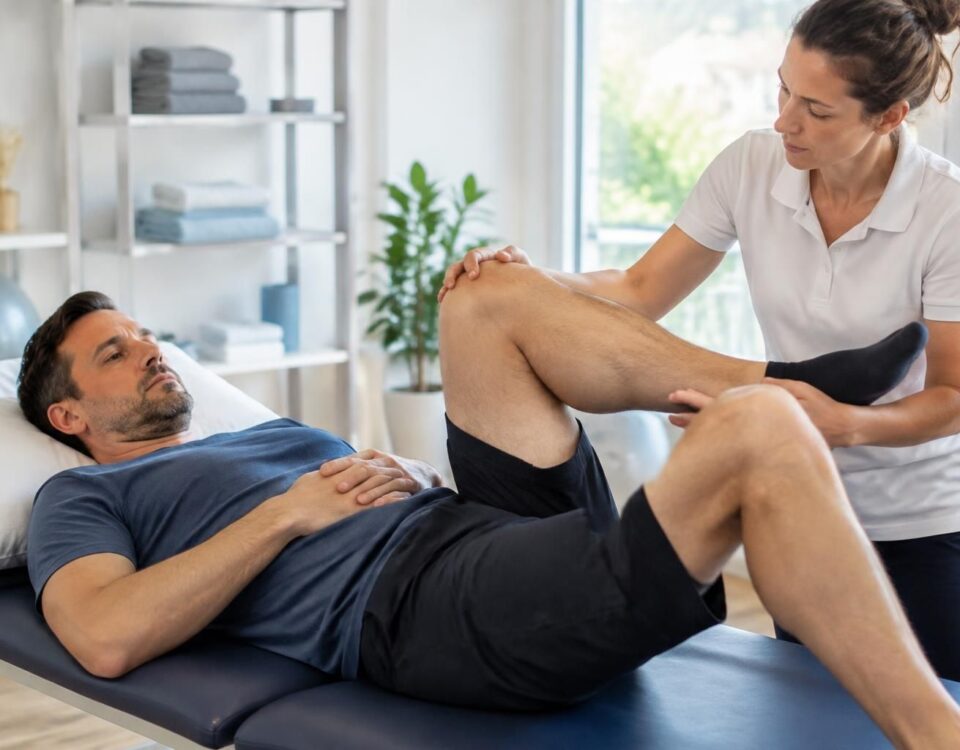


Sciatica: pain in the calf and possible nerve origin
08/07/2026
Sciatica in Montreal: why the same treatment does not work for everyone
09/07/2026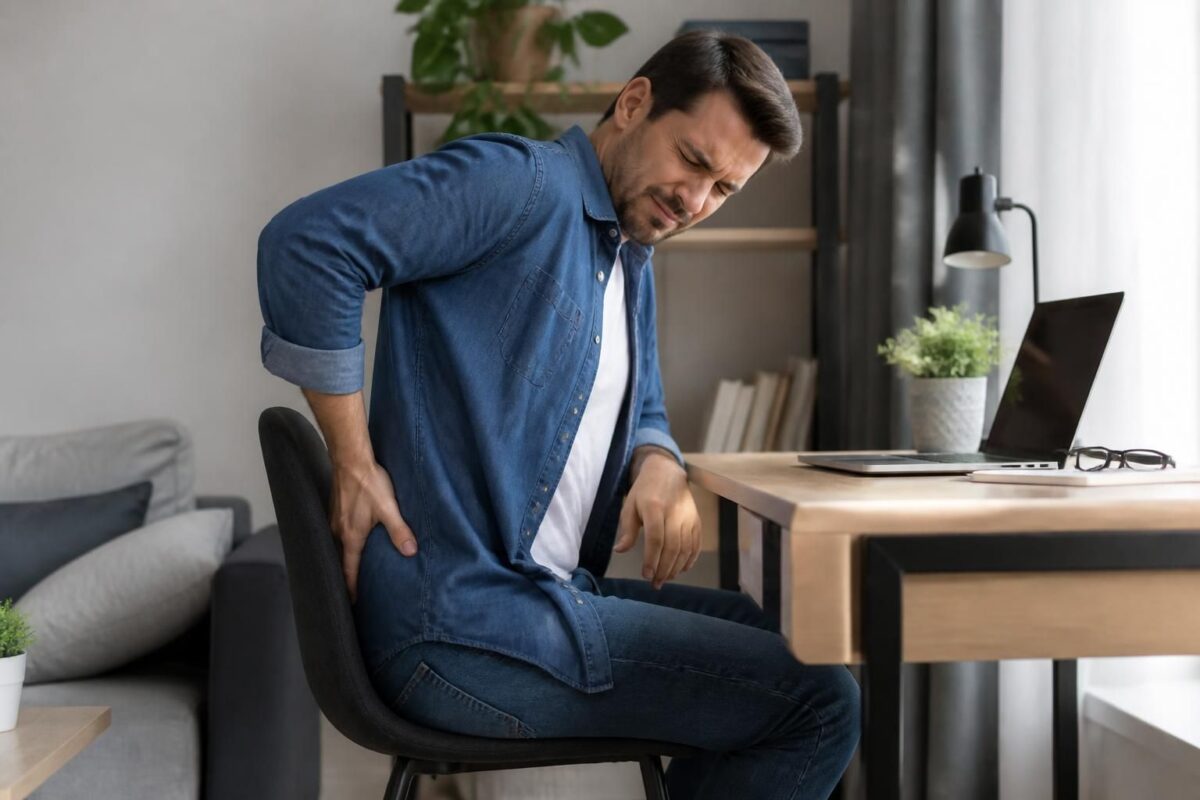
IN BRIEF |
In brief, Sciatica and pain in the buttock while sitting is a common condition caused by compression of the sciatic nerve, exacerbated by inadequate ergonomics. Its benefits include: pain reduction, improved mobility, and prevention of recurrences through postural education and simple adjustments (sciatic cushion, lumbar support, chair height). Its operation relies on adjusting posture, redistributing pressures, and incorporating breaks and walking into daily life, without requiring invasive processes. |
Sciatica can manifest as pain in the buttock when sitting, often related to irritation of the sciatic nerve. This pain can radiate from the lower back to the buttock and thigh and worsen with prolonged sitting. Common causes include herniated discs, muscle tension in the pelvic area, and piriformis syndrome.
- Avoid static positions and encourage breaks every 30 to 40 minutes to walk or move.
- Improve ergonomics: adjustable chair height, lumbar support, and sciatic cushion to reduce pressure on the nerve.
- Adjust posture: back straight, knees at approximately 90 degrees, feet flat; avoid crossing legs and use a footrest if needed.
- Maintain mobility through small activities and gentle stretches of the gluteal muscles and the piriformis.
- In case of persistent pain, consult a healthcare professional for an accurate diagnosis and appropriate treatment.
Quick summary: Sciatica and pain in the buttock while sitting occur when the sciatic nerve is irritated by pressure or poor ergonomics. This article, written by a healthcare professional, explains the mechanisms, positions to avoid, and practical solutions to relieve pain and prevent recurrences, emphasizing simple and effective adjustments in daily life.
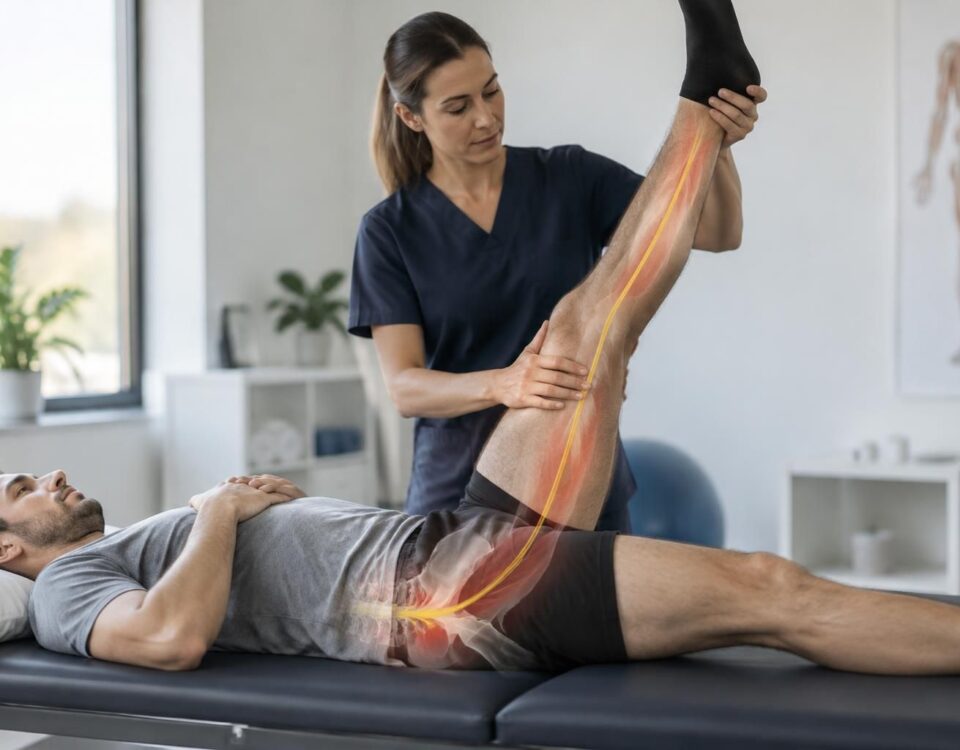
Buttock pain associated with sciatica often presents as a burning sensation that starts from the lower back and can radiate to the buttock and thigh. The sciatic nerve is the longest in the body and follows a path that can vary according to each person’s morphology. Pressure or irritation can cause pain that radiates and limits daily movements, especially when sitting for long periods.
Understanding the Pathway and Causes
The sciatic nerve begins at the lumbar vertebrae and extends down to the calf. Irritation can result from several mechanisms: pressure on the nerve due to intervertebral discs (for example, in case of postural changes or muscle tension), inflammation of the muscles around the pelvis, or conditions that narrow the passages through which the nerve travels. This condition can manifest differently among individuals, but pain that radiates from the buttock down the leg remains characteristic.
Several factors exacerbate pain when sitting: poor posture, an unsuitable seat, or muscle tension in the lower back and buttocks. To better understand these mechanisms, you can consult specialized resources on the relationship between sitting positions and sciatic pain, for example, this guide: sciatica and pain that increases when sitting.
Postures and Accessories to Limit Pain While Sitting
To preserve the lumbar spine and reduce pressure on the nerve, adopt an appropriate sitting configuration. Adjust the height of your chair so that your knees are about 90 degrees and slightly lower than the hips. Use a footrest if necessary to maintain this alignment. Avoid seats that are too low or too soft, which encourage a pelvis tilt and exacerbate pressure on the lumbar discs.
Using a sciatic cushion can relieve the area where the nerve passes and reduce pressure when sitting. Combine it with a lumbar cushion to support the natural curve of the spine and avoid sagging. These simple elements allow you to remain effective at work without unnecessary pain.
Avoid prolonged static postures. Simply standing up and walking for a few minutes every 30 to 40 minutes can make a real difference. If you feel persistent tension, prefer positions that preserve the alignment of the spine and avoid twisting the torso while moving.
For more details and concrete examples of postures, consult this guide: sciatica and pain that increases when sitting and generic exercises for sciatica.
Practical Management at Work and Home
In the workplace, prefer a height-adjustable office chair and consider a lumbar support to maintain the spine in a natural curve. If your chair is too firm or hard, a small accessory may be enough to correct the seat and alleviate pain. Alternate positions by staying active rather than remaining still in the same posture.
Regular walking is one of the simplest and most beneficial actions for sciatica. It improves circulation and keeps the muscles of the back and legs in motion. Start gradually and prefer stable surfaces. For a general reference on mechanisms and posture advice, you can consult resources related to buttock pain while sitting and measures to take in case of persistent pain:
For general information on postures and associated solutions, see: Sciatica that travels down to the calf – possible lumbar cause.
For an overview of non-surgical management options and comparisons between therapies, you can explore resources on TAGMED clinic.
Other Factors and Differentiated Aspects
In some cases, pain may result from a narrowing of the passage through which the nerve passes (foramen). This situation can amplify pain while sitting and may require specialized evaluation. For your information, this type of context is described in dedicated resources: narrow foramen.
Paresthesias or tingling in the feet or toes after prolonged sitting may occur. Useful readings on this phenomenon are available here: tingling after sitting.
When to consider a specialized approach
In cases where symptoms persist despite general measures and adjustments, it may be necessary to consider options for more in-depth evaluation. In some contexts, specialized approaches such as neurovertebral decompression can be discussed with a specialist. For general information and options to discuss with professionals, you can refer to resources dedicated to professional support and therapeutic guidance available through specialized domains like decompressionneurovertebrale.com.
For questions related to buttock pain and associated symptoms, reference resources on symptoms and differential diagnoses can be consulted on reliable information sites and references related to osteopathic practice, while remaining cautious about the use of specific home exercises.
If the pain persists, do not hesitate to seek a professional evaluation and discuss the available options. For additional information on clinical options and treatment choices within a clinical framework, consider a consultation with a specialized team and inquire about reference resources: pain that increases while sitting and tingling after sitting.
For further information and useful links, also consult the following resources: lumbar groove descent and narrow foramen.
Additionally, you can check resources on specific approaches and care options at TAGMED clinic: TAGMED Clinic.
Furthermore, resources dedicated to sciatic pain and buttock pain in a sitting position exist on the official reference portal: pain that increases while sitting.
For a general perspective and explanations on mechanisms, you can consult resources related to sciatica and buttock pain in various positions through the links available above.
Medical disclaimer: The information and advice provided on this site do not replace the opinion, diagnosis, or treatment of a healthcare professional. Please note that Dr. Sylvain Desforges, osteopath, is neither a medical doctor nor a physician, and is not a specialist in a medical specialty as defined by the Collège des médecins du Québec. Manual medicine, functional medicine, and sports medicine as described on this site exclude any medical treatment or diagnosis performed by a physician or medical specialist. Always consult your doctor for any medical questions. For more details, please read our full Legal Notice.

This recommendation helps you act quickly against sciatica and buttock pain when you are sitting. You will discover the most common causes, simple tips to improve your posture and ergonomics, suitable exercises, and nighttime support choices to limit pain and prevent recurrences.
Understanding the signals and causes
Sciatica occurs when the sciatic nerve is irritated or compressed, most often by a herniated disc or by muscular tensions in the lower back and buttocks. Prolonged sitting can exacerbate pain by increasing pressure on the discs and straining the nerve on its path to the calf. Concurrently, postural habits, weakness of the lumbar muscles, or joint disorders can also promote this pain. Understanding these mechanisms allows you to quickly target the solutions that really work for you.
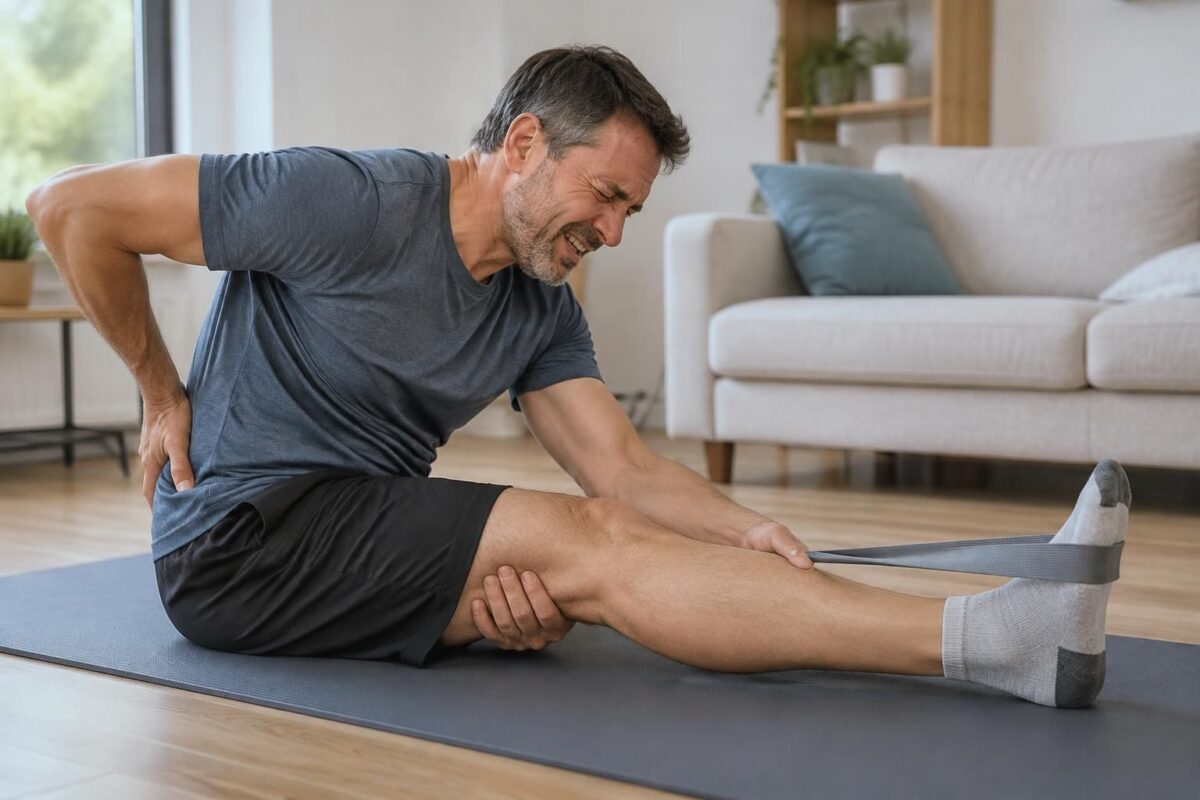
Sciatica and aggressive stretches: possible sign of worsening
IN BRIEF Sciatica is pain that radiates from the lower back or buttock down the leg. Aggressive stretching does not necessarily relieve the nerve and can intensify the pain, especially if it moves further down to the foot or is…
Optimizing sitting and ergonomics
To limit pressure on the lower back and the sciatic nerve, choose an adjustable chair with good lumbar support and sufficient depth so that your buttocks do not sink. A sciatic cushion can redistribute weight and relieve the nerve that runs near the buttocks. Make sure your knees are bent at ~90°, slightly lower or at the same level as your hips, to avoid a pelvic tilt and excessive arching of the lower back.
If your chair is too low or too soft, use a booster or a firm cushion to get to the appropriate height. The lumbar cushion placed in the curve of the back helps maintain spinal alignment and distributes loads better. Avoid seats that are too rigid or, conversely, too soft that accentuate pressure points around the hips and buttocks.
Avoid fixed postures and crossing your legs. Instead, adopt a position where both feet rest flat on the floor or on a footrest, to limit twisting and tension on the nerve.

Sciatica and calf stretching: when the pain increases
IN SHORT A calf stretch can exacerbate sciatica if it further irritates the nerve. It should not cause pain that increases or radiates down the leg: stop the movement and do not push through. Stretches may help with some tensions,…
Move, strengthen, and stretch
Regular mobility and targeted exercises help prevent flare-ups. Try to get up and walk for a few minutes every 30 to 40 minutes while working seated. Practice gentle stretches for the gluteal muscles and the piriformis, and consider sessions for strengthening the lumbar and gluteal muscles to support the back and reduce pressure on the nerve.
Myofascial relaxation and self-massage with rollers or balls can relieve tension and improve circulation. Use heat/cold methods as needed: heat to relax muscles and cold to reduce inflammation after activity.
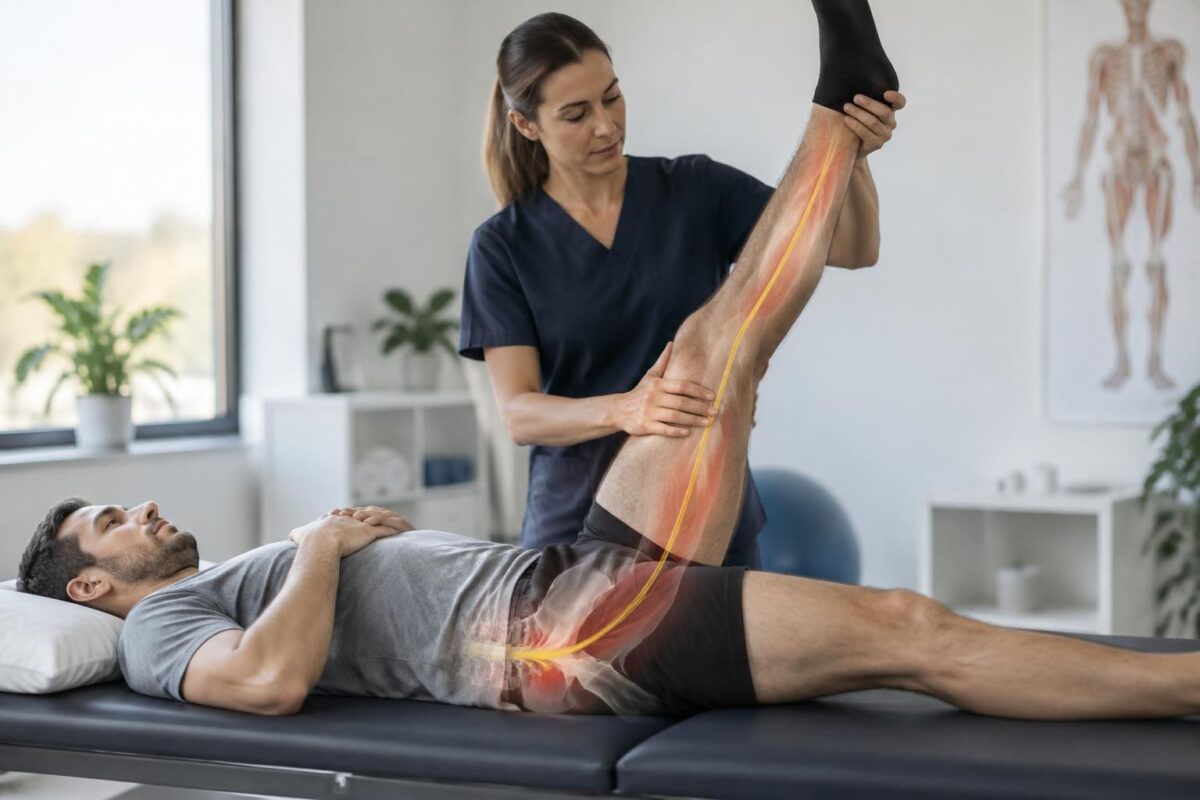
Sciatica and hamstring stretching: possible nerve tension
IN BRIEF Sciatica can make stretching the hamstrings uncomfortable, as the tension felt may come from the nerve rather than the muscle. A gentle stretch, with a straight back and without seeking maximum range, can help loosen the back of…
Sleep and nighttime support
For sleep, prefer a position that does not exert excessive pressure on the nerve. Sleeping on your back with your legs slightly elevated can help distribute support. If you sleep on your side, place a cushion between your knees to maintain hip and spinal alignment. A balanced mattress, not too soft or too firm, and suitable pillows help preserve a good posture throughout the night.
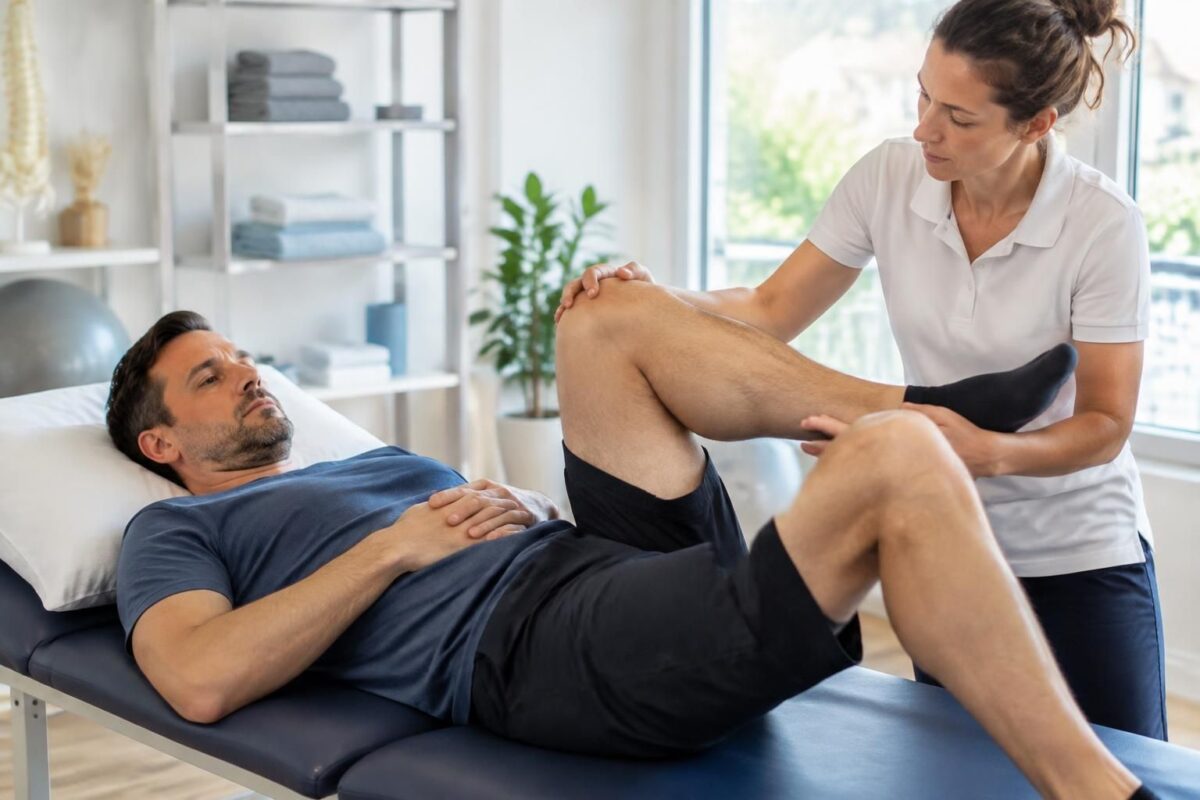
Sciatica and piriformis stretching: useful or worsening depending on the case
IN BRIEF Piriformis-related sciatica can cause deep pain in the buttock, sometimes radiating down the back of the thigh. A gentle stretch can loosen the hip and relieve discomfort if the muscle is involved, but it can worsen symptoms if…
When to consult and what options to consider
If pain persists despite adjustments, or if it is accompanied by numbness, significant tingling, or loss of strength in the legs, consult a healthcare professional. A physiotherapist or osteopath can develop a personalized plan, and targeted therapies (injections, localized therapies) may be considered in some cases. The goal is a clear diagnosis and appropriate management to enable you to quickly regain a pain-free sitting life.
| Element | Brief Description |
|---|---|
| Origin | Sciatic nerve compressed or irritated by a herniated disc or muscle tension. |
| Location | Pain radiating from the lower back to the buttock and sometimes the thigh. |
| Type of pain | Burning or sharp pain with possible paresthesias. |
| Aggravating factors | Prolonged sitting increases pressure on the lumbar discs. |
| Typical symptoms | Lumbar stiffness and buttock pain that can worsen with movement. |
| Differential diagnosis | Cruralgia, piriformis syndrome, lumbar osteoarthritis. |
| Recommended management | Postural education, gentle exercises, physiotherapy; useful tools: sciatic cushion, lumbar support. |
| Activities to prioritize | Regular walking and active breaks; avoid prolonged immobility. |
| Ergonomics | Adjustable chair, lumbar support, and footrest for proper posture. |

Sciatica and popular stretches: why to stay cautious
IN BRIEF Sciatica causes pain that radiates from the lower back down the leg. Popular stretches, such as the pigeon pose or hamstring stretches, are not always suitable: pulling on an irritated nerve can worsen the symptoms. Favor gentle movements,…
Testimonials on sciatica and buttock pain while sitting
My name is Thomas. Previously, my sciatica would block me whenever I sat too long. The pain would start from the lumbar spine and radiate into the buttock and thigh, making my workdays difficult. With an ergonomic chair and a sciatic cushion, I have found pain-free moments at work.
Anne, a consultant, explains that crossing her legs was her reflex, but this habit destabilized her pelvis and increased the pain in her buttock while sitting. She replaced this posture with her feet flat and added a footrest to maintain spinal alignment and relieve the sciatic nerve.
Jean, a developer, shares that long hours in front of the screen intensified his sciatica and pain in the buttock. Since he alternates regular breaks and stands or walks a bit, the pain has become more manageable and less overwhelming.
Alex, a teleworker, testifies that his home office space was a source of discomfort. With a height-adjustable chair and a lumbar cushion, his posture is better aligned, and tensions in the buttock decrease while sitting.
Marie, an on-duty nurse, notes that she uses a sciatic cushion on her chair during long shifts; this reduces pressure on the sciatic nerve and prevents numbness in the buttock during sitting.
Everyone agrees on the importance of a simple and adapted approach: alternating positions, taking breaks, and prioritizing ergonomics of the workstation to protect the sciatic nerve while sitting. Today, my days go by pain-free when I follow these ergonomic tips and use suitable accessories for sitting.

Sciatica and Pilates: movements to adapt
IN SHORT Sciatica causes pain that can radiate from the lower back down to the leg. The Pilates Reformer can promote a gradual return to movement and strengthen core control, provided that the movements, range, and resistance are adapted. Favor…
Detailed biography: Sciatica and buttock pain while sitting – Dr. Sylvain Desforges
Dr. Sylvain Desforges is a practitioner whose signature is prominent in the fields of osteopathy, naturopathy, and manual medicine. A recognized expert, he holds the position of founding president of TAGMED clinics and the ACMA association, and he advocates for an approach that puts innovation at the service of patients. His practice focuses particularly on the management of chronic pain and improving the quality of life for individuals suffering from sciatica and buttock pain associated with sitting. His goal is to provide effective, evidence-based care to sustainably reduce the impact of these pains on daily life.
In a career dedicated to the evolution of care, he combines traditional knowledge with cutting-edge technologies to offer comprehensive solutions. Among the pillars of his approach are multimodal assessment, workplace ergonomics, and the implementation of technologies such as spinal decompression, laser, and shockwave therapy. These tools address the root causes of pain, alleviate inflammation, and promote the rehabilitation of the nerve and musculoskeletal structures involved in sciatica.
His mission is to provide evidence-based care to optimize the health and well-being of each patient. Consulting Dr. Desforges offers a personalized approach that takes into account the anatomical mechanisms of the sciatic nerve, postural factors, and lifestyle habits. He pays particular attention to the prevention of relapses, focusing treatment on simple actions that can be integrated into daily life, and on tailored education to better understand the triggers of pain during sitting.
His work is based on a fine understanding of the anatomy of the sciatic nerve and trigger mechanisms such as disc compression, muscle tension in the glutes, and piriformis syndrome. This understanding allows the development of therapeutic plans that reduce pressure on the nerve and restore a healthy lumbar balance. Dr. Desforges prioritizes interventions that respect the body and avoid invasive approaches when possible while remaining ambitious regarding long-term results.
In practice, he adopts a multidisciplinary approach combining osteopathy, naturopathy, and manual medicine to propose tailored intervention programs. These programs aim to reduce stress on the sciatic nerve, improve postural alignment, and offer targeted exercises suited to each person’s intensity and lifestyle. The goal is to enable everyone to return to an active and pain-free life, even when spending long periods sitting.
The treatment modalities he favors integrate manual techniques combined with physical therapies and ergonomic advice. In addition to physiotherapy sessions, he may recommend solutions such as myofascial relaxation, specific stretching programs, and self-management measures at home. His vision is that a harmonious combination of care and education can sustainably reduce symptoms and prevent exacerbations related to poor posture at work or at home.
Finally, Dr. Desforges places patient support at the heart of his practice. His approach aims to inform and empower individuals affected by sciatica and associated pain in the glutes during sitting, emphasizing non-invasive solutions, regular follow-up, and continuous adaptation of treatments based on clinical feedback and observed progress. His philosophy is grounded in tangible improvement in quality of life and proactive prevention of relapses through active and personalized prevention.
Quick Summary: Sciatica and glute pain when sitting can quickly limit daily life. By understanding the mechanisms of the sciatic nerve, identifying postures to avoid, and adopting simple actions and ergonomic aids, it is possible to sustainably relieve pain and prevent relapses.

Sciatica and core stability: variable tolerance depending on symptoms
IN BRIEF Core strengthening in case of sciatica consists of progressively strengthening the trunk muscles. Its tolerance varies depending on pain and symptoms: suitable without worsening the pain, it can support mobility and the resumption of activities, but does not,…
Summary and Practical Advice
In the context of sciatica, pain follows the nerve’s path and worsens when one remains in a sitting position for too long. To limit symptoms, prioritize active breaks and adjustments that reduce pressure on the lower back. To understand possible mechanical causes, consult this guide: sciatica treatment Terrebonne – understanding possible mechanical causes. To guide your diagnosis along the painful path, the dedicated article can be helpful: Sciatica – why the path of pain helps orient the cause.
Use devices such as a sciatic cushion and a lumbar cushion to relieve pressure and preserve the natural curvature of the back. A height-adjustable chair and footrest facilitate adjustments and prevent pelvis tilt. For more in-depth ergonomics and best practices, you can consult the specialized resources mentioned below.
Avoid static postures and favor light movements or stretches every 30 to 40 minutes. Alternate positions when possible and practice micro-breaks to maintain relaxation of the lumbar and glute muscles.
To enhance your knowledge, discover related resources such as BioCentre Lab – Glute Pain and Santé Quotidienne – Hidden Causes and Solutions.

Sciatica and lunges: leg pain to watch out for
IN BRIEF Sciatica is pain that starts from the lower back or buttock and radiates down the leg. If a lunge triggers or worsens this pain, stop the movement and adjust your activity: this exercise does not address sciatica. Consult…
Equipment and Adaptations for Posture Maintenance
Adapted ergonomics involves a height-adjustable chair, a footrest, and a lumbar cushion to keep the spine aligned and prevent directed compression on the sciatic nerve. You can test different configurations with an ergonomics and sitting position guide to determine what provides you with the most relief.
The sciatic cushion remains an effective option to free the nerve’s path and improve comfort when working or resting. For practical advice on postures and self-techniques, consult the dedicated resources mentioned below, including consultation and resources Sossiatique – Glute and Leg Pain.
Lifestyle and Activity Recommendations
Regular walking and targeted stretching of the glute and piriformis muscles promote better circulation and reduce tension. Avoid periods of immobility and favor moderate activities on stable ground. Explanations and practical tips can be found on Santé Quotidienne – Hidden Causes and Solutions.
In case of persistent pain, it may be helpful to consult for a differential diagnosis and a personalized treatment plan. To understand the nuances between lower back pain and nerve pain and guide management, refer to resources such as Sciatica – distinguish lumbar and nerve pain.
Resources and complementary action paths
To delve deeper into clinical aspects and treatment options, explore resources such as Macoupe – gluteal pain and sitting position and pain pathway and importance. For personalized advice and professional follow-ups, discuss with a physiotherapist or osteopath, and use the pages as a reference to guide your approach, particularly consultation in Terrebonne.

Dr Sylvain Desforges, B.Sc., D.O., N.D., osteopath, is the founding president of TAGMED and of the ACMA association. He dedicates his practice to chronic spinal pain, low back pain and symptoms compatible with sciatica, particularly when pain radiates toward the buttock, leg, calf, foot or toes.
Through SOS Sciatique, he publishes educational content on sciatica symptoms, possible causes such as disc herniation, disc narrowing, foraminal stenosis or irritation of a lumbar nerve root, as well as non-surgical approaches that may be considered according to the evaluation. At Clinique TAGMED, care may include, depending on the case, motorized neurovertebral decompression, specific osteopathic care or precision percussion.
For an evaluation related to sciatica treatment in Montreal / Mount Royal or sciatica treatment in Terrebonne, please consult the services available at Clinique TAGMED.
Medical disclaimer
The information published on SOS Sciatique is provided for educational purposes only and does not replace a consultation, diagnosis, opinion or treatment provided by a physician or another authorized healthcare professional. The author of this article is neither a medical doctor nor a specialist in a medical specialty recognized by the Collège des médecins du Québec. The osteopathic, manual medicine or functional support approaches described on this site do not constitute medical acts and are not intended to replace medical follow-up.
Consult a physician or emergency service in cases of loss of bladder or bowel control, anesthesia in the saddle area, significant or progressive weakness in the leg or foot, fever, recent trauma, severe pain or rapid worsening of symptoms. For more details, please read our Legal Notice.