Sciatica with foot weakness: sign to watch for
06/07/2026
Sciatica and numbness in the foot while seated
06/07/2026
IN BRIEF
| In brief, the path of the sciatic nerve describes its journey from the lower back to the foot and helps to understand the origin of sciatic pain. This approach offers clear benefits: it improves diagnosis by linking symptoms to a precise location, it guides treatment options, and helps to avoid unnecessary examinations. It also facilitates the identification of the cause (herniated disc, piriformis syndrome, stenosis, etc.) and directs towards appropriate, sometimes non-surgical, options. In Montreal, this framework is particularly useful for optimizing local care and responding quickly to the needs of patients suffering from pain along the sciatic nerve path. |
The sciatica occurs when the sciatic nerve is irritated or compressed along its path, which runs from the lower back to the foot. Understanding this path helps identify the cause and to quickly direct treatment.
The path of the sciatic nerve starts from the lumbar and sacral roots (L4-L5, S1-S3), crosses the pelvis and then the buttock, and travels to the popliteal fossa before splitting near the knee into the tibial nerve and fibular nerve. This trajectory explains why the referred pain can radiate from the lower back to the foot.
Typical signs include pain that runs down the back of the leg, sometimes associated with numbness or muscle weakness.
Common causes along this path are a lumbar herniated disc (L5-S1), a piriformis syndrome, or a narrowing of the spinal canals (stenosis). Other conditions exist but are less frequent.
In practice, knowing the path of the sciatic nerve allows for targeted diagnosis and adjustment of treatments, favoring conservative approaches when possible and avoiding unnecessary examinations.
This article, written by Dr. Sylvain Desforges, osteopath, explains how the path of pain associated with sciatica can guide the understanding of the cause. It specifies how the anatomy of the nerve and symptoms following its trajectory influence treatment choices. The goal is to provide a clear and practical approach to better assess and manage pain along the path of the sciatic nerve, prioritizing suitable solutions in the TAGMED clinic when necessary. For more information on non-surgical options and specialized care, see the resources offered on partner sites.
Path of the sciatic nerve and pain trajectory
The sciatic nerve is the longest in the body. It originates from the L4 to S3 roots and descends into the pelvis before crossing the thigh and leg to the foot. Along the posterior path, it can travel under the piriformis, behind the femur, and to the popliteal fossa. At this level, it divides into two major branches: the tibial nerve and the common fibular nerve. This trajectory explains why irritation or compression can cause pain that begins in the buttock and radiates to the calf, heel, and even the toes.
Signs and location of pain
Pain typically follows the trajectory of the nerve and may start in the buttock and then spread to the back of the thigh, calf, and foot. Numbness or electric shocks may accompany the pain. Muscle weakness may limit walking and some reflexes may be altered. The pain often worsens when sitting or during efforts that engage the back and leg.
Main causes and connection to the path
The most frequent causes manifest along the path of the sciatic nerve. The lumbar herniated disc presses on a nerve root near L5 or S1. The piriformis syndrome can irritate the nerve upon contact or beneath the piriformis muscle. Lumbar osteoarthritis and foraminal stenosis narrow the passages through which the roots pass. Rarer causes include tumors, infections, or direct trauma. In clinical practice, poor posture, improper lifting, or carrying heavy loads can trigger or worsen pain along the path.
Diagnosis and evaluation based on the path
Diagnosis is primarily based on clinical examination and analysis of the pain trajectory. The Lasègue test is a key marker to confirm the involvement of the sciatic nerve when raising the leg reproduces the pain along the path. Imaging examinations, such as MRI or CT scans, are considered when the pain persists beyond six weeks, worsens, or presents atypical signs. Electromyogram may be useful in some cases, but is not routine. The goal is to clarify the cause and avoid unnecessary examinations, prioritizing appropriate clinical management.
Therapeutic direction based on the path
In practice, the choice of treatment depends on the identified cause and the severity of symptoms. In most cases (about 90%), improvement occurs with a conservative approach within 6 to 8 weeks. Non-surgical options are favored when possible. In the TAGMED clinic, evaluation may lead to approaches such as neurovertebral decompression or precise osteopathic care as needed. For more information on these services, visit TAGMED Clinic.
Preventing pain along the path
To prevent episodes, prioritize mobility, strengthen core stability, avoid lifting heavy loads and sudden twists. Adopting an appropriate work posture and taking regular breaks during prolonged journeys can reduce risk. A simple routine of targeted stretches and appropriate physical activity supports the maintenance of the sciatic nerve path in good health.
Resources and useful links
For further information, you can consult resources through the following links, which respect the allowed domains:
- pain behind the thigh – possible link with the sciatic nerve
- sciatica and lifting a load
- non-surgical treatment in Montreal
- TAGMED Clinic
For general information on the journey and factors contributing to pain, you can also consult official resources on other specialized sites, including those dedicated to back science and medicine.
Medical disclaimer: The information and advice provided on this site do not replace the advice, diagnosis, or treatment of a healthcare professional. Please note that Dr. Sylvain Desforges, osteopath, is neither a medical doctor nor a physician, and is not a specialist in a medical specialty as defined by the Collège des médecins du Québec. Manual medicine, functional medicine, and sports medicine as described on this site exclude any treatment or medical diagnosis made by a medical doctor or specialist. Always consult your physician for any medical questions. For more details, please read our complete Legal Notice.

This document explains why the path of the sciatic nerve and the location of the pain allow for a quick orientation of the cause and guide the management. Understanding where the irritation occurs along the path helps target exams, treatments, and prevention advice, without awaiting burdensome and sometimes unnecessary results.
Understanding the path of the sciatic nerve
The sciatic nerve is the longest in the body and arises from the roots L4 to S3 at the lumbar and sacral level. It passes through the pelvis, crosses the buttock, ascends the back of the thigh, and then divides near the knee into two major branches, the tibial nerve and the fibular nerve, to innervate the leg and foot. This progression explains why pain from the sciatic nerve can affect very varied areas, from the buttock to the toes.
Herniated disc and disc bulge: do not confuse
IN BRIEF In brief, the Herniated disc and the disc bulge are two conditions of the spine that differ in their mechanism and prognosis. The disc bulge is a protrusion of the disc without rupture of the fibrous ring, often…
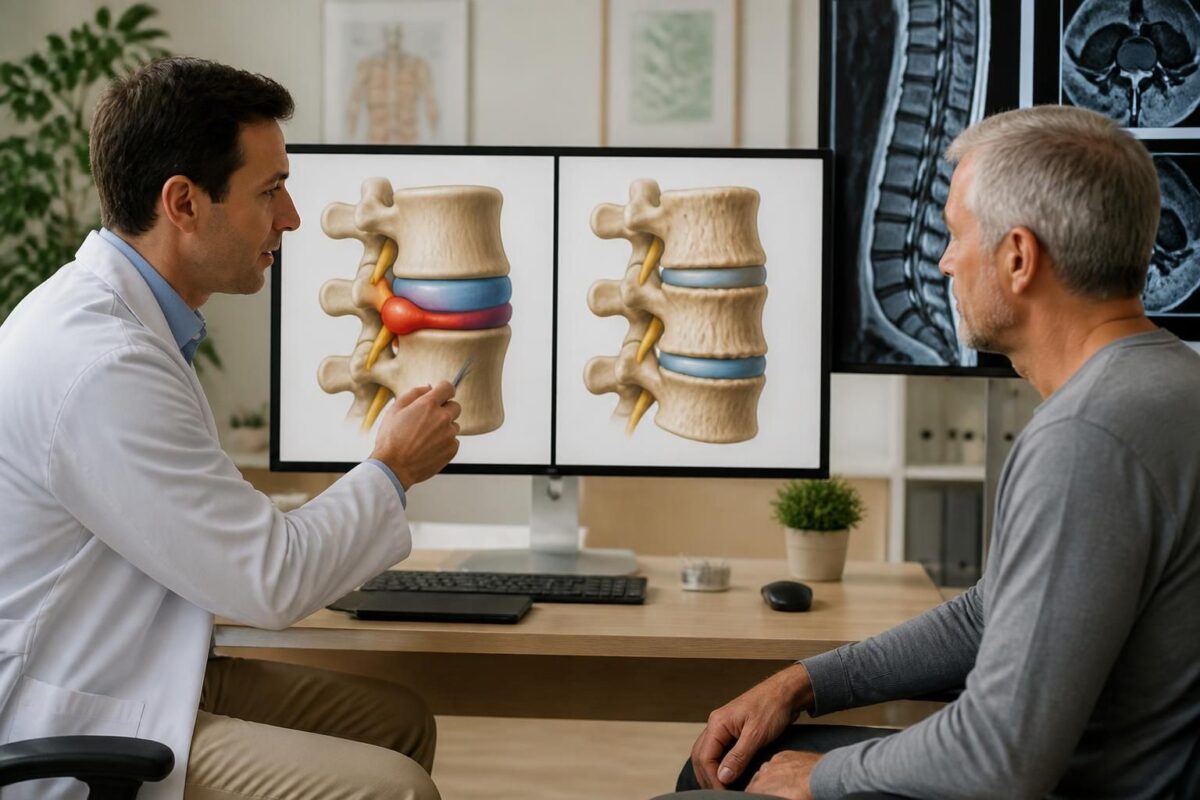
Herniated disc and disc disease: understanding the differences
IN BRIEF In brief, a herniated disc and discopathy are two distinct causes of spinal pain: wear of the intervertebral disc (discopathy) and the protrusion of the gelatinous nucleus that can compress a nerve (herniated disc). Understanding these differences helps…
How the path sheds light on the origin of pain
A pain that follows the path of the sciatic nerve is typically radicular: it often starts from the lower back or buttock and radiates down the back of the thigh, then to the calf and foot. By precisely identifying the affected segments (e.g., L5 or S1), one can deduce which root is involved and adapt the clinical examination and therapeutic plan. This mapping of the path avoids misinterpretations and steers towards the exact source.
Meaning of the areas
The location in the buttock and upper thigh points more towards involvement of the lumbar roots, while extension to the calf or foot reinforces suspicion of involvement of the nerve after its exit from the spinal-pelvic conflict. The fact that the sciatic nerve runs along this entire path clarifies why pain may be felt at multiple levels and at different times depending on daily movements.

Herniated disc and annular tear: possible pain
IN BRIEF In short, Herniated disc and annular tear refer to issues with the intervertebral disc that can cause lower back pain and, at times, pain radiating down the leg. Symptoms vary and can mimic sciatic pain. Treatment favors conservative…
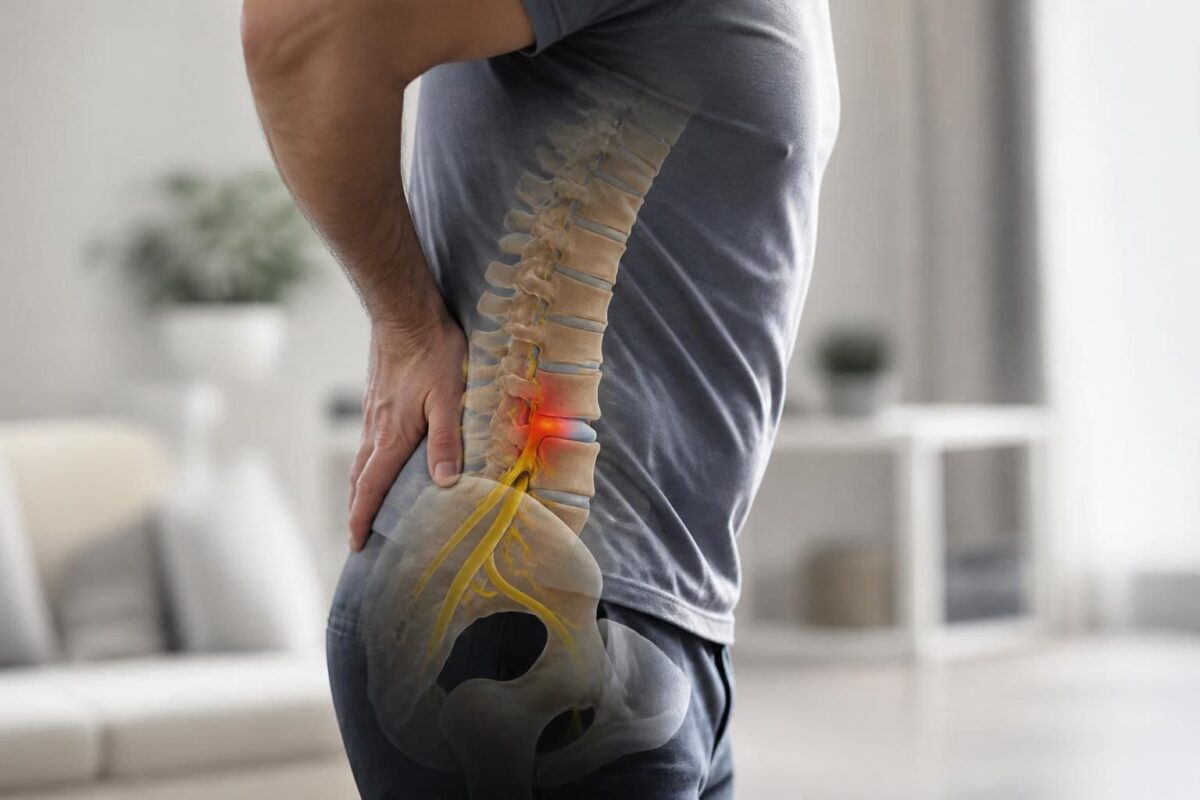
Herniated disc and chemical irritation of the nerve root
IN BRIEF In brief, Herniated disc and chemical irritation of the nerve root describe pain and dysfunction due to compression and inflammatory chemical exchanges affecting a spinal nerve root. This association explains radiating pain, abnormal sensations, and sometimes muscle weakness…
Common causes along the path
Lumbar disc herniation
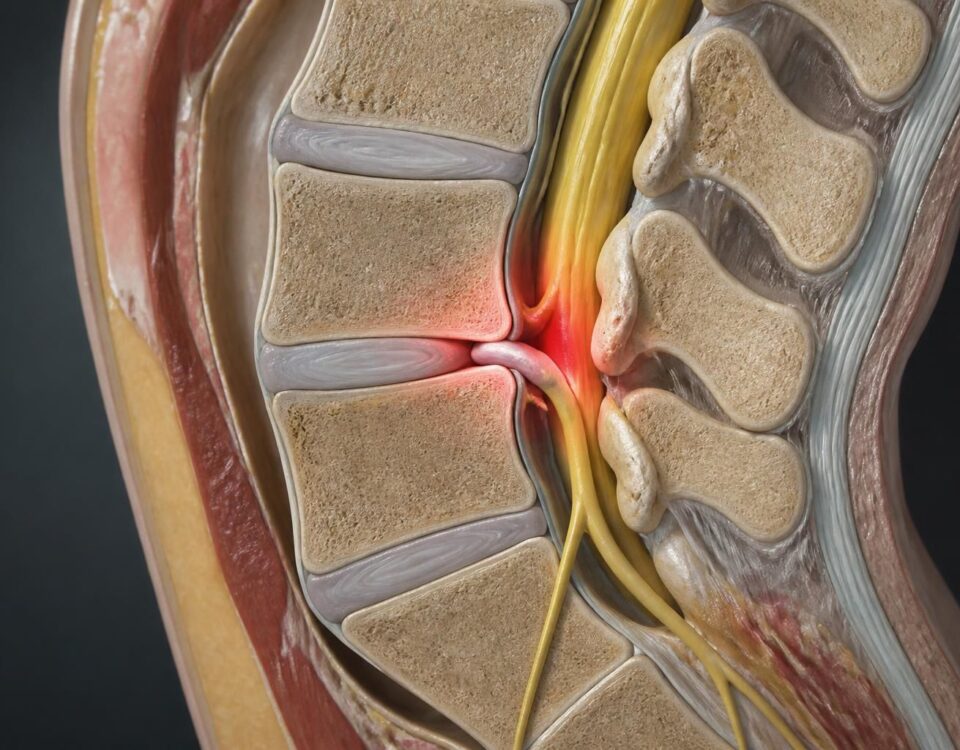
The lumbar disc herniation is the most common cause of radicular pain: the disc protrudes and compresses a root, causing pain that follows the path to the foot and may be accompanied by paresthesia or weakness.
Piriformis syndrome
The piriformis syndrome occurs when the sciatic nerve is irritated near its exit under the piriformis muscle. This location generates a pain that follows the path and can mainly affect the buttock and back of the thigh.
Other causes
Complementary causes exist but remain less frequent: spinal stenosis, lumbar osteoarthritis, tumor or infection; acute trauma can also trigger pain that follows the course of the nerve.
Herniated disc and mechanical compression of the nerve
IN BRIEF In brief, a herniated disc is a prolapse of the intervertebral disc that can lead to mechanical compression of the nerve root, causing pain and numbness that often radiate down the leg. This compression explains radiculopathy and sensations…
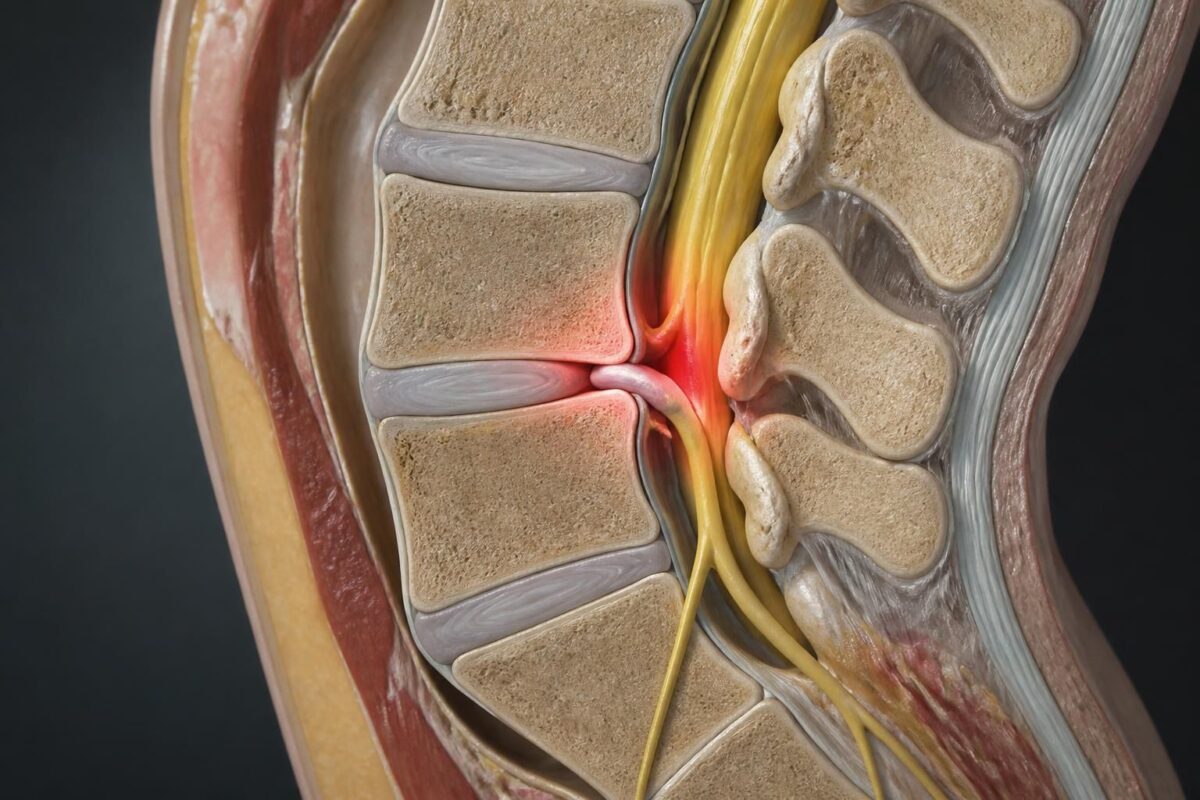
Herniated disc and nerve root inflammation
IN BRIEF In brief, lumbar disc herniation and nerve root inflammation refer to compression and irritation of a spinal root causing radiating pain, paresthesias, and sometimes muscle weakness. The mechanism combines disc protrusion and radicular inflammation, hence the importance of…
Signs and diagnosis
Clinical signs
Typical signs include pain that starts in the lower back or buttock and spreads along the leg, paresthesia, muscle weakness, and decreased reflexes, with possible aggravation during sitting or effort. The hip flexion test and neurological assessment help localize the implicated segment.
When imaging is useful
In the presence of persistence beyond several weeks, aggravation, or atypical signs, imaging (MRI or CT scan) may be indicated to confirm the diagnosis and guide treatment, without unnecessarily delaying appropriate conservative management.

Herniated disc and peripheral pain: sign to watch out for
IN BRIEF In brief, Herniated disc is the partial protrusion of the gelatinous nucleus of an intervertebral disc through the fibrous ring, which can compress a nerve root and trigger radiating pain in the limb. The key benefits of rapid…

Herniated disc and centralizing pain: sign to interpret
IN BRIEF In brief, a herniated disc is a protrusion of the intervertebral disc that can compress a nerve root, causing centralized pain and signs such as radiating pain, numbness, and weakness. The treatment is mostly conservative: guided activity, physical…
Management approaches centered on the path
In the majority of cases, relief comes from a conservative approach: gradual resumption of physical activity, strengthening and stretching exercises, and proper pain management. Physiotherapy and ergonomic advice play an essential role in restoring the sciatic nerve pathway without overloading the joints. In cases of persistent pain or significant neurological impairment, complementary options tailored to the pathway, such as targeted injections or supervised osteopathic approaches, may be considered after evaluation. The goal is to restore mobility and reduce the tension exerted on the nerve pathway.
| Element of the pathway | Quick orientation of the cause |
|---|---|
| Origin of roots (L4-S3) | Indicates a probable radicular source, often discogenic (herniation or degeneration). |
| Passage under the piriformis | Possible irritation of the nerve by the piriformis → associated syndrome. |
| Path from buttock → posterior thigh | Indicates irritation along the pathway; location guides the affected root. |
| Tibial/fibular division (popliteal fossa) | Specifies the affected nerve areas and possible deficits. |
| Irradiation to the foot | Spreads down to the foot; strongly points towards L5-S1 and a radicular origin. |
| Pain aggravated by sitting/effort | Typical signs of radicular irritation; points toward a discal or foraminal cause. |
| Numbness and shocks | Paresthesias useful for locating the involved nerve segment. |
| Motor weakness | Indicates nerve involvement, guiding towards severity and the need for rapid evaluation. |
| Clinical tests and orientation | Simple examples (Lasègue) help quickly orient the cause of the pathway. |
Testimonials: why the path of sciatic pain orients the cause
“My pain started in the buttock and traveled down the thigh to the toes. By describing this pathway, my doctor realized it was the sciatic nerve that was irritated and not just a muscular ache. This mapping of the pathway helped identify the cause and avoid unnecessary treatments,” says Claire, 41.
“The pain radiates from the buttock and travels up into the thigh, then extends into the calf and the foot. This specific route pointed me towards an L5-S1 disc herniation rather than just a muscular issue, which guided the rehabilitation sessions,” shares Julien, 48.
“The pathway of the pain gave me a true diagnostic map. From the buttock to the foot, we explored possible causes like piriformis syndrome or lumbar stenosis. The targeted assessment and exercises quickly provided relief,” explains Sophie, 36.
“When the pain starts from the lower back and follows the pathway down to the heel, it indicates that the nerve is affected deeply. This reasoning by pathway guided the treatment and avoided unnecessary surgery,” testifies Marc, 59.
“Understanding the course of the sciatic nerve helped me accept the care plan. The described pathway, from the nerve branching from the spine to the foot, showed me why strengthening exercises and targeted stretches are effective and how to prevent recurrences,” shares Alicia, 34.
“My doctor traced the pain pathway: lumbar base → buttock → thigh → calf → foot. Each step reassured me about the mechanical nature of the issue and the need for a comprehensive plan including physiotherapy and lifestyle changes,” concludes Yann, 67.
Dr. Sylvain Desforges, a recognized osteopath, has been working for years to demonstrate that understanding the pathway of the sciatic nerve is key to orienting diagnosis and treatments. An expert in osteopathy, naturopathy, and manual medicine, he is the founding president of TAGMED clinics and the ACMA association. His practice is based on innovation and evidence-based care, dedicated to managing chronic pain and integrating advanced technologies to optimize the health and well-being of his patients.
The course of the sciatic nerve is a central topic in evaluating radiating pain. Starting from the lumbar and sacral roots, it travels to the buttock, thigh, leg, and foot, explaining why pain felt in one area can have its origin higher up in the spine. Understanding this pathway allows for distinguishing true sciatica from other sources of pain and tailoring treatment accordingly.
Anatomically, the sciatic nerve is formed from the roots L4 to S3, originates in the lumbar region, and passes under the piriformis muscle to reach the posterior thigh. It then follows the contour of the leg to the popliteal fossa, where it divides into two major branches, the tibial nerve and the fibular nerve, which serve the muscles and skin of the calf, foot, and toes. This trajectory explains why irritation or compression can manifest as pain that traverses several segments of the lower limb, and why movements and postures can sometimes influence the intensity of symptoms.
Knowing this pathway also distinguishes potential causes that irritate the sciatic nerve. The most common cause is lumbar disc irritation leading to compression of the nerve roots. Other common factors include piriformis syndrome, lumbar osteoarthritis, and rarer phenomena such as spinal stenosis or traumatic injuries. This knowledge allows for quick orientation of investigations and therapeutic options, while avoiding misinterpretations that could delay appropriate treatment.
In his approach, Dr. Desforges emphasizes an evolving and multimodal care. The initial observation is based on precise analysis of the painful pathway, supplemented by clinical tests like the Lasègue sign and a detailed functional assessment. When necessary, targeted imaging examinations—such as MRI or CT scan—are considered to confirm the diagnosis and guide therapeutic decisions. However, the objective remains simplicity: to prioritize conservative treatments and adapted physical activity, in order to reduce risks and promote recovery within a few weeks.
Beyond technical gestures, Dr. Desforges’ approach incorporates complementary therapies and modern technologies to support healing and prevent recurrences. Motorized neurovertebral decompression, laser or shock wave therapies, and personalized rehabilitation programs are part of a range aimed at restoring mobility and quality of life. This journey-oriented vision helps avoid generalities and provide the patient with a solution tailored to the exact location of irritation.
To deepen his approach and the available services, contact Clinique TAGMED and discover how a pain journey-focused assessment can effectively identify the cause and promote durable recovery.
Quick summary: understanding the sciatic nerve pathway allows for rapid identification of the source of pain and guides examinations and treatment. Starting from its lumbar and sacral origin and following its course down to the foot, we understand why pain may radiate from the buttock to the toes and how each segment of the pathway can point to the underlying cause.
The sciatic nerve is the longest in the body and arises from the roots L4 to S3. Its pathway begins in the pelvis, passes under the piriformis muscle, descends behind the gluteal muscles, reaches the back of the thigh, runs along the femur, and branches at the knee into the tibial and fibular nerves. This mapping explains why a pathology located far from the leg can trigger symptoms that seem to “come from the foot” and why analyzing the pathway is crucial for diagnosis and management.
Painful, sensitive, and motor signs are distributed along this pathway. Radiating pain may begin in the buttock and travel up or down the leg, sometimes accompanied by numbness, tingling, or muscle weakness that hinders walking or lifting the foot. The location and intensity of symptoms depend on the segments involved (L4, L5, S1, S2, S3) and how the nerve is irritated or compressed along its path.
The most common causes align with this pathway. The lumbar disc herniation remains the primary etiology, followed by conditions such as piriformis syndrome, osteoarthritis, or spinal stenosis, and, less often, tumors or infections. These origins translate into patterns of pain and examinations to target along the pathway, rather than being limited to a single location. To better visualize these mechanisms, you can consult specialized resources such as guides on sciatica and the anatomy of the sciatic nerve. Some complementary explanations and useful clinical examples are available on resources dedicated to sciatic pain and the nerve pathway.
Diagnosis is first based on a rigorous clinical examination that describes the painful pathway and assesses mobility, strength, and sensitivity. The Lasègue test remains a reference for confirming irritation of the sciatic pathway. If symptoms persist beyond six weeks, worsen, or present atypical signs, imaging studies such as lumbar MRI or CT scans may be considered to clarify the etiology and guide treatment. The goal is to avoid excessive evaluations and prioritize clinical correlation with imaging when relevant.
Therapeutically, most sciatica cases progress favorably with conservative approaches and a gradual return to activity. Common strategies include appropriate pain relievers, maintaining or resuming physical activity, physiotherapy sessions focused on stretching, strengthening, and stabilization, and, if necessary, injections or, more rarely, surgical intervention in cases of large hernias or specific complications. Integrating complementary approaches such as therapeutic yoga or guided osteopathy can also help reduce recurrences and improve quality of life. For more detailed recommendations, refer to resources dedicated to sciatica and its treatments in various regions.
Understanding the sciatic nerve pathway also provides practical keys for prevention. Maintaining mobility, strengthening core stability, avoiding heavy loads and sudden twists, adopting ergonomic posture at work, and scheduling regular breaks in routine are effective strategies to limit irritations and painful episodes. Adopting a lifestyle that supports the back and lower limbs can make a real difference in preventing recurrences and sustainably improving symptoms.
To enhance your understanding of the mechanisms and therapeutic choices, you can consult specialized resources presenting the anatomy of the sciatic nerve, the precise pathway, and its impact on pain, including pages dedicated to sciatica and practical advice on sitting and posture. For example, online guides and clinical articles provide insights on the nerve pathway and treatment options suitable for each location and patient.
To delve into the practical aspects of the pathway and pain, you can consult the following resources: Sciatica sitting at the office, Why does sciatic pain follow a precise pathway in the leg, MSD Manual – Sciatica, Sciatic nerve – Anatomy and pain, Personalized evaluation in Terrebonne, Sciatica in Montreal – understanding the pain.

Dr Sylvain Desforges, B.Sc., D.O., N.D., osteopath, is the founding president of TAGMED and of the ACMA association. He dedicates his practice to chronic spinal pain, low back pain and symptoms compatible with sciatica, particularly when pain radiates toward the buttock, leg, calf, foot or toes.
Through SOS Sciatique, he publishes educational content on sciatica symptoms, possible causes such as disc herniation, disc narrowing, foraminal stenosis or irritation of a lumbar nerve root, as well as non-surgical approaches that may be considered according to the evaluation. At Clinique TAGMED, care may include, depending on the case, motorized neurovertebral decompression, specific osteopathic care or precision percussion.
For an evaluation related to sciatica treatment in Montreal / Mount Royal or sciatica treatment in Terrebonne, please consult the services available at Clinique TAGMED.
Medical disclaimer
The information published on SOS Sciatique is provided for educational purposes only and does not replace a consultation, diagnosis, opinion or treatment provided by a physician or another authorized healthcare professional. The author of this article is neither a medical doctor nor a specialist in a medical specialty recognized by the Collège des médecins du Québec. The osteopathic, manual medicine or functional support approaches described on this site do not constitute medical acts and are not intended to replace medical follow-up.
Consult a physician or emergency service in cases of loss of bladder or bowel control, anesthesia in the saddle area, significant or progressive weakness in the leg or foot, fever, recent trauma, severe pain or rapid worsening of symptoms. For more details, please read our Legal Notice.