Sciatica in telework: chair, posture and pain in the leg
01/07/2026
Non-surgical treatment of sciatica in Terrebonne: what you need to know
02/07/2026
In short
| The Non-surgical treatment of sciatica is an approach aimed at relieving pain and restoring mobility without surgery. At Montreal, it combines options like the neurovertebral decompression, targeted manual techniques and personalized exercises, sometimes supplemented by non-invasive therapies. Key Benefits: rapid pain reduction, renewed mobility, and Prevention of surgery, while remaining non-invasive and adapted to the patient. how it works: an individual assessment identifies the cause (for example slipped disc, Foraminal stenosis, Piriform Syndrome) and allows you to set up a personalized plan with follow-up to adjust care. Accessible in Montreal and its region, this treatment helps to regain an active and painless life. |
For the sciatica at Montreal, there are options non-surgical that help reduce pain and restore mobility without operative intervention.
- neurovertebral decompression Aiming to reduce the pressure on the nerves and promote the healing of the discs.
- Approaches osteopathic and targeted manual therapies to release tension and improve movement.
- Personalized exercises and postural advice to prevent aggravations and support recovery.
- Photobiomodulation or therapy by laser To reduce inflammation and accelerate healing.
Each plan is drawn up after a detailed assessment and adjusted over the sessions, with the aim of avoiding surgery when possible.
This content presents the non-surgical options for sciatica in Montreal. He explains the simple mechanisms, the revealing signs, the approaches available at the TAGMED clinic and the criteria for choosing appropriate care. The text focuses on proven, secure and patient-centric solutions, without the need for surgery when possible.
Understanding sciatica and non-surgical alternatives
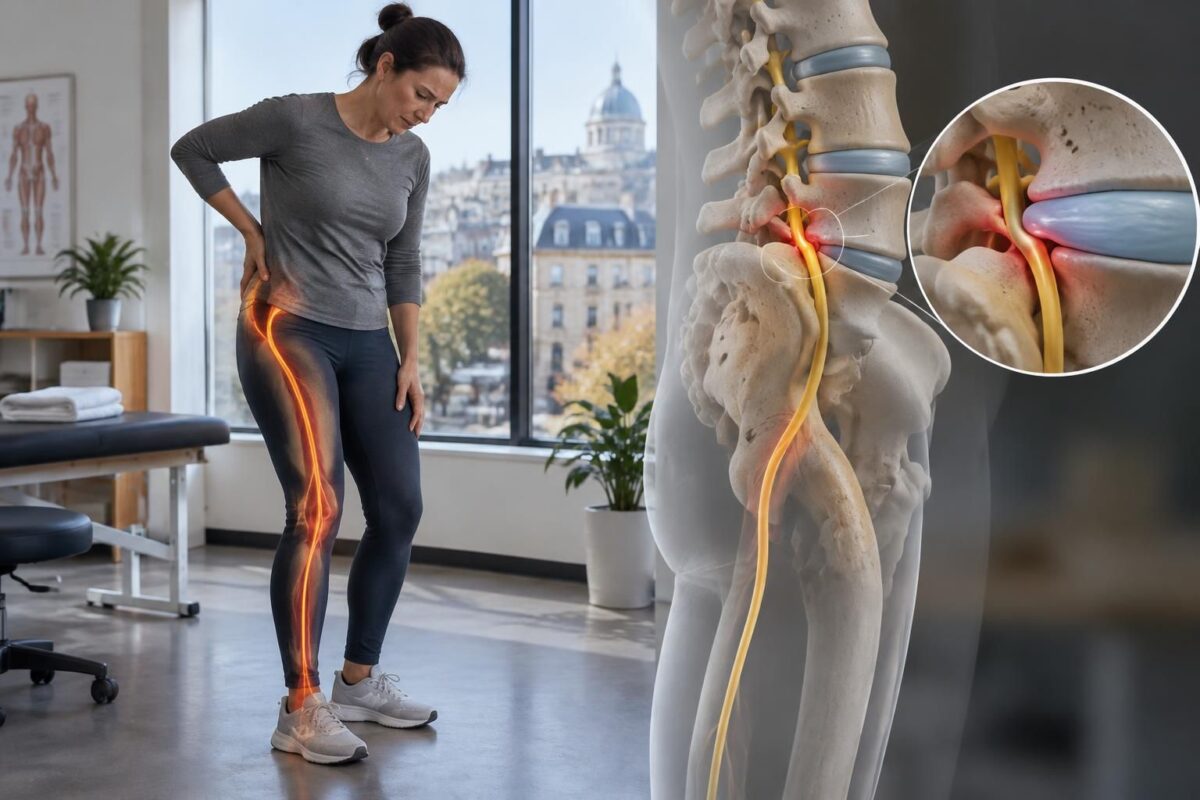
Sciatica is a pain triggered by irritation or compression of the sciatic nerve, the longest nerve in the body. This pain can go down from the lower back to the leg and foot. Common causes include disc herniation, protrusion, or foraminal stenosis. In Montreal, several non-surgical options exist to relieve pain and improve mobility, particularly as part of a specialized assessment in TagMed.
Neurovertebral decompression: a non-invasive approach
The neurovertebral decompression aims to reduce the pressure exerted on the nerve roots. This approach does not involve an operation and can be integrated into a global care plan. The number of sessions and the course of treatment depend on each case, after an in-depth evaluation. In Tagmed, this treatment is coordinated with the other modalities available and respects the disc indications, without prescribing exercises or stretching in sensitive situations.
Complementary non-surgical therapies
Photobiomodulation, commonly called laser therapy, can help reduce inflammation and promote healing of damaged tissues. This method is non-invasive and can be associated with neurovertebral decompression to improve comfort and mobility. Other non-surgical approaches can be proposed in an integrated logic within TagMed, while avoiding unnecessary invasive medical procedures.
To enrich the information, you can consult resources like Osteopathy and sciatic pain and SOS SCIATIC. Details of the options available in Montreal can also be found on Sciatica treatment in Montreal, and on Neurovertebral decompression and advanced degenerative pathologies.
What you need to know about indications and the clinical setting
Sciatica can be linked to various vertebral pathologies. Diagnosis is often based on clinical evaluation and, if necessary, imaging. In Montreal, TagMed offers a coordinated approach that focuses on non-surgical treatments when they offer sufficient benefit. For patients, the objective is to regain an active life and satisfactory mobility without resorting to surgery.
More information on modern and non-invasive treatments can be viewed on Laser and sciatica and on Osteopathy as a natural alternative. For patients from Terrebonne or Montreal seeking a personalized assessment, local resources exist via Personalized evaluation in Terrebonne.
Make an appointment and practical resources
To access non-surgical care in Montreal or in the agglomeration, it is recommended to contact TagMed. The team relies on a detailed assessment to determine the treatment plan and the necessary follow-up. Information and services are available at Clinic Tagmed Montreal and on Sciatica Clinic.
Note that neurovertebral decompression and associated treatments should not be supplemented by exercises or stretches that are not suitable for your disc situation. The care plan is adapted after a clinical evaluation and is not based on generic exercise prescriptions.
Tagmed professionals rely on recognized training in osteopathy and manual medicine, including at NUMSS, NAO, National University of Medical Sciences and National Academy of osteopathy. For professional aspects and associations, our practice is part of the ACMA, College of Canadian Osteopaths and College of Canadian Osteopaths. To learn more about approaches and resources, see Our SOS Sciatica Resources.
For more general information about non-surgical treatment options in Montreal, see Sciatica treatment in Montreal and Decompression and advanced degenerative pathologies.
Additional resources and recommended sites: SOS SCIATIC, TagMed Clinic – Montreal Sciatic Treatment.
If you are looking for non-surgical solutions in Montreal, talk to the experts at TagMed. Ask for a full assessment to determine the best option for your condition.
- Non-surgical treatment In Montreal: neurovertebral decompression and osteopathy For sciatica
- Eligibility after evaluation and, if necessary, imagery
- Progress : sessions of 15–30 minutes with Custom Plan
- Results : progressive relief and Improving mobility, sometimes quick
- Security : non-invasive, without surgery and with few side effects
- Montreal and surroundings : quick access to specialists and dedicated centers
- Monitoring : Post-processing follow-up To adjust the exercises
- Choice of practitioner : Expertise in decompression and lumbar
- cost : to check with your insurance
- Prevention : Reduce episodes and limit recurrences

This guide presents the main elements to know about the non-surgical treatment of the sciatica at Montreal. It summarizes the options available, the steps of personalized care and the expected results, without the need for surgery. The goal is to help you choose effective solutions to reduce pain, restore mobility and prevent recurrences through non-invasive approaches.
Understanding sciatica and non-surgical options
The sciatica Refers to pain that follows the path of the sciatic nerve, often caused by irritation or compression in the lumbar level. Frequent causes include intervertebral discs, muscle tension and degenerative conditions. Non-surgical treatments aim to reduce nerve pressure, reduce inflammation and strengthen the muscles of the back and hips to improve posture and stability. Current approaches favor a combination of non-invasive tools, adapted to each patient, in order to regain an active and painless life.
Sciatica in Montreal: nerve root, disc, and foramen explained simply
IN BRIEF Sciatica corresponds to pain linked to the irritation of a nerve root, sometimes near a lumbar disc or a narrowed foramen. In Montreal, distinguishing an L4-L5 issue that may affect the L5 root from an L5-S1 problem that…
Why Montreal is a central choice for this treatment
the region of Montreal brings together clinics specializing in non-surgical approaches to sciatica, offering expertise in neurovertebral decompression, manual therapies and personalized exercise programs. By choosing a local team, you benefit from coordinated support, quick access to in-depth assessments and regular monitoring to adjust the treatment plan according to your progress and needs.

Sciatica in Montreal: understanding L5-S1 foraminal compression
IN BRIEF L5-S1 foraminal compression is a narrowing of the opening where a nerve root exits, which can cause sciatica with pain, tingling, or weakness in the buttock and leg. In Montreal, an assessment allows for correlating symptoms, clinical examination,…
Non-surgical approaches available in Montreal
neurovertebral decompression
This technique aims to release pressure on discs and nerve roots, helping to reduce pain and improve mobility. It is non-invasive and can be integrated into a global care pathway, with precise monitoring of the effects on your pain and function.
Manual therapies and targeted exercises
Manual therapy sessions combined with personalized therapeutic exercises help restore spinal alignment, soften tissues and strengthen the stabilizer muscles. This active approach makes you an actor in your recovery and can sustainably improve your posture and your daily movements.
Complementary technologies and integrated approach
Tools like photobiomodulation and other non-invasive techniques can be used in addition to exercises and decompression. The objective is to reduce inflammation, promote tissue regeneration and accelerate the resumption of activities, without the need for surgery.

Sciatica in Montreal: why L5-S1 is often involved
IN BRIEF The sciatica L5-S1 often corresponds to irritation of the S1 root, sometimes related to a herniated disc. The pain may start in the buttock and descend behind the thigh to the calf or the foot. In Montreal, understanding…
How does a custom support take place?
It all starts with a detailed assessment of your symptoms, mobility and medical history. On this basis, the team establishes a Treatment plan Personalized that can combine decompression, manual therapies and exercise program adapted to your condition. The course is thought to be progressive and safe, with regular adjustments according to your feedback and the results observed. One monitoring Attentive makes it possible to measure progress and prevent recurrences by advice on postural hygiene and appropriate physical activity.
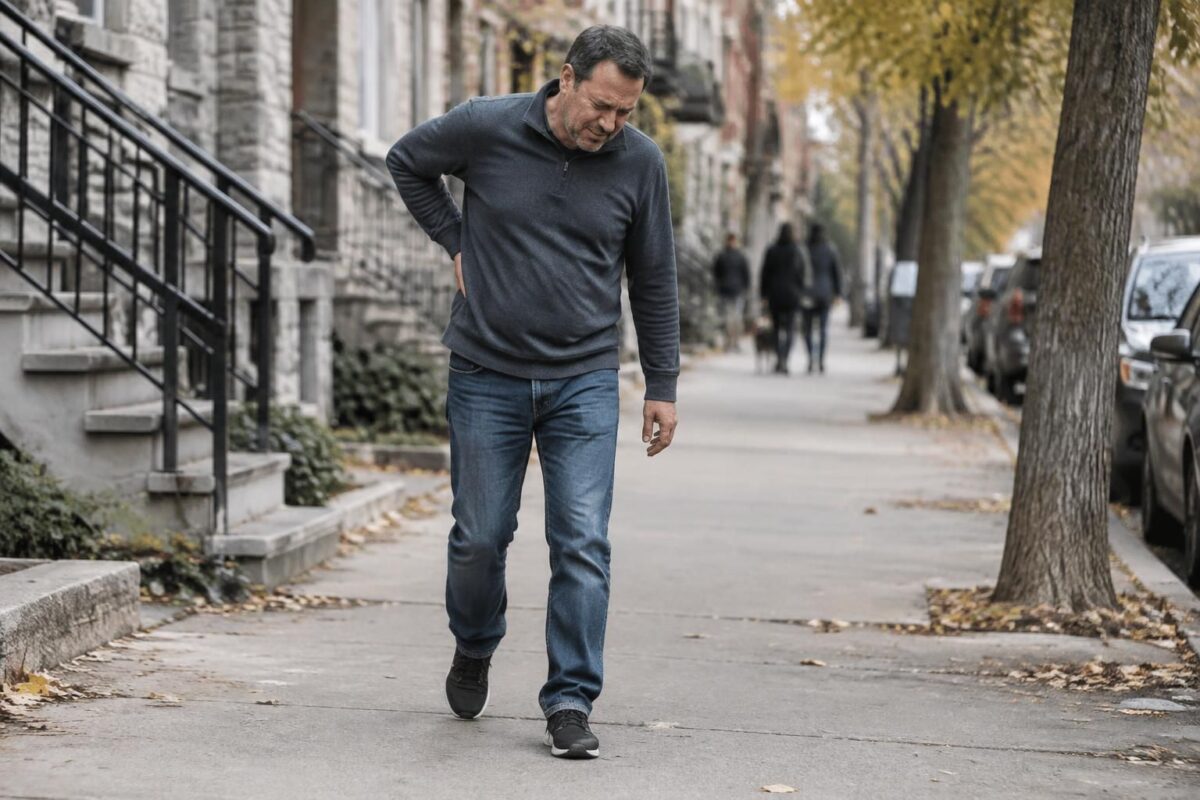
Sciatica in Montreal: L5 and difficulty lifting the foot
IN BRIEF The difficulty in lifting the foot with sciatica can indicate weakness related to the involvement of the L5 root, sometimes caused by a herniated disc. This foot drop increases the risk of falling and requires prompt medical evaluation;…
What to expect and potential results
Most patients experience a gradual decrease in pain and improved mobility after a few weeks, with clearer gains over the weeks and months. The typical program can extend over several weeks to several months, depending on the severity and repetition of symptoms. The objective is to reduce the use of drugs and avoid surgery while restoring a natural and lasting function.

Sciatica in Montreal: S1 and difficulty rising up on the toes
IN BRIEF S1 sciatica can cause pain from the buttock to the calf and foot, as well as difficulty getting on tiptoe. This weakness may suggest irritation of the S1 nerve root, but is not sufficient to establish a diagnosis.…
Prevent recurrences and maintain mobility
To prevent recurrences, adherence to the treatment plan, respect for home exercises and ergonomics at work play a key role. Maintaining regular physical activity, adopting good postures and integrating appropriate rest periods helps preserve the benefits of non-surgical care and support an active and painless life.
Key elements to remember
Non-surgical treatments offer an effective way to sciatica at Montreal, with a personalized approach, rigorous follow-up and significant results without surgery. Optimize your chances of success by choosing a competent local team, respecting the recommendations and remaining active in your rehabilitation.

Sciatica in Montreal: L4-L5 and pain towards the top of the foot
IN BRIEF The sciatica related to L4-L5 can radiate from the lower back to the buttock and the leg; pain on the top of the foot may suggest involvement of the L5 root, but the pathways vary and symptoms overlap.…
| Criterion | Concise description |
|---|---|
| Definition and purpose | Treatment non-surgical aims at Reduce the pain and Restore mobility through approaches non-invasive adapted in Montreal. |
| Key Terms | Physiotherapy, osteopathy, neurovertebral decompression and associated therapies such as laser or neuromodulation. |
| Indications and eligibility | Eligible after medical assessment, in the absence of loss of control urinary or gradual weakness. |
| Key Benefits | relief, improvement of mobility and risk reduction surgical. |
| Duration and protocol | sessions short With a plan over a few weeks, adjusted according to the answer. |
| Accessibility Montreal | several local options and Quick appointment booking in Montreal and surroundings. |
| Impact on daily life | gradual return to painless activities and walking, improvement of the quality of life. |
| Security and risks | Approaches slightly invasive with Low risks when carried out by professionals; Discussion of contraindications. |
| Monitoring and evaluation | regular reassessments to adjust treatment and monitor progress. |

Sciatica in Montreal: pain in the big toe, L5 root or another cause?
IN BRIEF Pain that radiates toward the big toe may indicate irritation of the L5 root, sometimes related to a herniated disc, but other causes are possible. In Montreal, evaluating the pain pathway, strength, sensitivity, and walking helps guide management…
Testimonials on the non-surgical treatment of sciatica in Montreal: what you need to know
Marie P., Montreal “After months of pain that shaved my daily life, I discovered that the Non-surgical treatment could really change things. The neurovertebral decompression was progressive but effective and, over the sessions, the pain decreased to allow me to resume my favorite activities. »
Jean L., Montreal : “What I learned is that a good non-surgical plan can combine decompression, targeted exercises and regular follow-ups. The first results are generally modest, but the combination of approaches helped me to regain mobility that I thought was lost, without surgery. »
Chloe S., Montreal “I was skeptical at first, but the professionals made it clear to me what to know: sciatica can be caused by various factors and several non-surgical options exist in Montreal. After a few weeks, I noticed a reduction in irradiation and better endurance during my daily trips. »
Luke T., Montreal : “What I appreciate with non-surgical treatment is the personalized approach and non-invasive. A combination of techniques adapted to my case allowed me to limit the periods of pain and to avoid the operation, while working on my posture and my muscular dynamics. »
Alice R., Montreal : “I was told that it takes time and follow-up, and that the results depend on each individual. Thanks to a coordinated program including decompression and training advice, I found a real quality of life and I went back to doing my activities without fearing a relapse. »
Mathieu G., Montreal : “If you seek to understand What you need to know On non-surgical, be aware that treatments like spinal decompression can reduce nerve pressure and relaunch natural healing. My experience shows that with patience and good supervision, it is possible to reduce pain and gain mobility, without going through surgery. »
Dr. Sylvain Desforges, Expert in osteopathy, naturopathy and manual medicine, is the founding figure of the Tagmed Clinics and theACMA Association. his career, dedicated toHealth Innovation, leads him to favor the Non-surgical management lower back and sciatic pain, particularly in Montreal, where he emphasizes approaches evidence-based to sustainably improve the quality of life of its patients.
Its philosophy is based on an approach patient-centric, combining a In-depth assessment and one Personalized treatment plan. He favors methods non-invasive and adapted to each individual, rather than precipitated invasive gestures. This approach is based on scientific evidence, patient safety and transparent communication so that each person understands the objectives, risks and benefits envisaged.
To treat sciatica in a way non-surgical, Dr. Desforges combines varied and complementary techniques. Among these are the neurovertebral decompression, the laser therapy and the Shockwave therapy. These modalities can be brought together in a coherent and progressive framework, supported by osteopathy and functional advice intended to strengthen the posture, mobility and stability of the spine.
The neurovertebral decompression Aims to reduce the pressure exerted on the nerve roots and promote the rebalancing of the intervertebral discs. The Therapeutic laser Acts on inflammation and tissue repair, accelerating recovery and improving local circulation. Finally, the shock waves Stimulate vascularization and the healing process of soft tissues around the spine. Together, these approaches aim to reduce pain, restore mobility and allow a gradual resumption of daily activities without surgery.
The clinical course in Montreal is designed to be clear and accessible. After a initial assessment and, if necessary, additional examinations, a Tailor-made treatment plan is developed. The protocol provides for regular sessions, supplemented by exercises and postural hygiene advice to be carried out at home. One Regular follow-up Allows you to adjust modalities, assess progress and anticipate any difficulty in order to maintain a lasting return to the activity.
For Montreal patients, the use of non-surgical can offer an effective alternative to sciatica, with significant results on pain and function. This approach aims not only to relieve the painful episode, but also to reduce the risk factors for recurrence and to improve the overall quality of life without having to resort to surgery.
This Montreal care framework reflects Dr. Desforges’ commitment to care scalable and evidence-based. Thanks to a close collaboration between osteopathy, functional physiotherapy and advanced technologies, it offers a complete and safe offer for those who suffer from sciatica and wish to favor options non-surgical.
In terms of safety and effectiveness, the preferred approach remains the one that respects the patient and favors the slightest risk while maximizing the chances of recovery. Dr. Desforges continues to enrich his methods and his network in Montreal, in order to offer everyone a reliable path to an active and painless life.
To find out more about his approach and the services available, do not hesitate to ask TagMed clinics and discuss with his team the possibilities adapted to your sciatic situation.
This article presents in a clear and practical way the options non-surgical available to process the sciatica at Montreal, focusing on local mechanisms, benefits, limits and resources. It aims to help patients understand how to achieve lasting relief without the need for surgery, through a personalized and progressive approach.

Sciatica in Montreal: why the affected root changes the pain pathway
IN BRIEF Sciatica refers to pain or nerve symptoms that vary depending on the affected lumbar root. Pain, tingling, or numbness may manifest in the buttock, thigh, calf, or foot. Understanding this distribution helps guide the assessment, without diagnosing based…
Options and principles of non-surgical treatment
The Non-surgical treatment of the sciatica Seeks to decrease clinical signs while promoting stability and spinal function. It can combine techniques of neurovertebral decompression, targeted exercises, appropriate manual support and ergonomic advice. The objective is to release pressure on the irritated nerves and gradually improve mobility, in order to allow a resumption of daily activities without significant pain.
A gait multimodal is often the most effective, adapted to the precise cause (eg herniated disc, foraminal stenosis or piriformis syndrome) and to the location of the pain. Personalized protocols can incorporate non-surgical decompression sessions, stretching and reinforcement programs, as well as gentle manual therapy techniques that respect tissue integrity.
Among the complementary options used in a non-surgical setting, the photobiomodulation (Laser Therapy) can help reduce inflammation and accelerate tissue recovery, while approaches such as guided mobility and postural education facilitate recurrence prevention. For a practical perspective in Montreal and its surroundings, it is useful to examine dedicated resources and feedback on non-surgical alternatives.
To deepen the mechanisms and alternatives, check out the following resources that describe non-surgical approaches and their typical applications in the area: neurovertebral decompression without surgery, Understanding pain and choosing treatment in Montreal, and Non-surgical approach in Terrebonne.
Local resources and remedies in Montreal
To guide your approach and compare non-surgical options, it may be useful to consult specialized resources in sciatica pain and conservative treatments. For example, information about Sciatic pain in NDG/Montreal and on Sciatica and herniated disc — Clinic herniated disc Offer clear benchmarks to understand the options available.
Additional resources can guide patients based on their location. For example, for Montreal and the surroundings, specialized structures and guides offer routes non-surgical adapted, with concrete proposals for management and follow-up criteria.
To expand your information, you can also explore resources such as sciatica treatment On Physiosa and content describing non-surgical options in Montreal and adjacent regions.
Key points for patients and professionals
An approach personalized and Individual centered is essential, because the causes and manifestations of the sciatica vary by patient. A program non-surgical Can combine decompression, targeted exercises, postural education and, if necessary, technologies like photobiomodulation or other gentle modalities, while ensuring regular follow-up to adjust the care plan.
The decision to opt for a non-surgical solution is based on the precise diagnosis, the degree of alert and the patient’s recovery objectives. It is recommended to discuss with competent professionals and evaluate options from a perspective of gradual pain reduction, improvement of mobility and prevention of recurrences.
For those who wish to compare the alternatives available in the region, specialized resources and practical guides can offer clear perspectives on the benefits, deadlines and eligibility conditions of non-surgical treatments.
Appointment and follow-up: As part of a non-surgical course, a first appointment allows you to establish an accurate diagnosis and to define a treatment plan aligned with your needs, followed by a regular check to assess progress and adjust the exercises and modalities used.

Dr Sylvain Desforges, B.Sc., D.O., N.D., osteopath, is the founding president of TAGMED and of the ACMA association. He dedicates his practice to chronic spinal pain, low back pain and symptoms compatible with sciatica, particularly when pain radiates toward the buttock, leg, calf, foot or toes.
Through SOS Sciatique, he publishes educational content on sciatica symptoms, possible causes such as disc herniation, disc narrowing, foraminal stenosis or irritation of a lumbar nerve root, as well as non-surgical approaches that may be considered according to the evaluation. At Clinique TAGMED, care may include, depending on the case, motorized neurovertebral decompression, specific osteopathic care or precision percussion.
For an evaluation related to sciatica treatment in Montreal / Mount Royal or sciatica treatment in Terrebonne, please consult the services available at Clinique TAGMED.
Medical disclaimer
The information published on SOS Sciatique is provided for educational purposes only and does not replace a consultation, diagnosis, opinion or treatment provided by a physician or another authorized healthcare professional. The author of this article is neither a medical doctor nor a specialist in a medical specialty recognized by the Collège des médecins du Québec. The osteopathic, manual medicine or functional support approaches described on this site do not constitute medical acts and are not intended to replace medical follow-up.
Consult a physician or emergency service in cases of loss of bladder or bowel control, anesthesia in the saddle area, significant or progressive weakness in the leg or foot, fever, recent trauma, severe pain or rapid worsening of symptoms. For more details, please read our Legal Notice.