Big toe pain: why think of L5?
01/07/2026
Non-surgical treatment of sciatica in Montreal: what you need to know
02/07/2026
In short In short, the sciatica in telework describes pain that radiates along the sciatic nerve and is accentuated by a chair badly regulated and postures maintained. Its main advantages: A better adapted workstation reduces pain and improves productivity, allowing to remain active without major pain. how it works: by adjusting the station (chair, desk, screen), alternating Sitting and standing, and by integrating Active breaks And some stretches Soft, the pressure on the lumbar discs is reduced and the sciatic nerve is relieved. Accessible in telework, this approach prevents relapses and promotes comfort throughout the day. |
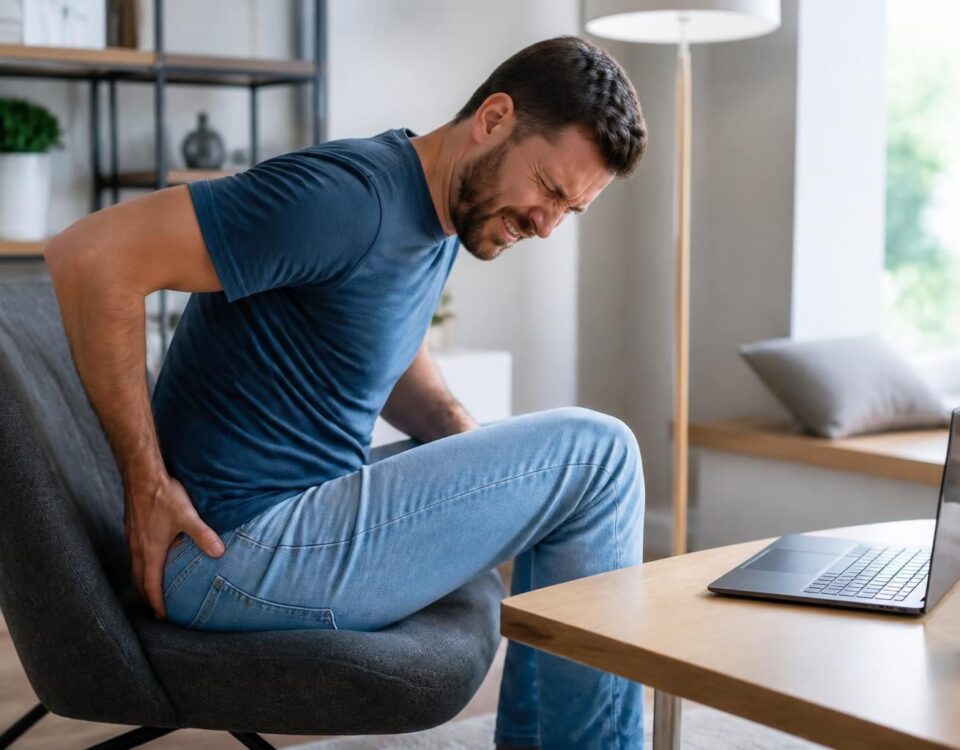
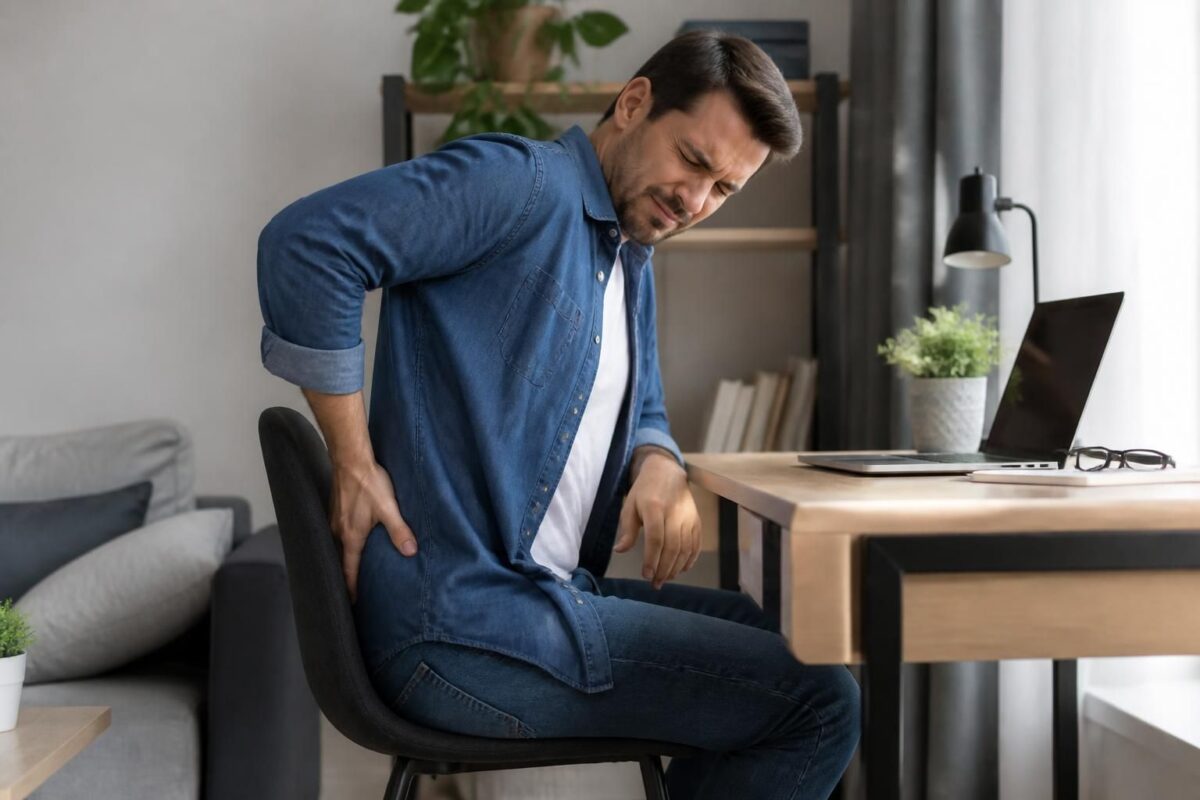
In telework, the sciatica may appear or worsen due to chair poorly adapted and posture maintained for too long. the pain can then radiate into leg.
- Adjust the chair correctly: Feet flat, knees at ~90°, backrest with lumbar support and suitable height.
- Vary the postures And take active breaks every 30–45 minutes to avoid stagnation.
- Use an ergonomic support (Lumbar cushion, seat cushion) And make sure the screen is at eye level to protect the back.
This text, written by a health professional and expert, summarizes the causes and practical solutions for a sciatica which manifests itself in telework. It describes how to choose and adjust the chair, how to adapt the posture and how to mitigate the Leg pain throughout the day. You will find simple gestures, organizational rules and resources to work in safety and comfort.
Understand why sciatica can worsen from telework
The pain follows the path of the sciatic nerve. It can start in the lower back and descend into the leg. The prolonged sitting position increases the pressure on the lumbar discs and may irritate the nerve. Poor posture can also aggravate pain by tension of the piriformis muscle and tilting of the pelvis.
The key is to avoid a single posture and vary the positions. Each change moderates the constraint on the spine and on the nerve.
Chair and workspace settings
Set the height of the chair so that the feet rest flat on the floor. The knees should be 90 degrees or slightly below hip level. The backrest should support the lower back and promote a slight natural curvature. Add lumbar support if necessary.
Armrests should allow relaxed shoulders and 90 degree elbows. Place the screen at eye level and at a comfortable distance to avoid leaning your head forward. If your chair does not offer this alignment, use a support or desk to position the screen.
Apply the 45-5 rule: every 45 minutes, get up 5 minutes and move. If possible, choose a height-adjustable desk to alternate sitting and standing.
Dynamic postures and alternatives to limit pain
Alternate postures rather than staying frozen in a single position. A dynamic seat or a seat-knee can promote slight variation of the pelvis and trunk. Dynamic seating (balloon or balance cushion) supports deep muscles and can prevent prolonged tension.
In addition, consider layout options like a height-adjustable desk and short active periods. The goal is to distribute the stresses over different areas of the body and to avoid overload of the same region.
Avoid crossing your legs for a long time to limit tension and pelvic asymmetry. Check that the edge of the seat does not compress the back of the thighs and that the lower back has sufficient support.
Ergonomic equipment and aids
An ergonomic seat cushion can redistribute pressure and support natural lordosis. Choose a model adapted to your morphology and your workstation. A footrest can help if the feet do not touch the ground when the chair is at the right height. A height-adjustable desk makes it easy to alternate between sitting and standing and can be particularly useful for sciatica related to prolonged compression.
For more information on ergonomic options and suitable solutions, you can consult specialized resources in areas such as sossciatica.com and Cliniquetagmed.com.
To enrich your choices and guide you in concrete steps, discover relevant resources in the following areas: sossciatica.com, decompressionneurovertebrale.com, SoshernieDiscale.com.
Practical management of pain and safety at telework
In case of pain, avoid prolonged bed rest. Hydrate yourself and adapt your activity. Use simple measures like heat or cold depending on the type of pain and the inflammatory phase. Soft stretches and light movements may help, but avoid any exercise that increases pain.
Stay aware of the symptoms. If the pain is accompanied by weakness, significant numbness or urinary or sphincter disorders, consult a health professional quickly.
To deepen the concepts mentioned and discover complementary approaches, refer to the specialized resources on sites such as sossciatica.com and sossciatica.com.
Additional resources on ergonomics and telework can be consulted in areas dedicated to health and ergonomics, while remaining aligned with professional recommendations and local standards.
Medical Disclaimer: The information and advice provided on this site does not replace the health professional’s diagnosis or treatment. Please note that Dr. Sylvain Desforges osteopath is neither a doctor of medicine nor a doctor, and is not a specialist in a medical specialty as defined by the Collège des Médecins du Québec. Manual medicine, functional medicine and sports medicine as described on this site exclude any medical treatment or diagnosis made by a doctor or specialist doctor. Always consult your doctor for any medical questions. For more details, please read our full legal notice. »
- Adapted chair : adjust height, depth and lumbar support; Feet flat and knees at 90°.
- Lumbar support : cushion or appendix to maintain lordosis.
- screen and desktop : Upper edge aligned with eyes, keyboard in range and unobstructed surface.
- Posture and breaks : avoid slaughter; Vary positions every 45 minutes and walk a few steps.
- Leg pain : favor soft stretching and walking; Apply hot or cold as needed.
- Practical rule : Rule of 45-5 and, if possible, adjustable desk to alternate sitting/standing.
- Signs to watch : Weakness, numbness, urinary disorders – consult quickly.

In this article, you will discover how to manage a sciatica in telework thanks to a chair adapted, a posture effective and simple gestures to limit the Leg pain without interrupting your activity.
Understanding teleworking mechanisms
Prolonged hold in the sitting position increases the pressure on the Lumbar discs and can maintain inflammation of the sciatic nerve. The chair and work habits play a major role: a posture that crushes the natural curvature of the back can aggravate the symptoms, while alternating and varied supports help to distribute the constraints.
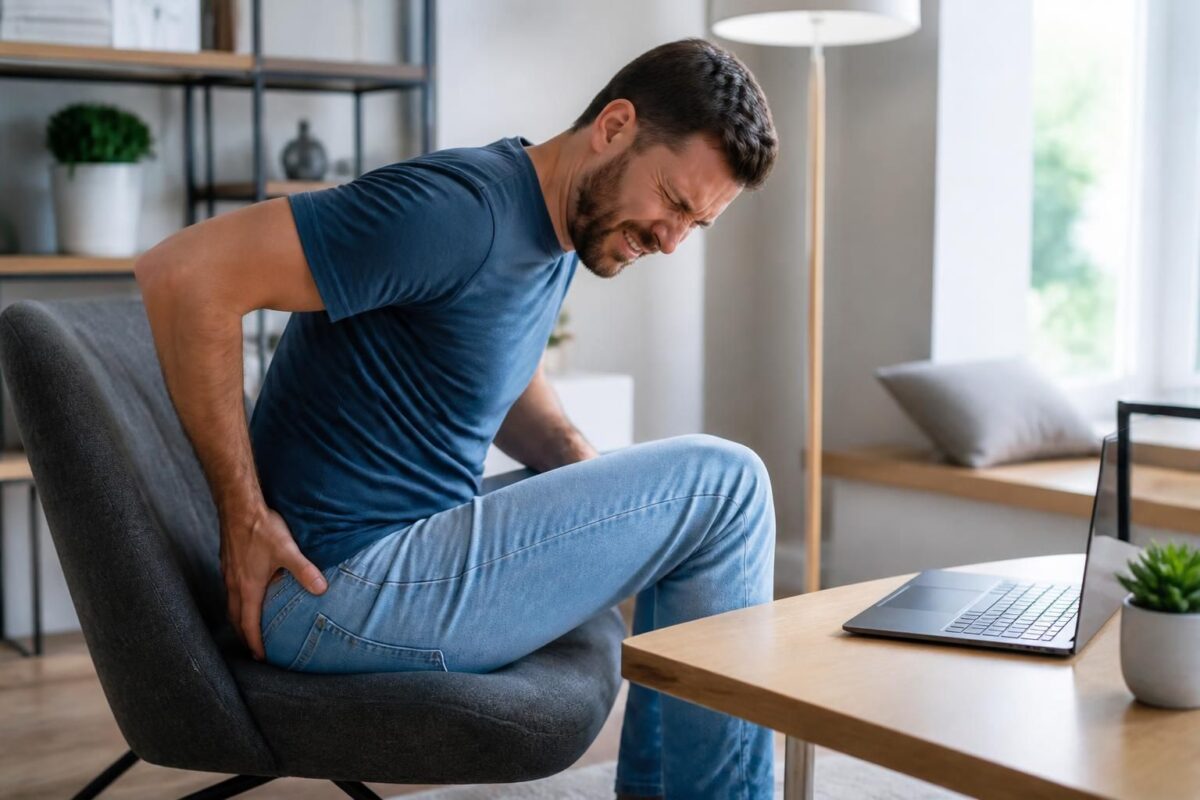
Sciatica and low sitting position: why this can worsen
IN BRIEF In brief, sciatica and low sitting position describe the possible aggravation of pain when the lower back is in prolonged flexion or poorly supported while sitting. This increases pressure on the lumbar discs and nerve tension, with pain…

Sciatica and Pain at the Restaurant or Cinema
IN BRIEF In brief, sciatica can manifest during outings to a restaurant or a cinema as pain following the path of the sciatic nerve, worsening while seated. This approach aims to help in public environments with simple gestures: adopting a…
Home position layout
Chair settings
Stable and comfortable seat: feet flat On the ground, the knees slightly flexed at about 90°, and the folder Slightly tilted backwards. Lumbar support positioned in the hollow of the back helps preserve the lordosis natural and avoids tension in the lumbar region.
Lumbar support and adapted cushion
One Lumbar support or a Ergonomic cushion Can redistribute pressures and prevent compression points at the coccyx and ischium level. For some profiles, a specific cushion can help maintain a neutral posture without constant effort.
Screen and keyboard position
Place the upper edge of the screen at eye level and at a comfortable distance to avoid tipping your head. The keyboard should be within reach of the forearms, shoulders relaxed, in order to limit the tensions accumulated along the posterior chain.
Rule of 45-5 and alternatives
Adopt the 45-5 rule: every 45 minutes in a sitting position, take 5 minutes to move, walk or stretch. If your setup allows, use a height-adjustable desk to alternate between sitting and standing throughout the day.

Sciatica and pain during prolonged meetings
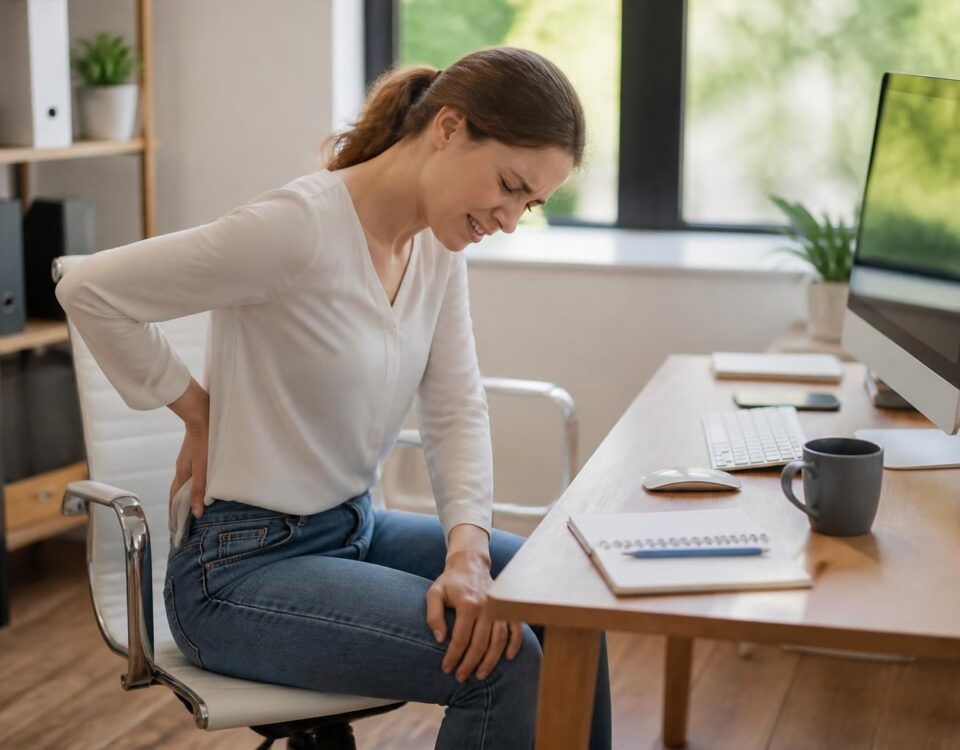
IN BRIEF In brief, sciatica and pain related to prolonged meetings is pain that follows the path of the sciatic nerve and worsens in prolonged sitting positions. What is it? It is pain starting from the lower back and radiating…
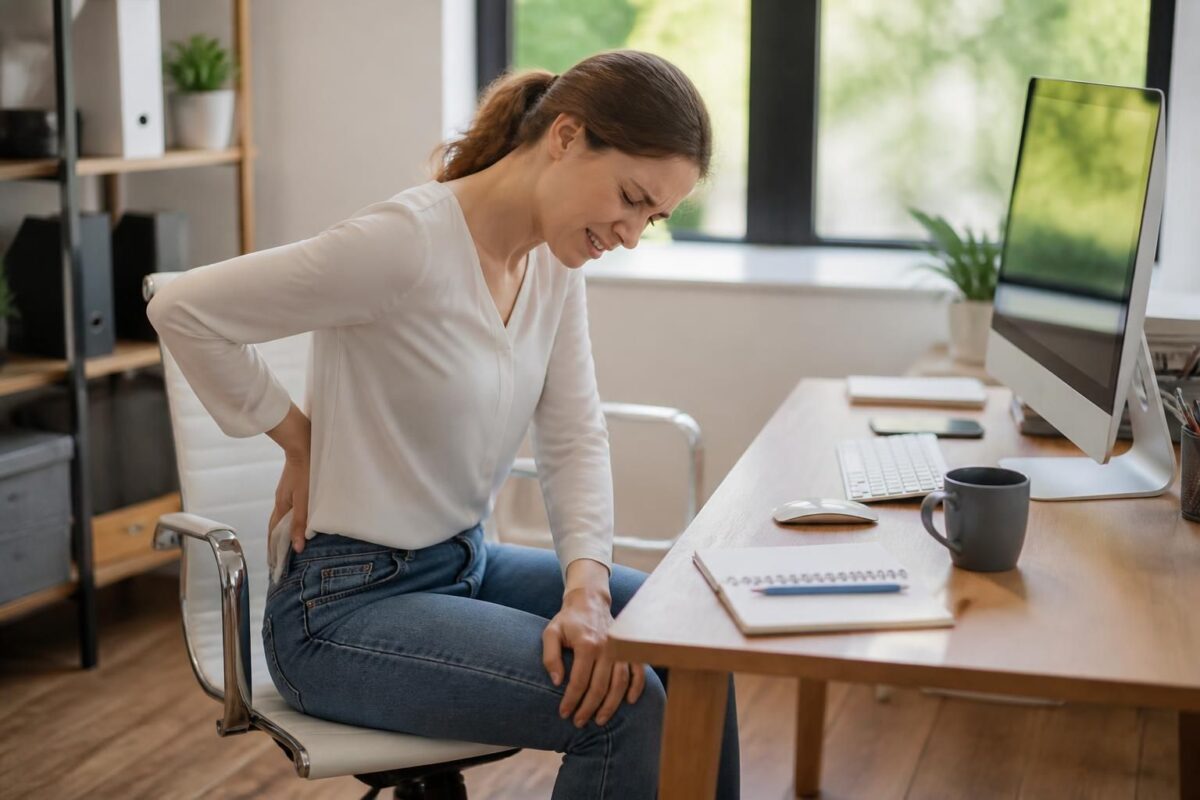
Sciatica and Difficulty Staying Seated for Long Periods
IN BRIEF In brief, sciatica and difficulty sitting for long periods describe pain that radiates from the lower back down the leg and worsens with prolonged sitting. What is it? It is pain related to the irritation or compression of…
Posture and habits to adopt on a daily basis
Avoid postures that maintain pain
Avoid slumping and crossing your legs for long periods. A poorly positioned screen can force the neck and unbalance the entire postural chain to the pelvis, increasing tension in the lumbosacral.
Alternate positions and environments
Change position regularly and use dynamic accessories: dynamic chair, exercise ball or suitable stool. Varying the supports prevents the overuse of the same area and improves the tolerance to the seated posture.
Additional equipment
Simple elements such as a footrest and a modular desk allow to optimize the alignment of the hips and knees. The objective is to maintain a position that respects natural curvatures and offers regular active breaks.

Sciatica and toe pain while sitting
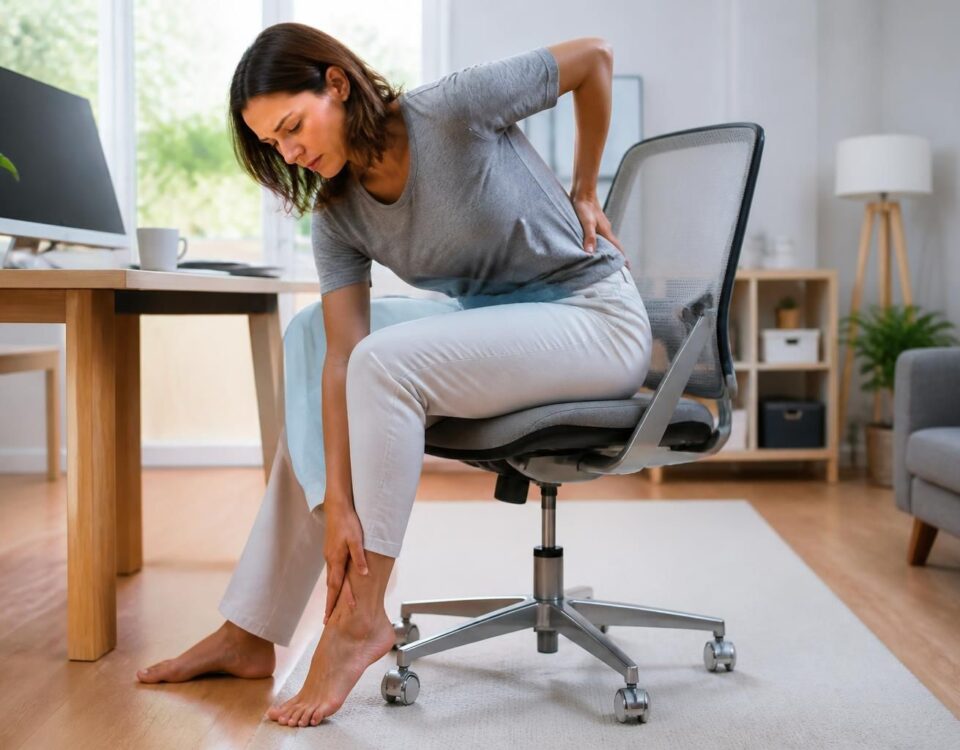
IN BRIEF Sciatica and big toe pain in sitting position refer to pain that starts from the lower back and can reach the foot when the sciatic nerve is irritated or compressed. Benefits: simple and quick measures to implement at…
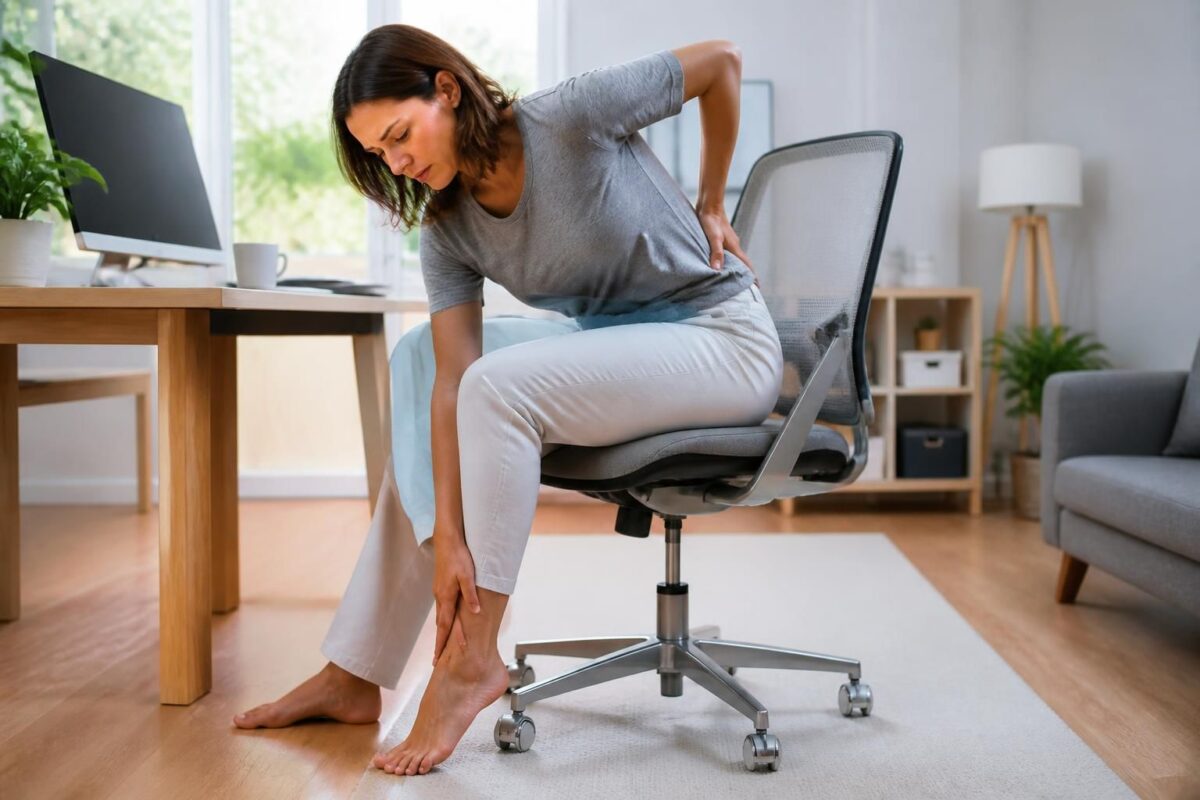
Sciatica and heel pain while sitting
IN BRIEF In brief, the topic sciatica and heel pain in sitting position describes pain that can radiate from the lower back to the heel when remaining seated. It may result from irritation or compression of the sciatic nerve and…
Pain management in the leg
Immediate measures
In case of increased pain, alternate between heat and cold for short and moderate intervals to relieve inflammation and local spasms. Apply these measures carefully and without exceeding a few minutes each time.
Soft stretches and simple exercises
A few movements without significant pain can help: knee to the chest, piriform in lying position, and stretching of the hamstrings. These gestures must remain comfortable and be stopped at the slightest slump.
When to consult
Consult a professional if the pain is accompanied by weakness, loss of sensitivity, urinary disorder or extreme pain that does not respond to usual measures.
| Element | Impact and solution |
|---|---|
| Chair and settings | Backrest and depth adjustment with lumbar support to limit the pressure on the discs and reduce the pain radiating in the leg. |
| Seat and knee height | Feet flat and knees at ~90° to preserve the alignment and avoid the retroverted rocker which stresses the nerve. |
| Lumbar support | Conserves natural lordosis and prevents pinching of the sciatic nerve linked to a sitting Extended. |
| Screen position | Eye screen to prevent tensions that disturb the trunk and accentuate pain. |
| Variation of postures | Change posture every 30-45 minutes to unzip discs and limit irradiation. |
| Alternative seats | Use footrest, ergonomic cushion or desk at height to vary the supports and reduce the tension. |
| Active breaks | Light walking and gentle stretches during breaks to improve circulation and reduce pain. |
| Simple stretches | Piriform and hamstring stretches without forcing, after such acute consultation. |
| Alert signs | Intolerable pain, weakness or deviant disorders: Seek promptly for a doctor. |

Sciatica and calf pain when sitting
IN BRIEF In brief, sciatica and calf pain while sitting refers to pain radiating along the sciatic nerve down to the calf, often exacerbated by prolonged seated posture. The benefits: quick relief, prevention of recurrences, and improved daily comfort through…
Sciatica and pain in the buttock while sitting
IN BRIEF In brief, Sciatica and pain in the buttock while sitting is a common condition caused by compression of the sciatic nerve, exacerbated by inadequate ergonomics. Its benefits include: pain reduction, improved mobility, and prevention of recurrences through postural…
Testimonials on sciatica in telework: chair, posture and pain in the leg
Since I teleworked, my Sciatica mostly manifests at the end of the day. The pain starts from my lower back and goes up along my leg, and it all starts when I’m sitting on a chair who lacks lumbar support.
I replaced my Ergonomic chair And I adjusted the backrest, the seat and the armrests. In a few days, the pain in the leg calmed down and my concentration came back.
To prevent the pain from settling, I introduced Active breaks every 30 minutes and I used a Height adjustable desk To alternate between sitting and standing. My posture is more natural and less tension in the column.
At first, I tended to lean forward and stay rigid. Today, I vary the positions and I favor a posture which preserves lordosis and reduces pressure on discs. Result: less pain in the leg.
I also like to test options like theDynamic seat and the Ergonomic cushion, which redistribute the pressure and protect the sciatic nerve when I’m sitting for a long time. Sometimes a slight heat quickly soothes the painful area.
With these simple adjustments posture and equipment, I can telework without the Sciatica dominate my days, and the Leg pain is much less frequent.
Dr. Sylvain Desforges is recognized as an expert in osteopathy, Naturopathy and manual medicine, and he occupies the role of founding president of the Tagmed clinics as well as the ACMA association. Its trajectory is marked by an approach ofInnovation in care which is based on global chronic pain management and the integration of advanced technologies such as spinal decompression, the re-energy laser and shockwave therapy. Its mission: to deliver evidence-based care to optimize the health and well-being of its patients.
In the context of telework, he observes that the hours spent in front of the screen, poorly adapted chairs and frozen postures can aggravate a sciatica which starts from the lower back and radiates into the leg. Its approach is based on a detailed understanding of the mechanisms, associating an individual assessment of the domestic environment with multimodal treatment. He favors a combination of manual interventions, postural education and a program of exercises adapted to working life at home.
Its therapeutic approach for teleworkers invites an approach personalized and progressive. After a precise diagnosis, he coordinates measures that go well beyond simple symptomatic treatment: targeted rehabilitation, optimization ofergonomy of the position, and adaptation of daily habits. The objective is to reduce mechanical stress on the lumbar spine and reduce sciatic nerve irritation, while preserving the ability to work remotely.
In practical terms, Dr. Desforges encourages simple but effective adjustments around the workstation. Adjusting the chair so that the feet lie flat and knees are at right angles, suitable lumbar support, and screen positioning at eye level. He also recommends Posture changes regular and Active breaks Every 30 to 45 minutes, in order to print micro-mmilious movements and limit the prolonged tension on the discs and nerves. In addition, it offers Sweet exercises Intended to release the tissues around the painful path and restore mobility without excessively straining the leg.
At the heart of his approach are technological tools and methods that complement traditional support. When the mechanisms persist, it envisages integrative strategies including treatments such as spinal decompression and therapies targeted by laser or shock waves, always with a view obvious and adapted to the patient’s profile. This orientation makes it possible to approach the sciatica not only as pain, but as a set of biomechanical and behavioral factors to be modified as part of the telework.
For professionals and teleworkers, its message is clear: the key lies in an approach multidisciplinary, custom tailored, which combines manual therapy, tips ergonomic, and adapted exercises. By infusing movement and precision into the daily professional at home, it aims to preserve the function And to limit painful episodes that radiate into the leg can slow down professional activity.
This article summarizes how to manage a sciatica in telework, playing on the chair, the posture and the pains in the leg. You will find practical advice for setting up your position, simple exercises and resources to deepen, in order to limit outbreaks and preserve your comfort throughout the day.
Note that the goal is to find suitable adjustments for everyone, because there is no universal posture. The key action is to vary the positions and institute regular active pauses to limit pressure on the lumbar discs and tension on the sciatic nerve.
To implement these recommendations, focus on simple and effective arrangements: a chair correctly adjusted with lumbar support, a Ergonomic cushion suitable, and a screen at eye level. Combine this with the Rule of 45-5 (45 minutes sitting, 5 minutes standing or moving) and gentle stretches targeting the sciatic nerve path to release tension and improve mobility.
If the pain persists or is accompanied by warning signs (weakness, loss of sensitivity, urinary disorders), consult a health professional quickly. To deepen and compare approaches and solutions, you can explore these relevant resources: Sciatica at work – Solutions, Non-surgical options in Montreal, Sciatica and trunk flexion, Cautious approach in Terrebonne, posture to avoid, Sciatica and telework, How to sit without aggravating the pain, Understanding pain before choosing treatment, Sciatica and office work, Montreal Prudent Approach.

Dr Sylvain Desforges
Dr Sylvain Desforges, B.Sc., D.O., N.D., osteopath, is the founding president of TAGMED and of the ACMA association. He dedicates his practice to chronic spinal pain, low back pain and symptoms compatible with sciatica, particularly when pain radiates toward the buttock, leg, calf, foot or toes.
Through SOS Sciatique, he publishes educational content on sciatica symptoms, possible causes such as disc herniation, disc narrowing, foraminal stenosis or irritation of a lumbar nerve root, as well as non-surgical approaches that may be considered according to the evaluation. At Clinique TAGMED, care may include, depending on the case, motorized neurovertebral decompression, specific osteopathic care or precision percussion.
For an evaluation related to sciatica treatment in Montreal / Mount Royal or sciatica treatment in Terrebonne, please consult the services available at Clinique TAGMED.
Medical disclaimer
The information published on SOS Sciatique is provided for educational purposes only and does not replace a consultation, diagnosis, opinion or treatment provided by a physician or another authorized healthcare professional. The author of this article is neither a medical doctor nor a specialist in a medical specialty recognized by the Collège des médecins du Québec. The osteopathic, manual medicine or functional support approaches described on this site do not constitute medical acts and are not intended to replace medical follow-up.
Consult a physician or emergency service in cases of loss of bladder or bowel control, anesthesia in the saddle area, significant or progressive weakness in the leg or foot, fever, recent trauma, severe pain or rapid worsening of symptoms. For more details, please read our Legal Notice.