Pain behind the thigh: possible link with the sciatic nerve
29/06/2026
Sciatica and sitting: why does the pain increase?
29/06/2026
In short The Sciatica is one Lumbar pain radiating to the buttocks and leg due to compression or irritation of the sciatic nerve. The Most common lumbar causes include theslipped disc, the Spinal canal narrowing, the Piriform Syndrome and lumbar osteoarthritis, as well as trauma. Understanding these mechanisms allows Appropriate support and fast, and a better quality of life thanks to an approach multimodal associate pharmaceuticals, physiotherapy and osteopathy, with surgery only if necessary. |
Sciatica: Most common lumbar causes to know
- Slipped disc : displacement of the pulpy nucleus which compresses the root of the sciatic nerve.
- Lumbar stenosis : narrowing of the spinal canal leading to nerve compression.
- Piriform Syndrome : contraction or irritation of the piriformis muscle irritating the nerve.
- Lumbar osteoarthritis : Wear of the lumbar joints promoting pain and compression.
- Trauma and degeneration : Accidents or aging that disrupt stability and cause lower back pain.
The Sciatica is a frequent pain that can disrupt everyday life. This article introduces the most common lumbar causes, their mechanisms and options for support. The objective is to help understand pain and to direct towards appropriate solutions without delaying medical care.
lumbar disc herniation
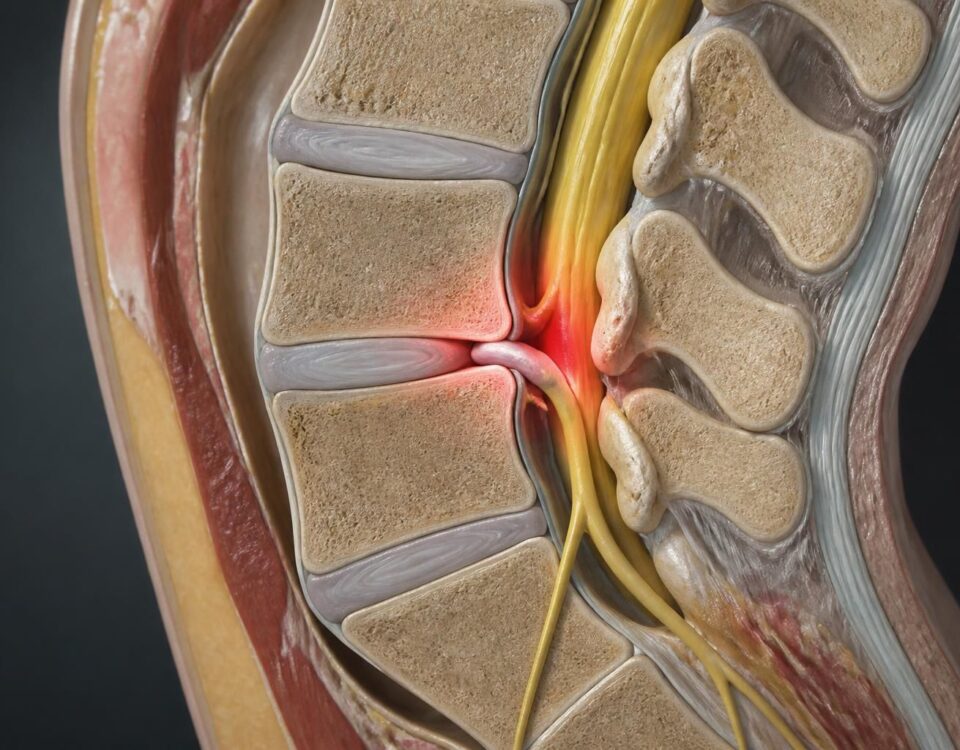
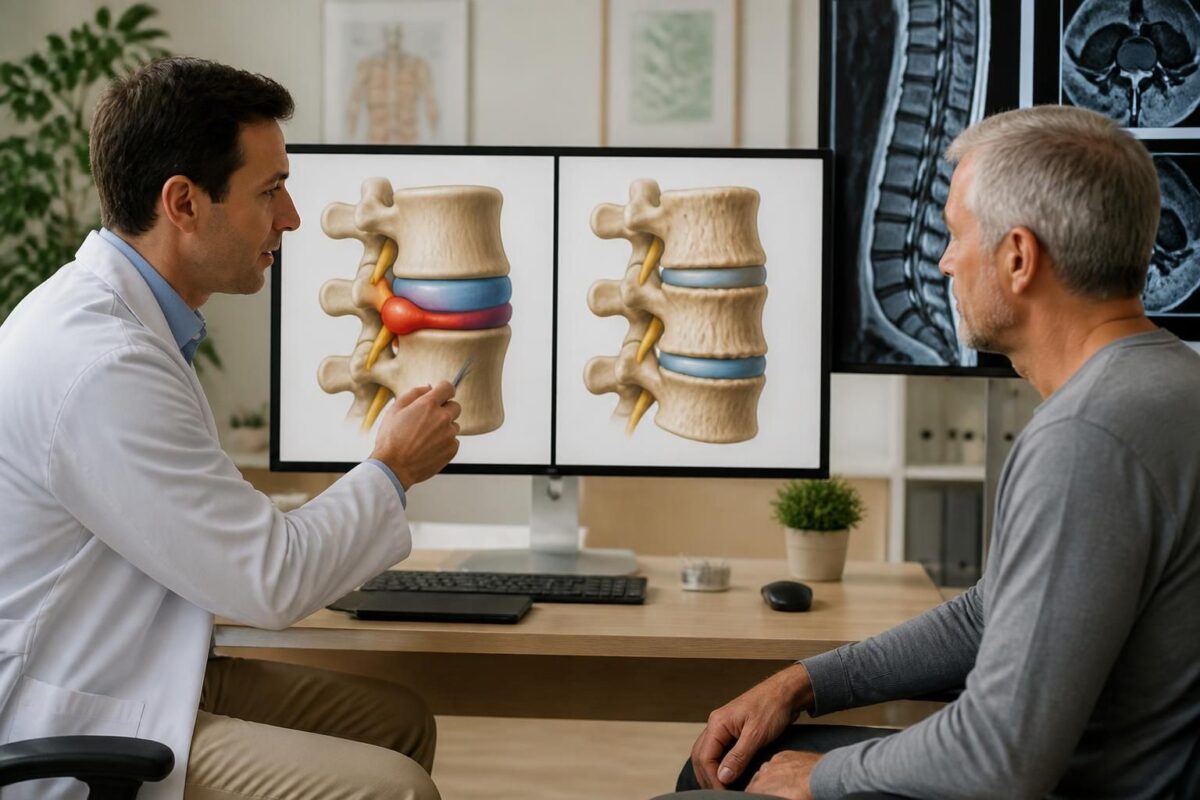
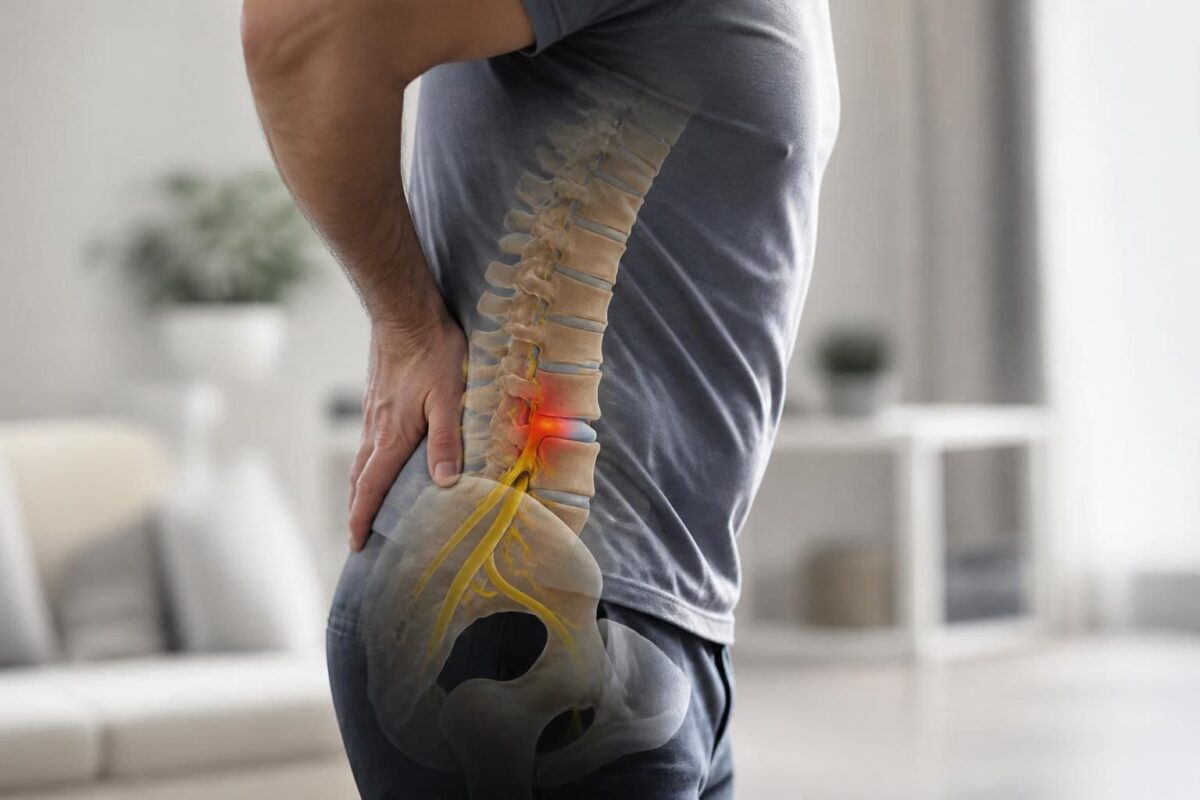
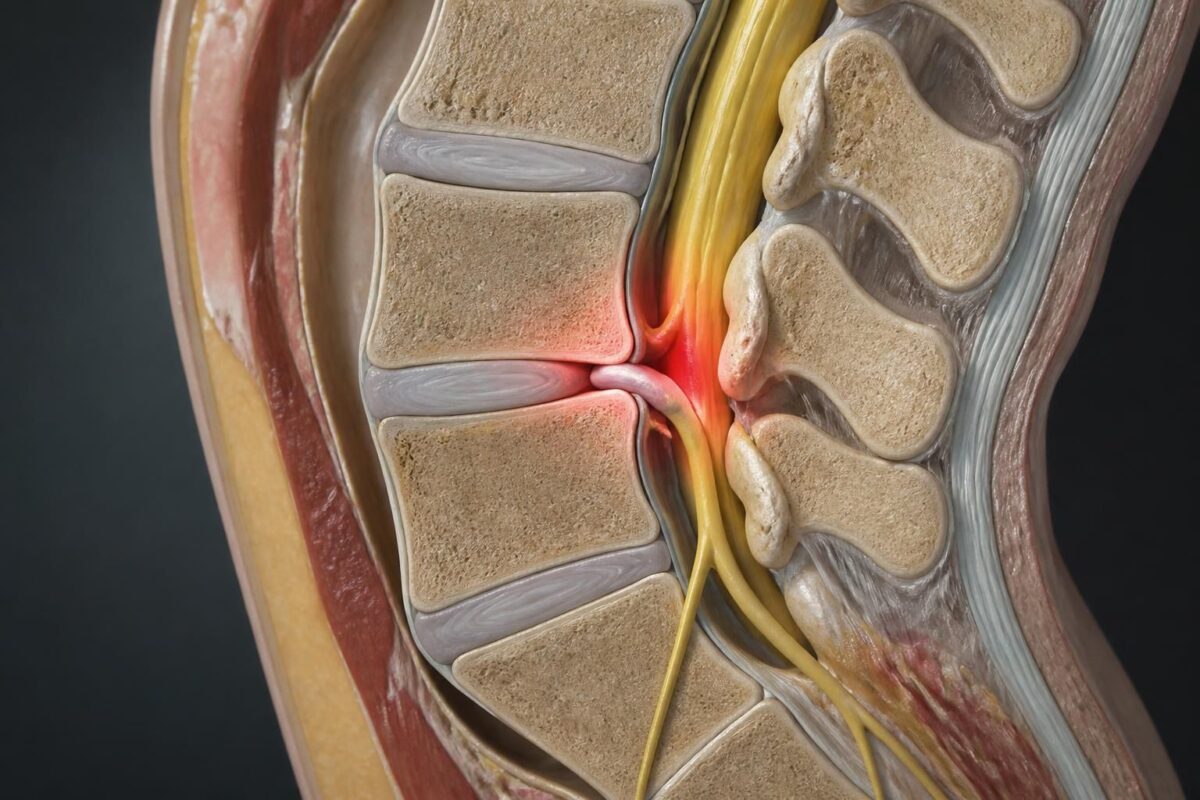
The lumbar disc herniation Occurs when the pulpy nucleus comes out of the intervertebral disc and can compress the sciatic nerve. This compression gives pain irradiated To the buttocks and the leg and can be accompanied by paresthesia. The mechanism is mainly mechanical and related to normal wear or an overload episode.
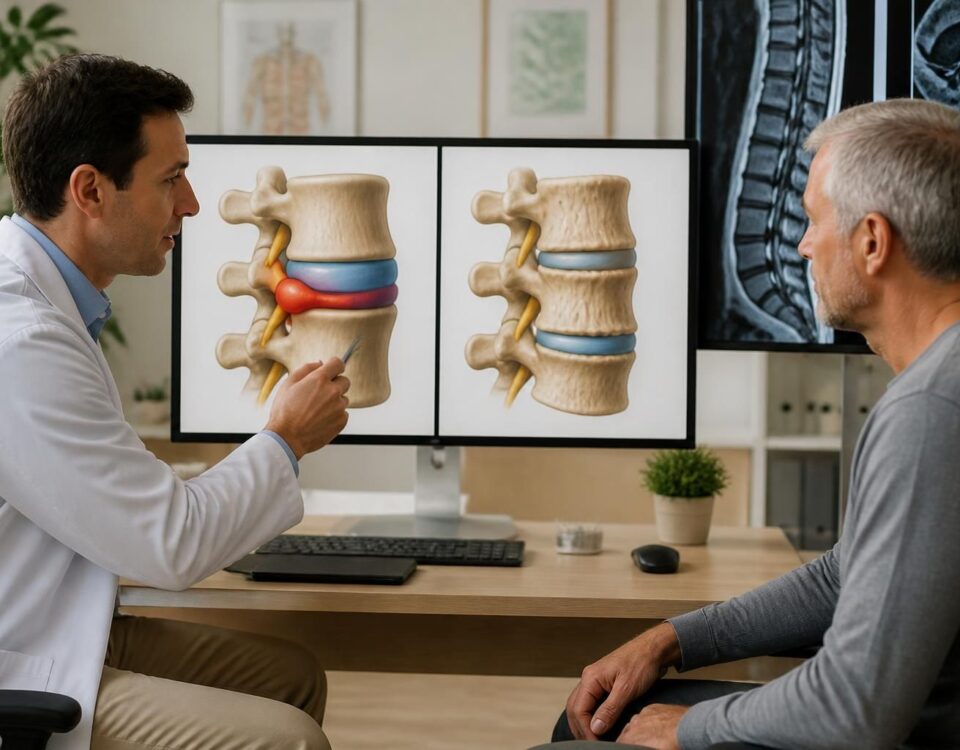
The diagnosis is based on clinical examination and, if necessary, on imaging. Support is multimodal and may include drug treatments, osteopathic care and, depending on the assessment, of neurovertebral decompression. Additional information is available on the resources dedicated to this subject.
For more information, see This topic on lumbar disc herniation.
Foraminal stenosis and lumbar stenosis
The Foraminal stenosis is the narrowing of the foramen through which the nerve comes out, which can cause lumbar pain and radiculopathy. The Lumbar stenosis May result from thickening of joint structures and tissues around the spine.
Symptoms vary depending on the path of the compressed nerve and may include pain, weakness or discomfort in the leg. The diagnosis is based on clinical evaluation and imaging. The treatment is adapted to each patient and may involve manual actions and targeted measures according to the overall assessment.
To learn more, see Resources on disc pinching and sciatica and Sciatica in Montreal.
Piriform syndrome and other extra-lumbar causes
The Piriform Syndrome Results from contraction or irritation of the piriformis muscle, which can compress the trunk of the sciatic nerve. This cause is sometimes described as a Non-lumbar sciatica and can simulate disc-origin sciatica.
The diagnosis is based on clinical examination and exclusion of other causes. The treatment can combine manual approaches and strategies adapted to the overall patient’s condition. For additional information, see Related Resources.
More information: Sciatica and back twist.
Trauma and degeneration (lumbar osteoarthritis)
The trauma and the disc degeneration May cause sciatic pain. Lumbar osteoarthritis is common with age and may contribute to nerve irradiation. These mechanisms lead to lasting discomfort and require accurate assessment to avoid recurrences.
The management is adapted to each case and can combine drug treatments, functional measures and osteopathic care. Specific options exist in specialized clinics, particularly in Montreal or Terrebonne.
To learn more about these mechanisms, you can consult the dedicated resources on specialized sites.
Support and orientation approaches
The management of the sciatica is based on an approach multimodal. In appropriate cases, treatments may include pharmacological measures and osteopathic care. Neurovertebral decompression is an option served by specialists and dedicated centers.
Pick-up options at TagMed Clinic are available in Montreal and Terrebonne. For more information, see Tagmed Clinic and associated resources.
To deepen related topics and different clinical configurations, look at these resources: Sciatica in Montreal, disc pinch, Slipped disc, neurovertebral decompression.
For more general information and further reading, you can also visit the following resources: Sciatica and conduct, Piriform and back twist.
Medical Disclaimer: The information and advice provided on this site does not replace the health professional’s diagnosis or treatment. Please note that Dr. Sylvain Desforges osteopath is neither a doctor of medicine nor a doctor, and is not a specialist in a medical specialty as defined by the Collège des Médecins du Québec. Manual medicine, functional medicine and sports medicine as described on this site exclude any medical treatment or diagnosis made by a doctor or specialist doctor. Always consult your doctor for any medical questions. For more details, please read our full legal notice.
Most common lumbar causes to know
- lumbar disc herniation: Compression of the sciatic nerve
- Lumbar stenosis: narrowing of the spinal canal
- Lumbar osteoarthritis / Facet syndrome: wear of the posterior joints
- disc failure (protrusion/degeneration): pressure on the nerve roots
- Piriform Syndrome: contraction irritating the sciatic nerve
- Lumbar trauma: shock or sudden movement
- spondylolisthesis: slipping of a vertebra
- Poor posture and overload: Triggering and aggravating factors

This quick sheet summarizes the most common lumbar causes to know in connection with irradiated pain in the leg. It distinguishes the main mechanisms that explain low back pain associated with sciatica and proposes clear benchmarks to understand the signs, most often effective treatments and risk factors in 2025. The causes to be known remain mainly theslipped disc and theLumbar osteoarthritis, followed by the Lumbar spinal canal stenosis and the spondylolisthesis, which explain a significant part of nerve pain in the lumbar level.
Disc herniation and disc protrusion
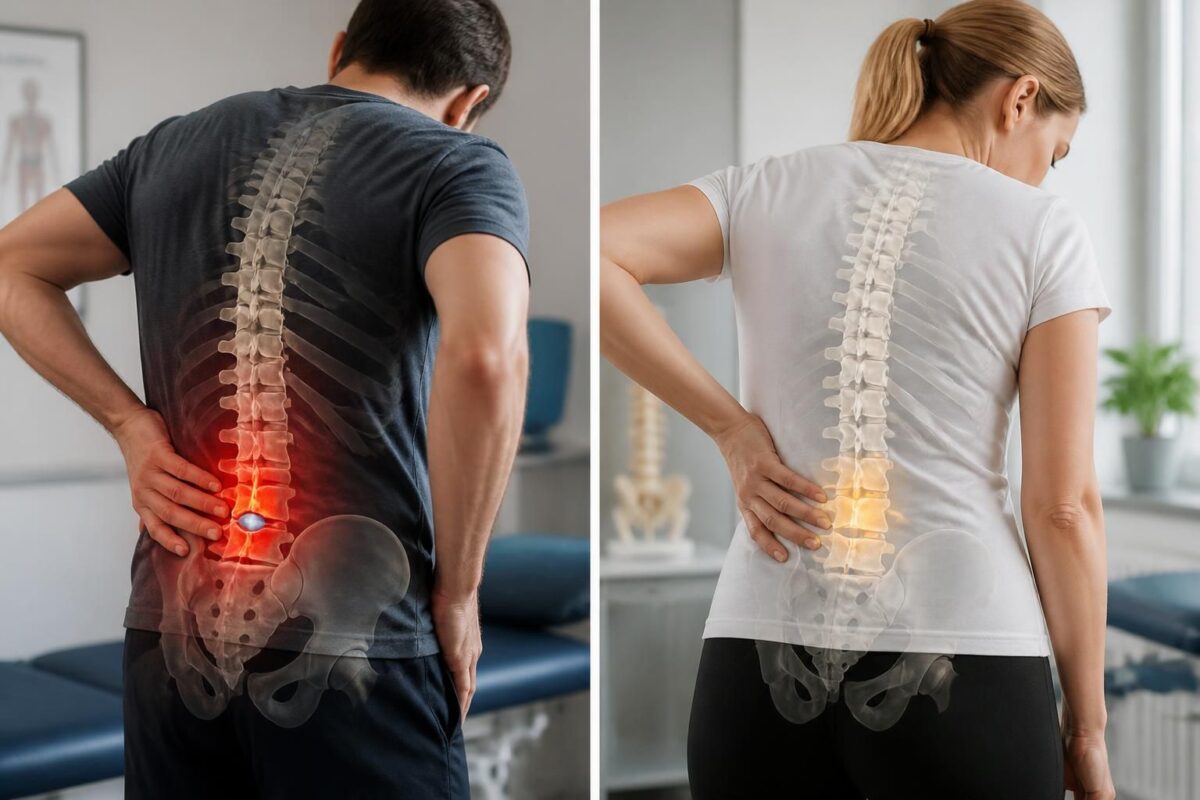
The slipped disc results from displacement or protrusion of the pulpy nucleus of the intervertebral disc, which can compress a nerve root and trigger lumbar pain with irradiation along the path of the sciatic nerve. This mechanism is common in active adults, especially during uplifting or repeated efforts. The pain can be local and then spread into the buttocks and leg, sometimes with paresthesias or distal muscle weakness. Exercise worsening and improvement in flexion or elongated position are typical.
Herniated disc and disc bulge: do not confuse
IN BRIEF In brief, the Herniated disc and the disc bulge are two conditions of the spine that differ in their mechanism and prognosis. The disc bulge is a protrusion of the disc without rupture of the fibrous ring, often…
Herniated disc and disc disease: understanding the differences
IN BRIEF In brief, a herniated disc and discopathy are two distinct causes of spinal pain: wear of the intervertebral disc (discopathy) and the protrusion of the gelatinous nucleus that can compress a nerve (herniated disc). Understanding these differences helps…
Lumbar osteoarthritis and facet syndrome
theLumbar osteoarthritis Refers to the wear of the posterior joints (facets) of the vertebrae. With age or after repeated solicitations, these joints can become painful and cause lumbar pain fluctuating, sometimes associated with root irradiation when ossified surfaces irritate the nerves. Facet syndrome is a common cause of persistent lumbar pain on exertion, especially when rotating and extending the trunk, and can coexist with radiated signs without obvious hernia.
Herniated disc and annular tear: possible pain
IN BRIEF In short, Herniated disc and annular tear refer to issues with the intervertebral disc that can cause lower back pain and, at times, pain radiating down the leg. Symptoms vary and can mimic sciatic pain. Treatment favors conservative…
Herniated disc and chemical irritation of the nerve root
IN BRIEF In brief, Herniated disc and chemical irritation of the nerve root describe pain and dysfunction due to compression and inflammatory chemical exchanges affecting a spinal nerve root. This association explains radiating pain, abnormal sensations, and sometimes muscle weakness…
Lumbar spinal canal stenosis
The Lumbar spinal canal stenosis Corresponds to a narrowing of the canal where the nerve roots pass. Narrowing can be related to osteoarthritis, hypertrophy of the ligaments, or vertebral slippage, and it can cause lumbar pain associated with symptoms in the lower limbs when walking, called neurogenic claudication. Patients often report pain that improves by bending the trunk and worse after prolonged walking or standing.
Herniated disc and mechanical compression of the nerve
IN BRIEF In brief, a herniated disc is a prolapse of the intervertebral disc that can lead to mechanical compression of the nerve root, causing pain and numbness that often radiate down the leg. This compression explains radiculopathy and sensations…
Herniated disc and nerve root inflammation
IN BRIEF In brief, lumbar disc herniation and nerve root inflammation refer to compression and irritation of a spinal root causing radiating pain, paresthesias, and sometimes muscle weakness. The mechanism combines disc protrusion and radicular inflammation, hence the importance of…
spondylolisthesis and other degenerative pathologies
The spondylolisthesis Refers to the slippage of a vertebra relative to the adjacent vertebra, leading to instability and irritation of the nerve roots. It can be congenital or linked to degeneration, and manifested by mechanical, sometimes irradiated lumbar pain. Other degenerative pathologies, such as the local inflammatory process or repeated micro-traumas, can amplify symptoms and promote the development of persistent lumbar pain associated with irradiation.
Herniated disc and peripheral pain: sign to watch out for
IN BRIEF In brief, Herniated disc is the partial protrusion of the gelatinous nucleus of an intervertebral disc through the fibrous ring, which can compress a nerve root and trigger radiating pain in the limb. The key benefits of rapid…

Herniated disc and centralizing pain: sign to interpret
IN BRIEF In brief, a herniated disc is a protrusion of the intervertebral disc that can compress a nerve root, causing centralized pain and signs such as radiating pain, numbness, and weakness. The treatment is mostly conservative: guided activity, physical…
Trauma and aggravating factors
Acute trauma (fractures, sprains) or repeated microtraumas at the lumbar level can trigger or aggravate disc and joint mechanisms. An episode of shock, fall or excessive stress can accelerate pre-existing wear and promote the appearance of a hernia, ductwork narrowing or a painful joint facet syndrome. Factors such as overweight, lack of training, and poor posture accentuate the risk and severity of lumbar manifestations.
| Frequent lumbar cause | Concise description |
|---|---|
| Slipped disc | Core displacement and compression of the sciatic nerve, provoking irradiated pain along the limb. |
| Foraminal stenosis / Narrow lumbar duct | Shrinkage of spinal canal or from foram compressing the nerve roots with associated pain. |
| Piriform Syndrome | Contraction of piriform muscle irritating the sciatic nerve out of the channel. |
| Trauma and degeneration | Shocks or wear disc catchy Pain and radiculopathy. |
| Lumbar osteoarthritis | Wear of Posterior joints causing a narrowing and compression of nerve roots. |
| spondylolisthesis | slip of a vertebra on the other that can pinch the sciatic nerve. |
| Discopathy and radiculitis | inflammation or degeneration of the disc irritating the nerve root. |
| Sacroiliac dysfunction | Dysfunction of sacroiliac system and referred pain along the sciatic path. |
Testimonials: the most common lumbar causes to know
Here are testimonials illustrating the most frequent lumbar causes associated with sciatica and the paths of care to consider.
“At first, the pain started from the lower back and radiated to the leg. The diagnosis showed a slipped disc which compresses the sciatic nerve. After the appropriate treatment, my mobility returned and the pain decreased significantly. »
“My doctor explained that my pain came mainly from a Lumbar osteoarthritis. Understanding this cause allowed me to adapt my activities and undertake targeted rehabilitation to regain daily comfort. »
“My symptoms were mostly local and accentuated after walking: the doctor identified a Piriform Syndrome as responsible. By working on relaxation and mobility of the pelvis, the pain progressed and I was able to resume my outings. »
“the pain increased on the march and the diagnosis revealed a Spinal canal stenosis (Channel narrowing). A multidisciplinary protocol allowed me to gain endurance and considerably improve my quality of life. »
“After a lumbar trauma, the pain remained tenacious. Thanks to an accurate evaluation and a suitable care plan, I reduced pain and strengthened my stability to limit recurrences. the role of origins as trauma appeared clearly. »
Dr Sylvain Desforges, expert in osteopathy, naturopathy and manual medicine, is the founding president of the Tagmed clinics and the ACMA association. With a career dedicated to innovation in care, he specializes in Chronic pain management and the integration of advanced technologies such as Motorized neurovertebral decompression, the laser and the Shockwave therapy. Its practice is based on an approach evidence-based and aims to optimize the health and well-being of each of its patients, in particular when the lumbosciatica disturbs the daily life.
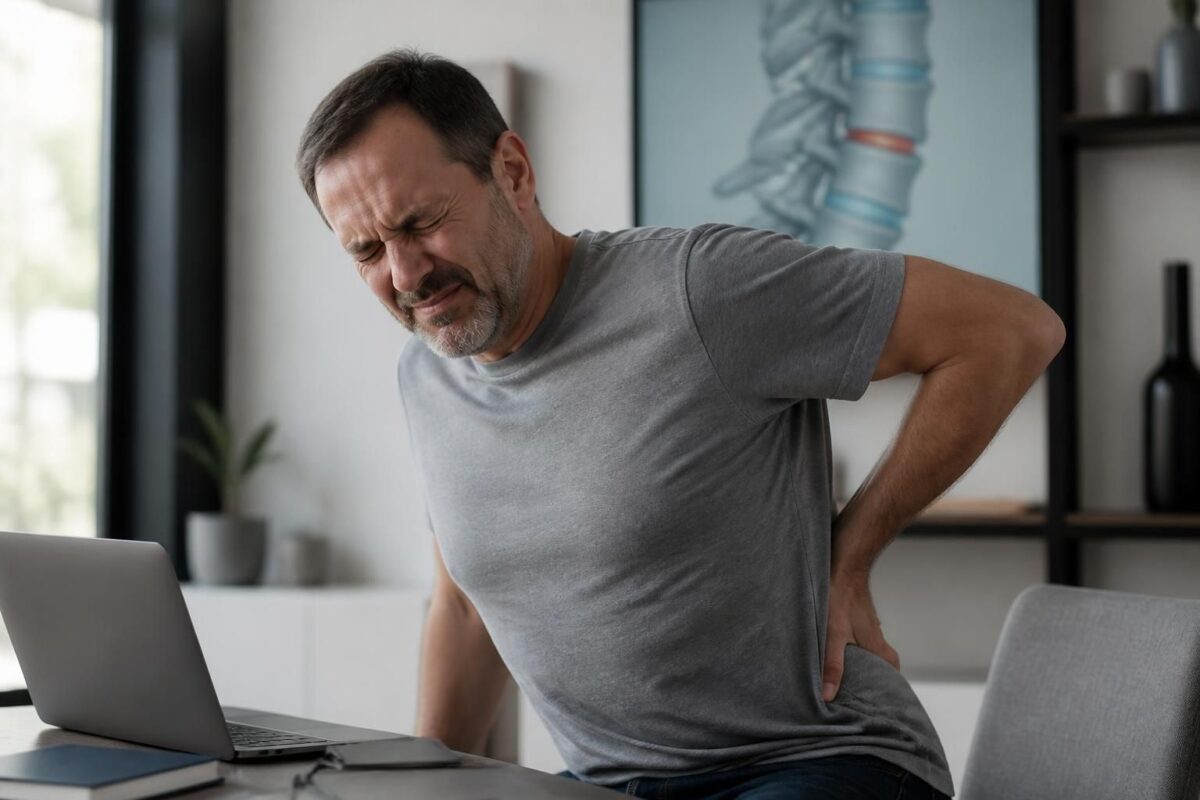
The sciatica is often described as pain that starts from the lower back and radiates into the buttocks or leg. In the experience of this specialist, there are two main lumbar axes: a true sciatica, frequently linked to a slipped disc, and a False sciatica, caused by excessive contraction of the piriformis muscle. This distinction is essential to accurately adapt treatments and avoid diagnostic errors that hinder recovery.
Among the most common lumbar causes, we find The disc herniation, which corresponds to a displacement of the pulpy nucleus which compresses the sciatic nerve and causes intense pain with irradiation. come next Foraminal stenosis and Lumbar duct stenosis, which limit the space available for the nerve roots and lead to pain and general discomfort. The piriform syndrome is another common cause of sciatica, resulting from a contraction of the piriformis muscle which irritates the trunk of the sciatic nerve. Finally, theLumbar osteoarthritis, the trauma And the associated degenerative alterations play a significant role in the onset and chronicity of symptoms.
Understanding the compression mechanisms makes it possible to better guide the treatments. In practice, the doctor can identify a Disc compression by failure of the intervertebral disc, a Spinal canal narrowing or a Muscle disorder related to posture or repeated overload. Beyond the mechanical causes, biological and lifestyle factors can influence the onset and persistence of pain, which justifies a comprehensive and personalized assessment.
On the diagnostic and therapeutic level, the modern approach favors an approach multidisciplinary and integrated. The course may include postural counseling, targeted exercises, and pain management strategies, while avoiding prolonged rest. Tracking can be based on manual techniques, physical therapies and, when necessary, interventional options. In any case, the objective is to restore mobility and quality of life while remaining focused on results assessable and Sustainable.
In practice, Dr. Desforges offers an approach that combines traditional knowledge and contemporary technologies to address the sciatica and its most common lumbar causes. Its mission remains to offer care efficient and safe, based on solid clinical data, in order to help each patient find a life without pain and with regained activity. To learn more about its approach and the services available, contact the TagMed Clinic.
Sciatica is a frequent lumbar pain that can radiate to the buttocks and leg. This article summarizes the most common lumbar causes, their mechanisms and non-surgical management options to know in 2025 to optimize diagnosis and quality of life.
Slipped disc and Spinal canal narrowing are the most frequently encountered lumbar causes in sciatica. The slipped disc causes compression of the nerve roots by deformation of the intervertebral disc, often associated with irradiated pain; the Lumbar duct narrowing May also cause nerve compression and a progressive painful picture, especially when walking or prolonged standing. theLumbar osteoarthritis and the Facet syndrome also participate in these mechanisms, altering the posterior joints and promoting mechanical pain. The Piriform Syndrome, real non-lumbar cause, can also irritate the sciatic nerve by muscle contraction and produce non-lumbar sciatica.
Symptoms typically associate a lumbar pain With irradiation along the path of the sciatic nerve, sometimes accompanied by paresthesias and some stiffness. The presentation can be lumbosciatica When the pain extends to the leg, with variations according to positions and movements. A Postural deviation And insufficient physical activity can aggravate pain and promote recurrences if risk factors are not taken care of.
The diagnosis is based on a clinical examination and interrogation, with maneuvers such as Lasegue’s maneuver to reproduce the pain. imaging, especiallyMRI or the Scanner, is considered depending on the case to specify the cause and guide the treatment. Blood tests may be prescribed to rule out serious causes in the event of particular suspicion. Early and appropriate care can limit evolution and promote faster recovery.
Support in 2025 is based on an approach multimodal and non-surgical when possible. Options include painkillers, anti-inflammatories, muscle relaxants and physical therapy, supplemented by targeted manual acts such as osteopathy and physiotherapy to release tension and restore mobility. Infiltration and, in rare cases, surgery remain ways to consider when conservative treatments fail or when signs of urgency appear.
Prevention involves maintaining an active lifestyle and Postural hygiene suitable for everyday life. Regular exercise, weight control, a balanced diet and reduction of risk factors (tobacco, sedentary lifestyle) help reduce the likelihood of recurrence and preserve long-term low back health. To deepen non-invasive mechanisms and options, you can consult specialized resources and practical guides available on the web.
To deepen the concepts and causes, see for example the following resources: Doctissimo#ATFP_CLOSE_TRANSLATE_SPAN# – Sciatica, Decompression#ATFP_CLOSE_TRANSLATE_SPAN# Neurovertebral and sciatica, UNR#ATFP_CLOSE_TRANSLATE_SPAN# Health – Common causes of sciatica, Treatment#ATFP_CLOSE_TRANSLATE_SPAN# Non-surgical in Montreal, LE#ATFP_CLOSE_TRANSLATE_SPAN# Trauma – Sciatica, Causes#ATFP_CLOSE_TRANSLATE_SPAN# of sciatica: understand why pain descends into the leg, Doctoome#ATFP_CLOSE_TRANSLATE_SPAN# – Sciatica: Recognize and relieve pain, SOS#ATFP_CLOSE_TRANSLATE_SPAN# Sciatica – Quick Access, LE#ATFP_CLOSE_TRANSLATE_SPAN# Doctor – Pathologies related to sciatica.

Dr Sylvain Desforges, B.Sc., D.O., N.D., osteopath, is the founding president of TAGMED and of the ACMA association. He dedicates his practice to chronic spinal pain, low back pain and symptoms compatible with sciatica, particularly when pain radiates toward the buttock, leg, calf, foot or toes.
Through SOS Sciatique, he publishes educational content on sciatica symptoms, possible causes such as disc herniation, disc narrowing, foraminal stenosis or irritation of a lumbar nerve root, as well as non-surgical approaches that may be considered according to the evaluation. At Clinique TAGMED, care may include, depending on the case, motorized neurovertebral decompression, specific osteopathic care or precision percussion.
For an evaluation related to sciatica treatment in Montreal / Mount Royal or sciatica treatment in Terrebonne, please consult the services available at Clinique TAGMED.
Medical disclaimer
The information published on SOS Sciatique is provided for educational purposes only and does not replace a consultation, diagnosis, opinion or treatment provided by a physician or another authorized healthcare professional. The author of this article is neither a medical doctor nor a specialist in a medical specialty recognized by the Collège des médecins du Québec. The osteopathic, manual medicine or functional support approaches described on this site do not constitute medical acts and are not intended to replace medical follow-up.
Consult a physician or emergency service in cases of loss of bladder or bowel control, anesthesia in the saddle area, significant or progressive weakness in the leg or foot, fever, recent trauma, severe pain or rapid worsening of symptoms. For more details, please read our Legal Notice.