Sciatica: pain that worsens when sitting and possible disc-related cause
14/07/2026
Sciatica Treatment in Montreal: What Not to Promise
15/07/2026
IN BRIEF
In brief, sciatica can manifest during outings to a restaurant or a cinema as pain following the path of the sciatic nerve, worsening while seated. This approach aims to help in public environments with simple gestures: adopting a correct posture, prioritizing an appropriate ergonomics (chair with lumbar support, not sitting too long), taking active breaks, and performing stretching and strengthening exercises before, during, or after the meal or the movie. Main benefits: reduction of pain, maintaining mobility, and rediscovering pleasure during these outings without resorting to heavy treatments. How does it work? alternate sitting/standing, avoid fixed positions, practice targeted stretches and gentle movements, and optimize the environment (suitable seating, regular breaks) to reduce pressure on the nerve and promote quick recovery. |
Sciatica is pain following the path of the sciatic nerve, starting from the lower back, passing through the buttock and the back of the thigh down to the leg. During a meal at a restaurant or a movie session, it can worsen after long periods of sitting or facing a poorly adapted seat. Here’s how to limit discomfort during these outings.
- Seat and posture: prefer a place with lumbar support or add a cushion; keep your feet flat and avoid crossing your legs.
- Regular movements: stand up and walk for a few minutes every 20–30 minutes.
- Short stretches: standing, lean slightly forward, and perform small stretches of the hamstrings and back.
- Pain management: during acute phases, apply cold, then heat a few minutes later; light massage can help.
- Preparation and organization: plan your outing by staying active and choosing accessible routes to limit uncomfortable positions.
This text, written by a health professional and expert, explains how sciatica can appear or worsen when you are at a restaurant or cinema. You will find possible causes, environmental and postural triggering factors, practical advice to limit pain, and care options suitable for these situations.
Sciatica is pain following the path of the sciatic nerve. In a restaurant or cinema context, prolonged sitting and poorly ergonomic seats can trigger or amplify the pain. Stress, heavy meals, and lack of physical activity between relaxation moments also play an important role.
Specific Causes and Triggers for Outings
The causes remain the same as for low back pain radiating down the leg. Prolonged pressure on the nerve can increase when you sit for long periods on a chair without lumbar support. A hunched posture or crossed legs increases tension. Alcohol and heavy meals can generally worsen discomfort in the long term.
Posture Preservation and Environmental Choice
Prefer a seat with good lumbar support, and if necessary, use a small cushion. Sit well, feet flat, and avoid crossing your legs. Take breaks to stand and walk for a few minutes every 20 to 30 minutes. Adopt simple actions that relieve the load on your back and legs.
Pain Management During the Outing
In case of pain, apply a cold pack to the painful area for 10 minutes, then alternate with heat to relax the muscles. Stay hydrated and prefer lighter meals before and after the activity. Over-the-counter pain relievers may be considered based on your doctor’s advice and the intensity of the pain.
Warning Signs and When to Consult
Quickly contact a doctor if the pain worsens despite rest, if you experience marked weakness in the foot or leg, urinary or fecal disorders, loss of sensation in the pelvic area, or pain that prevents you from moving your toes and feet.
Treatment Approaches and Practical Advice
Opt for a multimodal approach. Continue suitable activity and avoid strict bed rest. A specific, supervised exercise program can help protect your back and reduce future episodes. For assistance in this area, you can turn to official resources and specialized clinics, such as the TAGMED clinic in Montreal or Terrebonne.
For more information, check out our resources at sossciatique.com and sossciatique.com. You will find information on signs, causes, and care options.
Additional information on neurovertebral decompression and disc herniations can help you better understand your pain if it is recurrent. You can consult resources such as decompressionneurovertebrale.com, sosherniediscale.com, or sosherniateddisc.com for general information. For practical advice and care options in clinics, visit cliniquetagmed.com.
If you are looking for advice in other contexts, you will find useful resources at sostunnelcarpien.com and sossciatique.com, which cover various aspects of radicular pain and prevention strategies.
Notify your doctor if you experience warning signs, including pain that persists or worsens despite simple measures, marked weakness in the back or limbs, or urinary or fecal disorders. A clinical assessment is necessary to specify the cause and adapt treatment.
Medical disclaimer: The information and advice provided on this site do not replace the opinion, diagnosis, or treatment of a healthcare professional. Please note that Dr. Sylvain Desforges, osteopath, is neither a medical doctor nor a physician, and is not a specialist in a medical field as defined by the Collège des médecins du Québec. Manual medicine, functional medicine, and sports medicine as described on this site exclude any medical treatment or diagnosis made by a physician or specialist. Always consult your doctor for any medical questions. For more details, please read our full Legal Notice.
- Preparation: plan your route and time to minimize stress and pain.
- Light meal: opt for simple and light dishes to avoid unnecessary inflammation.
- Portable comfort: bring a small lumbar pillow or a hot/cold pack.
- Quick warm-up: two simple stretches to discreetly do (hamstring, piriformis).
- Post-meal plan: plan a short walk after the meal or movie.
- Posture and seating: sit upright, back supported, feet flat, avoid overly deep seats.
- Movement break: move every 20–30 minutes during the restaurant or movie.
- On-site pain management: apply local heat or cold and practice light self-massage.
- Cinema and outings: choose comfortable sessions and stand up to stretch before and after watching.
- After outing: recharge with a light walk and good hydration.

This recommendation guides you to manage a sciatica and associated pain when you are at a restaurant or movie theater. It combines practical advice on posture, breaks, simple exercises, and signs that should prompt you to consult.
Preparing your posture before the meal or movie
Choose a seat that supports your lower back and lumbar area well. Prefer a chair with an upright backrest and lumbar support, and keep your feet flat on the floor without crossing your legs. Try to remain as upright as possible, shoulders relaxed, and pelvis neutral. If the seat is not very ergonomic, discreetly use a small cushion or rolled clothing to support your lower back. Stay aware of your posture and avoid sitting too long in the same position without breaks.
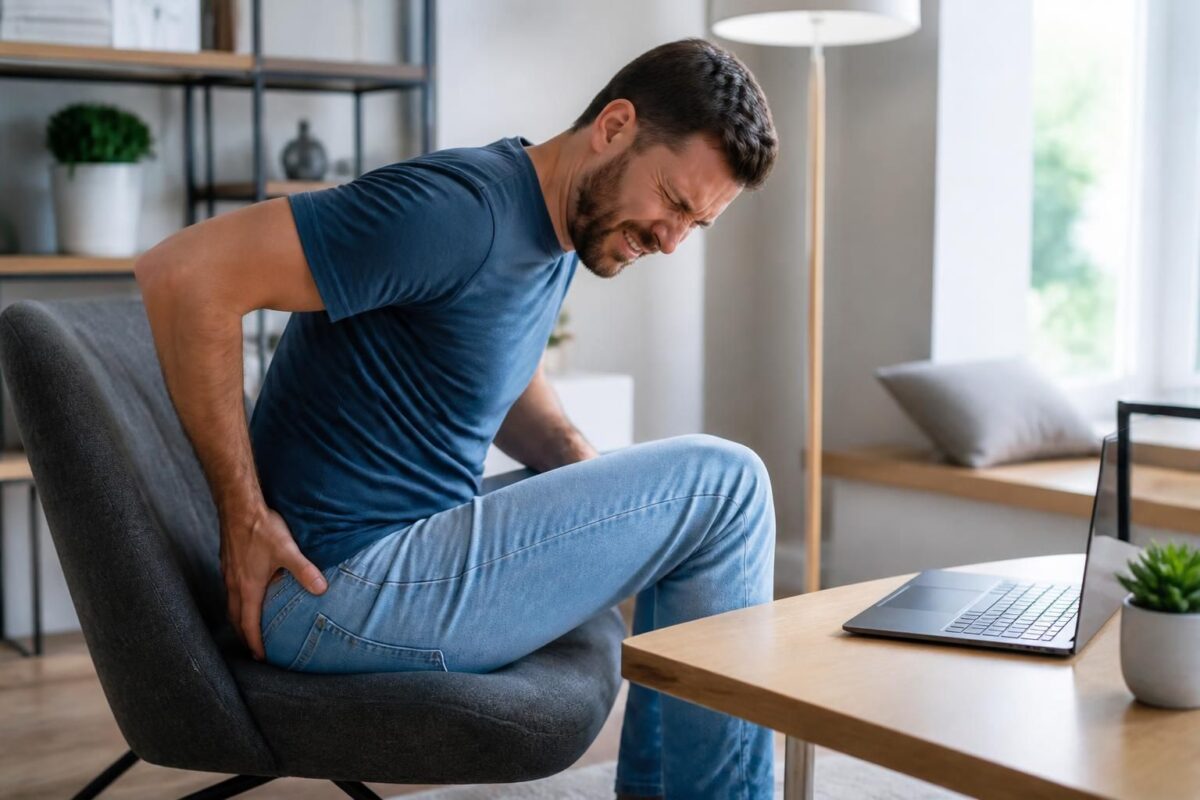
Sciatica and low sitting position: why this can worsen
IN BRIEF In brief, sciatica and low sitting position describe the possible aggravation of pain when the lower back is in prolonged flexion or poorly supported while sitting. This increases pressure on the lumbar discs and nerve tension, with pain…

Sciatica and pain during prolonged meetings
IN BRIEF In brief, sciatica and pain related to prolonged meetings is pain that follows the path of the sciatic nerve and worsens in prolonged sitting positions. What is it? It is pain starting from the lower back and radiating…
Pain management during the meal or movie
Break and movement
Plan to get up and walk for a few minutes every 20 to 30 minutes when possible. A short walk helps relieve pressure on the sciatic nerve and promotes circulation of the tissues around the spine.
Discreet exercises to do in public
Without drawing attention, you can perform a few simple actions to relieve pain. Try a series of moderate holds while sitting, engaging your abdominal muscles and keeping your back supported, then release. If you feel tension in your lower back, do a gentle forward bend from the hips, without forcing. You can also perform gentle torso rotations while sitting, limiting the range and avoiding sharp pain. The goal is to maintain light and continuous activity rather than prolonged rest.
Inflammation and comfort management
For some, a little local relief might be helpful, such as a light warm pack applied to the lower back before moving or, if available, a light application of cold along the leg at the appropriate time. However, avoid heavy remedies or those that are difficult to use discreetly in public. Prioritize simple and natural solutions and listen to your body.
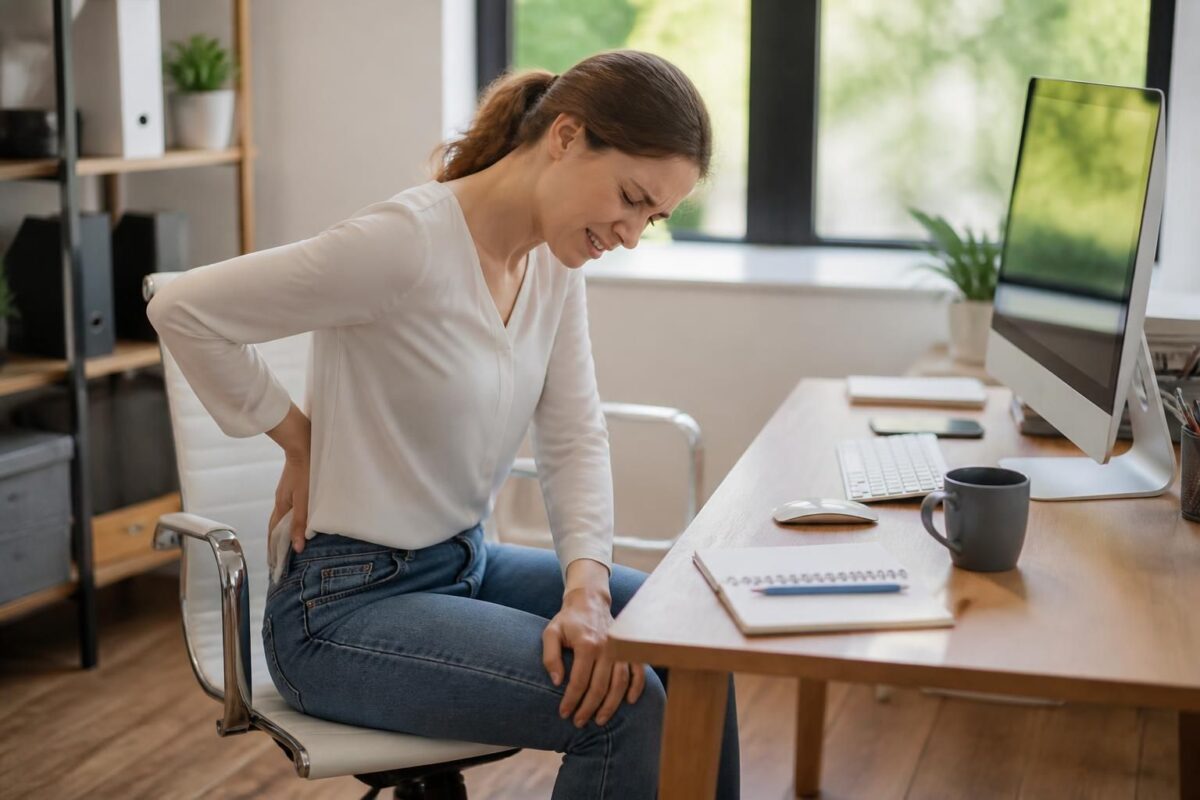
Sciatica and Difficulty Staying Seated for Long Periods
IN BRIEF In brief, sciatica and difficulty sitting for long periods describe pain that radiates from the lower back down the leg and worsens with prolonged sitting. What is it? It is pain related to the irritation or compression of…

Sciatica and toe pain while sitting
IN BRIEF Sciatica and big toe pain in sitting position refer to pain that starts from the lower back and can reach the foot when the sciatic nerve is irritated or compressed. Benefits: simple and quick measures to implement at…
Action plan after the meal or movie
After exiting, continue the basic exercises recommended by your physiotherapist: stretches targeting the lower back, hamstrings, and piriformis, and core strengthening exercises to strengthen the deep trunk muscles. If you have a known herniated disc, adapt movements according to specific advice received and prioritize McKenzie-type exercises if prescribed by your therapist. Activities such as walking, swimming, or cycling on flat terrain remain beneficial to improve mobility without overload.
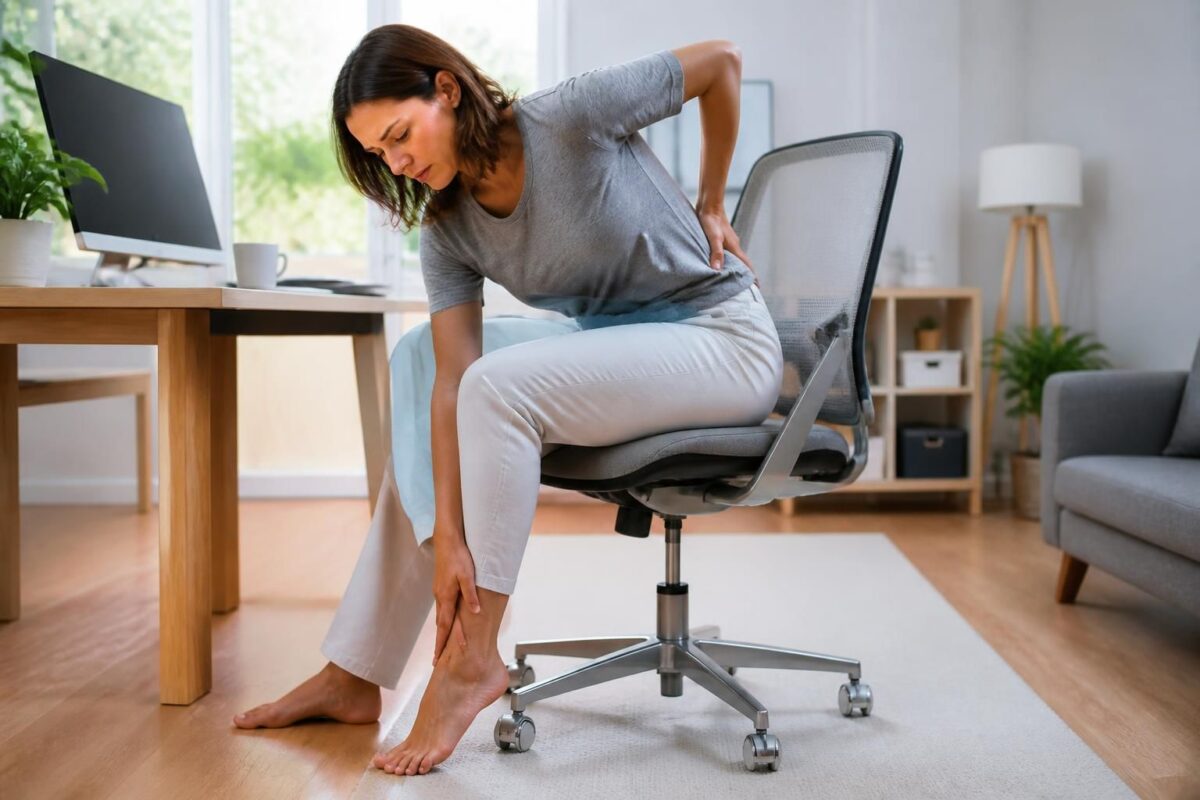
Sciatica and heel pain while sitting
IN BRIEF In brief, the topic sciatica and heel pain in sitting position describes pain that can radiate from the lower back to the heel when remaining seated. It may result from irritation or compression of the sciatic nerve and…

Sciatica and calf pain when sitting
IN BRIEF In brief, sciatica and calf pain while sitting refers to pain radiating along the sciatic nerve down to the calf, often exacerbated by prolonged seated posture. The benefits: quick relief, prevention of recurrences, and improved daily comfort through…
When to consult quickly and warning signs
If the pain worsens, if you notice a loss of strength in one leg, urinary issues, unbearable nighttime pain, or noticeable numbness in the perineal area, contact a doctor or emergency services immediately. Pain that persists beyond 6 weeks despite active measures also merits thorough evaluation. In case of fever, marked fatigue, or unexplained weight loss, seek prompt consultation.
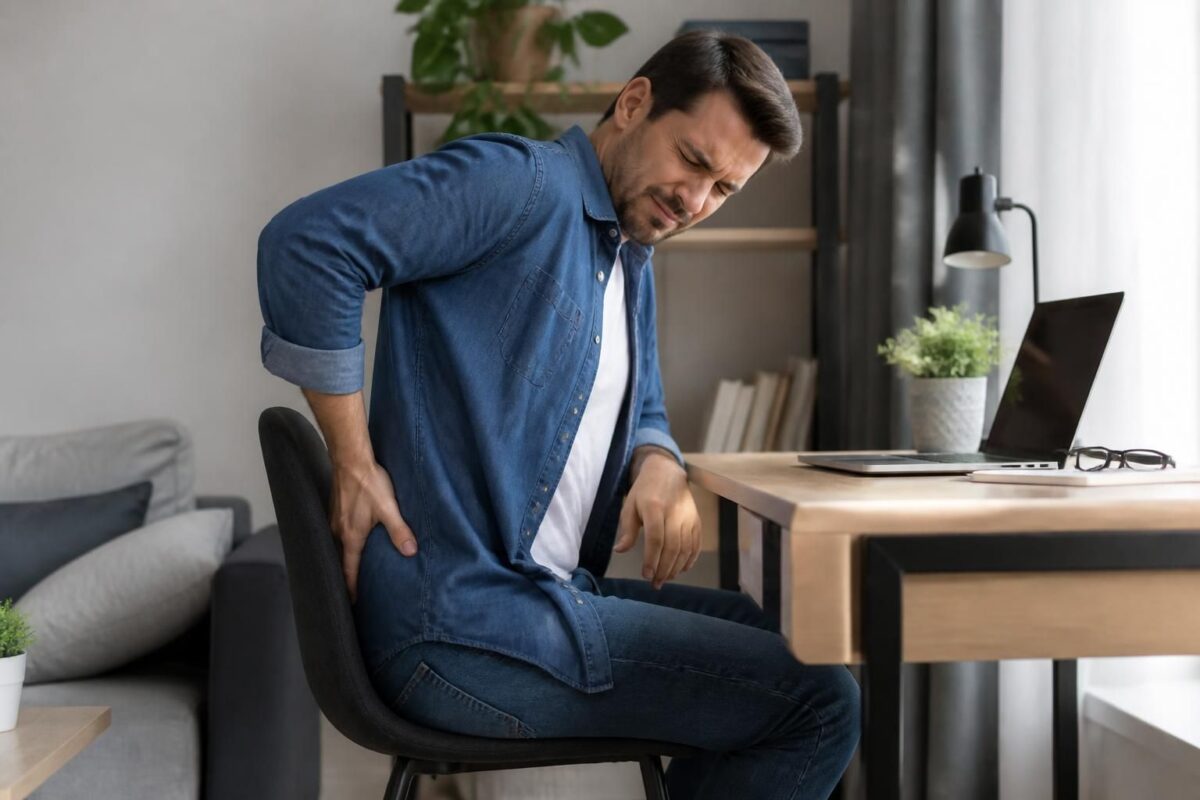
Sciatica and pain in the buttock while sitting
IN BRIEF In brief, Sciatica and pain in the buttock while sitting is a common condition caused by compression of the sciatic nerve, exacerbated by inadequate ergonomics. Its benefits include: pain reduction, improved mobility, and prevention of recurrences through postural…
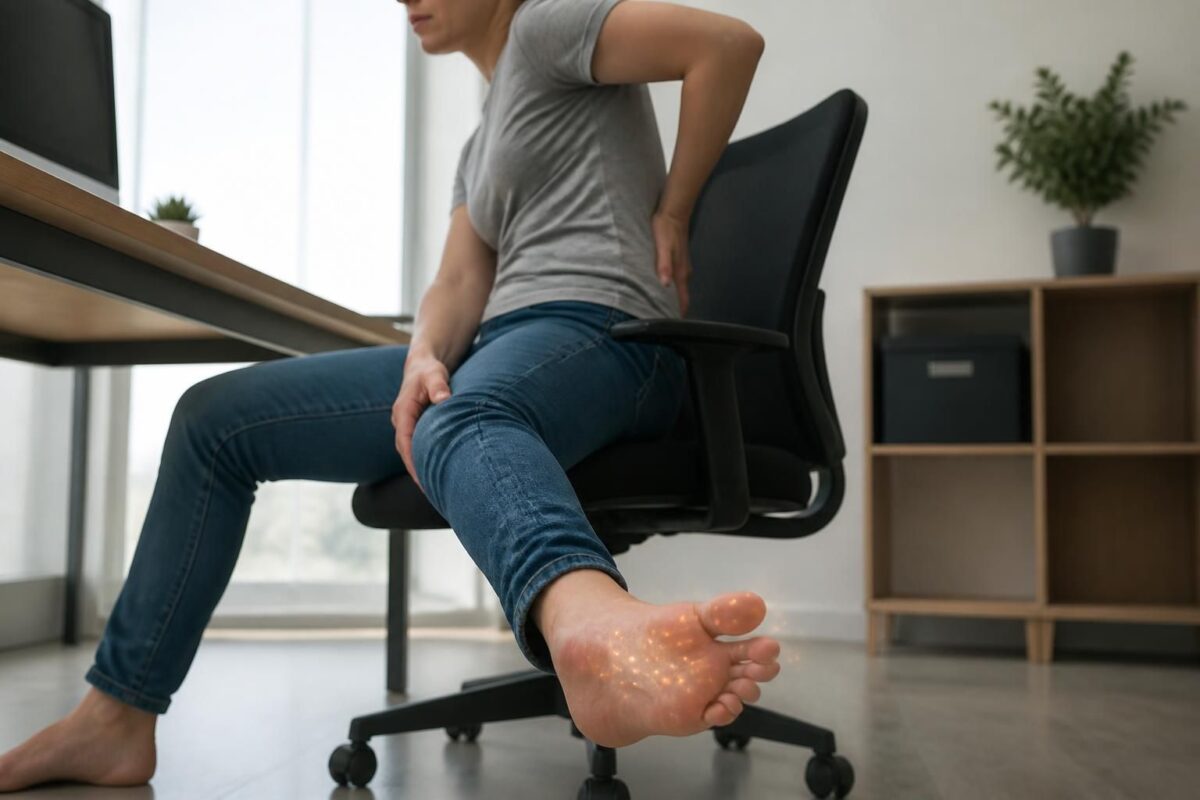
Sciatica and tingling in the toes after sitting
IN SHORT In short, sciatica associated with numbness of the toes after sitting for a prolonged period is pain and tingling due to compression or irritation of the sciatic nerve. What is it? A condition that can affect the toes…
Practical advice to prevent episodes
Outside of outings, maintain regular appropriate physical activity, work on your posture daily, and adopt lifestyle habits that limit inflammation, such as a balanced diet and stress management. If you regularly experience sciatic pain during public outings, consider a personalized exercise program you can follow before, during, and after your activities to stay active while protecting your back.
| Restaurant | Cinema |
|---|---|
| Adopt a straight posture with lumbar support, take breaks every 20–30 min, walk for 2–3 min, opt for light meals, and stay hydrated. | Choose a seat with lumbar support, stand up during advertising breaks, perform simple stretches, and stay hydrated. |
Testimonials: Sciatica and pain at the restaurant or cinema
My name is Julie, and I have a Sciatica that can wake up as soon as I sit too long at a restaurant. The pain starts from the lower back, moves up to the hip, and then spreads down the leg, sometimes with an electric shock sensation. While waiting for the dish or staying in the room, I feel discomfort that forces me to get up, walk a few steps, and discreetly perform simple stretches from the program. After these micro-breaks, the pain decreases, and I can continue my evening without being stuck.
Me, Maxime, a cinema lover, I often experience pain when I sit too long in the chair. Sciatica manifests as pain that starts in the lower back and travels down the leg, sometimes accompanied by tingling. To avoid spoiling my movie experience, I sit with a lumbar support and get up every 20 minutes to take a few steps in the hallway. I have also integrated the exercises from the program into my routine before and after screenings; this helps me maintain mobility and limit pain spikes during the film.
I am Claire, and during a restaurant outing with friends, a Sciatica triggered intense pain after an hour spent sitting. The nerve pathway is strongly felt when I am passive in my chair, but by practicing targeted stretches and using active breaks (standing, light walking, and gentle trunk rotation), I was able to resume my meal without pain taking over the evening. The secret was to apply simple stretches and to move regularly, as recommended by the exercise program.
Me, Thomas, 38 years old, I have found that going to the cinema can be difficult when Sciatica flares up. The pain, following the typical route of the sciatic nerve, becomes bothersome after a prolonged screening. I adopted a proactive approach during the film: ensuring a seat with support, getting up to walk a few steps at halftime, and doing quick stretches during commercials. In parallel, I follow the program of at-home exercises that strengthen the back and deep muscles, which helps me tolerate cinema outings better and fully enjoy relaxation moments without pain taking over.
Sciatica, pain at the restaurant or cinema: an expert’s view reinventing care management
Dr. Sylvain Desforges is a doctor who combines osteopathy, naturopathy, and manual medicine to offer an integrated approach to pain. Founder and president of the TAGMED clinics and the ACMA association, his journey is driven by innovation in health. He has established himself as a specialist in chronic pain and the integration of advanced technologies such as spinal decompression, therapeutic laser, and shockwave therapy. His mission is to provide evidence-based care to optimize the health and well-being of his patients, even when sciatica disrupts outings to restaurants or cinemas.
His philosophy relies on a multimodal and active approach: combining manual therapies, naturopathic advice, and targeted rehabilitation to achieve measurable results. He favors non-pharmacological interventions and emphasizes patient education to tailor treatment to the lifestyle and social context. Whether before a dinner or during a cinema session, he encourages simple and effective strategies to remain mobile and fully enjoy leisure moments.
Regarding sciatica, Dr. Desforges offers personalized management that combines clinical listening and innovative technologies. Rather than limiting himself to passive treatments, he favors options capable of acting on inflammation and tension around the sciatic nerve while preserving daily activities. His range of solutions may include decompression protocols, targeted laser sessions, and shockwave therapies, complemented by specific exercises and a progressive rehabilitation plan. The goal: reduce pain, restore mobility, and enable social outings without persistent discomfort.
Within the TAGMED and ACMA structures, Dr. Desforges works with multidisciplinary teams to translate research results into concrete clinical actions. Each patient benefits from an individualized plan designed to be effective in real life and sustainable in the long term. His commitment is to offer a care approach that places the patient at the center and provides actionable solutions within a busy and social schedule.
In practical terms, this translates to simple advice to implement during an outing: adjust your seated posture, plan active breaks, and perform discreet micro-exercises before meals or during long films, choose ergonomic seats, and plan routes that protect your back. At-home exercise programs accompany the care journey, allowing for strengthening of back muscles and improving overall stability. Dr. Desforges’ approach is based on the idea that pain can be managed without giving up social life, with suitable tools and attentive listening to individual needs.
To learn more about his approach and the available services, prioritize contacting the TAGMED clinic and the ACMA association to discover the resources and personalized programs he offers, focused on sciatica and the sustainable improvement of quality of life.
Quick summary: this article guides you on sciatica and the associated pain, particularly in everyday situations such as dining at a restaurant or watching a movie at the cinema. You will discover practical tips to limit discomfort, adapt your posture, and integrate simple exercises into these leisure moments, while knowing when to seek a professional and where to find reliable resources.
Practical tips during a meal at a restaurant
When suffering from sciatica, prolonged sitting posture can amplify pain. Choose a chair with good lumbar support and keep both feet flat on the floor, knees bent at about 90 degrees. If possible, add a small cushion or lumbar support to maintain the natural curve of your spine. Avoid crossing your legs and prefer active breaks: get up and walk a few minutes after each main course to encourage circulation and reduce tension on the sciatic nerve.
Adopt simple gestures to limit discomfort between dishes: do gentle small stretches at the beginning and during the meal, and prefer moderate portions to avoid excessive abdominal pressure that can influence posture. If the pain intensifies, don’t hesitate to stand up around the table or move closer to an open space to walk a bit and regain a more comfortable position.
To explore the technical aspects of sciatica and its treatments, here are reliable resources to consult: MSD Manuals – Sciatica, MédecinIndirect – Causes, symptoms, and treatments, and Le Médecin – Sciatalgia.
If you experience persistent pain after meals, consider non-drug options like heat on the lower back and light massage, or simple exercises suggested by your physiotherapist. For those looking for suitable training plans, you might consider exercise programs aimed at strengthening the back and peripheral muscles to protect the spine while remaining active during this social activity.
Practical Tips at the Cinema
At the cinema, choose seats that provide lumbar support and sufficient room to move your shoulders and hips. If possible, select seats near the aisles so you can get up without disturbing too many people and take a few steps to relieve tension between acts. Use a small pillow or cushion to support your lower back, and keep your feet flat, possibly on a footrest, to avoid a too-leaning position that can worsen pain.
Between screenings, stand up regularly and take short walks in the lobby. Gentle stretches of the hamstrings and piriformis can be done discreetly if you find a quiet spot, without interrupting the film for long periods. Be sure to stay hydrated and avoid heavy meals just before the show to limit feelings of heaviness and discomfort.
To learn more about the science and treatment options for sciatica, consult recognized resources like Doctissimo – Sciatalgia and UNR Santé – Signs to Watch For.
For those wanting to go further in prevention and management, feel free to explore the following resources: MSD Manuals – Sciatica, Le Médecin – Sciatalgia, and SosSciatique – Pain and Nerve Irritations.
Would you like to go further in the daily management of sciatica and adopt a dedicated exercise program? Discover practical and customizable approaches and consider asking your physiotherapist for exercises suited to your cultural outings.
Useful Resources and Links
To deepen your understanding of sciatica and the available treatments, you can consult the following resources independently or after consulting with your doctor:
Sciatica: causes, symptoms, and treatments,
Sciatica in Terrebonne – interpret a pain that goes down below the knee,
To access useful information on the topic and practical advice, you can also consult reliable and up-to-date external resources, like those listed above, or contact your healthcare professional for a personalized plan suited to your dining or cinema outings.

Dr Sylvain Desforges
Dr Sylvain Desforges, B.Sc., D.O., N.D., osteopath, is the founding president of TAGMED and of the ACMA association. He dedicates his practice to chronic spinal pain, low back pain and symptoms compatible with sciatica, particularly when pain radiates toward the buttock, leg, calf, foot or toes.
Through SOS Sciatique, he publishes educational content on sciatica symptoms, possible causes such as disc herniation, disc narrowing, foraminal stenosis or irritation of a lumbar nerve root, as well as non-surgical approaches that may be considered according to the evaluation. At Clinique TAGMED, care may include, depending on the case, motorized neurovertebral decompression, specific osteopathic care or precision percussion.
For an evaluation related to sciatica treatment in Montreal / Mount Royal or sciatica treatment in Terrebonne, please consult the services available at Clinique TAGMED.
Medical disclaimer
The information published on SOS Sciatique is provided for educational purposes only and does not replace a consultation, diagnosis, opinion or treatment provided by a physician or another authorized healthcare professional. The author of this article is neither a medical doctor nor a specialist in a medical specialty recognized by the Collège des médecins du Québec. The osteopathic, manual medicine or functional support approaches described on this site do not constitute medical acts and are not intended to replace medical follow-up.
Consult a physician or emergency service in cases of loss of bladder or bowel control, anesthesia in the saddle area, significant or progressive weakness in the leg or foot, fever, recent trauma, severe pain or rapid worsening of symptoms. For more details, please read our Legal Notice.