Sciatica and Pain at the Restaurant or Cinema
14/07/2026
Sciatica treatment in Terrebonne: things to avoid promising
15/07/2026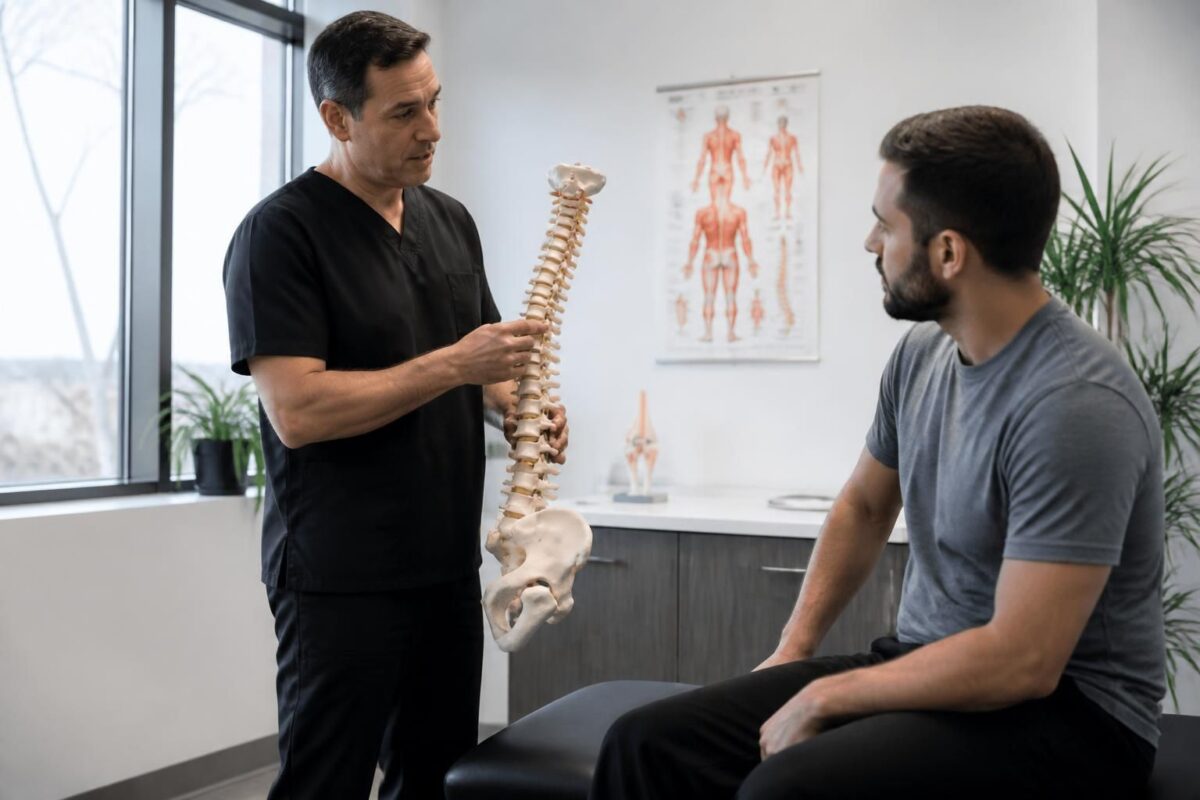
IN BRIEF in French
In brief, the treatment of Sciatica in Montreal is a non-surgical and personalized approach aimed at reducing irritation of the sciatic nerve and restoring mobility. Definition: it involves a clinical assessment focused on origin that identifies possible causes (herniated disc, foraminal stenosis, muscular irritations) and a tailored management plan. Benefits: long-term pain reduction, improved flexibility, prevention of relapses, and enhanced safety. How it works: progressive diagnosis and non-invasive interventions such as motorized neurovertebral decompression, specific osteopathy, and precision percussion, with progression adapted to the patient’s tolerance. In Montreal, this service is particularly recommended for pain radiating along the sciatic pathway and to avoid invasive measures. Important: avoid overly optimistic promises or poorly tailored treatments; a precise assessment guides the choices, and results are built over time, without unnecessary pain. |
In Montreal, the treatment of sciatica is based on a targeted clinical assessment and non-surgical options tailored case by case. To avoid unrealistic expectations, here are things not to promise:
- A quick recovery or a complete disappearance of symptoms within a few days.
- A universal protocol for all patients; each case requires a personalized approach.
- That surgery will automatically be avoided after the first appointment; the goal is a precise assessment and a safe progression.
- That non-invasive therapies will work for everyone; effectiveness varies depending on the cause (hernia, stenosis, nerve irritations, etc.).
- Promises of improvement without assessing warnings signs (loss of bladder control, progressive weakness, fever, recent trauma, rapidly worsening pain).
- Generic exercise programs without a clear diagnosis and without personalized guidance.
The approach favors a precise assessment, a gradual progression, and an adjustment of treatment according to tolerance and the patient’s evolution.
Quick summary: This article, written by a health professional expert in lower back pain and sciatica in Montreal, reminds of the limits of overly generous promises and proposes an approach based on clinical evaluation, reliable non-surgical options, and progressive management through TAGMED clinics and their associated resources. The goal is to avoid universal solutions and prioritize choices tailored to each patient, remaining transparent about what can realistically be achieved without surgery.
Avoid miracle promises and universal guarantees
Many messages promise a rapid disappearance of pain or a universal cure. However, sciatica involves varied mechanisms and multiple possible causes. A promise cannot be valid without a precise assessment of the source (disc, foraminal, joint, or muscle). For resources and clear explanations, see the information available on pain in the buttock and signs of sciatica and the specialized discussions on the SOS Sciatica website.
In Montreal, caution is advised. Overly dynamic or unfounded promises can lead to poorly tailored treatments. To better understand the realities and options, consult the resources on myths and realities of sciatica treatment in Quebec and the advice from Clinique TAGMED.
Clinical assessment as the foundation for safe treatment
The first step involves a thorough clinical assessment to identify the probable source of the pain and its exact path. This step determines whether a non-surgical approach can be effective and safe. In Montreal, the evaluation aims to moderate nerve irritation and guide towards suitable treatments without systematically resorting to surgery. To learn more about the local offer, refer to Clinique TAGMED.
Warning signs require prompt management. Loss of bowel or bladder control, saddle anesthesia, significant or progressive weakness, fever, or recent trauma necessitate urgent medical evaluation. To better understand these signals, you can consult dedicated resources on SOS Sciatica and practical guides on their site.
Relevant and safe non-surgical options
A non-surgical and individualized approach is favored when the source is clear and compatible with conservative management. Options to consider in a treatment journey in Montreal or Terrebonne include motorized neurovertebral decompression, specific osteopathy, and the use of precision percussion, following a rigorous assessment. These methods aim to reduce nerve irritation, restore mobility, and limit risky procedures, without resorting to surgical acts.
To understand where to find these services and how they are structured, see the following resources: neurovertebral decompression, herniated disc and related approaches, and the page dedicated to non-surgical practice on Clinique TAGMED. In this context, therapists favor targeted and progressive approaches, adapted to the patient’s tolerance. Note that therapies such as laser or shockwaves are not used for lower back pain in this context.
For patients concerned with specific manifestations, focused resources exist, such as sciatica and calf cramp or numbness of the toes. Other useful resources address symptoms related to the foot and tendon, available via SOS Sciatique and their dedicated pages.
For information on assessment and non-surgical action pathways available in Montreal, you can explore the specific pages of the TAGMED network and the associated resources. For example, a cautious and structured approach is described in the TAGMED resources and partner sites mentioned below.
What to avoid promising in the context of decompression and other causes
In articles discussing neurovertebral decompression, herniated disc, protrusion, bulging disc, foraminal stenosis, spinal stenosis, disc pinching, or disc degeneration, it is important to avoid recommending exercises or stretches that do not take into account the exact origin of the pain. An accurate assessment guides the choices and prioritizes non-invasive interventions tailored to the patient’s tolerance, without imposing general actions that could worsen the situation.
When and how to avoid poorly suited treatments
Avoid universal protocols that promise quick recovery without a precise diagnosis. Sciatica can arise from various lumbar causes, and the therapeutic plan should be built around a focus on the likely origin identified during the assessment. For resources and guides, consult the SOS Sciatique pages and the fact sheets dedicated to radiating pain and the mechanisms behind sciatica, available at Sciatica in Terrebonne and the associated resources.
Comparative table of non-surgical options and physiotherapy
| Therapy | Relative effectiveness | Notes | Location |
|---|---|---|---|
| Motorized neurovertebral decompression | High for certain etiologies; depends on the assessment | Targeted and non-surgical approach; requires monitoring | Montreal / Terrebonne (TAGMED) |
| Specific Osteopathy | Varies according to the cause and tolerance | Non-invasive intervention focused on mobility and biomechanical tension | Montreal / Terrebonne (TAGMED) |
| Precision striker | Localized results based on diagnosis | Targeted treatment after assessment | Montreal / Terrebonne (TAGMED) |
| Physiotherapy / kinesiology | Variable effectiveness and sometimes lower for certain causes | Compared to other options, may be less suitable depending on the etiology | Varies by practice (general reference) |
Resources and useful links
To delve deeper, here are resources directly related to non-surgical practice and assessment in Montreal and the surrounding areas:
- Sciatica – SOS Sciatique
- Pain in the buttock without back pain, could it be sciatica
- Numbness of the toes – what to monitor
- Pain on the top of the foot, possible L5 root involvement
- Why not everything suits everyone – Terrebonne
- Myths and realities of treatment in Quebec
- Sciatica – TAGMED Clinic
- Neurovertebral decompression
For individuals presenting specific symptoms, targeted resources exist on SOS Sciatique and the pages dedicated to radiating pain and buttock pain without back pain.
Warning: for specific medical questions and appropriate care, consult your physician and qualified professionals at TAGMED.
Medical disclaimer: The information and advice provided on this site do not replace the advice, diagnosis, or treatment of a healthcare professional. Please note that Dr. Sylvain Desforges, osteopath, is neither a medical doctor nor a physician, and is not specialized in any medical specialty as defined by the Collège des médecins du Québec. Manual medicine, functional medicine, and sports medicine as described on this site exclude any medical treatment or diagnosis made by a physician or specialist doctor. Always consult your physician for any medical questions. For more details, please read our complete Legal Disclaimer.
- Instant healing without examination or precise diagnosis.
- Durable remission guaranteed regardless of the cause.
- Quick recovery without a personalized program.
- Universal treatment for all forms of sciatica.
- Immediate elimination of symptoms without evaluating warning signs.
- Laser and shockwave therapy presented as a miracle solution for all profiles.
- Surgery avoided without adapted non-surgical exploration when necessary.
- Invasive interventions without neurological and functional evaluation.
- Generic exercise programs without precise diagnosis.
- Guaranteed quick recovery without a relapse prevention plan.

This guide provides clear recommendations on treating sciatica in Montreal, emphasizing what should not be promised. It highlights the importance of a precise clinical assessment, non-surgical approaches, and a framework for honest communication that specifies the limitations of treatments and realistic timelines.
Avoid promises of quick recovery
Sciatica is a multifactorial issue, and the duration of symptoms varies based on the cause (herniated disc, foraminal narrowing, nerve irritation). No promise of immediate disappearance can be made for all patients. The realistic goal is a reduction in nerve irritation and a gradual improvement in mobility and function.
Promising recovery in a few days is generally misleading and can lead to disappointment or inappropriate choices. In Montreal, as elsewhere, cautious management favors a measured progression and follow-up that adjusts actions and exercises according to tolerance and clinical evolution.
Promise of instant recovery
Avoid any formulation that suggests that pain will disappear immediately or that life will return “as before” after the first consultation.
Promise of universal results
Avoid claims stating that one plan fits all cases. Each situation is unique: etiology, location, tolerance, and professional and personal context influence outcomes.
Avoid promises without prior assessment
Promising results without a thorough assessment can endanger the patient and lead to poorly suited treatments. A structured clinical evaluation, including neurological examination and, when necessary, additional tests, is essential to guide non-surgical care.
Without a clear diagnosis, it is impossible to guarantee the effectiveness of a protocol or device. In Montreal, serious professionals favor an assessment approach to determine if a conservative approach may be sufficient or if a specialized referral is necessary.
Promise without a clear diagnosis
Avoid promises based on assumptions or isolated symptoms without clinical confirmation.
Unfounded promises and unproven treatments
Some non-validated options or devices may seem appealing but are not based on solid evidence. Suggestions that “miracle” solutions exist should be approached with caution.
In Montreal, prioritizing non-surgical options based on a personalized assessment allows for the reduction of nerve irritation and improvement of mobility without claiming unrealistic gains. The use of unlisted or unproven technologies should not be presented as the default solution.
Commitment to realistic and safe communication
A responsible professional clearly describes the objectives, limitations, and realistic timelines, and proposes a gradual and personalized plan, with regular follow-up and adjustments based on clinical evolution and patient tolerance. In Montreal, this approach aims to protect the patient from excessive promises and to promote informed and safe decisions.
| Axis | Concise text not to promise |
|---|---|
| Instant healing | Avoid promising immediate healing; favor evaluation and appropriate progression. |
| Universal solution | Management is not the same for everyone; adopt a personalized and gradual approach. |
| Promises without diagnosis | Avoid universal protocols without a clear diagnosis; base on the probable cause and pain pathway. |
| Invasive shortcuts | Avoid invasive actions without necessity or clinical demonstration. |
| Injections as the only solution | Injections can help but do not replace rehabilitation and assessment. |
| Rushed surgery | Avoid surgical intervention without precise evaluation and without exploring non-surgical options. |
| Untargeted technologies | Laser and shockwave therapy are not systematic; favor adapted conservative approaches. |
| Non-personalized plan | Avoid generic programs; favor a protocol tailored to the profile and tolerance. |
| Lack of follow-up | Monitor and supervised progression are crucial to prevent relapses. |
Testimonials: what to avoid promising in the treatment of sciatica in Montreal
In the context of treating sciatica in Montreal, some messages promise mountains and wonders. Here are testimonials illustrating what should be avoided in promises and what should be prioritized for safe and effective care.
Marie, 42, Montreal: I was promised a quick recovery and an immediate return to my activities. However, after several weeks, I realized that the pain decreases gradually and that the real benefit comes from a personalized plan and progressive work. The team did not promise a miracle, but a non-surgical and safe approach that respects my pace.
Jean, 54, Montreal: I was led to believe that the pain would disappear in the blink of an eye if I proceeded with a quick intervention. As a result: this expectation generated disappointment. The doctor instead offered me a precise clinical assessment, followed by a graduated program and without surgery. I left with better mobility and a better understanding of the causes, without the promise of instant healing.
Sophie, 39 years old, Montreal: I was promised universal results and a “miracle solution” for sciatica. However, the actual path involves a targeted assessment and non-surgical solutions tailored to me, such as decompression or specific osteopathy, all with realistic goals and ongoing support. I am reassured to have been guided towards actions that respect my body, not unrealistic promises.
Karim, 63 years old, Montreal: A promise of rapid resolution or avoiding surgery at all costs was presented to me, but the team favored a cautious approach, based on an evaluation of the origin and non-surgical options when appropriate. Today, I have a better understanding of my pain and a progressive plan that preserves my safety and quality of life.
Dr. Sylvain Desforges, an expert in osteopathy, naturopathy, and manual medicine, is the founding president of the TAGMED clinics and the ACMA association. With a career dedicated to innovation in healthcare, he specializes in managing chronic pain and integrating advanced technologies such as neurovertebral decompression, laser, and shockwave therapy. His mission is to offer evidence-based care to optimize the health and well-being of his patients, prioritizing a personalized and non-invasive approach whenever possible.
In Montreal, the approach to treating sciatica is based on a rigorous clinical assessment and clear guidance towards non-surgical options. Dr. Desforges emphasizes the importance of avoiding promises of rapid or universal cures that do not take into account the painful journey or the specifics of each patient. The evaluation aims to precisely delineate the source of the pain—whether it stems from a herniated disc, disc pinch, foraminal stenosis, other lumbar strains, or a combination of factors—in order to propose safe and appropriate interventions.
The diagnosis relies on meticulous information gathering, a neurological examination, and if necessary, imaging analysis to confirm the origin and guide the treatment plan. In this context, Dr. Desforges favors a discerning approach between disc-related, foraminal, or muscular causes, rather than a standardized protocol that could be inappropriate. This orientation allows for prioritizing non-invasive and gradual solutions while remaining ready to direct to complementary options when the benefits are clear and measurable.
Among the non-surgical options used in practice, targeted interventions include motorized neurovertebral decompression, specific osteopathy, and the precision impactor, chosen based on the patient’s tolerance and the probable cause. These techniques aim to decrease nerve irritation and restore mobility, without resorting systematically to surgery. They ideally integrate into a rehabilitation program and tailored postural advice for each profile.
It is important to understand that results vary according to profiles and origins. Dr. Desforges reminds that realistic goals consist of reducing pain, improving function, and preventing relapses, rather than “eradicating all symptoms” overnight. Therapeutic decisions are made in collaboration with the patient, after clear information on the potential benefits and limitations of different options, with gradual follow-up adapted to clinical evolution.
In Montreal and the surrounding areas, TAGMED’s approach aims to avoid poorly adapted treatments and prioritize a measured progression. The ultimate goal is to relieve the pain radiating into the leg, restore mobility, and reduce the risk of relapse while respecting each individual’s pace and tolerance. This philosophy, focused on safety and proven effectiveness, guides each consultation and the choice of interventions to support a sustainable recovery without surgery when possible. The proposed framework is designed for patients seeking thoughtful and reliable management of sciatica treatment in Montreal.
This text presents the key elements of sciatica treatment in Montreal, emphasizing a precise assessment and non-surgical options tailored to each patient, while reminding of the limits of promises and the importance of avoiding poorly adapted treatments.
Key Points and Warnings Regarding Promises on Sciatica Treatment in Montreal
It is important to avoid promising a rapid cure or universal results. Sciatica can have various origins (disc, foraminal, muscular, or joint) and each patient reacts differently to non-invasive treatments; the effects vary according to the cause and tolerance. For further guidance, consult general resources such as Passeport Santé and explanations on the origins and treatments.
A personalized clinical assessment is essential to determine the exact pathway of the pain and the associated neurological signs. This approach allows guidance towards suitable non-surgical options such as motorized neurovertebral decompression, specific osteopathy, or using the precision impactor when relevant and tolerated by the patient.
Non-surgical solutions can be effective but are not suitable for all profiles. Their effectiveness varies according to the precise cause (disc, foraminal, joint, or muscle) and the patient’s tolerance. In Montreal, the emphasis is on directing to safe and targeted interventions after a rigorous assessment. To learn more about the local cautious approach, consult dedicated resources in Montreal on the cautious approach in Montreal.
Warning signs require an urgent medical evaluation, especially when urinary or bowel control loss, saddle anesthesia, significant progressive weakness, fever, or rapidly worsening pain occur. To better understand these signals and their implications, refer to specific resources such as foot weakness and possible neurological cause and tingling in the toes after sitting.
For localized and tailored care, explore the options offered by TAGMED and its partners, who prioritize a structured non-surgical approach after assessment. You can discover the services and solutions provided at La Sciatique Solution and the site of Clinique TAGMED.
More broadly, understanding why the same treatment does not suit everyone and why the initial assessment is decisive can help avoid hasty choices. Independent and specialized resources can shed light on this process, particularly those that explain the mechanisms behind sciatica and the use of non-surgical approaches in Montreal at why the same treatment does not suit everyone.
For a practical and hands-on view of sciatica in Montreal, use neutral resources and testimonials that emphasize targeted assessment and appropriate progression, rather than universal protocols. Additional information on non-surgical options and specialized assessment in Montreal can be accessed via the dedicated pages for TAGMED and related resources at the cautious approach in Montreal and pain in the buttock and leg.

Sciatica in Montreal: nighttime pain in the leg
IN BRIEF In brief, nocturnal sciatica is a root pain in the lower back that irritates the sciatic nerve and worsens when lying down, causing nighttime awakenings. In Montreal, this service offers a non-surgical approach focused on posture, bedding, and…

Sciatica in Montreal: pain from the lower back to the calf
IN BRIEF In brief, sciatica is a pain that starts in the lower back and can radiate down to the calf, caused by irritation or compression of the sciatic nerve. In Montreal, this service offers a personalized evaluation and non-surgical…

Sciatica in Montreal: hip pain or true nerve radiation?
IN BRIEF Sciatica is a nerve pain that follows the path of the sciatic nerve and can radiate from the buttock to the foot, which can be perceived as pain in the hip. Lower back pain, on the other hand,…

Sciatica pain in Montreal: incomplete journey, should we be concerned?
IN BRIEF In brief, sciatic pain is a lumbar nerve-origin pain whose pathway may be incomplete and may not reach the foot. In Montreal, the evaluation clarifies the pathway, strength, and function, and determines if imaging can change the approach.…
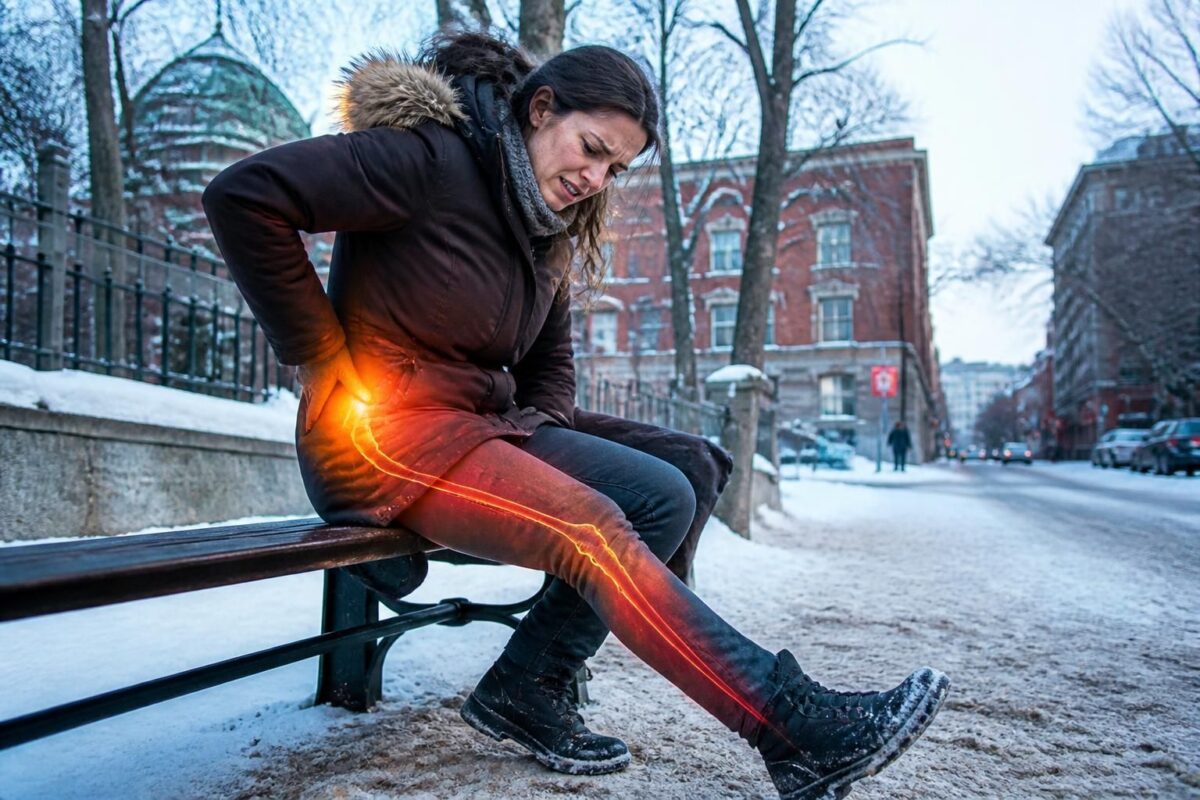
Sciatica in Montreal: pain towards the little toe and S1 root
IN BRIEF Sciatica is pain radiating along the path of the sciatic nerve, typically from the lower back to the leg and down to the little toe when the S1 root is irritated or compressed. In Montreal, this phenomenon is…

Sciatica in Montreal: pain towards the top of the foot and L5 root
IN BRIEF Sciatica in Montreal with pain in the top of the foot and a possible involvement of the L5 root is a lumbar radiculopathy where the pain follows the path of the sciatic nerve to the dorsum of the…

Sciatica in Montreal: pain radiating to the outer edge of the foot
IN BRIEF In brief, sciatica is pain that follows the path of the sciatic nerve, starting from the lower back and extending down to the foot, often radiating to the outer edge of the foot. In Montreal, this condition is…

Sciatica in Montreal: pain in the buttock after a long sitting position
IN BRIEF In brief, sciatalgia is pain that follows the path of the sciatic nerve, often triggered after a prolonged sitting position and lumbar irritation. In Montreal, this issue is mainly managed without surgery thanks to a careful diagnosis and…

Dr Sylvain Desforges, B.Sc., D.O., N.D., osteopath, is the founding president of TAGMED and of the ACMA association. He dedicates his practice to chronic spinal pain, low back pain and symptoms compatible with sciatica, particularly when pain radiates toward the buttock, leg, calf, foot or toes.
Through SOS Sciatique, he publishes educational content on sciatica symptoms, possible causes such as disc herniation, disc narrowing, foraminal stenosis or irritation of a lumbar nerve root, as well as non-surgical approaches that may be considered according to the evaluation. At Clinique TAGMED, care may include, depending on the case, motorized neurovertebral decompression, specific osteopathic care or precision percussion.
For an evaluation related to sciatica treatment in Montreal / Mount Royal or sciatica treatment in Terrebonne, please consult the services available at Clinique TAGMED.
Medical disclaimer
The information published on SOS Sciatique is provided for educational purposes only and does not replace a consultation, diagnosis, opinion or treatment provided by a physician or another authorized healthcare professional. The author of this article is neither a medical doctor nor a specialist in a medical specialty recognized by the Collège des médecins du Québec. The osteopathic, manual medicine or functional support approaches described on this site do not constitute medical acts and are not intended to replace medical follow-up.
Consult a physician or emergency service in cases of loss of bladder or bowel control, anesthesia in the saddle area, significant or progressive weakness in the leg or foot, fever, recent trauma, severe pain or rapid worsening of symptoms. For more details, please read our Legal Notice.