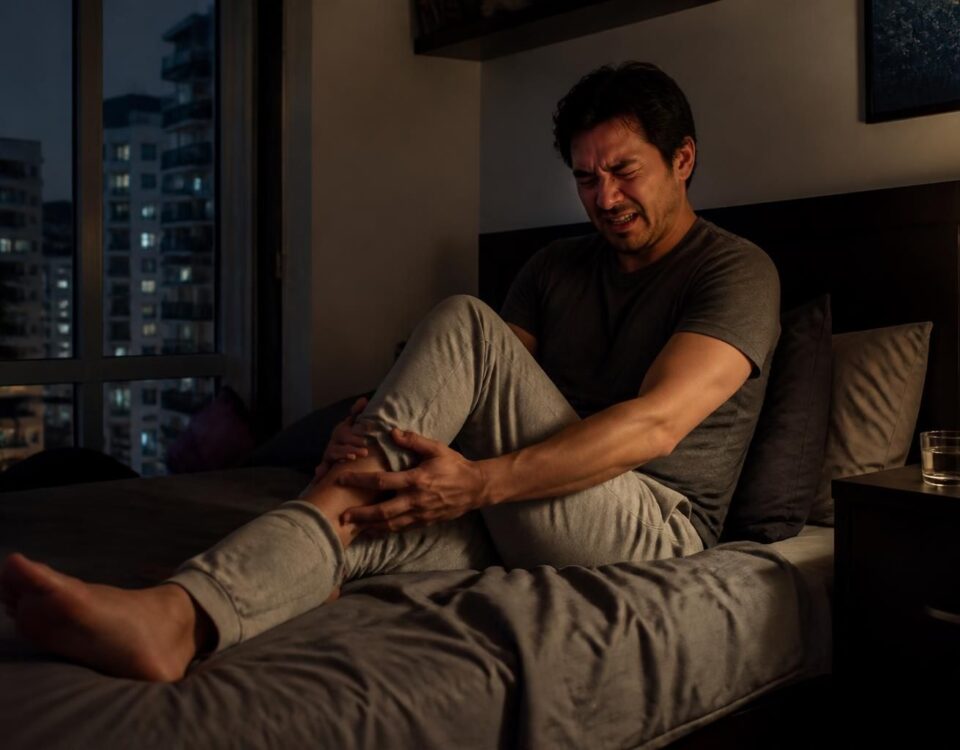
Sciatica and Pain That Radiates Down the Leg While Seated
05/07/2026
Pain in the buttock and leg: consultation for sciatica in Terrebonne
06/07/2026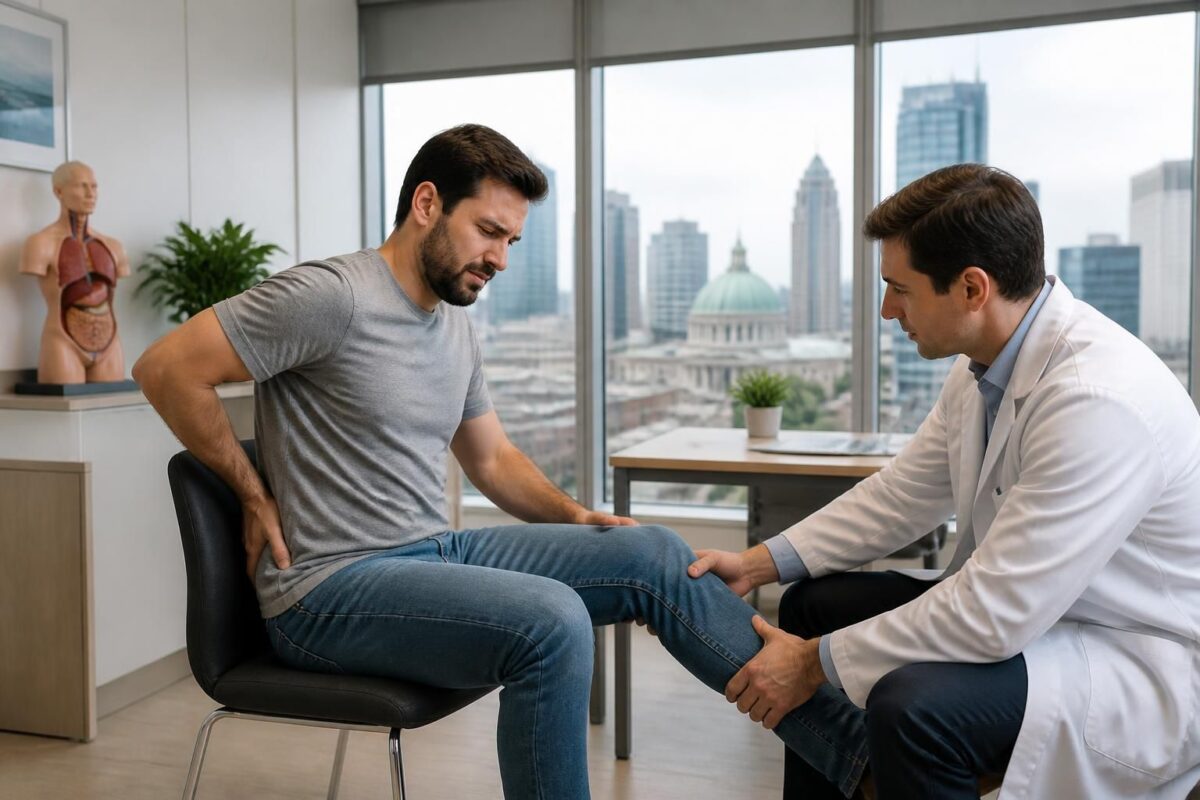
IN BRIEF In short, pain in the buttock and leg, typical of a sciatica, is pain that follows the path of the sciatic nerve and may be accompanied by burning, numbness, or tingling sensations. In Montreal, this service aims for a structured assessment and a suitable non-surgical solution, with a clear diagnosis and a personalized plan to reduce pain and improve mobility. How it works: during a consultation, the team identifies the probable cause (herniated disc, stenosis, piriformis, etc.), then proposes a program of non-invasive and progressive care (exercises, manual therapy, decompression if necessary), while ensuring follow-up and monitoring warning signs that require medical referral. |
Do you suffer from pain in the buttock and leg and are looking for a sciatica consultation in Montreal? At TAGMED Clinic, a comprehensive assessment is offered to link the painful path, symptoms, and signs to monitor, in order to target an appropriate and non-surgical approach.
The examination helps identify possible causes such as a herniated disc, a protrusion, foraminal or spinal stenosis, the piriformis syndrome, lumbar osteoarthritis, or a back injury, and directs towards solutions such as a motorized neurovertebral decompression, a specific osteopathy, or a mild instrumental intervention, depending on the assessment.
The plan is personalized, progressive, and focused on pain relief and improving mobility, with clear objectives and monitoring of warning signs. In cases of rapidly worsening pain or concerning symptoms, prompt medical management is recommended.
This article, written by an expert healthcare professional, explains how localized pain in the buttock and leg may evoke sciatica, what a consultation in Montreal entails, and what non-surgical options are available at TAGMED Clinic. You will find key factors to understand the painful path, the role of assessment, and care approaches tailored to your situation.
Pain and Typical Path of the Sciatic Nerve
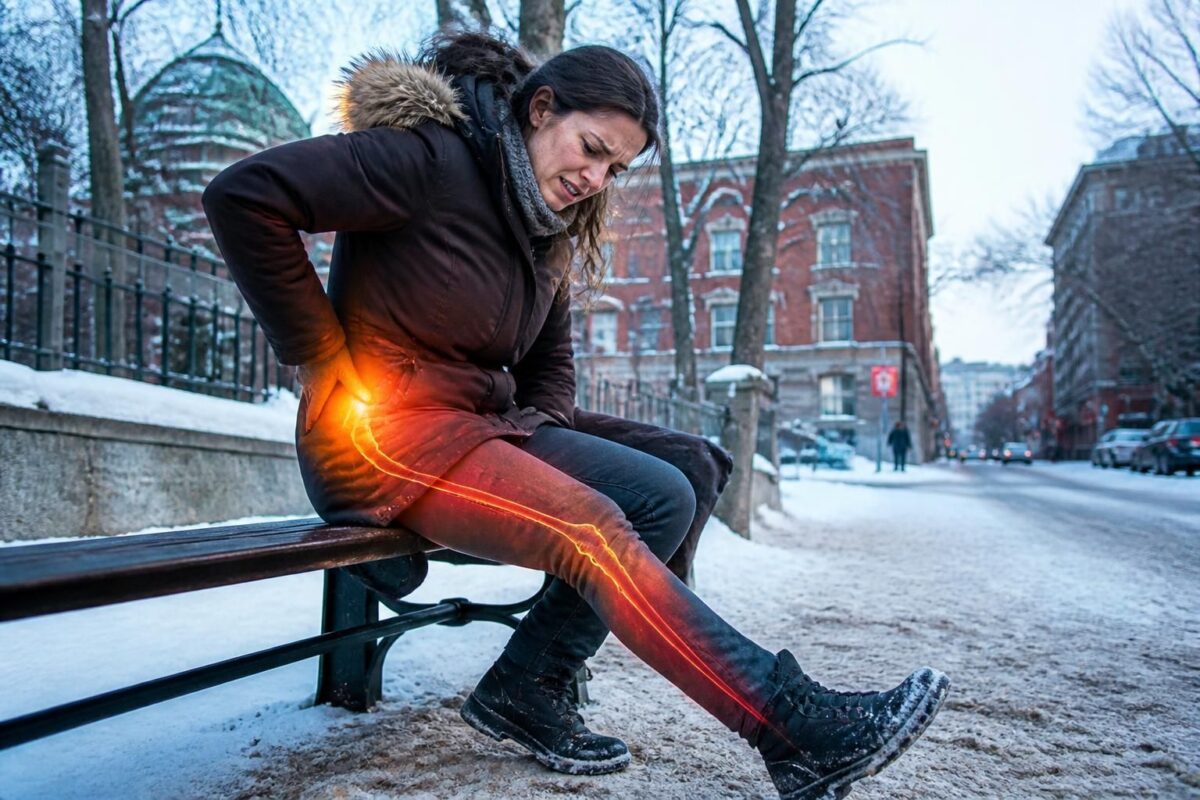
The sciatic nerve is the largest in the body. It originates in the lower back, travels through the buttock region, and descends along each leg to the foot. This description explains why pain may radiate from the lower back to the buttock, then downward through the thigh, calf, and foot. Classic signs include sharp or burning pain, sometimes described as an electric shock, accompanied by numbness, tingling, and sometimes weakness in the affected leg.
Common Causes and Risk Factors
The most common causes of sciatica include a herniated disc, foraminal or spinal stenosis, piriformis syndrome, lumbar osteoarthritis, or a back injury. Certain factors increase risks: obesity, sedentary lifestyle, and professions requiring sustained physical effort. The assessment should clarify the exact cause to guide the most appropriate treatment.
How a Consultation in Montreal Works
The consultation aims to understand the pain path, neurological signs, and medical history. The practitioner performs a thorough clinical examination and assesses the patient’s tolerance to different positions and movements. Imaging may be considered based on the examination results and symptoms to identify any potential nerve compression. The goal is not to quickly conclude on a single cause but to create a clear profile to determine if a non-surgical approach is relevant.
Therapeutic Approaches at TAGMED Clinic
At TAGMED Clinic, care may include tailored non-surgical options for each case, such as motorized neurovertebral decompression, specific osteopathy, or a guided instrument-assisted intervention when justified by the evaluation. In some cases, complementary treatments may be considered to relieve pain and improve function while remaining aligned with the patient’s tolerance and observed outcomes.
When to Consult Quickly and Warning Signs
Consult promptly if the pain progresses, if numbness becomes constant, or if progressive weakness appears. Signs such as loss of urinary or bowel control, saddle anesthesia, or rapidly worsening pain require immediate medical attention. Pain that significantly disrupts sleep or daily activities also warrants a rapid evaluation.
Key Elements of Evaluation and Care Plan
The evaluation process links the pain path to neurological disorders and possible care options. The aim is to understand the pain profile and indicate precautions, the pace of care, and reasonable limits, without relying on a single approach. The plan may combine non-surgical options and, when necessary, refer for medical assessment for appropriate management.
Resources and Further Reading
To learn more, you can consult the following resources:
- Symptoms and pathways of sciatica
- Pinched sciatic nerve
- Useful pathway and significance of the route to the knee
- Personalized assessment in Terrebonne
- Sciatica and TAGMED consultation
- Treated in Terrebonne, pain descending into the leg
- Sciatica and electric discharge
- Herniation, stenosis, or nerve irritation
- Sciatica explained
- SOS Sciatica – general information
For more information, you can also visit TAGMED’s websites and associated resources.
Medical disclaimer: The information and advice provided on this site do not replace the opinion, diagnosis, or treatment of a healthcare professional. Please note that Dr. Sylvain Desforges, osteopath, is neither a medical doctor nor a physician, and is not a specialist in a medical specialty as defined by the Collège des médecins du Québec. Manual medicine, functional medicine, and sports medicine as described on this site exclude any medical treatment or diagnosis made by a doctor or specialist. Always consult your physician for any medical questions. For more details, please read our full Legal Notice.
- Sciatic-type pain that radiates from the buttock down the leg
- Painful pathway lower back → buttock → thigh/leg
- Urgency to monitor loss of bowel/bladder control, progressive weakness
- History and imaging available (MRI/CT)
- Items to bring medical file and treatments tried
- Consultation objective confirm diagnosis and guide towards non-surgical options
- Consultation location: Montreal
- Comprehensive evaluation of the pathway and neurological signs
- Differential diagnosis disc herniation, protrusion, stenosis, piriformis syndrome
- Non-surgical options based on evaluation (decompression, osteopathy, precision impactor)
- Personalized plan rehabilitation and tailored strengthening
- Follow-up and pace of care with clear objectives

This article guides you on pain in the buttock and leg related to sciatica, and shows you why consulting in Montreal for a structured evaluation and tailored non-surgical care is important. You will find out how to recognize signs requiring prompt consultation, how the evaluation at TAGMED Clinic proceeds, which treatment options to prioritize, and what daily actions to adopt to promote recovery.
Identifying warning signals and when to consult
A pain radiating down the buttock and leg, associated with burning sensations, electric shocks, or tingling and numbness, may reflect irritation or compression of a lumbar nerve root. This pain can affect the back of the thigh, calf, and even the foot, and it may be accompanied by muscle weakness in the affected leg.
It is crucial to consult promptly if you observe warning signs such as progressive weakness, loss of bowel or bladder control, saddle anesthesia, rapidly worsening pain, or symptoms that significantly disrupt sleep and daily activities.

Sciatica in Montreal: nighttime pain in the leg
IN BRIEF In brief, nocturnal sciatica is a root pain in the lower back that irritates the sciatic nerve and worsens when lying down, causing nighttime awakenings. In Montreal, this service offers a non-surgical approach focused on posture, bedding, and…

Sciatica in Montreal: pain from the lower back to the calf
IN BRIEF In brief, sciatica is a pain that starts in the lower back and can radiate down to the calf, caused by irritation or compression of the sciatic nerve. In Montreal, this service offers a personalized evaluation and non-surgical…
How the evaluation is conducted in Montreal
At the TAGMED Clinic in Montreal, the evaluation aims to understand the pathway of pain, the neurological signs, and possible care options. The team examines the evolution, the movement of pain, and the tolerance of movements, to distinguish sciatica related to a disc herniation, foraminal stenosis, piriformis syndrome, or other factors.
Role of imaging and complementary examinations
Based on the results of the clinical examination, complementary examinations may be considered to clarify the exact cause and guide the treatment plan. Imaging, such as MRI or CT, helps locate nerve compression and guide non-surgical therapeutic choices.
The goal is to propose a personalized and non-surgical approach whenever possible. Options to consider include motorized neurovertebral decompression, specific osteopathy, and, if applicable, an instrument-assisted intervention based on the evaluation and patient tolerance.

Sciatica in Montreal: hip pain or true nerve radiation?
IN BRIEF Sciatica is a nerve pain that follows the path of the sciatic nerve and can radiate from the buttock to the foot, which can be perceived as pain in the hip. Lower back pain, on the other hand,…

Sciatica pain in Montreal: incomplete journey, should we be concerned?
IN BRIEF In brief, sciatic pain is a lumbar nerve-origin pain whose pathway may be incomplete and may not reach the foot. In Montreal, the evaluation clarifies the pathway, strength, and function, and determines if imaging can change the approach.…
Non-surgical treatment options
Preferred non-surgical treatments may combine physical therapy, rehabilitation exercise programs, and postural advice to reduce tension on the nerve roots. Injections may be considered to reduce inflammation and relieve pain when warranted, in addition to other care.
Neurovertebral decompression may be considered in certain cases compatible with a disc-related origin or mechanical compression, always after thorough evaluation. Specific osteopathy and precision impactor can be integrated to adapt mobility, correct compensations, and promote the patient’s gradual tolerance.
Sciatica in Montreal: pain towards the little toe and S1 root
IN BRIEF Sciatica is pain radiating along the path of the sciatic nerve, typically from the lower back to the leg and down to the little toe when the S1 root is irritated or compressed. In Montreal, this phenomenon is…

Sciatica in Montreal: pain towards the top of the foot and L5 root
IN BRIEF Sciatica in Montreal with pain in the top of the foot and a possible involvement of the L5 root is a lumbar radiculopathy where the pain follows the path of the sciatic nerve to the dorsum of the…
Practical advice and prevention
While waiting for the consultation, adopt a proper posture, avoid sudden movements that worsen the pain, and favor gentle and progressive stretching under supervision when recommended. Maintain regular and appropriate physical activity, strengthen the back and core muscles, and listen to your body’s signals to adjust your efforts.
| Element | Concise Description |
|---|---|
| Pain Pathway | Helps guide the evaluation and links back, buttock, and leg without concluding alone. |
| Associated Symptoms | Burning, electric shock, tingling, numbness; possible weakness. |
| Signs to Monitor | Progressive weakness, urinary/bowel loss, saddle anesthesia; emergency. |
| Possible Causes | Herniated disc, stenosis, protrusion, piriformis; individual evaluation necessary. |
| Screening and Imaging | Clinical exam and history; MRI or CT scan depending on suspicion. |
| Non-surgical Approaches | Physiotherapy, neurovertebral decompression, osteopathy, injections depending on the case. |
| TAGMED Evaluation Elements | Complete analysis of the pathway and neurological signals to determine the care plan. |
| TAGMED Montreal Consultation | Structured evaluation and personalized plan, with secure and progressive options. |
| Emergency and Pre-consultation Advice | Avoid sudden movements; prepare your history, symptoms, and goals. |

Sciatica in Montreal: pain radiating to the outer edge of the foot
IN BRIEF In brief, sciatica is pain that follows the path of the sciatic nerve, starting from the lower back and extending down to the foot, often radiating to the outer edge of the foot. In Montreal, this condition is…

Sciatica in Montreal: pain in the buttock after a long sitting position
IN BRIEF In brief, sciatalgia is pain that follows the path of the sciatic nerve, often triggered after a prolonged sitting position and lumbar irritation. In Montreal, this issue is mainly managed without surgery thanks to a careful diagnosis and…
Testimonials: Pain in the Buttock and Leg During a Sciatica Consultation in Montreal
“Before, I was dragging a pain in the buttock that went down my leg, and every movement was painful. After a sciatica consultation in Montreal, the evaluation was clear and the personalized care plan allowed me to progress quickly without surgery.”
“In Montreal, I was welcomed by a team that took the time to listen to the painful pathway and symptoms. The pain in the buttock and leg significantly decreased thanks to targeted exercises and a non-surgical approach tailored to my case.”
“As an active person, sciatica that radiates down the leg is upsetting. The consultation in Montreal provided me with a clear explanation of the pathway and a progressive program that allowed me to return to my daily activities without major pain.”
“I appreciated the attention to detail during my consultation in Montreal: they connected the painful pathway, the signs to watch out for, and the non-surgical care options. My pain in the buttock has decreased, and I feel better equipped to prevent recurrences.”
Pain in the Buttock and Leg: Sciatica Consultation in Montreal – Expert Profile
Dr. Sylvain Desforges is a practitioner whose practice is based on a triple expertise: osteopathy, naturopathy, and manual medicine. As the founding president of TAGMED clinics and the ACMA association, he has dedicated his career to healthcare innovation and improving the management of chronic pain. His commitment is particularly evident in the management of low back pain and nerve irritations that manifest as pain radiating in the buttock and leg.
With an integrative approach, he prioritizes patient-centered care, based on evidence and tailored to each clinical profile. His goal is to combine manual methods, gentle techniques, and technological tools to reduce pain, restore mobility, and improve the quality of life of those suffering from sciatica. He thus advocates for personalized care that extends beyond simple symptoms to target underlying causes and predisposing factors.
In Montreal, the sciatica consultation begins with a thorough evaluation of the painful pathway: from the lower back to the buttock, then down the thigh, calf, and sometimes even to the foot. This process aims to connect clinical signs to the affected nerve pathway and identify potentially irritated nerve roots. The medical history, patient movements, functional limitations, and results of any additional examinations help clarify the diagnostic framework and rule out emergencies.
The proposed care program is resolutely non-surgical when possible and relevant. It may include options such as motorized neurovertebral decompression, osteopathy adapted to the patient’s mobility and tolerance, as well as targeted interventions with a precision impactor when justified. Careful and progressive exercise advice, postural rehabilitation, and pain management approaches complete the therapeutic plan to promote sustainable recovery.
Pedagogy plays a central role in his approach. Dr. Desforges is committed to clearly explaining the link between the painful pathway and the physiological mechanisms involved, so that the patient understands why certain postures and movements worsen or alleviate the pain. This transparent communication allows the patient to be actively involved in choosing care options and the pace of therapy while remaining vigilant for warning signs that require prompt medical attention.
At the heart of the practice is a collaborative vision: treating sciatica in Montreal often requires coordination with other healthcare professionals to optimize outcomes. Dr. Desforges favors a multidisciplinary approach and continuity of care so that each patient benefits from a coherent journey tailored to their needs. His commitment is to provide evidence-based care that aims to reduce pain, restore function, and support the overall well-being of the patient.
In summary, the consultation for buttock and leg pain in Montreal, under the guidance of Dr. Sylvain Desforges, combines clinical expertise, advanced technologies, and an educational approach to propose comprehensive and individualized management of sciatica. Patients access this care within a framework of non-invasive treatment whenever possible, with particular attention to safety and the effectiveness of chosen interventions.
This conclusion focuses on the pain in the buttock and leg, often described as sciatica. It reminds us that a consultation in Montreal allows for evaluating the painful pathway, identifying possible causes, and considering tailored non-surgical options. The goal is to establish a personalized and progressive plan, focused on safety and return to activity.
In the context of a suspected sciatica, the evaluation in consultation aims to link the painful pathway (lower back, buttock, thigh, calf, foot) to neurological signs and to determine whether a non-surgical approach is relevant. The doctor or therapist seeks to understand if irritation of a lumbar nerve root or mechanical compression explains the symptoms, in order to avoid hasty assumptions and inappropriate treatments.
Treatment options may include motorized neuro-vertebral decompression, specific osteopathy, and precision percussion, considered according to the patient’s profile and treatment tolerance. Elements such as physiotherapy, rehabilitation exercises, and, if necessary, injections can complement the care plan. The approach is personalized and chosen based on the cause and severity of the symptoms, aiming for a sustainable reduction of pain and improvement of function.
For Montreal, Clinique TAGMED offers a structured evaluation that is not limited to a single sign. It seeks to understand the overall pain profile and determine whether a non-surgical approach may be relevant, while remaining vigilant towards signs that require quick medical referral. The consultation can guide you towards suitable and safe options before considering invasive procedures.
It is essential to remain attentive to warning signs: loss of urinary or bowel control, saddle anesthesia, progressive weakness in the legs, intense and rapid pain or rapid aggravation of symptoms. In the presence of these elements, a medical emergency is indicated and must be evaluated without delay.
For more in-depth information, you can consult the following resources to understand the mechanisms and options associated with sciatica: Cautious approach to avoid inappropriate treatments, Sciatica and pain that increases while sitting, Sciatic nerve – treatments, When the lumbar disc irritates the nerve, Understand your sciatica, Sciatica explained, Sciatica and telework, Sciatic pain, Sciatica – Solution, Lumbar nerve roots.

Dr Sylvain Desforges, B.Sc., D.O., N.D., osteopath, is the founding president of TAGMED and of the ACMA association. He dedicates his practice to chronic spinal pain, low back pain and symptoms compatible with sciatica, particularly when pain radiates toward the buttock, leg, calf, foot or toes.
Through SOS Sciatique, he publishes educational content on sciatica symptoms, possible causes such as disc herniation, disc narrowing, foraminal stenosis or irritation of a lumbar nerve root, as well as non-surgical approaches that may be considered according to the evaluation. At Clinique TAGMED, care may include, depending on the case, motorized neurovertebral decompression, specific osteopathic care or precision percussion.
For an evaluation related to sciatica treatment in Montreal / Mount Royal or sciatica treatment in Terrebonne, please consult the services available at Clinique TAGMED.
Medical disclaimer
The information published on SOS Sciatique is provided for educational purposes only and does not replace a consultation, diagnosis, opinion or treatment provided by a physician or another authorized healthcare professional. The author of this article is neither a medical doctor nor a specialist in a medical specialty recognized by the Collège des médecins du Québec. The osteopathic, manual medicine or functional support approaches described on this site do not constitute medical acts and are not intended to replace medical follow-up.
Consult a physician or emergency service in cases of loss of bladder or bowel control, anesthesia in the saddle area, significant or progressive weakness in the leg or foot, fever, recent trauma, severe pain or rapid worsening of symptoms. For more details, please read our Legal Notice.