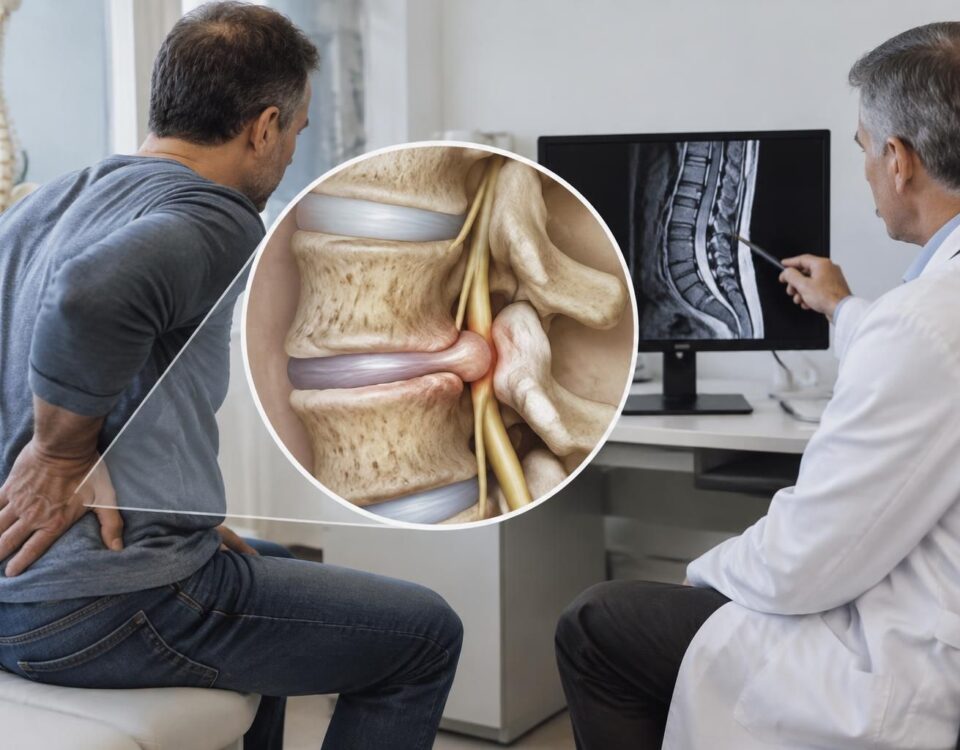
Sciatica with burning in the leg: what does this symptom mean?
02/07/2026
Sciatica in Montreal: Why the clinical evaluation always precedes the treatment
03/07/2026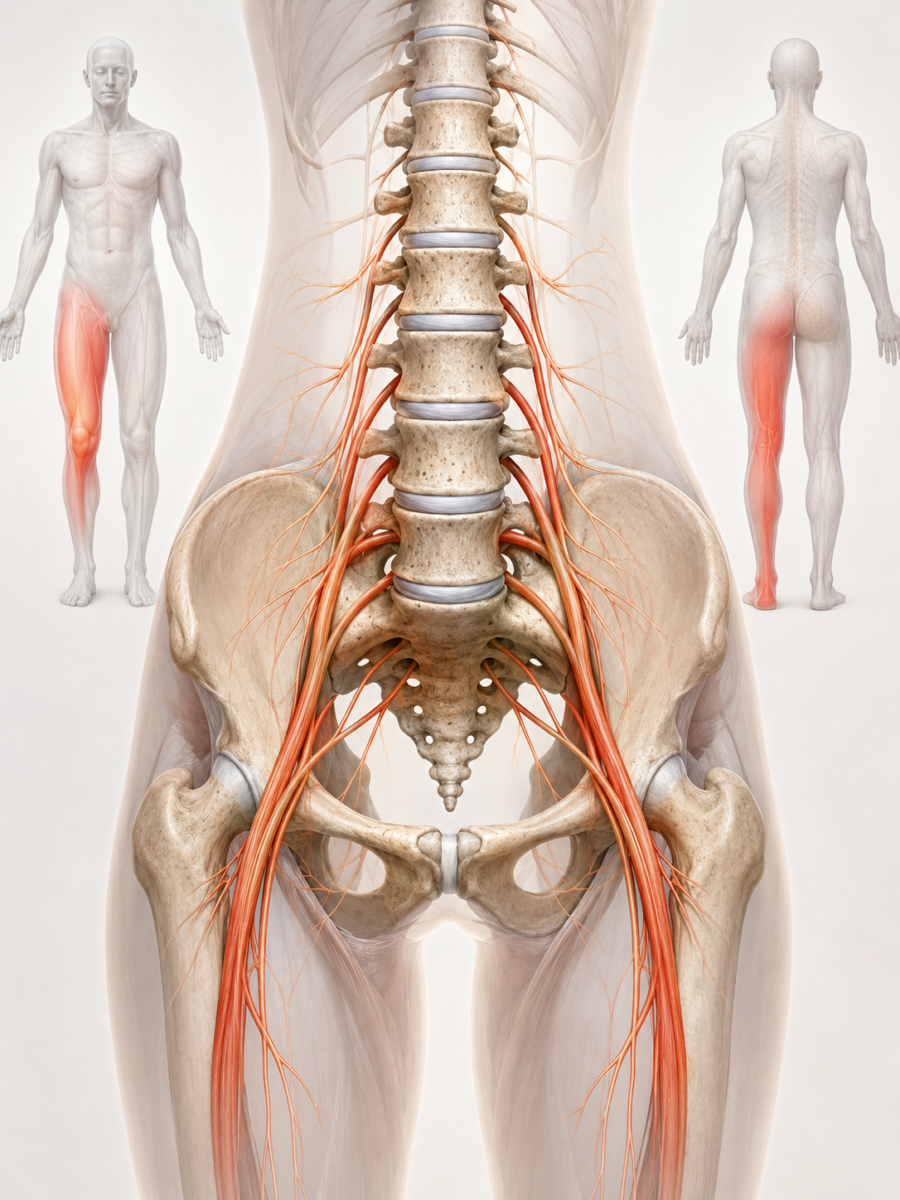
In short
| The sciatica is based on the role of Lumbar nerve roots (L4-L5, L5, S1) which form the sciatic nerve and ensure the sensitivity and movement of the leg. This allows a Accurate evaluation and an Targeted support to reduce pain and improve mobility. Its operation depends on the journey and any tensions or compressions along these roots, a source of irradiated pain towards the buttocks, thigh, calf or foot. By understanding this course, exercises and therapeutic approaches are optimized. In Montreal, this approach is particularly suitable for patients seeking effective and lasting solutions for sciatica pain and associated disorders. |
Short summary: Sciatica and role of the lumbar roots
The sciatic nerve is formed by the Lumbar and sacral roots (mainly L4, L5, S1 and S3). He assures sensitivity and diesel engine of the leg and foot, starting from the lower back and descending towards the thigh then the ends.
Understanding this journey allows you to quickly identify potential sources of pain, including compression or irritation due to a piriform tense or lumbar tension.
- role of Lumbar roots : Origins of sensation and movement to the toes.
- course and distribution of the nerve, of the buttocks to the end of the toes.
- Common causes: slipped disc, compression foraminal and inflammation.
- Typical signs: pain that radiates to the calf or foot, burns, tingling and numbness.
An appropriate therapeutic approach aims to relieve irritation, improve mobility and prevent recurrences through posture and reinforcement exercises.
Quick summary: This article explains how the Lumbar nerve roots form the sciatic nerve, what are their functions in the leg and what warning signals guide diagnosis and management. It describes the path, frequent causes of pain and possible therapeutic approaches, avoiding specific exercise prescriptions when talking about neurovertebral decompression or associated conditions.
Origin and course of lumbar roots
The sciatic nerve originates from the Lumbar roots and sacred, mainly L4, L5, S1 and, depending on the individuals, S2 at S3. These roots come together to form a single nerve that descends along the lower limb. The journey begins in the lower back, crosses the buttocks and thigh, then spreads towards the leg and the foot. Understanding this route makes it possible to quickly identify the sources of pain and the areas potentially affected by radiculopathy.
For additional light on the anatomy and the course, you can consult the resources focused on the sciatic nerve and its location, in particular the pages dedicated to theAnatomy#ATFP_CLOSE_TRANSLATE_SPAN# and sciatic nerve pain and explanations on the effects of sitting on sciatica Sciatica#ATFP_CLOSE_TRANSLATE_SPAN# and sitting position.
Functions and implications for the leg
The Lumbar roots ensure the sensitivity and the Engine control thigh, leg and foot. The sciatic nerve irrigates the sensory and motor territories to the toes. Compression or grip along its course can cause symptoms such as burns, electric shocks or numbness.
The role of lumbar roots is crucial for walking and stability. Pain or weakness following root damage can be due to pinching or irritation in the lumbar and gluteal area, with symptoms that sometimes radiate to the calf and foot. Additional information on the link between posture and sciatic nerve can be found in the resources dedicated to posture and work from home.
Typical causes and clinical signals
Pain signals related to the lumbar roots may result fromadherence, of compression or mechanical irritation throughout the nervous journey. Common causes include degenerative factors of the lumbar spine and root disorder variants. Typical symptoms include painful irradiation along the sciatic path and, sometimes, sensory or motor disorders in the territories served by the lumbar roots.
To deepen mechanisms and signs, see sciatic pain resources and associated causes. Certain situations associated with decompression or nerve pain management are addressed on sites dedicated to neurovertebral decompression.
Clinical implications and therapeutic approach
precise knowledge of the role of Lumbar roots Guides diagnosis and management. In practice, patients can access different options at the TagMed Clinic in Montreal or Terrebonne, adapted to each case and centered on nervous system safety and pain reduction through manual clinical approaches and specific non-drug techniques when appropriate.
To explore the solutions proposed in this context, the treatments available at the TAGMED clinic are presented as possible and safe alternatives in order to improve the daily life of people suffering from sciatica linked to radicular damage. In addition, resources dedicated to neurovertebral decompression and other approaches offer additional perspectives, without prescribing inappropriate exercises or stretching in some contexts.
Diagnostic aspects and therapeutic framework
The diagnosis is based on precise interrogation of symptoms and a targeted clinical examination. Imaging tools and neurological tests may be required to assess the extent of root damage and guide the therapeutic choice. In cases where a non-surgical approach is considered, alternatives such as neurovertebral decompression and other non-invasive interventions can be discussed with the attending physician and specialists from TagMed.
Additional resources on the therapeutic approach and remote or clinical treatment options can help to better understand the role of lumbar roots in sciatic pain and available solutions.
Options and Related Resources
To learn more about neurovertebral decompression and its impact on acute sciatic pain, consult a specialized resource from the following links: LES#ATFP_CLOSE_TRANSLATE_SPAN# Benefits of Neurovertebral Decompression.
For general information on the path of the sciatic nerve and the causes of associated pain, you can refer to the dedicated pages on the sciatic nerve and the associated pain available on sossciatica.com#ATFP_CLOSE_TRANSLATE_SPAN# and on questions related to sitting and pain from this angle Sciatica#ATFP_CLOSE_TRANSLATE_SPAN# and sitting position.
Additional information on difficulties related to radiculopathy and general approaches can be consulted via resources dedicated to walking and nerve pain, and as part of the treatments offered at the TAGMED clinic.
Books and resources on sciatic pain and treatments to TagMed are available via the site Clinic#ATFP_CLOSE_TRANSLATE_SPAN# TAGMED.
For practical advice and clear explanations of the course and causes of sciatic nerve pain, you can consult hello#atfp_close_translate_span# Health – Route and Causes.
Note that neurovertebral decompression and specific clinical contexts are subject to appropriate approaches and should not be associated with inappropriate exercises or stretching without medical supervision.
Medical Disclaimer: The information and advice provided on this site does not replace the health professional’s diagnosis or treatment. Please note that Dr. Sylvain Desforges osteopath is neither a doctor of medicine nor a doctor, and is not a specialist in a medical specialty as defined by the Collège des Médecins du Québec. Manual medicine, functional medicine and sports medicine as described on this site exclude any medical treatment or diagnosis made by a doctor or specialist doctor. Always consult your doctor for any medical questions. For more details, please read our full legal notice.
- Origin and roots: L4-L5, L5-S1, S1-S3 from the marrow.
- Course and route: from the lumbar to the pelvis, then buttock and thigh to the foot.
- Functional role: Transmission of sensitivity and motor control of the leg and foot.
- Role in sciathics: compression/irritation causing irradiation and paresthesia.
- Possible adhesions: slipping of the nerve hindered by postural or muscular tensions (eg piriformis).
- Clinical signs: Pain radiated along the leg, tingling and targeted weakness.
- Simple indicators: Clinical tests like Lasègue and evaluation of the strength of the innervated muscles.
- Therapeutic approaches: postural correction, lumbar reinforcement and, if necessary, targeted decompression.
- Objective: restore mobility and prevent recurrences.
This recommendation explains the crucial role of Lumbar nerve roots in the sciatica, how they fuel the mobility of the legs and why their proper functioning directly impacts your quality of life. You will discover the origins, the route and the signs that should attract attention, as well as practical axes for prevention and rehabilitation.
Disc herniation and persistent pain in the leg
IN BRIEF A disc protrusion is a bulging of a disc that can irritate a nerve and cause persistent pain in the leg, sometimes accompanied by tingling or numbness. Imaging alone does not confirm the origin of the symptoms: clinical…
Disc herniation and lumbar degeneration
IN BRIEF A lumbar disc protrusion is a bulging of a disc often related to disc degeneration. It does not always cause symptoms but can contribute to lower back pain or pain radiating down the leg if a nerve is…
Anatomy and path of lumbar roots
Origins and role of lumbar roots
The Lumbar roots arise around the lumbar segments, mainly between L1 and L5, and then mingle with the sacral roots to constitute the sciatic nerve. They convey sensory information and provide motor control of the lower leg and foot compartments. This complex configuration explains why pain that arises in the lower back can spread to the leg.
Course and areas of influence
The sciatic nerve forms at the level of the lumbo-sacral plexus and takes a path that crosses the buttocks, descends along the thigh and then branches out towards the leg and the foot. This length confers an extended sensitivity and a coordinated motor skills of daily gestures. The tensions or adhesions that appear at the roots or along their journey can quickly manifest themselves by irradiated pain and motor disorders.
Functions and risks
The main function of Lumbar roots is the transmission of sensitivity and control of the muscles of the leg. Their complexity and length nevertheless make them particularly susceptible to irritation, inflammation and compressions, especially when postural or mechanical conditions deteriorate.
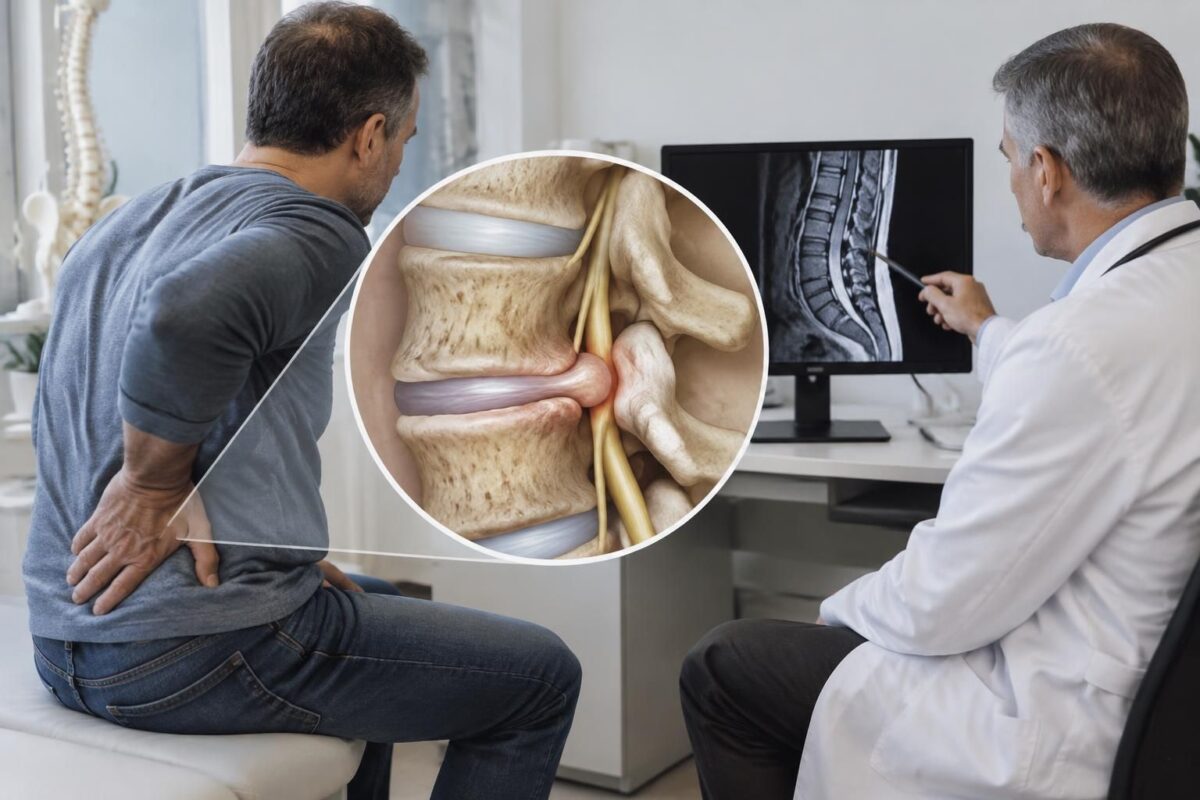
Disc protrusion and disc pinching: combined mechanisms
IN BRIEF A disc protrusion is a bulging of the disc, while a disc narrowing refers to a decrease in its height. These changes can coexist and sometimes irritate a nerve root, leading to pain or radiation, but they can…

Disc herniation and associated foraminal stenosis
IN BRIEF A disc protrusion associated with foraminal stenosis occurs when a bulging disc coexists with a narrowing of the opening through which a nerve root passes. This association can lead to lower back pain radiating into the leg, tingling,…
Typical causes and symptoms
Irritations or compressions of the lumbar roots result in pain that radiates along the path of the sciatic nerve, often described as burns, electric shocks or tingling. The onset may follow physical overload, poor posture, or minor trauma. The precise assessment of the painful areas (buttocks, thighs, legs, foot) helps to locate the root(s) concerned.
Associated signs include decreased sensitivity, paresthesias and, sometimes, muscle weakness causing some discomfort when walking. Pain that is accentuated during exertion or prolonged sitting often signals nervous irritation requiring appropriate care.

Spinal disc protrusion and nerve inflammation
IN BRIEF A disc protrusion is a bulging of the disc that can irritate or compress a nerve, without necessarily causing symptoms. When it leads to nerve inflammation, it can cause pain in the back or neck, sometimes accompanied by…

Disc protrusion and irritation of L5
IN SHORT A disc protrusion is a bulging of the disc that can irritate the L5 root and cause lower back pain radiating to the buttock, leg, or foot, sometimes with tingling or weakness. MRI alone is not sufficient to…
Impacts on posture and mobility
An irritation of the lumbar roots changes the way of holding and moving. The column can adopt compensations to limit pain, which, in turn, can aggravate tensions and promote new adhesions. Early detection and targeted rehabilitation help prevent pain cycles and restore normal mobility.

Disc protrusion and pain after twisting the back
IN BRIEF A disc protrusion is a bulging of the disc that can contribute to pain after a back twist, but it alone does not confirm the cause. The pain can remain in the lower back or radiate to the…

Disc herniation and pain after lifting
IN BRIEF A disc protrusion is a bulging of a disc between the vertebrae. Pain that appears after lifting a load does not prove that it is the cause: the MRI must be interpreted alongside the symptoms and the clinical…
Therapeutic approaches and rehabilitation
In practice, a multimodal strategy is preferred: posture correction, specific muscle strengthening of the trunk and lumbar muscles, and pain reduction techniques adapted to each patient. Manual approaches and progressive exercises facilitate the return to normal function without worsening of the lumbar roots. An adapted evaluation guides the choices between postural rehabilitation, physiotherapy and, if necessary, anti-inflammatory treatments under medical control.
Prevention and practical advice
To preserve the proper functioning of Lumbar roots, favor regular physical activity, adapt your workstation and avoid mismanaged loads. Maintain proper postural hygiene, strengthen the deep muscles of the back and trunk, and monitor the first signs of irritation to intervene early. Personalized advice can be useful to integrate these practices into your daily life and prevent recurring episodes of sciatica.
| key | concise explanation |
|---|---|
| Origin nerveless | The sciatic nerve is formed from the lumbar and sacral roots L4 to S3, ensuring sensitivity and motor skills of the leg and foot. |
| Course | He descends from the lower back towards the buttocks and the thigh, then branches out to the toes. |
| main function | transmission of the sensitivity and control engine leg and foot muscles. |
| Innervated areas | major cutaneous and muscular territories of the leg and foot. |
| Vulnerability | Long journey and possible adherence or cuts all along the journey. |
| Signs of irritation | Pain radiant Towards butt/thighs, burning, paresthesia and numbness. |
| aggravating factors | villainous posture and mechanical overload. |
| rapid diagnosis | clinical examination and, if necessary, imaging and neurophysiological tests to locate the lesion. |
| Therapeutic approach | Physiotherapy, lumbar strengthening, postural correction and targeted decompression. |
| Prevention | Regular physical activity, adapted posture and musculoskeletal maintenance. |
Testimonials: sciatica and the role of lumbar nerve roots
My diagnosis of sciatica became clear when the doctor explained to me the role of Lumbar roots in the path of the sciatic nerve. from segments L4-L5 and S1 (sometimes S3), they carry the sensitivity and motor control that cause the pain to descend along the leg. By feeling the pain that starts from the lower back, crossing the buttock and radiating to the calf, I understood that it was not just “the back” but a precise nervous path.
I discovered that tensions in posture or repetitive efforts can irritate the Lumbar roots, causing pain that “creates an electric shock” in the leg. While working on the alignment of the spine and lumbar muscles, I found that the pain decreases when the nerve sheath regains its mobility.
Another important aspect was the management of tensions around the piriformis muscle, as poor glide of the Nerve sheath can compress the Lumbar roots and trigger radiant pain. Understanding this link between muscle and the nerve path helped me to adapt my exercises and my daily positions.
Subsequently, rehabilitation sessions focused on the Lumbar muscle strengthening and the Postural rehabilitation allowed me to regain better mobility. Knowing which lumbar segments support the sciatic nerve gave me confidence in the treatment plan and in the active breaks to integrate into my day.
Finally, the evaluation confirmed the importance of a balance sheet supported by additional tests, in particular theEMG, to specify which Lumbar roots are affected and guide the therapeutic actions. Understanding this mechanism has helped me stay patient and follow an appropriate strategy to avoid recurrences.
The sciatic nerve represents the longest and one of the central elements of lower limb mobility. It arises from the fusion of Lumbar roots and sacred, mainly the levels L4-L5 and S1 (with additional contributions according to individual anatomy). Its journey begins in the lower back, crosses the buttocks, descends along the thigh and branches out towards the calf and the foot. Understanding this course is anticipating areas of tension and pain mechanisms that may surprise by their location, but also by their intensity.
The lumbar and sacral roots play a fundamental role in the sensitivity and movement of the underlying structures. The course Sciatic nerve can be disturbed if adhesions or tensions form near the gluteus maximus or the piriformis muscle. These mechanisms, often invisible to the naked eye, explain why pain that starts from the lower back can radiate towards the buttocks, thigh, then reach the calf and foot.
The most common causes of sciatic nerve pain revolve around the slipped disc and mechanical compressions, but also a bad posture or trauma. Typical symptoms include a Burning pain or electric, paresthesias and numbness that sometimes evolve in irradiation towards the calf and the foot. Muscle weakness can accompany these manifestations, transforming walking and daily activities into a temporary challenge.
On the anatomo-functional level, each lumbar segment participates in specific areas of sensitivity and motor control. The associated risks increase when the nerve undergoes prolonged compression, repeated tension or trauma. This complexity explains why the diagnosis and treatment should be adapted to each patient, taking into account the individual path of the nerve and its interaction with the adjacent muscles.
The diagnosis is based on a rigorous clinical examination and, if necessary, additional investigations. The Lasègue test can illuminate sciatica disc, but it is not systematic in the event of truly peripheral sciatic neuropathy. Electromyogram (EMG) and MRI target compression or muscular atrophy areas and direct personalized and effective care, focused on pain reduction and functional improvement.
In therapy, a multidisciplinary approach offers the best results. theosteopathy and the manual medicine Aim to release tension, rebalance posture and promote free slippage of nervous structures. programs of Postural rehabilitation and lumbar reinforcement, supplemented by techniques such as therapeutic cold and supervised anti-inflammatory treatments, form a solid base. Depending on the case, advanced options such as the Motorized neurovertebral decompression, therapies in laser Or shock waves can be considered to amplify the effectiveness of the treatment.
Adopt precise knowledge of the role of Lumbar roots Allows you to act upstream: posture, adapted physical activity and daily habits become allies. The path to recovery depends on the underlying cause and the speed of the intervention. In the majority of cases, a combination of therapies and rehabilitation leads to a noticeable improvement in pain and mobility, while reducing the risk of recurrence.
This conclusion explores the Key role of lumbar nerve roots in the sciatica, describing their origin, their path and the mechanisms that explain the pain and irradiation in the leg. it highlights how the contributions of the segments L4-L5 and of S1 to S3 Feed sensitivity and motor control, and how local tensions or compressions can trigger typical symptoms such as burns, paresthesias and weakness.
The Lumbar roots are born segments L4-L5 and S1 to S3, form the base of the sciatic nerve and ensure the transmission of sensory and motor signals to the toes. Their journey starts from the lower back, crosses the pelvis and descends along the leg; Their positioning and slipping into the surrounding structures explain why pain can radiate from the back to the buttocks and leg. To deepen the anatomy and the role of lumbar roots, see this article: Article#ATFP_CLOSE_TRANSLATE_SPAN# on anatomy and the role of lumbar roots.
Clinically, sciatic manifestations often result from irritation or compression of the roots, with irradiation towards the calf or foot and paresthesias. The diagnosis is based on clinical examination and investigations such as EMG and MRI, in order to distinguish herniated disc, foraminal stenosis or nerve irritation. To better understand common scenarios, see Sciatica#ATFP_CLOSE_TRANSLATE_SPAN# – MSD MANUAL.
Therapeutic approaches aim to reduce inflammation and compression while re-educating posture and strengthening the lumbar muscles. Non-invasive options such as neurovertebral decompression and osteopathy can be part of a personalized plan depending on the assessment. To learn more about these options, you can check: Decompression#ATFP_CLOSE_TRANSLATE_SPAN# Non-invasive neurovertebral, Osteopathy#ATFP_CLOSE_TRANSLATE_SPAN# and sciatic pain, and Doctissimo#ATFP_CLOSE_TRANSLATE_SPAN# – Sciatic Nerve.
To enrich your understanding and access practical advice, explore additional resources such as Nerf#ATFP_CLOSE_TRANSLATE_SPAN# Sciatica – Anatomy and role, and Sciatica:#ATFP_CLOSE_TRANSLATE_SPAN# Hernia, stenosis or nerve irritation. You will also find points of attention on the therapeutic choices depending on the clinical context.

Dr Sylvain Desforges, B.Sc., D.O., N.D., osteopath, is the founding president of TAGMED and of the ACMA association. He dedicates his practice to chronic spinal pain, low back pain and symptoms compatible with sciatica, particularly when pain radiates toward the buttock, leg, calf, foot or toes.
Through SOS Sciatique, he publishes educational content on sciatica symptoms, possible causes such as disc herniation, disc narrowing, foraminal stenosis or irritation of a lumbar nerve root, as well as non-surgical approaches that may be considered according to the evaluation. At Clinique TAGMED, care may include, depending on the case, motorized neurovertebral decompression, specific osteopathic care or precision percussion.
For an evaluation related to sciatica treatment in Montreal / Mount Royal or sciatica treatment in Terrebonne, please consult the services available at Clinique TAGMED.
Medical disclaimer
The information published on SOS Sciatique is provided for educational purposes only and does not replace a consultation, diagnosis, opinion or treatment provided by a physician or another authorized healthcare professional. The author of this article is neither a medical doctor nor a specialist in a medical specialty recognized by the Collège des médecins du Québec. The osteopathic, manual medicine or functional support approaches described on this site do not constitute medical acts and are not intended to replace medical follow-up.
Consult a physician or emergency service in cases of loss of bladder or bowel control, anesthesia in the saddle area, significant or progressive weakness in the leg or foot, fever, recent trauma, severe pain or rapid worsening of symptoms. For more details, please read our Legal Notice.