How osteopathy promotes muscle tissue regeneration
29/06/2026
Osteopathic techniques to enhance joint stability
29/06/2026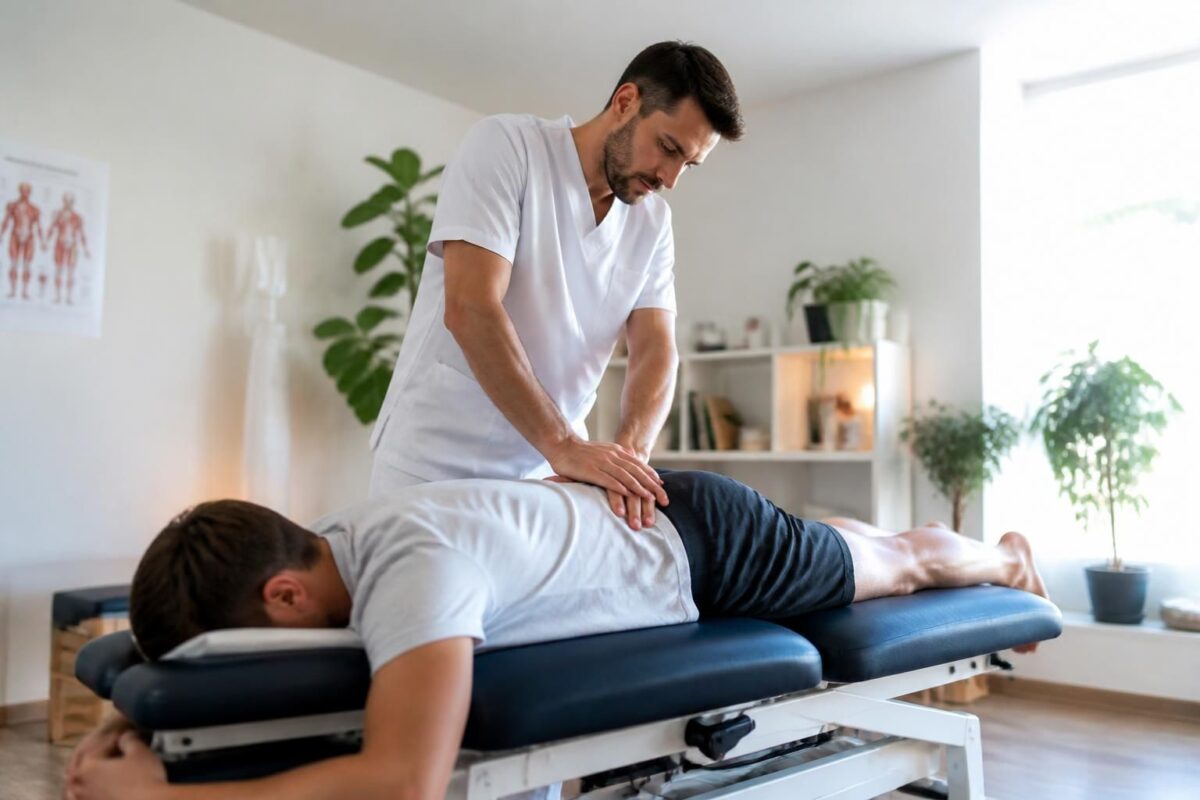
In short
| In short, Osteopathy for the sciatic pain is one Manual approach and non-invasive. It aims to Reduce the pain and to Restore alignment of the body. It Release tensions and Decreases nerve compression, improving the Lumbar mobility. Advantages: Progressive relief, better mobility and Prevention of recurrences. It relies on a Postural assessment and one Personalized follow-up. In Montreal, this service is a Alternative to drugs to resume activities quickly. |
For sciatic nerve pain, Osteopathy offers an approach non-drug and non-invasive Focused on body balance and re-establishing mobility. thanks to a Postural assessment and to a Personalized diagnosis, the osteopath targets underlying causes such as muscle tension, imbalances and nerve compression.
- Objectives: gradual pain reduction and Improved lumbar mobility.
- Techniques: Gentle manipulations and Targeted stretches To release tension and promote alignment.
- Impact: Reduction of symptoms without major side effects and Prevention of recurrences through home exercises and postural advice.
- Framework: suitable when the pain is moderate and in addition to medical assessments and other treatments if necessary.
By choosing osteopathy, you are opting for a body-centric approach, aimed at restoring harmony and improving your quality of active life durably.
This guide written by a health professional explains how Osteopathy can help relieve sciatic pain without systematically using drugs. It describes the course of an osteopathic consultation, the mechanisms at stake, the possible results and the ways to maintain the long-term benefits through appropriate follow-up.
How osteopathy acts on sciatic pain
The sciatic nerve Can be compressed by different causes. The osteopathic approach aims to release tensions around the nerve and to restore the overall balance of the body by Gentle manipulations and techniques for releasing myofascial tensions. The goal is to improve mobility and reduce pain, without surgery or medication. The treatment emphasizes the relationship between posture, mobility and functioning of muscles and fascias.
The consultation begins with a anamnesis and one Postural assessment To identify alterations that could contribute to pain. The objective is to orient the choice of techniques adapted to each patient, in a logic of global care and not symptomatic alone.
Postural assessment and osteopathy session
The postural assessment is based on the examination of the movements of the spine and surrounding structures. The neurological examination makes it possible to verify the presence or extent of a possible compromise of the nerve roots. The osteopath favors Soft manual techniques and targeted joint mobilization. Simple tips for improving posture and limiting tensions in daily life can be given, without prescribing specific stretching or exercise when it is not suitable for the clinical context.
The typical session combines antecedent collection, neurological test, vertebral and fascial mobility assessment, gentle manipulations and postural advice. The treatment aims for a gradual improvement of symptoms and a functional rehabilitation adapted to the activity of the patient.
Common causes and osteopathic approach
Slipped disc and bulge disc May cause local compression of nerve roots. In osteopathy, the approach consists of mobilizing and releasing tensions around the areas concerned and proposing appropriate daily exercises or gestures to prevent future tensions, without prescribing specific stretching intended to directly treat the compression.
Piriform Syndrome and Extra-vertebral compression Sciatic nerve can cause pain in the buttocks and when walking. The osteopathic objective is the myofascial relaxation and the targeted stretching of the areas involved, always in a logic of global balance and without invasive manipulation.
muscle spasm and Lumbar osteoarthritis cause stiffness and mechanical pain. The osteopath offers relaxation techniques and gentle mobilizations to restore mobility and limit chains of tension.
Efficiency and evidence
Patients often report improvement after a few sessions, with a gradual decrease in pain and better mobility. Osteopathy is generally considered as complementary to other treatments and can reduce addiction to analgesics when evaluation and follow-up are regular and personalized. For moderate cases, the objective is to improve function and quality of life while avoiding more invasive interventions.
Resources and clinical work suggest that theosteopathy Can be integrated effectively into overall management of back and sciatic pain, as part of a set of coordinated care with health professionals and associated therapies. Seeing examples and feedback on specialized sites can help to better understand potential results and limitations.
Monitoring, prevention and limitations
An interview plan may include regular visits and postural advice, in order to limit recurrences and optimize long-term outcomes. The follow-up makes it possible to adjust the techniques used and to adapt the objectives according to the evolution of the symptoms and the activities of the patient.
Prevention emphasizes posture, mobility and light reinforcement of the trunk, while remaining appropriate for the individual context. In some cases, osteopathy is used as a supplement to medical treatments and does not replace medical assessment or treatment when necessary.
To learn more about the mechanisms for improving circulation and the role of osteopathy in recovery after a sports injury, you can consult the following resources:
How osteopathy improves blood circulation in sore areas and
Osteopathy and recovery after a sports injury. To understand the links between osteopathy and mobility, see also Osteopathy and mobility.
Complementary resources and professional perspectives are based on the teachings of NUMSS, NAO, National University of Medical Sciences and National Academy of osteopathy. Relevant professional associations include ACMA, College of Canadian Osteopaths and College of Canadian Osteopaths.
For additional information on related approaches, you can also consult the pages dedicated to the neurovertebral decompression and other column-related conditions at the following sites:
neurovertebral decompression,
slipped disc,
Herniated Disc, and carpal tunnel. For general information on osteopathy and well-being, see Osteopathy and well-being.
To find an appointment, you can consult Osteopath meeting Or contact the Tagmed Clinic for sciatica and back-friendly services.
The information and advice provided on this site does not replace the advice, diagnosis or treatment of a healthcare professional. Please note that Dr. Sylvain Desforges osteopath is neither a doctor of medicine nor a doctor, and is not a specialist in a medical specialty as defined by the Collège des Médecins du Québec. Manual medicine, functional medicine and sports medicine as described on this site exclude any medical treatment or diagnosis made by a doctor or specialist doctor. Always consult your doctor for any medical questions. For more details, please read our full legal notice.
“Medical disclaimer: The information and advice provided on this site does not replace the health professional’s benefit, diagnosis or treatment. Please note that Dr. Sylvain Desforges osteopath is neither a doctor of medicine nor a doctor, and is not a specialist in a medical specialty as defined by the Collège des Médecins du Québec. Manual medicine, functional medicine and sports medicine as described on this site exclude any medical treatment or diagnosis made by a doctor or specialist doctor. Always consult your doctor for any medical questions. For more details, please read our full legal notice. »
Osteopathy and sciatic pain: an alternative to drug solutions
- Care course : targeted evaluation and postural assessment to identify the origin.
- Differential diagnosis : herniated disc, piriform syndrome, muscle spasms.
- osteopathic session : Gentle manipulations and targeted stretching.
- non-invasive techniques : Fascial release and joint mobilizations.
- Review and follow-up : Neurological tests and regular personalized follow-up.
- Post-session education : Stretching tips and exercises at home.
- Expected results : Progressive relief, better mobility and regained sleep.
- Benefits vs Drugs : reduction or absence of side effects and addiction.
- complementarity : Can register with physiotherapy and rehabilitation.
- Limits and orientation : Some situations require medical or surgical management.
- Prevention and follow-up : Regular exercise program and periodic reviews.
- Why choose osteopathy : holistic and personalized approach, targeting tensions and alignment.

This article explores how theosteopathy can become a Safe and effective alternative drug treatments for pain related to the sciatic nerve. By focusing on the body as a whole, it aims to reduce pain, improve mobility and prevent recurrences through approaches non-invasive and personalized.
Why osteopathy can be an alternative to drugs
The sciatic pain Can be fueled by muscle tension, postural imbalances and mobility limitations. Osteopathy offers Soft manual techniques and targeted stretching that affects muscle chains, fascias and overall body alignment. This approach aims to Reduce nervous compression and to restore a more harmonious lumbar function, without systematically resorting to analgesics or invasive treatments.
Professionals trained in osteopathy point out that a In-depth postural assessment and one Personalized diagnosis allow you to guide the techniques best suited to each patient. Typical results include a gradual pain reduction, a Improving mobility and a better ability to resume daily and professional activities.

How osteopathy improves the quality of life of active people
In short In short, theosteopathy is a global approach that Optimizes mobility and the function of the body of ACTIVE PEOPLE, for a better quality of life. It helps prevent injury and reduce Musculoskeletal pain While promoting the Sports recovery.…
Assessment and osteopathic diagnosis for sciatica
Background collection and initial review
The process begins with a Detailed anamnesis and targeted questions on appearance, evolution and aggravating or improving factors. The osteopath doctor then evaluates the vertebral mobility and fascial, as well as Neurological tests that identify areas of tension and structures involved in sciatic pain.
Diagnosis and therapeutic orientation
The balance sheet is based on the observation of mobility deficits, areas of tension and functional limitations. According to the evaluation, the osteopath chooses appropriate protocols and can propose additional explorations if necessary, in order to ensure treatment personalized and secure.

Osteopathy and sports recovery: prepare the body for lasting performance
In short In short, Osteopathy and Sports recovery is one Global manual approach that sustainably prepares the body for the effort by restoring mobility and circulation After the effort. It is a discipline that acts on the sinews, the joints,…
course of an osteopathic session for sciatica
Components of the session
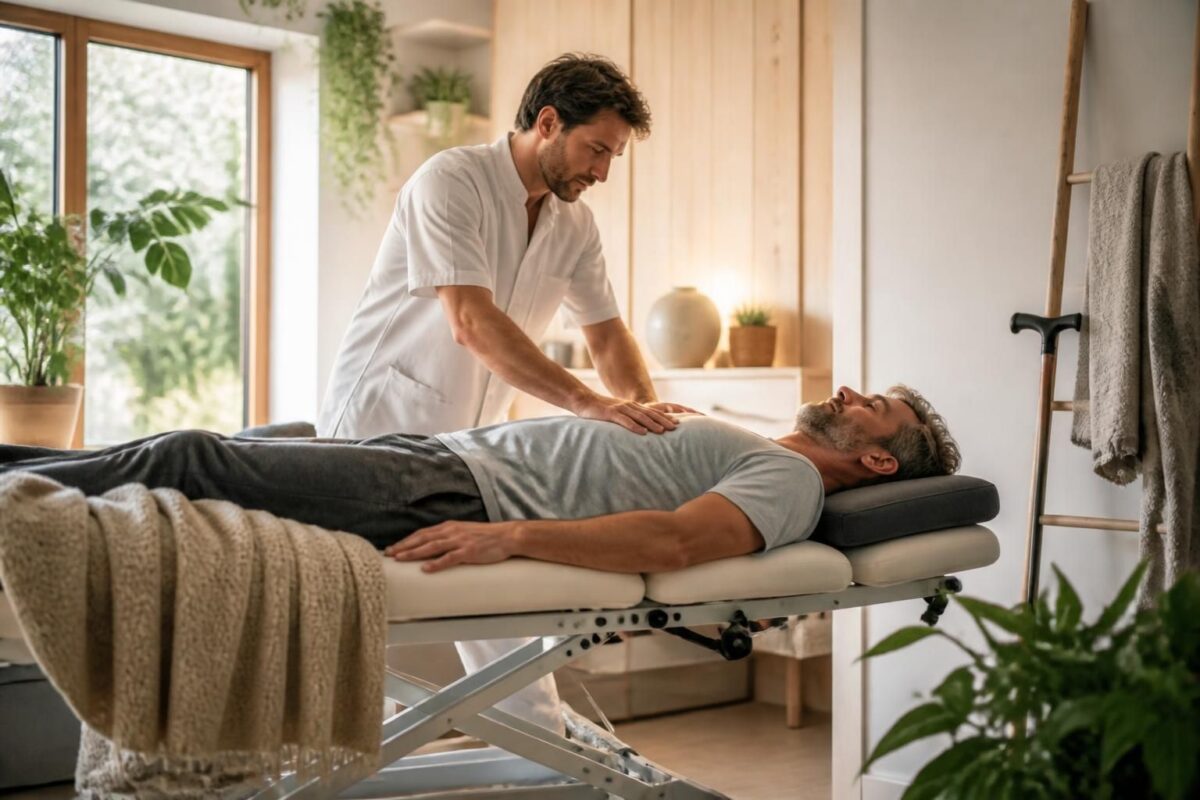
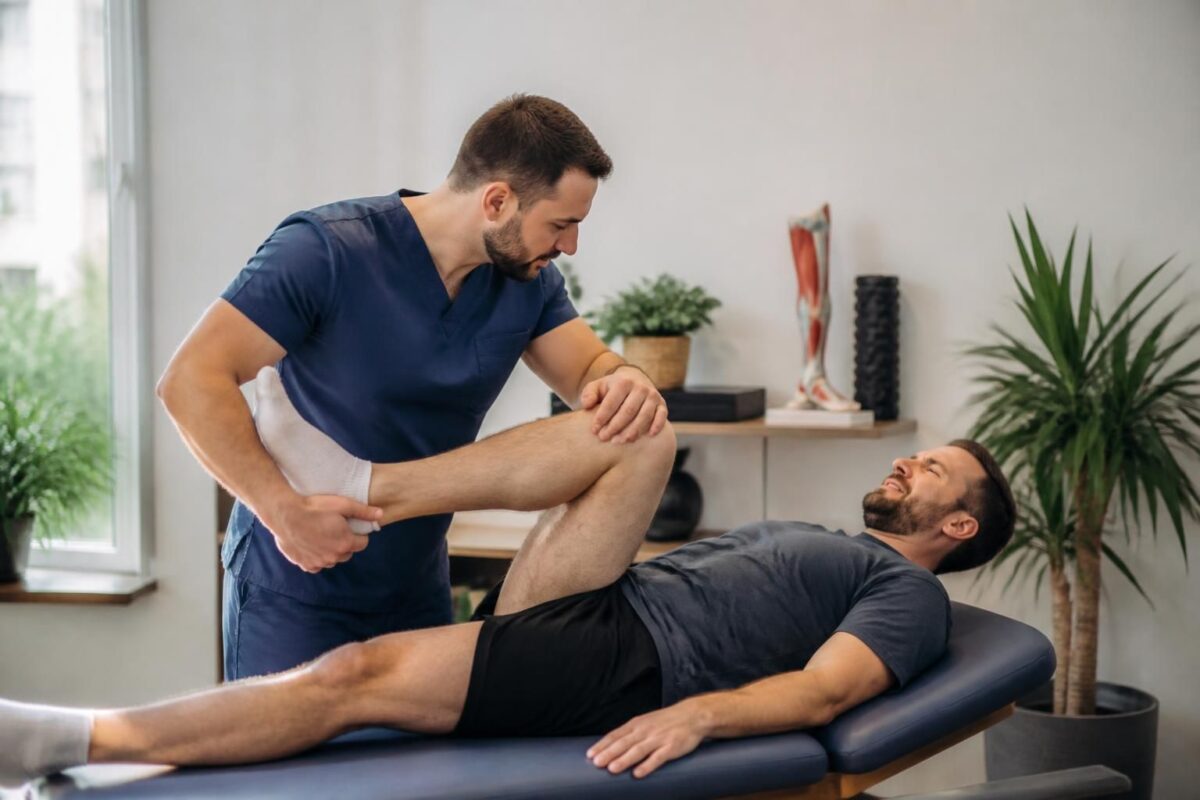
A typical session includes the Background collection, a neurological test, the evaluation of the Vertebral and fascial mobility, of Targeted gentle manipulations And some Joint mobilizations, as well as Stretching tips and exercises to do at home. Everything aims to release tensions around the sciatic nerve and Restore alignment of the body.
Examples of expected results
After a few sessions, patients often report a Improved walking, decreased radiant pain and better quality of life at work and in daily activities. The therapist adjusts the protocol over the course of evolution and specifies the exercises to be practiced regularly.
Why Osteopathy Is Essential For Recovery People
In short In short, Osteopathy in convalescence is an approach manual and holistic which helps to accelerate the recovery by restoring The balance, the mobility and a good circulation fabrics. it contributes to Reduce the pain, support the Back to…
Efficiency, safety and limits
Efficiency and safety
In many situations, theosteopathy offers significant symptomatic reduction and improves the Lumbar mobility, with little or no adverse effects when practiced by a qualified professional. It may partially supplement or replace drug treatments, especially when symptoms allow for an approach non-pharmacological.
Clear limits and indications
Osteopathy is not a single solution for all forms of sciatica. in the presence of Important neurological signs, of Motor deficits progressive, or a suspicion of acute structural pathology, Medical reference remains essential and necessary. In addition, for cases of severe disc herniation or uncontrollable pain, other modalities may be indicated according to the overall medical assessment.

Osteopathic manipulations to strengthen post-traumatic muscles
In short In short, Osteopathic manipulations for Strengthen post-traumatic muscles constitute a gentle manual approach aimed at restoring the mobility, reduce the pain and facilitate the Functional rehabilitation After a injury. What is Is it? A series of precise gestures…
Prevention and follow-up
Prevention is based on muscle building, targeted easing exercises and Adapted ergonomics on a daily basis. One Regular follow-up Allows you to adjust the treatment plan and limit relapses, while continuing an appropriate physical activity. The objective is to maintain mobility and ensure better long-term functional endurance.
| Aspect | Osteopathy – Concise Summary |
|---|---|
| Objective | Relieve sciatic pain and restore lumbar mobility without the need for medication. |
| Key methods | gentle manipulations, targeted stretching, myofascial relaxation and postural assessment. |
| Patient approach | Overall body assessment and personalized treatment plan. |
| course of a session | Anamnesis, targeted examination, gentle manipulations and tips for stretching or exercise at home. |
| Benefits vs Drugs | non-invasive and without major side effects; May decrease drug addiction and support rehabilitation. |
| Expected results | Progressive improvement in mobility and pain reduction within a few weeks. |
| Limits and indications | Does not replace medical advice in alarming cases; Some cases require imaging or medical intervention. |
| Prevention and follow-up | Regular exercises, adapted posture and periodic assessments to prevent recurrences. |
| Risks and security | Low risk when performed by a qualified osteopath; Possible temporary muscle pain after session. |

Osteopathy and prevention of work-related musculoskeletal disorders
In short theosteopathy is one Manual approach that restores body balance and prevents MSD related to work. Its advantages: reduction of tension, improvement of mobility and prevention of chronic pain. She is preventive and healing, suitable for office and trades…
Testimonials: Osteopathy and sciatic pain — an alternative to drug solutions
“I suffered from sciatic pain Intense and I had tried everything: drugs, injections, and yet nothing held on in the long term. theosteopathy gave me a Non-drug alternative which reduced pain and improved my quality of life without side effects. »
“After a few sessions, my Lumbar mobility improved and the sleep became more restorative. I was able to resume my activities without fear of the nocturnal pain. »
“I was skeptical at first, but theosteopathy allowed a Sustainable reduction pain and a gradual return to my work. The sessions were gentle and targeted, and I learned exercises to do at home. »
“I was offered pharmaceuticals To calm the inflammation, but I chose another path. The approach holistic and the Postural assessment revealed imbalances that I had not noticed, and the stretching tips accompany me on a daily basis. »
“The sessions osteopathic, combined with postural work, allowed me to avoid recurrences and limit pharmaceuticals. My active life and my hikes are coming back gradually. »
“After months of pain and treatment, theosteopathy provided progressive and lasting relief. The results on the pain and the mobility were remarkable, without dependence on drug treatments. »
The Dr Sylvain Desforges, recognized osteopath and expert in manual medicine, puts his know-how at the service of lower back pain and sciatica. Its approach is based on comprehensive care and evidence-based, favoring non-invasive interventions aimed at reducing dependence on drug treatments and sustainably improving the quality of life of active patients suffering from Chronic pain.
The sciatica is characterized by pain that follows the path of the sciatic nerve, starting from the lower back to gain the buttocks and leg. Osteopathy offers a Non-drug alternative By tackling musculoskeletal imbalances and tensions that can compress the nerve root. By restoring alignment and mobility, it seeks to release the pressure on the nerve and promote better circulation, while preventing recurrences through a preventive approach adapted to the patient’s lifestyle.
The osteopathic journey begins with a Postural assessment and an anamnesis deep. The objective is to identify the probable origin of the pain and to direct the clinical assessment to the most relevant techniques. The exam neurological Allows to reproduce the signs and to assess the possible attack of the nerve root. Depending on the objective, this complete assessment accelerates therapeutic choices and avoids invasive acts when possible.
The Typical session is structured around several stages. It begins with the collection of antecedents and neurological tests, followed by an assessment of vertebral and fascial mobility. The practitioner then offers Targeted gentle manipulations and adapted joint mobilizations, supplemented by muscle stretching advice and exercises to be performed at home. This approach aims to restore mobility, reduce pain and strengthen postural balance to limit recurrence factors.
Several clinical situations enter the field of osteopathy when sciatic pain occurs. Slipped disc and local root compression generally respond to targeted mobilizations and fascial releases. The Piriform Syndrome is approached by myofascial relaxation techniques and specific stretching. In case of muscle spasm, the work of muscle relaxation and mobilization contributes to quickly recovering functional autonomy. Finally, lumbar osteoarthritis, associated with mechanical pain, benefits from mobilizing work and appropriate postural advice to preserve mobility and limit inflammation.
The results observed are often progressive And are part of a weekly dynamic: reduction in painful intensity, improvement in mobility and overall feeling of well-being. Osteopathy does not systematically replace other treatments when specific medical indications exist, but it is an important support that can complement drug approaches and functional rehabilitation.
Follow-up is essential: a personalized intervention plan combines strengthening and stretching exercises, postural advice and regular assessments. In addition, cooperation with other health professionals can be considered when necessary, in order to ensure appropriate and lasting care. The objective remains clear: to allow the patient to regain normal activity and Optimized daily operation without drug dependence.
This summary explains how Osteopathy can represent a Non-drug alternative effective against sciatic pain, relying on a Postural assessment, of Gentle manipulations And some Targeted stretches, while being part of a global approach to prevention and personalized follow-up. She recalls that, when symptoms indicate a pathology requiring specific medical care, it is advisable to consult a health professional and synergize the approaches rather than opposing them.

The benefits of osteopathy to treat muscle imbalances
In short theosteopathy is a manual approach to restore themuscle harmony and postural considering the body as a whole. Its main benefits include the reduction of aches and tensions, the improvement of the mobility and from the posture, and prevention…
Objectives and mechanisms of osteopathy in the face of sciatica
The use ofosteopathy Aim for a Progressive relief pain and a Improved lumbar mobility over several weeks. preferred techniques are gentle handling And some Muscle stretching which release tensions around the path of the sciatic nerve and restore the alignment of the body. This approach non-invasive Also seeks to reduce postural and functional triggers that maintain pain.
Osteopathy and chronic leg pain: regaining an optimal quality of life
In short In short, Osteopathy is one Global manual approach aimed at reducing Chronic leg pain and improve the quality of life. What is it? Non-drug therapy using the hands to identify restrictions and treat lesional chains. How does it…
Assessment, diagnosis and standard session
The process begins with a Postural assessment and an anamnesis In depth to identify the possible origin of the pain and guide the osteopathic diagnosis. The exam may include a neurological test and assessment of the mobility of the spinal segments and fascias. The standard session combines Gentle manipulations targeted, Joint mobilizations and stretching tips to be done at home, accompanied by a Real personalized follow-up to optimize the results.
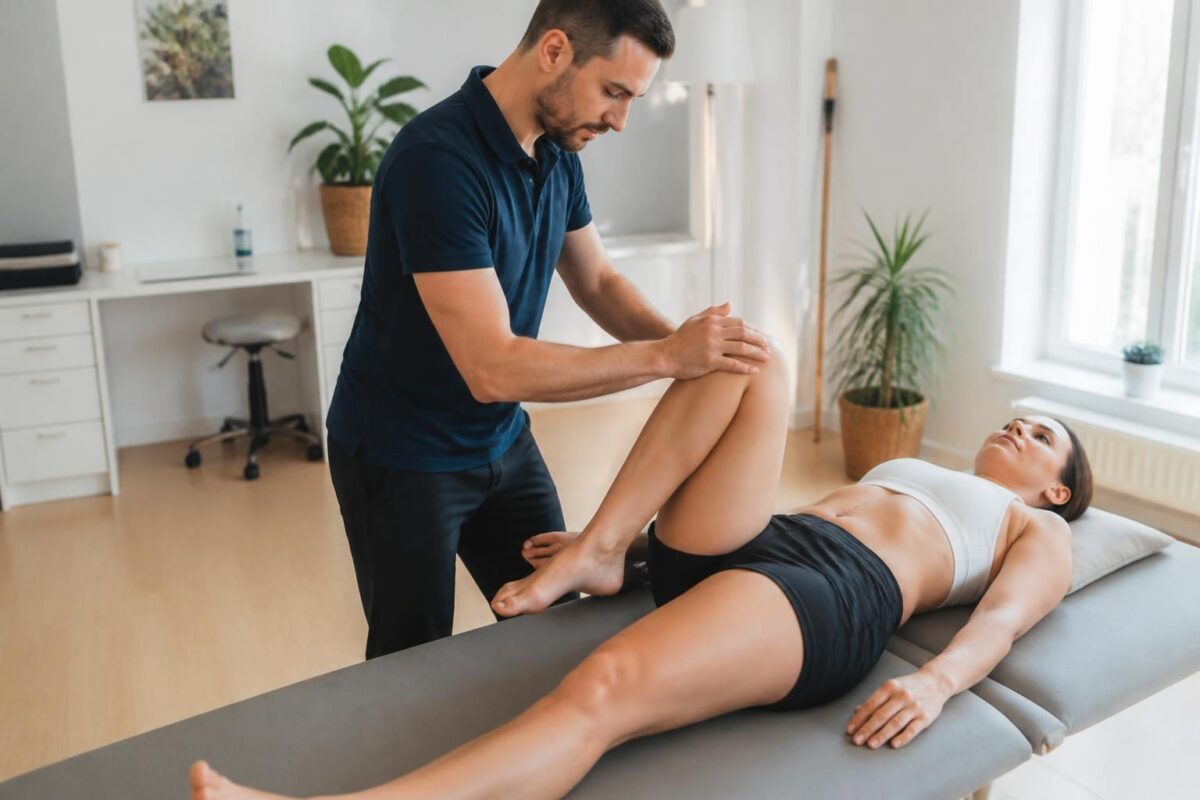
How osteopathy supports recovery after complex surgery
In short In short, Post-operative osteopathy is an approach fresh which supports the recovery After a Complex surgery. It helps to reduce the pain and the fatigue, improves the mobility and accelerates the healing thanks to a better vascularization and…
Targeted osteopathic causes and approaches
Different situations can be associated with the sciatica, and the osteopath will adapt the gestures accordingly: herniated discs or Root compression may require fascial mobilization and relaxation, the Piriform Syndrome calls for specific stretching and release, the muscle spasm requires tension relaxation techniques and a Progressive mobilization, and theLumbar osteoarthritis is treated by mobilization and postural advice to preserve mobility.
Results and clinical evidence
Osteopathic practice can lead to pain reduction and to a Improving mobility After a few sessions, sometimes with a Sensitive progress in comfort on a daily basis. This approach complements drug treatments and rehabilitation, promoting functional increase and better quality of life, while remaining non-drug and adapted to the patient. To deepen the mechanisms and observable results, see the resources describing the action of osteopathy on pain and mobility.
references and articles in the field emphasize that theosteopathy May be associated with symptom improvement when the approach is integrated into comprehensive care, and is particularly useful as a supplement to drug care and rehabilitation. To learn more about potential benefits and limits, you can explore additional resources such as Full support and An alternative to drug solutions.
Monitoring, prevention and limitations
After the first phases of treatment, a Personalized follow-up and a prevention program are essential: progressive lumbar reinforcement, targeted stretching of the glutes and hamstrings, and postural control at work and during repetitive gestures. The goal is to Prevent recurrences and maintain the gains obtained. It should nevertheless be recalled that, in some cases of severe nerve compression or progressive neurological losses, a Specialized medical evaluation And additional treatment options may be needed.
To complete your understanding and discover complementary approaches to posture and stress, you can consult the following resources: Osteopathy and sciatica: an alliance to relieve pain, Osteopathy and posture: correcting chronic imbalances, and How osteopathy improves mobility after prolonged immobilization. You will also find content on the link between osteopathy and stress, and methods to soothe the body and mind.
additional online resources, including Osteopathy and sciatica: how to effectively relieve pain, and An alternative to drug solutions, illustrate how osteopathy can be integrated as a lasting lever in the management of pain related to the sciatic nerve.
Finally, for a global approach and practical tools, you can explore resources dedicated to maintaining performance and stress management, in order to optimize results over the long term. For more examples and case studies, see guides and clinical trials available in the references mentioned above and the associated pages with Osteopathy and performance among active professionals.

Dr Sylvain Desforges, B.Sc., D.O., N.D., osteopath, is the founding president of TAGMED and of the ACMA association. He dedicates his practice to chronic spinal pain, low back pain and symptoms compatible with sciatica, particularly when pain radiates toward the buttock, leg, calf, foot or toes.
Through SOS Sciatique, he publishes educational content on sciatica symptoms, possible causes such as disc herniation, disc narrowing, foraminal stenosis or irritation of a lumbar nerve root, as well as non-surgical approaches that may be considered according to the evaluation. At Clinique TAGMED, care may include, depending on the case, motorized neurovertebral decompression, specific osteopathic care or precision percussion.
For an evaluation related to sciatica treatment in Montreal / Mount Royal or sciatica treatment in Terrebonne, please consult the services available at Clinique TAGMED.
Medical disclaimer
The information published on SOS Sciatique is provided for educational purposes only and does not replace a consultation, diagnosis, opinion or treatment provided by a physician or another authorized healthcare professional. The author of this article is neither a medical doctor nor a specialist in a medical specialty recognized by the Collège des médecins du Québec. The osteopathic, manual medicine or functional support approaches described on this site do not constitute medical acts and are not intended to replace medical follow-up.
Consult a physician or emergency service in cases of loss of bladder or bowel control, anesthesia in the saddle area, significant or progressive weakness in the leg or foot, fever, recent trauma, severe pain or rapid worsening of symptoms. For more details, please read our Legal Notice.