How osteopathy supports recovery after complex surgery
29/06/2026
The benefits of osteopathy to treat muscle imbalances
29/06/2026
In short
|
In short, Osteopathy is one Global manual approach aimed at reducing Chronic leg pain and improve the quality of life. What is it? Non-drug therapy using the hands to identify restrictions and treat lesional chains. How does it work? A Palpatory assessment and an anamnesis Guide gentle techniques on the fascias and joints, acting on the nervous system and circulation to restore balance. Advantages: pain reduction, Improving mobility, Prevention of recurrences and possible reduction of drugs. accessible to Paris And in Île-de-France, this approach can be integrated into a multimodal strategy to optimize the management of Leg pain. |
You suffer from Chronic leg pain and seek to find a Optimal quality of life ? losteopathy offers a Global approach centered on the balance of the body and functional chains.
thanks to Soft manual techniques and to a Overall assessment, the practitioner identifies the dysfunctions that cause pain and acts on structures and postures to sustainably improve mobility and well-being.
Clinical results often show pain reduction and better limb function, with benefits that can persist when matching appropriate physical activity and postural corrections in a multimodal approach.
For personalized support, choose a Qualified osteopath And consider a treatment plan adapted to your situation.
This article, written by a health professional expert in osteopathy, presents how Osteopathy can help people with Chronic leg pain to find a quality of life more stable. It explains the mechanisms of action, the evidence available and the conditions in which this approach can be integrated into a global care strategy without being limited to the simple reduction of pain.
Understanding chronic leg pain and the role of osteopathy
A body-centric approach and mechanics
The body is seen as a functional unit. Pain in an area may result from a lack of mobility elsewhere. The osteopath seeks restrictions in tissues and joints that can maintain distal pain or create postural imbalances.
Manual diagnosis and choice of techniques
The first step consists of a careful palpatory examination. The practitioner identifies areas of tension, joint limitations and tissue imbalances. The objective is to identify the primary dysfunctions that fuel the pain of the legs, and not to treat only the symptom.

How osteopathy improves the quality of life of active people
In short In short, theosteopathy is a global approach that Optimizes mobility and the function of the body of ACTIVE PEOPLE, for a better quality of life. It helps prevent injury and reduce Musculoskeletal pain While promoting the Sports recovery.…
How osteopathy acts on pain and mobility
Palpatory diagnoses and treatment centered on the body
The techniques used evolve over time. Today, soft and global approaches are favored, particularly around fascias, joints and soft tissues. This diversity makes it possible to target the muscle and joint chains involved in leg pain without favoring a single area.
First consultation and typical duration
The first session usually lasts between 45 minutes and one hour. The anamnesis explores the history, lifestyle and current treatments. This information guides the choice of tests and techniques applied in subsequent sessions.

Osteopathy and sports recovery: prepare the body for lasting performance
In short In short, Osteopathy and Sports recovery is one Global manual approach that sustainably prepares the body for the effort by restoring mobility and circulation After the effort. It is a discipline that acts on the sinews, the joints,…
Scientific evidence and limitations
What the studies show
Clinical trials have been performed on lower back pain and lower limb pain. The results describe a reduction in pain and an improvement in function after osteopathic treatments, with benefits observed over several weeks to a few months after the intervention.
Methodological limits
Experimental protocols have limitations, particularly in terms of placebo and standardization of techniques between practitioners. These elements explain why the results vary and require further research to clarify the optimal indications and protocols.
Why Osteopathy Is Essential For Recovery People
In short In short, Osteopathy in convalescence is an approach manual and holistic which helps to accelerate the recovery by restoring The balance, the mobility and a good circulation fabrics. it contributes to Reduce the pain, support the Back to…
When to consult and for whom
Indications and alarm signals
A chronic pain legs May benefit from an osteopathic assessment when symptoms persist despite other non-drug measures. In the presence of fever, loss of sensitivity or marked weakness, it is necessary to consider an early medical consultation to exclude a cause requiring urgent medical care.
Context and contraindications
Osteopathy is suitable for many situations related to leg pain, but certain active inflammatory conditions or acute conditions require adaptation of techniques and coordination with medical treatments. In some complex cases, a multimodal approach may be considered.

Osteopathic manipulations to strengthen post-traumatic muscles
In short In short, Osteopathic manipulations for Strengthen post-traumatic muscles constitute a gentle manual approach aimed at restoring the mobility, reduce the pain and facilitate the Functional rehabilitation After a injury. What is Is it? A series of precise gestures…
Integration and prevention
Adapted physical activity and multimodal approach
Osteopathy is part of a strategy that combines mobility, posture and adapted physical activity. The goal is to restore and maintain normal leg function while reducing pain triggers. The action can be supplemented by advice on ergonomics and lifestyle.
To deepen the preventive aspects, discover resources such as Osteopathy and mobility prevention with age.
Integration with other supports
In some cases, osteopathy complements other approaches such as recovery aid after a sprain or surgery. For people in post-operative rehabilitation, osteopathy can be beneficial in addition to medical care. More information on this topic in dedicated resources.
To deepen potential benefits after a sprain, see: Osteopathy and recovery after a sprain.

Osteopathy and prevention of work-related musculoskeletal disorders
In short theosteopathy is one Manual approach that restores body balance and prevents MSD related to work. Its advantages: reduction of tension, improvement of mobility and prevention of chronic pain. She is preventive and healing, suitable for office and trades…
Useful and ethical resources
Specialized resources in osteopathy and chronic pain can help to better understand mechanisms and treatment options. For additional information, you can view dedicated articles on approved sites.
To find out more about the mechanisms and possible benefits of osteopathy in chronic leg pain, go to the pages dedicated to the overall approach and planning of a follow-up compatible with your health.
For further reading and recent studies, please refer to the following resources:
- Why osteopathy is beneficial in postoperative rehabilitation
- Prevention and mobility with age
- Recovery after sprain
For specific details on the neurovertebral decompression and other associated conditions, you can consult specialized resources in eligible domains.
For other information related to traffic improvement and performance, explore the related resources available through trusted sites.
- osteopathy : Global function-centric approach.
- Mobility and posture improved when walking.
- Pain : progressive reduction without medication.
- Gentle techniques : Fascials and targeted tissue release.
- Circulation Optimized locale and improved recovery.
- Adapted physical activity : Safe and durable recovery.
- Prevention : Exercises at home to avoid recurrences.
- Personalized evaluation : Tailor-made plan and clear objectives.
- Multimodal approach : Collaboration with physiotherapist and doctor if necessary.
- Quality of life : Back to comfortable daily activities.

This article offers practical recommendations on theosteopathy and the Chronic leg pain, and explains how to find a quality of life Optimal thanks to a global approach, adapted techniques and a multimodal strategy adapted to everyone.

The benefits of osteopathy to treat muscle imbalances
In short theosteopathy is a manual approach to restore themuscle harmony and postural considering the body as a whole. Its main benefits include the reduction of aches and tensions, the improvement of the mobility and from the posture, and prevention…
Understanding chronic leg pain and the role of osteopathy
Objectives and mechanisms
The pain of the legs that persists often falls into a musculoskeletal imbalance, causing tension and a reduction in mobility. theosteopathy offers a Global approach Aiming for the balance of the body and the movement of the joint chains. The practitioner favors palpatory assessments to identify primary dysfunctions and choose suitable techniques rather than targeting only the painful area.
The techniques used have evolved into gentle, fascial and neurodynamic approaches, which are part of a modern understanding of chronic pain. The objective is to improve mobility, to modulate the nervous system and to promote better tissue circulation.
How osteopathy supports recovery after complex surgery
In short In short, Post-operative osteopathy is an approach fresh which supports the recovery After a Complex surgery. It helps to reduce the pain and the fatigue, improves the mobility and accelerates the healing thanks to a better vascularization and…
When to consult and what to expect on a first visit
Schedule and expected results
During a first consultation, allow between 45 minutes and one hour. The osteopath collects medical history, trauma, lifestyle and ongoing treatments, then performs palpatory tests to establish a personalized plan.
The results are not measured in a single session: some people experience improvement after the first consultation, but most benefit from a protocol over several spaced sessions to optimize functional gains and symptom management.
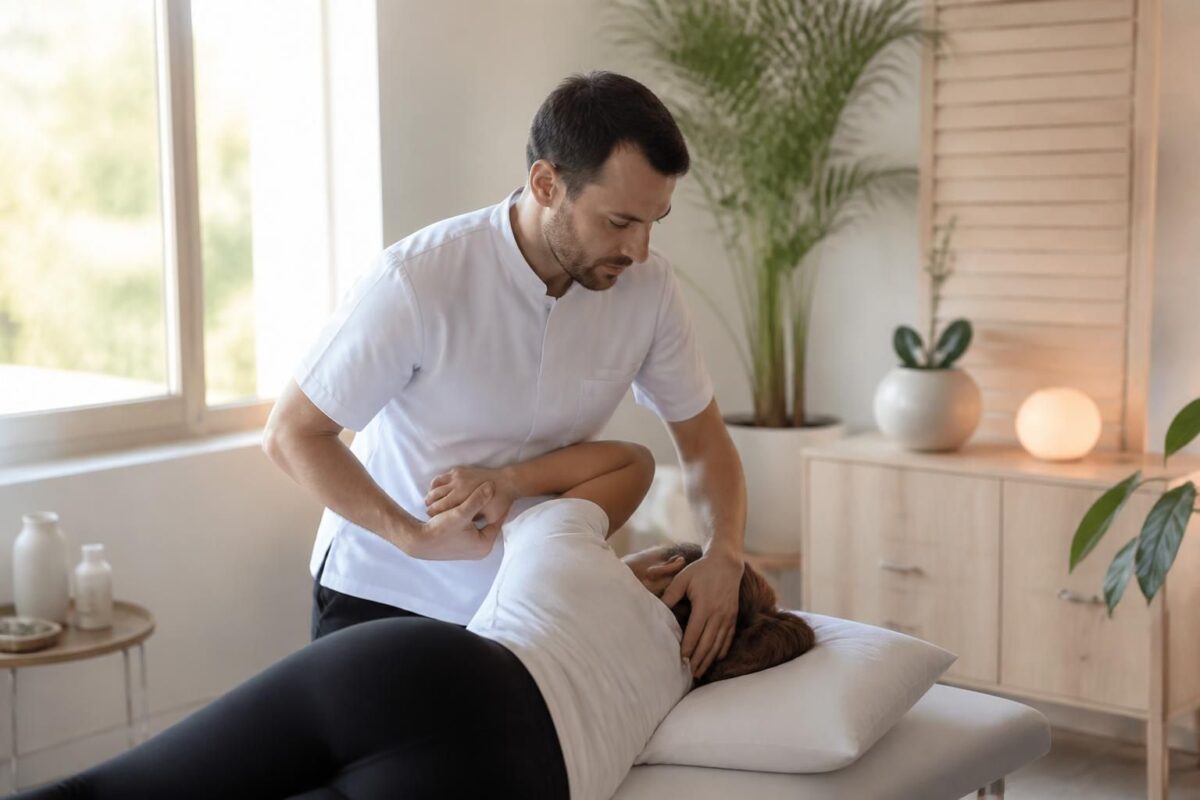
Why osteopathy is a natural alternative to drug treatments
In short In short, Osteopathy is one Soft manual approach who restores thebalance and mobility of the body without drugs. This natural alternative Acts on the cause pain rather than their symptoms and can reduce the consumption of certain treatments.…
Adapted approaches and techniques
Key elements of the intervention
Osteopathic manipulations are based on global and patient-friendly techniques. By favoring precautionary and progressive gestures, the osteopath acts on the lumbar structures and segments of the lower limbs, while considering the fascias and postural supports. The therapeutic mechanism is based on modulating the nervous system, improving mobility and reducing muscle tension.
For certain leg pains, osteopathy can be part of multimodal care and is often associated with strengthening and stretching exercises, ergonomic advice and better physical activity.
Integrate osteopathy into a multimodal strategy
Complementarity with other care
The Multimodal strategy associate theosteopathy physiotherapy, appropriate physical activity and, if necessary, medical follow-up for the underlying conditions. The objective is to reduce pain sustainably and restore function.
Simple exercises and a gradual resumption of walking, swimming or cycling can strengthen the musculoskeletal system and support the results of the sessions. Everything must be coordinated with a doctor in case of red signs or pathologies requiring specific treatment.
The role of lifestyle and physical activity
concrete actions to be implemented
Improving posture at work and on a daily basis, wearing suitable shoes and practicing regular stretches contributes to reducing stress on the legs. The integration of an adapted physical activity, combining endurance and reinforcement, is essential to preserve the gains obtained by osteopathy.
Sleep, stress management and relaxation routines complete the approach; They directly influence pain perception and recovery.
Choose a competent osteopath
Criteria and questions to ask
Prefer a practitioner with recognized training and ADELI registration. Ask for information on its areas of expertise and on the proposed treatment plan, in order to assess the suitability with your needs and objectives.
| Objective | reduce the pain Chronicle of the legs and find theautonomy on a daily basis. |
| Mechanism | Action on the the nervous system and the fascias to modulate pain and restore mobility. |
| Global approach | Evaluation of postural chains and distant factors, not just the painful area. |
| Targeted pain | Lumbar pain associated with symptoms of the legs (radicular/sciatica) of mechanical origin. |
| Sessions and progress | 3–4 initial sessions close together, then adaptation according to the response. |
| Physical activity | Adapted activity (walking, swimming) to support the benefits and prevent recurrences. |
| Security | Low risk with practice by a trained professional; Monitoring of warning signals. |
| Collaboration | complete physiotherapy and medicine; Possible coordination with doctors and rheumatologists. |
| indicators | Decreased pain, improved mobility, better autonomy in daily activities. |
| Accessibility | cost not covered by social security; mutuals may partially reimburse according to the contract. |
Testimonials on osteopathy and chronic leg pain: regaining an optimal quality of life
Before, Chronic leg pain made me fear every step. The heaviness, tingling and evening cramps forced me to cancel out and depend on painkillers. After consulting an osteopath, I discovered an approach overall which takes into account the whole body. In a few sessions, my symptoms decreased, my movements became more fluid and my quality of life has greatly improved. I can walk again for a long time without pain and resume my daily activities with confidence.
Marc was living with a lumbar pain spreading in the leg, limiting his daily journeys and his sport. The osteopathic intervention favored gentle techniques, centered on the balance of the musculoskeletal system, and a program of exercises to do at home. Gradually, the pain receded and mobility returned. Today, he resumes his Sunday walks and speaks of a Quality of life found without addiction to analgesics.
Claire suffered from Heavy legs and nocturnal pain linked to inadequate posture. After a few osteopathy sessions focused on fascia relaxation and postural balance, she noted a decrease in tension and an improvement in circulation. She can now enjoy longer outings, without fear of being blocked by pain, and her energy is back on a daily basis.
Lucas worked upright throughout the day and suffered from Chronic leg pain which affected his concentration and mood. The osteopathic approach, by combining targeted manipulations and postural advice, improved its mobility and reduced inflammation. After a few weeks, he was able to resume his evening race and feels more efficient at work, with a Quality of life found.
Isabelle suffered fromOsteoarthritis and joint pain, making simple gestures difficult. Osteopathy made adjustments that released mobility restrictions and eased pain. It tells a more stable routine, more walking, and a better light sports recovery. Its quality of life is now higher, and she recommends osteopathy as a non-drug approach for chronic leg pain.
The pain that persists in the legs can be debilitating and have a lasting impact on everyday life. In this context, theosteopathy offers a global approach, centered on the person and not on the only symptom. Dr. Sylvain Desforges, expert in osteopathy, naturopathy and manual medicine, has been involved for years in the management of chronic leg pain, with a permanent concern to combine attentive listening, fine palpation and targeted interventions. Founding President of TagMed and the ACMA association, he carries a practice focused on the effectiveness, safety and ethics of care, in order to help each patient regain a regained mobility and autonomy.
In its approach, the body is considered as a functional unit. Localized pain in the leg can trap whole postural chains and find its origin far from the pain point, for example in the pelvis, the lumbar spine, or even old tissue scars. The osteopathic approach is based on a detailed anamnesis and a palpatory examination which aim to identify primary dysfunctions and postural habits that perpetuate the pain. This holistic vision makes it possible to develop a personalized therapeutic plan, integrating the techniques best suited to each patient and its context.
On the scientific level, the evidence grows without consecrating osteopathy as a universal solution. Clinical trials and synthetic analyzes indicate significant clinical improvements for some lower limb pain, with noticeable decreases in pain and functional gains in the short and medium term. The mechanisms invoked go beyond the simple idea of “resetting the bones”: manipulations influence the nervous system, fascias and circulation, modulating painful perception and promoting better amplitude of movement. The results observed vary according to the individual and the exact nature of the pain, which underlines the need for personalized and adapted support.
Practical applications for leg pain include associated low back pain, knee pain, fascia disorders and post-traumatic muscle pain. Much of the benefits come from techniques that restore mobility and reduce tensions, while preserving a drug-free approach when possible. Osteopathic action can be part of a multimodal strategy, in addition to adapted physical activities, physiotherapy, good ergonomics and psychological support when necessary.
The typical course begins with an in-depth assessment and a first exploration session that usually lasts between 45 minutes and one hour. Then, the protocol is adjusted according to the patient’s response, with a range of initial appointments often between 3 and 4, then interview sessions to prevent recurrences. The objective is clear: to restore function, reduce pain and allow you to resume your daily and sporting activities with efficiency and serenity.
Dr. Sylvain Desforges favors an approach based on data, safety and dialogue with the patient. The integration of technologies such as spinal decompression, laser And shockwave therapy can complement manual care to optimize results when relevant. To find out more about its approach and the services available, contact the TagMed clinic directly and explore the possibilities offered by this team dedicated to your well-being and quality of life.
This rapid summary shows how theosteopathy can help to reduce Chronic leg pain and find a quality of life optimal, thanks to a Global approach and non-drug adapted to each patient. Clinical data indicates significant improvements in pain and function in a majority of people involved, particularly for lower back pain and pain related to musculoskeletal disorders of the lower limbs, while stressing that the results vary by seniority and individual characteristics. To go further, discover our specialized resources and articles, in particular on personalized care and long-term profits.
Available evidence shows that osteopathy can offer relief Moderate to significant chronic lower back pain in about 60 to 70% patients, with effects that continue on average 3 to 6 months after the sessions. These results are part of a mechanistic framework where the work is based on the nervous system, the fascias and the overall balance of the body, rather than on an exclusively localized approach. To learn more about the mechanisms and data available, see dedicated resources like those described in our postural tension reductions and efficacy on chronic pain.
An approach overall Remains essential: the osteopath assesses the interactions between mobility, posture and lifestyle, and offers an adapted protocol that can last several weeks. Although some patients notice improvement from the first session, others require a set of appointments (sometimes 3 to 4 close sessions and then maintenance visits) to consolidate the benefits and prevent recurrences. To optimize the results, the integration of appropriate physical activities and specific exercises is recommended.
The safety and limits of osteopathy should be recalled: Handling carried out by a competent practitioner generally has few side effects and remains non-invasive compared to certain drug treatments. However, some peripheral pain or neuropathy may require a multimodal approach coordinated with other health professionals. For complex cases, collaboration with doctors and physiotherapists can promote more complete and personalized care.
For those who wish to deepen or consider a personalized approach, several resources support the therapeutic approach: Custom support, Prevention of prolonged postures, and Reduced drug dependence. Other useful readings address the impact on athletes and the overall management of chronic pain, in particular through perspectives on recovery and improvement of function on a daily basis.
For those who want to further explore current data and approaches, you can check out the following additional resources: Osteopathy and sports recovery, Latest scientific data, and Chronic pain management.

Dr Sylvain Desforges, B.Sc., D.O., N.D., osteopath, is the founding president of TAGMED and of the ACMA association. He dedicates his practice to chronic spinal pain, low back pain and symptoms compatible with sciatica, particularly when pain radiates toward the buttock, leg, calf, foot or toes.
Through SOS Sciatique, he publishes educational content on sciatica symptoms, possible causes such as disc herniation, disc narrowing, foraminal stenosis or irritation of a lumbar nerve root, as well as non-surgical approaches that may be considered according to the evaluation. At Clinique TAGMED, care may include, depending on the case, motorized neurovertebral decompression, specific osteopathic care or precision percussion.
For an evaluation related to sciatica treatment in Montreal / Mount Royal or sciatica treatment in Terrebonne, please consult the services available at Clinique TAGMED.
Medical disclaimer
The information published on SOS Sciatique is provided for educational purposes only and does not replace a consultation, diagnosis, opinion or treatment provided by a physician or another authorized healthcare professional. The author of this article is neither a medical doctor nor a specialist in a medical specialty recognized by the Collège des médecins du Québec. The osteopathic, manual medicine or functional support approaches described on this site do not constitute medical acts and are not intended to replace medical follow-up.
Consult a physician or emergency service in cases of loss of bladder or bowel control, anesthesia in the saddle area, significant or progressive weakness in the leg or foot, fever, recent trauma, severe pain or rapid worsening of symptoms. For more details, please read our Legal Notice.