Why osteopathy is a natural alternative to drug treatments
29/06/2026
Osteopathy and chronic leg pain: regaining an optimal quality of life
29/06/2026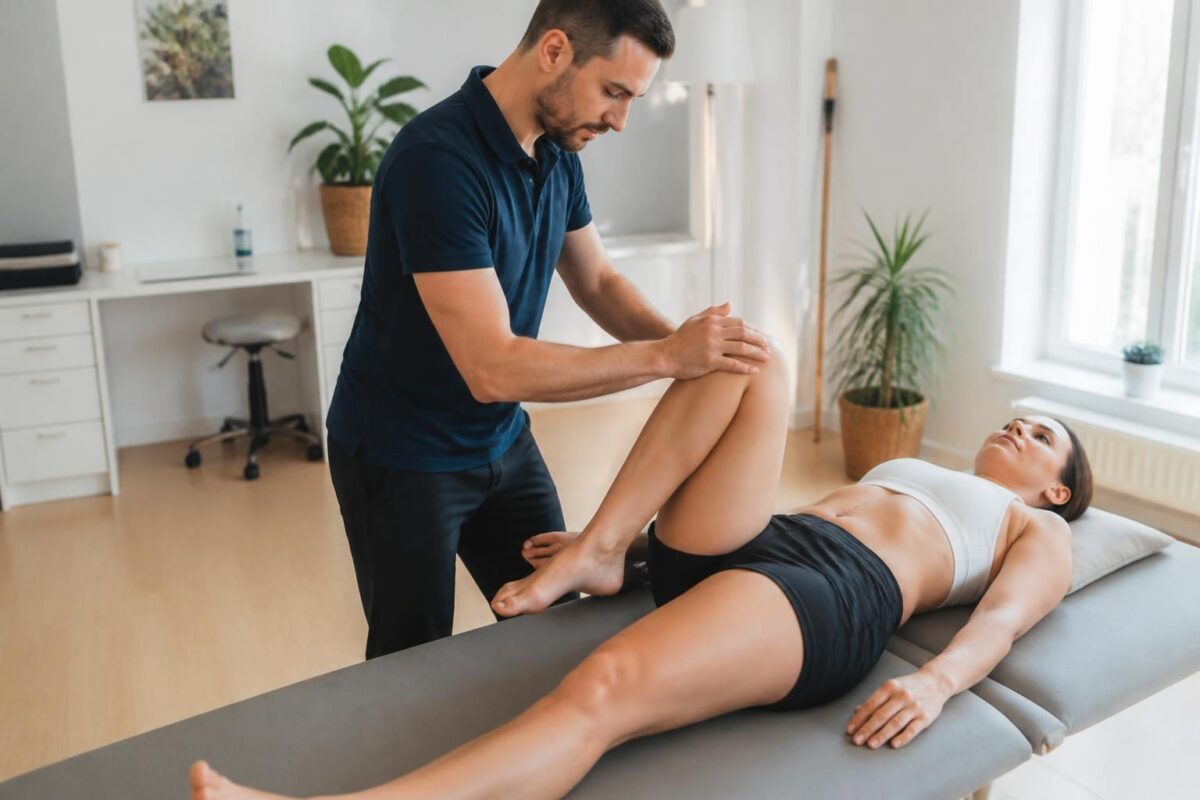
In short
| In short, Post-operative osteopathy is an approach fresh which supports the recovery After a Complex surgery. It helps to reduce the pain and the fatigue, improves the mobility and accelerates the healing thanks to a better vascularization and the release of tensions. By integrating into a Global rehabilitation program, it promotes welfare and prevent complications. accessible to Montreal, this method is particularly indicated to optimize the Operating sequences and facilitate the resumption of Daily activities without pain. |
After complex surgery, osteopathy supports recovery with gentle manual techniques that act on the pain, the Muscle tensions and the mobility operated areas. They improve the Blood and lymphatic circulation, promote the healing and reduce the Fatigue and stress post-operative, contributing to a more restorative rest. This approach fits into a multidisciplinary rehabilitation program and can prevent some complications, offering tailored and personalized support throughout recovery until return to normal activity.
This article explains how Osteopathy can support the recovery After a Complex surgery. It describes the mechanisms of action, the manual techniques used and the expected benefits, in particular the reduction of the pain, improving the mobility and an healing more efficient. Everything is part of a global and personalized rehabilitation program.
Approach and mechanisms
theosteopathy is one manual medicine who seeks to restore the overall balance of the body. she works to release tensions, to improve the circulation blood and to support the the nervous system. In post-operation, it aims for a Controlled mobility and an Healthy healing without invasive intervention.
Techniques used postoperatively
Osteopaths use Targeted manual techniques and fascia approaches to promote circulation and tissue function around the operated area. These gestures are integrated into a global care plan and do not replace the medical treatments prescribed by health professionals.
Pain, fatigue and well-being
Post-operative pain can be alleviated by stimulation of endorphins and muscle relaxation induced by osteopathic gestures. It can also improve the sleep and reduce the fatigue, two key elements of recovery.
Healing and mobility
a better one vascularization and better oxygenation of the tissues support the healing. By reducing the tensions around the scar, osteopathy can limit future adhesions and mobility limitations.
Integration into rehabilitation
To obtain good results, osteopathy is part of a multidisciplinary rehabilitation program, with appropriate follow-up. The practitioner adjusts care according to the patient’s progress and coordinates interventions with other health professionals.
Resources and additional readings
To expand your understanding, consult relevant resources on global benefits and mobility, including:
Global well-being and musculoskeletal system.
Preserve mobility and flexibility with age.
To understand the links between osteopathy And recovery after surgery, you can also refer to resources specialized in osteopathy and post-operative recovery:
Neurovertebral decompression and recovery
For more information on general structures and approaches, see also the resources of Tagmed Clinic.
Additional links on the safety and efficacy of osteopathic approaches after surgery can be consulted via specialized resources associated with non-invasive approaches and rehabilitation.
To better understand post-operative rehabilitation and mechanisms that can be mobilized, you can also explore information on the general aspects of osteopathy and post-operative recovery in the following resources: Prevention and maintenance of optimal mobility, Overall well-being, Mobility and flexibility.
Medical Disclaimer: The information and advice provided on this site does not replace the health professional’s diagnosis or treatment. Please note that Dr. Sylvain Desforges osteopath is neither a doctor of medicine nor a doctor, and is not a specialist in a medical specialty as defined by the Collège des Médecins du Québec. Manual medicine, functional medicine and sports medicine as described on this site exclude any medical treatment or diagnosis made by a doctor or specialist doctor. Always consult your doctor for any medical questions. For more details, please read our full legal notice. »
Reference axis: rehabilitation centered on the Functional mobility and the reduction of post-operative constraints.
- Pain decreased thanks to gentle handling
- Mobility found after immobilization
- Circulation and improved drainage
- strain released around the scar
- Posture and optimized stability
- Fatigue and reduced stress
- adherence and less likely rigidities
- Recovery Accelerated functional

This article presents how theosteopathy can support the Recovery after complex surgery, by associating gentle techniques with a global approach to the body. It helps to improve the mobility, to reduce the pain and optimize the healing, thus enrolling in a rehabilitation program Effective for faster and safer business recovery.
Understanding the role of osteopathy after complex surgery
After a major intervention, theosteopathy offers a body-centric approach as a whole. Thanks to soft manual handling, it aims to release tension, improve the bloodstream and lymphatic, and promote the proper functioning of the nervous system. This approach contributes to reducing the pain postoperative and to prepare the tissues for a Optimal healing.

How osteopathy improves the quality of life of active people
In short In short, theosteopathy is a global approach that Optimizes mobility and the function of the body of ACTIVE PEOPLE, for a better quality of life. It helps prevent injury and reduce Musculoskeletal pain While promoting the Sports recovery.…

Osteopathy and sports recovery: prepare the body for lasting performance
In short In short, Osteopathy and Sports recovery is one Global manual approach that sustainably prepares the body for the effort by restoring mobility and circulation After the effort. It is a discipline that acts on the sinews, the joints,…
Essential osteopathic techniques
Joint manipulations
Targeted mobilizations gradually restore the Joint mobility Limited by intervention and immobilization. These gestures, carried out gently, prevent compensatory tensions and facilitate the resumption of daily activities.
Stretching and work of the fascias
stretching and work on the fascia release adhesions and improve the flexibility, supporting healing and preventing pain from persistent tension.
Massages and drainage
the techniques of Draining massage stimulate the circulation and disposal of metabolic waste, reducing swelling and promoting Faster recovery.
Postural rebalancing and breathing
A work on the posture And breathing improves tissue oxygenation, decreases painful compensation and supports a gradual resumption of activities, especially during repetitive efforts and movements.
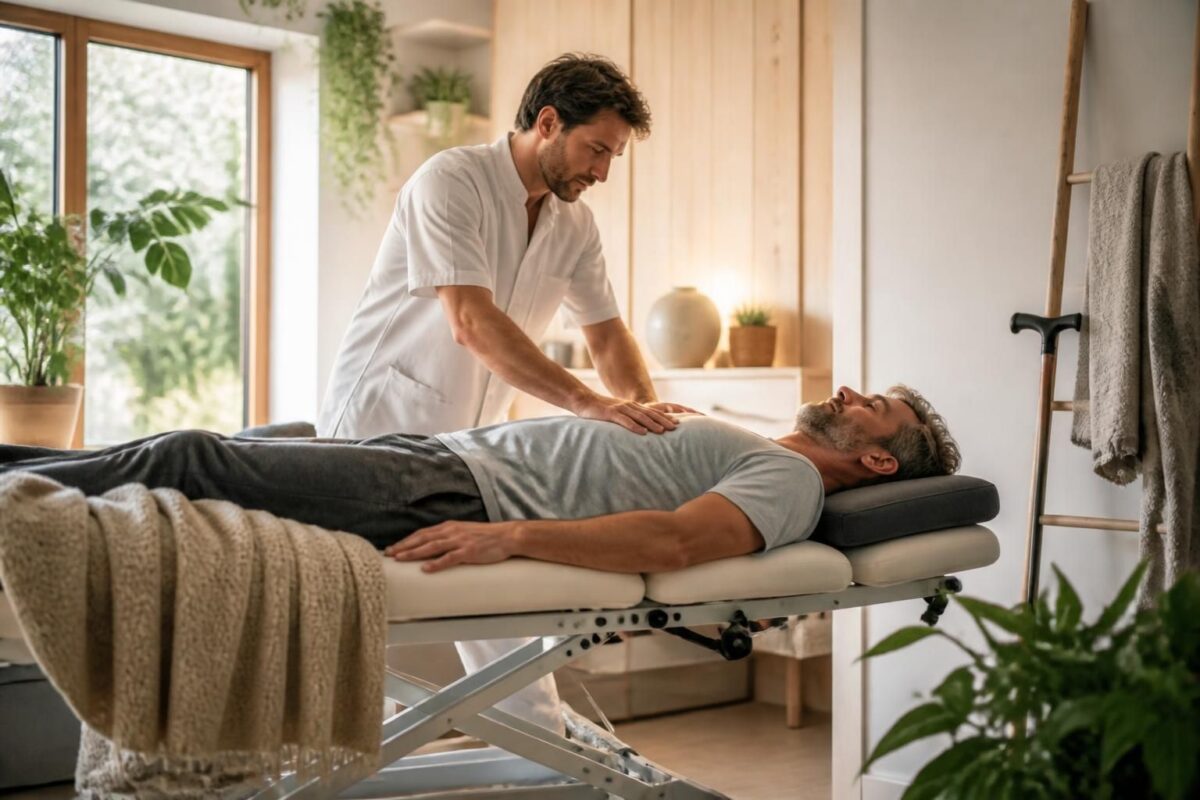
Why Osteopathy Is Essential For Recovery People
In short In short, Osteopathy in convalescence is an approach manual and holistic which helps to accelerate the recovery by restoring The balance, the mobility and a good circulation fabrics. it contributes to Reduce the pain, support the Back to…

Osteopathic manipulations to strengthen post-traumatic muscles
In short In short, Osteopathic manipulations for Strengthen post-traumatic muscles constitute a gentle manual approach aimed at restoring the mobility, reduce the pain and facilitate the Functional rehabilitation After a injury. What is Is it? A series of precise gestures…
Impact on pain, fatigue and mobility
By stimulating the production of endorphins and releasing the muscles around the operated area, theosteopathy participate in the pain reduction and from the fatigue. a better one mobility facilitates the Resumption of activities and strengthens bodily confidence during convalescence.

Osteopathy and prevention of work-related musculoskeletal disorders
In short theosteopathy is one Manual approach that restores body balance and prevents MSD related to work. Its advantages: reduction of tension, improvement of mobility and prevention of chronic pain. She is preventive and healing, suitable for office and trades…

The benefits of osteopathy to treat muscle imbalances
In short theosteopathy is a manual approach to restore themuscle harmony and postural considering the body as a whole. Its main benefits include the reduction of aches and tensions, the improvement of the mobility and from the posture, and prevention…
Integration into the rehabilitation program
To optimize the results,osteopathy must register in a rehabilitation program overall, in coordination with other health professionals. Regular monitoring makes it possible to adjust the care to the evolution of the patient and to associate the benefits of osteopathy with targeted exercises.
Example of postoperative progression
Weeks 1-2: osteopathy focused on reducing pain and inflammation, mild mobilization; Weeks 3-4: Work on muscle tension and improving mobility; Weeks 5-6: Optimization of posture and progressive reinforcement, with particular attention to the reassured recovery of daily and professional activities.
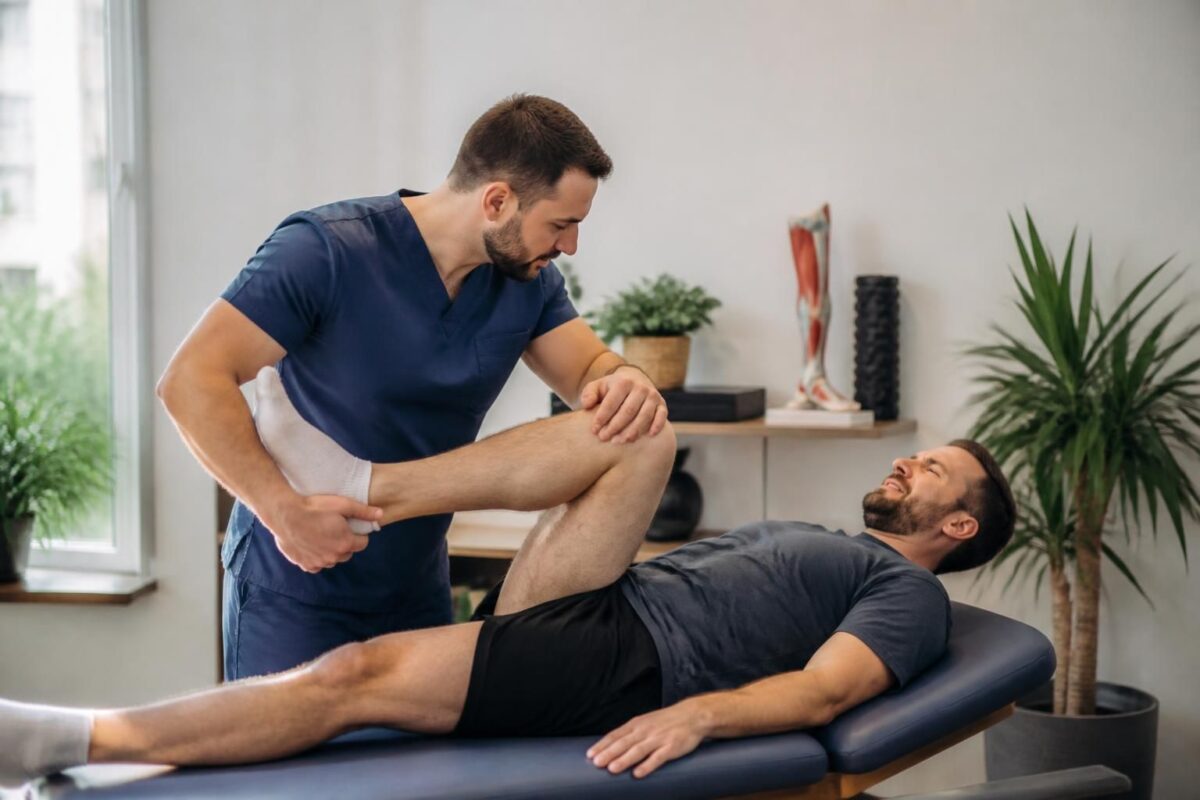
Osteopathy and chronic leg pain: regaining an optimal quality of life
In short In short, Osteopathy is one Global manual approach aimed at reducing Chronic leg pain and improve the quality of life. What is it? Non-drug therapy using the hands to identify restrictions and treat lesional chains. How does it…
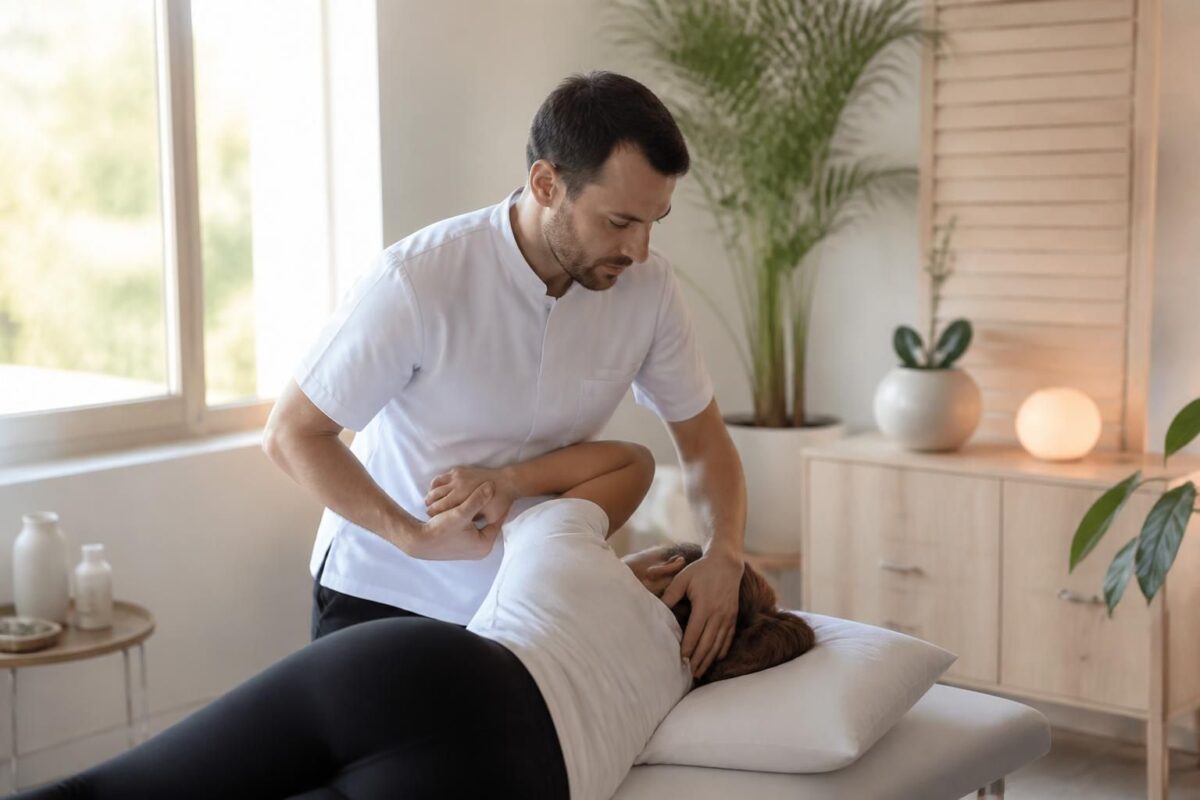
Why osteopathy is a natural alternative to drug treatments
In short In short, Osteopathy is one Soft manual approach who restores thebalance and mobility of the body without drugs. This natural alternative Acts on the cause pain rather than their symptoms and can reduce the consumption of certain treatments.…
When to consult and what to expect
Consult a qualified osteopath if the pain Persists after the first convalescence phases, if movement limitations or tensions remain problematic, or if fatigue is abnormal. Expect personalized sessions that respect the healing pace and support a safe progress towards a recovery sustainable.
| Aspect | Concise impact |
|---|---|
| pain and discomfort | gradual reduction in pain and tension around the operated area. |
| Mobility and amplitude | Progressive improvement in mobility and range of motion. |
| Circulation and edema | Improved blood and lymph circulation, reduction of edema. |
| Healing | Promotes harmonious healing and prevents adhesions. |
| Posture and rebalancing | Optimization of posture and alignment of the body to limit tension. |
| Sleep and stress | Reduced stress and improved sleep and general well-being. |
| Prevention of complications | Prevention of functional complications and support for recovery. |
| Monitoring and coordination | Coordination with the medical team for a personalized rehabilitation plan. |
| Back to activity | Progressive planning of the return to activity according to the capacities found. |
Testimonials: How Osteopathy Supports Recovery After Complex Surgery
Marie, 58 years old — Replacement of the knee: “After my operation, theosteopathy was a real support. The Gentle techniques and targeted have released tensions around the knee and improving the Blood and lymphatic circulation, reducing theswelling and the pain. I was able to start rehabilitation earlier and recover more quickly. »
Luc, 64 — Spine surgery: “The Gentle manipulations aimed at restoring mobility have decreased the stiffness postoperative and improved my mobility. Sleep has become deeper and the fatigue gradually faded. The support was personalized and gave me the necessary confidence to resume my daily activities. »
Élise, 47 years old — Pelvic surgery: “The Fascia techniques and the Muscle stretching warned the Scar adhesions and reinforced my flexibility. The healing was done in a more harmonious way and I was able to return to work more quickly than expected. »
Jean-Pierre, 72 — Abdominal surgery: “The Draining massages and work on circulation have reduced theedema and the pain, and helped me resume everyday gestures with less fatigue. losteopathy was a real lever to regain my autonomy. »
Clara, 50 years old — Chest reconstruction: “After my surgery, theosteopathy brought a welfare overall, a better sleep and a reduction in stress. The regular sessions allowed me to consolidate the achievements and to approach rehabilitation with serenity. »
Dr. Sylvain Desforges, Expert in osteopathy, naturopathy and manual medicine, is the founding president of tagmed and association acma. His career is dedicated to innovation in health care and the management of Chronic pain, with a specialized approach to recovery issues after complex surgery. Her work is based on rigorous evaluation, a strong therapeutic relationship and personalized protocols to optimize the health and well-being of patients.
As part of the operative follow-up, theosteopathy Presents as essential support for recovery. Thanks to soft and calibrated manual techniques, it acts on residual tensions, improves blood circulation and regulates the functioning of the nervous system. This approach helps to reduce pain, facilitate smoother movements and accelerate healing mechanisms, while limiting adverse effects such as inflammation and stiffness.
Among the preferred tools are the Joint manipulations intended to restore the mobility of the joints injured or immobilized by the intervention and the post-operative period; the Muscle stretching to prevent adhesions and preserve tissue elasticity; the Draining massages that energize circulation and lymph to reduce edema and facilitate the elimination of toxins; and the Fascia techniques which release deep tension and improve the flexibility of the trunk and joint belts. Together, they are part of a progressive and tissue-friendly rehabilitation.
Regarding postoperative pain, gentle osteopathic interventions can reduce painful sensations and promote relaxation of the muscles surrounding the operated area. By stimulating the production of endorphins and promoting more fluid breathing, osteopathy supports more serene recovery and better tolerance to active rehabilitation.
Beyond pain and mobility, osteopathy acts on the fatigue and stress inherent in the postoperative period. A global rebalancing of the body can improve sleep quality, reduce anxiety and establish a mental state conducive to healing. This psychosomatic dimension is integrated into the practice in a holistic and personalized logic.
Integrated into a multidisciplinary rehabilitation program, the osteopathic approach harmonizes the actions of the various health professionals and ensures regular monitoring adapted to the evolution of the patient. Dr. Desforges focuses on evidence-based care, with ongoing adjustments in care based on progress and emerging needs, in order to optimize function, mobility and sustainable well-being.
In close collaboration with surgical teams and rehabilitation professionals, this approach aims to offer recovery pathways that respect the pace and specific needs of each patient, while placing well-being and functionality at the heart of the practice.
This text explains how theosteopathy Can support recovery after complex surgery, favoring a Faster healing, a pain reduction and an improvement in welfare When this approach is integrated into a rehabilitation program global.
The mechanisms of action of theosteopathy postoperatively based on gentle manipulations that release tension, improve the bloodstream and facilitate the operation of the system nervous. This approach can support the healing and reduce pain, stiffness and inflammation associated with the procedure.
Among the techniques commonly used are the Joint manipulations To restore mobility, Muscle stretching To prevent adhesions, drainage lymphatics to reduce swelling and Fascia works to release deep tension. These specific actions aim to accelerate recovery and make daily activities more feasible.
The reduction of pain and from the fatigue Goes through mechanisms like endorphin stimulation and muscle relaxation, which improve comfort and endurance during rehabilitation sessions and beyond.
Post-operative convalescence is also marked by the stress and a reduction in sleep quality; The osteopathic approach offers a Overall balance which can promote a Restful sleep and better tolerance to rehabilitation exercises.
In terms of healing, manipulation and improvement of vascularization contribute to a Healthy healing and preventing long-term adhesions and chronic pain. By working around the scar, we can limit the tensions that hinder mobility.
Integrate theosteopathy in a global rehabilitation program, including the physiotherapy and, if necessary, support psychological, optimizes the chances of full recovery. Working with dedicated professionals, such as Osteorive, allows holistic care adapted to the evolution of the patient.
To learn more, check out relevant resources such as
Osteopathy and recovery after surgery,
Why osteopathy is beneficial in post-operative rehabilitation,
Role of osteopathy in post-surgical rehabilitation,
Post-operative osteo surgery,
Osteopathy and recovery after a fracture.
This work is part of a holistic and progressive approach. By collaborating with competent professionals and adapting the plan to progress, osteopathy can support a resumption of functional activities, while reducing the risk of complications and promoting sustainable well-being.

Dr Sylvain Desforges, B.Sc., D.O., N.D., osteopath, is the founding president of TAGMED and of the ACMA association. He dedicates his practice to chronic spinal pain, low back pain and symptoms compatible with sciatica, particularly when pain radiates toward the buttock, leg, calf, foot or toes.
Through SOS Sciatique, he publishes educational content on sciatica symptoms, possible causes such as disc herniation, disc narrowing, foraminal stenosis or irritation of a lumbar nerve root, as well as non-surgical approaches that may be considered according to the evaluation. At Clinique TAGMED, care may include, depending on the case, motorized neurovertebral decompression, specific osteopathic care or precision percussion.
For an evaluation related to sciatica treatment in Montreal / Mount Royal or sciatica treatment in Terrebonne, please consult the services available at Clinique TAGMED.
Medical disclaimer
The information published on SOS Sciatique is provided for educational purposes only and does not replace a consultation, diagnosis, opinion or treatment provided by a physician or another authorized healthcare professional. The author of this article is neither a medical doctor nor a specialist in a medical specialty recognized by the Collège des médecins du Québec. The osteopathic, manual medicine or functional support approaches described on this site do not constitute medical acts and are not intended to replace medical follow-up.
Consult a physician or emergency service in cases of loss of bladder or bowel control, anesthesia in the saddle area, significant or progressive weakness in the leg or foot, fever, recent trauma, severe pain or rapid worsening of symptoms. For more details, please read our Legal Notice.