Montreal sciatic treatment: what to do when the pain descends into the leg?
30/06/2026
Heel pain: S1 root or other cause?
30/06/2026
In short In short, the sciatic treatment at Terrebonne is one Effective solution for a Pain going down in the leg. Quick definition: This is a set of appropriate measures to reduce inflammation and restore mobility, without surgery. Advantages: Quick relief, better mobility and gradual return to activity, with local and personalized support. How does it work? A Local assessment Guide the plan that can combine measured rest, manual therapies, targeted exercises and, if necessary, drug treatments or injections, in order to obtain lasting results adapted to your daily life in Terrebonne. |
Quick summary for sciatic treatment at Terrebonne : What to do when the pain descend into the leg ?
- Brief rest and gradual resumption of activity: avoid prolonged rest, but do not force at first.
- Adopt good postures And favor positions that relieve. Walk regularly and, when necessary, lie down with slightly raised legs.
- Treatment initial: use ains and of paracetamol to calm the pain; If the intensity is high or recurrent, your doctor may offer other analgesics.
- local and specialized approaches: sessions of physiotherapy or ofosteopathy in Terrebonne to free the nerve and restore mobility; Injections may be considered if the pain persists.
- Exercises and heat: after the acute phase, practice stretching and reinforcement; the heat Can help relax the muscles, the cold being reserved after a trauma.
- Follow up and signs to watch: If the pain persists beyond a few weeks, or gets worse, consult for evaluation and possibly imaging; The surgery remains exceptional.
This article clearly presents what to do when the sciatica descends into the leg at Terrebonne. You will discover the signs to monitor, available non-surgical options and local resources to help you regain mobility and comfort quickly.
Understanding sciatica and its main signs
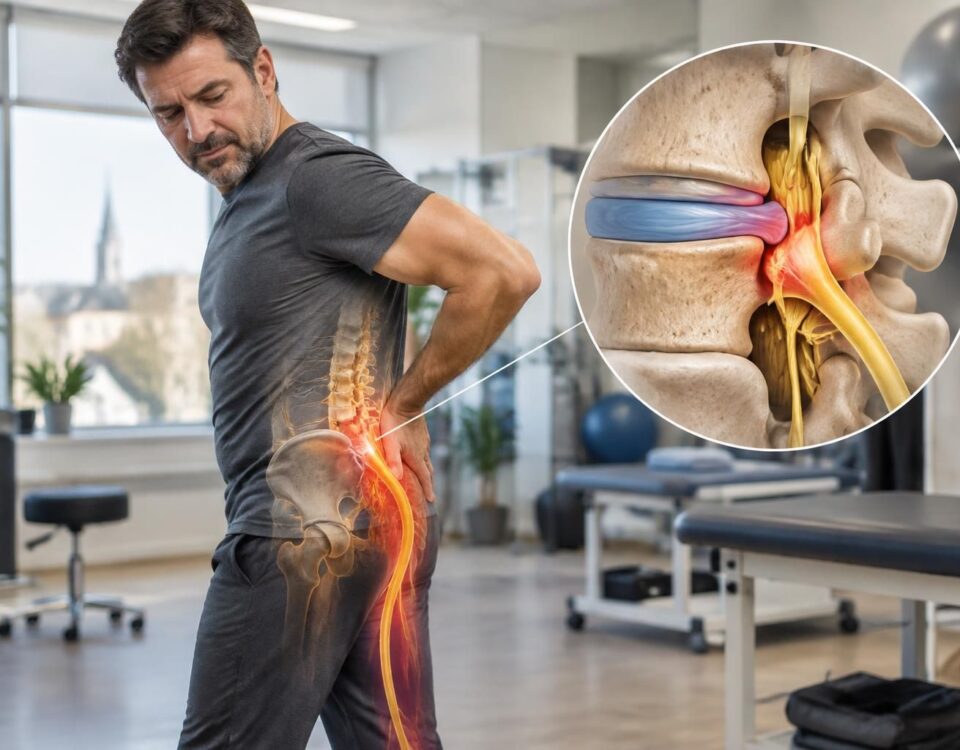
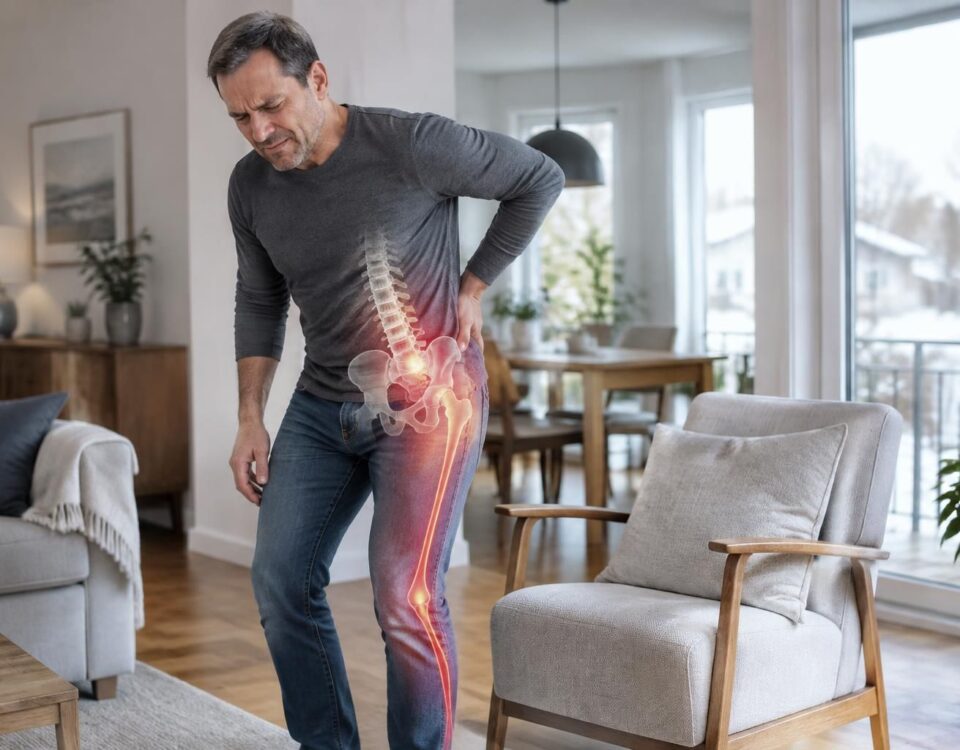
The sciatica is a pain that can start from the lower back and down the leg. It may look like an electric shock or a burn. Tingling, tingling or numbness may accompany the pain. The pain can follow two paths depending on the location of the irritated root, often around L4-L5 or L5-S1 levels.
The pain may be due to compression and inflammation of the sciatic nerve. Common causes include young disc herniation or spinal canal stenosis, as well as factors such as sedentary lifestyle and prolonged postures. In some people, pregnancy can also alter posture and cause lumbosciatica, but these cases usually remain transient after childbirth.
Evaluation and key moments to consult
If the pain is associated with significant weakness, loss of sensitivity or difficulty moving the foot, check quickly. A doctor can assess the extent of the disorder and offer appropriate options. In case of pain that persists beyond a few weeks or worsens, a specialized assessment may be necessary.
For a personalized evaluation in Terrebonne, you can contact the Tagmed clinic for a non-surgical approach adapted to your case..
Treatment options in Terrebonne and at the TagMed Clinic
In Terrebonne, the treatment of the sciatica Focus on non-surgical approaches when possible. techniques such as neurovertebral decompression motorized and specific osteopathy can be considered depending on the evaluation. The TagMed Clinic offers these options in Terrebonne and Montreal.
Specialized resources explain the benefits of osteopathy for sciatic pain and non-surgical approaches available. For more information, see the dedicated pages on sossciatica.com and descriptions of non-surgical treatments at sossciatica.com.
For cases requiring specialized management, neurovertebral decompression can be part of the options explored. Information on this approach and other non-surgical alternatives are available at decompressionneurovertebrale.com.
If you are looking for specific information in Terrebonne, the sciatica treatment page in Terrebonne on sossciatica.com can guide you to a suitable assessment.
Prevent and manage on a daily basis
Short rest can help in the acute phase, but it is necessary to resume an activity without excess. Walking is useful, but without pushing too hard. Proper posture and regular movements help prevent recurrences.
In the long term, staying active and following a suitable program can promote healing. A professional can offer advice on pain management and muscle building, while avoiding movements that aggravate pain.
When to consider a non-surgical procedure or surgery
Most sciatica regress with non-surgical treatments. If the pain persists or is stubborn, a specialized assessment may refer to additional options, including non-surgical procedures or, in rare cases, a surgical procedure discussed with your doctor. For cases of heavy disc herniation or narrow lumbar canal, specific approaches are evaluated by the specialist.
For information and resources, consult the dedicated pages on Health Magazine and ameli.
For a non-surgical approach proposed by TagMed, see Clinqie Tagmed – Terrebonne.
In any case, the solutions are adapted to each patient. For a personalized assessment and a clear action plan, contact the TagMed Clinic or consult the resources mentioned above.
Relevant Professional Associations: Approaches presented are part of practices recognized by ACMA and the College of Canadian Osteopaths.
For more historical or pedagogical information on osteopathy and training, references are limited to NUMSS, NAO, National University of Medical Sciences and National Academy of osteopathy.
For general information about the mechanisms and non-surgical options associated with sciatica, see the published resources on sossciatica.com.
Finally, for a practical and safe approach, favor the advice of a health professional and favor official medical resources. For details on non-surgical options and services in Terrebonne, see Tagmed Clinic.
Medical Disclaimer: The information and advice provided on this site does not replace the health professional’s diagnosis or treatment. Please note that Dr. Sylvain Desforges osteopath is neither a doctor of medicine nor a doctor, and is not a specialist in a medical specialty as defined by the Collège des Médecins du Québec. Manual medicine, functional medicine and sports medicine as described on this site exclude any medical treatment or diagnosis made by a doctor or specialist doctor. Always consult your doctor for any medical questions. For more details, please read our full legal notice.
- Short rest: 24 to 72 hours max, then gradual resumption of activity without forcing.
- Light Walk And regular movement to limit sedentary lifestyle.
- Posture: avoid painful positions; Lying with raised legs can relieve.
- Heat: Apply a heat source to relax the muscles.
- Lifting: bend your knees and keep your back straight; Avoid heavy loads.
- Sweet exercises: Stretching and mobility framed, without forcing if the pain increases.
- over-the-counter drugs: Paracetamol and NSAIDs according to medical recommendations.
- Consult If the pain persists beyond 2 to 6 weeks or worsens.
- Medical assessment: general practitioner then, if necessary, rheumatologist.
- Manual therapies: physiotherapy or osteopathy to release the nerve and prevent recurrences.
- Non-surgical options: reinforcement exercises, corrective postures and functional advice.
- Targeted treatments: Local injections or corticosteroids if resistant pain.
- Imagery: MRI or CT scan if persists despite initial treatment.
- Surgery: considered only in rare cases of severe disc herniation or resistant compression.
- local context: Adapted care in Terrebonne within local clinics.

Here are the essential recommendations for treating a sciatica When the pain descends into the leg, with a look at Terrebonne: understanding the causes, adopting daily gestures and knowing treatment options, from simple measures to specialized interventions, in order to quickly relieve and prevent recurrences.
Understand the pain that goes down the leg
The sciatic pain is neuralgia linked to the sciatic nerve, the longest in the body. It often starts with low back pain and then radiates to the buttocks and leg. The journey follows the roots L5 and S1, which explains the irradiation areas and possible sensations such as electric shock, burning or tingling. In more severe cases, muscle weakness may appear and make certain movements difficult in the foot.
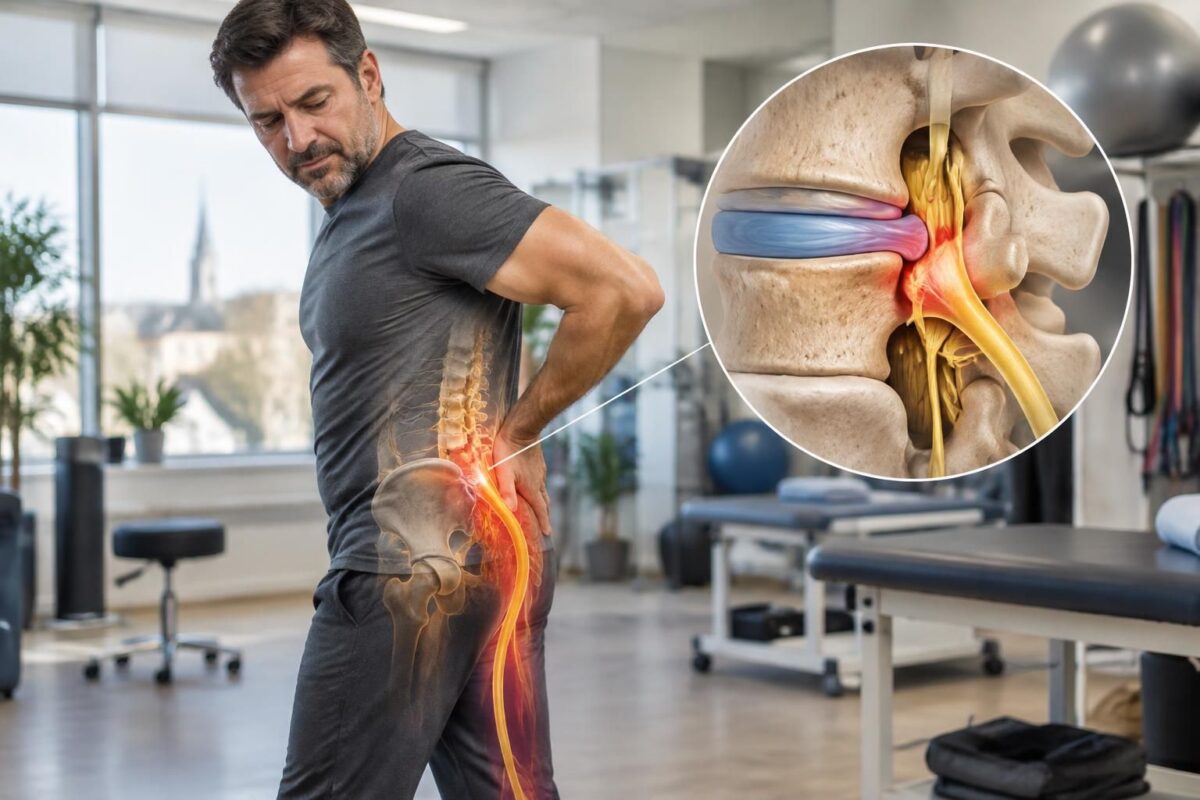
Sciatica in Terrebonne: nerve root, disc, and foramen explained simply
IN BRIEF Sciatica is pain that occurs when a nerve root in the lower back is irritated or compressed, sometimes by a disk or a narrowed foramen. Understanding these structures helps better locate the possible cause of symptoms and guide…
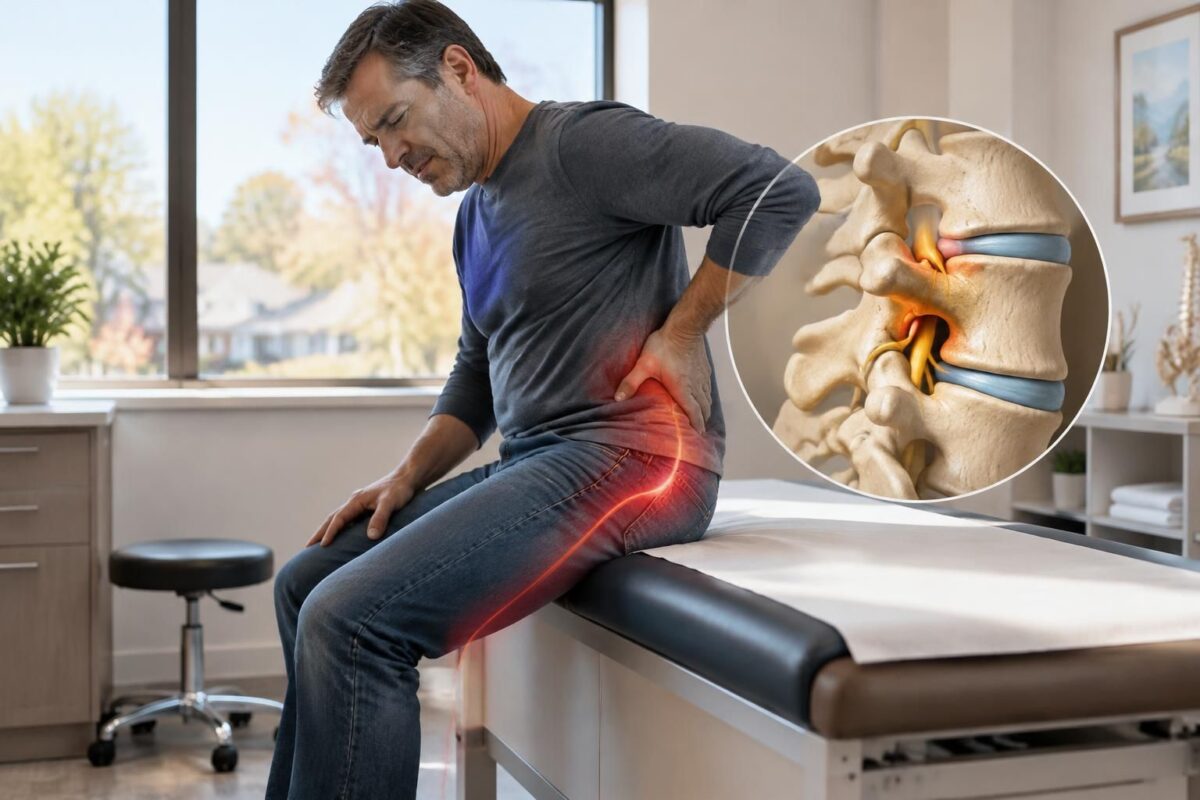
Sciatica in Terrebonne: understanding the L5-S1 foraminal compression
IN BRIEF The L5-S1 foraminal compression corresponds to a narrowing of the opening through which a nerve root passes, potentially contributing to sciatica. In Terrebonne, the assessment compares the side and course of the symptoms, neurological examination, imaging, and limited…
first gestures to adopt when the pain descends into the leg
In case of pain coming down, start with a brief rest, but do not stay bedridden for long. Resume moderate activity quickly, without forcing, and favor positions that relieve rather than those that aggravate the pain. A lumbar belt can be temporarily useful. Apply heat to relax the muscles and favor movement rather than sedentary lifestyle, in order to avoid worsening due to lack of activity.
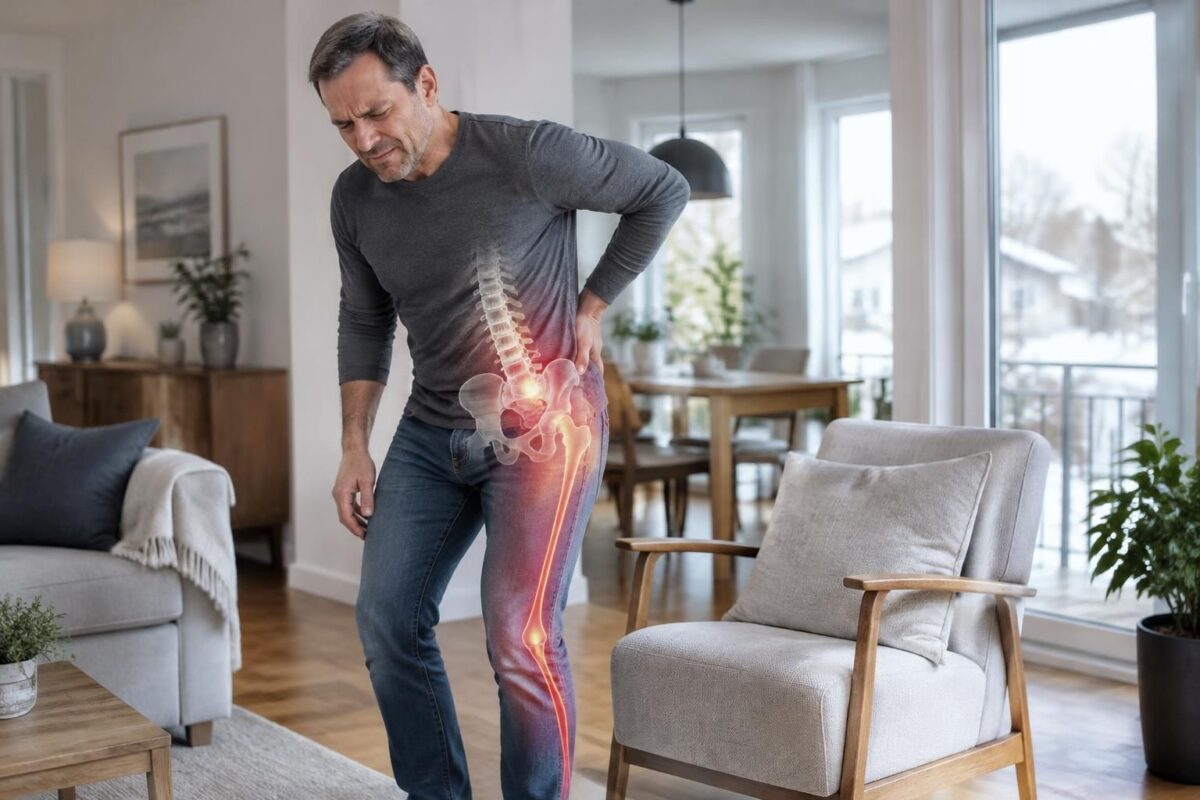
Sciatica in Terrebonne: why L5-S1 is often involved
IN BRIEF Sciatica corresponds to pain related to the irritation of a nerve root, which can extend from the buttock down to the leg. The L5-S1 level is often involved, as a disc herniation or irritation at this location can…
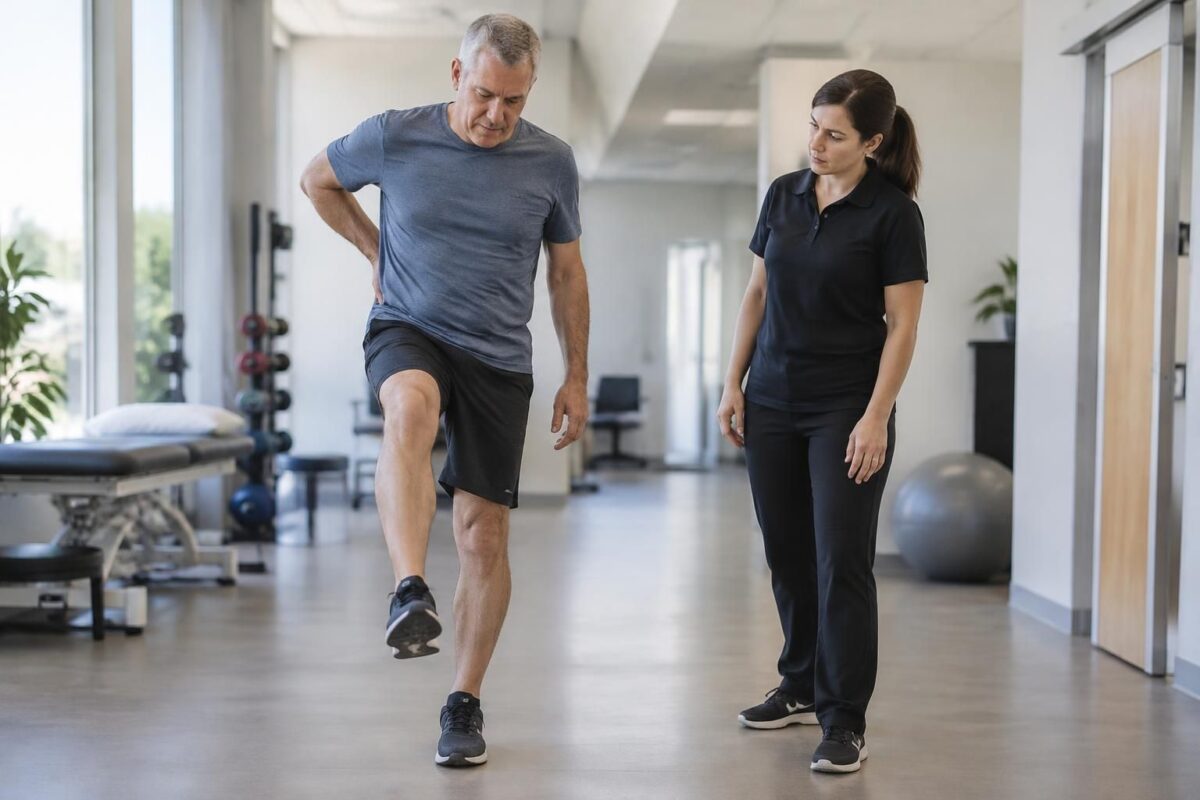
Sciatica in Terrebonne: L5 and difficulty lifting the foot
IN SHORT The L5 sciatica can cause pain or numbness on the side of the leg, the top of the foot, and the big toe, sometimes with difficulty lifting the foot. In Terrebonne, an evaluation compares strength, sensitivity, reflexes, and…
Treatment options available in Terrebonne
Non-medicated care and manual therapies
Non-drug approaches play a key role. A suitable osteopathic approach can release the nerve and restore mobility, supplemented by mobility and reinforcement exercises guided by the practitioner. Promote appropriate and regular physical activity, with targeted reinforcement, helps limit recurrences and support the spine.
Drugs and interventional techniques
In first intention, the Non-steroidal anti-inflammatory drugs (NSAI) and the paracetamol Help control pain and inflammation. If the pain returns or persists, a doctor may offer stronger drugs and, as the case may be, local injections to reduce inflammation around the nerve. In more tenacious situations, a Epidural lumbar infiltration Can be considered, under radiological guidance, in order to reduce nerve irritation.
When to consider surgery?
surgery remains rare and is essential especially in the event of Engine deficit important, or when severe and persistent symptoms are resistant to conservative treatment, especially in the presence of slipped disc significant which permanently blocks the lumbar canal. A specialized assessment is essential to determine this use.
Exercises and posture to favor
In addition to treatment, some exercises and postural adjustments may help. For example, in a lying position, bring your knees to your chest and hold for a few moments; Slowly cross one leg on the other and alternate the sides; And gently stretch the spine by extending the arms above the head, taking care not to force it if the pain increases. Always seek the advice of your practitioner before starting an exercise program and avoid painful movements.
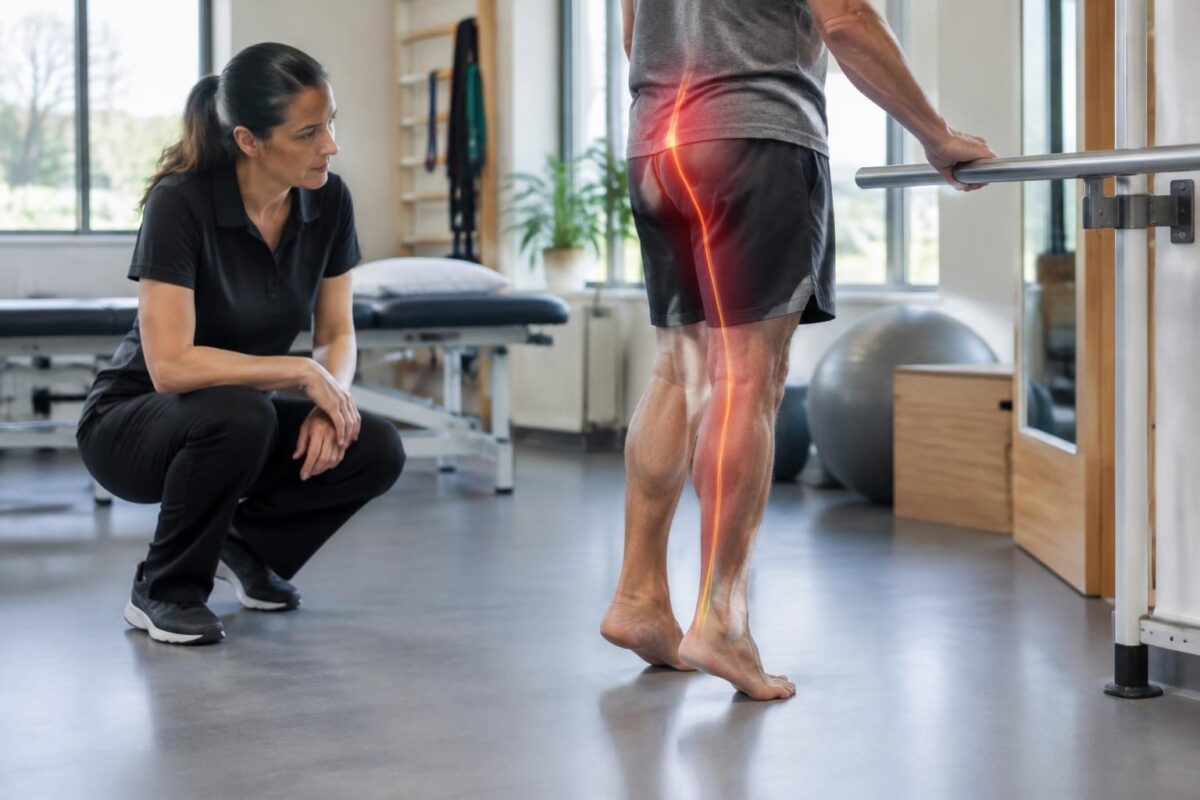
Sciatica in Terrebonne: S1 and difficulty standing on tiptoe
IN SHORT An S1 sciatica can irritate the nerve root associated with the calf and make it difficult to rise onto the balls of the feet. This sign should be evaluated with strength, sensitivity, reflexes, and walking: the pathway of…

Sciatica in Terrebonne: L4-L5 and pain towards the top of the foot
IN BRIEF A L4-L5 sciatica can radiate to the outer side of the leg and the top of the foot, sometimes reaching the big toe. This pathway can guide the assessment, though it does not suffice to confirm the cause:…
When to consult and what to do next
If the pain persists after three to six weeks or is accompanied by a motor deficit, quickly consult a doctor or osteopath in Terrebonne for a complete assessment and appropriate options, including, if necessary, imaging and a personalized therapeutic plan. In the meantime, favor low-impact activities, progressive reinforcement and good postural hygiene on a daily basis.

Sciatica in Terrebonne: L5-S1 and symptoms in the calf
IN BRIEF A L5-S1 sciatica can cause pain that radiates down the calf, sometimes accompanied by tingling, numbness, or weakness. At Terrebonne, an assessment at the TAGMED Clinic helps to examine the symptom pathways, strength, and sensitivity, and then discuss…

Sciatica in Terrebonne: pain in the big toe, L5 root or another cause?
IN BRIEF Pain in the big toe accompanied by pain in the buttock or leg may be compatible with irritation of the L5 root, but other causes are possible. In Terrebonne, the evaluation notably compares strength, sensitivity, and gait to…
Terrebonne sciatic treatment: what to do when the pain descends into the leg?
| Element | Concise recommendation |
|---|---|
| Rest and gradual recovery | Initial rest from 2-3 days, then progressive resumption of activities with lumbar support if necessary. |
| front-line drugs | paracetamol and ains Alternating, according to the advice of the doctor. |
| Manual therapies | Use adapted sessionsosteopathy or of physiotherapy to free the nerve and mobilize the region. |
| Heat | Apply a heat local to relax the muscles and relieve the pain. |
| Physical activity | move regularly; Prioritize marches and avoid prolonged inactivity. |
| Exercises at home | Stretching and strengthening exercises prescribed, to be performed regularly. |
| Local infiltrations | stealth locals (xylocaine and corticosteroids) in case of resistant pain. |
| Lumbar infiltration | Lumbar infiltration epidural Radio-guided for very intense and rebellious pain. |
| Surgical option | surgery envisaged only in case of Severe disc herniation or persistent narrow canal. |
Testimonials on Terrebonne sciatic treatment: what to do when the pain descends into the leg?
“Before my sciatic treatment in Terrebonne, the sciatic pain descended into my right leg and wasted my days. After a few sessionsTargeted osteopathy and a program ofExercises at home, I regained mobility and sleep came back. »
“As a delivery man, the pain that went down to the foot blocked my journeys. In Terrebonne, I was explained the causes and proposed non-surgical solutions: Manual techniques, reinforcement and postural advice. In a few weeks, the pain decreased and I was able to resume my activities normally. »
“My case was acute and I was afraid of invasive treatment. Terrebonne staff guided me step by step: neurovertebral decompression, osteopathy, and a plan of exercises that can be done at home. The pain going down in the leg gradually moved away and I feel confident again. »
“I work for several hours sitting down and I had pain that went from the lower back to the leg. In Terrebonne, I received practical advice on postures and osteopathy sessions. Now I move more and feel that the leg is less painful after each session. »
“After two months, my lumbosciatica decreased markedly. The treatment in Terrebonne has been personalized: muscle building, Column mobility and tips for resuming regular physical activity. I am grateful to be able to relive without this pain that descended into the leg. »
in the context of sciatic treatment at Terrebonne, Dr. Sylvain Desforges embodies an approach integrated mingled osteopathy, naturopathy and manual medicine. Recognized expert, he is the founding president of the clinics tagmed and association acma, and puts at the service of its patients a career dedicated to health innovation. His practice favors a Management of chronic spine pain and a non-surgical approach when possible. by combining manual techniques with advanced technologies such as neurovertebral decompression, the laser and the shock waves, it aims to quickly relieve pain radiating in the leg and improve mobility. Its objective is support evidence-based and adapted to each patient, in order to optimize health and overall well-being.
When an episode of sciatica occurs, the pain often originates in the lower back and follows the path of the sciatic nerve, which can affect the buttocks, thigh and leg. The diagnosis aims to identify the root of the problem: a slipped disc, a Lumbar duct stenosis, or other factors like piriformis syndrome. In Terrebonne, the approach is based on a precise evaluation which makes it possible to avoid inappropriate treatments and to favor non-invasive care when possible, in order to reduce pain and stop chronicity.
The care path begins with a Full assessment Including postural observation, targeted palpation and functional tests, followed by a personalized plan. Depending on the results, the therapist can combine osteopathic techniques, home exercises and complementary therapies like decompression, laser or shock waves, when relevant. The objective is to maintain or restore activity, including walking and muscle building, to prevent recurrences and improve lumbar stability.
The use of technologies is thought of as a support for the body’s natural healing ability. Neurovertebral decompression helps to release stress on nerve roots, the laser can promote reduction of inflammation and healing, and shock waves can stimulate tissue remodeling. These options are integrated into an individualized and progressive program, in addition to manual techniques and postural advice. Each step is adapted to the evolution of the patient, with regular evaluations to adjust the plan and avoid overloads or unsuitable exercises.
Beyond the initial relief, the approach focuses on education and prevention. Improving posture at work, stress management, sleep and diet can favorably influence the evolution of pain in the long term. Targeted exercise programs and home care tips help strengthen the lumbar spine and support healing. In Terrebonne, the treatment is based on a multidisciplinary approach where osteopathy and complementary therapies combine to promote sustainable recovery and a better quality of life.
quick summary : the sciatica is a pain starting from lower back and radiating in a leg, often due to Compression or inflammation of the sciatic nerve (for example slipped disc or Narrow lumbar canal). The treatment is aimed at Quick relief and the Restoration of mobility : Brief rest, resumption of activity, manual therapies, and an adapted drug strategy (NSAIDs and analgesics). In case of persistent pain Terrebonne, additional options exist (stealth, injections, or minimally invasive surgery depending on the evaluation), all accompanied by exercises, postural advice and muscle strengthening. Consulting local resources and health professionals will allow you to get a personalized plan.
When a sciatica Goes down into the leg, the first step is a clear assessment to confirm the diagnosis and locate the concerned nerve root (L4-L5 or L5-S1) and the origin of pinching or irritation. At Terrebonne, multidisciplinary support can be offered, combining osteopathy, physiotherapy and, if necessary, a specialized approach to confirm the origin of the pain and personalize the treatment plan. To guide your approach, you can refer to resources that explain how to recognize and treat sciatica and when to consult a doctor.
In the context of appropriate treatment, non-pharmacological options play a key role. Maintaining a suitable physical activity, practicing gentle exercises and professional-guided stretches, and working on posture and sitting work improve mobility without aggravating pain. To understand why the pain can be accentuated in a sitting position and how to adapt your workstation, consulting specialized resources can be very illuminating.
Medication, first-line treatments include Non-steroidal anti-inflammatory drugs and one painkiller. In case of recurrent or insufficient pain, a medical assessment may lead to additional options, including targeted injections or more powerful oral treatments, under medical supervision. To understand the mechanisms of the disc pinch and the associated options, dedicated resources detail the different scenarios and the treatments available.
For more resistant cases, intervention approaches such as stealth Or, exceptionally, a minimally invasive surgery can be considered after evaluation. Clear indications and a discussion with your specialist will assess the risks and benefits according to your personal situation. Dedicated resources explore these options and their implementation conditions.
Finally, the practical links below offer additional perspectives on the concrete aspects to be considered on a daily basis (car driving, prolonged sitting, resumption of activity and advice from a rheumatologist). For people located in Terrebonne, local resources and adapted care pathways exist to facilitate access to effective and personalized care:
7 Tips from a Rheumatologist for Sciatica
Why the pain increases in a sitting position
herniated disc, stenosis or nerve irritation
How to recognize and treat sciatica
When to consult and what to do in case of sciatica
Sciatica and leg: symptoms and advice
Prolonged sitting and understanding
Automotive and sciatic driving
For people located in Terrebonne, local resources are available, in particular via specialized approaches and adapted care pathways. In particular, you can consult the options at the TagMed clinic and the information dedicated to the treatment of sciatica in the region.

Dr Sylvain Desforges, B.Sc., D.O., N.D., osteopath, is the founding president of TAGMED and of the ACMA association. He dedicates his practice to chronic spinal pain, low back pain and symptoms compatible with sciatica, particularly when pain radiates toward the buttock, leg, calf, foot or toes.
Through SOS Sciatique, he publishes educational content on sciatica symptoms, possible causes such as disc herniation, disc narrowing, foraminal stenosis or irritation of a lumbar nerve root, as well as non-surgical approaches that may be considered according to the evaluation. At Clinique TAGMED, care may include, depending on the case, motorized neurovertebral decompression, specific osteopathic care or precision percussion.
For an evaluation related to sciatica treatment in Montreal / Mount Royal or sciatica treatment in Terrebonne, please consult the services available at Clinique TAGMED.
Medical disclaimer
The information published on SOS Sciatique is provided for educational purposes only and does not replace a consultation, diagnosis, opinion or treatment provided by a physician or another authorized healthcare professional. The author of this article is neither a medical doctor nor a specialist in a medical specialty recognized by the Collège des médecins du Québec. The osteopathic, manual medicine or functional support approaches described on this site do not constitute medical acts and are not intended to replace medical follow-up.
Consult a physician or emergency service in cases of loss of bladder or bowel control, anesthesia in the saddle area, significant or progressive weakness in the leg or foot, fever, recent trauma, severe pain or rapid worsening of symptoms. For more details, please read our Legal Notice.