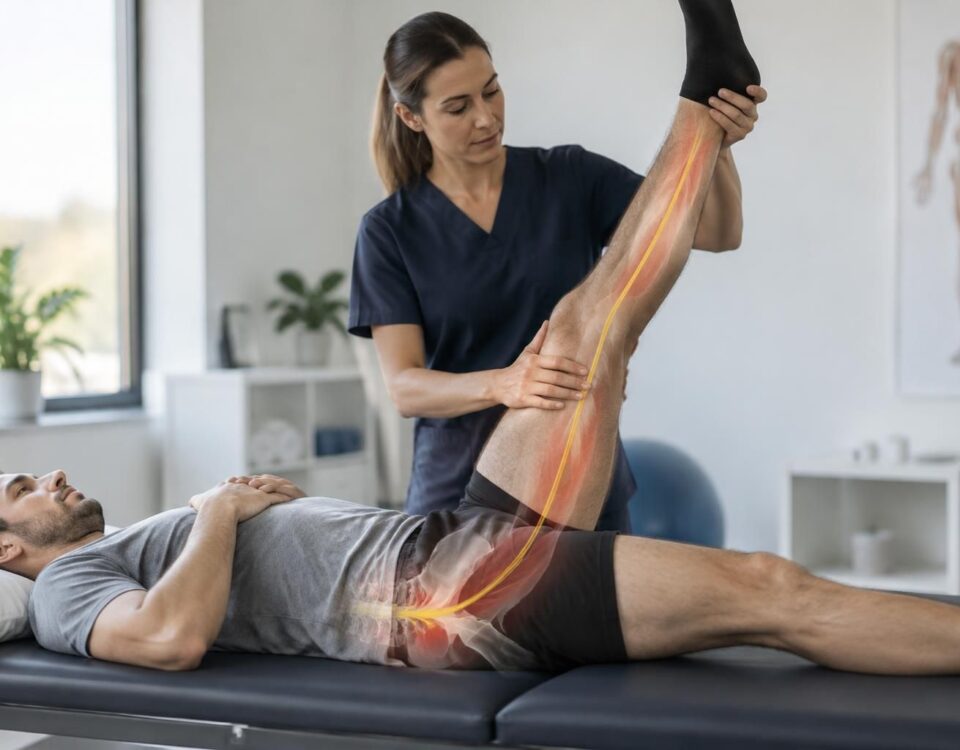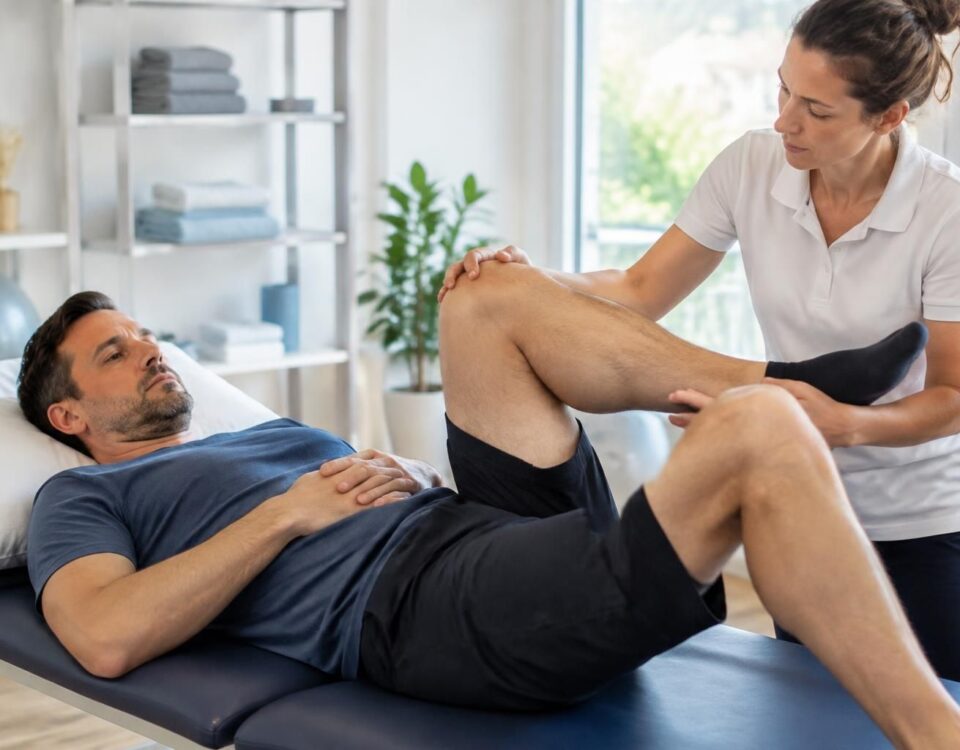
Sciatica: hernia, stenosis or nervous irritation?
29/06/2026
Montreal sciatic treatment: what to do when the pain descends into the leg?
30/06/2026
In short
| In short, the sciatica related to the Extended sitting position is a pain that gets worse after long sitting periods, due to increased pressure on the lumbar discs and sciatic nerve. The article explains what to understand and proposes simple actions: Adopting a Neutral posture with a Lumbar support, keep your feet flat and insert Micro breaks Every 30 to 45 minutes, accompanied by gentle stretching and ergonomic layout of the workstation. Benefits include a pain reduction, a better circulation and a resumption of the mobility on a daily basis, without the use of invasive measures. Available in Montreal and in the region, this guide is aimed at both professionals and drivers, to prevent aggravation and sustainably improve comfort in a seated position. |
The sciatica can be accentuated when staying in a Extended sitting position. The key is to understand how the posture and the environment affects the Lumbar disc pressure and on the way to sciatic nerve.
- The posture and one Lumbar support Help to limit mechanical stress and preserve the nerve.
- Adopt a Ideal position : chair bottom, buttocks well supported, Knees at hip height, flat feet, straight back and relaxed shoulders.
- Avoid habits that act as irritants: fold one’s legs, shrink, or any twisting of the pelvis.
- Promote Micro breaks Every 30-45 minutes and alternate between sitting and standing to stimulate circulation and reduce pressure on discs.
- For persistent symptoms, consider a professional assessment and exercises.
Quick Summary: This article, written by a health professional and expert, explains what a sciatica related to a Extended sitting position, the mechanisms involved, the postures to favor and concrete actions in the office, in the car and at home. The goal is to clarify what to understand to limit pain and improve mobility on a daily basis.
The sciatica Can be influenced by prolonged image rear on lumbar discs. When you sit for a long time, the pressure in your lower back increases, which can irritate the sciatic nerve And cause pain, tingling or electric feeling that descends into the leg.
Understand the mechanisms
The sciatic nerve takes its root in the lumbar vertebrae and runs through the leg. Poor posture can compress the discs or create a twist of the pelvis, which increases the tension on the nerves and muscles around it. Maintaining natural curvatures and stable trunk alignment helps to limit this pressure.
Alert and signals to monitor
pain that is accentuated after a few minutes of sitting, more irradiation in the leg, tingling, a burning sensation or an “electric leg” print requires an assessment. Note the positions and activities that trigger these symptoms to guide postural adjustments.
Posture and arrangement to limit pain
Ideal position on chair
Sit at the bottom of the chair, back slightly supported by the backrest. The knees should be roughly at the hips, or slightly lower. The feet remain flat on the ground, spread at the width of the basin. The basin Must be in a slight natural retroversion. Avoid crossing your legs and slumping.
Use of cushions and supports
A small lumbar cushion or towel rolled up in the hollow of the back helps maintain the natural curvature. Place it at the belt level, not too high. One Seat cushion Slightly tilt forward can facilitate pelvic straightening and decrease pressure on the lumbar discs. Slightly vary your position every 15 to 20 minutes to avoid muscle stiffness.

Sciatica and calf stretching: when the pain increases
IN SHORT A calf stretch can exacerbate sciatica if it further irritates the nerve. It should not cause pain that increases or radiates down the leg: stop the movement and do not push through. Stretches may help with some tensions,…
Equipment and environment
Workstation and journeys
Set the chair So that the feet touch the ground and the knees form an angle close to 90 degrees. Position the screen at eye level to avoid tilting your head. Use the armrests to slightly support the forearms and reduce shoulder tension. If possible, opt for a folder that actively supports the back without pushing you too far.
Driving and traveling
In the car, back up the seat slightly to keep a relaxed leg and avoid excessive hip flexion. Prefer a moderate inclination of the backrest and a lumbar support or a cushion if necessary. Take regular breaks on long journeys to walk and stretch your legs slightly.
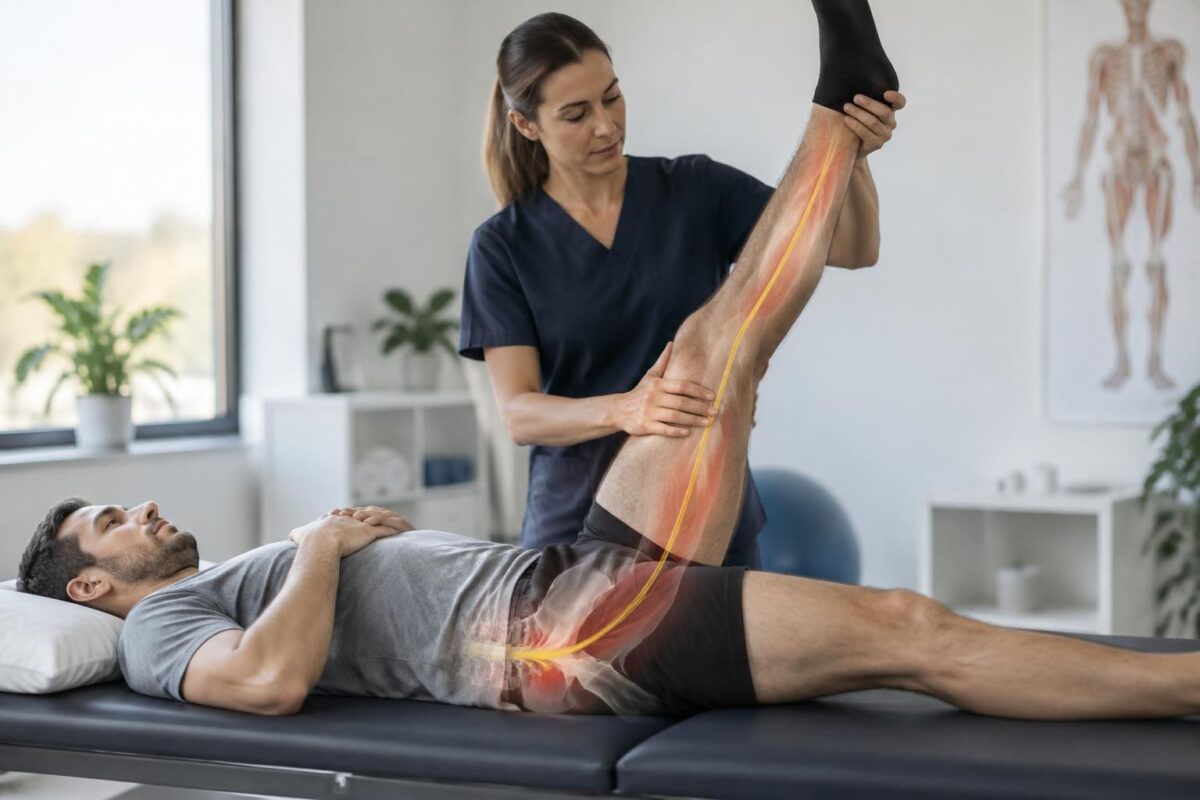
Sciatica and hamstring stretching: possible nerve tension
IN BRIEF Sciatica can make stretching the hamstrings uncomfortable, as the tension felt may come from the nerve rather than the muscle. A gentle stretch, with a straight back and without seeking maximum range, can help loosen the back of…
Other actions and prevention to focus on
Variations and short breaks
Avoid frozen positions. Alternate between sitting and standing when possible. Take micro breaks every 30 to 45 minutes to walk a few steps and mobilize the joints.
Simple activities and movements
Integrate soft movements such as the mobility of the ankles and micro-tilts of the pelvis. These gestures help to improve circulation and reduce tension around the sciatic nerve. If the pain increases, stop and consult a healthcare professional.
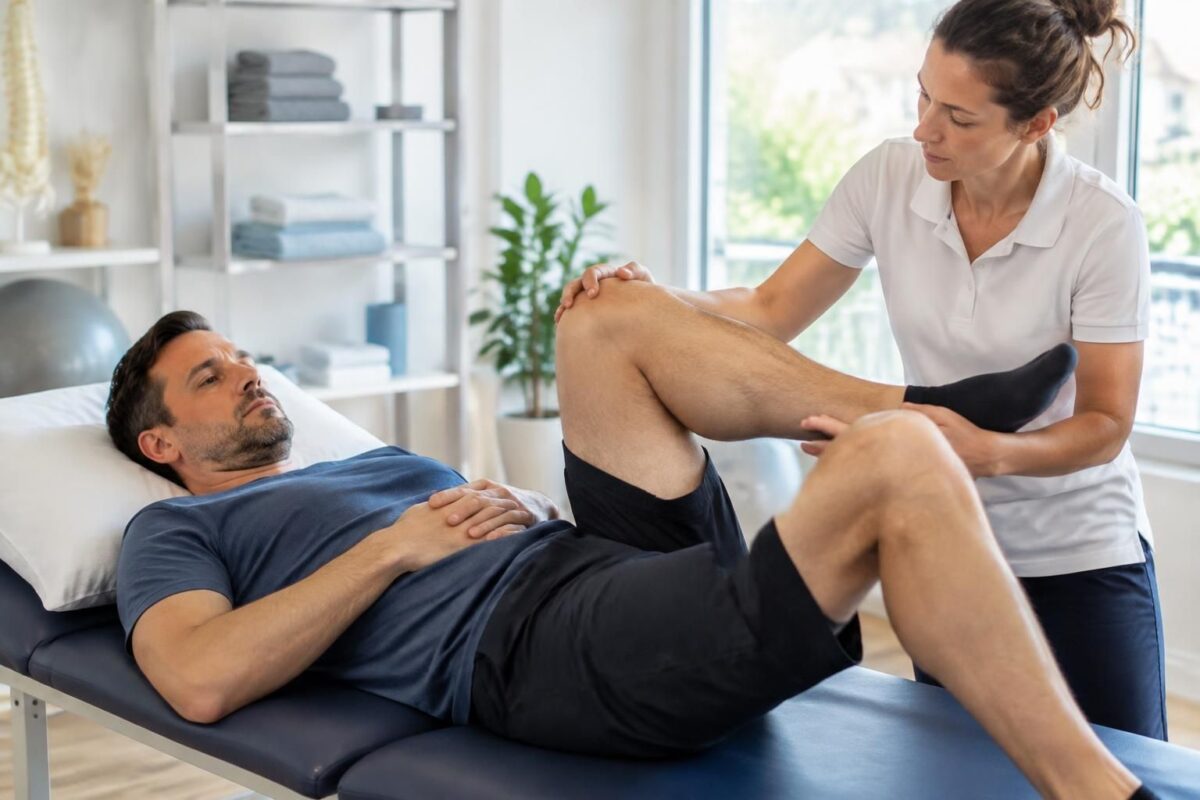
Sciatica and piriformis stretching: useful or worsening depending on the case
IN BRIEF Piriformis-related sciatica can cause deep pain in the buttock, sometimes radiating down the back of the thigh. A gentle stretch can loosen the hip and relieve discomfort if the muscle is involved, but it can worsen symptoms if…
When to consider a specialized assessment
If the pain persists despite postural adjustments and pauses, or if it is accompanied by weakness in the leg, consult a doctor quickly. A professional can confirm the origin and offer appropriate rehabilitation. Non-invasive options exist and can be discussed with your doctor, including specialized approaches in neurovertebral decompression depending on the case. For information about options and processing choices, you can refer to resources like DecompressionNortebral and other relevant sites on the authorized network.
Resources and useful links
To learn more, check out these reliable and relevant sources:
- Sciatic pain in Montreal — Personalized assessment
- Sciatica and prolonged sitting position
- Neurovertebral decompression — Non-invasive solution
- Pain behind the thigh and sciatic nerve
- sciatica and sitting — how to do
- Positions to avoid
- Sciatica and back twist
- Seven good gestures to counter sciatica
- How to sit with sciatica without aggravation
- calf and sciatica pain
Medical Disclaimer: The information and advice provided on this site does not replace the health professional’s diagnosis or treatment. Please note that Dr. Sylvain Desforges osteopath is neither a doctor of medicine nor a doctor, and is not a specialist in a medical specialty as defined by the Collège des Médecins du Québec. Manual medicine, functional medicine and sports medicine as described on this site exclude any medical treatment or diagnosis made by a doctor or specialist doctor. Always consult your doctor for any medical questions. For more details, please read our full legal notice.
- The Extended sitting position Increases the pressure on the lumbar discs and can trigger sciatica pain.
- One subsidence or a torsion of the column can Compress the sciatic nerve and amplify the symptoms.
- Aim for them Natural curvatures and back stability to limit mechanical stress.
- Typical signs: pain that intensifies after a few minutes and irradiation in the leg.
- The risk increases if you Cross your legs Or lack lumbar support — adjust now.
- Sit at the bottom of the chair, knees at hip height and flat feet for a stable base.
- Use a Lumbar support or a cushion for Maintain natural curvature and gain in lasting comfort.
- Avoid them Cross legs and sagging; Adjust the seat and back to preserve the sciatic nerve.
- Set Desktop and Screen: Eye height and relaxed head to prevent back tension.
- Take a break every 30-45 minutes; Walk and stretch slightly to release pressure.
- If possible, Alternate sitting and standing To boost circulation and reduce discomfort.

This article explains why sciatica and Extended sitting position constitute a duo to monitor and proposes concrete recommendations to limit pain. You will discover the mechanisms that trigger or aggravate the pain, warning signs to be spotted and practical actions ofergonomy And gentle exercises that are easy to apply in the office, in the car and at home.

Sciatica and popular stretches: why to stay cautious
IN BRIEF Sciatica causes pain that radiates from the lower back down the leg. Popular stretches, such as the pigeon pose or hamstring stretches, are not always suitable: pulling on an irritated nerve can worsen the symptoms. Favor gentle movements,…
Understanding the Mechanisms of Pain Related to Sitting
sitting for a long time increases the pressure on the Intervertebral discs and can compress the sciatic nerve, especially if the column is misaligned or if twists occur. This pressure can trigger irradiation in the leg and accentuate the symptoms in some people. Conversely, a stable posture, with the back well supported and the pelvis aligned, limits these constraints and allows the nerve to function more freely, without major triggers.

Sciatica and Pilates: movements to adapt
IN SHORT Sciatica causes pain that can radiate from the lower back down to the leg. The Pilates Reformer can promote a gradual return to movement and strengthen core control, provided that the movements, range, and resistance are adapted. Favor…
How to spot warning signals
If the pain gets worse after a few minutes in a seated position, or if it radiates further into the leg, it is a warning signal. Tingling, a burning sensation in the thigh or an “electric” leg print also indicates excessive stress on the nerve. Note the conditions: seat type, duration and activities; These observations will guide the adjustments to be made.

Sciatica and core stability: variable tolerance depending on symptoms
IN BRIEF Core strengthening in case of sciatica consists of progressively strengthening the trunk muscles. Its tolerance varies depending on pain and symptoms: suitable without worsening the pain, it can support mobility and the resumption of activities, but does not,…
Adapt your position to protect the nerve
For a healthy seat, sit at the bottom of the chair, buttocks against the backrest, without slumping. Your knees should be roughly at the height of the hips, feet flat on the ground, or supported by a footrest. Maintain a slight natural arch, relaxed shoulders and a relaxed mind; Avoid crossing your legs and leaning forward, which increase torsion and pressure.
Ergonomics and tools to be preferred
Use a Lumbar cushion Or a rolled towel to support the hollow of the back and promote the natural curve. One Seat cushion Slightly tilted forward can help keep the pelvis in a neutral position and reduce pressure on records. If possible, choose a chair with a Lumbar support And adjust screen and armrests to limit neck and shoulder tension.

Sciatica and lunges: leg pain to watch out for
IN BRIEF Sciatica is pain that starts from the lower back or buttock and radiates down the leg. If a lunge triggers or worsens this pain, stop the movement and adjust your activity: this exercise does not address sciatica. Consult…
Posture and gestures during travel and daily activities
In the car, slightly move the seat away to spare the hip angle and preserve the lumbar support; Choose breaks every hour or 90 minutes to walk and stretch your legs. In transport or at home, alternate positions and integrate soft stretches and micro-movements to promote blood circulation and lower back mobility.

Sciatica and deadlifts: risk depending on the cause
IN BRIEF Sciatica and deadlifts are not always incompatible: the risk depends on the cause of the pain and its intensity. During acute episodes, it’s best to avoid heavy loads and seek medical or physiotherapy advice before resuming. A gradual…
When to consult
If the pain persists despite the adjustments, or if it is accompanied by muscle weakness, urinary disorders or a painful spike, consult a health professional quickly. A doctor, a physiotherapist or a rheumatologist will be able to assess the origin and propose a suitable plan, sometimes with additional examinations.
| Element | Concise summary |
|---|---|
| Main constraint related to prolonged seating | The sitting time Increases pressure on Lumbar discs and can irritate the sciatic nerve. |
| Disk and Nerve impact | maintain a natural curvature and one Lumbar support Reduces compression and pain. |
| Alert signs | pain that intensifies on the seat, tingling or heat in the leg. |
| Target posture | Position neutral: supported file, buttocks at the bottom, knees at hip height, flat feet. |
| post ergonomics | settle chair height and screen: Feet on the ground, right angle knees, eye screen. |
| Lumbar support | Use a Lumbar cushion or a rolled towel to maintain the natural curvature. |
| Movements and breaks | vary the positions and make Micro breaks every 30–45 minutes; Walk and stretch. |
| Trips and driving | in the car, back the seat and keep the Relaxed knee; Regular breaks on long journeys. |
| When to consult | pain persists or is accompanied by weakness: quickly consult a doctor or a physiotherapist. |
What our clients really understand about sciatica and prolonged sitting
“Marie, administrative executive: before, I stayed for hours sitting without a break and I felt the pain radiating in the leg. I understood that The prolonged sitting position Increases pressure on Lumbar discs and can irritate the sciatica and the sciatic nerve. Since then, I follow the ergonomic recommendations and I take breaks every 30 to 45 minutes. »
“Ahmed, driver: I used to drive without stopping; I understood that the inclination of the backrest and a Lumbar support suitable, with Micro breaks, relieve the sciatica. Now I alternate sitting/standing and I’m much more comfortable. »
“Elise, developer: crossing the legs had become the norm; I found out that this disrupts the basin and can aggravate the pain around the sciatica. keeping your feet flat and using a Lumbar cushion, the sciatica decreased. »
“Marc, itinerant salesman: the seats soft And the long days in a frozen position were the enemy. By choosing a chair with a good Lumbar support And by getting up regularly, I felt a marked improvement for the sciatica. »
“Sophie, student: the Soft stretches And the ankle rotational movements, even if seated, help me keep circulation around the sciatica and avoid tingling. Active pauses have become a reflex. »
Dr. Sylvain Desforges is a major figure in the field of care (osteopathy, naturopathy and manual medicine), whose work is based on a holistic and individualized approach. osteopathy, naturopathy and manual medicine form the basis of his expertise, and he is the founding president of the clinics tagmed as well as the association acma. Through his leadership, he embodies a vision that puts innovation at the service of clinical practice and training, in order to sustainably improve the quality of life of patients.
His career is marked by a clear orientation towards Management of the chronic pain and the integration of advanced technologies to optimize therapeutic results. Among the tools he prefers are the vertebral decompression, the laser and the Shockwave therapy, which he uses in a logic evidence-based To offer non-invasive and case-by-case options. This technological and clinical approach aims to accelerate relief, while reducing dependence on symptomatic treatments and avoiding heavier interventions when possible.
Dr. Desforges’ mission goes beyond just symptomatic management: it is based on a precise understanding of the mechanisms of pain and on the identification of triggering factors, in particular The prolonged sitting position. He seeks to educate his patients on the lumbar mechanisms and to propose practical strategies to reduce the pressure exerted on the discs and on the sciatic nerve, without imposing postural rigidity. Its approach enhances the natural curvatures of the spine and the balance between stability and movement, in order to improve fatigue tolerance and daily activities.
In his daily practice, Dr. Desforges relies on a Patient education active and on treatment plans custom. It combines postural advice, gentle exercises, and ergonomic recommendations to limit painful peaks and promote mobility. Its working environment is resolutely interdisciplinary, promoting collaboration with other health professionals and therapists to provide comprehensive care that takes into account the physical, emotional and behavioral aspects related to Sciatica.
Finally, he favors solutions non-invasive and individualized, oriented towards reduced symptoms and rapid resumption of activities, while limiting risks and side effects. By focusing on early interventions and regular follow-up, it helps patients reintegrate the movement and restore their function in the context of their personal and professional lives. This proactive approach reflects his belief that understanding the effects of Extended sitting position and acting accurately can sustainably transform the daily experience of people with Sciatica.
This analysis highlights the crucial impact of sciatica When we stay in Extended sitting position, and shows that the adjustments ofergonomy and the Micro breaks can change the game. She insists that it is not only the isolated position that counts, but the duration, stability and quality of lumbar support. By combining neutral posture, suitable tools and regular movements, everyone can reduce sciatic nerve irritation and preserve their quality of life on a daily basis.
What you need to understand is that the Duration of seating is often more decisive than the single position. A Increased pressure on the intervertebral discs During a long sitting station may irritate the sciatic nerve and exacerbate symptoms. At the same time, certain habits such as crossing the legs or sagging aggravate the tension on the path of the nerve and limit the possibilities of relief.
To act concretely, choose a Neutral posture Supported by a Lumbar support and feet well laid flat on the ground. Adjust your chair and desk so that the hips are about knee height, and use a footstool if necessary. Avoid positions that twist the pelvis and favor supports that maintain the natural curvature of the spine. You can consult dedicated resources for detailed advice on Postures#ATFP_CLOSE_TRANSLATE_SPAN# to avoid and best practices in ergonomics.
The Micro breaks Are essential: getting up and moving for a few minutes every 30 to 45 minutes releases the discs and promotes blood circulation around the nerve. Alternating sitting and standing periods, adjusting back support frequently and practicing gentle stretches help reduce irritation and prevent painful spikes. For more in-depth support for non-surgical options and techniques such as neuro-vertebral decompression, you can inquire about specific resources such as dedicated pages.
In case of persistence or worsening of symptoms, it is important to stagger the steps with a health professional: a doctor or physiotherapist can personalize the postural advice and offer an appropriate rehabilitation program. For additional information on the causes and correlates of sciatica, you can consult specialized sources such as Treatments#ATFP_CLOSE_TRANSLATE_SPAN# Non-surgical and Pain#ATFP_CLOSE_TRANSLATE_SPAN# Behind the thigh.
To deepen the positions and adjustments to favor or avoid in your daily life, also explore guides dedicated to ergonomics and sciatica management. for example, CE#ATFP_CLOSE_TRANSLATE_SPAN# Practical guide Summarizes the ergonomic advice and postural alterations to be preferred, while other complementary resources offer targeted approaches according to your activity and your profile.

Dr Sylvain Desforges, B.Sc., D.O., N.D., osteopath, is the founding president of TAGMED and of the ACMA association. He dedicates his practice to chronic spinal pain, low back pain and symptoms compatible with sciatica, particularly when pain radiates toward the buttock, leg, calf, foot or toes.
Through SOS Sciatique, he publishes educational content on sciatica symptoms, possible causes such as disc herniation, disc narrowing, foraminal stenosis or irritation of a lumbar nerve root, as well as non-surgical approaches that may be considered according to the evaluation. At Clinique TAGMED, care may include, depending on the case, motorized neurovertebral decompression, specific osteopathic care or precision percussion.
For an evaluation related to sciatica treatment in Montreal / Mount Royal or sciatica treatment in Terrebonne, please consult the services available at Clinique TAGMED.
Medical disclaimer
The information published on SOS Sciatique is provided for educational purposes only and does not replace a consultation, diagnosis, opinion or treatment provided by a physician or another authorized healthcare professional. The author of this article is neither a medical doctor nor a specialist in a medical specialty recognized by the Collège des médecins du Québec. The osteopathic, manual medicine or functional support approaches described on this site do not constitute medical acts and are not intended to replace medical follow-up.
Consult a physician or emergency service in cases of loss of bladder or bowel control, anesthesia in the saddle area, significant or progressive weakness in the leg or foot, fever, recent trauma, severe pain or rapid worsening of symptoms. For more details, please read our Legal Notice.