
Sciatica: pain that worsens with walking and possible stenosis
15/07/2026
Sciatica: nerve pain or mechanical pain?
15/07/2026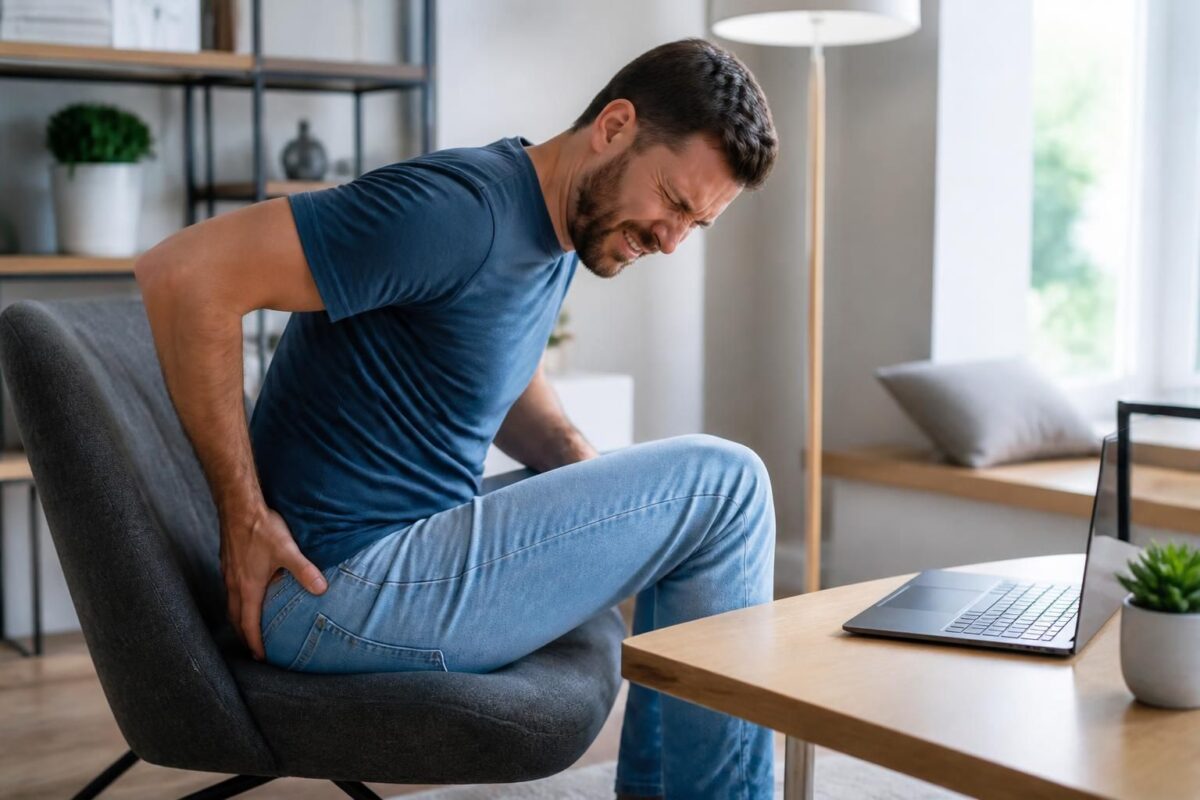
IN BRIEF
| In brief, sciatica and low sitting position describe the possible aggravation of pain when the lower back is in prolonged flexion or poorly supported while sitting. This increases pressure on the lumbar discs and nerve tension, with pain that may radiate to the buttock, thigh, or foot. The benefits of understanding this link include the ability to adopt a correct posture, incorporate active breaks and gentle exercises to relieve and prevent inflammation. In practice, this helps limit painful episodes, improve mobility, and support recovery without resorting to invasive measures. |
The sciatica can worsen when one remains in a low sitting position for too long. While sitting, without lumbar support, the natural lordosis can decrease and the pressure on the lumbar discs can increase, exacerbating irritation of the sciatic nerve. The back may round, prolonged flexions or twists further strain the lumbar region and trigger or exacerbate pain that may radiate down to the buttock, then to the thigh and the calf. Adopting a suitable posture with good support and taking regular breaks can help limit these effects. If the pain worsens while sitting or is accompanied by numbness or weakness, it is important to consult.
This article, written by a health professional and expert in osteopathy, explains why a low sitting position can aggravate sciatica. It describes the possible mechanisms, signs to watch for, recommended posture adjustments, and resources available at the TAGMED Clinic. The goal is to reduce pain, improve tolerance for sitting, and encourage safe activity resumption.
How a low sitting position can aggravate sciatica
Sciatica occurs when the sciatic nerve is irritated or compressed. A low sitting posture promotes lumbar flexion and may increase pressure on the discs and nerve structures. This can increase tension on the nerve and trigger or amplify pain that radiates down the leg.
While sitting, the lower back may round or lack support. Insufficient lumbar support and unsuitable seating often exacerbate pressure on the lumbar discs. This increased pressure can reduce the available space around the nerve roots and worsen symptoms.
The pain experienced may be localized in the back, radiate to the buttock, or extend down to the calf and foot. Some individuals also present neurological signs such as tingling, numbness, or weakness when the position is prolonged.
To better understand the mechanisms, you can refer to our resources on risky positions and sciatica assessment: sciatica assessment Montreal and sciatica pain during daily life.
Signs that indicate a low sitting position may aggravate
Worsening pain while seated that then radiates down the leg. Numbness or tingling in the foot or toes. Weakness upon standing and changes in walking. If you observe these signs, a specialized assessment is recommended.
To better assess your situation, discover sciatica assessment and associated symptoms on our dedicated resources: Sciatica Assessment Montreal.
Practical tips to limit the impact of a low sitting position
Use a chair with lumbar support and ensure your hips and knees form about 90 degrees. Keep your feet flat and avoid crossing your legs. If necessary, place a small cushion or rolled towel behind the lower back to maintain the natural curve.
Be mindful of the duration of sitting. Take active breaks every 20 to 30 minutes. During these breaks, stand up, walk a few steps, and change positions. Simple micro-movements can help maintain lumbar mobility without straining the nerve.
Establish a routine that emphasizes suitable work environments. If your workstation is in front of a computer, ensure the screen is at eye level and the keyboard is close to avoid twisting and leaning of the torso.
To complement the information, refer to the following resources addressing assessment and posture issues: Foot weakness and potential neurological cause and pain at the restaurant or cinema.
When and how to involve a specialist
If the pain persists or worsens while sitting, or if the pain radiates below the knee with neurological signs, it is important to consult. Personalized assessment helps identify the probable origin and guide daily actions to prioritize. At the TAGMED Clinic, you can receive tailored support and advice on measures to implement in your daily life.
To learn more about the options and assessments offered, visit: Sciatica Assessment Montreal and Sciatica Decompression – Terrebonne.
Additional information on positions and actions to avoid can be consulted in our dedicated resources: Sciatica – how to sit and Sciatica – positions to avoid.
Role of support at the TAGMED Clinic
Personalized support can help reduce pain and improve tolerance for a low sitting position. The professional will evaluate your posture, pain trajectory, and neurological signs to provide tailored and safe advice. Consultations at the TAGMED Clinic in Montreal or Terrebonne can be arranged based on your location.
For more information on the approaches offered at TAGMED, visit cliniquetagmed.com.
Medical disclaimer: The information and advice provided on this site do not replace the opinion, diagnosis, or treatment of a healthcare professional. Please note that Dr. Sylvain Desforges, osteopath, is neither a medical doctor nor a physician, and is not a specialist in a medical specialty as defined by the Collège des médecins du Québec. Manual medicine, functional medicine, and sports medicine as described on this site exclude any medical treatment or diagnosis made by a physician or medical specialist. Always consult your doctor for any medical questions. For more details, please read our full Legal Notice.
- Low position > increased lumbar pressure and sciatic nerve irritation in the lower back.
- Flexion and rotation of the trunk in a low seated position > disc tension and exacerbation of symptoms.
- Stagnation and poor vascularization > slowed recovery and stiffness.
- Pain that travels down the leg when the posture is maintained, a sign of nerve aggravation.
- Prolonged driving and work in a low position > increased risk of pain and muscle fatigue.
- Active break every 30–45 minutes and change of posture.
- Lumbar support (cushion/support) to preserve lordosis and reduce pressure.
- Prefer alternative positions: straight back, feet flat, knees bent.
- Gentle activity: light walking, targeted stretching without pain.
- Avoid twists and deep bends during efforts or lifting.
- Limited driving continuously with breaks, and plan micro-rests if necessary.

Here’s why a low seated position can aggravate sciatica and how adopting appropriate habits can provide lasting relief. In summary, lack of support, prolonged bending, and misaligned posture increase pressure on the lumbar discs and the nerve root, which can heighten pain and discomfort when sitting for too long.
Why a low seated position can aggravate sciatica
A chair that is too low or lacks lumbar support neutralizes the natural curve of the spine and encourages an increased lumbar flexion. This position increases pressure on the intervertebral discs and can irritate or compress the sciatic nerve root, triggering or amplifying the pain that travels down the leg.
The role of flexion and lack of support
When the back remains rounded and the lower back is poorly supported, the lumbar region works against you, which can intensify muscle tension and limit tolerance to sitting.
Impact on perfusion and muscle fatigue
Prolonged inactivity and a low position lead to less effective local circulation and fatigue of postural muscles, which can exacerbate spasms and back pain.
What to avoid when sitting low
Avoid rounded back and lack of support
Avoid positions where the back is rounded and unsupported. Without lumbar support, the natural lordosis disappears and the load on the discs increases.
Avoid crossed legs and too low seats
Crossed or sitting cross-legged can cause a tilt of the pelvis and asymmetrical tension on the sciatic nerve, especially if the posture is maintained for long periods.
Avoid periods of stillness
Remaining still for long periods amplifies negative effects: increased tension, stagnation, and loss of mobility. Move regularly and vary positions to promote better circulation.
Good practices for safe sitting
Adjust the height of your chair so that your hips are slightly higher than your knees and your feet rest flat on the floor, with knees at about 90 degrees.
Use a lumbar support or a rolled towel to maintain the natural curve and avoid a slumped back. Keep your shoulders relaxed and your torso upright, without twisting your trunk.
Prioritize active breaks every 30 to 45 minutes, alternate sitting and standing, and favor posture transitions (sitting > standing > lying down) to limit strain on the lower back and leg.
Avoid sustained twists and bends. If the environment allows, use a footrest or a stool to adapt the position of your feet and reduce lumbar strain.
Complementary activities and practical tips
In parallel, engage in simple activities: gentle walking, targeted stretching, and gradual strengthening of the torso. Diaphragmatic breathing can also help relax lumbar tension and limit pain during efforts.
When to seek assistance
If the pain intensifies, descends below the knee, is accompanied by numbness or weakness, or significantly affects your gait, consult for a personalized evaluation and tailored advice for your situation.
| Factor related to low seating | Concise impact on sciatica |
|---|---|
| Seat too low and pelvis tilted | Increases lumbar flexion and compresses the sciatic root. |
| Insufficient lumbar support | Eliminates lordosis and increases pressure on the nerve root. |
| Slouched back or unsupported lumbar | Increases disc pressure and may irritate the sciatic nerve. |
| Crossed legs or sitting cross-legged | Creates asymmetric tension and may worsen radicular pain. |
| Trunk twists in a low position | Causes shear on the spine and may trigger nerve pain. |
| Insufficient breaks during prolonged sitting | Reduces circulation and increases stiffness and pain. |
| Driving/working in a fixed position | Limits micro-movements and increases nerve tension. |
| Prolonged maintenance without changing position | Encourages stagnation and may amplify symptoms. |
| Inappropriate desk height | Unbalances the hip and lumbar and may increase disc strain. |
Testimonials: Sciatica and low seating position – why it can worsen
“I suffered from sciatica that started in my lower back, then radiated to my buttock and leg. Every hour spent in a low seating position seemed to worsen the pain, as the natural curve of the back was lost and the pressure on the lumbar discs increased.”
“While driving or spending hours on my computer, the nerve became more irritated. This low seating position without lumbar support compressed my back and triggered electrical sensations down my leg. The pain became sharper with every missed break.”
“At my workstation, I noticed that prolonged sitting cross-legged or slouched led to a pelvic asymmetry and further stressed the sciatic nerve. With good lumbar support and regular breaks, the pain decreased; without it, it returned quickly.”
“The pain is not limited to the back: during a long journey, sitting low caused the pain to glide down to the calf. I realized that nerve tensions and pressure on the discs increase with prolonged lumbar flexion.”
“Since I started taking active breaks and alternating sitting/standing, the pain has diminished. I now know how to recognize the signs and avoid positions that worsen the sciatica, particularly staying in a low seating position for too long.”
“If the pain goes below the knee or is accompanied by numbness or weakness, it is essential to consult quickly. My experience has shown me that the key is to listen to your body and adjust your posture and working habits to avoid worsening the situation.”
Dr. Sylvain Desforges, expert in osteopathy, naturopathy, and manual medicine, is the founding president of TAGMED clinics and the ACMA association. Throughout a career dedicated to innovation in healthcare, he has established himself as a specialist in managing chronic pain and integrating the most advanced technologies. His approach is based on evidence-based care aimed at optimizing the health and well-being of his patients, placing education and personalization at the heart of each journey.
In the context of sciatica and sedentary postures, he emphasizes the critical role of the sitting position, especially when it is low. An inadequately adjusted seat can alter lumbar alignment and increase pressure on the intervertebral discs, while also putting more stress on the nerve roots that travel to the sciatic nerve. This configuration can promote irritation, amplifying pain and limiting tolerance for certain movements. For Dr. Desforges, understanding the link between sitting posture and the onset or worsening of symptoms is essential for guiding targeted and beneficial long-term interventions.
The practical science he advocates shows that low seating position can lead to a decrease in the natural lordosis and a rotation/pivot of the pelvis, triggering pain in the buttocks-thigh, and sometimes down to the calf or foot. This chain of factors can be accentuated if the patient remains in the same posture for an extended period without change, promoting muscle fatigue and reducing local vascularization. For this typical patient, Dr. Desforges favors a multifactorial approach that combines postural analysis, targeted rehabilitation, and gradual reintegration of essential movements.
His management program, focused on education and movement, incorporates simple daily actions and adapted exercises to protect the back and relieve the sciatic nerve. He encourages regular walking, gentle stretching, and gradual strengthening of the torso, while ensuring to modify sitting positions to limit loads on the lumbar spine. The goal is to allow better tolerance for the sitting posture while preventing painful episodes to maintain mobility and quality of life.
To complement this approach, Dr. Desforges employs advanced therapeutic solutions when useful: spinal decompression, therapies using laser, and shockwave therapy, used as complementary tools to reduce nerve compression, promote recovery, and accelerate the healing process. These technologies, combined with personalized assessment and suitable rehabilitation, aim to restore lumbar function and limit painful triggers related to the sitting position.
As a leader in his field, Dr. Desforges emphasizes the importance of personalized support that empowers patients to take action themselves. His evidence-based, patient-centered approach seeks to transform postures and daily habits into opportunities for sustainable relief and autonomy, rather than being limited to isolated treatments.
This detailed conclusion shows why sciatica associated with a low seating position can worsen pain, and which simple actions can help limit negative effects while preserving mobility and recovery.
The low sitting position can increase pressure on the lumbar structures, particularly the intervertebral discs, when the back rounds or the pelvis tilts forward. This configuration amplifies tension on the nerve root and can promote irritation or inflammation of the sciatic nerve, resulting in pain that may radiate into the buttock, thigh, or down to the foot. The longer the position is maintained, the more stress accumulates, disrupting blood flow and muscle relaxation, which can slow healing and prolong symptoms.
Two main mechanisms explain the deterioration in a low sitting position: on one hand, prolonged lumbar flexion and lack of lumbar support promote inadequate lordosis, increasing compression on sensitive structures; on the other hand, immobility and the repetition of static movements limit the drainage of inflammatory substances and fatigue the muscles that support the spine, reducing the body’s ability to compensate for tensions. These combined factors can trigger sharper pain with each position change and upon standing, creating a vicious cycle between pain and posture.
Daily consequences include increased localized pain, sensations that radiate down the leg, and muscle fatigue that can alter overall posture. In case of worsening pain while sitting, it is useful to check the exact path of the pain, the presence of neurological signs, and tolerance to the position to quickly guide an appropriate approach before the pain becomes more pervasive.
To limit aggravation through simple adjustments, prioritize lumbar support and active breaks: alternate between sitting and standing positions, walk regularly on flat surfaces, and practice gentle stretches targeting the muscles around the sciatic nerve. Avoid prolonged sitting without support, sudden twists, and excessive bending of the trunk while driving or working on a computer. If in doubt, do not hesitate to seek the support of a professional to adapt your workstation and daily movements.
To delve deeper into the postures to avoid and the effects of sitting on sciatica, consult these helpful resources: Sciatica: positions to avoid and So-called tips on positions to avoid daily. You will find explanations about the mechanisms and possible adjustments. Other complementary elements may be useful to understand associated manifestations and possible origins: pain in the calf and possible nerve origin, pain in the buttock and possible lumbar cause, and sciatica and sitting position. For a gradual and cautious approach in treatment, you may also consult: understand the possible mechanical causes.
Additionally, ergonomics and prevention resources can help adjust your positions and habits: Ergonomics and positions to avoid and How to avoid positions that worsen pain.

Sciatica and pain that increases after a long walk
IN BRIEF in English In brief, Sciatica and pain that increases after a long walk is pain that follows the path of the sciatic nerve and may worsen during walking. This phenomenon can arise from nerve irritation or compression at…
Sciatica and pain that appears after a few minutes of walking
IN BRIEF Sciatica is a pain that follows the path of a nerve root from the lower back down to the leg. When it appears after a few minutes of walking, it indicates nerve irritation or compression, often due to…

Sciatica and prolonged walking: why does the pain increase?
IN BRIEF In brief, sciatica is pain that follows the path of the sciatic nerve and can intensify during prolonged walking, especially in the presence of lumbar stenosis or a herniated disc. The goal is an active and tailored management…

Sciatica and walking: helpful or aggravating?
IN BRIEF In brief, sciatica and walking is the analysis of whether walking can help or worsen pain related to the sciatic nerve. What is it? Sciatica is pain that radiates from the lower back down the leg, often due…

Sciatica and travel return: pain that travels down the leg
IN SHORT Sciatica is pain that runs down the leg, caused by irritation or compression of the sciatic nerve. In the context of return from travel, it may appear after long trips or repetitive movements. In practice, understanding this mechanism…

Sciatica and travel: how to recognize a worsening
IN BRIEF In brief, sciatica and travel describe the worsening of sciatic pain during a trip, with radiation into the leg and radicular signs. Benefits: it allows for quick identification of warning signs, adjustment of breaks and movements, and traveling…
Sciatica and airplane: prolonged sitting and leg pain
IN BRIEF In brief, sciatica related to prolonged sitting on the plane describes pain that arises or worsens when one remains seated for long periods during a flight, due to pressure on the lumbar discs and the sciatic nerve. How…

Sciatica and train: pain after a long journey
IN BRIEF In brief, Sciatica after a long train journey is pain that radiates along the sciatic nerve after long periods of sitting. The problem often arises from an inadequate posture and a poorly mobilized pelvis during the trip. The…

Dr Sylvain Desforges, B.Sc., D.O., N.D., osteopath, is the founding president of TAGMED and of the ACMA association. He dedicates his practice to chronic spinal pain, low back pain and symptoms compatible with sciatica, particularly when pain radiates toward the buttock, leg, calf, foot or toes.
Through SOS Sciatique, he publishes educational content on sciatica symptoms, possible causes such as disc herniation, disc narrowing, foraminal stenosis or irritation of a lumbar nerve root, as well as non-surgical approaches that may be considered according to the evaluation. At Clinique TAGMED, care may include, depending on the case, motorized neurovertebral decompression, specific osteopathic care or precision percussion.
For an evaluation related to sciatica treatment in Montreal / Mount Royal or sciatica treatment in Terrebonne, please consult the services available at Clinique TAGMED.
Medical disclaimer
The information published on SOS Sciatique is provided for educational purposes only and does not replace a consultation, diagnosis, opinion or treatment provided by a physician or another authorized healthcare professional. The author of this article is neither a medical doctor nor a specialist in a medical specialty recognized by the Collège des médecins du Québec. The osteopathic, manual medicine or functional support approaches described on this site do not constitute medical acts and are not intended to replace medical follow-up.
Consult a physician or emergency service in cases of loss of bladder or bowel control, anesthesia in the saddle area, significant or progressive weakness in the leg or foot, fever, recent trauma, severe pain or rapid worsening of symptoms. For more details, please read our Legal Notice.