
Sciatica: pain in the buttock and possible lumbar cause
07/07/2026
Sciatica Treatment Montreal: Understanding Possible Mechanical Causes
08/07/2026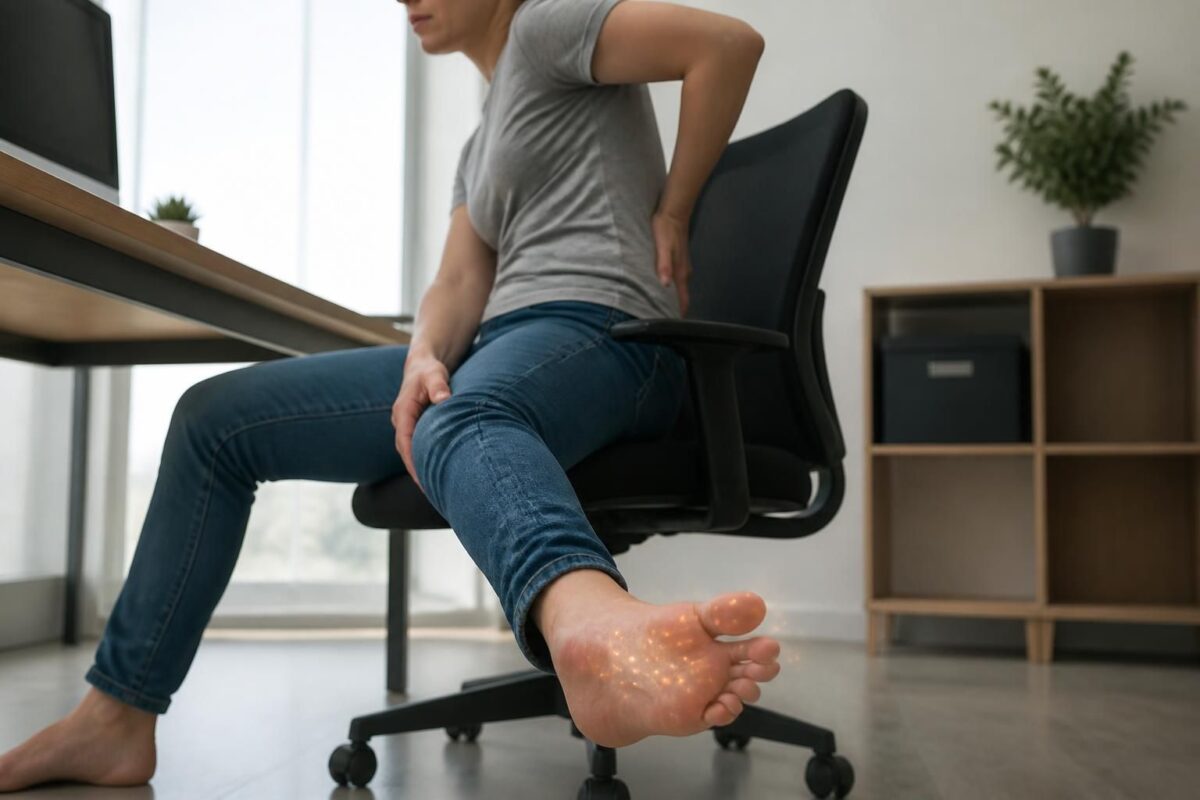
IN SHORT
| In short, sciatica associated with numbness of the toes after sitting for a prolonged period is pain and tingling due to compression or irritation of the sciatic nerve. What is it? A condition that can affect the toes and foot, causing numbness and sensations of burning or tingling. Benefits: rapid improvement in mobility and reduction of symptoms through a multimodal approach including stretching exercises, manual therapy, and tailored treatment. How does it work? Early diagnosis guides to concrete solutions: stretching exercises, heat/cold, manual therapy, and, if necessary, anti-inflammatories or injections. Available in your area, this approach aims to address the cause and symptoms to limit the impact on daily life. |
After a prolonged sitting position, sciatica can cause numbness of the toes and tingling. This symptom results from compression of the sciatic nerve along its path to the foot.
Typical signals include tingling and sometimes pain that radiates from the buttock to the foot. Treatment often combines stretching exercises, manual therapy, and anti-inflammatories; more severe cases may require epidural injections or surgery.
An early diagnosis helps avoid the chronicity of symptoms and regain mobility and comfort more quickly.
This guide, written by a health professional and expert, explains the link between sciatica and tingling in the toes after sitting. It details possible causes, signals to watch for, and management options to regain mobility and comfort, without resorting to inappropriate exercises in this context.
Causes and Mechanisms
The prolonged sitting position can promote the compression of the sciatic nerve, sometimes related to a herniated disc or muscle tension. This compression disrupts nerve signals and can cause numbness and tingling in the toes, with pain that may radiate along the leg. The pathway of the nerve explains why some toes are more affected than others depending on the precise level of compression.
To delve deeper into the mechanisms and clinical approaches, you can consult specialized resources on assessment and management. Clinical evaluation often precedes treatment, according to the cautious approach of some centers.
Signs and Diagnosis
Paresthesia and numbness of the toes may be signs of sciatica or other peripheral nerve disorders. Diagnosis is based on clinical examination and may require additional tests, such as nerve tests. Signs such as pain that radiates from the buttock to the foot, muscle weakness, or tingling that persists despite rest should prompt prompt medical evaluation. For additional information on signs to watch for, see: foot weakness and signs to watch for.
If a disc-related or nerve compression cause is suspected, other specialized resources can be consulted to understand the available options and implications for the sciatic nerve. For a broader perspective on issues related to the spine and the nerve, also consult resources dedicated to decompression and discopathies, while staying within the recommended framework.
Management Options
Management should aim to treat the underlying cause and relieve symptoms. A multimodal approach is often useful, without prioritizing stretching exercises in this context. Among the commonly considered options are:
Non-pharmacological interventions: improving workplace ergonomics, taking regular breaks, adjusting seating, suitable manual therapy, and, when relevant, acupuncture. The goal is to reduce pressure on the nerve and improve nerve signal circulation. For guidance on careful assessment and management, refer to existing clinical resources such as: Cautious approach to avoid inappropriate treatments.
Pharmacological approach and injections: non-steroidal anti-inflammatory drugs (NSAIDs) can reduce inflammation around the nerve. Muscle relaxants may decrease spasms that worsen compression. In some cases, specific treatments for neuropathic pain may be considered.
Injections and surgery: in cases of persistent pain or progressive neurological deficits despite conservative treatments, epidural corticosteroid injections may provide significant relief. Surgery remains an option when nerve compression is disabling and does not respond to non-surgical treatment. For information on options discussed in the disc-related context, you can consult specialized resources like Sos Hernie Discale and Sos Herniated Disc.
For clinical evaluations and advice tailored to your context, some public hospital and clinical resources (sample) offer cautious approaches and personalized planning. You may also refer to guides dedicated to evaluating and managing pain related to lower back pain and the sciatic pathway via resources associated with specialized clinics.
For additional information on issues related to pain and maintaining a sitting position, consult pain that increases while sitting.
Preventing the Return of Symptoms
To reduce the risk of recurrence of tingling and numbness, adopt an appropriate posture, take breaks, and adjust your workspace. Correct ergonomics and simple changes in postural hygiene can make a significant difference in the long term. Complementary resources exist to shed light on these aspects, particularly regarding the effects of posture and daily activities on sciatica and numbness.
For additional information on the links between work postures, sitting, and lower back pain, as well as ways to avoid poorly adapted treatments, see Cautious approach to avoid poorly adapted treatments.
For a general perspective on symptoms and mechanisms involved in sciatica and paresthesia, you can consult specialized resources such as Sos Hernie Discale and Sos Herniated Disc.
For complementary information on tingling sensations and possible causes, including links to resources on early signs and assessments, also see Clinical assessment and prevention and Increased pain when sitting.
To broaden perspectives on peripheral disorders and nerve mechanisms, specialized resources also exist in other clinical contexts, particularly around neurological symptoms and associated causes.
Useful links: Clinical assessment and treatment, Foot weakness – signs to watch for, Avoiding poorly adapted treatments, Pain that increases when sitting, Carpal tunnel syndrome and peripheral nerve disorders.
Medical disclaimer: The information and advice provided on this site do not replace the opinion, diagnosis, or treatment of a healthcare professional. Please note that Dr. Sylvain Desforges, osteopath, is neither a doctor of medicine nor a physician, and is not a specialist in a medical specialty as defined by the Collège des médecins du Québec. Manual medicine, functional medicine, and sports medicine as described on this site exclude any medical treatment or diagnosis made by a doctor or medical specialist. Always consult your physician for any medical questions. For more details, please read our complete Legal Notice.
Medical disclaimer: The information and advice provided on this site do not replace the opinion, diagnosis, or treatment of a healthcare professional. Please note that Dr. Sylvain Desforges, osteopath, is neither a doctor of medicine nor a physician, and is not a specialist in a medical specialty as defined by the Collège des médecins du Québec. Manual medicine, functional medicine, and sports medicine as described on this site exclude any medical treatment or diagnosis made by a doctor or medical specialist. Always consult your physician for any medical questions. For more details, please read our complete Legal Notice.
- Origin and symptoms
- Sciatica: numbness and pain along the nerve pathway
- After a long sitting position: pressure on the sciatic nerve
- Location depending on the level (L4-L5 or L5-S1)
- Actions and treatments
- Stretching exercises and manual therapies to relieve the nerve
- Anti-inflammatories and muscle relaxants if necessary
- For severe cases: epidural injections then surgery if conservative treatments fail
- Quick diagnosis to prevent symptoms from worsening and to quickly adapt the care plan

This guide helps you understand the link between sciatica and tingling in the toes after sitting, and offers practical recommendations to relieve and prevent these symptoms, without waiting for the pain to worsen.
Understanding the link between sciatica and numbness after sitting
Sciatica occurs when an important nerve, the sciatic nerve, is compressed or irritated. This compression can be due to a herniated disc, muscle spasms, or a narrowed spinal canal. When the nerve is irritated, the electronic signals traveling along the nerve pathway from the lower back to the toes become abnormal and manifest as tingling, pins and needles, and sometimes as numbness. The location of the affected toes varies based on the level of compression: for example, L4-L5 often affects the big toe, while other levels may involve other toes. This dynamic explains why sitting can trigger or worsen these symptoms when posture compresses the nerve.
Why sitting can worsen symptoms
Prolonged sitting can increase pressure on the lower back and the structures surrounding the sciatic nerve. As a result, nerve signals become less effective and manifest as numbness and tingling in the feet and toes. Symptoms may remain localized to the toes or slowly extend to the foot and leg. In cases of sciatica, pain can also radiate from the buttock to the foot, and muscle weakness may appear in the affected leg. Accurate diagnosis helps to distinguish sciatica from other causes of paresthesia, such as peripheral neuropathy or vitamin deficiencies.
Practical recommendations for relief and prevention
Non-drug measures to prioritize
Take regular breaks to stand and walk: move every 30 to 60 minutes to reduce tension on the nerve. Incorporate sciatic nerve stretching exercises and strengthening exercises for the lower back and abdomen. Maintain a neutral posture and use appropriate lumbar support when sitting. Apply alternating heat and cold depending on the inflammatory phase, and wear suitable shoes with orthopedic support if necessary. Manual therapy (physiotherapy or osteopathy) can help relieve tensions compressing the nerve and restore mobility. Acupuncture may also be useful for stimulating nerve points and reducing pain.
When to consider medical treatments and interventions
Additionally, non-steroidal anti-inflammatory drugs can reduce inflammation around the sciatic nerve, and muscle relaxants can decrease spasms. In some cases, medications targeting neuropathic pain may be recommended. For more severe or persistent situations, epidural corticosteroid injections can provide lasting relief. Surgery is considered when conservative treatments fail or when neurological deficits progress, with the aim of decompressing the nerve.
When to consult and how diagnosis guides action
Early diagnosis enables the establishment of a personalized plan and helps avoid the chronicity of symptoms. If tingling persists, worsens, or is associated with marked weakness or severe pain, consult a doctor quickly. An assessment may include a clinical examination and, if necessary, an electromyogram to evaluate nerve activity and guide treatment. In cases of rapidly evolving symptoms or sudden onset, seek management without delay, including emergency care if necessary.
Comparison: Sciatica vs tingling in the toes after sitting
| Sciatica | Tingling after sitting |
|---|---|
| Sciatica: compression or irritation of the sciatic nerve, often due to a herniated disc or a spasm. | Tingling post-sitting: paresthesia in the toes related to transient nerve or vascular pressure. |
| Location: pathway of the nerve from the buttock to the toes, possibly radiating down the leg. | Primarily in the toes, sometimes in the foot after prolonged sitting. |
| Type of sensations: radiating pain and possible numbness along the pathway. | Paresthesia (tingling and numbness) mainly in the toes. |
| Trigger: worsens in a seated position and certain movements; improves with movement. | Appears after prolonged sitting and improves by moving or changing position. |
| Associated signs: possible muscle weakness and pain along the nerve pathway. | Often little pain; isolated or transient numbness sensation. |
| Useful examinations: neurological examination with possible MRI or EMG depending on suspicion. | Electromyogram and targeted imaging if necessary to specify the etiology. |
| Quick treatments: targeted stretching, manual therapies, and anti-inflammatories; adjustment of activities. | Heat/cold, active breaks, ergonomic corrections, and simple exercises. |
| When to consult: emergency if motor deficit or sudden disabling pain. | Consult quickly if numbness persists or is accompanied by diabetes signs or concerning progression. |
Testimonials: Sciatica and numbness in the toes after sitting
Marie, freelance writer, Paris: after sitting all day at my computer, I felt a numbness in my toes and pain that radiated down my leg. It was referred to as sciatica, which disrupted my concentration. Thanks to a program that combines stretching exercises and manual therapy, along with inflammation periods managed by anti-inflammatories, the sensations gradually diminished, and I can work again without pain.
Claude, developer, Lyon: after several hours in a sitting position, my toes felt numb, and pain ran from my lower back to my foot. The assessment confirmed a sciatica related to nerve compression. The treatment was multi-layered: stretching exercises, appropriate heat, and, if necessary, specific measures. Today, I can sit longer without my symptoms worsening.
Émilie, teacher, Nice: while sitting for my classes, I noticed tingling in my toes and pain that followed the path of the sciatic nerve. Early diagnosis allowed us to start a simple plan: stretching exercises, manual therapy, and shoe adjustments. The symptoms have significantly decreased, and I can resume my classes without discomfort.
Marc, traveling salesman, Marseille: long days in the car and sitting meetings left me with numbness in my toes and pain radiating down my leg. After receiving care that combined stretching exercises and manual therapy, my sciatic pain improved greatly, and I regained mobility even at the end of the day.
Sciatica and tingling in the toes after sitting: profile of Dr. Sylvain Desforges
Dr. Sylvain Desforges is a practitioner combining osteopathy, naturopathy, and manual medicine, dedicated for years to health innovation. Leading the TAGMED clinics and the ACMA association, he develops a holistic approach aimed at improving the quality of life of patients suffering from chronic pain and functional disorders. His work prioritizes a proven and tailored management, allowing everyone to regain mobility and comfort, even when the cause relates to sciatica or pain radiating to the toes.
In his practice, he addresses the typical symptoms of sciatica and tingling in the toes after prolonged sitting as signs of a sciatic nerve that may be compressed or irritated. His approach is multifaceted: he focuses on understanding the underlying mechanisms and proposing solutions that combine manual techniques, targeted exercises, and dedicated technologies. He emphasizes that early detection is essential to prevent the chronicity of symptoms and to guide a personalized treatment that is adapted to the patient’s lifestyle.
To evaluate pain manifesting as numbness in the toes, Dr. Desforges prioritizes a rigorous diagnostic approach based on clinical examination, listening to the patient’s history, and, if necessary, additional tests. The electromyogram can be used to analyze nerve conduction and determine if the source is indeed at the lumbar level or if other neuropathic causes are involved. This approach allows for the objective assessment of symptoms and the quick selection of the most relevant therapeutic pathway for each patient, all while remaining focused on available scientific evidence.
The treatment plan he may propose is multidisciplinary and aims to address both the cause and the symptoms. Commonly used options include specific stretching exercises for the sciatic nerve, manual therapies, and physical modalities like heat or cold depending on the evolution of the inflammation. Complementary techniques such as acupuncture and orthotics or suitable supports for the feet can be integrated to optimize nerve relaxation and reduce compression. In some cases, targeted medication treatments and neuropathic approaches may be considered as part of a coordinated medical support.
At the heart of his practice, Dr. Desforges integrates innovative technologies, including spinal decompression, laser therapies, and shockwave therapies, to reduce the pressure on the nerve and enhance muscle recovery. This combination of manual expertise and technological tools is based on solid clinical evidence and a personalized approach tailored to the gravity of symptoms and the daily lives of patients. His goal is clear: to enable each individual to regain comfortable walking and a normal sensation in the toes while reducing the risk of recurrence.
Driven by a patient-centered vision, Dr. Desforges is committed to sustainably supporting those suffering from sciatica and paresthesias after a prolonged sitting period. His team emphasizes therapeutic education and regular follow-up to adjust treatment and prevent relapses, with an approach that combines scientific rigor and attentive listening to the patient’s experience. Through this philosophy, he aims to transform disabling pain into regained and lasting mobility, day by day.
This text explains how a sciatica can cause numbness in the toes after a prolonged period in a sitting position, and why it is important to quickly identify the cause to restore mobility and comfort. It details the mechanisms behind these tingling sensations, the diagnostic options, and therapeutic approaches ranging from exercises and manual therapies to medication treatments, injections, or surgery when necessary. Finally, it provides practical advice to limit crisis linked to sitting posture and sustainably improve quality of life.
After sitting for a long time, numbness in the toes can be a sign of sciatica exacerbated by compression or irritation of the sciatic nerve. Symptoms do not always limit themselves to the toes and can extend to the foot or leg, depending on the level of compression. An accurate diagnosis based on a clinical examination and, if necessary, an electromyogram, helps differentiate sciatica from other causes such as peripheral neuropathies or deficiencies, particularly in vitamin B12. Research and a quick consultation can prevent symptoms from becoming permanent and propose an adapted treatment plan.
To understand the mechanisms and options without surgery, a multi-choice approach is favored that combines specific exercises for the sciatic nerve, manual therapies, and physical measures like heat, cold, and suitable orthotics. In addition, medication treatments may include anti-inflammatories to reduce inflammation around the nerve and muscle relaxants to alleviate spasms that worsen compression. In some cases, more targeted treatments such as epidural injections or, when necessary, surgical intervention may be considered to eliminate the source of compression and restore nerve function.
Prevention involves simple and daily adjustments when spending a lot of time sitting: alternating positions, taking active breaks, performing targeted stretches, and choosing suitable footwear with adequate support. If symptoms appear suddenly or evolve into increasing discomfort, it is highly recommended to consult quickly to implement a personalized plan and limit the risks of chronicization. For practical advice and different perspectives, you can consult dedicated resources like these: Sciatica and pain that descends into the leg while sitting, Tingling in the foot and sitting position, Non-surgical treatment of sciatica and other useful resources listed below.
To delve into aspects related to determining the origin of paresthesias and management options, complementary links offer explanations and practical advice: Tingling in the feet – causes and when to consult, Stretching and caution depending on the cause, Sciatica or peripheral neuropathy, Sciatica with electric shock – signs of nerve irritation, Tingling in the feet in prolonged sitting, Tingling in the feet.
Sciatica and pain that appears after a few minutes of walking
IN BRIEF Sciatica is a pain that follows the path of a nerve root from the lower back down to the leg. When it appears after a few minutes of walking, it indicates nerve irritation or compression, often due to…

Sciatica and prolonged walking: why does the pain increase?
IN BRIEF In brief, sciatica is pain that follows the path of the sciatic nerve and can intensify during prolonged walking, especially in the presence of lumbar stenosis or a herniated disc. The goal is an active and tailored management…

Sciatica and walking: helpful or aggravating?
IN BRIEF In brief, sciatica and walking is the analysis of whether walking can help or worsen pain related to the sciatic nerve. What is it? Sciatica is pain that radiates from the lower back down the leg, often due…

Sciatica and travel return: pain that travels down the leg
IN SHORT Sciatica is pain that runs down the leg, caused by irritation or compression of the sciatic nerve. In the context of return from travel, it may appear after long trips or repetitive movements. In practice, understanding this mechanism…

Sciatica and travel: how to recognize a worsening
IN BRIEF In brief, sciatica and travel describe the worsening of sciatic pain during a trip, with radiation into the leg and radicular signs. Benefits: it allows for quick identification of warning signs, adjustment of breaks and movements, and traveling…

Sciatica and airplane: prolonged sitting and leg pain
IN BRIEF In brief, sciatica related to prolonged sitting on the plane describes pain that arises or worsens when one remains seated for long periods during a flight, due to pressure on the lumbar discs and the sciatic nerve. How…

Sciatica and train: pain after a long journey
IN BRIEF In brief, Sciatica after a long train journey is pain that radiates along the sciatic nerve after long periods of sitting. The problem often arises from an inadequate posture and a poorly mobilized pelvis during the trip. The…

Sciatica and subway: stay standing or seated?
IN BRIEF In short, sciatica and metro: staying standing or sitting is a practical question for daily commutes. The goal is to manage pain without restricting mobility, favoring appropriate postures and micro-breaks to avoid twists and asymmetrical loads. Main benefits:…

Dr Sylvain Desforges, B.Sc., D.O., N.D., osteopath, is the founding president of TAGMED and of the ACMA association. He dedicates his practice to chronic spinal pain, low back pain and symptoms compatible with sciatica, particularly when pain radiates toward the buttock, leg, calf, foot or toes.
Through SOS Sciatique, he publishes educational content on sciatica symptoms, possible causes such as disc herniation, disc narrowing, foraminal stenosis or irritation of a lumbar nerve root, as well as non-surgical approaches that may be considered according to the evaluation. At Clinique TAGMED, care may include, depending on the case, motorized neurovertebral decompression, specific osteopathic care or precision percussion.
For an evaluation related to sciatica treatment in Montreal / Mount Royal or sciatica treatment in Terrebonne, please consult the services available at Clinique TAGMED.
Medical disclaimer
The information published on SOS Sciatique is provided for educational purposes only and does not replace a consultation, diagnosis, opinion or treatment provided by a physician or another authorized healthcare professional. The author of this article is neither a medical doctor nor a specialist in a medical specialty recognized by the Collège des médecins du Québec. The osteopathic, manual medicine or functional support approaches described on this site do not constitute medical acts and are not intended to replace medical follow-up.
Consult a physician or emergency service in cases of loss of bladder or bowel control, anesthesia in the saddle area, significant or progressive weakness in the leg or foot, fever, recent trauma, severe pain or rapid worsening of symptoms. For more details, please read our Legal Notice.