Herniated disc and peripheral pain: sign to watch out for
04/09/2026
Sciatica in Montreal: pain towards the little toe and S1 root
05/09/2026
IN BRIEF
In brief, sciatica and travel describe the worsening of sciatic pain during a trip, with radiation into the leg and radicular signs. Benefits: it allows for quick identification of warning signs, adjustment of breaks and movements, and traveling safely without halting activity. How does it work? Symptoms (pain, tingling, weakness) are monitored, appropriate activity and regular breaks are prioritized, and rapid consultation is made in case of serious signs. This guide is aimed at any traveler and helps preserve mobility and comfort during the journey. |
For travelers susceptible to sciatica, it is essential to quickly identify signs of worsening or urgency in order to act without delay.
- Quickly worsening pain or persistent pain despite movement and usual measures.
- Increasing weakness or loss of strength in the leg or foot, especially a foot drop.
- Saddle anesthesia or new numbness in the perineum or genital areas.
- Sudden urinary or bowel issues (retention, incontinence).
- Pain associated with fever or signs of infection, or following a significant trauma.
- Inability to use pedals or walk reliably due to pain or numbness.
- Medication reactions (e.g., sedatives) that may impair driving or attention.
Practical advice during travel:
- Prepare a treatment plan and carry a medical report or a list of medications.
- Stay active during the trip: breaks every 30–60 minutes, short movements and micro-movements, variation of sitting positions.
- Use lumbar support and prefer aisle seats to facilitate position changes and stretching.
This article, written by a healthcare professional and expert, explains how to recognize when sciatica worsens during travel and how to act to stay mobile and safe. It describes typical signs, factors during the journey, and practical measures to reduce risk. It also specifies when to seek prompt consultation and how to distinguish a worsening from other pains.
Warning signs to watch for during travel
Sciatica can present as pain radiating down the leg. This pain may be throbbing, burning, or electric and follows a clear pathway to the foot or toe. Tingling or numbness in certain areas may accompany the pain. Pain that worsens with coughing, sneezing, or exertion can also be a sign of nerve irritation.
Weakness or decreased strength in the leg or foot may occur, especially when raising the foot or bearing weight on the forefoot. Reflexes may be altered during a medical examination. Sometimes, radicular pain exists without obvious paralysis, linked to inflammation.
Factors during travel that worsen symptoms
A prolonged sitting position often increases strain on the lower back and may exacerbate irritation of a nerve root. Lack of movement or insufficient breaks can maintain pain and limit mobility.
Repeated movements, vibrations, and long distances by car, train, or plane can trigger symptoms. Intense exertion or uncomfortable positions during travel can provoke or intensify pain.
How to manage and reduce risk during the journey
Stay as active as possible, but within a tolerable range. Take short walks during breaks and change positions regularly. Favor simple movements and position adjustments that enhance back and leg comfort.
Plan for breaks every 30 to 60 minutes if possible. Stand up, walk briefly, and return to your seat with proper posture. Use lumbar support if available and adjust your space to limit strain on your back.
Organize your medications and keep a brief medical report or list of known treatments. If you feel new or concerning symptoms, quickly contact a healthcare professional.
When to seek prompt consultation and spot an emergency
A neurological emergency may present as recent or rapid loss of control of the bladder or bowel, saddle anesthesia (numbness in the perineal area), marked or progressive weakness in the leg or foot, or fever associated with very intense pain. An accident or trauma followed by neurological symptoms warrants immediate evaluation.
Stay vigilant if new signs appear during travel. In the presence of such signs, request prompt medical consultation and avoid driving or being alone if you do not feel safe.
Resources and useful links
To delve deeper into the signs and situations to watch for, you can consult specialized resources on the following sites:
Tingling in the heel and possible S1 root
Pain on top of the foot and L5 root
Pain radiating down the leg when coughing
Pain in the buttock after prolonged sitting
For general information on sciatica and signs of worsening, some resources present similar cases and practical advice. Additional information can be found at decompressionneurovertebrale.com or sosherniateddisc.com, depending on the context and symptoms.
Additional advice on travel management and pain is available at cliniquetagmed.com and sossciatique.com, which offer clinical insights tailored to daily practice.
This content may complement the information provided by your doctor. It does not replace a personalized medical consultation for your specific situation.
medical disclaimer: The information and advice provided on this site do not replace the advice, diagnosis, or treatment of a health professional. Please note that Dr. Sylvain Desforges, osteopath, is neither a doctor of medicine nor a physician, and is not specialized in a medical specialty as defined by the Collège des médecins du Québec. Manual medicine, functional medicine, and sports medicine as described on this site exclude any medical treatment or diagnosis made by a physician or medical specialist. Always consult your doctor for any medical questions. For more details, please read our full Legal Notice.
Warning Signs
Responses and Prevention

This article provides practical guidelines to recognize an aggravation of sciatica during travel and to act quickly. You will learn to distinguish warning signs, know when to consult, and how to adjust your route and breaks to stay active safely.
Before Departure: Understand the Risks and Prepare the Trip
To travel safely, create a clear plan and anticipate the constraints related to sciatica. Check for any current warning signs and prepare a small medical file or list of medications to take. Prepare simple exercises and comfortable sitting positions that allow for regular movement, without stressing the irritated nerve. If you have had recent episodes, discuss specific travel arrangements with your doctor (medications, non-drug options, any planned injections as per recommendations).
How to Recognize an Aggravation During Travel
Typical Signs to Watch For
An aggravation often manifests as pain that descends further into the leg, sometimes accompanied by tingling or numbness. The pain can be throbbing, burning, or electric and follow a clear pathway down to the foot. Other useful signals include pain that worsens with coughing or sneezing, or when getting up and during certain movements. The leg may experience a decrease in strength or reflexes, a potential sign of radiculopathy.
Signs Requiring Urgent Consultation
Certain situations require prompt attention even while traveling: bladder or intestinal issues, saddle anesthesia (numbness in the perineal area), foot drop or rapid and significant weakness of one leg, severe pain associated with fever or suspicion of infection, or in the case of major trauma. If any of these elements arise, prioritize an immediate medical consultation and consider an alternative means of transportation if symptoms severely limit safety.
Practical Tips During Travel
Driving and Road Safety
Pain can distract and delay your reflexes. Assess your ability to drive before hitting the road. Take frequent breaks to walk and rehabilitate yourself. Avoid sedative medications that may decrease attention and coordination.
Posture and Movements
Stay active without overexerting: alternate short sitting periods and light walks, change position regularly, and use lumbar support during long sitting stretches. On an airplane, move your ankles and stand briefly every 30 to 60 minutes when possible to limit pressure on the lumbosacral region.
Symptom Management and Medications
Bring your usual treatments and a medical summary if necessary. Check for any impacts on driving and safety (e.g., painkillers that cause drowsiness). If you experience intense persistent pain, discuss the possibility of targeted treatment with a health professional if it may facilitate travel and subsequent rehabilitation.
Plan micro-breaks and simple exercises during long sitting periods and adjust your trip according to the evolution of symptoms. If the pain progresses towards warning signs, prioritize access to local care and feel free to re-evaluate the travel plan with a doctor to avoid any serious complications.
| Indicator | Context and Actions |
|---|---|
| Radiating pain down the leg | Indication of a radicular injury; remain active with regular breaks and consult if the pain progresses or if weakness appears. |
| Numbness or targeted weakness | Nerve signal; prioritize breaks and plan an evaluation before travel if it persists. |
| Pain worsening when coughing/sneezing/straining | Possible herniated disc; move gently, avoid prolonged immobility and monitor for signs of progression. |
| Dominant pain in the leg | Radicular clues; plan controlled movement and regular breaks during the trip. |
| Neurological emergency (bladder/bowel issues, saddle anesthesia) | Consult immediately; medical emergency if it appears. |
| Rapid weakness or progression | Quick assessment and adjustment of travel; prevent long trips. |
| Pain persists despite conservative treatment | Re-evaluation and possible imaging before travel. |
| Pain fluctuates with loss of function | Monitor the trend and adjust activity and breaks; avoid excessive exertion. |
| Prolonged sitting aggravating | Get up every 30-60 minutes, micro-movements and lumbar support. |
Testimonials on Sciatica and Travel: How to Recognize Worsening
“On a trip to New York, the radicular pain traveled from the lower back down to the leg. I had numbness and tingling, and the pain descended to my foot. I understood it was a worsening when walking became unsteady and pain increased when sneezing. I stopped, used a small lumbar cushion, and scheduled short walks to stay active without overexerting.”
“During the train and car journey to Lyon, the pain became intense and was accompanied by weakness and numbness in my foot. I realized I needed to act quickly: regular breaks, adjusting the seat, and starting a short series of mobility exercises. This radicular worsening taught me the importance of monitoring signs and not pushing through the trip.”
“While traveling in Europe, after two days of walking, the pain took over my leg and I felt tingling and a pain that descends to my foot. I recognized the warning and took micro-breaks every 30-60 minutes and walked for 1-2 minutes, then consulted to adjust the mobility and trunk strengthening exercise program.”
“On a long-haul flight to Tokyo, every sneeze triggered a pain radiating down the leg. It was clear: I needed to stay active but avoid overexertion. I planned regular breaks, used lumbar support, and followed simple exercises to maintain mobility and prevent worsening.”
“On a cruise, the onset of pain descending in the leg with new numbness set off the alarm. I realized a quick examination was necessary and consulted the doctor on board. With adjustments to the travel plan and frequent breaks, I was able to continue the itinerary without it worsening.”
Dr. Sylvain Desforges, expert in osteopathy, naturopathy, and manual medicine, is the founding president of TAGMED clinics and the ACMA association. His background is driven by a constant desire to innovate in healthcare, with a particular focus on chronic pain management and the integration of advanced technologies such as spinal decompression, laser, and shockwave therapy. His mission is to provide evidence-based care to optimize quality of life and mobility for his patients, especially during travel and extended trips.
In his practice, he highlights the distinction between radicular pain (sciatica) and nonspecific back pain. He explains that typical signs of nerve root involvement may include pain that radiates down the leg, sometimes associated with tingling or weakness, whereas simple lower back pain remains predominantly localized in the back or pelvis. This precise approach guides his patients in the prior evaluation of travel and in preventing potential worsening during journeys.
For travelers, Desforges advocates a proactive approach: understanding the factors that trigger or worsen sciatica during long trips and identifying signs that require immediate adjustment. He reminds that certain causes, such as constraints from prolonged sitting or a disc that may protrude, can trigger nerve irritation, and that proper planning of the trip and active breaks can prevent flare-ups. The specialist’s expertise relies on precise assessment and personalized solutions to maintain mobility and limit pain during travel.
Regarding treatment, the goal is to control pain, promote movement, and enable a gradual return to activities. The approach relies on clear and enlightening advice, continuity of appropriately adjusted activity, physiotherapy, and active exercises aimed at strengthening the trunk and stability. Suitable medication options and, when necessary, targeted injections may be considered to reduce nerve irritation and facilitate a return to mobility during travel. This palette is part of an evidence-based and patient-centered approach.
Alert signals that require special attention during travel include the onset of bladder or bowel issues, a sensation of numbness in the saddle area, or marked and rapid weakness in the leg or foot. In the presence of such symptoms, a quick medical evaluation is recommended. Similarly, if neurological deficits persist or worsen despite conservative measures, it is prudent to re-evaluate the travel plan and treatment options to ensure maximum safety on the road and in the air.
To learn more about her approach and the services offered to travel safely despite sciatica, discover the work of TAGMED clinics and ACMA.
In summary, this article explains how to recognize a worsening of sciatica during travel and what actions to take to limit the impact, maintain mobility, and secure your trips.
Key points to recognize a worsening during a trip
A worsening typically manifests as a radiating pain that follows its path down to the leg, sometimes accompanied by tingling, numbness, or a reduction in muscle strength in certain areas.
Watch for the appearance of warning signs such as increasing weakness or a drop foot, indicating significant nerve irritation or compression that requires quick medical evaluation.
The pain may be more intense during certain movements or activities (coughing, sneezing, straining while walking or climbing stairs) and can persist even at rest, often distinguishing true sciatica from other muscle pains.
General symptoms such as fever or signs of infection, or the sudden onset of urinary or intestinal problems, are signs of neurological emergency requiring immediate attention.
Practical actions during travel
Stay appropriately active and avoid prolonged bed rest; favor short walking distances, position changes, and micro-movements that promote mobility while protecting the nerve.
Prepare a pain management plan and medications, and carry a short medical file or a list of known treatments to communicate them easily if needed onboard or during a medical appointment at your destination.
Adopt a “movement strategy” for long periods of sitting (plane, train, car) by getting up every 30 to 60 minutes, varying positions, and practicing small walks or stretches to relieve pressure on the lower back.
Quickly assess your ability to drive if traveling by car. If you experience severe pain, weakness, numbness, or if you are taking medications that decrease alertness, it is wise to refrain from driving and seek medical consultation.
Resources and useful links
To delve deeper and obtain additional travel-specific advice, please consult the following resources:
Sciatica in Terrebonne: pain that changes trajectory over the days
Sciatica and cold sensation in the foot: what to check
Sciatica in Montreal: pain that radiates down the leg when coughing
Disc herniation and chronic sciatica: why the pain persists
Numbness in the leg and sciatica in Montreal: checks
Sciatica: advice for travelers
Effective management of sciatica pain while traveling: tips and practices
For further information, these resources provide practical advice and strategies tailored to sciatica and travel. Remember that these indications do not replace a personalized medical evaluation suited to your situation.
Sciatica and pain that appears after a few minutes of walking
IN BRIEF Sciatica is a pain that follows the path of a nerve root from the lower back down to the leg. When it appears after a few minutes of walking, it indicates nerve irritation or compression, often due to…

Sciatica and prolonged walking: why does the pain increase?
IN BRIEF In brief, sciatica is pain that follows the path of the sciatic nerve and can intensify during prolonged walking, especially in the presence of lumbar stenosis or a herniated disc. The goal is an active and tailored management…

Sciatica and walking: helpful or aggravating?
IN BRIEF In brief, sciatica and walking is the analysis of whether walking can help or worsen pain related to the sciatic nerve. What is it? Sciatica is pain that radiates from the lower back down the leg, often due…

Sciatica and travel return: pain that travels down the leg
IN SHORT Sciatica is pain that runs down the leg, caused by irritation or compression of the sciatic nerve. In the context of return from travel, it may appear after long trips or repetitive movements. In practice, understanding this mechanism…
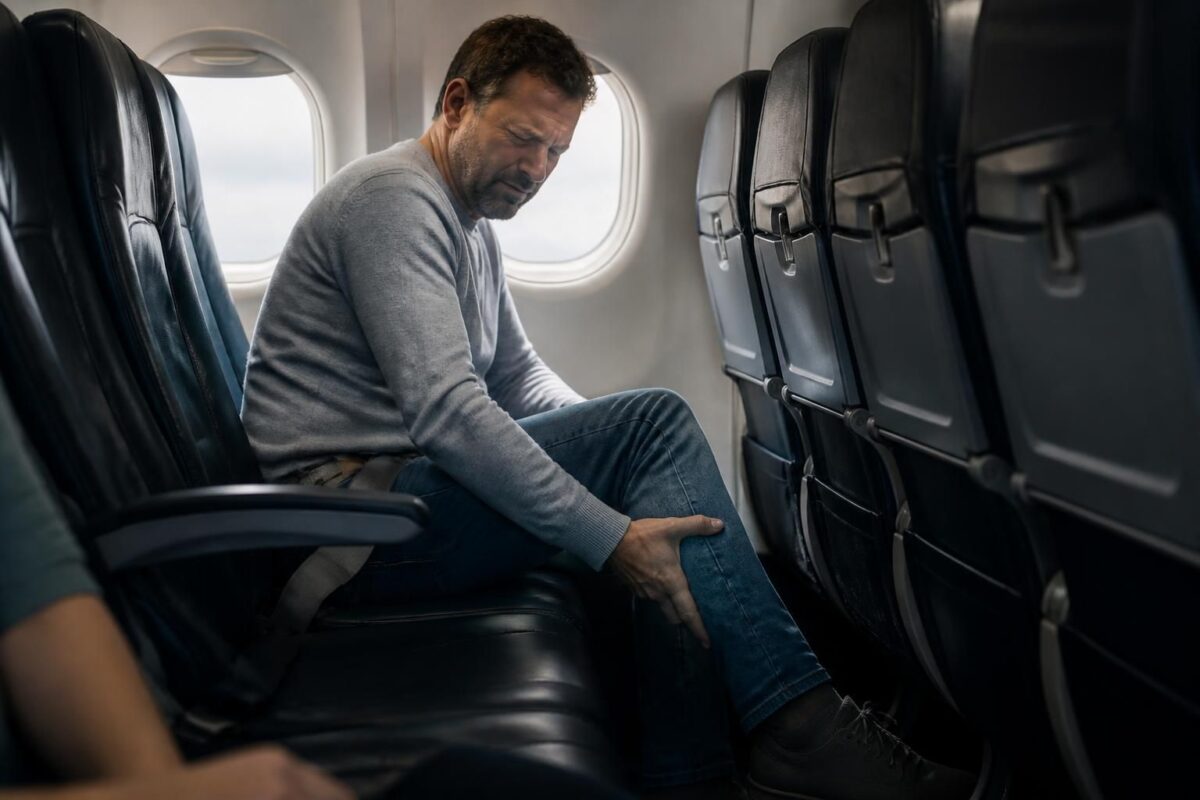
Sciatica and airplane: prolonged sitting and leg pain
IN BRIEF In brief, sciatica related to prolonged sitting on the plane describes pain that arises or worsens when one remains seated for long periods during a flight, due to pressure on the lumbar discs and the sciatic nerve. How…

Sciatica and train: pain after a long journey
IN BRIEF In brief, Sciatica after a long train journey is pain that radiates along the sciatic nerve after long periods of sitting. The problem often arises from an inadequate posture and a poorly mobilized pelvis during the trip. The…

Sciatica and subway: stay standing or seated?
IN BRIEF In short, sciatica and metro: staying standing or sitting is a practical question for daily commutes. The goal is to manage pain without restricting mobility, favoring appropriate postures and micro-breaks to avoid twists and asymmetrical loads. Main benefits:…

Sciatica and bus: vibrations, seating, and sciatica pain
IN BRIEF In brief, sciatica related to trips by bus is pain that follows the sciatic nerve, worsened by seated position and vibrations during the journey. The benefits of a tailored approach include improved posture, reduced pressure on the tailbone…

Dr Sylvain Desforges, B.Sc., D.O., N.D., osteopath, is the founding president of TAGMED and of the ACMA association. He dedicates his practice to chronic spinal pain, low back pain and symptoms compatible with sciatica, particularly when pain radiates toward the buttock, leg, calf, foot or toes.
Through SOS Sciatique, he publishes educational content on sciatica symptoms, possible causes such as disc herniation, disc narrowing, foraminal stenosis or irritation of a lumbar nerve root, as well as non-surgical approaches that may be considered according to the evaluation. At Clinique TAGMED, care may include, depending on the case, motorized neurovertebral decompression, specific osteopathic care or precision percussion.
For an evaluation related to sciatica treatment in Montreal / Mount Royal or sciatica treatment in Terrebonne, please consult the services available at Clinique TAGMED.
Medical disclaimer
The information published on SOS Sciatique is provided for educational purposes only and does not replace a consultation, diagnosis, opinion or treatment provided by a physician or another authorized healthcare professional. The author of this article is neither a medical doctor nor a specialist in a medical specialty recognized by the Collège des médecins du Québec. The osteopathic, manual medicine or functional support approaches described on this site do not constitute medical acts and are not intended to replace medical follow-up.
Consult a physician or emergency service in cases of loss of bladder or bowel control, anesthesia in the saddle area, significant or progressive weakness in the leg or foot, fever, recent trauma, severe pain or rapid worsening of symptoms. For more details, please read our Legal Notice.