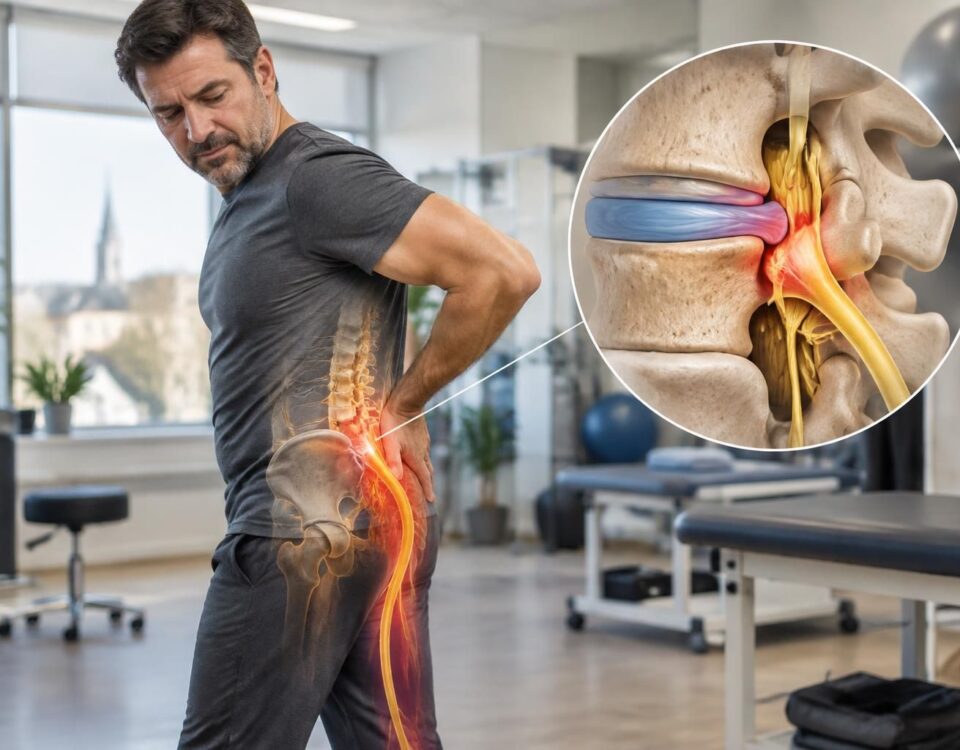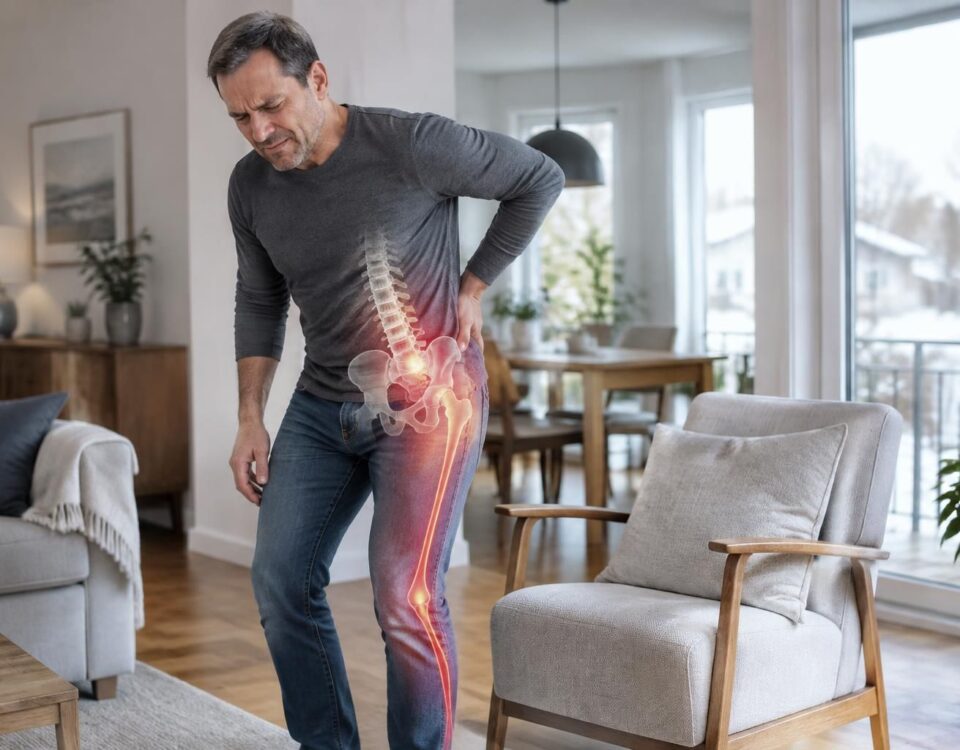
Sciatica in Montreal: Why the clinical evaluation always precedes the treatment
03/07/2026
Sciatica with electric shock: sign of nervous irritation?
03/07/2026
In short
| In short, the sciatica is lumbar pain that follows the path of the nerve roots and the diagnosis is based on a Clinical evaluation. At Terrebonne, this evaluation systematically precedes the treatment and directs towards non-surgical approaches when possible. Its key advantages are to identify the disc origin (L5/S1), to confirm the Sign of Lasègue And to rule out nerve complications, which helps to avoid inappropriate treatment and quickly adapt the treatment. Functioning is based on interrogation and clinical examination to clarify the painful path and determine if imaging examinations are necessary. In results, this offers effective, personalized and patient-centric care from the first appointment. |
In Terrebonne, the Sciatica requires a Clinical evaluation first of all treatment. The Clinical diagnosis relies on the interrogation to specify the path of the pain and on theclinical examination To confirm the disc origin, in particular thanks to the Sign of Lasègue. This step makes it possible to quickly guide the therapeutic plan and decide whether a imagery is necessary, while looking for any possible Neurological complications. Without this evaluation, treatment could be unsuitable and recovery could be delayed.
Quick summary: This article explains why, in Terrebonne, the evaluation clinical precedes all treatment of the sciatica. The evaluation confirms the origin of the pain, specifies the path L5/S1 and determines if imaging is necessary. It guides the treatment decisions proposed by the TAGMED clinic and aims to avoid inappropriate interventions.
Clinical evaluation: the base of treatment
The Clinical diagnosis is asked during the interrogation and examination. The interrogation specifies the Painful journey linked to L5 or S1. The examination confirms the discretion of the symptoms by the Sign of Lasègue, when this sign is positive. The evaluation research neurological complications such as paralysis, theanesthesia or vesico-sphincter disorders. If the pain persists despite the treatments, a imagery is envisaged to guide the therapeutic choice and avoid inappropriate management.
When imaging is needed
Imaging is required in case of Persistent sciatica despite the treatment. The X-rays refer to discopathy or lumbar osteoarthritis. The scanner of the lumbar spine assesses the size of the lumbar duct or the presence of a hernia. theMRI Also analyzes the canal and can reveal a hernia that compresses a nerve root. It can detect rare conditions such as neurinomas. For complex cases, other additional examinations can be discussed.
Imaging exam(s) and additional examinations
If the first results are not enough, the balance sheet can be expanded. One Assessment in search of extra-spinal causes Can be arranged with the help of a rheumatologist. This assessment may include a Abdominal scanner, a EMG, a Arteriography of the lower limbs, or an assessment of the hip joints and sacroiliacs.
To learn more about non-surgical approaches and osteopathic perspectives, see The benefits of osteopathy to treat sciatic pain and specific solutions related to Terrebonne on Treatment of sciatica in Terrebonne.
Role of treatments and referral to TagMed
After the evaluation, the care plan is adapted. At TagMed Clinic, non-surgical options and specialized approaches are discussed based on clinical diagnosis and imaging results. The choice of treatments aims to reduce pain and improve function without invasive interventions when possible.
Specialized Resources and Resources
For additional information, see the following resources: Foot or toe and sciatica pain, Neurovertebral and acute sciatica decompression, and Advantages of neurovertebral decompression.
Dr Sylvain Desforges, B.Sc., D.O., N.D., Osteopath, is the founding president of
tagmed
and the ACMA Association. He devotes his practice to Chronic pain From the spine, back pain and pain compatible with sciatica, especially when the pain goes down to the buttocks, leg, calf, foot or toes.
Through SOS Sciatica, he publishes educational content on the symptoms of sciatica, possible causes such as disc herniation, disc pinching, foraminal stenosis or irritation of a lumbar nerve root, as well as on non-surgical approaches that can be considered depending on the evaluation. At the Tagmed Clinic, care may include, as appropriate, the neurovertebral decompression motorized, specific osteopathy or the precision striker.
For an assessment related to
Treatment of sciatica in Terrebonne,
Consult the services available at the
Tagmed Clinic.
Medical warning
The information published on SOS Sciatica is provided for educational purposes and does not replace a consultation, diagnosis, or treatment by a doctor or other authorized health care professional. The author of this article is neither a doctor nor a specialist in a medical specialty recognized by the Collège des Médecins du Québec. The approaches to osteopathy, manual medicine or functional support described on this site are not medical acts and are not intended to replace medical follow-up.
For more details, please read our legal notice.
Medical Disclaimer: The information and advice provided on this site does not replace the health professional’s diagnosis or treatment. Please note that Dr. Sylvain Desforges osteopath is neither a doctor of medicine nor a doctor, and is not a specialist in a medical specialty as defined by the Collège des Médecins du Québec. Manual medicine, functional medicine and sports medicine as described on this site exclude any medical treatment or diagnosis made by a doctor or specialist doctor. Always consult your doctor for any medical questions. For more details, please read our full legal notice.
- Clinical evaluation Specifies the painful journey and the L5/S1 level.
- Sign of Lasègue and neurological examination confirm or exclude disc origin.
- Search for neurological complications (paralysis, anesthesia, vesico-sphincter disorders).
- The result guides imaging choices and appropriate non-surgical options.
- Without evaluation, risk of unnecessary imaging and inappropriate treatment.
- The evaluation determines the necessary additional examinations (radiography, MRI, scanner).
- Avoid premature invasive treatments by favoring non-operative approaches.
- Identifies aggravating factors and comorbidities that guide the care plan.

This article explains why, in Terrebonne, the clinical evaluation always precedes the treatment of sciatica and how it guides the choice of non-surgical approaches. The diagnosis is based on interrogation and examination, imaging is reserved for persistent cases and therapeutic decisions depend on the results of this evaluation.
Clinical evaluation: the key to diagnosis
As part of sciatica in Terrebonne, the Clinical diagnosis is established before any treatment. The interrogation specifies the painful journey, most often compatible with the attacks of the L5 or S1 territories, and the examination confirms the disc origin thanks to the Sign of Lasègue when it is positive. We also make sure to detect any neurological complications (paralysis, anesthesia, vesico-sphincter disorders). This approach makes it possible to distinguish the different causes and to avoid inappropriate treatments.
The key elements of the evaluation
The interrogation precisely describes the path of pain and the factors that aggravate or relieve it. The examination aims to demonstrate disc origin and assess the integrity of the nervous system; The presence of Route L5 or S1 and the Sign of Lasègue reinforce the disc hypothesis. The doctor is also looking for signs of neurological vulnerabilities that will guide the safety of the treatment plan. Finally, the response to the initial treatment can guide the need or not for additional investigations.
The role of imaging and indications
The Imaging Reviews are considered in case of persistent sciatica. X-rays will help identify a discopathy or osteoarthritis directing towards a lumbar origin. The scanner of the lumbar spine makes it possible to assess the size of the canal and to detect a possible hernia. theMRI of the lumbar spine also analyzes the size of the canal and the presence of a hernia likely to compress a nerve root; It can reveal rare conditions such as neuromas. In the event of non-conclusive results, an enlarged assessment can be considered with the help of a rheumatologist and may include options such as an abdominal CT scan, an EMG or an evaluation of the arteries of the lower limbs and joints of the hip and sacroiliac.
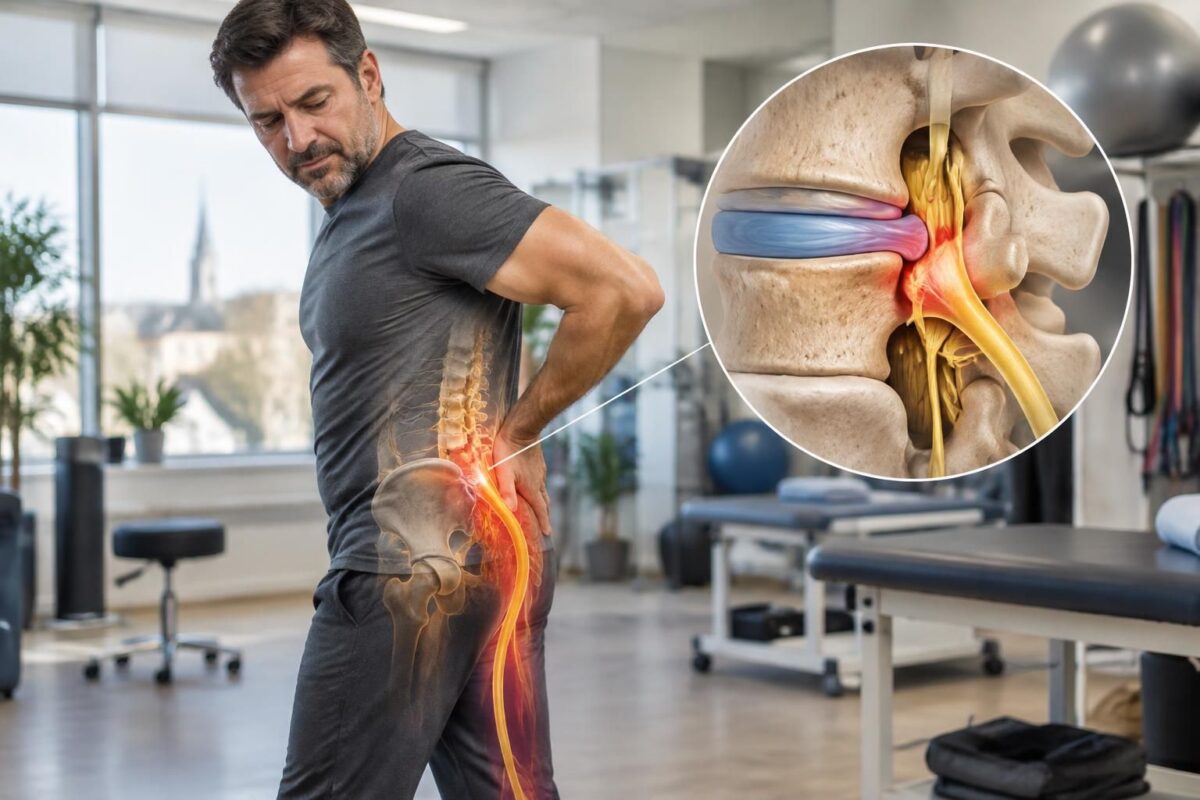
Sciatica in Terrebonne: nerve root, disc, and foramen explained simply
IN BRIEF Sciatica is pain that occurs when a nerve root in the lower back is irritated or compressed, sometimes by a disk or a narrowed foramen. Understanding these structures helps better locate the possible cause of symptoms and guide…
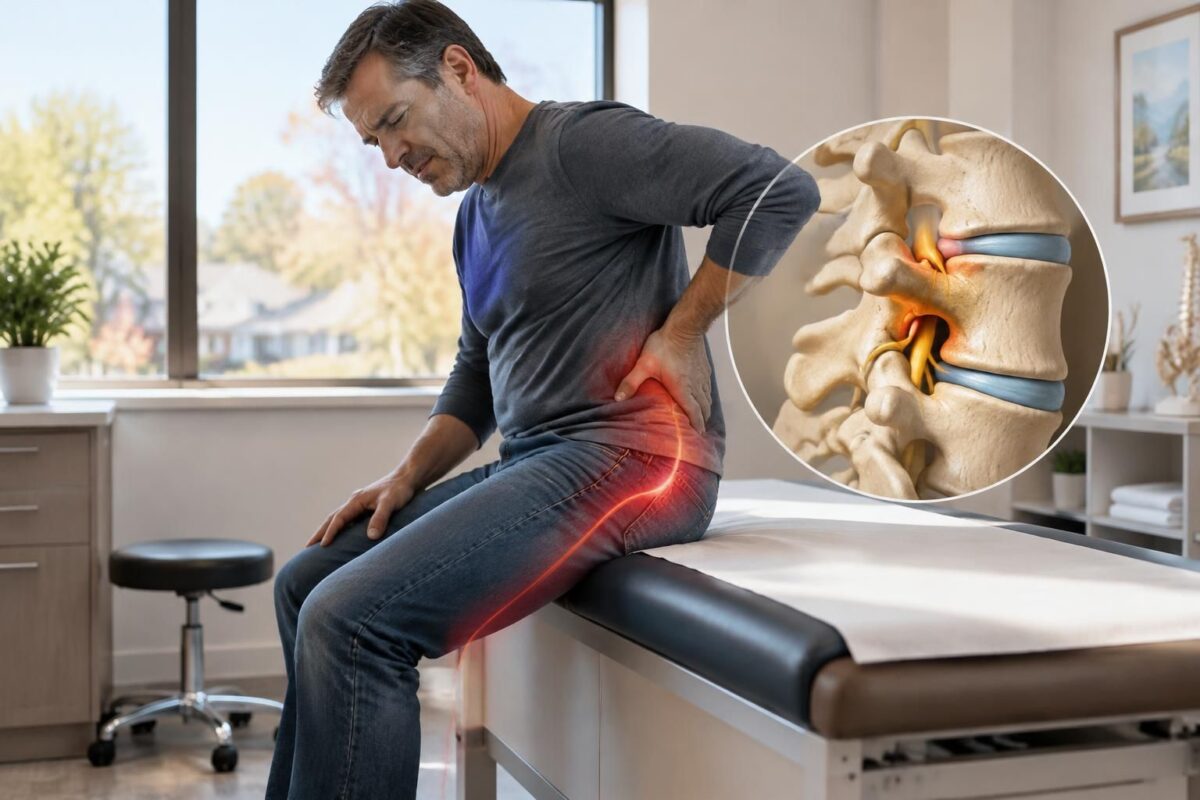
Sciatica in Terrebonne: understanding the L5-S1 foraminal compression
IN BRIEF The L5-S1 foraminal compression corresponds to a narrowing of the opening through which a nerve root passes, potentially contributing to sciatica. In Terrebonne, the assessment compares the side and course of the symptoms, neurological examination, imaging, and limited…
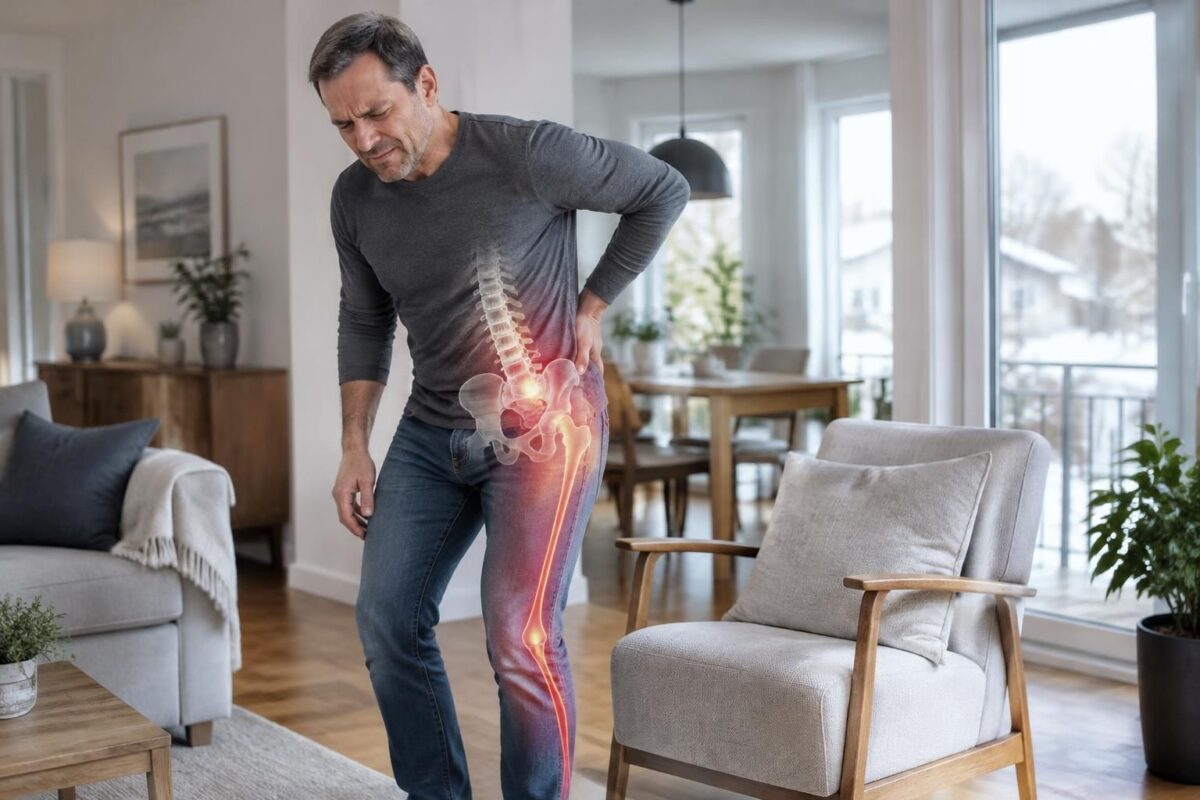
Sciatica in Terrebonne: why L5-S1 is often involved
IN BRIEF Sciatica corresponds to pain related to the irritation of a nerve root, which can extend from the buttock down to the leg. The L5-S1 level is often involved, as a disc herniation or irritation at this location can…
Practical application for Terrebonne
In Terrebonne, following a rigorous clinical assessment guarantees a personalized and secure approach. As a first intention, we favor non-surgical approaches when the evaluation allows it, by adapting the therapeutic plan according to the results of the interrogation and the examination. Imaging is only useful when the pain persists despite treatment or when significant neurological signs appear, in order to clarify the therapeutic choice and avoid unnecessary acts.
What this means for the patient
The patient benefits from a clear diagnosis and a personalized plan, with appropriate follow-up and transparent communication about the options available. A Clinical evaluation in depth helps explain the potential causes of pain, the benefits of manual therapies and functional exercises, and to limit unrealistic expectations. In the event of persistence, the following steps are based on imaging results and clinical evolution, in order to propose an adapted strategy in Terrebonne.
| Evaluation item | Impact on treatment |
|---|---|
| Targeted interrogation of the painful journey (L5-S1) | Focuses the diagnosis and quickly directs towards the appropriate treatment. |
| Sign of Lasègue positive | Strengthens the disc hypothesis and guides the options. |
| neurological examination and vigilance of complications | Detects neurological risks and decides whether to imaging or urgent care. |
| Evaluation of complications vesico-sphincter | Evaluates the urgency and adapts the care plan. |
| Imaging decision After failure of drug treatment | Locate the cause and direct towards a targeted treatment (discal or foraminal). |
| Recommended imaging (radiographs, scanner, MRI) | Shows the extent of the conflict with the root and guides the therapeutic choices. |
| Additional examinations possible in case of doubt | Expand search to avoid misdiagnoses. |
| Multimodal plan favoring non-invasive approaches | Promotes conservative strategies and adjusts treatment according to the evaluation. |
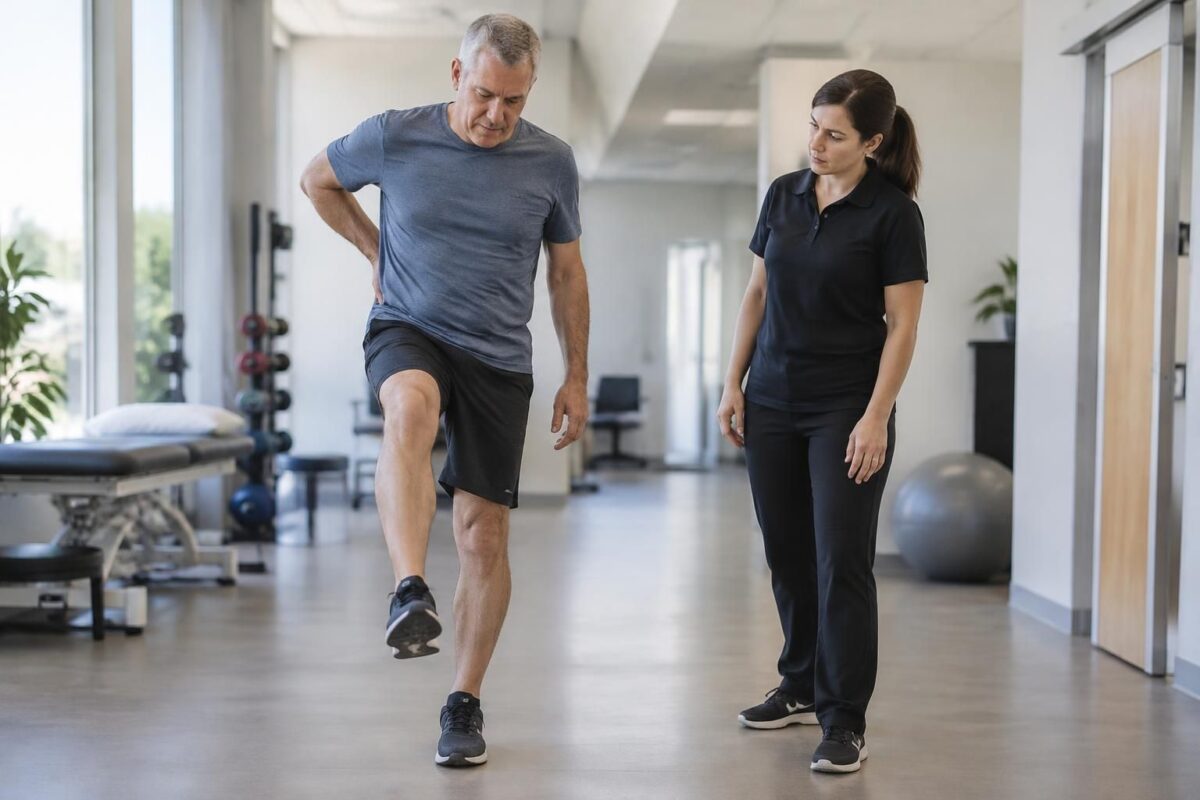
Sciatica in Terrebonne: L5 and difficulty lifting the foot
IN SHORT The L5 sciatica can cause pain or numbness on the side of the leg, the top of the foot, and the big toe, sometimes with difficulty lifting the foot. In Terrebonne, an evaluation compares strength, sensitivity, reflexes, and…
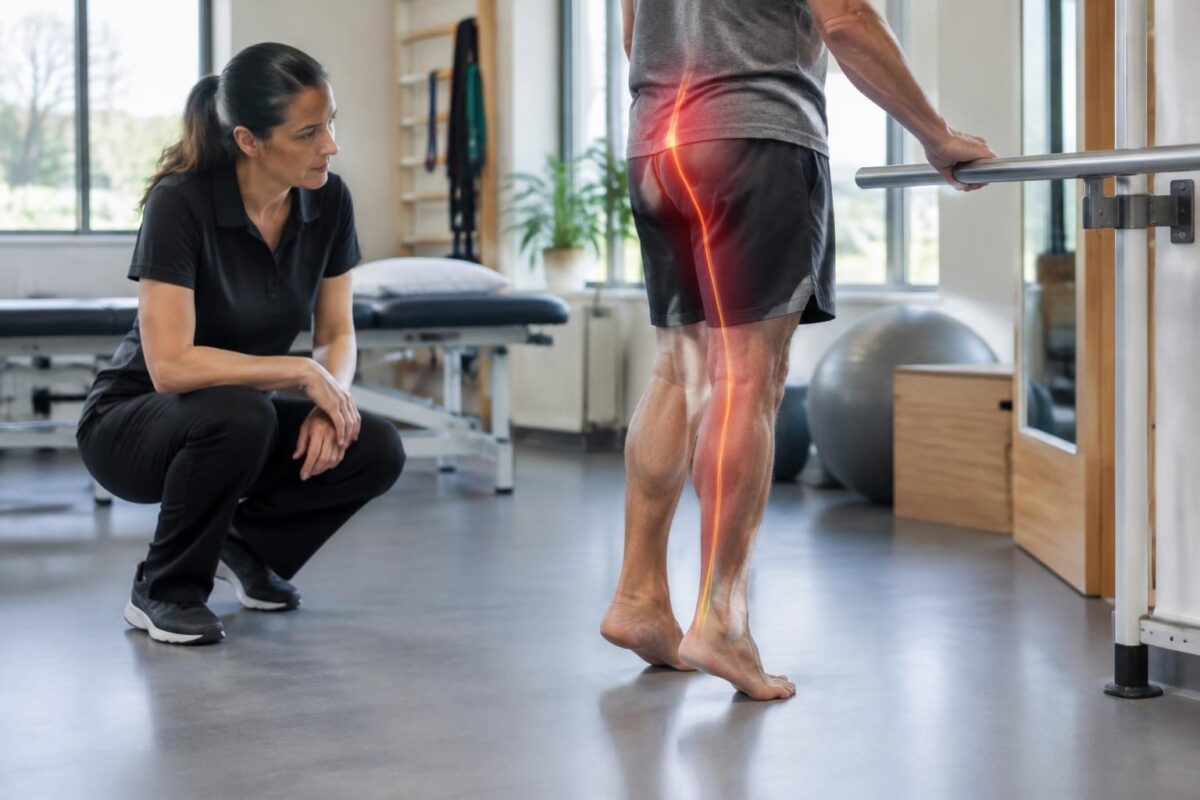
Sciatica in Terrebonne: S1 and difficulty standing on tiptoe
IN SHORT An S1 sciatica can irritate the nerve root associated with the calf and make it difficult to rise onto the balls of the feet. This sign should be evaluated with strength, sensitivity, reflexes, and walking: the pathway of…

Sciatica in Terrebonne: L4-L5 and pain towards the top of the foot
IN BRIEF A L4-L5 sciatica can radiate to the outer side of the leg and the top of the foot, sometimes reaching the big toe. This pathway can guide the assessment, though it does not suffice to confirm the cause:…
Testimonials in Terrebonne: why the clinical evaluation always precedes the treatment of sciatica
In Terrebonne, a pain that radiated in the leg led me to the specialist. theClinical evaluation Triggered everything: the interrogation precisely defined the pain path at the L5/S1 level and the examination confirmed the disc origin thanks to the Sign of Lasègue, when this sign is positive. This essential step guided the choice of treatment And avoided imposing an inappropriate approach from the start.
Another testimony from Terrebonne insists on this point: thanks to theClinical evaluation, we can rule out neurological complications and vesic-sphincter disorders, and thus immediately direct towards appropriate non-surgical approaches. Understanding the mechanism before acting helps stop abuse and target what really helps.
In a third account, the team explained that theimagery is only considered if the treatment medicinal not enough to make the pain disappear. This logic makes it possible to avoid superfluous examinations and to progress step by step, while remaining focused on the resolution of symptoms.
One patient appreciated the clarity of the course: theClinical evaluation was the foundation of a plan progressive and personalized, who established trust and demonstrated that the treatment begins with listening and accurately identifying the problem before proposing a solution.
Finally, another testimony points out that the approach centered on theClinical evaluation Allows you to understand the origin and mechanism of the sciatica in Terrebonne, facilitating the return to daily activities and avoiding hasty treatments. The transparency of the explanations and the reassuring framework were decisive in considering appropriate and non-surgical management.
In the Terrebonne region, sciatic pain is a frequent reality that can significantly limit daily life. Dr. Sylvain Desforges, an experienced osteopath and expert in manual medicine, insists on a fundamental rule: any effective care begins with a Clinical evaluation rigorous. Its approach, based on years of experience and practice focused on safety and efficiency, is based on a precise understanding of the painful journey and the underlying mechanisms. The priority is to establish a clear mapping of the symptoms before considering any treatment.
Clinical evaluation is the cornerstone of the diagnostic process. The interrogation aims to specify the painful journey, which often orients towards a lumbar and root origin. The diagnosis focuses in particular on the path L5 or S1, because these segments draw the lines that connect the lower back to the buttock and the leg. The clinical examination also seeks specific indicators, such as the Lasègue sign, whose positivity favors a disc origin of the symptoms. Beyond pain, the assessment incorporates the detection of potential neurological complications, such as sensitive or motor loss, vesico-sphincter disorders, or any alteration of leg and foot function. This step makes it possible to draw a clear priority order and to avoid any misinterpretation that could lead to inappropriate treatment.
The clarity of the evaluation and its systematic nature make it possible to guide the therapeutic choices. For patients in Terrebonne, as for those in the surrounding area, the objective is to start non-invasive and appropriate interventions that target the real cause. The Preservation of neural structures and pain limitation go through an individualized approach, which can combine osteopathy, manual therapies and functional advice. The clinical evaluation does not just say where the problem is; It also determines the possible responses to treatment and the adjustments necessary to progress towards concrete and measurable results.
When symptoms persist despite appropriate medical care and reasonable therapeutic trial, imaging exploration is considered. The Imaging Reviews Used – X-rays, scanner and MRI – allow the diagnosis to be refined and verification of hypotheses such as discopathy, lumbar osteoarthritis or hernia likely to explain the conflict with the painful nerve root. MRI in particular offers a detailed view of the lumbar duct and can reveal rare conditions such as neurinomas, while favoring a targeted assessment depending on the patient’s symptoms. However, the use of imaging remains guided by the persistence of pain and the absence of response to the initial treatment.
In some cases, exploration may be extended to additional assessments, especially when the clinical signs do not fully agree with the initial results. An extra-spinal target assessment can be considered with the collaboration of a rheumatologist and may include examinations such as abdominal investigations, neurophysiological tests (EMG) or an evaluation of the arteries of the lower limbs, as well as the study of the joints of the hip and sacroiliac. This multi-disciplinary journey aims to neglect any track and to offer complete and adapted support to the Terrebonne context.
In short, the clinical evaluation always precedes the treatment in the management of sciatica. This approach makes it possible to clearly differentiate possible causes, to plan targeted treatments and to prevent inappropriate treatment. Dr. Sylvain Desforges advocates a careful and progressive approach, patient-centric and based on clinical and, if necessary, radiological evidence, in order to restore function and well-being in the Terrebonne region. The path to recovery therefore begins with a rigorous evaluation and a precise understanding of the painful journey and the mechanisms involved.
This presentation recalls that, in the context of sciatica in Terrebonne, the clinical evaluation systematically precedes treatment. The approach is based on interrogation and physical examination to confirm disc origin, identify warning signals and guide to appropriate options, including non-drug approaches when relevant.
In the context of sciatica, The clinical evaluation is central. theexamination specifies the pain path, generally linked to the segments L5 or S1, and the clinician seeks the Sign of Lasègue to support the hypothesis of a root conflict of disc origin. During this exam, the Neurological complications potential (paralysis, anesthesia, vesic-sphincter disorders) must be identified to determine the urgency and type of management.
The decision to use Imaging Reviews Depends on pain persistence or treatment failure. The X-rays allow to identify a discopathy or a osteoarthritis that guide the lumbar origin. The scanner of the lumbar spine assesses the size of the canal and may reveal a hernia. theMRI offers a detailed analysis of the lumbar duct and the existence of a hernia that can lead to conflict with the painful nerve root, and can also highlight rarer conditions such as neurinomas.
If the initial examinations do not make it possible to standardize the diagnosis, an enlarged assessment can be considered in collaboration with a rheumatologist. This report may include an abdominal scanner, An EMG, An arteriography of the lower limbs, or an evaluation of the hip joints and sacroiliacs.
For Terrebonne patients, local resources and non-invasive options can be put forward. To deepen advice and practical approaches, you can consult content like LA#ATFP_CLOSE_TRANSLATE_SPAN# Sciatica – Clinic Tagmed and LA#ATFP_CLOSE_TRANSLATE_SPAN# Solution for sciatica, as well as practical guides such as that#atfp_close_translate_span# do when the pain descends into the leg and Numbness#ATFP_CLOSE_TRANSLATE_SPAN# in leg and sciatica.
Non-surgical options such as neurovertebral decompression and functional approaches are also discussed, including via resources such as Decompression#ATFP_CLOSE_TRANSLATE_SPAN# Neurovertebral: Alternative to drugs and Relieve#ATFP_CLOSE_TRANSLATE_SPAN# without surgery.
To broaden the perspective, it is useful to consult resources with the links between hernia, stenosis and nerve irritation, for example Sciatica#ATFP_CLOSE_TRANSLATE_SPAN# – Hernia, stenosis or nerve irritation, and clinical reports like CAS#ATFP_CLOSE_TRANSLATE_SPAN# Sciatica Clinic.

Sciatica in Terrebonne: L5-S1 and symptoms in the calf
IN BRIEF A L5-S1 sciatica can cause pain that radiates down the calf, sometimes accompanied by tingling, numbness, or weakness. At Terrebonne, an assessment at the TAGMED Clinic helps to examine the symptom pathways, strength, and sensitivity, and then discuss…

Sciatica in Terrebonne: pain in the big toe, L5 root or another cause?
IN BRIEF Pain in the big toe accompanied by pain in the buttock or leg may be compatible with irritation of the L5 root, but other causes are possible. In Terrebonne, the evaluation notably compares strength, sensitivity, and gait to…

Dr Sylvain Desforges, B.Sc., D.O., N.D., osteopath, is the founding president of TAGMED and of the ACMA association. He dedicates his practice to chronic spinal pain, low back pain and symptoms compatible with sciatica, particularly when pain radiates toward the buttock, leg, calf, foot or toes.
Through SOS Sciatique, he publishes educational content on sciatica symptoms, possible causes such as disc herniation, disc narrowing, foraminal stenosis or irritation of a lumbar nerve root, as well as non-surgical approaches that may be considered according to the evaluation. At Clinique TAGMED, care may include, depending on the case, motorized neurovertebral decompression, specific osteopathic care or precision percussion.
For an evaluation related to sciatica treatment in Montreal / Mount Royal or sciatica treatment in Terrebonne, please consult the services available at Clinique TAGMED.
Medical disclaimer
The information published on SOS Sciatique is provided for educational purposes only and does not replace a consultation, diagnosis, opinion or treatment provided by a physician or another authorized healthcare professional. The author of this article is neither a medical doctor nor a specialist in a medical specialty recognized by the Collège des médecins du Québec. The osteopathic, manual medicine or functional support approaches described on this site do not constitute medical acts and are not intended to replace medical follow-up.
Consult a physician or emergency service in cases of loss of bladder or bowel control, anesthesia in the saddle area, significant or progressive weakness in the leg or foot, fever, recent trauma, severe pain or rapid worsening of symptoms. For more details, please read our Legal Notice.