Sciatica: leg numbness and cause to clarify
10/07/2026
Sciatica in Montreal: when the pain becomes stronger in the leg than in the back
11/07/2026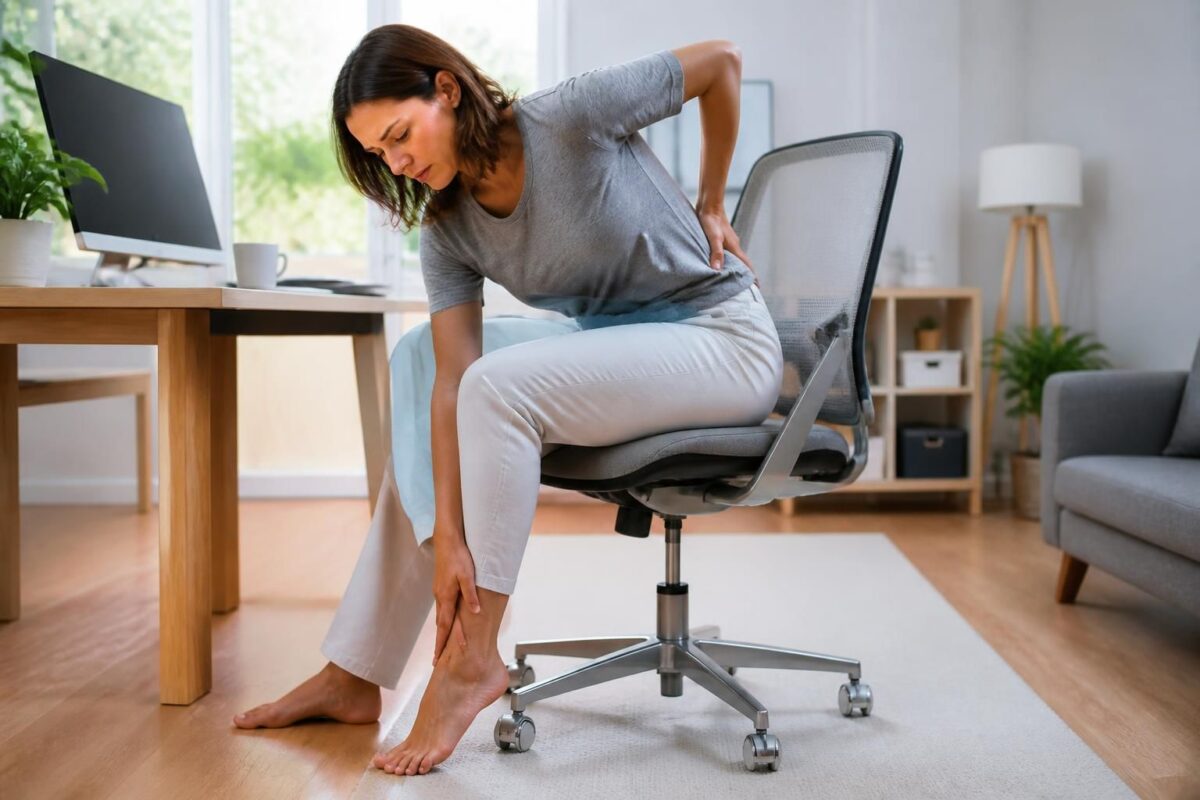
IN BRIEF
| In brief, the topic sciatica and heel pain in sitting position describes pain that can radiate from the lower back to the heel when remaining seated. It may result from irritation or compression of the sciatic nerve and associated muscle tension. The main advantages? Understanding the causes and adopting an appropriate posture to gain comfort and prevent recurrences. How does it work? By adjusting office habits and using simple elements such as a sciatic cushion and <strong;lumber support, pressure on the nerve is reduced and lasting relief is achieved, all while continuing daily activities without resorting to heavy interventions. |
The sciatica can manifest as a heel pain when remaining in a sitting position for long periods. This pain may be a radiation from the sciatic nerve and reach the heel depending on the nerve pathway and the degree of compression. To limit these symptoms while sitting, it is advisable to adjust posture and work rhythm.
- Avoid prolonged sitting and take micro-breaks every 30–40 minutes to walk and relax the back.
- Posture and support: straight back, lumbar support, knees at ~90°, feet flat; avoid crossing legs; use a lumbar cushion and, if necessary, a footrest.
- Mobility and gentle stretches: incorporate short walks and simple stretches to relax the muscles and free up spinal space.
- Monitoring signs: watch for warning signs like progressive weakness in a leg, loss of sensation, or sphincter issues – consult quickly if this appears.
This article is written by a health professional and expert. It explains why sciatica and heel pain can occur in a sitting position. It provides simple explanations and practical advice to reduce pain and preserve the heel and the sciatic nerve. It proposes ergonomic adjustments and daily strategies to limit painful episodes without resorting to invasive measures.
Understanding the link between sciatica and heel pain in a sitting position
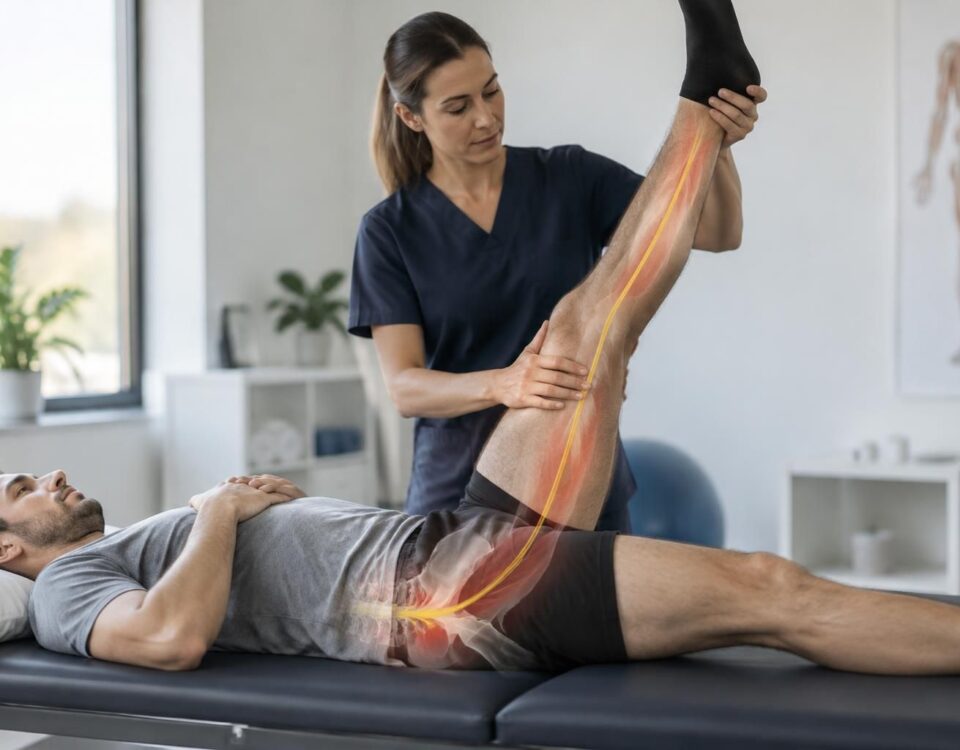
The sciatic nerve is the longest in the body. It can become irritated when you sit for a long time or are poorly positioned. The pain can project towards the heel and foot, or remain localized in the thigh and buttock. The nerve’s pathway and postural constraints explain why the heel can be painful even without pain in the lower back.
Several mechanisms explain this phenomenon. Sustained pressure on the discs, tension in the gluteal and lower back muscles, or a position that alters lumbar alignment can amplify irritation of the sciatic nerve. This pain can also intensify during repetitive movements or sudden efforts, even light ones, if you are poorly positioned while sitting.
To better understand, you can explore resources that address the pain associated with these sensations and the mechanisms of pain in a sitting position, including pages addressing tingling after sitting and gluteal pain related to the lumbar region (which refer to it). Additional information on possible lumbar causes of buttock pain is also available (associated link). For practical advice on exercises in a sitting position, you can consult dedicated resources (practical article). And if the pain “descends” into the leg, other useful resources explain this symptom in a sitting position (details on the subject).
Pain may be felt in the heel when the sciatic nerve is irritated near its pathway or when lumbar tension radiates to the distal level. Information about conditions that compress nerve roots and lead to these symptoms may be helpful in understanding the general framework (anatomical details).
Postures to avoid in sitting position
In a sitting position, certain postures aggravate irritation of the sciatic nerve and increase heel pain. Avoid staying frozen in a low position and adopting positions that increase pressure on the lower back or twist the lumbar spine. You can reduce the risk by adjusting your chair and seat.
Remaining seated for too long without moving can accentuate the pain. In transport, at the office, or at the table, prioritize active breaks and small mobilizations. If you must remain seated, use ergonomic aids and vary positions every 30 to 40 minutes.
Avoid crossing your legs as this posture can unbalance the pelvis and increase pressure on the sciatic nerve. An alternative is to keep your feet flat and, if necessary, use a footrest to support a good pelvic tilt.
If you experience persistent pain when seated, it may be helpful to consult specific advice on seating and alignment. Resources dedicated to sitting position and sciatic relief offer concrete recommendations (solving pain in sitting position). Online articles also cover the relationship between sitting and symptoms (useful links).
Ergonomics and posture in the workplace
To reduce pressure on the lumbar spine, use a height-adjustable seat so that the knees are about 90 degrees and slightly lower than the hips. Lumbar support, such as a dedicated cushion, helps maintain the natural curve of the lower back (lordosis), relieving nerve endings and improving comfort.
A sciatic cushion can also be helpful in freeing the area where the nerve passes, especially if you need to sit for a long time. This helps reduce pressure and improve pelvic alignment. These simple adjustments allow you to maintain your workflow while limiting pain.
To complement ergonomics, you may consider resources that focus on sitting posture and symptom management. For example, advice regarding posture and pain related to sitting can be consulted on specialized sites (patient links). Articles dedicated to buttock pain and the lumbar canal also highlighted the mechanisms involved (anatomical references).
To explore complementary approaches, you can consult resources on exclusions and therapeutic choices in osteopathy and manual medicine, and consider recognized training such as NUMSS, NAO, National University of Medical Sciences, and National Academy of Osteopathy (professional references and training for informational purposes only). Relevant professional associations may be mentioned here: ACMA, College of Canadian Osteopaths, Collège des Ostéopathes Canadiens.
Alternatives and strategies to relieve heel pain while sitting
Vary your positions and take active breaks. Simply standing up and walking for a few minutes regularly can help. Light walking activates circulation and may decrease pain associated with sitting.
You may also consider simple ergonomic measures: changing seats, adding a footrest, and keeping your back straight with lumbar support. These gestures improve alignment and reduce pressure on the sciatic nerve and heel.
Practical resources recommend simple and suitable exercises when you do not have significant neurological symptoms. You can refer to exercises designed to relieve sciatica while sitting on dedicated pages (recommended exercises). Note that these exercises should be adapted to your situation and performed without increasing pain.
In case of pain extending to the heel, you might consider complementary approaches offered in specialized clinics. Some facilities, notably the TAGMED clinic in Montreal or Terrebonne, offer assessment and approaches tailored to this type of symptomatology (TAGMED Montreal | TAGMED Terrebonne). These options aim to reduce mechanical constraints and support the sciatic nerve without resorting to invasive treatments.
When to consult and what examinations to consider
If you observe progressive weakness in one leg, marked loss of sensation, or sphincter disturbances, consult promptly. These signs require urgent evaluation.
In the absence of red flags, a consultation after 2 to 6 weeks of persistent pain may be reasonable. Typical examinations include a neurological clinical exam and, if necessary, an MRI to assess lumbar structures and the nerve pathway. An electromyogram may be considered if there is doubt about a nerve injury or if pain persists despite treatment.
Management may range from postural education and ergonomic advice to more specialized options, including targeted interventions based on the identified cause. In some cases, surgery may be discussed after a detailed assessment and evaluation of risks and benefits.
Quick overview of approaches and possible outcomes
| Goal | Intervention | Expected outcome |
|---|---|---|
| Immediate relief | Postural education and ergonomics, simple seating adjustments | Pain reduction and short-term mobility improvement |
| Recurrence reduction | Strengthening core muscles and optimizing ergonomics | Better stability and fewer recurrences |
| Refractory pain | Specialized evaluations and complementary options | Pain control and exploration of therapeutic options |
| Severe cases | Targeted interventions after assessment | Reduction of compression and possible neurological improvement |
For this type of issue, an integrated approach can be discussed with professionals. Resources and treatments offered by TAGMED and other facilities may be considered depending on the clinical context and the patient’s preferences.
Also read: articles and additional resources on the link between heel pain and sciatica, and on support approaches in sitting and work environments, including the partner pages listed below.
Additional resources and useful links:
- tingling after sitting
- pain in the buttock and possible lumbar cause
- pain radiating down the leg while sitting
- lumbar canal compressing nerve roots
- Positions to avoid in sciatica
- Sitting position and sciatica pain
- Pain radiating down the leg while sitting (reference)
Medical disclaimer: The information and advice provided on this site do not replace the opinion, diagnosis, or treatment of a healthcare professional. Please note that Dr. Sylvain Desforges, osteopath, is neither a medical doctor nor a physician, and is not a specialist in a medical specialty as defined by the Collège des médecins du Québec. Manual medicine, functional medicine, and sports medicine as described on this site exclude any medical treatment or diagnosis made by a physician or specialist. Always consult your physician for any medical questions. For more details, please read our full Legal Notice.
- Causes and mechanisms: pressure on the discs and sciatic nerve when seated.
- Nerve pathway: pain that may radiate to the heel.
- Common causes: herniated disc, narrow lumbar canal, gluteal/lumbar tension.
- Signals: buttock or lower back pain spreading to the heel, possible numbness.
- Aggravating factors: poor postural habits and repetitive actions.
- Posture tips: sciatic cushion and lumbar support to reduce pressure.
- Chair adjustment: height that places knees at ~90°, hips slightly below knees.
- Leg management: footrest and avoid crossing legs.
- Micro-breaks: every 30–40 minutes, walking or gentle stretches.
- Strengthening: short exercises for core and hips (plank, bridge, bird-dog).
- Equipment: insoles/orthotics if necessary and suitable shoes.

This article provides practical recommendations for understanding and alleviating sciatica associated with heel pain when sitting. You will discover why sitting posture can trigger or amplify pain, how to adjust your workstation, and which simple exercises can be performed without standing to limit irritation of the sciatic nerve and prevent recurrences.
Understanding the link between sciatica and heel pain when sitting
The sciatic nerve is one of the longest pathways in the body: it starts from the lower back and can carry signals all the way to the heel. Staying seated for too long and inappropriately increases stress on the lumbar spine and on the nerve that runs near the buttock and thigh, which can radiate down to the heel. In some cases, the pain manifests mainly as a burning sensation or tingling that travels up the leg and may be felt at the heel. The goal is to reduce pressure and maintain a posture that respects the natural curvature of the spine.
Postures to avoid when sitting
Avoid prolonged pressures and twisting
Prolonged sitting without adjustments increases disc pressure at the lumbar discs and can amplify pain radiating to the heel. Avoid remaining in a fixed position, crossing legs, or slumping. A poor pelvic tilt leads to a shift that degrades lumbar lordosis and puts more strain on the sciatic nerve.
Simple adjustments to adopt
To limit irritations in the workplace, opt for an adjustable height chair with lumbar support, keeping knees at 90° and feet flat on the ground. Avoid seats that are too low or too soft, which encourage pelvic tilting. Take micro-breaks every 30 to 40 minutes and alternate sitting/standing positions when possible. A footrest can make a difference if your feet do not comfortably touch the ground.
Equipment and arrangements for healthy sitting
The right chair and supports
Invest in an ergonomic chair with adjustable height and a backrest that properly supports the lumbar region. Use a lumbar cushion or rolled towel to maintain the natural curve of the back and avoid setups that require working with a hunched back.
Useful accessories
Alongside the chair, consider a sciatic cushion or a small ergonomic cushion placed on the seat to relieve the area where the nerve runs and reduce pressure. A footrest helps to level support and keeps the knees slightly lower than the hips, which limits strain on the nerve.
Exercises and stretches suitable for sitting
Easy exercises to do without leaving your workstation
Perform simple movements during your breaks: slightly twist the torso to the right and then to the left to mobilize the lumbar segments while keeping the hips still. Also, do gentle piriformis stretches while seated: cross an ankle over the opposite knee and gently lean the torso forward without forcing. Finally, practice marching in place for 2 to 3 minutes at regular intervals.
Strengthening and prevention
To stabilize the core, focus on targeted strengthening exercises on days when you are less painful: gentle activation of the deep abdominal and gluteal muscles during short standing breaks. Simple and regular actions can limit episodes and help to preserve the heel when sciatic pain is present.
When to consult and warning signs
Contact a professional promptly if you notice a progressive weakness in one leg, marked loss of sensation, or bowel/bladder issues. In the absence of red flags, a consultation after 2 to 6 weeks of persistent pain is reasonable. In any case, a personalized assessment can help tailor advice and exercises to your specific situation.
Sciatica and Heel Pain in Sitting Position: Quick Comparison Table
| Item | Concise Response |
|---|---|
| Sciatica-heel connection in sitting | The sciatic nerve can be irritated by prolonged pressure in a sitting position, which can radiate to the heel. |
| Aggravating postures in sitting | Hunched back and prolonged sitting increase pressure on the discs and the nerve. |
| Elements to avoid | Crossed legs, too low chair, misaligned pelvis. |
| Sitting tips | Adjustable chair, lumbar support, sciatic cushion, feet flat and knees at 90°. |
| Useful accessories | Sciatic cushion, footrest, and lumbar support to distribute pressure. |
| Breaks and movement | Change position every 30-40 minutes, then take a short walk. |
| Quick exercises | Piriformis stretch, hamstrings, and gentle lumbar movements. |
| Heel vs plantar fascia | Pain in the heel may be associated but is not systematic; check other causes like plantar fascia. |
| When to consult | Pain persists > 6 weeks or neurological signs, consult quickly. |
Testimonials: Sciatica and Heel Pain in Sitting Position
“I am a graphic designer, and I spend hours in a sitting position. After 45 minutes, my sciatica flares up, and the heel pain spreads to my foot. I started taking micro-breaks every 30 minutes and using a lumbar cushion: it has significantly eased the pain, and I can work longer without suffering.”
“My job requires prolonged sitting. The sciatica wakes up, and my heel pain intensifies, especially when I’m stuck at the office. A footrest and a sciatic cushion on my chair have made all the difference, and I alternate between standing and sitting every 20-30 minutes. I recommend this change to my colleagues.”
“Since I started working from home, the heel pain and sciatica in sitting position have been a hindrance. I switched to an adjustable chair with lumbar support, and I use a small cushion between my knees during breaks to avoid twisting my back. Result: less pain and more productivity.”
“As a team leader, I am often standing and then sitting. When I sit too long, the sciatica and heel pain become intense. I’ve learned to vary my postures, do micro-stretches, and take short walks. This routine has greatly improved my comfort and performance at work.”
“I am a student, and I spend hours reading and writing in a sitting position. Sciatica and heel pain appear after a few hours, so I opted for a footrest, an appropriate chair, and simple stretches during breaks. My days are more bearable, and I achieve better results.”
Biography of Dr. Sylvain Desforges: Sciatica and Heel Pain in Sitting Position
In the field of manual medicine, the management of sciatica and associated heel pain, often exacerbated by prolonged sitting position, requires a comprehensive and personalized approach. Dr. Sylvain Desforges embodies this approach: a recognized expert in osteopathy, naturopathy, and manual medicine, he offers his patients an integrated care vision, combining traditional expertise and innovative technologies to restore comfort and mobility in daily life.
At the head of the TAGMED clinics and founder president of the ACMA association, Dr. Desforges is a pioneer in innovative health care. His trajectory is guided by a simple yet powerful conviction: every patient deserves evidence-based support tailored to their lifestyle and work environment. This orientation is particularly relevant when pain radiates from the lower back to the hip, leg, or heel and when sitting postural habits become triggering or aggravating factors.
His intervention is based on managing chronic pain that prioritizes a comprehensive evaluation of the body and its mechanisms, rather than merely targeting symptomatic relief. Dr. Desforges emphasizes harmony between manual therapies, postural advice, and measured use of advanced technologies. His goal: to offer tangible results, improve function, and allow patients to resume their lives — work, sports, and home activities — without fear of relapse.
To address problematic areas related to sciatica and heel pain associated with sitting, he relies on a technological palette that he masters in terms of mechanisms and indications. This includes spinal decompression, which can release compressed nerve roots, laser treatment to promote tissue repair and reduce inflammation, and shock wave therapies that stimulate local healing and enhance musculoskeletal stability. This combination offers a targeted and progressive approach suitable for patients who spend long hours sitting and see their symptoms awaken with the slightest poor posture.
Beyond technical actions, Dr. Desforges stresses the importance of a clear and accessible therapeutic framework. He works on posture in the workplace, lifestyle habits, and adapted rehabilitation programs to prevent recurrences and ensure lasting improvement. His approach is supported by interdisciplinary collaboration, where each patient benefits from a personalized plan, regularly re-evaluated in light of progress made and health objectives.
Patients who walk through the doors of TAGMED clinics find structured support, characterized by listening and scientific rigor. By combining clinical expertise and cutting-edge technologies, Dr. Sylvain Desforges offers a concrete path to reduce pain related to sciatica and heel pain when sitting is an aggravating factor, while preserving function and quality of life.
This detailed summary shows how a sciatica associated with heel pain can be exacerbated by sitting position, and offers practical solutions to limit pain, prevent recurrences, and improve your daily comfort, including ergonomic advice and simple exercises.
Understanding the link between sitting posture and heel pain
In prolonged sitting, pressure on the lumbar discs increases, and the path of the sciatic nerve may become irritated, which can manifest as pain radiating up to the heel or foot. The symptom can be perceived as a nerve-related pain radiating from the lower back to the heel, and can sometimes be confused with local heel pain. To better distinguish the origins, it is useful to understand that certain mechanical causes play a major role in sciatic pain and can manifest as heel pain when the nerve is constantly stressed by poor sitting posture. To deepen understanding of the mechanisms, you can consult specialized resources on possible mechanical causes and the distinctions between lumbar pain and nerve pain: this guide on mechanical causes and distinguishing lumbar pain from nerve pain.
Heel pain can be amplified by inadequate sitting posture, but it can also result from a set of tensions in the deep trunk muscles and the posterior chain. A neutral sitting posture and regular micro-movements can reduce pressure on lumbar structures and limit irritation of the sciatic nerve. To understand how posture can influence your pain and what may actually be causing it, see the points discussed in resources on decompression and sitting positions: sciatic decompression Montreal and why pain increases when sitting.
Ergonomic tips for sitting and painful heel
To limit pain when sitting, prioritize a setup that supports the natural curve of the lower back and avoids extra pressure on the nerves. Use a sciatic cushion and lumbar support to maintain an upright and balanced posture throughout the day. Make sure your knees are bent at about 90 degrees and that your feet rest flat on the floor or on a footrest. Gradually alternate positions and take micro-breaks every 30 to 40 minutes to walk and reduce tension in the back and legs. For additional advice on sitting posture and ergonomic aids, refer to this practical guide on sitting and sciatica.
If you experience persistent pain near the buttocks or heel, adjust your seat and work environment to avoid positions that aggravate symptoms. An adjustable height seat, a firm cushion, and suitable lumbar support can make a significant difference in reducing pain and preventing recurrences. To delve deeper into how to evaluate and adjust your workstation, you can refer to dedicated resources on ergonomics and prevention.
Exercises and habits to adopt to avoid recurrences
Beyond postural changes, simple and controlled exercises can help release tensions irritating the sciatic nerve and stabilize the pelvis. Gentle stretches and targeted mobilizations can improve space between the vertebrae and relax the muscles surrounding the hip. For example, piriformis stretches, gentle knee rotation exercises, and dynamic hamstring stretches can be beneficial when performed without acute pain. For explanations and demonstrations, you can consult resources on effective stretches: simple and effective stretches.
Strengthening the deep and stabilizing muscles is also key to preventing episodes. Light core exercises, bridges, and movements that strengthen the lumbopelvic area form a solid foundation for a rehabilitation program. For structured approaches, you can explore targeted strengthening programs and posture advice that accompany these movements. Resources on setting up a workstation and recommended movements are available in guides dedicated to health and ergonomics: how to sit with sciatica and sciatica or peripheral neuropathy.
Note that each case is unique: if pain persists despite adaptations, it may be helpful to discuss a more in-depth evaluation with a professional. Options exist, ranging from postural education to physical approaches, including localized treatments or decompression techniques in certain contexts.
For additional information on mechanical causes and treatments, consult the following resources: Sciatica and lifting a load, distinguishing lumbar pain from nerve pain, and sciatic decompression Montreal.
When to consult and what steps to take
If you notice progressive weakness in a leg, significant loss of sensation, or sphincter disturbances, contact a professional quickly. In the absence of red flags, a consultation after 2 to 6 weeks of persistent pain may be reasonable to evaluate the causes and adapt treatment. Examinations such as MRI imaging or electromyography may be considered depending on the context and progression of symptoms. Options ranging from postural education to physiotherapy, or even injections or surgical intervention, can be discussed depending on the intensity and origin of the problem.
To deepen the topics discussed and find additional resources, feel free to consult the guides dedicated to sitting posture and prevention, as well as pages offering approaches specific to your area.

Sciatica and calf stretching: when the pain increases
IN SHORT A calf stretch can exacerbate sciatica if it further irritates the nerve. It should not cause pain that increases or radiates down the leg: stop the movement and do not push through. Stretches may help with some tensions,…
Sciatica and hamstring stretching: possible nerve tension
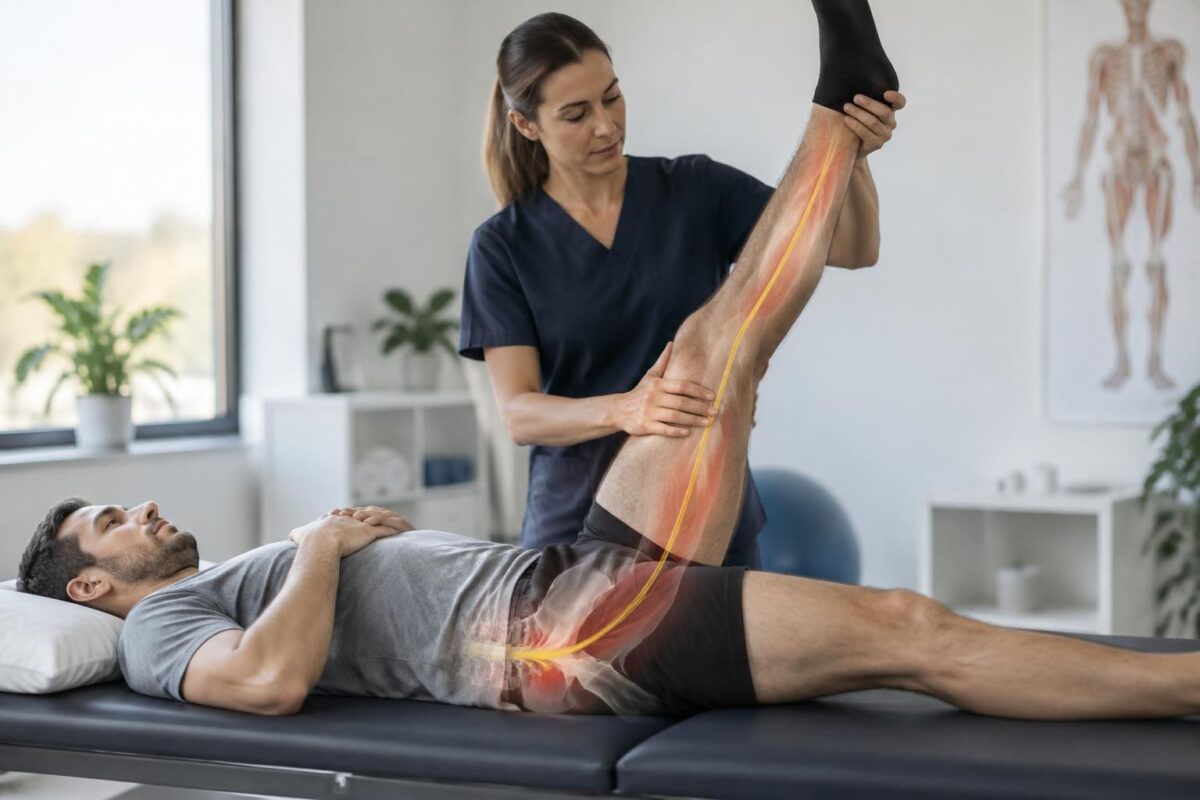
IN BRIEF Sciatica can make stretching the hamstrings uncomfortable, as the tension felt may come from the nerve rather than the muscle. A gentle stretch, with a straight back and without seeking maximum range, can help loosen the back of…
Sciatica and piriformis stretching: useful or worsening depending on the case
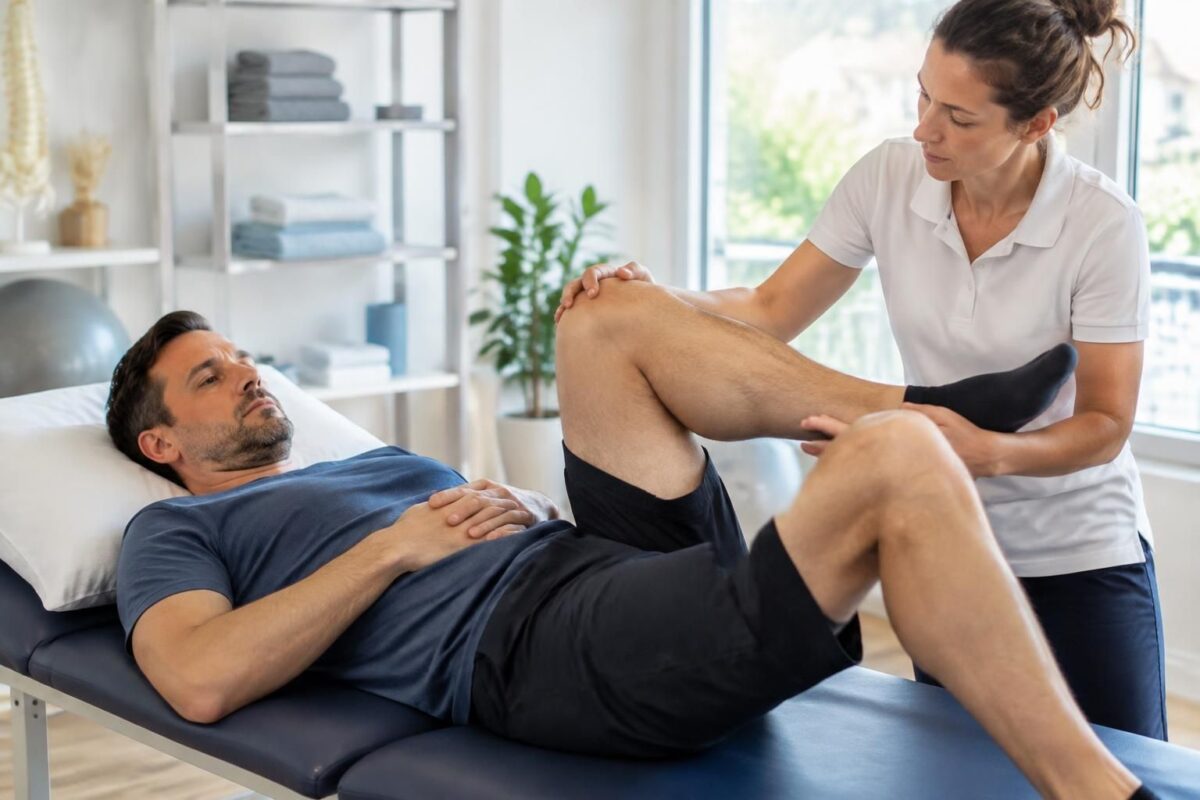
IN BRIEF Piriformis-related sciatica can cause deep pain in the buttock, sometimes radiating down the back of the thigh. A gentle stretch can loosen the hip and relieve discomfort if the muscle is involved, but it can worsen symptoms if…

Sciatica and popular stretches: why to stay cautious
IN BRIEF Sciatica causes pain that radiates from the lower back down the leg. Popular stretches, such as the pigeon pose or hamstring stretches, are not always suitable: pulling on an irritated nerve can worsen the symptoms. Favor gentle movements,…

Sciatica and Pilates: movements to adapt
IN SHORT Sciatica causes pain that can radiate from the lower back down to the leg. The Pilates Reformer can promote a gradual return to movement and strengthen core control, provided that the movements, range, and resistance are adapted. Favor…

Sciatica and core stability: variable tolerance depending on symptoms
IN BRIEF Core strengthening in case of sciatica consists of progressively strengthening the trunk muscles. Its tolerance varies depending on pain and symptoms: suitable without worsening the pain, it can support mobility and the resumption of activities, but does not,…

Sciatica and lunges: leg pain to watch out for
IN BRIEF Sciatica is pain that starts from the lower back or buttock and radiates down the leg. If a lunge triggers or worsens this pain, stop the movement and adjust your activity: this exercise does not address sciatica. Consult…

Sciatica and deadlifts: risk depending on the cause
IN BRIEF Sciatica and deadlifts are not always incompatible: the risk depends on the cause of the pain and its intensity. During acute episodes, it’s best to avoid heavy loads and seek medical or physiotherapy advice before resuming. A gradual…

Dr Sylvain Desforges, B.Sc., D.O., N.D., osteopath, is the founding president of TAGMED and of the ACMA association. He dedicates his practice to chronic spinal pain, low back pain and symptoms compatible with sciatica, particularly when pain radiates toward the buttock, leg, calf, foot or toes.
Through SOS Sciatique, he publishes educational content on sciatica symptoms, possible causes such as disc herniation, disc narrowing, foraminal stenosis or irritation of a lumbar nerve root, as well as non-surgical approaches that may be considered according to the evaluation. At Clinique TAGMED, care may include, depending on the case, motorized neurovertebral decompression, specific osteopathic care or precision percussion.
For an evaluation related to sciatica treatment in Montreal / Mount Royal or sciatica treatment in Terrebonne, please consult the services available at Clinique TAGMED.
Medical disclaimer
The information published on SOS Sciatique is provided for educational purposes only and does not replace a consultation, diagnosis, opinion or treatment provided by a physician or another authorized healthcare professional. The author of this article is neither a medical doctor nor a specialist in a medical specialty recognized by the Collège des médecins du Québec. The osteopathic, manual medicine or functional support approaches described on this site do not constitute medical acts and are not intended to replace medical follow-up.
Consult a physician or emergency service in cases of loss of bladder or bowel control, anesthesia in the saddle area, significant or progressive weakness in the leg or foot, fever, recent trauma, severe pain or rapid worsening of symptoms. For more details, please read our Legal Notice.