


Pain behind the thigh: sciatica or other cause?
Pain behind the thigh can be reminiscent of sciatica, especially if it starts in the buttocks or lower back and goes down to the calf, heel, foot or toes.
Any pain in the back of the thigh is however not automatically sciatica. It may come from an irritated lumbar nerve root, disc herniation, protrusion, foraminal stenosis, piriformis syndrome, muscle pain in the hamstrings, hips or from another mechanical cause.

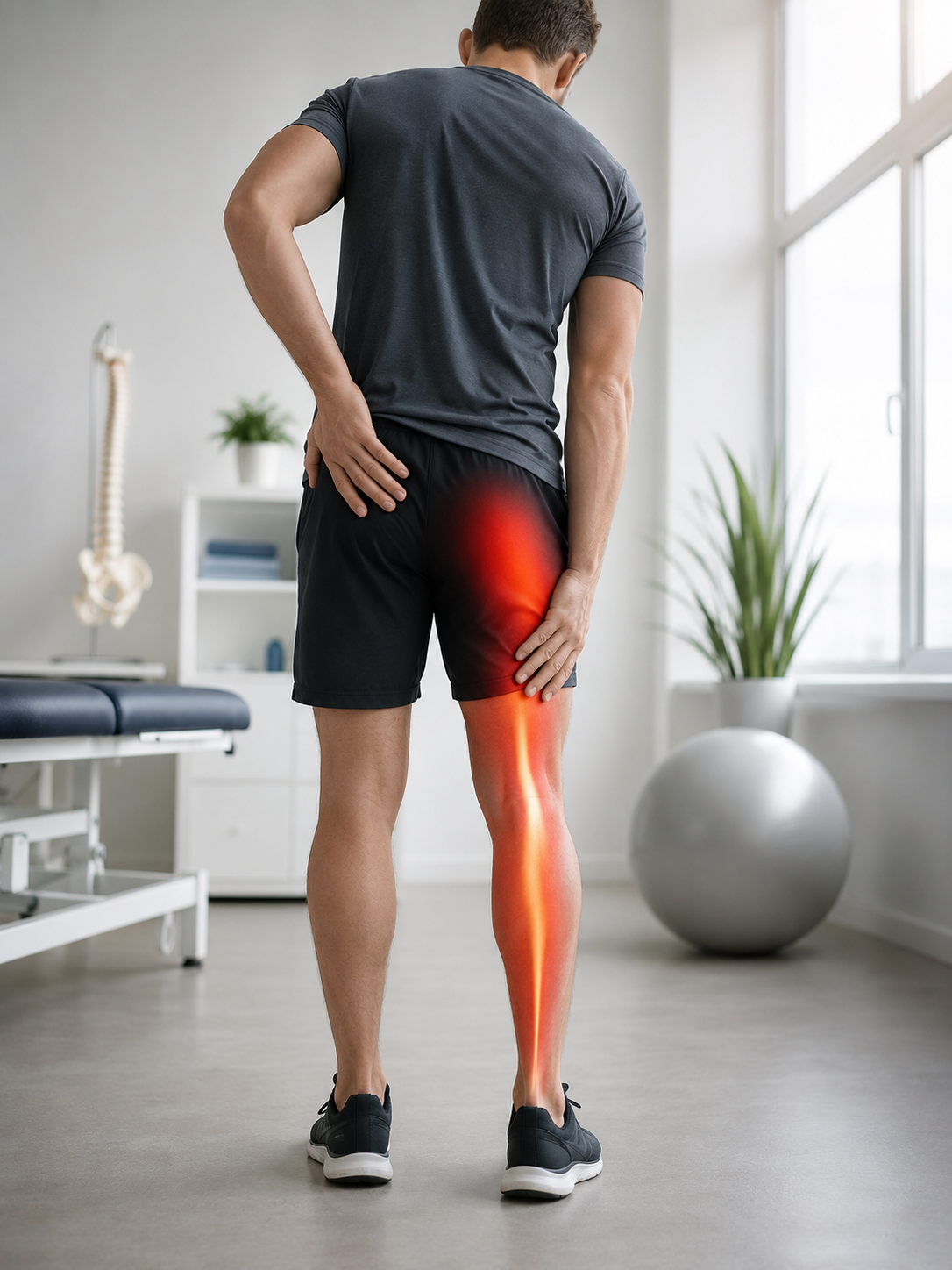
the path of pain gives important clues
Pain located only behind the thigh can have a muscular origin, especially in the hamstrings. It can be aggravated by certain hip movements, muscle tension, brisk walking, running or some effort.
Pain more compatible with sciatica often descends from the buttocks to the back of the thigh, then sometimes towards the calf, heel, outer edge of the foot or toes. The lower the path, the more a lumbar nerve cause should be considered.
| Felt journey felt | possible cause | What to check |
|---|---|---|
| Back thigh only | hamstrings, hip, referred pain or local overload. | pain on exertion, stretching, palpation or muscle contraction. |
| butt + back of thigh | Possible sciatica, possible piriform, referred lumbar pain. | Presence of pain under the knee or nervous symptoms. |
| butt + thigh + calf | more likely lumbar nerve irritation. | L5 or S1 roots, lumbar disc or foraminal stenosis. |
| thigh + foot or toes | more suspicious root sciatica. | Numbness, tingling, weakness and precise territory. |
| Pain in front of the thigh | cruralgia or other nervous territory. | Differentiate sciatica, cruralgia and hip pain. |
When a pain behind the thigh looks more like sciatica
Pain behind the thigh becomes more suspicious of being sciatica when it follows a nervous course, descends under the knee, reaches the calf or foot, or is accompanied by neurological sensations.
Pain that starts from the buttock
Pain that starts in the buttocks and descends behind the thigh can be compatible with the path of the sciatic nerve.
Pain under the knee
The pain that goes down to the calf, heel or foot suggests more lumbar nerve irritation.
Electrical burn or shock
A current, burning or shock feeling may suggest a nerve component.
tingling
Stinging in the leg or foot should be interpreted with caution.
Numbness
Localized numbness can give a clue to the possibly irritated nerve root.
muscle weakness
Difficulty lifting the foot, pushing on the tip of the foot or walking normally should be assessed quickly.
Possible causes of pain behind the thigh
Pain in the back of the thigh can come from several structures. It can be nervous, muscular, tendonous, lumbar or joint. This is why it is risky to conclude too quickly with sciatica or muscle injury without analyzing the context.
Lumbar causes should be considered when the pain descends into a specific path or is accompanied by neurological signs. Muscle causes are more suspected when pain is replicated by hamstring effort, contraction or stretching.
- Lumbar disc herniation: possible descending pain towards the thigh, calf or foot.
- Protrusion or bulging disc: Possible irritation of a nerve root.
- Foraminal stenosis: narrowing of the exit passage from a root.
- Piriformis syndrome: possible, but to be considered with caution.
- Hamstrings: muscle or tendon pain behind the thigh.
- Hip or sacroiliac: possible referred pain towards the buttocks or thigh.
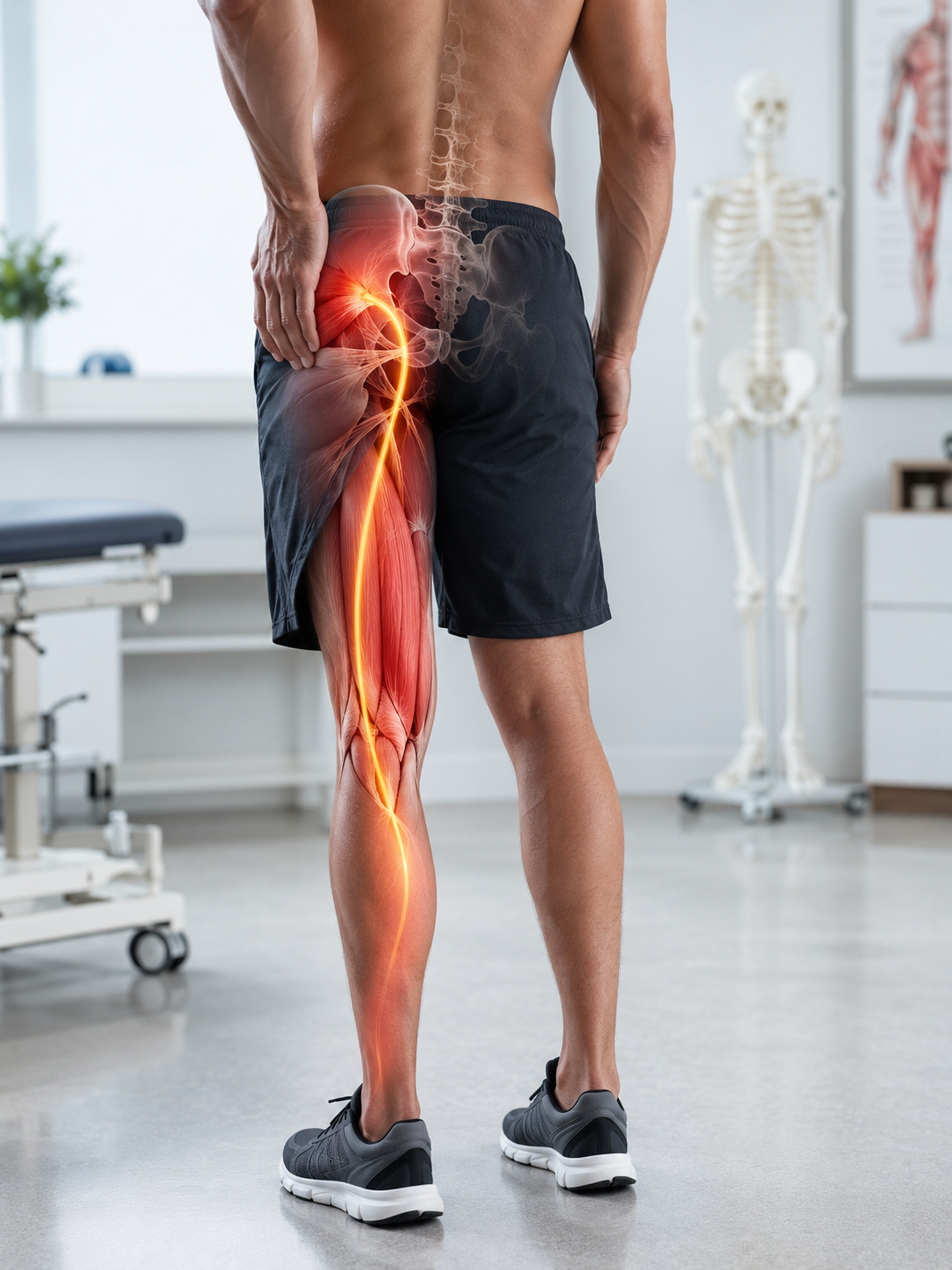
Sciatic pain or hamstring pain?
The pain of the hamstrings can sometimes imitate sciatica because it is located behind the thigh. However, it is often more related to effort, stretching or muscle contraction. Sciatica follows a nervous course more often and can descend under the knee.
| Comparative element | more likely muscle pain | more likely sciatica |
|---|---|---|
| onset of pain | Effort, false movement, running, stretching or contraction. | Lower back or buttock with descending irradiation. |
| Location | more localized thigh back. | Butt, thigh, calf, foot or toes. |
| Nervous symptoms | usually absent. | Tingling, numbness, burning or discharge possible. |
| Weakness | Pain that limits muscle exertion. | Possible neurological deficit of the foot, calf or leg. |
| foot pain | little typical. | Compatible with L5 or S1 irritation. |

Why personalized evaluation is essential
Pain behind the thigh can be confused with sciatica, hamstring pain, hip pain, or referred pain in the pelvis. Evaluation should compare path, aggravating movements, strength, sensitivity, walking, and neurological signs.
This approach makes it possible to avoid two frequent errors: treating a real sciatica like a simple muscle pain, or treating muscle pain as nerve pain. The journey under the knee, the attack of the foot and the neurological signs are important clues.
Pain Path
Determine if the pain stays in the thigh or goes down to the calf, foot or toes.
neurological function
Check strength, sensitivity, walking and symptoms.
What if the pain is behind the thigh?
The first step consists in specifying the behavior of the pain: did it appear after an effort, do it descend from the buttock, do it affect the calf or the foot, is it aggravated sitting, standing, walking or by certain lumbar movements?
According to the assessment, non-surgical and non-invasive approaches can be discussed. If the painting evokes a lumbar origin, the approach should aim for the probable cause: disc, foramen, lumbar canal, disc pinch or stenosis. If the cause is more muscular or articular, the action to be taken must be adapted.
| pain profile | Priority | Why |
|---|---|---|
| Pain after muscle exertion | Evaluate hamstrings and hip. | A muscular or tendon cause may be possible. |
| butt + thigh + calf | Look for lumbar nerve irritation. | The descending path increases the probability of sciatica. |
| numbness or weakness | priority to neurological signs. | These signs should guide caution. |
| pain aggravated quickly | rapid reassessment. | Rapid progress can change what to do. |
Pain behind the thigh and clinical orientation
An educational page like this serves to better understand the possible differences, but it does not replace an evaluation. Pain behind the thigh should be interpreted depending on its path, duration, reaction to positions, neurological signs and aggravating factors.
For a local appointment or a geolocated treatment page, the main conversion page must be hosted on the TagMed Clinic website in order to avoid SEO cannibalization with the educational content of SOS Sciatica.
The educational pages of SOS Sciatica must explain the causes and guide the reader. The local treatment, appointment and conversion pages should remain on the TagMed Clinic website.
Understand the route
Limited thigh pain and pain that goes down to the foot does not have the same meaning.
Orient the sequel
When the pain goes down, worsens or is accompanied by weakness, the evaluation becomes more important.
Frequently Asked Questions about Pain Behind the Thigh and Sciatica
Is pain behind the thigh still sciatica?
No. It can come from the sciatic nerve, but also from the hamstrings, from the hip, from the pelvis or from a lumbar referred pain.
When does the pain behind the thigh make you think of sciatica?
She evokes more sciatica when she starts from the buttocks, descends under the knee, reaches the calf, the foot or the toes, or is accompanied by numbness or weakness.
How to distinguish sciatica and muscle pain?
Muscle pain is often related to effort, contraction or stretching. Sciatica more often follows a nervous course and can be accompanied by neurological sensations.
Can the pain behind the thigh come from a herniated disc?
Yes I do. A lumbar disc herniation can irritate a nerve root and cause pain in the buttocks, back of the thigh, calf or foot.
Can hamstring pain mimic sciatica?
Yes I do. Muscle pain on the back of the thigh may look like sciatica, especially if it is deep or descends a little towards the knee.
Can the pain behind the thigh come from the piriform?
Yes, but piriformis syndrome is often overestimated. A more common lumbar cause should be considered if the pain drops below the knee or reaches the foot.
What signs are more worrying?
Progressive weakness, loss of urinary or intestinal control, stool anesthesia, rapidly aggravated pain or expanding numbness should be assessed quickly.
Why does the pain go down to the foot sometimes?
Pain that goes down to the foot can be related to irritation of a lumbar nerve root, often L5 or S1 depending on the route.
Should we stretch the hamstrings?
not automatically. If the pain comes from an irritated nerve root, some stretching can increase the symptoms. First you need to clarify the probable cause.
When to consult for pain behind the thigh?
It is necessary to consult if the pain persists, descends into the leg, reaches the foot, limits walking, disturbs sleep or is accompanied by numbness or weakness.
Does your pain behind the thigh go lower?
A personalized assessment can help distinguish muscle pain from lumbar nerve irritation, especially if the pain drops below the knee, reaches the foot or is accompanied by numbness or weakness.
Dr Sylvain Desforges, B.Sc., D.O., N.D., Osteopath

Editorial information, sources and limitations
This content is intended to inform patients about sciatica, possible causes, warning signs, and care options. It does not replace an individualized assessment.
Reference sources
References are selected according to the subject of the page: guidelines, systematic reviews, then institutional resources.
- NICE NG59 – Low back pain and sciatica in over 16s — National guideline
- HAS – Management of patients with common low back pain — French national guideline
- Cochrane – Corticosteroid injections for treatment of sciatica — Systematic review
- NCBI Bookshelf – Sciatica — Clinical institutional resource
Complementary resources from the TAGMED network
These internal resources complement the clinical information and thematic linking. They do not replace national guidelines or systematic reviews.
Editorial note on decompression
Clinical resource from the TAGMED network; it does not replace national guidelines. Some guidelines use the term “traction” and recommend caution for low back pain with or without sciatica. Any decompression option should therefore be presented as an individualized clinical approach, with limitations, indications, and contraindications clearly explained.
Limitations of this information
The information on this page is general. It does not constitute a diagnosis, prescription, or guarantee of results. Pain radiating into the leg may have several causes; assessment should consider clinical history, examination findings, symptom progression, and, when appropriate, complementary tests.
When to seek urgent medical care
Seek urgent medical care if you experience loss of bladder or bowel control, saddle anesthesia, major or progressive leg weakness, unexplained fever, pain after significant trauma, or severe pain that rapidly worsens.
