Sciatica with electric shock: sign of nervous irritation?
03/07/2026
Sciatica and pain after a sitting day
03/07/2026
In short
| In short, the sciatica due to irritation of sciatic nerve by the Lumbar disc manifests as pain that follows the path of the nerve and is often linked to a slipped disc. Its main advantages: rapid diagnosis, support focused on pain relief and the Back to mobility, and reduced risk of surgery when possible. How it works: we identify the location of irritation and we offer an adapted treatment (postural education, physiotherapy, targeted exercises, pain management) to accelerate healing, typically in weeks to a few months. In Montreal, this service is particularly relevant for obtaining an effective non-surgical approach and a quick return to your activities. |
Sciatica: When the lumbar disc irritates the nerve
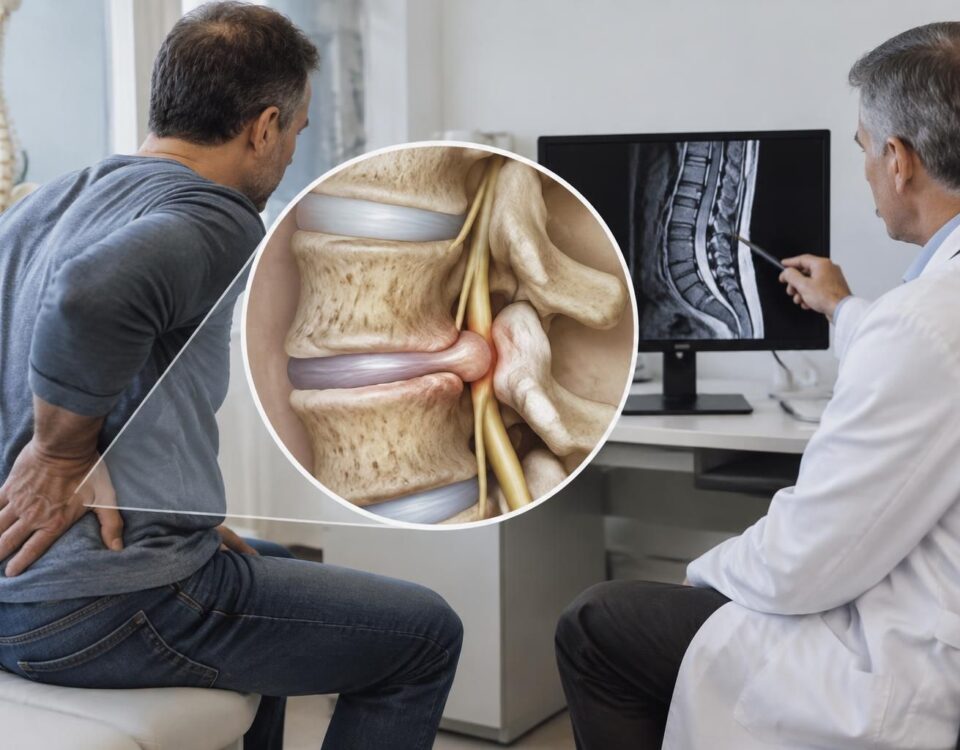
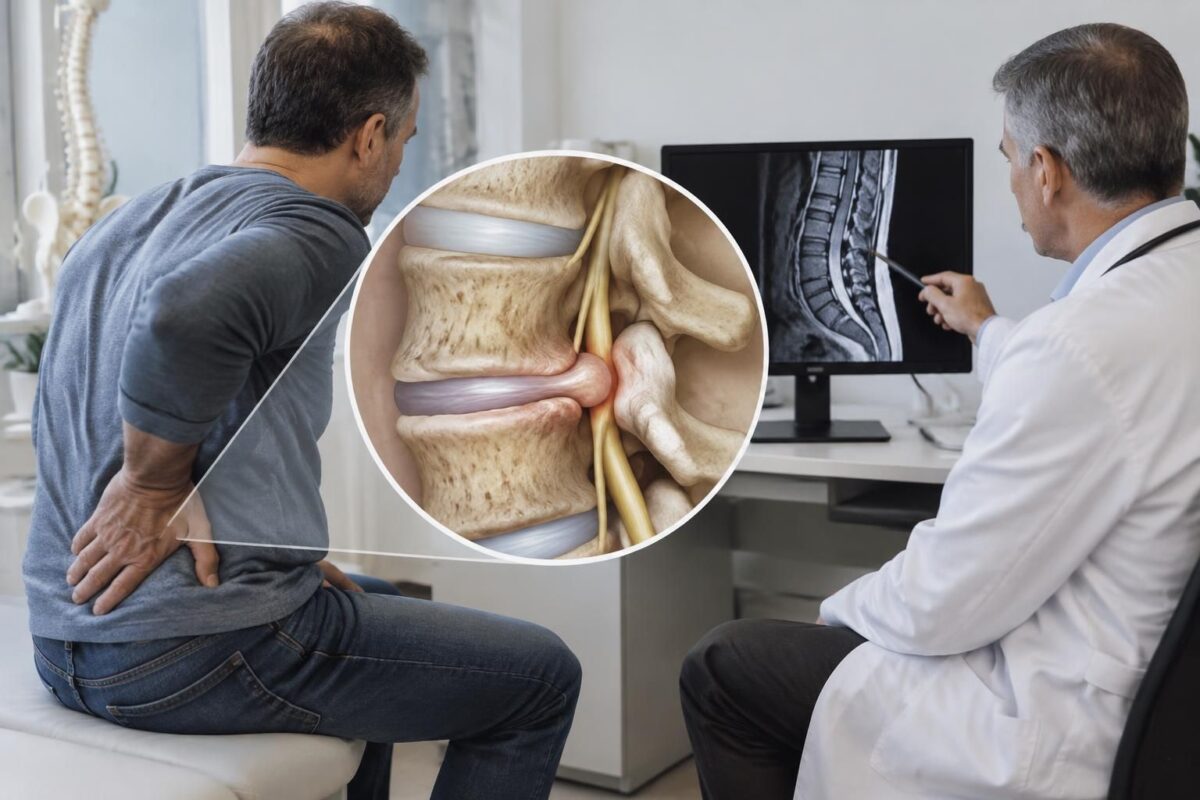
Sciatica occurs when the lumbar disc becomes irritating and compresses the nerve root of the sciatic nerve, the longest in the body. This irritation is often linked to a herniated disc or the sag of the disc which presses on the root.
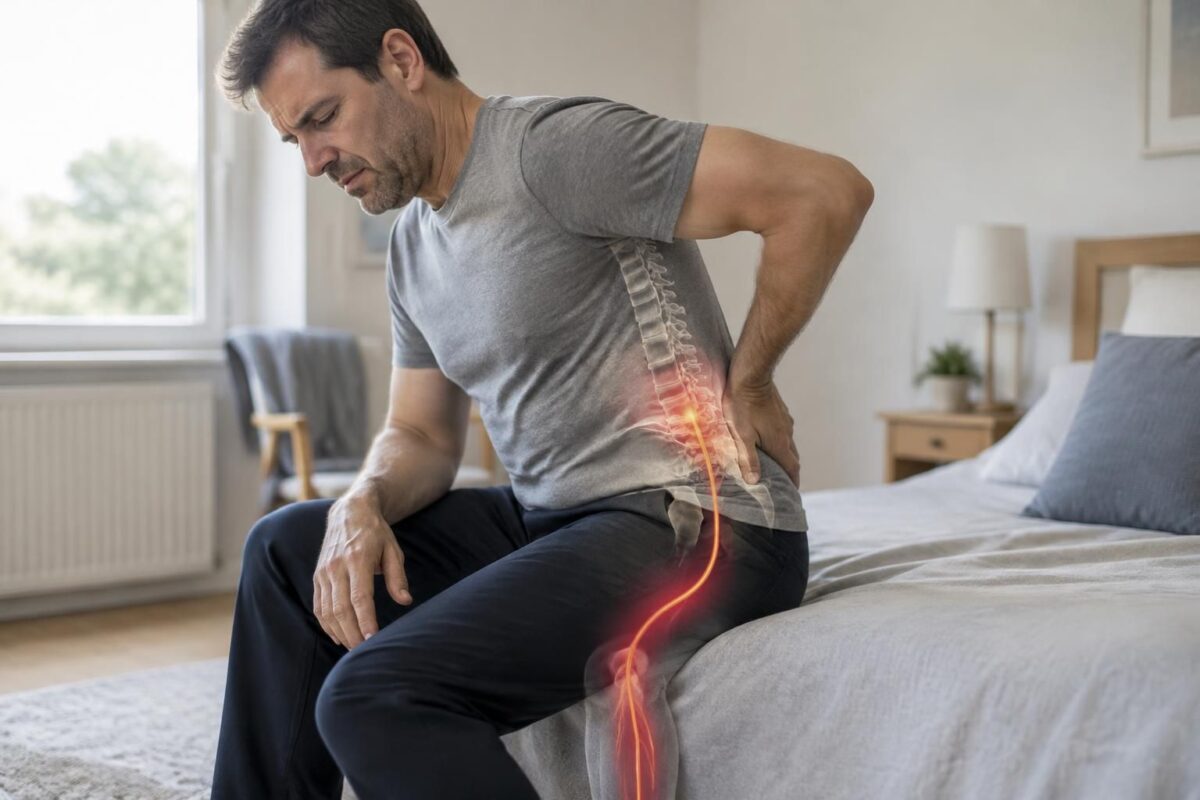
It is manifested by lower back pain that spreads in the buttocks and leg, sometimes up to the foot, depending on the affected root (L5 or S1). Sensitivity disorders, muscle weakness and decreased reflexes can accompany the attack.
- Lumbar and root pain which follows the nervous path and can be aggravated by coughing or sneezing.
- Sign of Lasègue Positive during the examination and pain triggered by the mobilization of the leg.
The diagnosis combines the clinical examination and, if necessary, imaging (MRI or CT scan) to confirm a herniated disc and exclude other causes.
The treatment aims to quickly relieve the pain and promote the resumption of activities: short rest, analgesics and anti-inflammatory, then physiotherapy and patient education. Surgery can be considered in case of motor deficit or pain not relieved by non-surgical treatments.
Non-surgical and appropriate approaches can accelerate healing depending on the professional assessment.
This article explains how the sciatica can be born when the Lumbar disc irritates the nerve sciatica. It describes typical symptoms, signs to observe, useful examinations and options for management. It also sheds light on the non-surgical approaches offered at the TagMed Clinic and the resources available online to guide patients in their decision.
Understand the mechanism
The sciatic nerve is the longest in the body. The disc can deform and cause slipped disc which compresses the nerve root. This compression generates pain that can descend into the buttocks and leg. The pain follows the path of a lumbar root, most often related to L5 or S1.
Signs and diagnosis
The pain can manifest in the lumbar level and along the leg. The precise location depends on the irritated root (L5 or S1). The Lasègue sign can be sought when the patient is on the back. The Achilles reflex can be decreased when S1 is touched. The doctor also evaluates genito-sphincter disorders and motor signs. Additional examinations help to clarify the cause and assess the extent of the disc conflict.
Support options
The initial treatment aims to relieve pain and promote recovery. Common measures include relative rest and appropriate drug treatments. Subsequently, education and information on the actions to be adopted and the positions to be favored play a key role in the prevention of recurrences.
At the Tagmed Clinic, non-surgical approaches may include neurovertebral decompression motorized, theSpecific osteopathy and the use of Precision striker, depending on the individual assessment. For more information, see Tagmed Clinic.
Additional resources describe the non-surgical options available in Montreal and the benefits of osteopathy in the treatment of sciatic pain: Sciatica Treatment in Montreal – Non-surgical options to consider, and The benefits of osteopathy to treat sciatic pain.
Neurovertebral decompression and other specialized approaches
In some cases, neurovertebral decompression can be offered as a non-surgical option. To learn more about this approach, see neurovertebral decompression.
For information about herniated disc options, see dedicated resources such as SoshernieDiscale.com and SosherniateDisc.com.
Prevention and lifestyle
Prevention requires an appropriate posture and regular physical activity. Prevent repeated heavy loads and promote soft mobility help keep the back in good condition. For general advice on sciatica and preventive measures, you can consult specialized resources in this area.
When to consult and alert criteria
Quickly consult a professional if serious problems appear. Emergency signs include loss of urinary or intestinal control, progressive weakness or rapidly increasing pain, or marked motor disorders.
To explore other perspectives on sciatica and non-surgical options, see for example Sciatica treatment in Montreal and Calf and Sciatica Pain – Interpretation.
In order to deepen the theoretical and practical framework around the associated pathologies, you can consult additional resources and professional discussions on sites dedicated to sciatica and its treatments.
Medical Disclaimer: The information and advice provided on this site does not replace the health professional’s diagnosis or treatment. Please note that Dr. Sylvain Desforges osteopath is neither a doctor of medicine nor a doctor, and is not a specialist in a medical specialty as defined by the Collège des Médecins du Québec. Manual medicine, functional medicine and sports medicine as described on this site exclude any medical treatment or diagnosis made by a doctor or specialist doctor. Always consult your doctor for any medical questions. For more details, please read our full legal notice.
- lumbar pain which spans the path of sciatic nerve (butt, thigh, leg).
- Pain radiant along the nerve to the foot or toes.
- Pain aggravated Through exertion, cough, sneezing or defecation.
- Possible abnormal sensations: dysesthesia in the nervous territory.
- Neurological signs: Sign of Lasègue positive; reflex Achilles decreased in S1.
- Stiffness and contracture of the paravertebral muscles.
- Signs of possible severity: genito-sphincter disorders or progressive weakness of the lower limbs.
- Diagnosis: Clinical examination + targeted imaging to confirm disc disease.
- Initial management: moderate rest, analgesic and anti-inflammatory under supervision.
- Readaptation: physiotherapy, back strengthening and postural education.
- Non-surgical options: manual therapies adapted to the evaluation (osteopathy, guided exercises).
- Surgical Emergencies: marked engine deficit or rapid progress requiring evaluation.
- Prevent recurrences: posture at work and when carrying loads, regular physical activity.
- Regular follow-up to adjust the treatment according to the evolution of the symptoms.

Sciatica linked to a lumbar disc irritating the nerve is a pain in the lower back that radiates to the buttocks and leg. It generally results from a herniated disc that compresses a nerve root, the path and the dependent level of the affected vertebra (L5-S1 or L4-L5). The key message: the pain is mechanical and root, and the management is based on a progressive approach ranging from the most conservative use to more specialized options if necessary.
Understanding Mechanism: Disc and Nerve
the intervertebral disc Can degenerate or crack, which can cause it to break and compress a nerve root. This irritation causes pain that follows the path corresponding to the affected root and may be associated with sensory or motor disorders depending on the level. In most cases, the mechanism is linked to a slipped disc which alters disc protection and compresses the nerve.
Disc herniation and persistent pain in the leg
IN BRIEF A disc protrusion is a bulging of a disc that can irritate a nerve and cause persistent pain in the leg, sometimes accompanied by tingling or numbness. Imaging alone does not confirm the origin of the symptoms: clinical…
Disc herniation and lumbar degeneration
IN BRIEF A lumbar disc protrusion is a bulging of a disc often related to disc degeneration. It does not always cause symptoms but can contribute to lower back pain or pain radiating down the leg if a nerve is…
Disc protrusion and disc pinching: combined mechanisms
IN BRIEF A disc protrusion is a bulging of the disc, while a disc narrowing refers to a decrease in its height. These changes can coexist and sometimes irritate a nerve root, leading to pain or radiation, but they can…
Revealing signs and distribution according to level
The lumbosciatic disc is manifested by lower back pain associated with pain that descends into the buttocks and leg. The precise location depends on the irritated nerve:
L5: Pain that can rise on the outer side of the thigh and leg, raise towards the back of the foot and touch the big toe. S1: Pain that extends to the buttocks and along the posterior side of the thigh and leg, to the sole of the foot and the 5th toe.
The pain may be punctuated or persistent, and sensitivity disorders (dysesthesia) may appear. Neurological signs such as reflexes or motor weakness may also be present, requiring careful medical evaluation.
How to manage pain and promote healing
Initial approach and self-care
In the acute phase, rest is temporary and the analgesics Or anti-inflammatory can help reduce pain. The objective is to move from a state of immobility to a gradual resumption of mobility without forcing the back. Avoiding repetitive gestures and heavy loads is essential to avoid aggravating nervous irritation.
rehabilitation and maintenance of mobility
The physiotherapy and work on strengthening abdominal and lumbar muscles support the spine and facilitate recovery. Gentle controlled flexion and extension exercises, combined with postural advice, help restore stability and avoid compensation that aggravates pain.
Non-surgical options and procedures
In most cases, the lumbosciatica disc heals over time and appropriate care. When the pain is very strong or when motor or sensory signs deteriorate, non-surgical techniques such as injections may be considered, or, in some cases, surgery may be necessary urgently to prevent permanent functional loss. Alternatives such as radio-guided procedures exist in some centers, with precise indications and adequate medical follow-up.
Prevent and live with lumbosciatica
Ergonomics and posture
Adopt a neutral posture at work and at home: feet flat on the ground, shoulders and hips aligned, and move the loads away from the body by bending the knees rather than the back to lift them.
Physical activity and prevention
Maintain proper regular physical activity: walking, swimming or other gentle cardiovascular activities, combined with strengthening and supple exercises for the back and abdomen. Sedentary lifestyle is a preventable risk factor for low back pain and sciatica.
When to consult quickly
Consult without delay in case of loss of urinary control or rectum, anesthesia around the stool, marked or progressive weakness of a lower limb, fever, or onset pain after trauma, as these signs may reveal medical emergency requiring immediate evaluation.
| Aspect | Concise description |
|---|---|
| Release | Conflict Lumbar disc and nerve root Triggers a painful crisis aggravated by exertion, coughing or sneezing. |
| Location | pain depending on the journey of sciatic nerve Up to the butt, thigh, calf and foot. |
| Cracks | dysesthesias and paresthesias; Possible muscle weakness depending on the affected root. |
| Key clinical sign | Positive Lasègue sign; Pain with leg extension on the back. |
| Useful exams | MRI or CT scan to confirm a slipped disc; X-rays useful for evaluating pinching. |
| differentials | Posterior osteoarthritis, inflammatory or tumoral lumbar pain to consider depending on the framework. |
| Evolution | 3 to 6 months typically; improvement with care and physiotherapy; Surgery in case of motor deficit or stubborn pain. |
| Initial treatment | Brief, analgesic and anti-inflammatory rest; Rehabilitation and postural advice. |
| Surgical indications | Surgery if persistent or aggravated clear motor deficit or hyperalgic pain. |

Disc herniation and associated foraminal stenosis
IN BRIEF A disc protrusion associated with foraminal stenosis occurs when a bulging disc coexists with a narrowing of the opening through which a nerve root passes. This association can lead to lower back pain radiating into the leg, tingling,…

Spinal disc protrusion and nerve inflammation
IN BRIEF A disc protrusion is a bulging of the disc that can irritate or compress a nerve, without necessarily causing symptoms. When it leads to nerve inflammation, it can cause pain in the back or neck, sometimes accompanied by…

Disc protrusion and irritation of L5
IN SHORT A disc protrusion is a bulging of the disc that can irritate the L5 root and cause lower back pain radiating to the buttock, leg, or foot, sometimes with tingling or weakness. MRI alone is not sufficient to…
Testimonials: sciatica and lumbar disc that irritates the nerve
Mary, 38 years old : “I experienced a sciatica which appeared after the move. The Lumbar disc irritated the nerve sciatica and the pain rose from the lower back to the foot. After a Personalized report And a few dosteopathy sessions, the pains decreased and I found an active life without fear of pain with each movement. »
John, 52 years old : “One morning, the lumbar pain became unbearable and the sciatica took over, with a typical route from the nerve irritated by the Lumbar disc. The osteopathic treatment gave me simple gestures to do at home and improved my mobility, which allowed me to resume work faster than expected. »
Camille, 32 years old : “I thought it was only muscular, but it was a sciatica related to a Lumbar disc which irritated the nerve. The pain stretched from the lumbar region to the buttocks and leg. After a few sessions, with postural hygiene advice and exercises, I gained in comfort and confidence in my movements. »
Luke, 47 years old : “Each crisis made me doubt: pain that started from the lower back, intense back pain, then pain radiating in the leg. The sciatic nerve was irritated by the disc. The support was clear and reassuring: the mechanism was explained to me and proposed a non-surgical approach with progressive but lasting results. »
Sophie, 45 years old : “After an aggravation, I understood that it was a pain due to thenerve irritation by the Lumbar disc. Dosteopathy sessions and custom exercises allowed to limit episodes and resume my daily activities without fear of the next crisis. »
Dr. Sylvain Desforges, a renowned osteopath, consolidates his career around an integrated approach to chronic pain and spinal pathologies. Expert in osteopathy, naturopathy and manual medicine, he holds the position of founding president of the Tagmed clinics and the ACMA association. His work, based on evidence and clinical experience, is based on a simple mission: to improve the quality of life of patients suffering from Lower back pain and of sciatica, favoring solutions non-invasive and adapted to each patient. In his practice, he combines traditional knowledge and advanced technologies to optimize the results and overall well-being of patients.
The Sciatica is a painful attack of the lower limb following the path of the sciatic nerve, the longest nerve in the body. In the majority of cases, it is linked to a conflict between the disc and the corresponding nerve root, most often by a slipped disc which compresses the nerve. We also distinguish the disc causes of the other spinal origins such as infections or tumors. The lumbosciatica, syndrome associating back pain and root pain, can also be manifested by muscle weakness and impact daily life. Dr. Desforges approaches these mechanisms with clinical precision, in order to quickly identify the affected nerve and the painful path to propose the most relevant treatment plan.
To detect if the pain comes from a slipped disc or sciatica of root origin, the assessment is based on the patient’s history and a targeted examination: pain location, intensity, and neurological signs. The doctor looks for elements such as the extent of the painful territory, disturbances of sensitivity, and the Achilles reflex decreased in case of S1. The Lasègue sign, sought after in the lying patient, can reveal tension in the sciatic nerve. Additional examinations can be considered depending on the context, in order to rule out secondary causes such as a tumoral, inflammatory or infectious pathology. Dr. Desforges’ work favors a gradual and personalized approach, aimed at preserving function and reducing pain through appropriate therapeutic actions.
In his practice, he favors an approach non-surgical Where possible, combining physiotherapy, movement work and patient education. The goal is to accelerate natural healing, improve muscle tone and rehabilitate everyday actions to prevent recurrences. when necessary, modern and non-invasive techniques, such as Motorized neurovertebral decompression or targeted manual therapies, adjust on a case-by-case basis to promote recovery. Dr. Desforges remains convinced that care based on evidence and attentive listening to the patient is the key to a lasting reduction in pain and a quick return to working life.
This conclusion summarizes that the sciatica occurs when the Lumbar disc irritates the sciatic nerve, the long path of the most extensive nerve of the body. The most common cause is slipped disc or a conflict between the disc and the nerve root, resulting in a radiculalgia with lumbar pain radiating towards the buttocks and leg. After a presentation of the mechanisms and clinical signs, we explore the diagnosis, therapeutic options and preventive measures, favoring non-surgical approaches when possible and specifying surgical indications in the event of severity or functional suppression.
The lumbar disc may irritate the sciatic nerve when its contents or contour changes, which generates a Pain radiating along route L5-S1 or L4-L5. This lumbar pain associated with pain in the outer face of the thigh and leg, or depending on the territory corresponding to L5 or S1, can be accompanied by dysesthesia and muscle weakness. The sign of Lasègue and sensitivity in the affected nerve territory help confirm root involvement, while neuromuscular assessment and the search for genitonis- sphincter disorders point to severity and need for rapid treatment.
The diagnosis is based on a set of clinical and imaging examinations. X-rays can show disc pinching, but MRI is the most reliable tool to visualize hernia and nerve root compression. The scanner can be useful in some specific cases. In all cases, an underlying cause is sought and assessed the presence of unfavorable motor or sensory signs that will guide the treatment.
The treatments are primarily aimed at relieving pain and promoting a return to function. Non-surgical approaches include initial rest, analgesics and anti-inflammatory drugs, followed by physiotherapy and postural education to remuscle the back and learn appropriate daily gestures. Disciplines such as osteopathy can provide support by working on the mobility and stability of the spine, and techniques such as motorized neurovertebral decompression can be considered depending on the evaluation. In some cases, options such as the use of a radio-guided ethanol gel (Discogel) are mentioned as non-surgical alternatives in some centers.
When the situation is more critical, surgery may be necessary: Hyperalgic sciatica or deficit With impossible walking, hypotonia or amyotrophy, which reflect a threat of irreversible progression. In these situations, surgery is considered to prevent aggravation. For those looking for non-invasive options, decompression and non-surgical treatment resources exist and can be an effective intermediate step.
Prevention goes through simple daily actions: adapted posture in front of the computer, carrying loads by bending the knees, maintaining a straight back and muscle strengthening. Regular physical activity practice contributes to the prevention of low back pain and sciatica and promotes faster recovery after a crisis.
To learn more, check out these resources: Sciatic nerve neuropathy, The benefits of osteopathy, Sciatica with burning in the leg, Sciatica and trunk flexion, Causes of sciatica, Sciatica: Causes, Symptoms and Treatments, Non-surgical treatment in Terrebonne, Sciatica: Causes, Symptoms and Treatments, Non-invasive decompression.

Disc protrusion and pain after twisting the back
IN BRIEF A disc protrusion is a bulging of the disc that can contribute to pain after a back twist, but it alone does not confirm the cause. The pain can remain in the lower back or radiate to the…

Disc herniation and pain after lifting
IN BRIEF A disc protrusion is a bulging of a disc between the vertebrae. Pain that appears after lifting a load does not prove that it is the cause: the MRI must be interpreted alongside the symptoms and the clinical…

Dr Sylvain Desforges, B.Sc., D.O., N.D., osteopath, is the founding president of TAGMED and of the ACMA association. He dedicates his practice to chronic spinal pain, low back pain and symptoms compatible with sciatica, particularly when pain radiates toward the buttock, leg, calf, foot or toes.
Through SOS Sciatique, he publishes educational content on sciatica symptoms, possible causes such as disc herniation, disc narrowing, foraminal stenosis or irritation of a lumbar nerve root, as well as non-surgical approaches that may be considered according to the evaluation. At Clinique TAGMED, care may include, depending on the case, motorized neurovertebral decompression, specific osteopathic care or precision percussion.
For an evaluation related to sciatica treatment in Montreal / Mount Royal or sciatica treatment in Terrebonne, please consult the services available at Clinique TAGMED.
Medical disclaimer
The information published on SOS Sciatique is provided for educational purposes only and does not replace a consultation, diagnosis, opinion or treatment provided by a physician or another authorized healthcare professional. The author of this article is neither a medical doctor nor a specialist in a medical specialty recognized by the Collège des médecins du Québec. The osteopathic, manual medicine or functional support approaches described on this site do not constitute medical acts and are not intended to replace medical follow-up.
Consult a physician or emergency service in cases of loss of bladder or bowel control, anesthesia in the saddle area, significant or progressive weakness in the leg or foot, fever, recent trauma, severe pain or rapid worsening of symptoms. For more details, please read our Legal Notice.