


Sciatica in Terrebonne: how to distinguish between low back pain and nerve pain
05/07/2026
Sciatica: when the lumbar canal compresses the nerve roots
05/07/2026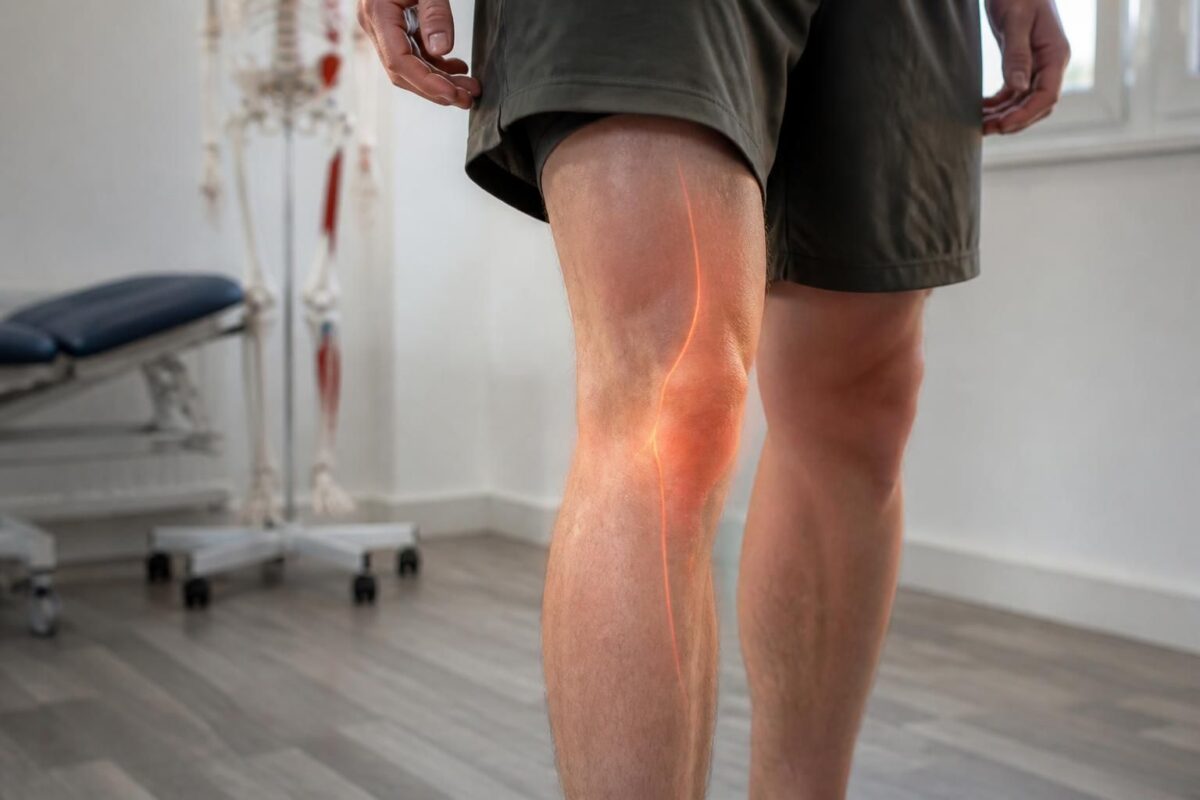
IN BRIEF
| In brief, sciatica that extends below the knee is pain caused by irritation or compression of the sciatic nerve, which runs from the buttock down to the calf and sometimes to the foot. This pathway explains why the pain radiates from the lower back or buttock along the leg. Understanding the key causes (herniated disc, lumbar stenosis, piriformis syndrome) allows for a quick targeting of nonsurgical approaches and avoids inappropriate treatments. Benefits include improved mobility and walking, reduced pain, and decreased risk of recurrence through a personalized plan (exercises, manual therapy, and rehabilitation). Available in Montreal and local clinics, this approach prioritizes practical and patient-centered solutions, without routinely resorting to surgery. |
The sciatic nerve arises from the lumbar roots L4 to S3 and is the longest nerve in the body. After passing through the pelvis and underneath the piriformis muscle, it runs down the posterior side of the thigh to the popliteal fossa, where it divides into two main branches: the tibial nerve and the common fibular nerve (peroneal).
This pathway explains why compression or irritation can cause radiating pain that starts from the lower back or buttock and extends down to the calf, and sometimes to the foot. Common causes include a herniated disc, lumbar stenosis, and piriformis syndrome.
Knowing this path is key to locating the source, guiding nonsurgical treatments, and adapting exercises to relieve pressure on the nerve and prevent recurrences.
Sciatica that extends below the knee can be surprising, as the path of the sciatic nerve to below the knee often indicates nerve damage at the lumbar root or along the nerve pathway in the leg. This article explains why this path matters for diagnosis, assessment, and management while remaining focused on nonsurgical and clinically tailored approaches at TAGMED.
The sciatic nerve originates from the lumbar roots L4 to S3. It passes through the pelvis, goes under the piriformis muscle, then along the posterior side of the thigh before dividing behind the knee into two main branches — the tibial nerve and the common fibular nerve — to innervate the calf, foot, and toes. This path explains why pain that starts in the lower back or buttock can radiate down to below the knee and beyond.
Why Does This Pathway Influence Diagnosis
The location and extent of the pain help identify the involved nerve segments. Pain that follows the posterior pathway of the thigh and extends to the foot suggests involvement of the sciatic nerve or its roots L4–S3. This mapping aids in distinguishing possible causes and guiding clinical assessment and therapeutic decisions.
Common Causes Associated with This Pathway
Several mechanisms can produce sciatica that extends below the knee. Among the most common are a lumbar herniated disc, foraminal stenosis, or spinal stenosis that irritate or compress a nerve root. The piriformis syndrome can also play a role when this muscle compresses the nerve pathway in the buttock. Pregnancy can change posture and ligament tension, increasing sciatica pain in some women. For general resources on these mechanisms, you can refer to specialized resources on websites affiliated with SOS Sciatique.
For a comprehensive approach without systematic exercise in cases related to nerve root, disc, or foraminal decompression, prioritize clinical information and options provided by professionals at TAGMED and partners.
Evaluation and Clinical Implications
Key signs include pain that starts from the lower back or buttock and extends down the leg, sometimes accompanied by tingling, numbness, or weakness. The examination may include simple tests to evaluate nerve tension and muscle function. Imaging (MRI or CT scan) may be useful to visualize a herniation, stenosis, or other abnormalities. If in doubt, an EMG can help locate the exact area of compression or irritation.
As part of tailored management, specialized evaluations in Montreal or Terrebonne can be offered by the TAGMED Clinic.
Management Options and Nonsurgical Pathways
When relevant, nonsurgical approaches may be considered based on the evaluation. These options fit into a holistic approach aimed at reducing pressure on the nerve and restoring functions. Note that some situations require a targeted approach by specialists; in all cases, a medical consultation is recommended to determine the safest and most effective plan. To access information and care options, see the following resources:
First, for treatments at the TAGMED Clinic, consult Clinique TAGMED and explore available options in Montreal and Terrebonne. You may also refer to resources on Osteopathy and Sciatica Pain and content on nonsurgical treatment of sciatica in Terrebonne. Other useful resources include tingling in the foot and pain worsened by sitting. For general and practical information, also check specialized resources on sciatica pain in Montreal.
In some contexts, options like neurovertebral decompression may be discussed after a thorough evaluation, especially when etiologies such as a herniated disc or stenosis are confirmed. To understand these options, you can explore dedicated resources on decompression and related pathologies on affiliated specialized sites.
To continue your information on the path and mechanisms of the sciatic nerve, you can also consult educational resources available in clinical areas managed by professionals in osteopathy and recognized professional organizations.
For a clinical and safe approach, prioritize the evaluations and treatments offered by Clinique TAGMED and supported by associated resources on SOS Sciatique.
Medical disclaimer: The information and advice provided on this site do not replace the opinion, diagnosis, or treatment of a healthcare professional. Please note that Dr. Sylvain Desforges, osteopath, is neither a medical doctor nor a physician, and is not a specialist in a medical specialty as defined by the Collège des médecins du Québec. Manual medicine, functional medicine, and sports medicine as described on this site exclude any treatment or medical diagnosis made by a doctor or specialist. Always consult your physician for any medical questions. For more details, please read our complete Legal Notice.
- Origin and path: roots L4 to S3 come together to form the sciatic nerve.
- Passage: traverses the sciatic foramen and runs along the gluteus under the piriformis, then descends behind the thigh to the popliteal fossa.
- Branches: divides into tibial and fibular, serving the leg, calf, foot, and toes.
- Motor roles: controls the hamstrings and participates in movements of the leg, ankle, and foot.
- Sensory roles: sensitivity of the back of the thigh, leg, and foot.
- Why this path matters: helps locate sources of pain (disc, canal, piriformis) and guide treatments.

This guide presents why the path of the sciatic nerve that descends below the knee is central in low back pain radiating to the leg. It explains the anatomy of the nerve, possible causes of irritation along this journey, and the implications for diagnosis and non-surgical treatment, with practical advice for relieving and preventing this pain.
Understanding the anatomy and path of the sciatic nerve
The sciatic nerve originates from the lumbar roots located between the vertebrae L4 and S3. These roots come together to form a single trunk that traverses the pelvis, passes through the sciatic foramen, and runs under the piriformis muscle down the back of the thigh. Downstream, it splits into the tibial nerve and the fibular nerve, which supply the muscles and provide sensation to the calf, ankle, and foot. Understanding this path helps identify where pain may radiate and why it can affect the back, buttock, leg, and foot.
Why is this path below the knee important?
The location of the nerve along this path explains why pain can “radiate” from the lower back to the foot. Compression or irritation at any segment of the pathway can cause radiating pain, paresthesias, or weakness in the muscles of the leg or foot. The path below the knee is particularly key in distinguishing a radicular lesion from discal origin or a peripheral nerve impairment, which guides therapeutic choices and appropriate exercises.
Clinical signs and diagnostic implications
Typical signs include pain that starts at the lumbar or buttock level and descends into the leg, often accompanied by tingling or a sensation of electric shock. In some cases, weakness may occur, particularly in the foot. Diagnosis relies on clinical examination and may be supplemented by imaging and functional tests to precisely locate the irritated area along the path and determine if the origin is lumbar or peripheral.
In practice, targeting the path allows for effective guidance of non-surgical treatments and avoids inappropriate approaches that do not resolve the underlying cause of the pain.
Non-surgical treatment and strategies focused on this path
Manual approaches, exercises, and posture
Targeted exercises and osteopathic or physiotherapeutic techniques can reduce pressure on the nerve and improve the mobility of the spine and hips. The work focuses on strengthening the muscles of the trunk and lower limbs, improving flexibility, and correcting postures that exacerbate the path of the nerve below the knee.
Practical tips for daily life
Adopt positions that respect spinal alignment, favor gentle activities like walking, and avoid prolonged rest. An appropriate mattress and light stretching can limit painful episodes and promote gradual recovery without overloading the nerve.
When to consult quickly
Check if the pain is accompanied by significant loss of strength, urinary or fecal discomfort, progressive numbness, or very intense pain that persists despite conservative measures. A medical assessment allows for adjustment of the treatment plan and rules out risks requiring urgent intervention.
| Aspect | Concise explanation |
|---|---|
| Origin and pathway | The sciatic nerve originates from the roots L4 to S3 and traverses the pelvis, then runs along the back of the thigh to the popliteal fossa. |
| Served areas | It innervates the back of the thigh, the calf, the foot, and the toes, with motor and sensory functions. |
| Role of the pathway beneath the piriformis | The passage beneath the piriformis muscle may explain local irritations radiating towards the foot. |
| Clinical significance of the pathway to the knee | Radiation along the pathway helps to locate irritation or compression on the nerve. |
| Common causes along the pathway | Lumbar disc herniation, foraminal stenosis, and piriformis syndrome. |
| Typical symptoms | Pain radiating from the lower back to the leg with paresthesias and sometimes weakness. |
| Diagnostic indicator | Clinical examination and imaging target the pathway to confirm compression or irritation. |
| Non-surgical approaches | Physiotherapy and osteopathy with targeted exercises and mobilization along the nerve. |
| Practical advice | Maintain gentle mobility, adopt positions that respect alignment, and practice light stretching. |
Testimonials: why the pathway of sciatica that descends below the knee matters
Testimonial — Marie, 54 years old
“At first, the pain started in the lower back and remained localized, then it moved down below the knee to the calf. This pathway became clear evidence of a sciatic nerve injury, rather than just back pain. Understanding this precise journey allowed me to aim for targeted treatment and avoid solutions that would not address the nerve issue.”
Testimonial — Thomas, 36 years old
“When the pain extended to the foot, with electric shocks, I realized that it wasn’t a muscular pain. The fact that the pathway followed the whole leg gave me confidence in the radicular diagnosis and guided the therapist towards appropriate exercises and a progressive approach that protects the nerve rather than aggravates it.”
Testimonial — Claire, 60 years old
“During pregnancy, the pain followed the path from the knee to the foot, indicating a potential radiculopathy. This movement helped me adjust my positions and daily activities, favoring gentle movements and supports that relieve the nerve and preserve the spine.”
Testimonial — Lucas, 42 years old
“As an athlete, feeling the pain extending below the knee was revealing: it was the key indicator that the sciatic nerve was irritated along its pathway. This allowed me to adopt a plan that combines targeted strengthening and progressive rehabilitation, in order to resume activity without risking a relapse.”
The path of the sciatic nerve and its importance when it descends below the knee
Dr Sylvain Desforges, an experienced osteopath, sheds light on a key nerve pathway to understand the pains that radiate to the knee and beyond. Medical expertise and evidence-based practice guide his approach, with particular attention to the sciatic nerve and its functional implications. His commitment is to provide tailored care, combining manual techniques and current technologies, to optimize the health and well-being of his patients.
The sciatic nerve originates from the lumbar roots L4 to S3, originating in the lower back to form a single nerve trunk. After crossing the sciatic foramen, it ascends into the buttock beneath the piriformis muscle, then continues along the back of the thigh and borders the popliteal fossa behind the knee. At this point, it divides into two main branches: the tibial nerve and the common fibular nerve (peroneal). These branches serve the entire leg, calf, and foot, both motorically and sensorily. Understanding this pathway is essential, as it determines where and why pain signals propagate, and how treatments precisely target these areas.
The fact that the pain “descends below the knee” is a powerful clinical indicator. When the sciatic nerve is irritated or compressed, symptoms typically extend downstream of the knee, reflecting the activation of the tibial and fibular branches. This distribution helps clinicians differentiate between lumbar radiculopathy and localized peripheral nerve damage in the leg, and to adapt the assessment and care plan accordingly. Pain radiating to the foot may indicate a broader involvement of the terminal branches and suggest varied mechanisms, ranging from lumbar disc herniation to compression by the piriformis muscle.
The most common causes of sciatic pain involving the pathway to the knee include lumbar disc herniation, osteoarthritis or foraminal stenosis, and piriformis syndrome. Factors such as pregnancy or postural changes can also influence the onset or intensity of symptoms. In a modern and comprehensive approach, Dr Desforges prioritizes thorough clinical assessment, supplemented by imaging tools when necessary, followed by appropriate non-surgical management: targeted physiotherapy, osteopathy emphasizing movement, and complementary interventions when relevant. A precise understanding of the pathway helps guide these treatments and avoid inappropriate or repetitive care.
At the core of his approach is the idea that sciatic pain is a nerve signal requiring sensitive detection of the irritating mechanism rather than just a symptom to mask. The goal is to restore harmonious mobility, improve posture, and strengthen the muscle belts that support the spine and lower limbs. Relying on evidence-based methods, Dr Desforges offers a gradual approach, focused on movement and stability, to prevent recurrences and sustainably improve quality of life.
To discover the approach and services available at the TAGMED Clinic, contact Dr Sylvain Desforges and his team, experts in managing low back pain and descending sciatic pain. They support their patients with an integrated and personalized vision, from diagnosis to functional rehabilitation.
This article explores the sciatic nerve and its pathway that runs down below the knee, explaining why this trajectory is key to understanding leg pain and guiding treatments. It highlights the anatomy, associated clinical signs, and non-surgical management options that help relieve radiating pain down to the calf and foot.
The pathway of the sciatic nerve is central for interpreting symptoms. It originates from the lumbar roots L4 to S3, crosses the sciatic foramen, passes under the piriformis muscle, and then divides into the tibial and fibular branches that innervate the entire leg, calf, and foot. This organization explains why pain often starting in the lower back or buttock can radiate down to the calf or foot, and why it may be accompanied by paresthesia, burning sensations, or weakness. Understanding this pathway helps to more accurately locate the root cause and to distinguish true radiculopathy from other painful causes in the leg.
From a diagnostic perspective, knowledge of the exact path of the sciatic nerve helps guide tests and further examinations. Pain that follows this pathway suggests root involvement at specific levels (for example, L5-S1 may affect the foot and calf), which informs choices between imaging, EMG, and conservative treatments. To delve deeper into anatomical aspects and responsible mechanisms, you may consult specialized resources such as the anatomy sheet of the sciatic nerve or descriptions written by specialists in anatomy and nerve pain.
In therapeutic terms, the pathway below the knee influences management choices. Non-surgical approaches, including targeted exercises, nerve mobilization techniques, and strengthening programs for the trunk and lower limb muscles, aim to reduce tension on the roots and improve mobility. Adapting daily postures and optimizing the function of the lower limb can prevent recurrences and enhance quality of life. To better understand the mechanisms and treatment strategies, see guides that explain pain behind the knee and typical pathways in the leg, for instance, resources dedicated to sciatica.
To enrich your understanding and access additional readings, consult particularly the resources dedicated to the anatomy and pathway of the sciatic nerve, as well as articles specifically addressing calf pain and its relation to sciatica. Practical articles also discuss management after a day of sitting and stretching patterns according to the underlying cause. For example, Kenhub provides a detailed view of the anatomy, and SOS Sciatica explains the interpretation of calf pain associated with sciatica. For questions related to prolonged sitting or clinical assessment prior to treatment, you can refer to specialized resources such as clinical assessment beforehand and pages addressing narrow foramen and appropriate stretches.
To go further and access additional explanations on the precise pathway in the leg and the clinical implications, here are some useful readings: Pain Behind the Knee and Sciatica, anatomy and pain, narrow foramen, and stretches depending on the cause.

Sciatica and pain worsened while sitting: consider the disc?
IN BRIEF Sciatica aggravated in a seated position may be related to irritation of a nerve root, sometimes caused by a herniated disc. Remaining seated can exacerbate pain that radiates from the buttock down the leg, but this symptom alone…

Sciatica and pain relieved while seated: consider stenosis?
IN BRIEF A sciatica relieved in a seated position may suggest a lumbar stenosis and neurogenic claudication, but this sign alone is not sufficient for a diagnosis. Observing walking, weakness, and symptom evolution helps guide the evaluation and compare signs…
Sciatica and pain that worsens when walking
IN BRIEF A sciatica that worsens with walking is pain radiating from the buttock down the leg, exacerbated by walking. Several causes are possible: this symptom alone does not suffice for a diagnosis. Temporarily reduce walking duration, change positions, and…

Sciatica and pain that improves when walking
IN SUMMARY Sciatica is pain that radiates from the lower back or buttock down to the leg, sometimes all the way to the foot. If it decreases with walking, a gentle and regular walk can help limit stiffness and maintain…

IN BRIEF Sciatica is pain that often starts from the lower back or buttock and travels down the leg. Pain that worsens at the end of the day may be related to activities or prolonged positions, but it is not…

Sciatica and pain that worsens in the evening
IN BRIEF more painful sciatic pain in the evening is often related to inactivity, fatigue, and increased attention to sensations. This does not necessarily mean that the nerve is worsening. Gently changing positions, walking for a few minutes, and finding…

Sciatica and pain when turning in bed
IN BRIEF Sciatica can cause pain when turning in bed, as certain movements irritate the lower back or leg. Turn slowly, moving your shoulders and hips together; a cushion between the knees or under the knees can improve comfort. If…

Sciatica and pain when getting out of bed
IN BRIEF Sciatica upon getting out of bed is pain that radiates from the lower back to the buttock or leg and can be more pronounced after the night. Gradually rising, moving gently, and finding a comfortable sleeping position can…

Dr Sylvain Desforges, B.Sc., D.O., N.D., osteopath, is the founding president of TAGMED and of the ACMA association. He dedicates his practice to chronic spinal pain, low back pain and symptoms compatible with sciatica, particularly when pain radiates toward the buttock, leg, calf, foot or toes.
Through SOS Sciatique, he publishes educational content on sciatica symptoms, possible causes such as disc herniation, disc narrowing, foraminal stenosis or irritation of a lumbar nerve root, as well as non-surgical approaches that may be considered according to the evaluation. At Clinique TAGMED, care may include, depending on the case, motorized neurovertebral decompression, specific osteopathic care or precision percussion.
For an evaluation related to sciatica treatment in Montreal / Mount Royal or sciatica treatment in Terrebonne, please consult the services available at Clinique TAGMED.
Medical disclaimer
The information published on SOS Sciatique is provided for educational purposes only and does not replace a consultation, diagnosis, opinion or treatment provided by a physician or another authorized healthcare professional. The author of this article is neither a medical doctor nor a specialist in a medical specialty recognized by the Collège des médecins du Québec. The osteopathic, manual medicine or functional support approaches described on this site do not constitute medical acts and are not intended to replace medical follow-up.
Consult a physician or emergency service in cases of loss of bladder or bowel control, anesthesia in the saddle area, significant or progressive weakness in the leg or foot, fever, recent trauma, severe pain or rapid worsening of symptoms. For more details, please read our Legal Notice.


