Sciatic Pain Treatment in Terrebonne: Gradual and Cautious Approach
10/07/2026
Sciatica: leg numbness and cause to clarify
10/07/2026
IN BRIEF In brief, foot pain without low back pain refers to foot discomfort occurring independently of back pain, often caused by mechanical, nerve, or joint factors. This pain may result from plantar fasciitis, Morton’s neuroma, or a biomechanical imbalance, and is manifested by pain while walking, tingling, or a burning sensation. Quick assessment allows for identifying the origin and directing towards effective conservative treatments: relative rest, orthotics, physical therapy, and complementary approaches such as osteopathy or acupuncture. In Montreal, this assessment is particularly useful for quickly alleviating pain and guiding towards appropriate care without surgery when possible. |
Foot pain without low back pain: should we consider the back? An isolated foot pain may originate directly from the foot (for example, plantar fasciitis, Morton’s neuroma, arthritis, or stress fractures), but it may also reflect a biomechanical imbalance in the leg that impacts the foot. Sometimes, nerve irritation may radiate to the foot even in the absence of significant low back pain. Diagnosis is based on clinical examination and, if necessary, imaging and a podiatric assessment. Treatments prioritize relative rest, orthotics, physical therapy, and, as appropriate, complementary approaches. In cases of significant swelling, redness, or acute pain, consult promptly.
Foot pain can occur without apparent low back pain, but the back may still play a role. This article, written by a healthcare professional, explains when to consider the back in the context of foot pain, what the possible causes are, and how to approach management, primarily through the services available at TAGMED Clinic and associated resources.
Foot pain without low back pain does not mean there is no link with the back. The nervous system and posture can transmit painful signals or modify gait, even when the pain is primarily felt in the foot. Some causes come directly from the foot, while others reflect nerve sensitivity or a postural imbalance higher up, up to the lumbar level.
Possible origins of foot pain without low back pain
A muscular origin can explain pain after exertion, prolonged walking, or repetitive movements. The pain may manifest as muscle tension, a pulling sensation, a muscle spasm, or discomfort during activity. In this context, relative rest and a reduction in strain may be sufficient to improve symptoms.
Nerve irritation can also cause pain in the leg without significant low back pain. This is the case with sciatica or femoral nerve pain. The pain may be dominated by the leg, with little or no discomfort in the lower back, and may be accompanied by tingling, burning, or electric-like pain.
A joint or mechanical origin may arise from an imbalance at the level of the pelvis, hip, or knee. Pain then appears while walking, after prolonged sitting, or during specific movements, and the body may develop compensations that sustain the pain in the long term.
Less commonly: a vascular disorder can manifest through significant swelling, redness, local warmth, or unusual shortness of breath. These signs require quick medical evaluation.
The role of the back and signals that may suggest nerve involvement
Even without major low back pain, nerve involvement from the lumbar area can present as pain in the leg or foot. Paresthesias, a burning sensation, or electric-like pain may indicate nerve involvement along the pathway of the nerve, sometimes without significant dorsal pain.
Diagnosis and elements to observe
The diagnosis relies on a thorough clinical examination and, if necessary, targeted imaging modalities. Typical options include X-rays for bone issues, ultrasound for soft tissues, and MRI or CT scans when deeper or more complex conditions are suspected. The physician may also propose a podiatric assessment to evaluate pressure distribution in the foot and areas of mechanical overload.
For practical resources on foot-related pain and its mechanisms, consult heel pain and possible cause or calf pain and sciatica.
Common causes of unexplained foot pain
Plantar fasciitis is a common cause of pain in the arch of the foot, often felt upon rising and in individuals with arch imbalances. Morton’s neuromas involve thickening around a nerve between the metatarsals and cause a burning or numb sensation on the outer part of the foot. Arthritis and osteoarthritis can affect the joints in the foot and become more pronounced with age. Stress fractures mostly affect athletes and individuals with low bone density.
Sometimes, foot pain originates from another area of the body, such as a change in gait due to a knee condition, which leads to compensatory pain in the foot.
Diagnosis and management
The diagnosis is primarily based on clinical examination and appropriate imaging. In some cases, a podiatric assessment analyzes pressure distribution in the foot to identify overloaded areas.
To delve deeper and obtain tailored management, resources and clinical options exist notably at TAGMED Clinic and other specialized facilities. You can find additional information on the TAGMED website and specialized resources regarding disc disorders and associated pain.
Balanced and multidisciplinary approaches can be proposed. Conservative options include relative rest, ice application, and the use of custom orthotics to correct biomechanical imbalances and redistribute loads. Physiotherapy and other interventions may be considered, but the choices prioritize options available at the TAGMED clinic in Montreal or Terrebonne. Complementary approaches such as osteopathy or acupuncture may also be considered depending on the evaluation.
For additional information on specific cases related to the back or spine, you can consult the following resources: neurovertebral decompression, herniated discs, or degenerated discs.
In cases resistant to conservative treatments, certain interventions may be considered, under medical evaluation, such as infiltrations or targeted tissue stimulation technologies. The choice of treatments is discussed on a case-by-case basis within the TAGMED Clinic.
To explore the clinics and related resources, see notably the pages related to foot pain and the foot-back relationship, as well as the resources focused on manual approaches and non-surgical options available at TAGMED. TAGMED Clinic Details.
To guide your process, take the time to examine the signs that require prompt consultation, including any significant swelling, intense pain at rest, loss of sensation, or progressive weakness of a limb.
Medical disclaimer: The information and advice provided on this site do not replace the advice, diagnosis, or treatment of a healthcare professional. Please note that Dr. Sylvain Desforges, osteopath, is neither a medical doctor nor a physician, and is not a specialist in a medical specialty as defined by the Collège des médecins du Québec. Manual medicine, functional medicine, and sports medicine as described on this site exclude any treatment or medical diagnosis made by a physician or specialist doctor. Always consult your doctor for any medical questions. For more details, please read our full Legal Notice.
Column 1 — Assessment Axis (signs)
- Location and type: foot pain (arch, top, heel) with a burning, throbbing, or electric sensation.
- Possible lumbar signs: paresthesias or pain following a nerve pathway to the toes, with little or no lumbar pain.
- Evolution: pain that appears after activity, or worsens at the end of the day; sometimes at rest.
- Clinical indicators: swelling, redness, local warmth, or pain on palpation of tendons and fascia.
Column 2 — Actions and management suggestions
- Assessment: prompt consultation by a physician or podiatrist, targeted clinical examination, and, if necessary, appropriate imaging.
- Initial interventions: relative rest, ice, and activity adaptation.
- Functional corrections: custom orthotics and physiotherapy for rebalancing and strengthening.
- Complementary approaches: osteopathy or other manual therapies depending on response.

This article guides you to understand foot pain when lumbar pain is not present. You will find possible causes, signs that should alert you, and practical recommendations to assess and relieve the pain, with simple measures to implement and moments when to seek quick consultation.
Should we think about the back when the pain is in the foot?
Muscle and mechanical origins
Foot pain can result from sustained effort, prolonged walking, or repetitive movements. In this context, the muscles of the sole and leg may tense up and cause localized pain, a pulling sensation, or a contraction that hinders physical activity. Relative rest and reducing the movements that cause the pain may be enough to alleviate the symptoms or even make them disappear quickly.
Nerve irritation and referred pain
Some foot pains come from irritation of a nerve, even without marked lumbar pain. We refer to sciatica or femoral neuralgia when the pain can radiate down the leg. The picture may be dominated by foot pain, with little or no pain in the lower back, and accompanied by tingling, burning sensations, or electric pain.
Joint origin or biomechanical imbalance
An imbalance at the level of the pelvis, hip, or knee can lead to compensations that affect the foot. Pain may appear when walking, after prolonged positioning, or during certain movements. Over time, compensation mechanisms may settle in and maintain the pain daily.
Rare causes and circulatory warning signs
In rare situations, foot pain may reflect a circulatory disorder. If it is accompanied by significant swelling, redness, local warmth, or unusual shortness of breath, prompt consultation is necessary. These signals require medical evaluation to rule out more serious causes.
How to effectively assess this foot pain?
What you can do right away
Note the triggering circumstances (during exertion, after a day standing, when resuming an activity), the type of pain (throbbing, burning, electric), and the precisely painful areas. Apply the rule of simple gestures: relative rest, ice applied to the painful area for 15 to 20 minutes, and choosing more suitable footwear. A gait analysis may reveal compensations that exacerbate the pain.
When to consult and what examinations to consider
If the pain persists despite measures taken, or if it is accompanied by significant swelling, marked redness, local heat, or nighttime pain, seek help promptly. The doctor or podiatrist may recommend a clinical examination and, if necessary, further tests (ultrasound of the tendons and fascia, X-ray or MRI) to clarify the origin and guide treatment.
Treatment and Prevention Strategies
Conservative Measures and Biomechanical Correction
Initial approaches rely on relative rest, the use of custom foot orthotics, and adaptations to physical activity. Appropriate strengthening and stretching exercises for the foot and leg, especially for intrinsic muscles and the plantar fascia, can improve function and reduce pain. The choice of suitable footwear and monitoring daily loads play a key role in preventing recurrences.
Physiotherapy, Acupuncture, and Other Approaches
Physiotherapy offers a progression of targeted exercises and manual techniques to improve mobility and decrease pain. Complementary approaches such as acupuncture can provide additional relief for some patients. In refractory cases, more advanced options (injections or targeted therapies) can be discussed with a specialist.
When and Why to Seek Specialized Care
If symptoms do not improve despite measures, or if alarming signs appear (very intense pain, reduced function, a feeling of heaviness or loss of sensitivity), a specialized evaluation with an osteopath, podiatrist, or doctor is recommended to adapt treatment and prevent progression.
| Origin or Evaluation Axis | Rapid Impact and Actions to Consider |
|---|---|
| Local Muscular Origin | Rest and reduction of stress; improvement in few days. |
| Nerve Irritation (interdigital nerves or sciatic-femoral pain) | Assess referred pain; possible paresthesia; diagnostic direction toward sciatica or femoral pain. |
| Biomechanical Imbalance (pelvis/hip/knee) | Orthotics and rehabilitation to rebalance walking. |
| Circulatory Disorder (rare) | Urgent monitoring if swelling/redness; prompt medical consultation. |
| Plantar Fasciitis | Pain upon rising; appropriate footwear and stretching. |
| Morton’s Neuroma or interdigital nerve | Localized pain in the forefoot; podiatrist consultation; follow-up if persistent. |
| Foot Arthritis/Osteoarthritis | Chronic pain; conservative treatment (physio, adapted activity). |
| Overuse Micro-Fractures | Relative rest and load management; imaging if persistent. |
Testimonials: Foot Pain Without Back Pain — Should We Think About the Back?
Claire, 39 years old: After a long walk, I felt pain in my foot without any apparent back pain. I suspected plantar fasciitis or a sprain, but during the assessment, I was also asked to consider my posture and sensations in the lower back. I was explained that some neurons may be irritated and that the back can influence foot pain even without marked back discomfort. Today, with foot orthotics and targeted exercises, the pain has greatly diminished and I can walk again without fear.
Marc, 52 years old: Initially, I had pain in my foot that appeared after sports; no back pain. The doctor considered several origins, including possible nerve irritation and a disbalance at the pelvis. The question: should we think about the back? The work showed that correcting my gait and strengthening my core helps alleviate pain in the long term. Since then, I wear orthotics and do exercises guided by a physiotherapist.
Sophie, 28 years old: Burning pain on the top of the foot, without back pain. The process was to eliminate mechanical and nerve causes; the verdict was non-specific foot pain rather than a back condition. The use of osteopathy and physiotherapy helped restore balance and circulation. The message: should we think about the back? Sometimes yes, because the posterior chain influences all movement.
Dr Sylvain Desforges, expert in osteopathy, naturopathy, and manual medicine, is the founding president of the TAGMED clinics and the ACMA association. His approach is based on an integrated view of the body and a practice focused on the precise evaluation of foot pain even when back pain is minimal or absent. His method aims to quickly identify mechanical, neurological, and circulatory factors that may influence the foot, in order to propose effective and tailored solutions for the patient’s daily life. Throughout his career, he has developed a method that combines clinical rigor and advanced technologies to optimize the function of the affected limb.
When faced with foot pain without marked back pain, several hypotheses can be discussed. The origin can be muscular after intense effort, prolonged walking, or repetitive actions, leading to tension, pulling, or contracture that hinders effort. It can also be nerve irritation, sometimes associated with sciatica or femoral pain, where the pain mainly radiates in the leg or foot without corresponding to significant back pain. Lastly, joint or mechanical sources (imbalance of the pelvis, hip, or knee) and, more rarely, circulatory disorders may manifest as localized pain in the foot. Understanding these mechanisms prevents inappropriate treatments and guides toward targeted solutions.
In his practice, Dr Desforges prioritizes a multidisciplinary evaluation that includes observation of posture, analysis of gait, and identification of areas of mechanical overload using tools such as baropodometry. The diagnosis relies on a thorough clinical examination, sometimes supplemented by additional investigations when necessary, to distinguish plantar fasciitis, neuromas, arthritis, or other causes. This approach enables the establishment of a clear and personalized treatment plan and informs the patient about the recommended actions, suitable orthotics, and any additional examinations required.
To address foot pain with no obvious cause, Dr. Desforges proposes an approach based on evidence that combines conservative measures and techniques tailored to each profile. Initial steps include relative rest, applying cold for acute inflammation, and, when necessary, correcting biomechanical imbalances with custom orthotics. Physiotherapy can offer progressive strengthening and stretching exercises, while manual approaches aim to restore mobility and improve function of the foot and ankle. If needed, additional options—including technologies such as motorized neurovertebral decompression, laser, and shockwave therapy—can be considered to reduce pain and accelerate recovery.
Its goal is clear: to offer personalized care that optimizes health and well-being while enabling the patient to quickly regain mobility and their usual activities. The journey involves transparent information, reliable assessments, and tailored support for each situation, with a particular emphasis on measurable outcomes and preventing recurrences. To delve deeper into his approach and discover the available services, it is possible to consult resources associated with the TAGMED Clinic and to discuss directly the proposed options within this structure.
Quick summary: foot pain without lower back pain can stem from local causes such as plantar fasciitis, Morton’s neuromas, or arthritis, but one must also consider a back-related origin when radicular elements project down to the foot. The diagnosis relies on clinical examination, imaging, and gait analysis, and the treatment combines conservative measures, orthotics, and targeted therapies. This conclusion summarizes the key elements and provides practical avenues, with supplementary resources for deepening the understanding of signs and treatments. To enrich your understanding, you can consult specialized resources on nerve manifestations and foot pain, including articles describing tingling in the foot or pain that worsens while sitting.
In this context, it is important to differentiate between mechanical or inflammatory foot pain and pain that may originate from the back but manifests mainly in the foot. Even in the absence of lumbar pain, radiculopathy or lumbar nerve irritation may present as pain, paresthesias, or burning sensations that radiate down the leg and foot. To evaluate this possibility, the clinical examination should look for signs of referred pain, muscle weakness, or sensory disturbances that follow a nerve pathway rather than purely arthritic areas of the foot.
The diagnostic reasoning should combine clinical examination, imaging, and gait analysis. Options like X-rays, ultrasound, or MRI may be useful depending on the symptoms and suspected pathologies. Baropodometry or gait evaluation also helps identify abnormal loads and overuse areas that explain persistent pain. To delve deeper into nerve mechanisms and peripheral manifestations, you can consult resources such as pages dedicated to tingling in the foot and pain that increases while sitting.
In terms of management, conservative approaches play a central role: relative rest, ice for acute inflammation, and measures to limit mechanical overloading, combined with custom orthotics and physiotherapy exercises focusing on strengthening and stretching. Specialized resources indicate that these strategies often lead to significant pain reduction and improved function. For complementary perspectives on foot pain and available treatments, consult sources such as articles dedicated to foot pain and orthopedic advice.
When symptoms persist despite conservative measures, or in the presence of alarming signs (pain that radiates, significant swelling, redness, marked loss of sensation, or progressive weakness), a more comprehensive evaluation of the spine may be necessary, and a specialist opinion should be considered. More advanced options such as targeted treatments or manual alternatives can be discussed after a complete evaluation of foot causes and any lumbar implications. For additional insights on osteopathic approaches and specific indications, see dedicated resources on osteopathic approaches.
Alongside local management of the foot, it may be useful to explore the possibilities of multidisciplinary intervention that combines physiotherapy, orthopedics, and manual medicine to develop a personalized and effective plan. To go further, you can consult targeted content on nerve-related pain and associated manifestations in the feet, such as the following resources: Foot Pain – Hidden Causes and Unexplained Foot Pain – Causes and Treatments, which summarize possible mechanisms and therapeutic options. Finally, specialized resources such as pain in the foot or toes and sciatica and sciatica treatment Terrebonne provide useful information to understand the links between foot and back in certain symptomatic profiles.
Sciatica and foot weakness: risk of drop foot
IN BRIEF In brief, sciatica and weakness of the foot can cause a drop foot, the inability to lift the front of the foot. This situation occurs when the peroneal nerve or the sciatic nerve is compressed or injured. The…

Sciatica and weakness in the thigh: possible lumbar cause
IN BRIEF Sciatica with thigh weakness is a possible manifestation of a lumbar cause irritating a nerve root (L4-L5, L5-S1). Advantages: a quick diagnosis and a targeted treatment plan with rehabilitation to regain strength and mobility and prevent recurrences. Operation:…
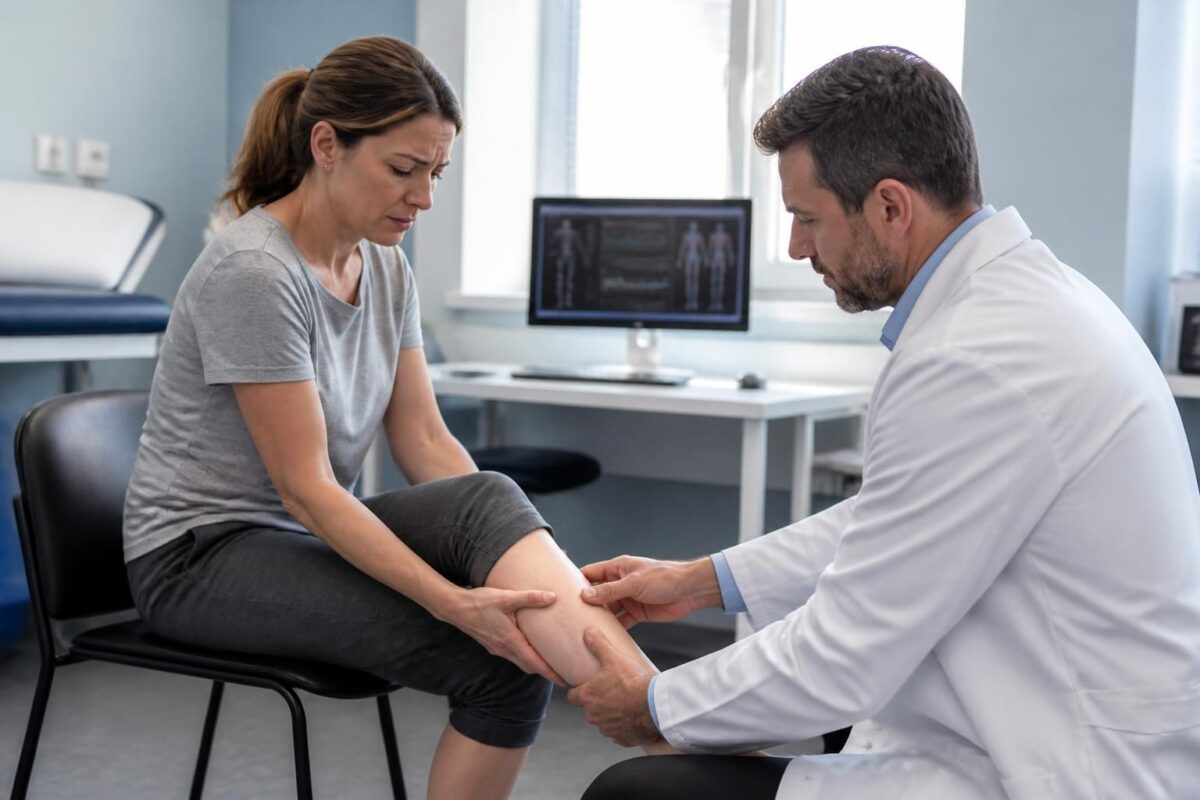
Sciatica and calf weakness: what should be monitored?
IN SHORT In short, sciatica and weakness in the calf describe a lumbar radiculopathy where pain follows the path of the sciatic nerve and may reach the calf. Benefits: a targeted non-surgical management, quick relief, and an improvement in mobility…

Sciatica and difficulty walking on tiptoes: possible S1 root
IN BRIEF In brief, sciatica with difficulty walking on tiptoes may reflect an involvement of the S1 lumbar root. What is it? a radicular pain that can limit foot elevation and walking on tiptoes. What are the benefits? an accurate…
Sciatica and difficulty walking on heels: possible L5 root
IN BRIEF The sciatica associated with a difficulty walking on the heels is generally due to an involvement of the L5 root of the sciatic nerve, with a pathway that starts from the lower back, crosses the buttock, and goes…

Sciatica and difficulty lifting the foot: emergency or quick consultation?
IN BRIEF The drop foot is a weakness of the foot dorsiflexors that causes a steppage gait and may reveal sciatica with compression of the nerve in the lumbar region. When it is associated with sciatic pain and loss of…
Sciatica and loss of strength: a sign not to be taken lightly
IN SHORT In short, sciatica is pain that follows the path of the sciatic nerve. A loss of strength in the leg is a sign that should not be taken lightly. It’s a warning indicating nerve damage that may require…

Sciatica and numb foot sensation: when to consult?
IN BRIEF In brief, sciatica and numbness in the foot refer to pain that follows the path of the sciatic nerve and may be accompanied by tingling or numbness in the foot. This summary specifies when to seek consultation, distinguishing…

Dr Sylvain Desforges, B.Sc., D.O., N.D., osteopath, is the founding president of TAGMED and of the ACMA association. He dedicates his practice to chronic spinal pain, low back pain and symptoms compatible with sciatica, particularly when pain radiates toward the buttock, leg, calf, foot or toes.
Through SOS Sciatique, he publishes educational content on sciatica symptoms, possible causes such as disc herniation, disc narrowing, foraminal stenosis or irritation of a lumbar nerve root, as well as non-surgical approaches that may be considered according to the evaluation. At Clinique TAGMED, care may include, depending on the case, motorized neurovertebral decompression, specific osteopathic care or precision percussion.
For an evaluation related to sciatica treatment in Montreal / Mount Royal or sciatica treatment in Terrebonne, please consult the services available at Clinique TAGMED.
Medical disclaimer
The information published on SOS Sciatique is provided for educational purposes only and does not replace a consultation, diagnosis, opinion or treatment provided by a physician or another authorized healthcare professional. The author of this article is neither a medical doctor nor a specialist in a medical specialty recognized by the Collège des médecins du Québec. The osteopathic, manual medicine or functional support approaches described on this site do not constitute medical acts and are not intended to replace medical follow-up.
Consult a physician or emergency service in cases of loss of bladder or bowel control, anesthesia in the saddle area, significant or progressive weakness in the leg or foot, fever, recent trauma, severe pain or rapid worsening of symptoms. For more details, please read our Legal Notice.