Sciatic Pain in Terrebonne: Role of Neurological Evaluation
14/07/2026
Sciatica: pain that worsens when sitting and possible disc-related cause
14/07/2026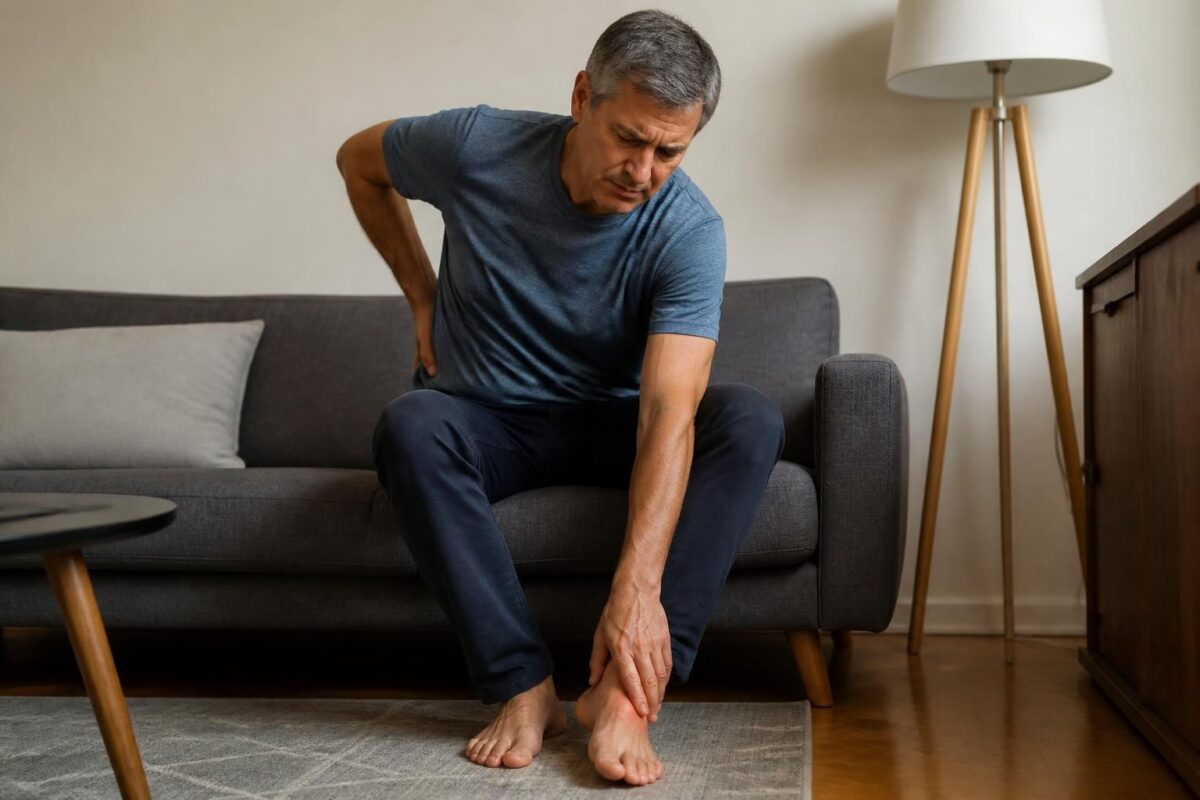
IN BRIEF Sciatica associated with pain on the top of the foot is often linked to compression or irritation of the L5 root of the sciatic nerve, leading to pain that starts in the lower back and radiates to the top of the foot and the big toe. Benefits: rapid diagnosis and effective non-surgical management, particularly through physical therapy and symptomatic treatments, with frequent improvement within weeks to months. How it works: we assess the painful pathway and neurological signs; MRI can confirm a disc herniation and guide treatment; the majority of cases can be managed locally, with monitoring for signs of urgency. In Montreal and Mont-Royal, this service aims to quickly relieve pain and promote a return to activity. |
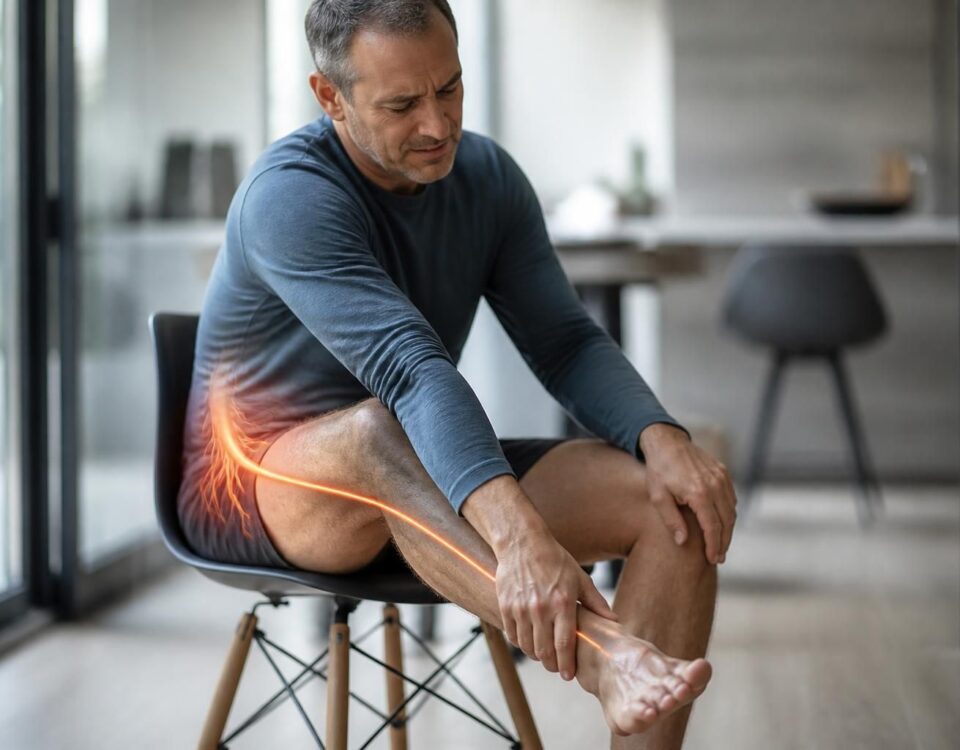
Sciatica can manifest not only as pain in the lower back and leg but also as pain that reaches the top of the foot when the L5 root is irritated or compressed.
- Origin: the most common cause is a lumbar disc herniation compressing the L5 root; other situations can affect the foramen or cause radiculopathy.
- Symptoms: pain along the pathway of the sciatic nerve towards the top of the foot and the big toe, with possible paresthesias and sometimes weakness in lifting the foot (L5 signs).
- Diagnosis: clinical examination and imaging (MRI) to confirm the root location and the cause.
- Management: conservative treatment primarily (appropriate activity, analgesics, NSAIDs, physical therapy); possible injections; surgery as a last resort if treatment fails or motor loss occurs.
This article, written by Dr. Sylvain Desforges, osteopath, explains how pain on the top of the foot can reflect an issue with the L5 root of the sciatic nerve. It describes the possible mechanisms, signs to watch for, the role of diagnosis, and management options at the TAGMED Clinic. The key takeaway is simple: pain that rises from the lower back to the foot can originate from compression or irritation of the L5 root and requires appropriate evaluation.
Understanding the connection between sciatica and back pain in the foot
The sciatic nerve and the L5 root
The sciatic nerve is the longest and largest in the body. It emerges from several lumbar roots, including L4, L5, and S1, and descends towards the buttock and the back of the leg. When the L5 root is compressed or irritated, pain can follow the pathway of the nerve and reach the top of the foot, the big toe, and the back of the leg.
Typical signs when discussing L5
Pain associated with the L5 root often manifests as pain that radiates from the buttock to the outer side of the leg, then to the top of the foot and the big toe. Symptoms such as paresthesias (tingling), decreased sensitivity, or weakness in the muscles that control the foot may accompany this pain. Progressive involvement can also hinder walking on the heels or lifting the foot.

Sciatic pain and loss of sensation: why consult?
IN BRIEF In brief, sciatica pain and loss of sensation describe pain that follows the path of the sciatic nerve and may be accompanied by paresthesia and numbness. Quick consultation has key benefits: obtaining a clear diagnosis, assessing the risks…

Sciatica and pain on the outer edge of the foot: possible S1 root
IN BRIEF What is this theme? The sciatic pain radiating towards the outer edge of the foot may reflect involvement of the S1 root of the sciatic nerve. This radiation can also affect the calf and heel depending on the…
Possible causes when pain reaches the top of the foot
Main origins related to the L5 root
The most common cause remains a lumbar disc herniation compressing the L5 root. This occurs when a fragment of the disc nucleus herniates and presses on the nerve root at L4-L5 or L5-S1. This compression can trigger pain that radiates along the nerve pathway to the top of the foot.
Other mechanisms to consider
Foraminal stenosis or spondylolisthesis can also compress the nerve roots and cause pain along the sciatic nerve. The piriformis syndrome, a muscle in the buttock, can sometimes irritate the sciatic nerve and present pain resembling sciatica without spinal origin. In some patients, pregnancy can also alter nerve relationships and promote pain along the sciatic pathway.

Sciatica pain that radiates down to the foot: understanding the pathway
IN BRIEF The sciatic pain that travels down to the foot is a projected pain following the path of the sciatic nerve, originating from the lower back and potentially radiating towards the buttock, thigh, calf, and foot. Understanding this pathway…

Sciatica with numbness in the toes: what should you watch out for?
IN BRIEF In brief, sciatica with numbness of the toes is an impairment of the sciatic nerve that can cause pain, paresthesia, and loss of sensation along the leg and foot. The evaluation may begin with a teleconsultation to screen…
Diagnosis and the role of imaging
Clinical elements and examinations
Diagnosis relies primarily on patient history and physical examination. The painful pathway, neurological signs, and reflexes help localize the affected root (L5 or S1). The Lasègue test and assessment of muscle strength are important elements. When pain is persistent or complex, imaging is considered.
Imaging and complementary tests
The only necessary examination may be a lumbar MRI to visualize discs, nerves, and vertebral structures, confirming a pressuring disc herniation on L5. A CT scan is an alternative when MRI is not possible. An electromyography (EMG) test may be useful to specify the nerve origin and the duration of the lesion.

Foot pain without back pain: should we think about the back?
IN BRIEF In brief, foot pain without low back pain refers to foot discomfort occurring independently of back pain, often caused by mechanical, nerve, or joint factors. This pain may result from plantar fasciitis, Morton’s neuroma, or a biomechanical imbalance,…

Pain in the buttock without back pain: could it be sciatica?
IN BRIEF In brief, buttock pain without back pain can be sciatica when the pain follows the path of the sciatic nerve down to the leg. What is it? a nerve-origin pain; the benefits of an accurate diagnosis: appropriate management,…
Management options and the role of the TAGMED clinic
General approach and principles
Most lumbar radiculopathies related to the L5 root evolve favorably with appropriate non-surgical management. The objective is to relieve pain, protect the nerve, and allow a gradual return to activities. At the TAGMED Clinic, we prioritize an approach based on evaluation and non-surgical interventions when appropriate.
Available treatments and where to obtain them
Appropriate options may include a motorized neurovertebral decompression and specific osteopathic approaches when conditions allow. In case of localized and persistent pain, targeted medication protocols may be considered based on the patient’s evaluation. For cases requiring more targeted intervention, the use of injections or precise procedures can be discussed depending on the case and clinical evaluation.
Useful links and complementary resources
- Sciatica and pain while sitting
- Burning pain and nerve irritation
- Symptoms and questions about sciatica
- Definition and causes of sciatica
- Questions to ask before starting treatment
- TAGMED Clinic
- Possible L5 root: pain that follows the sciatica pathway to the top of the foot and the big toe.
- Motor symptoms: difficulty lifting the foot and walking on the heels.
- Paresthesias: tingling sensations on the dorsum of the foot and the main toe.
- Sensory deficit: hypoesthesia on the dorsum of the foot.
- Clinical signs: pain aggravated by the Lasègue test or trunk extension.
- Rapid diagnostics: targeted clinical examination and lumbar MRI to confirm L5 and compression.
- Management: initial conservative treatment (adapted activity, analgesics/NSAIDs, physiotherapy).
- Intervention options: epidural injection if pain is unresolved.
- Emergencies to monitor: urinary disturbances, progressive weakness, loss of perineal sensation (cauda equina signs).
- Prevention and advice: avoid twisting, strengthen the back and abdomen, appropriately progress activity.

This recommendation highlights the links between pain on the top of the foot and a possible involvement of the L5 root of the sciatic nerve. It summarizes the mechanisms, the clinical signs to look for, and the management options, prioritizing a conservative approach tailored to each patient.

Sciatica radiating into the calf: possible lumbar cause
IN BRIEF In brief, sciatica that radiates down to the calf may have a lumbar cause and present as radicular pain radiating to the calf and foot. The diagnosis relies on a clinical evaluation that seeks the precise pain pathway…

Sciatic pain in one leg: how to explain it?
IN BRIEF In brief, sciatic pain in one leg is pain that follows the path of the sciatic nerve, starting from the lower back to the foot, often described as burning or electric and accompanied by numbness. It is most…
Understanding pain on the top of the foot and the L5 root
Pain that radiates to the top of the foot may reflect an involvement of the L5 root of the sciatic nerve. When this root is irritated or compressed by an intervertebral disc or through other mechanisms, the painful pathway follows the corresponding nerve territory: buttock, outer leg, forefoot, and dorsum of the foot, and may involve the big toe. This pain is often described as burning or electric and may be accompanied by paresthesias or weakness in the muscles involved in foot dorsiflexion.
Causes and diagnosis
The most common causes of L5 radiculopathy linking pain to the top of the foot are:
- Lumbar disc herniation L4-L5 or L5-S1, leading to compression of the L5 root.
- Foraminal or canal stenosis that reduces the space around the nerve root.
- Spondylolisthesis or other degenerative disorders that may narrow the nerve passages.
The diagnosis primarily relies on the medical history and clinical examination. The painful pathway, presence of motor signs (dorsiflexion strength of the foot), and sensory signs, as well as the Lasègue sign, are examined. Lumbar MRI is the key test to confirm a herniation or radicular compression, while EMG can specify the duration and level. In some cases, specialized assessment is necessary to rule out other causes and guide treatment.
Treatment and practical recommendations
Initial approach and general measures
In the majority of cases, the treatment is conservative and combines adapted activity with medical management. A focus on relative rest and maintaining tolerated physical activity is important to avoid regression due to inactivity. Possible treatments include:
Analgesics and sometimes non-steroidal anti-inflammatory drugs in the absence of contraindications; muscle relaxants to relax inflamed muscles; oral corticosteroids for a short duration; and, if the pain is neuropathic, gabapentinoids.
For prolonged pain, epidural injections may be proposed to reduce inflammation around the root.
Rehabilitation and posture
Physiotherapy is appropriate after the acute phase and aims to strengthen the deep muscles of the back and abdominal belt, improve mobility, and correct daily movements. Targeted exercises help maintain walking and prevent recurrences while avoiding risky movements.
When to consider intervention
Surgery is considered only after the failure of conservative treatment for several weeks, or in the presence of a neurological emergency (evolving motor deficit, cauda equina syndrome). In relevant cases, microdiscectomy offers high rates of relief from radicular pain, but results on back pain can be variable.
Practical tips for daily life
Engage in regular and appropriate walking, wear comfortable shoes, and avoid aggressive twisting movements. On the top of the foot, favor activities that do not excessively strain painful dorsiflexion and monitor warning signs such as rapid loss of strength or urinary issues, which require urgent medical evaluation.
| Elements | Brief Notes |
|---|---|
| Origin | Root L5 often involved by a lumbar disc herniation, radiating to the top of the foot and the big toe. |
| Location | Predominant pain on the top of the foot and dorsum, sometimes associated with radicular low back pain. |
| Motor Signs | Difficulty lifting the foot (dorsiflexion) possible; altered walking if significant weakness. |
| Sensory Signs | Paresthesias or burning sensation on the top of the foot and the big toe. |
| Key Diagnosis | Often confirmed by lumbar MRI showing compression of the L5 root. |
| Initial Approach | Conservative treatment as first-line: appropriate activity, analgesics, and physiotherapy. |
| Intermediate Treatment | Epidural injection may be considered if pain persists despite treatment. |
| Surgical Indications | Failure of conservative treatment after 6–8 weeks or progressive motor deficit. |
| Emergencies | Signs of cauda equina requiring immediate management. |
Testimonials on sciatica and pain on the top of the foot, Possible L5 root
Marie, 42 years old: “I suffered from sciatica that started from my lower back and radiated to the top of my foot, with burning sensations and paresthesias along the nerve pathway. The clinician mentioned a possible involvement of the L5 root. After a thorough assessment and a program combining targeted osteopathy and progressive rehabilitation, the pain decreased and I returned to my daily activities without fear of pain.”
Antoine, 54 years old: “My pain started after exertion at work and quickly radiated to the top of my foot, making it difficult to walk. The diagnosis suggested a possible L5 root. Thanks to a tailored therapeutic plan and some physiotherapy sessions combined with osteopathic care, I regained my mobility and forgot the constant pulling.”
Sophie, 33 years old: “I felt low back pain that evolved into pain along the nerve pathway to the left top of my foot. The symptoms resembled involvement of the L5 root, with tingling and a prickling sensation. After a precise assessment and personalized treatment, including stability exercises and gentle manipulations, the pain gradually decreased and I was able to resume my activities without discomfort.”
Julien, 48 years old: “After a wrong movement, radicular pain spread to the right top of my foot, with a burning sensation and slight weakness during dorsiflexion. A possible L5 root involvement was considered. Osteopathy sessions combined with a targeted rehabilitation program allowed me to regain strength and stop constant visits to the doctor.”
Claire, 60 years old: “The pain started in my lower back and rose to the top of my foot, with episodes of paresthesias. The clinician mentioned a possible involvement of the L5 root. After a therapeutic approach integrating mobility, trunk strengthening, and postural advice, I regained easy walking and a significant reduction in daily pain.”
Dr Sylvain Desforges, an osteopath and practitioner recognized for his integrated approach, emphasizes the management of low back and radicular pain. As the founding president of TAGMED clinics and committed to improving care, he combines osteopathy, naturopathy, and manual medicine to help patients suffering from sciatica and manifestations related to the L5 root. His work aims to provide evidence-based care while remaining attentive to each person’s healing journey.
When pain follows the course of the sciatic nerve and affects the top of the foot, it may reflect involvement of the L5 root. In this scenario, pain may radiate from the buttock to the dorsum of the foot, be associated with a burning sensation or tingling, and sometimes be accompanied by weakness during dorsiflexion or toe extension. The precise diagnosis relies on the combination of a careful clinical examination and additional assessment when necessary, to confirm L5 radicular involvement and identify the structures involved, such as a disc herniation or foraminal stenosis.
The therapeutic approach favored by Dr Desforges is multimodal and personalized. Osteopathy and manual medicine techniques aim to restore the mobility of vertebral segments and reduce pressure on the nerve root while promoting better muscle coordination. Physiotherapy offers targeted exercises to strengthen the muscles of the spine and leg, improve flexibility and posture, and facilitate a gradual return to normal walking without aggravating symptoms.
If pain persists despite conservative measures, additional options may be considered in a safe and gradual manner. Approaches such as motorized neurovertebral decompression, use of laser, and shock wave therapies may be integrated when the clinical assessment justifies it and under professional supervision. These technologies are used to support the reduction of inflammation, accelerate recovery, and limit the need for more invasive interventions, while remaining patient-centered and focused on functional goals.
At the heart of his work, Dr. Desforges prioritizes clear communication and therapeutic education so that each person understands the mechanisms of their pain and can actively participate in their recovery. He recommends appropriate and progressive activity, postural advice, and stretching routines tailored to the pain, in order to protect the spine and the nerve while promoting sustainable autonomy. His approach aims to transform the experience of sciatica and the dorsal dome of the foot into an opportunity for rehabilitation and strengthening.
Ultimately, the goal is to place the patient at the center of care, relying on a rigorous assessment, data-driven practice, and continuous adaptation of the therapeutic plan. Through this approach, Dr. Desforges is committed to optimizing health and well-being, prioritizing non-surgical solutions when relevant and encouraging a quick return to an active and pain-free life.
Quick summary: a sciatica can manifest as pain on the top of the foot when the L5 root is involved. This presentation is typical of lumbar radiculopathy and is often accompanied by a painful path that follows the course of the sciatic nerve to the dorsum of the foot and the big toe. The diagnosis is based on clinical examination and, if necessary, imaging and nerve tests; treatment is predominantly conservative, with surgery reserved for failure or signs of emergency.
Pain that affects the top of the foot may reflect an L5 radicular impairment of the sciatic nerve. In this context, the pain and sensory or strength disturbances typically target the L5 pathway, including the dorsum of the foot and the big toe. A walking deformity, weakness in foot dorsiflexion, or paresthesia on the dorsal side of the foot complete the picture. To correctly interpret these symptoms, it is helpful to consider both radiculopathy and peripheral causes such as fibular nerve injuries, tarsal tunnel syndrome, or other distal nerve compressions. Detailed resources on paresthesias and associated radicular signs can be consulted through dedicated articles on the SOS Sciatique website and other specialized references.
The diagnosis is based on a symptom interview and a neurological examination that assess sensitivity, strength, and reflexes. The key element is the concordance between the painful pathway and the L5 territory, as well as the potential presence of a motor deficit (e.g., difficulty raising the foot). To confirm the cause and plan treatment, lumbar MRI is the reference examination, and electromyography may be helpful when doubts persist about nerve involvement or to precisely locate the affected root. Dedicated pages discussing the causes and treatments of lumbar sciatica provide useful benchmarks on the mechanisms and available therapeutic options, including sections on targeted treatments in Montreal and explanations of different clinical scenarios.
Regarding treatment, a conservative approach remains systematic as the first line, with a combination of appropriate analgesics, anti-inflammatories, and, when necessary, a short course of corticosteroids. Physiotherapy and rehabilitation aim to restore mobility, strengthen the trunk and foot muscles, and teach protective back movements, all while maintaining suitable activity. In cases where pain persists despite medical treatment, epidural injections may provide temporary relief and promote nerve healing. In addition, resources such as pages specialized in spinal surgery or management guides provide a synthetic view of surgical indications and potential outcomes.
Surgery is only considered as a last resort, when lumbar sciatica is associated with progressive motor deficits, resistant hyperalgesic pain, or prolonged failure of conservative treatment. The key message remains: the vast majority of cases evolve favorably with appropriate and gradual management, but recovery may take several weeks to several months. Additional information on the mechanisms and treatments available can be consulted in the cited resources, including pages explaining the causes and treatments of sciatica and associated clinical assessments.
To delve deeper into signs and management options when experiencing paresthesias or pain in the front or top of the foot, you can consult useful resources such as sections dedicated to sciatica and toe tingling, or pages explaining manifestations related to the sciatic nerve after prolonged sitting here. For an overview of treatments and approaches in Montreal, refer to Treatment of sciatica in Montreal. Additional resources cover general concepts of causes, symptoms, and treatments, including this page on causes and treatments and MSD Manuals – Sciatica. For complementary perspectives on foot pain related to sciatica, you can consult this specialized resource and Doctissimo. Other useful insights are available on signs indicating targeted treatment, and on Sciatica and pain in prolonged meetings. General resources on lumbar pain and sciatica are available through groupesantepourtous.com.

Dr Sylvain Desforges
Dr Sylvain Desforges, B.Sc., D.O., N.D., osteopath, is the founding president of TAGMED and of the ACMA association. He dedicates his practice to chronic spinal pain, low back pain and symptoms compatible with sciatica, particularly when pain radiates toward the buttock, leg, calf, foot or toes.
Through SOS Sciatique, he publishes educational content on sciatica symptoms, possible causes such as disc herniation, disc narrowing, foraminal stenosis or irritation of a lumbar nerve root, as well as non-surgical approaches that may be considered according to the evaluation. At Clinique TAGMED, care may include, depending on the case, motorized neurovertebral decompression, specific osteopathic care or precision percussion.
For an evaluation related to sciatica treatment in Montreal / Mount Royal or sciatica treatment in Terrebonne, please consult the services available at Clinique TAGMED.
Medical disclaimer
The information published on SOS Sciatique is provided for educational purposes only and does not replace a consultation, diagnosis, opinion or treatment provided by a physician or another authorized healthcare professional. The author of this article is neither a medical doctor nor a specialist in a medical specialty recognized by the Collège des médecins du Québec. The osteopathic, manual medicine or functional support approaches described on this site do not constitute medical acts and are not intended to replace medical follow-up.
Consult a physician or emergency service in cases of loss of bladder or bowel control, anesthesia in the saddle area, significant or progressive weakness in the leg or foot, fever, recent trauma, severe pain or rapid worsening of symptoms. For more details, please read our Legal Notice.