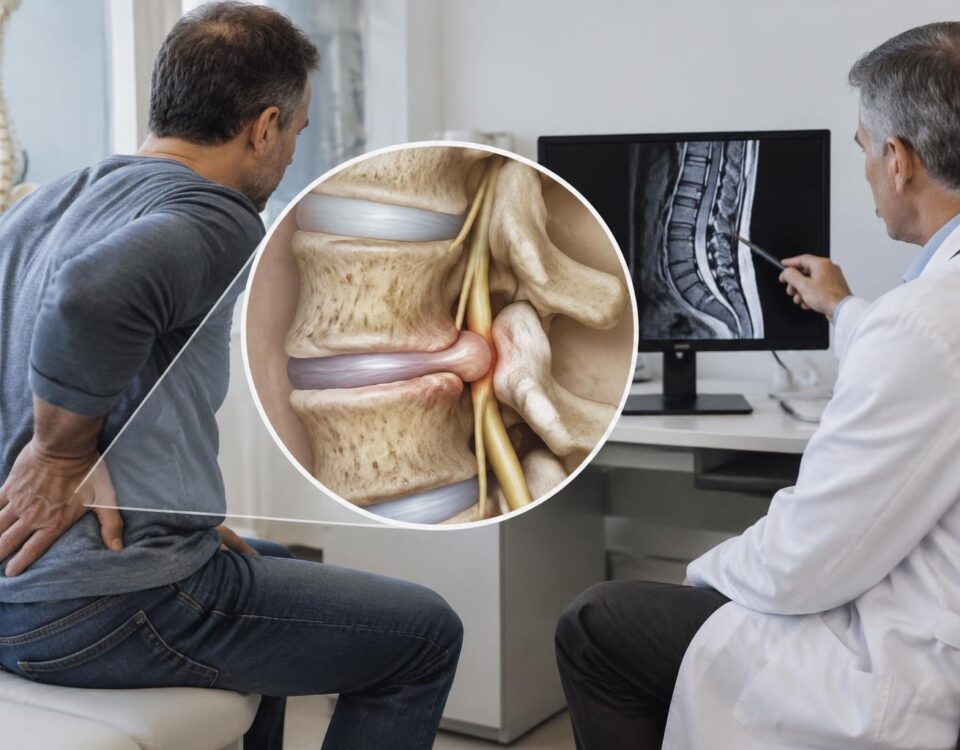
Sciatica and pain on the outer edge of the foot: possible S1 root
13/07/2026
Sciatica and pain during prolonged meetings
13/07/2026
IN BRIEF
| In short, sciatica with tingling in the toes and nerve compression is pain that follows the path of the sciatic nerve, caused by irritation or compression of the nerve roots, leading to numbness, tingling, and pain in the lower back, buttock, and leg down to the foot. Benefits include fast diagnosis, effective non-surgical options, and improved mobility and quality of life. The process relies on identifying the cause (e.g., herniated disc or stenosis) and establishing an adaptive treatment plan (rest, physiotherapy, targeted exercises, and intervention if necessary). In Montreal, this service is particularly recommended for pain related to lumbar nerve compression to quickly recover posture and walking while prioritizing a safe and personalized approach. |
Sciatica is pain that follows the path of the sciatic nerve, starting from the lower back, passing through the buttock, and descending into the leg and foot. The typical symptom is tingling in the toes, sometimes associated with numbness or tingling due to nerve compression of the lumbar roots.
This compression can result from a herniated disc, narrowing of the spinal canal, or other conditions that irritate the nerve and cause radiating pain along the nerve’s path.
Diagnosis is based on clinical examination and, if necessary, on additional tests to assess the extent of the injury. Treatment generally combines rest, physiotherapy, and measures aimed at relieving pain, with possible intervention if the compression persists and significantly impairs function.
This article explains the link between tingling in the toes and nerve compression within the framework of sciatica. It describes typical symptoms, common causes, diagnosis, and treatment options. It emphasizes possible clinical approaches at the TAGMED Clinic and non-surgical solutions when assessment allows.
About the author
Dr. Sylvain Desforges, B.Sc., D.O., N.D., osteopath, is the founding president of
TAGMED
and of the ACMA association. He dedicates his practice to chronic spinal pain, low back pain, and pain associated with sciatica, particularly when the pain radiates down to the buttock, leg, calf, foot, or toes.
Through SOS Sciatica, he publishes educational content on sciatica symptoms, possible causes such as herniated disc, disc pinching, foraminal stenosis, or irritation of a lumbar nerve root, as well as on non-surgical approaches that can be considered based on evaluation. At the TAGMED Clinic, care may include, depending on the case, motorized neurovertebral decompression, specific osteopathy, or a precision impactor.
For an evaluation related to
sciatica treatment in Montreal / Mont-Royal
or to
sciatica treatment in Terrebonne,
consult the available services at the
TAGMED Clinic.
Medical disclaimer
The information published on SOS Sciatica is provided for educational purposes and does not replace a consultation, diagnosis, opinion, or treatment performed by a doctor or other licensed healthcare professional. The author of this article is neither a doctor nor a specialist in a medical specialty recognized by the Collège des médecins du Québec. The osteopathy, manual medicine, or functional support approaches described on this site do not constitute medical acts and are not intended to replace medical follow-up.
For more details, please read our
Legal notice.
Paresthesias correspond to abnormal sensations, such as tingling, pins and needles, or numbness in the extremities. When these symptoms affect the toes or foot, they often reflect an injury to the sciatic nerve or its roots. The sensation may be temporary or persistent and may be accompanied by instability or pain along the nerve’s path.
Symptoms and Signs
The typical presentation combines a loss of sensitivity or numbness in the toes or foot, sometimes with tingling or radiating pain moving up to the lower back or leg. Numbness in the foot can compromise contact with the ground and alter balance and walking. In some cases, the pain is more prominent in certain segments and may be accompanied by mild to moderate weakness.
To explore the mechanisms and associated signs further, see the following resources:
Sciatica and calf pain while sitting,
Sciatica with foot weakness – sign to watch for,
Sciatica or muscle pain.
Common Causes
The main cause is compression of a nerve root by a herniated disc, narrowing of the spinal canal, or foraminal stenosis. Other factors include neurological disorders, diabetes, chronic alcohol use, or effects from previous treatments. A compressed nerve can also result from repetitive mechanical processes or prolonged posture that increases pressure on the nerve.
In the context of physical activity like cycling, a prolonged sitting position can lead to slight compression of the sciatic nerve and provoke tingling in the foot.
Diagnosis
Diagnosis primarily depends on clinical examination. The doctor evaluates muscle strength and reflexes, then looks for signs of radiating pain and numbness. Sensitivity tests and tests of standing on tiptoes or heels may be performed. If in doubt, an electromyogram (EMG) may be requested to specify the nature and extent of the nerve injury.
For cases involving neurovertebral decompression or associated pathologies, targeted imaging may be indicated to identify the cause (e.g., disc herniation, stenosis). The indications and choice of examinations depend on the clinical assessment and the symptoms presented.
Treatment and Care Pathway
The treatment plan is based on individual assessment. Non-surgical approaches may be considered when the assessment allows. At TAGMED Clinic, non-pharmaceutical and non-surgical options can be prioritized and tailored to each patient. In cases where compression is severe or debilitating, surgical intervention may be discussed, especially when a nerve is severely compressed by a disc herniation or a narrow canal.
Options may include, depending on the case, motorized neurovertebral decompression or other specialized techniques. For patients requiring specialized assessment, resources dedicated to decompression and the management of disc pathologies are available through the clinics and associated pathologies. For more information on procedures and available options, consult neurovertebral decompression.
Within the framework of a disc pathology, it is important to avoid self-suggested exercises or stretches without medical advice. Treatment decisions should be guided by clinical and radiological assessment, and discussed with a physician or licensed osteopath.
Neurovertebral Decompression and Other Specific Conditions
Neurovertebral decompression and issues related to a disc herniation or foraminal stenosis require a professional and individualized approach. The content available on specialized resources provides information on the mechanisms and therapeutic options without prescribing inappropriate exercises in these contexts. For general information on treatments and care pathways, you can consult the following resources:
Sciatic Decompression in Terrebonne,
Disc Herniation and Sciatica,
Disc Herniation and Radicular Pain.
To learn more about practical aspects and clinical approaches, you can also consult the following resources:
TAGMED Clinic,
Sciatica or Sacroiliac Pain,
Sciatica and Calf Pain While Sitting.
Regarding educational matters, it should be noted that osteopaths can come from recognized trainings, including NUMSS and NAO, as well as National University of Medical Sciences and National Academy of Osteopathy.
In any case, a personalized assessment is necessary to determine the most suitable and effective option. The treatments offered at TAGMED aim to relieve symptoms and optimize mobility while avoiding actions that could worsen nerve compression.
Supplementary resources:
Sciatica and Calf Pain While Sitting,
Sciatica or Muscle Pain,
Foot Weakness – Sign to Monitor.
For more information on treatments or non-surgical assessments, contact TAGMED Clinic or consult resources dedicated to neurovertebral decompression and sciatica on the recommended websites above.
Medical Disclaimer: The information and advice provided on this site do not replace the opinion, diagnosis, or treatment of a health professional. Please note that Dr Sylvain Desforges, osteopath, is neither a medical doctor nor a physician and is not a specialist in a medical specialty as defined by the Collège des médecins du Québec. Manual medicine, functional medicine, and sports medicine as described on this site exclude any treatment or medical diagnosis made by a physician or medical specialist. Always consult your doctor for any medical questions. For more details, please read our full Legal Disclaimer.
- Symptoms — tingling in the toes and foot
- Nerve pathway: lower back → buttock → leg → foot
- Quality: tingling, numbness, burning sensation
- Temporal: constant or intermittent
- Nerve compression — common causes: disc herniation, lumbar canal stenosis
- Other factors: diabetes, alcoholism, inflammation, nerve injury
- Diagnosis: clinical examination and, if necessary, imaging and neurophysiological studies
- Actions: physiotherapy, adapted posture, targeted physical activity; surgical evaluation in case of persistent disability

In this article, you will discover how tingling and numbness in the toes can reflect a nerve compression related to sciatica. You will get clear indicators on symptoms, possible causes, diagnosis, and practical recommendations to relieve and prevent these sensations, without necessarily resorting to surgery.
Signs and Implications of Paresthesias Related to Sciatica
Paresthesias manifest as tingling, pins and needles, and sometimes numbness in the toes or foot. When they originate from sciatica, they follow the pathway of the affected nerve and can influence balance while walking. Sensations of cold or warmth without stimulus may appear. Understanding these signs helps to locate the area of compression and adapt the therapeutic approach.
Common Causes of Compression and Their Consequences
The main cause is the compression of a lumbar nerve root, often related to a herniated disc, a spinal canal stenosis, or local inflammation. Factors such as prolonged posture, aging discs, or repetitive movements can worsen the situation. Disorders like diabetes, peripheral neuropathy, or other neurological conditions can also cause tingling; a comprehensive assessment is essential to target the appropriate treatment.
Diagnosis and assessment of severity
The doctor starts with a clinical examination and sensitivity tests to assess the extent of sensory loss and its impact on walking. If necessary, further investigations (imaging or electrodiagnostic study) can precisely locate the compressed root and guide the choice between conservative management and more targeted interventions. The goal is to determine the chances of recovery and the best therapeutic path for each patient.
Practical recommendations for relief and prevention
Pain management and rest
Apply simple methods like cold or heat depending on the times, and use over-the-counter pain relievers if necessary and after medical advice. Targeted rest can reduce nerve irritation without belittling the physical activity essential for recovery.
Appropriate physical activity and strengthening
Prefer exercises that strengthen the core, glutes, and lower back muscles. A progressive and regular program helps stabilize the spine and reduce pressure on the sciatic nerves. Avoid painful efforts and gradually increase intensity.
Posture and ergonomics
Maintain a neutral posture while sitting, standing, and during exertion. Adjust the seat height, lumbar support, and overall ergonomics to reduce lumbar tension and promote nerve circulation in the limb.
Preventive exercises and stretching
Incorporate gentle stretching and suitable mobility exercises, after warming up, to relieve the posterior muscles and promote tissue elasticity around the spine. Care should be taken not to provoke sharp pain during stretching.
When to consult
If tingling persists for several weeks, worsens, or is accompanied by marked weakness, loss of urinary control, or intense lumbar pain, it is essential to consult a specialist quickly to avoid any complications.
| Typical symptoms | Tingling and numbness in the toes, sometimes with radiating pain along the path of the sciatic nerve. |
| Location | Affected sciatic nerve; pain starting from the lower back or buttock and descending to the foot. |
| Main causes | Compression of the nerve by a herniated disc or a foraminal stenosis; other factors: diabetes, inflammation. |
| Diagnosis | Clinical examination; MRI and/or EMG to locate the affected root. |
| Evolution | Variable: temporary or permanent depending on the cause and treatment. |
| Treatment | Rest, physiotherapy, anti-inflammatories; injections or surgery if compression persists. |
| Emergency | Consult urgently in case of loss of urinary/bowel control or progressive weakness of the leg. |
| Prevention | Regular physical activity, back strengthening, good posture, and proper lifting techniques. |
| Differences with other paresthesias | Linked to the sciatic nerve; evaluation of underlying causes and warning signals. |
Testimonials on sciatica: tingling in the toes and nerve compression
For a few weeks, I started to feel tingling in my toes accompanied by a numbness that seemed to follow the path of the nerve. This sensation, resembling a nerve compression, appeared mainly when I walked or stood for a long time and lingered for several hours.
Over the weeks, I realized that these symptoms could stem from a sciatic nerve compression and that, in my case, the probable cause was a herniated disc or a narrowing of the spinal canal. Understanding this was reassuring and provided me with a clear direction for action.
My diagnosis was made after a thorough clinical examination and additional tests, including an electromyography (EMG) to precisely delineate the affected nerve root(s). Once the diagnosis was clarified, I was able to adopt a suitable plan and follow the advice of professionals.
The treatment combined physical therapy, targeted exercises, and appropriate pain management measures. I also learned the importance of good posture and a regular exercise program to relieve pressure on the nerve. In some cases, if the compression is too strong, surgical intervention may be considered to achieve decompression.
An unexpected personal experience arose when antibiotics were prescribed for another reason and unexpectedly seemed to influence my paresthesia symptoms. Of course, this is not a general recommendation, and it illustrates that the body can react unexpectedly; the important thing remains medical follow-up and a personalized treatment plan.
Dr Sylvain Desforges is an osteopath, practitioner of naturopathy, and manual doctor, whose work is part of a multidisciplinary approach to health and well-being. Founder president of TAGMED clinics and engaged with ACMA, he places innovation at the heart of his career. His practice is dedicated to chronic pain of the spine and the manifestations of sciatica when paresthesias — particularly tingling and numbness descending to the toes — indicate nerve compression along the path of the sciatic nerve.
With several decades of experience, he emphasizes a thorough and individualized assessment of each patient. His approach aims to determine the mechanical and neurological causes of paresthesias, distinguish signs of nerve irritation from other origins, and propose a evidence-based care plan. The goal is clear: restore function, reduce pain, and prevent recurrences by combining manual techniques, postural advice, and the most adaptive therapeutic gestures for each profile.
In his practice, nerve compression is addressed through a combination of non-surgical measures and, when necessary, targeted technologies. He favors interventions that support rehabilitation of the spine and lower limbs: motorized spinal decompression, specialized osteopathic techniques, and the integration of complementary therapies such as laser and shockwaves. Accompanying these approaches, he offers progressive exercise programs, postural feedback, and ergonomic strategies to limit stress on the sciatic nerve and optimize nerve flow.
On the diagnostic level, he explains that paresthesias in the feet and toes may reflect a precise location of the nerve root affected by a herniated disc, foraminal stenosis, or other neurospinal disorders. The assessment may include neurological clinical tests, sensitivity measurements, and, if necessary, additional examinations to map the extent of the damage and guide treatment. The objective is to establish a realistic prognosis and a therapeutic plan that prioritizes a return to active life and sports, while minimizing surgical risks when possible.
The contribution of Dr Desforges goes beyond simple individual care: it is part of an educational and preventive approach. His patients benefit from a clear explanation of the mechanisms of their sciatica, personalized support, and access to resources and services tailored for the long term. His commitment is to offer concrete and adaptive solutions at every stage of the care journey, so that everyone can regain mobility, stability, and confidence in their body.
With a vision that combines clinical expertise and responsible adoption of technologies, he continues his efforts for integrative and evidence-based care. His mission remains to provide a safe, effective, and sustainable approach for patients suffering from sciatica and nerve compression, in order to restore optimal quality of life and regained autonomy.
Quick summary: This conclusion concerns sciatica, tingling in the toes, and the nerve compression that can be the cause. It recalls the main mechanisms (herniated discs, canal narrowing, nerve damage), methods of diagnosis, and treatment options, from conservative approaches to surgery when necessary.
The paresthesia of the toes is frequently a sign of nerve compression along the path of the sciatic nerve or its lumbar roots. It manifests as tingling, numbness, and sometimes radiating pain. Persistent symptoms in the toes indicate that a specialized evaluation should be considered to determine if nerve compression is the source and to anticipate the prognosis for recovery.
The most common mechanical causes include herniated discs and spinal canal narrowing, but other factors such as inflammation, diabetes, or neurological disorders can also contribute to paresthesias. Situations related to cycling or prolonged positions may temporarily exacerbate these sensations due to slight nerve compression.
Diagnosis relies on a thorough clinical examination and may require imaging studies (MRI, CT) and electrodiagnostic tests to precisely identify the affected root and assess severity. This evaluation guides the treatment plan and allows for estimating the chances of recovery, as well as the associated timelines.
Treatment initially favors non-surgical approaches: physical therapy, central muscle strengthening exercises, improvement in posture, and pain management with analgesic measures. When compression persists and symptoms significantly affect daily life, surgical options such as discectomy may be considered to quickly relieve the affected root and promote a return to normal function.
For further exploration, discover resources dedicated to interpreting pain that travels below the knee, possible mechanical causes, and specialized evaluation: sciatica in Montreal: interpreting pain that travels below the knee, sciatica treatment in Terrebonne: possible mechanical causes, numbness in the toes: causes and effective solutions.
For a specialized and personalized assessment in Montreal or Terrebonne, you can refer to the dedicated pages: Sciatica evaluation in Montreal and Sciatica treatment in Terrebonne – possible mechanical causes.
To expand resources, also check: MSD Manuals – Sciatica, Sciatica: leg numbness – clarifying the cause, Sciatica: causes, symptoms, and treatments, and Sciatica: tingling in the foot.
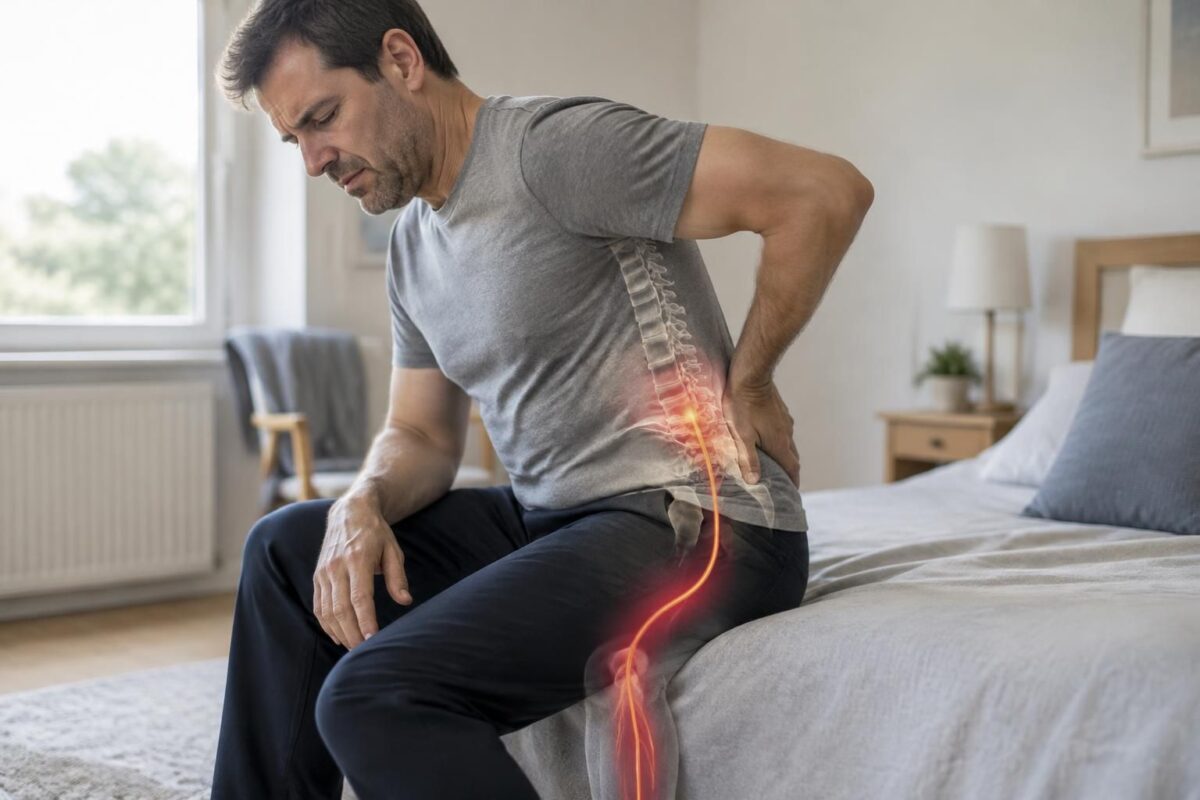
Disc herniation and persistent pain in the leg
IN BRIEF A disc protrusion is a bulging of a disc that can irritate a nerve and cause persistent pain in the leg, sometimes accompanied by tingling or numbness. Imaging alone does not confirm the origin of the symptoms: clinical…
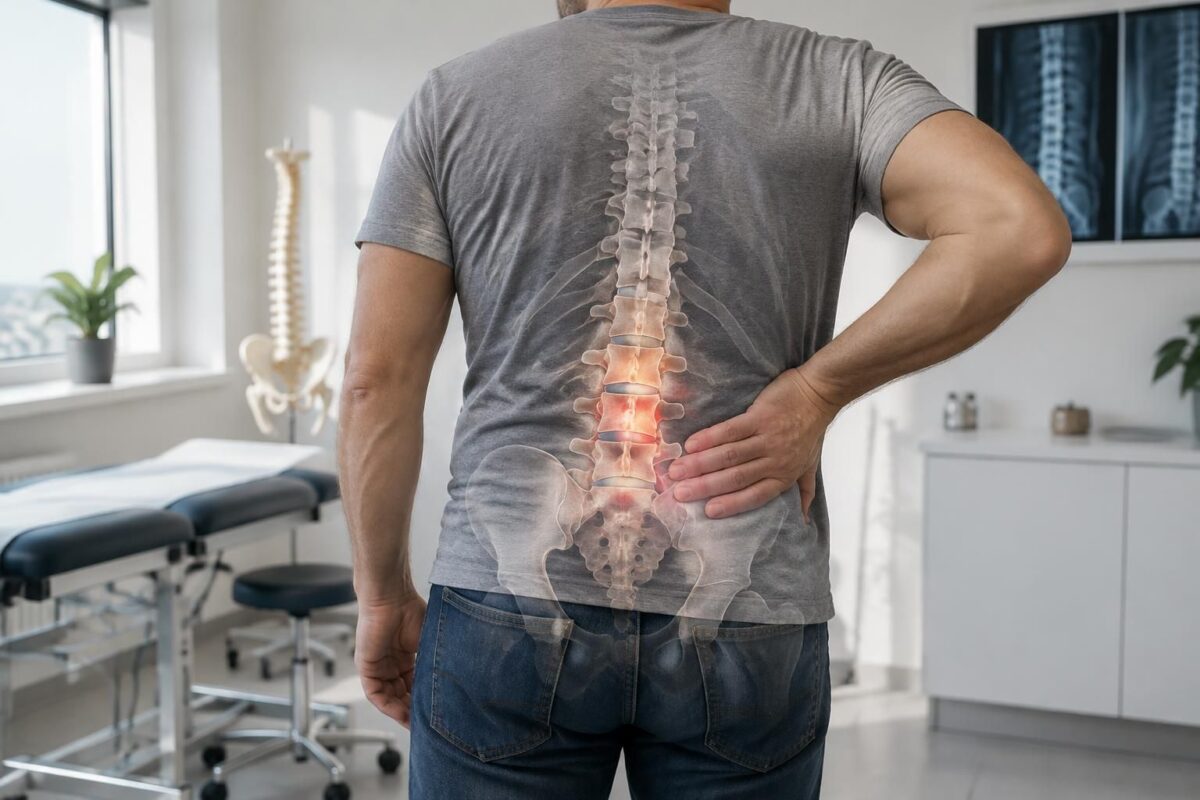
Disc herniation and lumbar degeneration
IN BRIEF A lumbar disc protrusion is a bulging of a disc often related to disc degeneration. It does not always cause symptoms but can contribute to lower back pain or pain radiating down the leg if a nerve is…
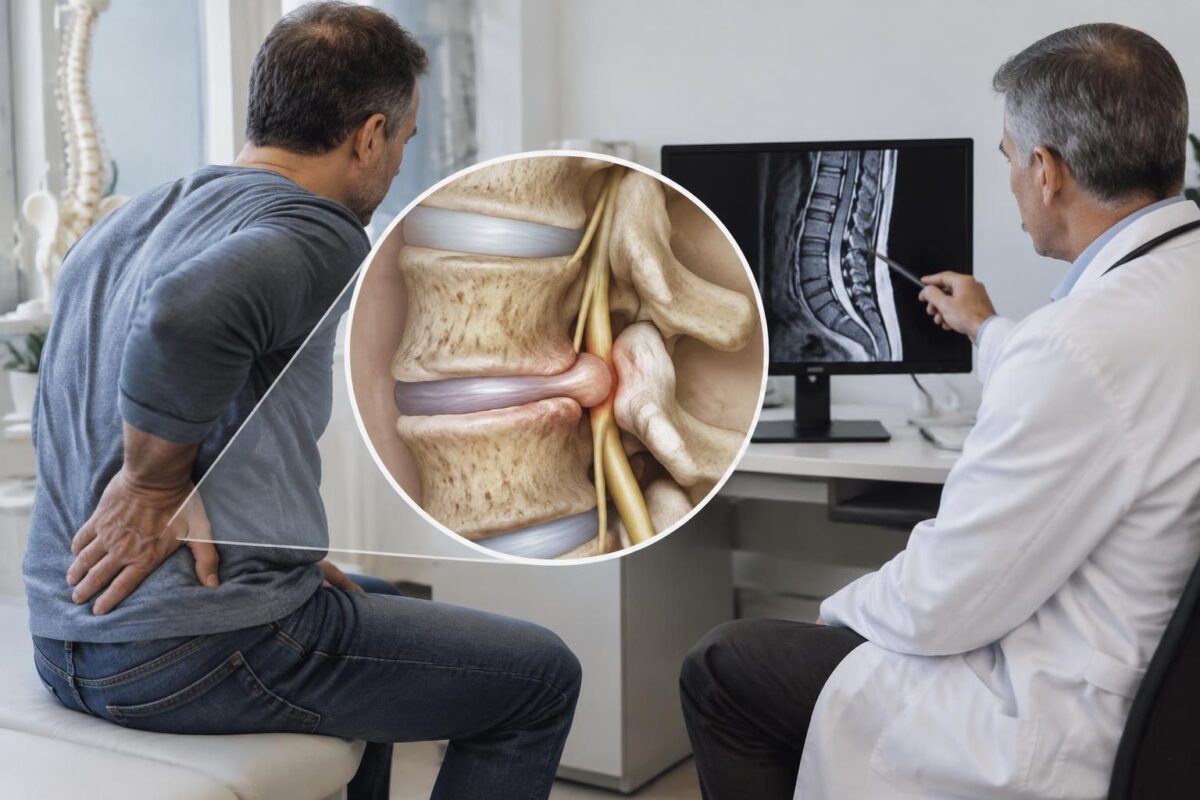
Disc protrusion and disc pinching: combined mechanisms
IN BRIEF A disc protrusion is a bulging of the disc, while a disc narrowing refers to a decrease in its height. These changes can coexist and sometimes irritate a nerve root, leading to pain or radiation, but they can…

Disc herniation and associated foraminal stenosis
IN BRIEF A disc protrusion associated with foraminal stenosis occurs when a bulging disc coexists with a narrowing of the opening through which a nerve root passes. This association can lead to lower back pain radiating into the leg, tingling,…

Spinal disc protrusion and nerve inflammation
IN BRIEF A disc protrusion is a bulging of the disc that can irritate or compress a nerve, without necessarily causing symptoms. When it leads to nerve inflammation, it can cause pain in the back or neck, sometimes accompanied by…

Disc protrusion and irritation of L5
IN SHORT A disc protrusion is a bulging of the disc that can irritate the L5 root and cause lower back pain radiating to the buttock, leg, or foot, sometimes with tingling or weakness. MRI alone is not sufficient to…

Disc protrusion and pain after twisting the back
IN BRIEF A disc protrusion is a bulging of the disc that can contribute to pain after a back twist, but it alone does not confirm the cause. The pain can remain in the lower back or radiate to the…

Disc herniation and pain after lifting
IN BRIEF A disc protrusion is a bulging of a disc between the vertebrae. Pain that appears after lifting a load does not prove that it is the cause: the MRI must be interpreted alongside the symptoms and the clinical…

Dr Sylvain Desforges, B.Sc., D.O., N.D., osteopath, is the founding president of TAGMED and of the ACMA association. He dedicates his practice to chronic spinal pain, low back pain and symptoms compatible with sciatica, particularly when pain radiates toward the buttock, leg, calf, foot or toes.
Through SOS Sciatique, he publishes educational content on sciatica symptoms, possible causes such as disc herniation, disc narrowing, foraminal stenosis or irritation of a lumbar nerve root, as well as non-surgical approaches that may be considered according to the evaluation. At Clinique TAGMED, care may include, depending on the case, motorized neurovertebral decompression, specific osteopathic care or precision percussion.
For an evaluation related to sciatica treatment in Montreal / Mount Royal or sciatica treatment in Terrebonne, please consult the services available at Clinique TAGMED.
Medical disclaimer
The information published on SOS Sciatique is provided for educational purposes only and does not replace a consultation, diagnosis, opinion or treatment provided by a physician or another authorized healthcare professional. The author of this article is neither a medical doctor nor a specialist in a medical specialty recognized by the Collège des médecins du Québec. The osteopathic, manual medicine or functional support approaches described on this site do not constitute medical acts and are not intended to replace medical follow-up.
Consult a physician or emergency service in cases of loss of bladder or bowel control, anesthesia in the saddle area, significant or progressive weakness in the leg or foot, fever, recent trauma, severe pain or rapid worsening of symptoms. For more details, please read our Legal Notice.