



Sciatica in Terrebonne: when the pain is stronger in the leg than in the back
11/07/2026
Sciatica: foot weakness and possible neurological cause
11/07/2026
IN BRIEF
| In brief, sciatica with numbness of the toes is an impairment of the sciatic nerve that can cause pain, paresthesia, and loss of sensation along the leg and foot. The evaluation may begin with a teleconsultation to screen for symptoms and guide management, followed by a clinical examination and, if necessary, complementary tests such as EMG and MRI. Key benefits include: early diagnosis, multidisciplinary approach, and treatment adaptation to reduce the risk of chronicity. Practically, this translates to quick triage, non-invasive therapies (physiotherapy, anti-inflammatories), and, as needed, injections or targeted interventions, while favoring a personalized approach. |
Sciatica with numbness of the toes: what to monitor?
The combination of sciatica and numbness of the toes may reflect an impairment of the sciatic nerve. To stay proactive and preserve your mobility, monitor the following key elements:
- Location and radiation: note where the numbness is and if the pain radiates to the toes.
- Duration and progression: persistent numbness, progressive or episodic?
- Motor deficits: difficulty lifting the foot or standing on tiptoes, muscle weakness.
- Abnormal sensations: burning, electrical shocks, paresthesia.
- Worrisome signs: loss of urinary/fecal control, unbearable pain, or rapidly worsening pain—emergency.
- Triggering factors: prolonged sitting, exertion, diabetes, trauma.
- Examinations and management: quick consultation for a neurological examination and possible imaging or EMG tests to clarify the cause.
- When to act urgently: sudden weakness of the foot, extensive paresthesia, rapidly worsening pain.
This article, written by a healthcare professional, explains what to monitor when sciatica is accompanied by numbness of the toes. You will discover the signs to watch for, the framework for diagnosis, and the possible management options in Montreal and Terrebonne through the TAGMED Clinic. The aim is to help you recognize the symptoms that require quick evaluation and to understand the basics of effective monitoring, without delving into unnecessary technical details.
Numbness of the toes can accompany sciatica when the nerve fibers going to the foot are affected. This signal deserves special attention. Monitor the precise location, onset and evolution of sensations, and any signs of associated weakness. Pain that extends towards the calf or foot, tingling, or a burning sensation along the course of the sciatic nerve indicate the need for increased monitoring and possible clinical evaluation.
Warning signs not to neglect
Look for the following elements and quickly contact a professional if any of them appear. Sudden and heavy pain in the back or leg, progressive weakness of the leg, loss of urinary or fecal control, or rapidly worsening numbness are urgent reasons requiring immediate evaluation.
- Persistent numbness or worsening in the arch of the foot or toes
- Weakness when walking, difficulty standing on tiptoes or lifting the foot
- Paresthesia or electric pain sensation that does not diminish
- Pain that persists despite ongoing treatments
How evaluation and follow-up are done
The evaluation begins with a history of symptoms and their progression, followed by a targeted clinical examination. Complementary tests may be requested to clarify the context and precise location of the nerve lesion. Among these tests, electromyography (EMG) and medical imaging (MRI) are commonly used to guide management. In certain cases, a specialized consultation is necessary to assess therapeutic alternatives and suitable non-surgical options.
What appropriate management provides
Monitoring and management must be tailored to each patient. At the TAGMED Clinic, the evaluation can be partially adapted to teleconsultation, but some clinical evaluations remain essential in person to check muscle strength and nerve functions. The goal is to determine whether a non-surgical approach is sufficient or if specialized interventions are indicated.
When to consider a specialized approach
Certain situations require urgent consultation or specialized management. A severe nerve compression or a progressive motor deficiency may lead to more thorough examinations and appropriate therapeutic options. For complex cases, specialized resources may be considered through dedicated centers and associated resources.
Useful resources and references
For more information, please consult the following resources that cover the links between sciatica, peripheral neuropathy, and pelvic or lumbar pain:
- Sciatica or peripheral neuropathy
- Pain that worsens when sitting
- Calf pain when sitting
- Sciatica or vascular problem
- Pain in the buttock when sitting
- Herniated disc and associated pain
- Carpal tunnel syndrome and peripheral neurology
- Neurovertebral decompression
- TAGMED Clinic
For tailored care, the TAGMED Clinic offers specialized consultations in Montreal and Terrebonne. You can learn more about the available services here.
Medical disclaimer: The information and advice provided on this site do not replace the opinion, diagnosis, or treatment of a healthcare professional. Please note that Dr. Sylvain Desforges, osteopath, is neither a medical doctor nor a physician, and is not a specialist in a medical specialty as defined by the Collège des médecins du Québec. Manual therapy, functional medicine, and sports medicine as described on this site exclude any treatment or medical diagnosis made by a physician or specialist doctor. Always consult your doctor for any medical questions. For more details, please read our full Legal Notice.
- Numbness of the toes: location and evolution
- Pain and paresthesias associated (type and intensity)
- Muscle weakness or difficulty lifting the foot
- Decreased sensitivity in the foot
- Signs of worsening rapid progression or extension to other areas
- Emergency: loss of urinary/fecal control, marked motor weakness, very intense pain
- Elements for consultation: duration, location, ongoing treatments
- Possible examinations: EMG, MRI, neurological examination
- Immediate actions: contact your doctor; emergency if warning signs
- Home management: relative rest, proper posture, physiotherapy
- Prevention and follow-up: tailored activity, diabetes control, appropriate shoes

Here are practical recommendations for monitoring sciatica associated with toe numbness. This article reminds you what to observe, the signs that require prompt care, and the elements to discuss during a medical follow-up. The goal is to help you act early to prevent progression and improve your quality of life.

Sciatica and pain worsened while sitting: consider the disc?
IN BRIEF Sciatica aggravated in a seated position may be related to irritation of a nerve root, sometimes caused by a herniated disc. Remaining seated can exacerbate pain that radiates from the buttock down the leg, but this symptom alone…
What is sciatica with toe numbness?
Sciatica is the result of a dysfunction of the sciatic nerve, the longest nerve in the body. When it is irritated or compressed, it can cause a dull pain, but also sensory symptoms, such as numbness of the toes, tingling, or burning sensations that sometimes radiate up the leg. Numbness may be isolated or accompanied by muscle weakness and changes in gait. Monitoring the evolution of these symptoms is essential to evaluate severity and adapt treatment.

Sciatica and pain relieved while seated: consider stenosis?
IN BRIEF A sciatica relieved in a seated position may suggest a lumbar stenosis and neurogenic claudication, but this sign alone is not sufficient for a diagnosis. Observing walking, weakness, and symptom evolution helps guide the evaluation and compare signs…
Signs and symptoms to watch for
Sensory symptoms and paresthesias
Note any numbness or tingling sensation affecting one or more toes. Monitor the location (foot, specific toes), intensity, and variations throughout the day. Burning sensations or electrical discharges along the leg should be described precisely during visits.
Motor signs and gait
Watch for signs of weakness or loss of motor control in the leg. If you have difficulty standing on your toes, lifting your foot, or maintaining a stable gait, note it and promptly inform your doctor. Progression of weakness may indicate more significant nerve involvement and requires specialized clinical evaluation.
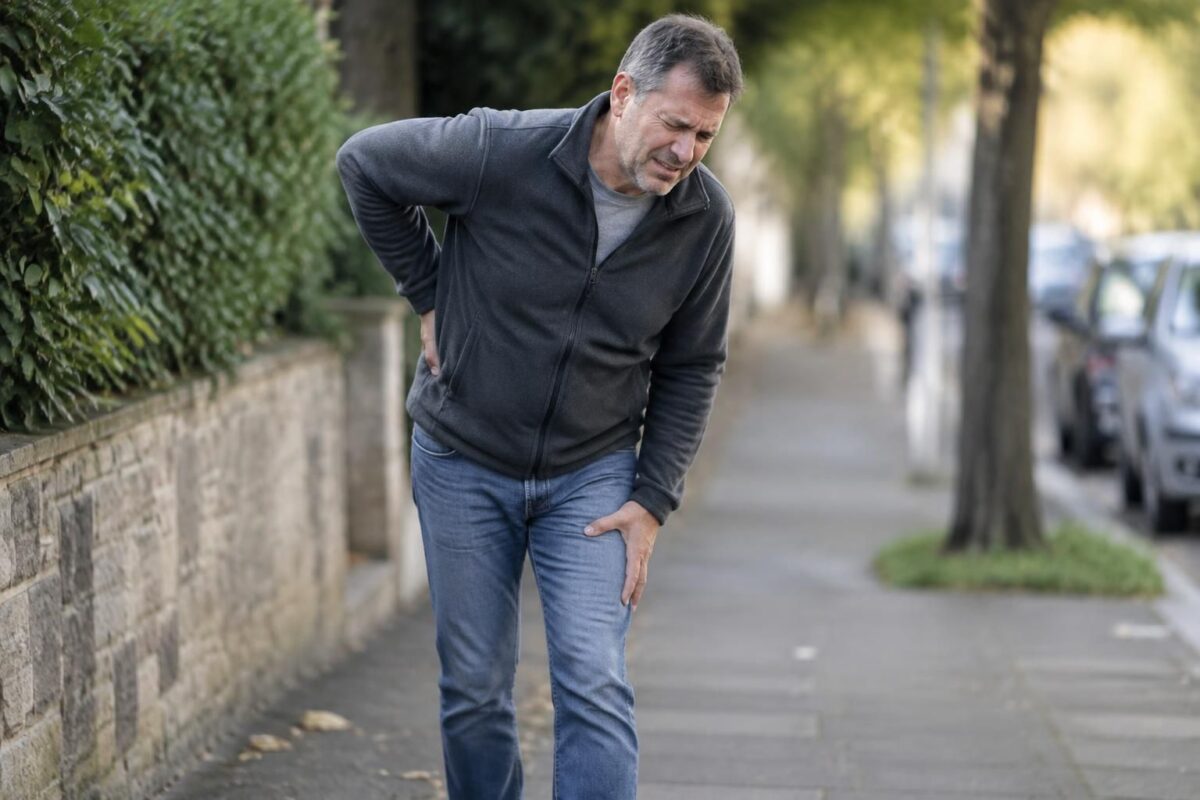
Sciatica and pain that worsens when walking
IN BRIEF A sciatica that worsens with walking is pain radiating from the buttock down the leg, exacerbated by walking. Several causes are possible: this symptom alone does not suffice for a diagnosis. Temporarily reduce walking duration, change positions, and…
When to alert or consult quickly
Neurological warning signs
Seek emergency consultation if you observe rapid progression of weakness, significant loss of sensation, or any new signs worsening within a few days.
Situations requiring urgent care
Call emergency services immediately if you develop a cauda equina syndrome, severe pain associated with urinary or fecal incontinence, loss of sensitivity in the perineal area, or very severe pain that does not subside despite usual treatments. In case of doubt about severity, contact 15 (SAMU) or 112.

Sciatica and pain that improves when walking
IN SUMMARY Sciatica is pain that radiates from the lower back or buttock down to the leg, sometimes all the way to the foot. If it decreases with walking, a gentle and regular walk can help limit stiffness and maintain…
Recommended examinations and follow-up
Remote evaluation and clinical examination
A remote evaluation can help identify symptoms and guide care, but an in-person neurological examination is often necessary to assess muscle strength, reflexes, and specific motor deficits.
Complementary examinations and follow-up
Depending on the evolution, additional examinations (for example EMG/MRI) may be requested to confirm the diagnosis and adjust the treatment. Regular follow-up allows for monitoring the progression of numbness and toes and adjusting non-surgical therapies (physiotherapy, osteopathy, analgesics) or targeted interventions.

IN BRIEF Sciatica is pain that often starts from the lower back or buttock and travels down the leg. Pain that worsens at the end of the day may be related to activities or prolonged positions, but it is not…
Daily adaptations and prevention
Maintain appropriate physical activity to preserve mobility and muscle strength. Work with your therapist on targeted exercises for the sciatic nerve and gentle stretches. Wear well-fitted shoes with adequate support and adopt fall prevention measures. A balanced diet and stress management also contribute to your overall well-being and recovery.

Sciatica and pain that worsens in the evening
IN BRIEF more painful sciatic pain in the evening is often related to inactivity, fatigue, and increased attention to sensations. This does not necessarily mean that the nerve is worsening. Gently changing positions, walking for a few minutes, and finding…
Sciatica with toe numbness: what to monitor?
| Element to monitor | What it means and actions |
|---|---|
| Toe numbness — location and extent | May indicate peripheral neuropathy or nerve compression. Monitor progression and contact a specialist if it spreads or persists. |
| Radiating pain along the sciatic pathway | Often related to irritation of the nerve. Follow the progression and triggers; consider an evaluation if it worsens. |
| Motor deficit — foot/ankle weakness | Signs of nerve damage; urgency if rapid progression. Possible need for EMG/MRI and treatment adjustment. |
| Decreased reflexes or sensitivity disorders | Indicators of damage; monitoring necessary and therapeutic adjustment. |
| Change in gait or instability | Risk of falling; assess balance and adapt home and workplace. |
| Nocturnal pain or pain at rest | May reflect inflammation or significant compression; prompt consultation recommended. |
| Emergency signs — sudden weakness, incontinence, extensive loss of sensation | Medical emergency: call for help or go to the emergency room immediately. |
| Risk factors — diabetes, obesity, smoking, sedentary lifestyle | Act on lifestyle and diabetes treatment to prevent worsening and complications. |

Sciatica and pain when turning in bed
IN BRIEF Sciatica can cause pain when turning in bed, as certain movements irritate the lower back or leg. Turn slowly, moving your shoulders and hips together; a cushion between the knees or under the knees can improve comfort. If…
Testimonials: Sciatica with toe numbness — what to monitor
“When I started to feel toe numbness, I thought it might be temporary. Then the Sciatica gained ground and I saw the numbness evolve with my movements. I closely monitored the location (toes vs. sole), intensity, and whether the pain radiating down my leg changed throughout the day. This vigilance, along with a rapid evaluation, allowed me to implement an appropriate treatment plan and avoid worsening.”
“My numbness began on a few toes and then spread. What I learned to monitor was the precision of the location, whether certain areas remained insensitive, and if weakness appeared while walking. I also noted the times when the pain became stronger at night or at rest, as this could indicate progression and the need for specialized care.”
“At one point, more concerning signs appeared: loss of urinary control and pain affecting the pelvic area. I immediately recognized this warning sign and called for help without hesitation. In these kinds of situations, the urgency is clear: you need to consult quickly and not wait.”
“I learned to distinguish what can be monitored remotely and what requires an in-person visit. By monitoring the evolution of strength, the emergence of pain that persists despite treatment, and any signs of deterioration, I made an early decision. This vigilance facilitated a more accurate evaluation and adjustment of the care plan with my healthcare professional.”
“My practical advice: keep a symptom diary and stay active according to your tolerance. Note where the toe numbness occurs, the affected areas, and the effectiveness of treatments. Careful monitoring allows for early intervention and helps preserve your quality of life in the face of Sciatica.
The sciatic nerve is the longest in the body and can, when irritated or compressed, lead to sciatica associated with toe numbness. This sensation may be a sign of deeper nerve damage and requires particular vigilance. Understanding the mechanisms and closely monitoring the evolution of symptoms allows for early intervention and avoidance of chronic issues. In practice, monitoring relies on observing changes in pain, sensitivity, and motor function along the irradiating path of the nerve.
Signs to monitor include progression of numbness to other areas of the foot or leg, persistent paresthesias, or muscle weakness that may manifest as difficulty standing on tiptoes or lifting the foot. Pain extending from the buttock to the toes, a burning sensation or electrical feeling, and increased sensitivity to touch may indicate worsening of the damage. The presence of nocturnal pain or an inflammatory picture also requires particular attention, as does the emergence of a gait disorder.
The diagnostic and monitoring aspect relies on a progressive and multidisciplinary evaluation. Thorough clinical examinations assess the strength and mobility of muscles innervated by the sciatic nerve, as well as reflexes and sensitivity. Additional investigations, such as MRI and EMG (electromyogram), are often used to precisely locate the lesion and determine its severity. Remotely, part of the evaluation can be conducted via telemedicine to analyze symptoms and guide the care plan, but in-person neurological examination remains frequently necessary to confirm the diagnosis and assess functional impairment.
Monitoring is not limited to the initial diagnosis. It also involves tracking treatments and risk factors: diabetes, obesity, sedentary lifestyle, and work habits. Therapeutic adjustments may be considered based on evolution, with a multimodal approach including manual therapies, exercises, analgesic treatments, and, if necessary, targeted interventions (injections or specialized procedures). Appropriate monitoring helps optimize functional recovery and prevent complications.
For patients experiencing toe numbness related to peripheral neuropathy or a nerve injury, the goal is to anticipate signs of progression and avoid delays in management. A quick consultation is recommended in the presence of progressive motor deficits, severe pain, or emergency signs such as loss of urinary or fecal control, which require urgent medical attention. Regular medical follow-up and an evaluation tailored to each case remain the best allies for preserving mobility and quality of life.
With a holistic approach in mind, specialized professionals offer integrated approaches, combining osteopathy, physiotherapy, and adapted rehabilitation strategies. The goal is to maintain mobility, improve balance, and reduce pain, while closely monitoring the evolution of symptoms over time. Therapeutic education and practical lifestyle advice complement the system, guiding each person towards greater autonomy.
To promote effective monitoring, keep a symptom diary: precise location, pain intensity, temporal variations, and responses to treatments. Choose suitable shoes, ensure home adaptations to prevent falls, and prioritize suitable physical activities that stimulate circulation and muscle strengthening. Regular vigilance and early management are key to a favorable evolution and optimal maintenance of motor and sensory function in the toes.
This text concisely presents the link between sciatica and toe numbness, what to monitor daily, signs that require prompt consultation, and practical approaches to remain active and prevent worsening. You will find clear benchmarks to track the evolution of your symptoms and guide actions towards the right resources, including elements to discuss during a teleconsultation or an in-person visit.
To effectively monitor your situation, stay attentive to the precise location of the numbness, its irradiation along the course of the sciatic nerve, and the appearance of any motor or sensory disturbances that worsen. Factors such as prolonged sitting, physical exertion, or increased lower back pain can change the intensity of symptoms. Remote assessment tools can help quickly detect signs that require more in-depth management, but a clinical examination remains essential to confirm the diagnosis and adjust treatments.
The warning signs that necessitate prompt consultation include increasing weakness, loss of bladder or bowel control, unbearable pain that does not decrease with analgesics, or a “dropped foot” that cannot be lifted. In these cases, do not hesitate to contact emergency services. For additional information on the mechanisms and associated investigations, you can consult resources like Neuro Sciatica Pathology Foot and practical advice regarding toe numbness and sciatica on Toe Numbness: Causes and Solutions Related to Sciatica.
Attentive follow-up can often prevent the chronicity of symptoms. In directing your care, it is useful to understand that each case may require a tailored approach: what works for one patient in Montreal may differ for another patient in Terrebonne or Montreal, highlighting the importance of personalizing treatments and adjustments. To better understand why the same treatment does not suit everyone, refer to specific analyses and local assessments like those discussed in dedicated resources.
To enrich your knowledge and guide your choices, here are some additional resources to consult naturally according to your context: Sciatica and Tingling in the Toes After Sitting, In Montreal, Why the Same Treatment Does Not Suit Everyone, and Pain in the Buttock and Possible Lumbar Cause.

Sciatica and pain when getting out of bed
IN BRIEF Sciatica upon getting out of bed is pain that radiates from the lower back to the buttock or leg and can be more pronounced after the night. Gradually rising, moving gently, and finding a comfortable sleeping position can…

Dr Sylvain Desforges, B.Sc., D.O., N.D., osteopath, is the founding president of TAGMED and of the ACMA association. He dedicates his practice to chronic spinal pain, low back pain and symptoms compatible with sciatica, particularly when pain radiates toward the buttock, leg, calf, foot or toes.
Through SOS Sciatique, he publishes educational content on sciatica symptoms, possible causes such as disc herniation, disc narrowing, foraminal stenosis or irritation of a lumbar nerve root, as well as non-surgical approaches that may be considered according to the evaluation. At Clinique TAGMED, care may include, depending on the case, motorized neurovertebral decompression, specific osteopathic care or precision percussion.
For an evaluation related to sciatica treatment in Montreal / Mount Royal or sciatica treatment in Terrebonne, please consult the services available at Clinique TAGMED.
Medical disclaimer
The information published on SOS Sciatique is provided for educational purposes only and does not replace a consultation, diagnosis, opinion or treatment provided by a physician or another authorized healthcare professional. The author of this article is neither a medical doctor nor a specialist in a medical specialty recognized by the Collège des médecins du Québec. The osteopathic, manual medicine or functional support approaches described on this site do not constitute medical acts and are not intended to replace medical follow-up.
Consult a physician or emergency service in cases of loss of bladder or bowel control, anesthesia in the saddle area, significant or progressive weakness in the leg or foot, fever, recent trauma, severe pain or rapid worsening of symptoms. For more details, please read our Legal Notice.


