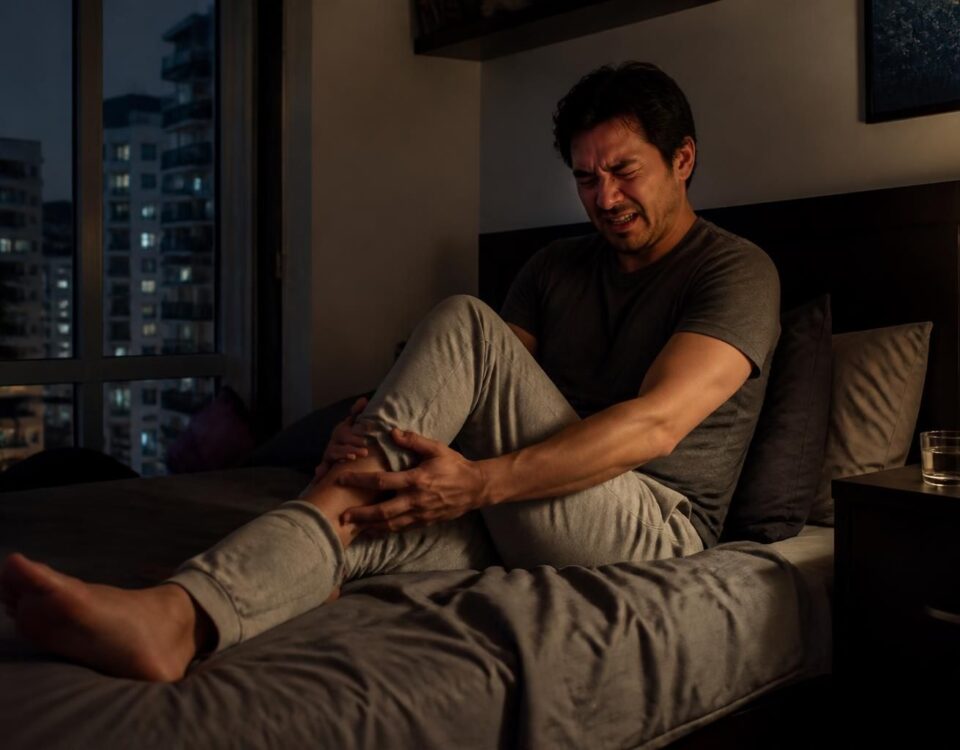
Sciatica and pain in the buttock while sitting
08/07/2026
Sciatica in Terrebonne: why the same treatment does not work for everyone
09/07/2026
IN BRIEF
| Sciatica is pain that follows the path of the sciatic nerve, often due to lumbar irritation or compression. The same treatment does not suit everyone as causes such as a herniated disc, foraminal stenosis, or piriformis syndrome vary. In Montreal, a personalized assessment offers a non-surgical plan combining physical therapy, targeted exercises, and, if relevant, neurovertebral decompression, to reduce pain and restore mobility, in a gradual and safe manner. |
In Montreal, Sciatica refers to pain that follows the path of the sciatic nerve and can arise from different causes. This diversity explains why the same treatment does not fit all patients: the pain profile, the exact path, and the neurological signs vary from person to person.
An effective plan relies on a detailed assessment and an understanding of the varied causes (herniated disc, protrusion, foraminal stenosis, piriformis syndrome). The treatment is then personalized and prioritizes non-surgical approaches tailored to the individual (physical therapy, osteopathy, neurovertebral decompression) with regular follow-up to prevent recurrences and optimize mobility without risking unnecessary surgery.
Quick summary: when it comes to sciatica, there is no one-size-fits-all solution. In Montreal, each patient benefits from an accurate assessment of the painful path, the underlying cause, and the neurological signs. This approach allows for the selection of an appropriate non-surgical strategy, often centered on neurovertebral decompression, specific osteopathy, or an instrument-guided intervention at TAGMED, rather than applying the same treatment to everyone.
Written by Dr Sylvain Desforges, osteopath, specialist in lumbar pain and sciatica in Montreal.
Understanding the Path of Pain
Sciatic pain follows the path of the sciatic nerve, sometimes starting from the lower back or buttock and descending toward the leg, calf, or foot. The path helps guide the assessment, but does not substitute a complete clinical analysis. The path and accompanying signs provide important clues about the nerve origin.
In some cases, the path can help distinguish lumbar radicular irritation from other sources of pain. For further information, see the associated resources on Sciatica – why the path helps to guide the cause.
Signs and Symptoms to Watch For
Sciatica may be accompanied by sensations such as burning, electric shocks, tingling, or numbness in the leg. Gradual weakness, loss of bladder control, or rapidly worsening pain require urgent assessment.
Other elements to monitor include pain in the buttock, pain behind the leg, pain in the foot, and a sensation of pain that can be continuous or intermittent depending on the path and the involved root.
To better understand the manifestations and nerve territories, see Sciatica – path and descent below the knee.
Probable Causes and Investigations
Sciatic pain may result from a lumbar herniated disc, disc protrusion, disc pinching, or foraminal or spinal stenosis. Diagnosis requires a thorough clinical evaluation and, if necessary, imaging to locate the source and guide treatment.
Understanding the mechanisms at the lumbar level helps anticipate care options. For a helpful summary on the causes and their evaluation, consult Sciatica – when the foramen becomes too narrow and Understanding your sciatica.
Non-Surgical Approaches at TAGMED
At TAGMED Clinic, the goal is not to impose a one-size-fits-all approach. A comprehensive assessment determines whether a non-surgical solution is appropriate. Among the possible options, based on the assessment, are:
- Motorized neurovertebral decompression to reduce strain on the discs and nerve roots.
- Specific osteopathy tailored to the patient’s mobility, compensations, and tolerance.
- Precision tool for a targeted low-amplitude intervention when analysis justifies it.
These approaches are discussed after a thorough evaluation and are not suitable for all profiles. For an overview of mechanisms and non-surgical approaches, you can consult the corresponding resources on Myths and realities – TAGMED and the decompression pages on neurovertebral decompression in Montreal.
Assessment and Personalized Care Plan
The structured assessment is based on four simple axes:
1) History and onset of pain; 2) Exact path and location; 3) Mobility and tolerance tests; 4) Plan describing options and pace of care. This approach aims to connect neurological signs, the painful path, and possibilities for non-invasive care, while specifying precautions and limitations.
For individuals seeking additional resources and examples of pathways, see the specialized resources on Sciatica – peripheral neuropathy and Sciatica – orientation of the cause.
Warning signs and urgency
Progression of numbness, increasing weakness, persistent foot pain, or loss of urinary/bowel control require rapid evaluation. In the presence of these signs, do not attempt to relieve the pain with repeated stretches or manipulations without professional assessment.
Roles of interventions and limitations
Non-surgical interventions at TAGMED aim to reduce pain and improve function without surgery, when possible. The use of techniques such as neurovertebral decompression may be considered based on the evaluation, but does not guarantee a universal outcome. For details on mechanisms and options, consult the specialized resources, notably The Sciatica Solution.
Resources and useful links
To delve deeper, the following resources offer additional information on pathways, causes, and non-surgical approaches:
- Sciatica – important pathway
- Sciatica or peripheral neuropathy
- Pathway and orientation of the cause
- Neurovertebral decompression – Montreal
- Chronic sciatica – causes
- Understanding your sciatica
- Too narrow foramen
- Myths and realities – TAGMED
- Sciatica decompression – Terrebonne
- The Sciatica Solution
Medical disclaimer: The information and advice provided on this site do not replace the advice, diagnosis, or treatment of a healthcare professional. Please note that Dr. Sylvain Desforges, osteopath, is neither a medical doctor nor a physician, and is not a specialist in a medical specialty as defined by the Collège des médecins du Québec. Manual medicine, functional medicine, and sports medicine as described on this site exclude any treatment or medical diagnosis made by a doctor or specialist. Always consult your physician for any medical questions. For more details, please read our complete Legal Notice.
Sciatica in Montreal: why the same treatment does not work for everyone
- Origin: the origin (herniated disc, protrusion, foraminal stenosis, or piriformis syndrome) guides the choice of strategy.
- Pathway: lower back → buttock → thigh → leg → foot; the pathway guides the evaluation and tests.
- Neurological signs: numbness, tingling, weakness; their presence adjusts the plan.
- Tolerance and safety: tolerance to movements and postures influences the adaptation of care.
- General state and comorbidities: diabetes, osteoporosis, or other conditions modulate choices and precautions.
- Activity and work: posture, loads, and active breaks guide solutions and ergonomics.
- Responses to treatment: reactivity varies; a plan adjusts over time.
- Non-surgical approaches: physiotherapy, osteopathy, neurovertebral decompression, and other personalized plans based on evaluation.

This article reminds us that regarding sciatica in Montreal, there is no single universal treatment. The choice depends on the pathway of pain, underlying lumbar causes, clinical evaluation, and patient needs. A personalized approach, favoring non-invasive options when possible, allows for better outcomes and reduces the risk of recurrence.
Why the same treatment does not work for everyone
The pathway indicates but does not diagnose
The pathway of pain can guide the evaluation, but it is not enough to establish a precise cause. Pain that follows the course of the sciatic nerve may reflect irritation of a nerve root, but it can also result from other lumbar mechanisms. A complete clinical analysis is necessary to avoid diagnostic errors and choose an appropriate strategy.
The varied causes of sciatica
Several origins can produce similar symptoms: lumbar disc herniation, disc protrusion, disc pinching, foraminal stenosis or spinal stenosis, and even causes related to the piriformis muscle. Each cause may require a different approach and alter the orientation of non-surgical treatment.
How evaluation guides treatment
A structured assessment reveals the precise pain profile, aggravating factors, and neurological signs. This step determines whether a non-surgical solution — such as neurovertebral decompression, specific osteopathy, or instrument-assisted intervention — is relevant, and to what extent it may be effective depending on the case.
Non-surgical approaches tailored to each profile
Osteopathy and manual therapies
Manual interventions are adjusted to the mobility, tolerance, and compensations of the patient. The objective is to restore normal function while respecting individual limits and avoiding movements that aggravate the pain.
Neurovertebral decompression
This approach aims to reduce mechanical stresses on the nerve roots when the assessment shows a discal origin or mechanical compression. It is not suitable for all patients and should be discussed based on the precise diagnosis and patient tolerance.
Targeted exercises, posture, and ergonomics
Progressive and tailored exercises, combined with postural and ergonomic advice, help strengthen the back, improve flexibility, and limit recurrences. It is important to start slowly and avoid stretches or movements that deepen the pain further down the leg.
Warning signs and when to consult quickly
Emergencies and serious signals
A loss of urinary or bowel control, saddle anesthesia, marked or rapid weakness, fever, or acute pain after trauma require immediate medical evaluation.
Care pathway in Montreal
Coordination and follow-up
In Montreal, a structured approach often involves multidisciplinary care, with a professional assessing the pathway, symptoms, and warning signs. The plan may include physiotherapy, targeted exercises, manual therapies, and, if necessary, non-surgical decompression, while emphasizing patient education, workplace ergonomics, and gradual progression of activities.
This approach allows for a clear explanation of the mechanisms of pain, evaluation of causes, and adaptation of non-surgical care according to the individual profile, aiming to rapidly improve mobility and comfort without immediately resorting to surgery.
| Key Element | Concise Impact on Treatment Choice |
|---|---|
| Patient Profile | Age, activity, and history influence recovery speed and the type of preferred exercises. |
| Possible Etiologies | Disc herniation, protrusion, foraminal or piriformis stenosis; each cause guides an adapted approach. |
| Pain Pathway | The pathway guides assessment but requires a complete clinical analysis to confirm the cause. |
| Neurological Signs | Weakness, numbness, or loss of urinary control require rapid adaptation of the plan. |
| Motion Tolerance | Some movements aggravate or irritate; progressive and personalized exercises are chosen. |
| Therapeutic Goals | Reduce pain and restore mobility, prioritizing non-surgical solutions when relevant. |
| Non-surgical Options | Targeted physiotherapy, osteopathy, and decompression based on assessment; guarantees adaptability. |
| Limits and Risks | Not universal: success depends on diagnosis and adherence to the plan; some situations require urgency. |
| Care Plan and Follow-up | Initial assessment and progressive plan with regular follow-up to adjust and prevent recurrences. |
Testimonials on Sciatica in Montreal: why the same treatment does not suit everyone
Marie, 46, Montreal: “At first, I was told everything came from an irritated nerve and that the treatment would be standard. However, after a thorough evaluation, the team proposed a personalized plan combining physiotherapy, progressive exercises, and postural advice. This non-surgical approach reduced my pain and improved my mobility without surgery, and I understood that what works for me may not suit someone else in Montreal.”
François, 52, Montreal: “My pain pathway started from my buttock to my calf. The first protocol helped me with exercises and physiotherapy, but I quickly hit a plateau. The team then adjusted the plan and offered a different approach — neurovertebral decompression and specific osteopathy — which allowed my recovery to resume. This clearly shows that the same treatment does not suit everyone, even in the same city.”
Isabelle, 33, Montreal: “As an athlete, I needed a plan that considered my tolerance and performance. The assessment revealed a different cause, and the use of specific osteopathy and tailored exercises allowed me to resume my training, but others need a different path.”
Ahmed, 60, Montreal: “My experience showed that neurovertebral decompression is not universal. For me, the key was a combination of ergonomics, progressive exercises, and tailored manual therapy. The same protocol does not suit everyone, especially depending on the location of the pain and mobility.”
Julie, 29, Montreal: “I first tried stretches and home advice, but my pain was radiating down to my foot and I had numbness. The detailed evaluation clarified that my sciatica required a structured approach with physiotherapy and tailored activities, and I was able to stay active without surgery. This journey proves that the same treatment does not universally apply.”
Dr Sylvain Desforges is an osteopath and practitioner committed to the development of complementary approaches tailored to each patient living with sciatic pain. An expert in osteopathy, naturopathy, and manual medicine, he founded TAGMED clinics and chairs the ACMA, leveraging his experience to address the specific challenges of low back pain and sciatica observed in Montreal. His work is part of an evidence-based care approach and a thoughtful integration of advanced technologies that accompany the therapeutic journey.
Science shows that sciatica is not limited to a single mechanism. In Montreal, the common observation is that similar symptoms can arise from various causes: herniated disc, protrusion, disc pinching, foraminal stenosis, or irritation of the lumbar nerve roots. This diversity requires a robust and personalized evaluation that can link the painful pathway, neurological signs, and the patient’s functional abilities. Dr. Desforges emphasizes the importance of examining the overall profile of the patient rather than relying on a single symptom to guide treatment.
In his approach, prevention and assessment structure the care plan. The TAGMED team favors non-surgical pathways when they correspond to the case: motorized neurovertebral decompression, targeted osteopathy, and instrument-assisted intervention when justified by the evaluation. This logic allows interventions to be adjusted to the individual context, the patient’s tolerance, and the evolution of symptoms, rather than uniformly applying a single protocol to all.
The therapeutic journey in Montreal relies on a precise mapping of the painful pathway and the involved nerve territories. Practitioners address the crucial question: “What aggravates or alleviates the pain?” This reflection guides the prescription of progressive exercises, manual techniques, and pain management strategies that respect the patient’s capabilities and avoid risky movements that could intensify the pain. The goal is to stabilize function, restore mobility, and prevent recurrences through a measured and informed approach.
Dr. Desforges’ philosophy is based on a multidisciplinary medicine that combines movement, education, and non-invasive technologies. At the heart of his practice, the search for a balance between spinal decompression, specific osteopathy, and instrument-guided intervention methods allows for the adjustment of care to each profile: athletes, workers, seniors, or individuals with a history of chronic pain. This personalization is the foundation of therapeutic effectiveness and is based on regular assessments, clear objectives, and transparent communication with the patient.
As the founder of TAGMED clinics and a key player in ACMA, Dr. Desforges is committed to providing care that evolves with scientific advances and the needs of Montrealers. His mission is to deliver evidence-based care aimed at optimizing health and well-being, without imposing a universal scheme that does not take into account the uniqueness of each sciatic pain. This patient-centered approach, adapted to Montreal, reflects a modern conception of managing sciatica, where the right treatment is one that aligns with the history, trajectory, and goals of each person.
This text demonstrates why, in Montreal, the same treatment for sciatica is not suitable for everyone. It highlights the importance of individualized assessment, multiple causes, and non-invasive options tailored to each profile, in order to avoid inappropriate treatments and favor a gradual and safe approach.
In the Montreal context, sciatica is rarely a unique pathology with a single solution. The painful pathway, neurological symptoms, and signs to monitor vary from person to person, necessitating the adaptation of each treatment plan. A thorough clinical evaluation allows for linking the pain pathway to potential causes such as a herniated disc, a protrusion, disc pinching, foraminal stenosis, or spinal stenosis, and identifying aggravating factors related to daily life and work. To understand the mechanisms and available options, you can consult specialized resources such as dedicated pages on SOS Sciatica and online guides on sciatica pain.
A personalized approach favors non-surgical solutions when relevant. At the TAGMED Clinic, options like motorized neurovertebral decompression, specific osteopathy, and instrument-assisted interventions (for example, the precision perceiver) can be considered according to the evaluation. The goal is not to “unlock” by force, but to adapt treatment to the patient’s tolerance and the progression of symptoms. For more information on the indications and limitations of these approaches, see related resources such as Sciatica – TAGMED Clinic and thematic articles on the subject.
The possible causes of pain are not limited to a herniated disc. A foraminal stenosis, a spinal stenosis, or a piriformis syndrome can contribute to similar symptoms. It is essential to evaluate clinical signs and imaging results, if applicable, to guide treatment toward non-invasive solutions or, when necessary, consider more specific options after a clear presentation of benefits and risks. For an overview of mechanisms and causes, resources such as pages on understanding pain and choosing treatment can be helpful.
To delve into the practical aspects, many online resources describe how evaluation links the pain pathway, symptoms, and possible care options. Guides on cautious approaches in Montreal and on radiating pains offer useful guidelines for decision-making.
Pain management and prevention of recurrences rely on a structured plan, including progressive exercises, postural advice, and ergonomic adjustments. For additional information and practical examples, consult resources such as sciatica in Montreal – understanding pain before choosing treatment and pages dedicated to decompression and non-surgical alternatives.
Finally, each patient is unique and requires tailored guidance. Resources like Sciatica – clinical trials and treatments and consultations at specialized clinics allow for exploring personalized plans while avoiding generalities that might lead to inappropriate treatments. For a practical and safe framework, turning to local professionals and regional guides, especially around Montreal, is a logical step toward a suitable and effective solution.
To access information and concrete options, you can also consult the following resources: Cautious approach, Understanding pain – Montreal, or Sciatic decompression – Montreal, to evaluate the available options and prepare a targeted consultation with a specialized clinic like TAGMED.

Sciatica in Montreal: nighttime pain in the leg
IN BRIEF In brief, nocturnal sciatica is a root pain in the lower back that irritates the sciatic nerve and worsens when lying down, causing nighttime awakenings. In Montreal, this service offers a non-surgical approach focused on posture, bedding, and…

Sciatica in Montreal: pain from the lower back to the calf
IN BRIEF In brief, sciatica is a pain that starts in the lower back and can radiate down to the calf, caused by irritation or compression of the sciatic nerve. In Montreal, this service offers a personalized evaluation and non-surgical…

Sciatica in Montreal: hip pain or true nerve radiation?
IN BRIEF Sciatica is a nerve pain that follows the path of the sciatic nerve and can radiate from the buttock to the foot, which can be perceived as pain in the hip. Lower back pain, on the other hand,…

Sciatica pain in Montreal: incomplete journey, should we be concerned?
IN BRIEF In brief, sciatic pain is a lumbar nerve-origin pain whose pathway may be incomplete and may not reach the foot. In Montreal, the evaluation clarifies the pathway, strength, and function, and determines if imaging can change the approach.…
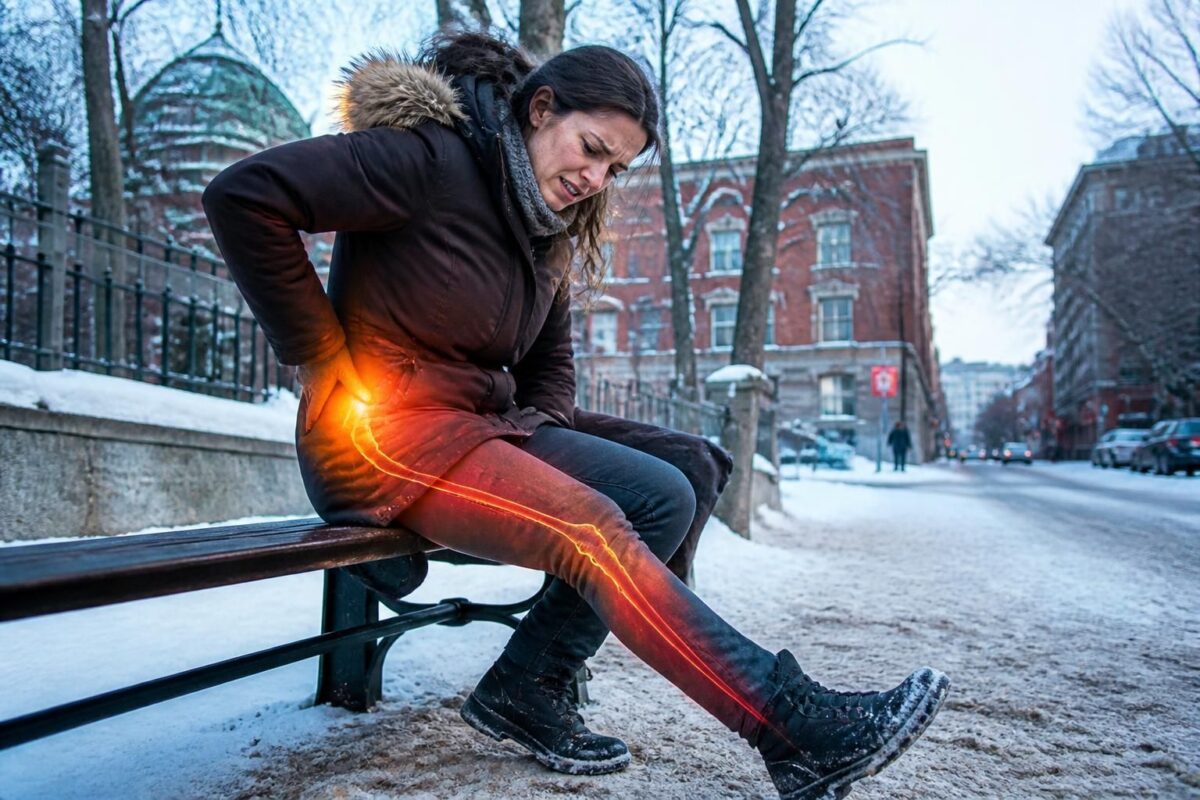
Sciatica in Montreal: pain towards the little toe and S1 root
IN BRIEF Sciatica is pain radiating along the path of the sciatic nerve, typically from the lower back to the leg and down to the little toe when the S1 root is irritated or compressed. In Montreal, this phenomenon is…

Sciatica in Montreal: pain towards the top of the foot and L5 root
IN BRIEF Sciatica in Montreal with pain in the top of the foot and a possible involvement of the L5 root is a lumbar radiculopathy where the pain follows the path of the sciatic nerve to the dorsum of the…

Sciatica in Montreal: pain radiating to the outer edge of the foot
IN BRIEF In brief, sciatica is pain that follows the path of the sciatic nerve, starting from the lower back and extending down to the foot, often radiating to the outer edge of the foot. In Montreal, this condition is…

Sciatica in Montreal: pain in the buttock after a long sitting position
IN BRIEF In brief, sciatalgia is pain that follows the path of the sciatic nerve, often triggered after a prolonged sitting position and lumbar irritation. In Montreal, this issue is mainly managed without surgery thanks to a careful diagnosis and…

Dr Sylvain Desforges, B.Sc., D.O., N.D., osteopath, is the founding president of TAGMED and of the ACMA association. He dedicates his practice to chronic spinal pain, low back pain and symptoms compatible with sciatica, particularly when pain radiates toward the buttock, leg, calf, foot or toes.
Through SOS Sciatique, he publishes educational content on sciatica symptoms, possible causes such as disc herniation, disc narrowing, foraminal stenosis or irritation of a lumbar nerve root, as well as non-surgical approaches that may be considered according to the evaluation. At Clinique TAGMED, care may include, depending on the case, motorized neurovertebral decompression, specific osteopathic care or precision percussion.
For an evaluation related to sciatica treatment in Montreal / Mount Royal or sciatica treatment in Terrebonne, please consult the services available at Clinique TAGMED.
Medical disclaimer
The information published on SOS Sciatique is provided for educational purposes only and does not replace a consultation, diagnosis, opinion or treatment provided by a physician or another authorized healthcare professional. The author of this article is neither a medical doctor nor a specialist in a medical specialty recognized by the Collège des médecins du Québec. The osteopathic, manual medicine or functional support approaches described on this site do not constitute medical acts and are not intended to replace medical follow-up.
Consult a physician or emergency service in cases of loss of bladder or bowel control, anesthesia in the saddle area, significant or progressive weakness in the leg or foot, fever, recent trauma, severe pain or rapid worsening of symptoms. For more details, please read our Legal Notice.