Sciatica and pain on the top of the foot: possible L5 root
14/07/2026
Sciatica and Pain at the Restaurant or Cinema
14/07/2026
IN BRIEF The sciatic pain is a pain that follows the path of the sciatic nerve, most often due to a herniated disc, osteoarthritis, or lumbar canal stenosis. This pain can worsen in a seated position and radiate from the buttock to the calf. Understanding the discal origin allows for quick guidance towards effective non-surgical treatments for relief and prevention of recurrences, while avoiding invasive procedures when unnecessary. In Montreal, this type of assessment is particularly relevant for improving mobility and reducing pain without surgery. |
Sciatica refers to a pain that follows the path of the sciatic nerve, most often felt in the buttock and along the leg.
It increases in a seated position, can be described as a burning or electric pain, and may extend to the calf or even the foot.
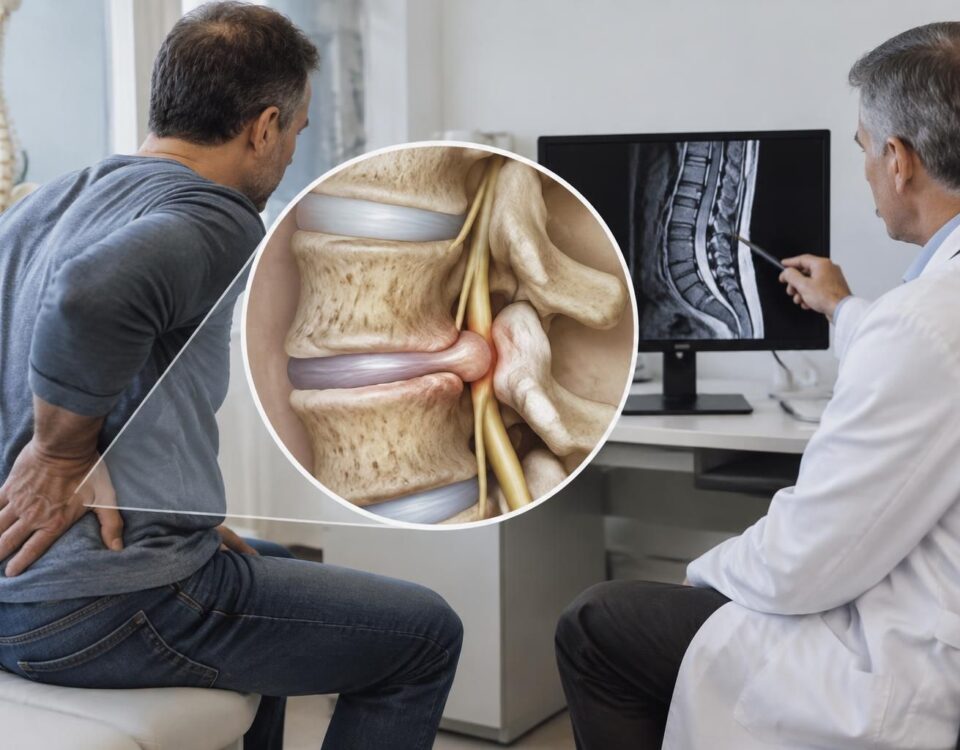
The most common discal cause is a herniated disc that irritates or compresses one or more nerve roots, causing radicular pain.
In many cases, radicular inflammation is predominant and can be relieved by appropriate anti-inflammatory treatments or manual approaches, without requiring surgery.
This text, written by a healthcare professional, explains why sciatic pain can intensify in a seated position and how a discal cause may be involved. It describes the mechanisms, symptoms, and conditions that require a medical evaluation. The goal is to inform without suggesting unsuitable exercises and to guide towards appropriate management options for your context.
Understanding Sciatic Pain
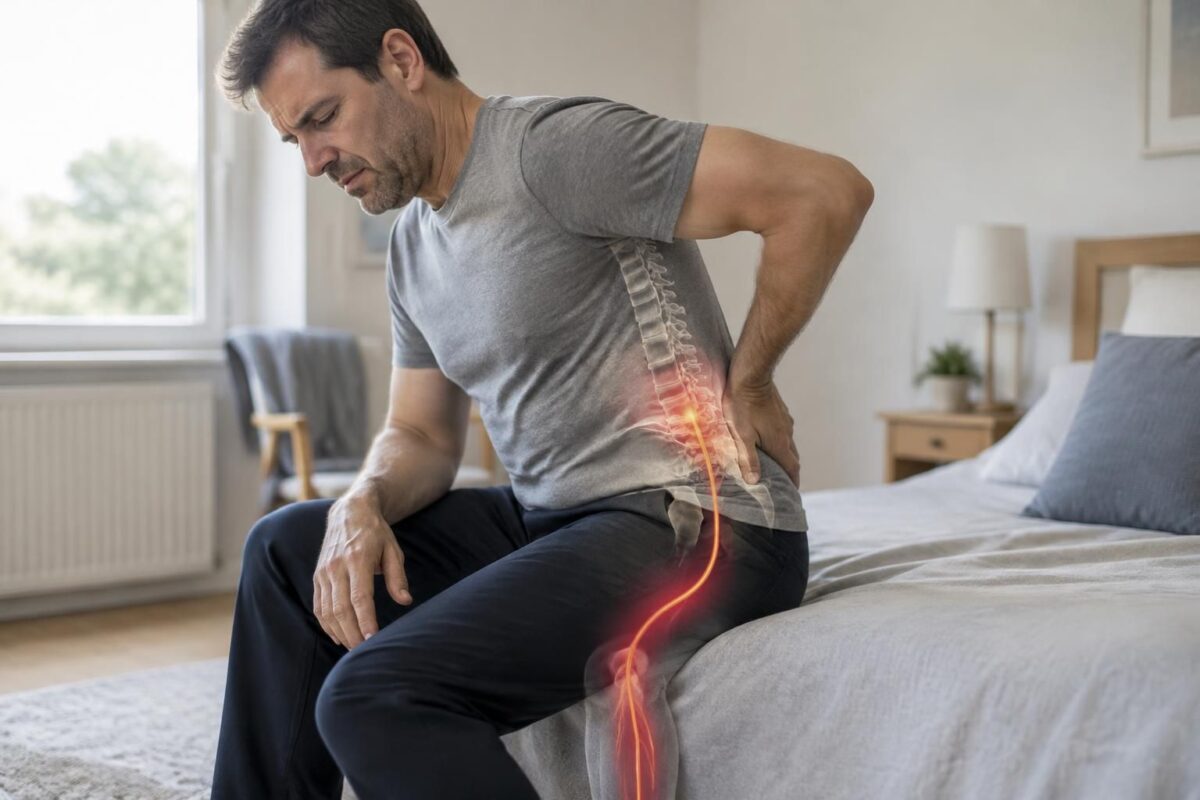
Sciatica is a pain that follows the path of the sciatic nerve. This nerve originates from the lumbar and sacral roots (mainly L5 and S1) and supplies a large part of the leg. Irritation or compression of the nerve roots can cause pain that starts from the lower back or buttock and radiates along the back of the thigh down to the calf or foot. This pain is often described as a burning sensation, electric shock, or shooting pain. In some cases, tingling or numbness accompanies the pain.
Why Does the Pain Increase in a Seated Position?
In a seated position, the foramina—the passages through which the nerve roots exit the spine—can narrow, especially in individuals with degenerative abnormalities or discopathy. This position can increase the compression or irritation of the roots, or exacerbate already existing radicular inflammation. Prolonged sitting can therefore amplify the pain and make symptoms more disabling. To better understand the nerve mechanisms, you can consult specialized resources that describe the role of nerve roots and the factors that trigger radiculopathy. Additional information is available on resources dedicated to sciatic pain and its neurological assessment.
Sciatic pain is generally unilateral and can be triggered or worsened by movements that engage the lumbar spine, coughing, sneezing, or walking. In cases of persistence or appearance of unusual symptoms, a medical evaluation remains necessary to distinguish discal causes from other origins, such as inflammatory radiculopathy or hidden pathology. For an initial context, you might consider a neurological evaluation: see this resource.
Possible Discal Causes
Several factors can link sciatic pain to a discal cause. The most common are:
- Herniated disc: a part of the intervertebral disc content may protrude and irritate a nerve root, causing pain that radiates along the sciatic path.
- Protrusion or disc bulging: deformations of the disc can influence the foramen or spinal canal and contribute to radicular irritation.
- Foraminal stenosis or spinal stenosis: narrowing of the vertebral canal or foramina can compress the roots, especially in positions that increase lumbar lordosis or load on the back.
- Radicular inflammation related to pro-inflammatory substances released by the disc.
In some cases, a discal disease may coexist with associated back or lumbar pain, and sciatic pain may be truncated when the pain stops before reaching the foot. The pain can also be very intense despite an examination of the leg tissues showing no obvious signs of local inflammation. For more information on the mechanisms, you can consult specialized resources on the symptoms and inflammatory causes associated with sciatica. Additional resources also address professional gestures and concepts related to assessment and treatment in clinical contexts.
Evaluation and Clinical Indications
The evaluation of sciatica related to discopathy is based on the medical history, clinical examination, and, if necessary, complementary tests. The key point is to determine if radiculopathy is present and which root is involved (L5 or S1). Pain appropriate to the sciatic path may be associated with neurological signs such as muscle weakness, paresthesia, or altered sensory-motor function in the territories served by the affected roots. Specialized sources describe the elements to observe during the evaluation and the criteria guiding the decision for imaging or other examinations.
As part of a neurovertebral decompression or disc management, it is important to consult competent professionals and prioritize interventions available at the TAGMED Clinic when relevant. Options may include targeted osteopathic approaches and protocols tailored to each case, without proposing generalized exercises or stretches in the context of discopathy. For more information on available approaches and evaluation criteria, you can consult the following resources:
- Heel pain while sitting
- Pain in one leg and explanations
- Numbness and causes to clarify
- Sciatica from disc herniation and inflammatory nature
Treatment options and decision-making
The treatment of sciatic pain associated with discopathy includes multidisciplinary approaches. In practice, patients can access care at TAGMED Clinic in Montreal or Terrebonne, which offer options tailored to each situation. In some cases, treatments aimed at reducing inflammation and optimizing nerve function may be prioritized. It is important to discuss with a healthcare professional to determine the best plan for your situation.
For additional information on clinical approaches and treatment perspectives, consult various sources on sciatic pain and its impact on mobility, such as those addressing neurological assessment and clinical implications in different contexts. Recognized resources provide explanations on mechanisms, symptoms, and criteria for referrals to further examinations.
For relevant and complementary resources, you can check the following links: Sciatica – Le Médecin, Sciatica – Le Traumatologue, Doctissimo – Sciatics, Vidal – Sciatic Pain.
Useful links and associated resources
To learn more about the mechanisms and symptoms, consult resources published on sciatic pains and aspects related to sitting position and neurological assessment. Some articles offer explanations suitable for the general public and useful clinical perspectives to guide management. Among these resources, take note of the following pages: Sciatica and difficulty staying seated for long periods, Neurological assessment and sciatic pain, Sciatica and heel pain while sitting.
For specialized information on disc-related aspects and inflammatory mechanisms, you can also consult resources dedicated to neurovertebral decompression and disc pathologies described in authorized fields.
Clinical references and relevant training institutions in the field of osteopathy and complementary sciences include programs recognized by NUMSS, NAO, and National University of Medical Sciences, National Academy of Osteopathy, and professional associations ACMA, College of Canadian Osteopaths, and Collège des Ostéopathes Canadiens. These mentions remain strictly related to general information contexts and professional training.
For additional information on discal causes and associated clinical manifestations, you can also consult educational resources and specialized journals available on the websites mentioned above.
Links to restricted and authorized websites for treatments and information related to the discussed conditions: Neurological assessment, Difficulty staying seated, Heel pain while seated, Sciatica in one leg, Disc herniation and inflammation, Numbness and clarifications.
Medical disclaimer: The information and advice provided on this site do not replace the opinion, diagnosis, or treatment of a healthcare professional. Please note that Dr. Sylvain Desforges, osteopath, is neither a medical doctor nor a physician, and is not a specialist in a medical specialty as defined by the College of Physicians of Quebec. Manual medicine, functional medicine, and sports medicine as described on this site exclude any treatment or medical diagnosis made by a physician or specialist doctor. Always consult your physician for any medical questions. For more details, please read our complete Legal Disclaimer.
- Sciatica: pain that worsens while sitting and radiates down the leg.
- Typical path: buttock → back of the thigh → calf → foot.
- Possible associated signs: numbness or tingling in the nerve territory.
- Possible disc causes: herniated disc or spinal canal stenosis.
- The mechanism is often inflammatory of the nerve root rather than purely compression.
- Common triggers include lifting effort, coughing, or sneezing.
- Relief may occur in lying position or with appropriate medical management.
- Consult to confirm disc origin and exclude other pathologies.

In this article, you will discover why a sciatica that worsens while sitting may be related to a disc cause, how to recognize the signs, and what non-surgical strategies can bring lasting relief from pain. The text explains the mechanism of nerve root irritation of the sciatic nerve and offers practical recommendations to quickly improve your comfort and prevent recurrences. This content does not replace a medical consultation, but it guides you toward an appropriate evaluation.
Understand why the pain increases in a sitting position
Sciatic pain is often a radiculopathy, meaning irritation and inflammation of the roots of the sciatic nerve located near the lower back. In prolonged sitting, the pressure applied to the posterior structures of the disc and on the joints can increase, exacerbating pain along the path of the nerve. This pain can be felt from the buttock to the foot and may be accompanied by sensations such as tingling or a strong urge to move for relief. The role of the L5 and S1 roots is central in the localization of symptoms, which often remain unilateral and intensify with the duration of the sitting posture.
Disc herniation and persistent pain in the leg
IN BRIEF A disc protrusion is a bulging of a disc that can irritate a nerve and cause persistent pain in the leg, sometimes accompanied by tingling or numbness. Imaging alone does not confirm the origin of the symptoms: clinical…
Disc herniation and lumbar degeneration
IN BRIEF A lumbar disc protrusion is a bulging of a disc often related to disc degeneration. It does not always cause symptoms but can contribute to lower back pain or pain radiating down the leg if a nerve is…
Possible disc causes and their impact
Disc herniation and nerve root inflammation
Sharp pain that descends behind the thigh and leg may stem from a protrusion or a disc herniation at the level of a lumbar disc. The key factor is the inflammation caused by substances released by the nucleus of the disc, which irritates the nerve root rather than mere mechanical compression. This nerve root inflammation often explains why anti-inflammatory treatments or targeted therapies quickly reduce pain, even if the appearance of the disc may remain unchanged on imaging.
Impact of inflammatory and physiological mechanisms
In many cases, the pain results more from inflammatory irritation than from significant compression of the nerve. This means that approaches focused on reducing inflammation, strengthening muscles, and improving mobility can have a quick and lasting effect. Other discal or transitional factors may influence the occurrence and characteristics of pain, but the common thread remains the inflammatory action on the roots.
Other factors to consider
Although the emphasis is on discopathy, other mechanisms such as lumbar canal stenosis or transitional anomalies can also contribute to disc-related sciatica. In all cases, a specialized evaluation helps to distinguish these possibilities and adopt the most suitable treatment.
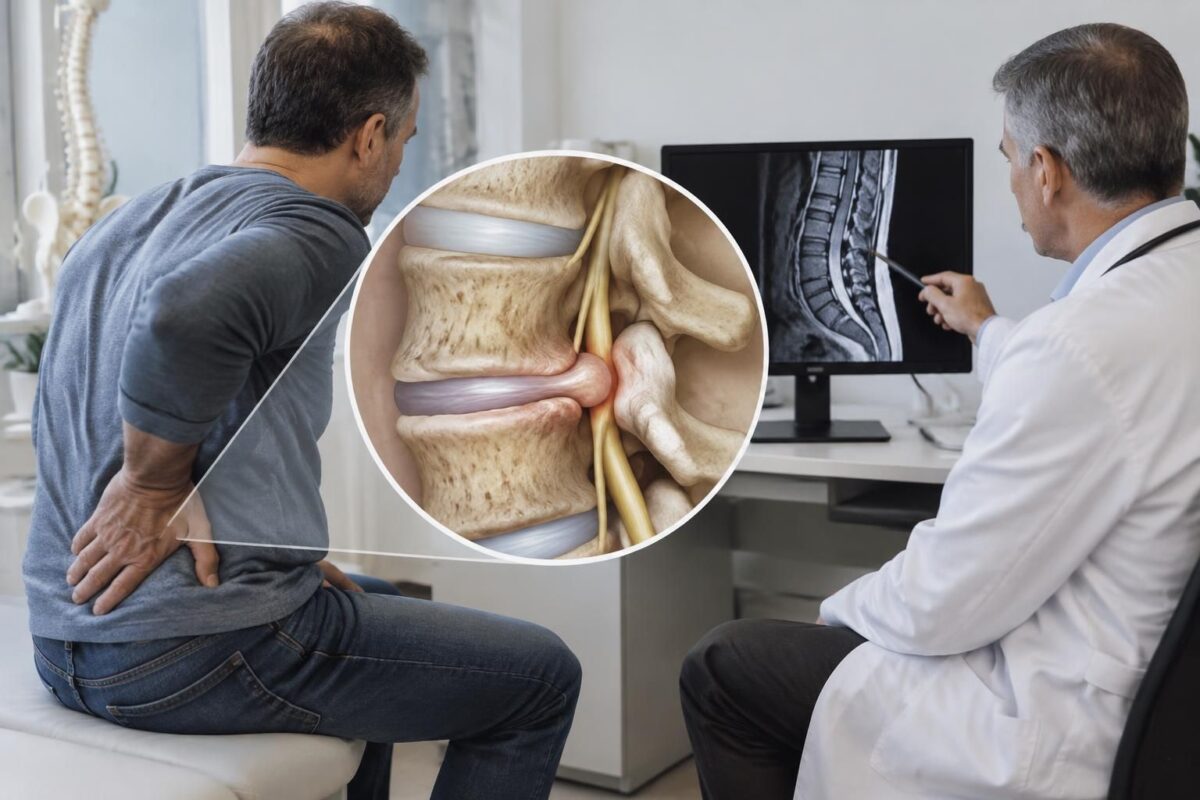
Disc protrusion and disc pinching: combined mechanisms
IN BRIEF A disc protrusion is a bulging of the disc, while a disc narrowing refers to a decrease in its height. These changes can coexist and sometimes irritate a nerve root, leading to pain or radiation, but they can…

Disc herniation and associated foraminal stenosis
IN BRIEF A disc protrusion associated with foraminal stenosis occurs when a bulging disc coexists with a narrowing of the opening through which a nerve root passes. This association can lead to lower back pain radiating into the leg, tingling,…
What to do for relief and prevention
To act quickly, consider an evaluation by a healthcare professional to clearly identify the disc cause and determine an appropriate non-surgical treatment plan. An integrated approach may include osteopathic therapies, ergonomic advice, and targeted exercises to strengthen lumbar support and improve mobility. The goal is to reduce nerve root inflammation, limit pain, and prevent recurrences while allowing you to gradually resume your daily activities.
Adopt simple habits to limit flare-ups: prioritize regular breaks during prolonged sitting periods, adjust your seat, and add suitable lumbar support. Gentle exercises for mobility and strengthening, conducted under supervision, may be recommended to restore spinal stability and reduce pressure on the nerve roots.
In parallel, work on your posture and ergonomics at work or at home, and favor activities that do not worsen pain during movement. If the pain persists or is accompanied by concerning signs (marked weakness, loss of urinary control, fever, or recent trauma), contact a professional or emergency services promptly.

Spinal disc protrusion and nerve inflammation
IN BRIEF A disc protrusion is a bulging of the disc that can irritate or compress a nerve, without necessarily causing symptoms. When it leads to nerve inflammation, it can cause pain in the back or neck, sometimes accompanied by…

Disc protrusion and irritation of L5
IN SHORT A disc protrusion is a bulging of the disc that can irritate the L5 root and cause lower back pain radiating to the buttock, leg, or foot, sometimes with tingling or weakness. MRI alone is not sufficient to…
Sciatica: pain that increases in a sitting position and link to a possible disc cause
| Element | Concise Description |
|---|---|
| Sitting position | Pain worsened by prolonged sitting, typical of radiculopathy related to a disc cause. |
| Pain path | Path along the sciatic nerve, often buttock → back of the thigh → calf, sometimes foot. |
| Possible disc causes | Disc herniation or spinal canal narrowing that may irritate a root. |
| Affected roots | Main: L5 and S1; localization varies depending on compression. |
| Typical location | Back of the thigh and calf; heel and outer side of the foot depending on the root. |
| Associated signs | Tingling, numbness, and sometimes muscle weakness. |
| Aggravating factors | Prolonged flexion, coughing, sneezing, and exertion can amplify the pain. |
| Assessment needed | Medical consultation recommended; clinical assessment and possible imaging depending on the case. |
| Non-surgical approaches | Anti-inflammatories and functional therapies based on evaluation; osteopathy possible. |

Disc protrusion and pain after twisting the back
IN BRIEF A disc protrusion is a bulging of the disc that can contribute to pain after a back twist, but it alone does not confirm the cause. The pain can remain in the lower back or radiate to the…

Disc herniation and pain after lifting
IN BRIEF A disc protrusion is a bulging of a disc between the vertebrae. Pain that appears after lifting a load does not prove that it is the cause: the MRI must be interpreted alongside the symptoms and the clinical…
Testimonials: pain that increases in a sitting position and possible link to discopathy
“I worked for hours at the office, and every time I sat too long, a burning sciatica would travel up my buttock and leg. The pain would become stronger when sitting and persist even after the end of the day. I was told a possible disc herniation or lumbar canal narrowing could explain this worsening at rest.”
“While driving for long hours, the pain intensified as soon as I remained seated. The journey became almost unbearable, and my leg betrayed me with tingling. The doctor suspected a radiculopathy related to a damaged intervertebral disc and nerve root irritation, which explained the pain that follows the path of the sciatic nerve.”
“I am a developer and spend entire days in front of the screen. Each prolonged session in a sitting position awakened a pain that descended behind my thigh to my calf. A disc herniation was suspected, and a thorough evaluation was recommended. After a tailored program, the symptoms decreased, and sitting became more bearable.”
“As I spent more time sitting for my family and professional tasks, the pain in the back of my thigh intensified, with a burning sensation spreading along the path of the sciatic nerve. A possible discal cause was mentioned, as well as the importance of addressing the structures surrounding the intervertebral disc. Through targeted techniques and exercises, I regained mobility and experienced less discomfort while sitting.”
“When the pain sets in, sitting becomes a real challenge: sciatica can be linked to a herniated disc and the irritation of one or more nerve roots. The evaluation confirmed this hypothesis and allowed me to follow an appropriate non-surgical plan, which significantly improved my ability to sit without debilitating pain.”
Sciatica: understanding the pain that worsens when sitting and its links to discal causes
Dr. Sylvain Desforges, an experienced and dedicated osteopath, is the founding president of TAGMED clinics and the ACMA association. With a career focused on innovation in healthcare, he specializes in the management of chronic pain of the spine and the integration of advanced technologies. His approach is based on scientific evidence, personalized assessment, and the goal of sustainably improving the quality of life of his patients suffering from sciatica and discal issues. His work relies on a multidisciplinary practice, focused on safety, efficiency, and education for patients.
To understand sciatica, he emphasizes that the pain is often associated with spinal injuries such as herniated discs, lumbar canal stenosis, or osteoarthritis of the posterior joints. When the sciatic nerve is irritated or compressed, the pain radiates from the buttock and back of the thigh, possibly extending to the calf and foot. In most cases, this pain worsens with prolonged sitting and may be accompanied by tingling, numbness, or muscle weakness in the areas supplied by the nerve roots.
The practitioner stresses the importance of an accurate diagnosis: identifying the type of radicular pain, assessing neurological signs, and distinguishing pain related to radicular inflammation from mechanical injuries. This distinction guides the therapeutic strategy and avoids inappropriate treatments. Clinical work emphasizes the path of the sciatic nerve—stemming from the L5 and S1 roots—and how discal mechanisms can trigger a combination of pain, paresthesia, and functional limitation. Understanding these mechanisms helps explain why pain may manifest differently or extend variably among patients.
In terms of treatment, Dr. Desforges prefers a non-surgical approach when possible and effective. Osteopathy, targeted manual techniques, and tailored exercise programs form the basis of his interventions. To complement this care, he incorporates technologies such as motorized neurovertebral decompression, laser, and shockwaves, to reduce inflammation, improve circulation, and accelerate recovery. This synergy between manual therapy and advanced technologies aims to quickly reduce pain, restore mobility, and prevent recurrences, while remaining aligned with evidence-based protocols tailored to each profile.
Over the years, his work has enabled many patients to return to normal activity and resume their daily lives without pain. His commitment is also reflected in educational resources and programs dedicated to understanding the mechanisms of sciatica, signs that require consultation, and available treatment options. His mission is to provide transparent, accessible, and effective care to guide everyone towards better spinal health and lasting well-being.
To learn more about his approach and the services available at TAGMED Clinic, contact the team directly for a personalized assessment tailored to your needs.
Sciatica is a pain that follows the path of the sciatic nerve and can worsen when sitting. It is often linked to a discal injury (such as a herniated disc) or lumbar canal stenosis, and can radiate from the buttock to the calf or foot. This article summarizes how pain increases when sitting and what possible discal causes exist, while also providing avenues for evaluation and non-surgical management. To understand the link between the pain pathway and the cause, refer to specialized resources that detail this mechanism and treatment options.
The pain that worsens while sitting is a common sign of sciatica and is often explained by inflammatory irritation of the nerve roots associated with mechanical stress on the spine. When sitting, especially in a flexed posture, pressure on the discs increases and can put further stress on the L5 or S1 roots, leading to pain that sometimes radiates from the buttock to the foot. The specific pathway of the pain (posterior thigh branch, calf, or dorsum of the foot) helps to guide the diagnosis, particularly the possibility of a discal cause or foramen stenosis. Dedicated resources explain how the pain pathway guides evaluation and therapeutic options.
On the pathophysiological side, a herniated disc is a common cause: the nucleus pulposus can irritate the nerve roots and trigger radiculopathy even without significant compression. Inflammation of the roots plays a crucial role in the pain, which explains why anti-inflammatory treatments and non-surgical approaches often provide significant relief, sometimes even when imaging shows a disc protrusion. To delve deeper into these mechanisms, you can consult the resources available on the reference bases and clinical guidelines provided below.
In case of persistent pain while sitting, it is essential to evaluate all factors and adopt a multidisciplinary approach: modifying posture, targeted exercises, manual therapies, and when necessary, a non-invasive treatment plan tailored to your situation. For practical information on treatment and non-surgical trials, see the dedicated resources for treating sciatica in Montreal and the advice on the relationship between pain and sitting position.
To broaden your understanding and access additional resources on the painful journey, disc mechanisms, and therapeutic approaches, refer to: Treatment of Sciatica in Montreal, Sciatica and Sitting Position, Pain Pathway and Cause Orientation, MSD Manuals – Sciatica, and the supplementary resources on the pathway and evolution of symptoms available on the dedicated pages.

Dr Sylvain Desforges, B.Sc., D.O., N.D., osteopath, is the founding president of TAGMED and of the ACMA association. He dedicates his practice to chronic spinal pain, low back pain and symptoms compatible with sciatica, particularly when pain radiates toward the buttock, leg, calf, foot or toes.
Through SOS Sciatique, he publishes educational content on sciatica symptoms, possible causes such as disc herniation, disc narrowing, foraminal stenosis or irritation of a lumbar nerve root, as well as non-surgical approaches that may be considered according to the evaluation. At Clinique TAGMED, care may include, depending on the case, motorized neurovertebral decompression, specific osteopathic care or precision percussion.
For an evaluation related to sciatica treatment in Montreal / Mount Royal or sciatica treatment in Terrebonne, please consult the services available at Clinique TAGMED.
Medical disclaimer
The information published on SOS Sciatique is provided for educational purposes only and does not replace a consultation, diagnosis, opinion or treatment provided by a physician or another authorized healthcare professional. The author of this article is neither a medical doctor nor a specialist in a medical specialty recognized by the Collège des médecins du Québec. The osteopathic, manual medicine or functional support approaches described on this site do not constitute medical acts and are not intended to replace medical follow-up.
Consult a physician or emergency service in cases of loss of bladder or bowel control, anesthesia in the saddle area, significant or progressive weakness in the leg or foot, fever, recent trauma, severe pain or rapid worsening of symptoms. For more details, please read our Legal Notice.