

Sciatica Treatment in Montreal: What Not to Promise
15/07/2026
Sciatic pain and loss of sensation: why consult?
15/07/2026
IN BRIEF
| The Treatment of Sciatica in Terrebonne is a conservative and progressive management focused on functional diagnosis and patient education. What is it? A set of assessments, targeted exercises, and ergonomic advice to reduce pain and regain mobility. Benefits: pain reduction, improved mobility, and prevention of relapses, with regained autonomy in daily life. Operation: initial assessment, personalized plan, and active rehabilitation, complemented by practical ergonomic advice. Important: do not promise rapid or total recovery; results vary. In Terrebonne, this service is tailored to the local context and accessible to help you resume your activities. |
Brief Summary – Treatment of Sciatica in Terrebonne: What Not to Promise
In the context of treatment of sciatica in Terrebonne, it is essential to avoid unrealistic promises. Results depend on the origin and phase of the pathology, and a personalized plan is necessary to progress safely and gradually.
- Avoid promising immediate pain relief for all patients.
- Avoid guaranteeing complete healing and no recurrences in every case.
- Avoid announcing a fixed number of sessions equivalent for all cases.
- Avoid presenting a single approach as sufficient, without adaptation to the patient.
- Avoid stating that treatment can replace a medical evaluation or ignore warning signs.
- Avoid assuring immediate and effortless return to all activities, without progression and suitable exercises.
This article, written by a specialized health professional, clarifies what to avoid promising when addressing the treatment of sciatica in Terrebonne. It emphasizes reliable assessment, realistic expectations, and non-surgical approaches proposed by TAGMED Clinic. The goal is to avoid impossible promises and offer a safe and effective approach.
It is essential to distinguish realistic promises from misleading assurances. Sciatica evolves differently depending on the causes and background. No approach guarantees rapid healing for everyone. A promise of universal results can mislead patients and delay appropriate care. The best option is to choose an accurate assessment and a tailored plan.
Avoid Absolute Promises
Patients often seek quick results. However, each case is specific. No promise can guarantee total and immediate disappearance of symptoms. Timelines vary based on the cause and response to treatment. A cautious approach relies on achieving progressive and measurable improvements, not on universal healing.
Understanding the Limits of Non-Surgical Treatments
Non-surgical options can relieve and limit recurrences. They are not suitable for all situations. Some promises of “instant healing” do not reflect clinical reality. A thorough evaluation allows for the selection of suitable measures and prevents relapses.
Importance of Personalized Assessment
An individual assessment is essential. It helps identify the precise cause and the most suitable among non-surgical interventions. At TAGMED Terrebonne, the program adapts to your recovery phase and tolerance. For more information, visit Clinique TAGMED.
What a Responsible Approach Offers in Terrebonne
A real approach combines clinical assessment, postural advice, and non-invasive care offered by the clinic. For general information on non-surgical options, visit Treatment of Sciatica on sossciatique.com, or the article dedicated to the cautious approach in Terrebonne on this article.
To understand nerve pathways and signs that justify a specialized evaluation, you can consult this article on the path of pain and the associated resources.
If you are looking for practical advice on daily life, this article offers useful guidelines.
Care options in Montrouge or Terrebonne are also discussed in validated resources, and you can also explore educational resources from Body House Kiné.
For information on non-surgical treatments available in Montreal or Terrebonne, see Treatment of Sciatica.
The postures and advice in professional and daily environments illustrated here are based on clinical protocols and feedback. For additional resources tailored to your situation, please consult the corresponding pages of sossciatique.com and Clinique TAGMED.
Medical Disclaimer: The information and advice provided on this site do not replace the opinion, diagnosis, or treatment of a health professional. Please note that Dr. Sylvain Desforges, osteopath, is neither a doctor of medicine nor a physician, and is not a specialist in a medical specialty as defined by the Collège des médecins du Québec. Manual medicine, functional medicine, and sports medicine as described on this site exclude any medical treatment or diagnosis performed by a physician or specialist. Always consult your physician for any medical questions. For more details, please read our full Legal Notice.
- Avoid promising a quick healing or complete disappearance without effort or rehabilitation.
- Avoid promises of universal results for all patients.
- Do not swear by a fixed timeline applicable to everyone.
- Avoid unique miracle solutions; each case requires a tailored approach.
- Avoid guaranteeing 100% relapse prevention after a single visit.
- Do not promise costs or reimbursements without accurate evaluation.
- Results depend on various factors: cause, stage, and physical condition.
- Non-surgical treatments require commitment and time.
- Pain can fluctuate and relapses occur without changes in habits.
- Absolute promises can harm the therapeutic relationship.
- Costs and coverage vary; no guarantee of reimbursement.
- A local evaluation is essential to adapt care.

This article guides you on sciatica treatment in Terrebonne, emphasizing what to avoid promising and the real limits of available approaches. It helps you assess proposals, ask the right questions, and choose a gradual and safe approach, without expecting miracles.
Stay realistic about treatment-related promises
In the context of treatment in Terrebonne, avoid commitments that promise immediate healing or a return to all activities without any caution. Sciatic symptoms evolve according to individual mechanisms, and the response to treatment can vary. Favor measurable promises and a gradual trajectory, with clear and revisable goals. Ask the practitioner how they assess progress and how much results may depend on your adherence to the plan.
Key points to examine
Look for quantifiable indicators (pain reduction on a scale, improvement in mobility, decrease in tingling sensations) and a realistic timeline. Be wary of overly general formulations which may obscure clinical uncertainty or lack of follow-up.
Sciatica in Terrebonne: radicular pain versus referred pain
IN BRIEF Sciatica refers to pain that radiates into the buttock and sometimes the leg. A radicular pain comes from the irritation of a nerve root and may be accompanied by tingling, numbness, or weakness; a referred pain spreads from…
What to examine before committing
Before starting, check the professional’s qualifications and their diagnostic approach. Ask how your situation (pain, muscle strength, neurology) will be evaluated and what criteria will guide the evolution of treatment. Ensure that the plan is personalized and includes regular re-evaluation steps. Discuss conservative options vs., if necessary, indications or contraindications for surgery and the role of exercises and postural education in your daily life.
Elements to clarify
What will the measurable goals be? How many sessions are initially planned and for what duration? What are the patient’s responsibilities and the expected outcomes at each stage?
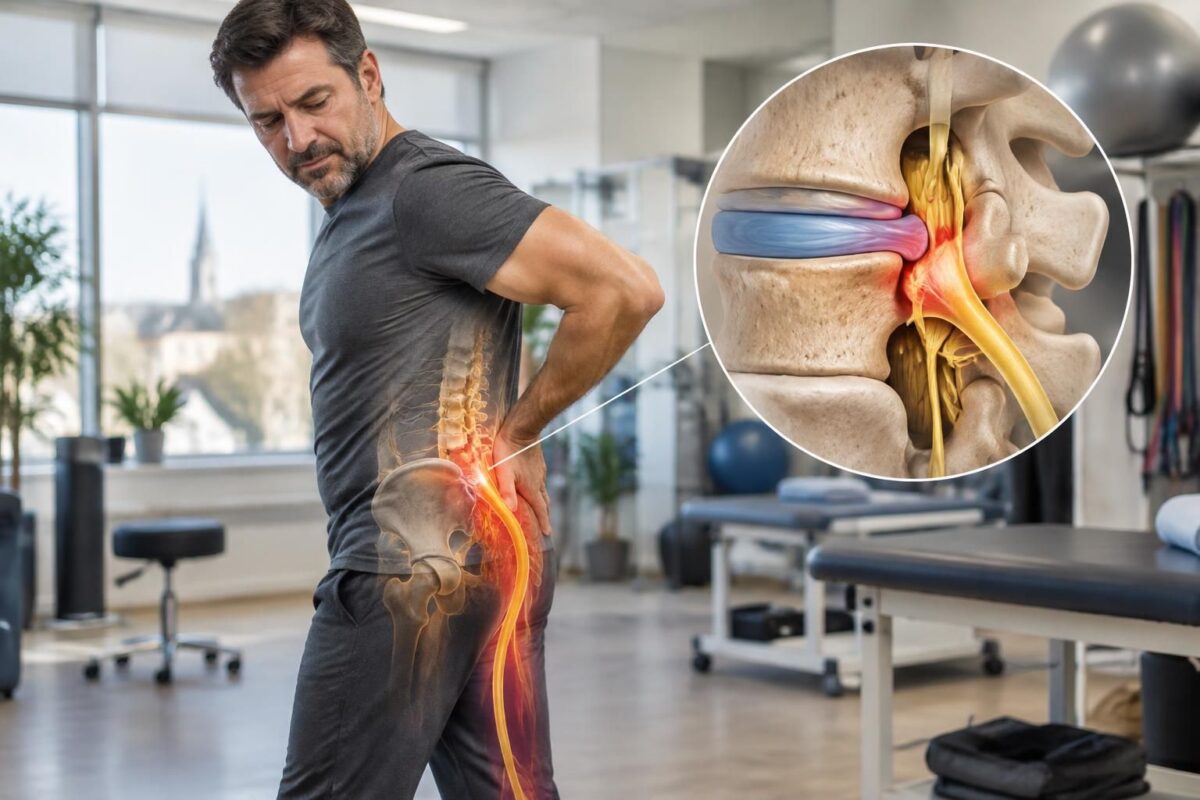
Sciatica in Terrebonne: nerve root, disc, and foramen explained simply
IN BRIEF Sciatica is pain that occurs when a nerve root in the lower back is irritated or compressed, sometimes by a disk or a narrowed foramen. Understanding these structures helps better locate the possible cause of symptoms and guide…
What a serious treatment can offer in Terrebonne
A structured and multidisciplinary approach may include physiotherapy, osteopathy, and ergonomic advice, focusing on core strengthening and relapse prevention. The goal is to improve mobility and gradually reduce pain while making you more self-sufficient in managing your daily activities. This relies on continuous evaluation and exercises tailored to your recovery phase.
Realistic expectations
Expect gradual gains rather than an instant disappearance of symptoms. Ask how each step contributes to your stability and your ability to resume your usual activities without exacerbation.
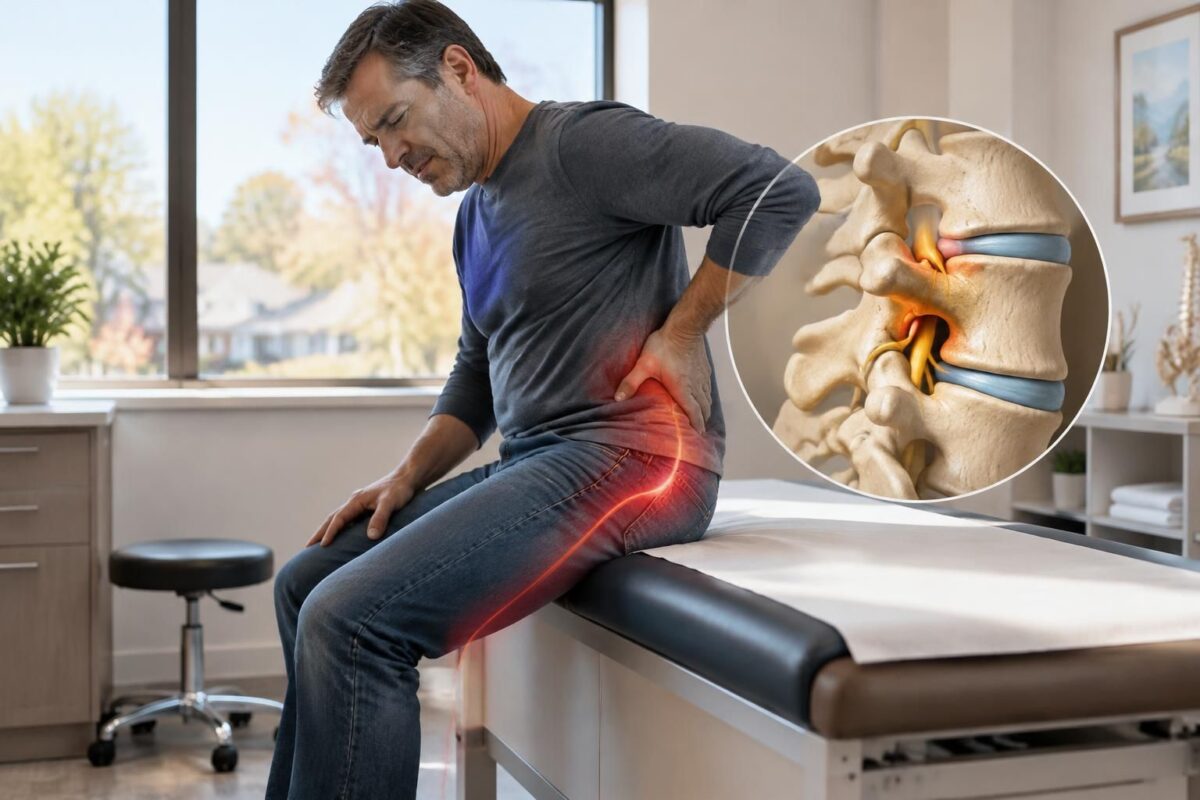
Sciatica in Terrebonne: understanding the L5-S1 foraminal compression
IN BRIEF The L5-S1 foraminal compression corresponds to a narrowing of the opening through which a nerve root passes, potentially contributing to sciatica. In Terrebonne, the assessment compares the side and course of the symptoms, neurological examination, imaging, and limited…
Promises to avoid in your communication
Avoid formulations that promise immediate return to sport or no side effects. Ban absolute guarantees and magic numbers (“everything gets better in X days”). Responsible communication instead indicates likely benefits, limits, and factors influencing results, without hiding possible discomforts or delays.
Expressions to favor or avoid
Favor phrases that describe gradual reduction, measurable improvement, and relapse prevention, while mentioning the importance of adherence to the plan and professional follow-up.
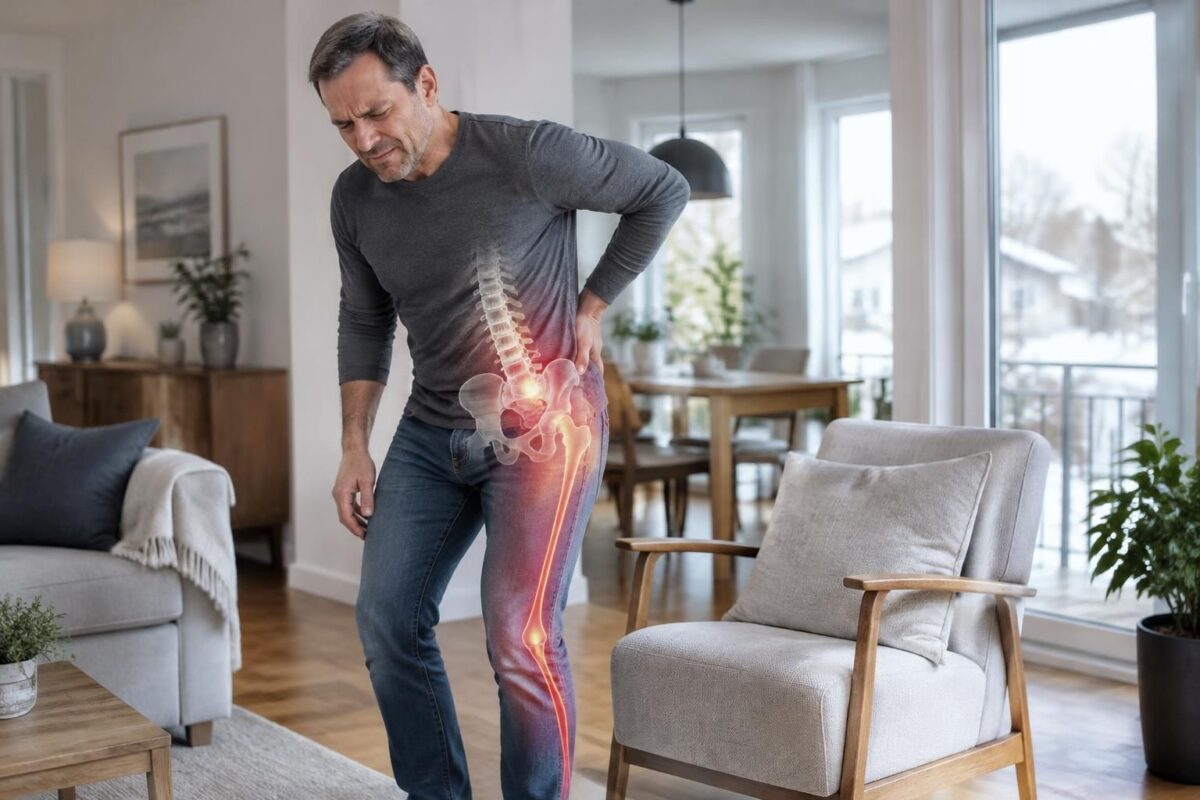
Sciatica in Terrebonne: why L5-S1 is often involved
IN BRIEF Sciatica corresponds to pain related to the irritation of a nerve root, which can extend from the buttock down to the leg. The L5-S1 level is often involved, as a disc herniation or irritation at this location can…
Key questions to ask during your first consultation in Terrebonne
Ask: “What is my likely diagnosis and what are the possible causes?”, “What is the proposed therapeutic plan and its stages?”, “How long before a noticeable improvement and what will the signs of progress be?”, “What are the alternatives if a step is not suitable?”, “What are the risks and possible side effects of the proposed treatments?”
Examples of questions to prepare
How do you adapt the plan based on progress? What tools or exercises will be favored and why? How to monitor and adjust pain and mobility in daily life?

Sciatica in Terrebonne: L5 and difficulty lifting the foot
IN SHORT The L5 sciatica can cause pain or numbness on the side of the leg, the top of the foot, and the big toe, sometimes with difficulty lifting the foot. In Terrebonne, an evaluation compares strength, sensitivity, reflexes, and…
Practical tips to support your treatment
Combine sessions with concrete adjustments in daily life: adapted sitting and standing posture, suitable physical activity, and core strengthening program. Consider ergonomic advice at work and home and plan regular re-evaluations to adjust the plan based on your progress. The goal is to reduce symptoms while strengthening the protective mechanisms of your spine.
Essential reminders
Stay attentive to any new or concerning signs and prioritize professional follow-up to stay on a safe and effective path.
| Element to Avoid | Concise Reality |
|---|---|
| Promise of Universal Quick Healing | Recovery depends on the etiology and adherence to the plan; there is no universal timeline. |
| Guarantee of Effortless Elimination | Improvement requires daily exercises and adaptations; there is no passive solution. |
| Promise of Lifelong Absence of Relapse | Prevention is possible but depends on postural work and sustainable activity. |
| Unique Miracle Treatment | Personalized support is necessary; no single treatment fits all. |
| Fixed Recovery Timelines | Times vary by case; follow-up and adjustments remain essential. |
| Ignored Functional Assessment | An assessment guides exercises and prevents worsening the condition. |
| Guarantees of No Side Effects | Any intervention can carry risks; adaptation and monitoring are essential. |
| Promises Related to Unproven Technologies | Effectiveness depends on the clinical context; appropriate demonstration and integration are necessary. |
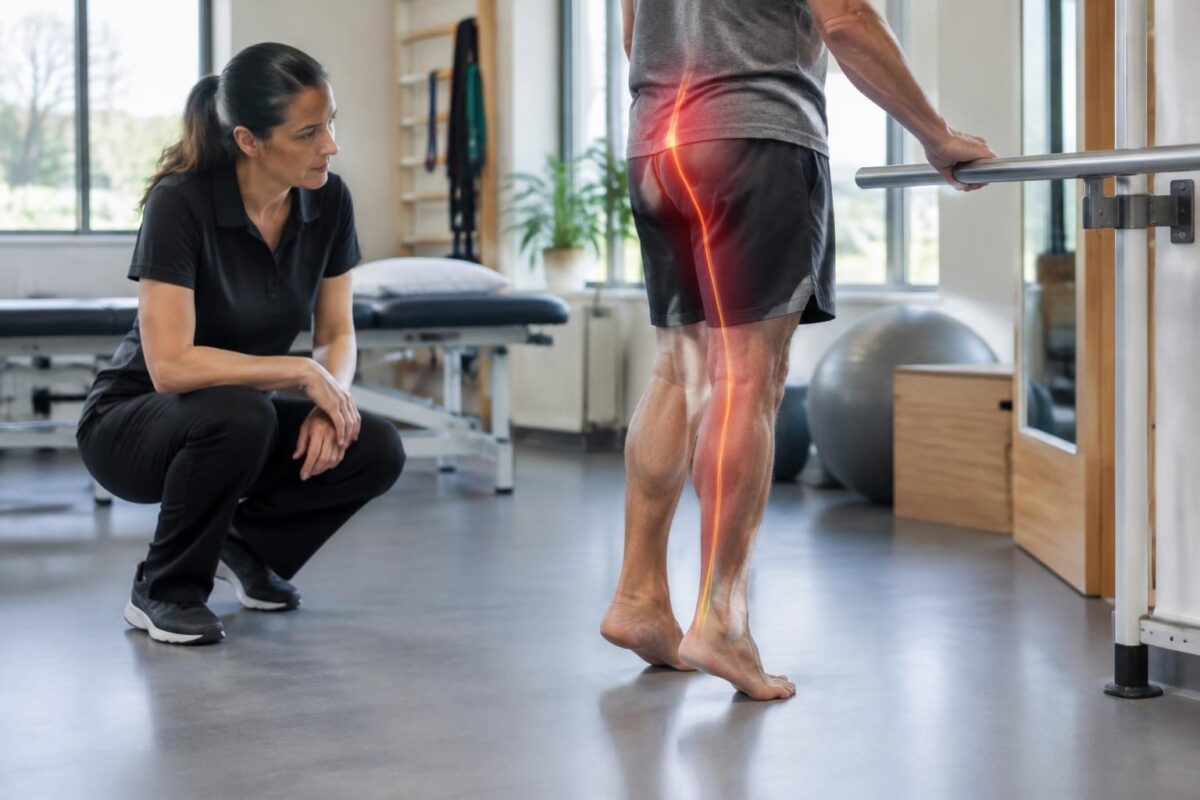
Sciatica in Terrebonne: S1 and difficulty standing on tiptoe
IN SHORT An S1 sciatica can irritate the nerve root associated with the calf and make it difficult to rise onto the balls of the feet. This sign should be evaluated with strength, sensitivity, reflexes, and walking: the pathway of…
Testimonials on Sciatica Treatment in Terrebonne: What to Avoid Promising
In Terrebonne, several patients share their experience with sciatica treatment and what to avoid promising when discussing results. The recurring message is clear: no miracles, but real and lasting progress achieved with an honest and tailored approach.
Marie, a resident of Terrebonne, emphasizes that she was primarily seeking sincere support. “I was promised quick results, but I soon realized that an effective treatment relies on measured progression and a clear understanding of limits. I appreciate being told about a realistic plan rather than immediate and guaranteed relief.”
Jean, another local patient, stresses the importance of avoiding promises of total pain disappearance. “The doctor explained to me that sciatica can gradually diminish through targeted exercises and better posture, but he also warned me that some episodes may persist briefly. This sense of limits allowed me to actively engage without developing unrealistic expectations.”
Isabelle shares that the rehabilitation process helped her gradually resume her activities. “What I appreciated was the transparency: no guarantee of returning to sports overnight, but a clear roadmap with milestones. That helped me stay motivated without getting discouraged by each fluctuation.”
Olivier, who works in Terrebonne, insists that good support avoids overly optimistic promises about quick recovery. “I was offered an approach focused on pain management, strengthening, and ergonomics. No promises in suspension, just a structured and adaptable method that respects my body and limits.”
Émilie highlights the importance of a personalized plan rather than a tempting marketing pitch. “The therapist took the time to assess my posture, habits, and daily activities. He didn’t sell a one-size-fits-all solution but a strategy tailored to my life in Terrebonne, which gave me confidence and reassurance.”
Lucas, who experienced a sciatic crisis, concludes that the key element is honesty in promises. “I was told that symptoms may fluctuate and that success depended on my personal commitment (activity, exercises, ergonomics). No crystal ball, but a collaboration that helps me progress step by step.”

Sciatica in Terrebonne: L4-L5 and pain towards the top of the foot
IN BRIEF A L4-L5 sciatica can radiate to the outer side of the leg and the top of the foot, sometimes reaching the big toe. This pathway can guide the assessment, though it does not suffice to confirm the cause:…
Dr. Sylvain Desforges is recognized as an expert in osteopathy, naturopathy, and manual medicine, and he serves as the founding president of TAGMED clinics as well as the ACMA association. His background is marked by a constant quest for innovation in healthcare and a clear focus on managing chronic pain, particularly those associated with sciatica. His efforts extend to Terrebonne and its surroundings, where he strives to provide evidence-based care focused on the overall recovery of the patient rather than on spectacular promises. In this context, he prioritizes the integration of advanced technologies such as spinal decompression, laser therapies, and shockwave therapies when they align with clinical assessment and patient needs.
To treat sciatica in Terrebonne, Dr. Desforges emphasizes a rigorous evaluation that seeks to identify the underlying cause – herniated disc, piriformis irritation, foraminal stenosis, or other nerve mechanisms – in order to propose a personalized and non-surgical care plan. This approach is based on evidence and a gradual progression of interventions, always accompanied by clear explanations and informed consent. The aim is not to promise instant symptom disappearance but to optimize function and well-being while limiting risks and adapting treatments to the evolution of each patient.
What should be avoided when promising during discussions about sciatica treatment is not just a precaution, it’s an ethics that guides the practice. It is crucial not to promise total and lasting healing within a given timeframe, nor to guarantee the absence of any side effects or complications. It is essential to avoid selling guaranteed results or universal plans that do not take into account individual specifics, such as age, comorbidities, activity level, and medical history. Finally, it is important not to present interventions as inevitable or without risk, nor to exclude the possibility of surgical intervention when necessary after a thorough evaluation. This transparency helps the patient make informed decisions and engage in a realistic therapeutic journey.
In Terrebonne, this approach prioritizes patient education, adjustment of daily activities, and targeted muscle strengthening as pillars of prevention and rehabilitation. Care is implemented in a progressive and adaptive manner, with open communication about goals, stages, and indicators of progress. Dr. Desforges’s team collaborates with the patient to establish a routine that combines appropriate exercises, dynamic posture, and therapeutic modalities when necessary, while closely monitoring signs of progression or deviation. This approach aims to optimize health and comfort without sacrificing safety or the reality of possible outcomes.
With a view of responsible and sustainable care, sciatica treatment in Terrebonne is based on a personalized evaluation, evidence-based therapeutic choices, and transparent communication about what can realistically be achieved. The pathway proposed by Dr. Desforges seeks to reduce pain, improve function, and support overall well-being, while maintaining an ethical and patient-centered approach. For those seeking a professional and measured approach, the goal is to guide each person towards informed decisions tailored to their unique situation.
This conclusion summarizes the elements to avoid promising when discussing the Sciatica Treatment in Terrebonne, emphasizing a realistic and progressive approach tailored to each patient. It highlights the limits of promises and proposes reliable guidelines for pragmatic and secure management.
Avoid promises of immediate or total healing is essential. Promising a rapid and lasting disappearance of pain, regardless of the case, creates unrealistic expectations and can lead to disillusionment or misguided choices if symptoms persist. Sciatica is often multifactorial and fluctuates based on inflammatory phases, hence the need for a personalized progression schedule rather than a universal timeframe. For cautious and tailored information, consult reliable resources such as those dedicated to sciatica and its treatments in Terrebonne and elsewhere, without guaranteeing identical results for all.
Do not set generic deadlines on the duration of pain or recovery is another crucial precaution. Each journey is unique: some benefit from improvements within weeks, while others require a graduated approach over several months. Realistic planning relies on clinical evaluation and regular monitoring, avoiding promises of quick resolution without nuance.
Avoid guarantees about the absence of long-term pain or the total elimination of sciatica episodes. Even with appropriate treatments, remissions and relapses can occur. The realistic goal is often to improve pain control, mobility, and quality of life rather than to eliminate all discomfort forever.
Do not suggest a single type of treatment as a universal solution in Terrebonne. Sciatica can arise from various causes (herniated disc, nerve irritation, osteoarthritis, etc.). A gradual and cautious approach involves precise assessment and combining ergonomic advice, targeted exercises, manual therapies, and lifestyle adjustments, with modifications according to the patient’s response. For a complementary perspective, you can consult specialized resources on non-surgical treatment and adaptive options in Terrebonne.
Avoid promises related to specific methods without sufficient demonstration or guarantees on particular techniques. It is crucial to prioritize information based on clinical evaluation, pain evolution, and functional outcomes rather than simplistic assurances. For lines of thought and evaluation criteria, consult resources that address understanding pain and the therapeutic approach suited to Terrebonne, such as those explaining how to choose a treatment after analyzing pain mechanisms.
To feed your discernment and avoid misleading promises, you can refer to official and reliable sources on the subject: Ameli, dedicated articles from Terrebonne on specialized websites like understanding pain in Terrebonne, or guides on non-surgical treatment and graduated approaches available online. To delve into positioning concepts and gestures to avoid, the following resources may be useful: Giphar, SantéChiro, and advice on non-surgical treatments in Montreal or Terrebonne available at SOS Sciatique.
For readers seeking local and progressive guidance, references such as sciatica in Montreal and the resources from Terrebonne mentioned above can guide the choice of an adequate and measured treatment, without promising unrealistic results.

Sciatica in Terrebonne: L5-S1 and symptoms in the calf
IN BRIEF A L5-S1 sciatica can cause pain that radiates down the calf, sometimes accompanied by tingling, numbness, or weakness. At Terrebonne, an assessment at the TAGMED Clinic helps to examine the symptom pathways, strength, and sensitivity, and then discuss…

Dr Sylvain Desforges, B.Sc., D.O., N.D., osteopath, is the founding president of TAGMED and of the ACMA association. He dedicates his practice to chronic spinal pain, low back pain and symptoms compatible with sciatica, particularly when pain radiates toward the buttock, leg, calf, foot or toes.
Through SOS Sciatique, he publishes educational content on sciatica symptoms, possible causes such as disc herniation, disc narrowing, foraminal stenosis or irritation of a lumbar nerve root, as well as non-surgical approaches that may be considered according to the evaluation. At Clinique TAGMED, care may include, depending on the case, motorized neurovertebral decompression, specific osteopathic care or precision percussion.
For an evaluation related to sciatica treatment in Montreal / Mount Royal or sciatica treatment in Terrebonne, please consult the services available at Clinique TAGMED.
Medical disclaimer
The information published on SOS Sciatique is provided for educational purposes only and does not replace a consultation, diagnosis, opinion or treatment provided by a physician or another authorized healthcare professional. The author of this article is neither a medical doctor nor a specialist in a medical specialty recognized by the Collège des médecins du Québec. The osteopathic, manual medicine or functional support approaches described on this site do not constitute medical acts and are not intended to replace medical follow-up.
Consult a physician or emergency service in cases of loss of bladder or bowel control, anesthesia in the saddle area, significant or progressive weakness in the leg or foot, fever, recent trauma, severe pain or rapid worsening of symptoms. For more details, please read our Legal Notice.