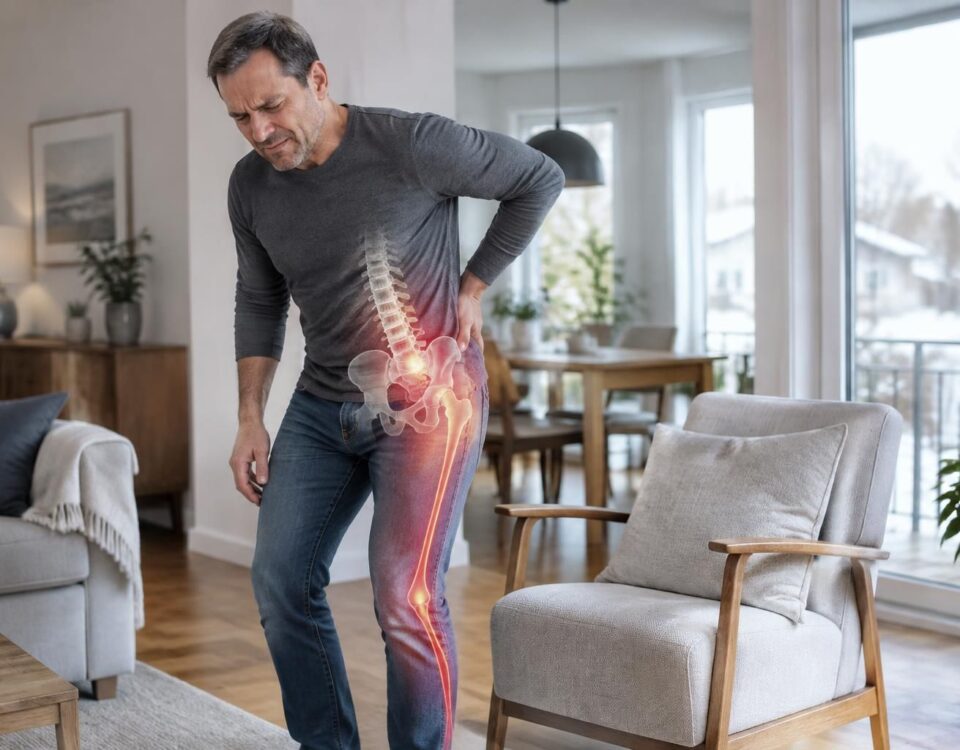
Sciatica in Montreal: Understanding pain before choosing treatment
29/06/2026
Pain behind the thigh: possible link with the sciatic nerve
29/06/2026
In short
| In short, the sciatica is a pain that follows the path of the sciatic nerve, starting from the lower back, passing through the buttock and descending in the leg to the foot. It may result from a slipped disc, of one Spinal canal narrowing or other lumbar conditions. Understanding the cause allows you to choose a treatment Suitable: non-surgical options like neurovertebral decompression motorized, theSpecific osteopathy and the Precision striker, associated with prevention advice. In Terrebonne, this service offers a Localized assessment and personalized support to relieve pain and improve mobility without immediate surgery. |
At Terrebonne, understand the sciatic pain is the key to choosing the right treatment. The pain can follow the path of the sciatic nerve: lower back, buttock, then back of the leg, and its intensity often depends on the underlying cause (discal hernia, stenosis or nerve irritations). Before considering exercises or interventions, a Accurate evaluation Identifies the probable cause and the best therapeutic path. To the Tagmed Terrebonne Clinic, the approach is personalized and favors non-surgical solutions such as Motorized neurovertebral decompression, theSpecific osteopathy and the Precision striker, in order to relieve pain, improve mobility and promote resumption of activities. The goal is to avoid surgery when it is not necessary.
This guide, written by a health professional, explains sciatica and how it can appear at Terrebonne. It describes the pain path, possible causes and non-invasive approaches available to help you choose the right treatment, without a single prescription.
Understanding pain and its trajectories
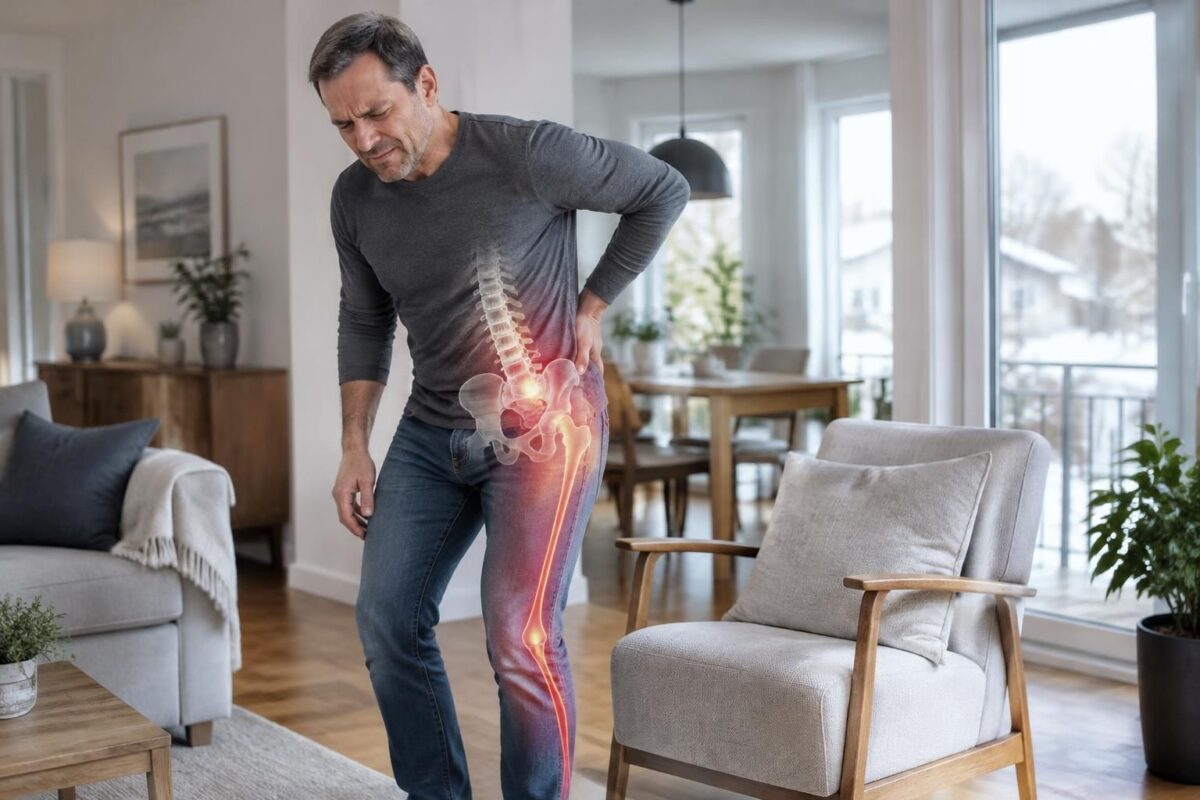
The sciatica is a pain that follows the path of the sciatic nerve. The nerve starts from the lower back, passes through the buttocks and descends into the leg. The pain can go down to the back of the leg and sometimes project towards the calf or foot.
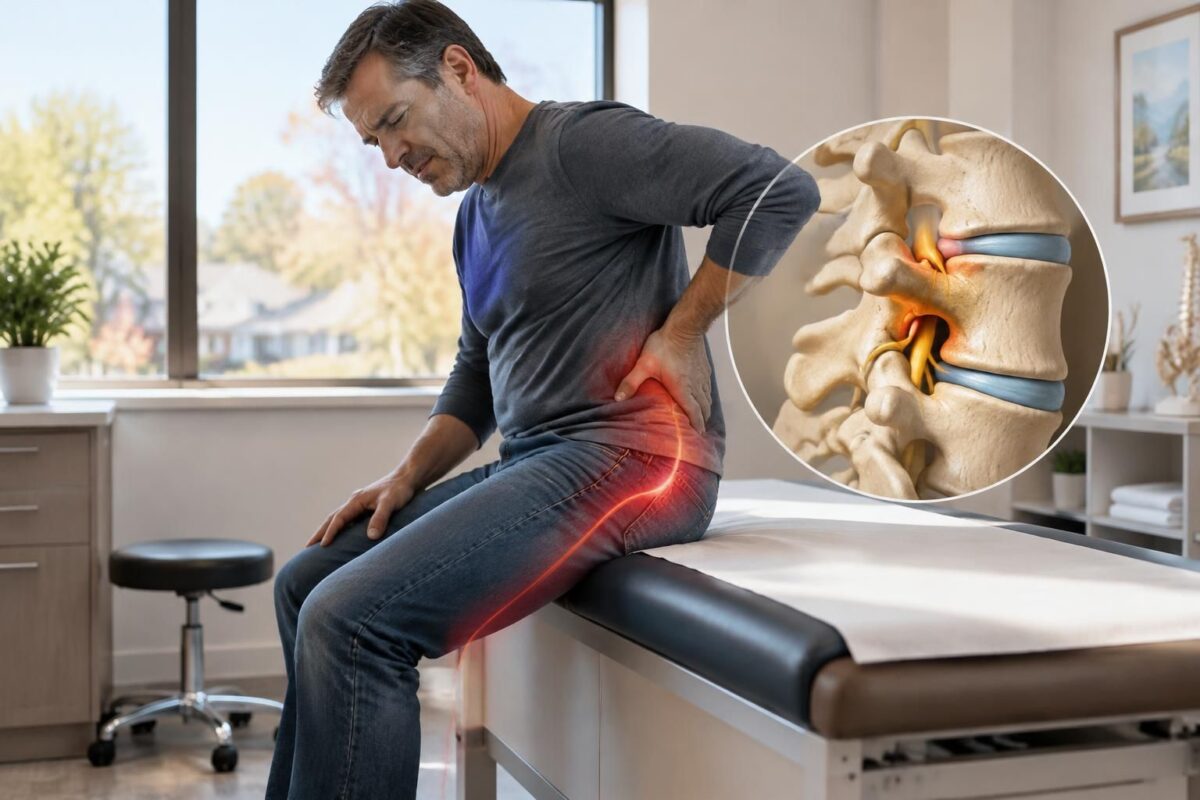
The most common causes are slipped disc, narrowing of the spinal canal or changes related to osteoarthritis. These conditions irritate or compress one or more nerve roots.
The pain can be described as burning or penetrating. Tingling and weakness can accompany the pain, especially when walking or standing worsens.
Diagnose the pain
The diagnosis is based on a simple clinical examination that assesses strength and reflexes, and on the symptoms described by the patient.
Imaging examinations may be requested to confirm a slipped disc, a stenosis or other anomalies. Electrical tests can also help to specify the affected root and the severity of the attack.
Treatment options in Terrebonne
At the TagMed clinic, several non-surgical options can be considered depending on the evaluation. The Motorized neurovertebral decompression is a possible approach when the clinical profile allows it.
theSpecific osteopathy aims to improve mobility and reduce biomechanical constraints on the column, without the need for surgery.
The Precision striker Proposes a targeted and gentle intervention when the evaluation reveals appropriate mechanical dysfunction. These approaches are part of a personalized strategy after medical consultation.
Additional resources and information
To understand non-surgical options and non-invasive approaches, consult resources such as Why#ATFP_CLOSE_TRANSLATE_SPAN# Neurovertebral decompression is a non-invasive solution for sciatica.
General information on sciatica and its treatments is available on MSD#ATFP_CLOSE_TRANSLATE_SPAN# Manual: Sciatica.
For details on options in Montreal and Terrebonne, visit Clinic#ATFP_CLOSE_TRANSLATE_SPAN# TagMed – Sciatica.
Complementary resources on the pain going down in the leg are accessible on Numbness#ATFP_CLOSE_TRANSLATE_SPAN# in leg and sciatica and on Treatment#ATFP_CLOSE_TRANSLATE_SPAN# of sciatica in Montreal – Non-surgical options to consider.
Note that the treatment aims to reduce irritation, improve mobility and guide safe recovery of activities. Some conditions require detailed evaluation and appropriate support by a specialized team.
For more information and concrete examples related to the sciatica And to its common causes (herniated disc, stenosis, disc cracks), you can consult dedicated resources on recognized sites and the pages of the TagMed clinic.
Medical Disclaimer: The information and advice provided on this site does not replace the health professional’s diagnosis or treatment. Please note that Dr. Sylvain Desforges osteopath is neither a doctor of medicine nor a doctor, and is not a specialist in a medical specialty as defined by the Collège des Médecins du Québec. Manual medicine, functional medicine and sports medicine as described on this site exclude any medical treatment or diagnosis made by a doctor or specialist doctor. Always consult your doctor for any medical questions. For more details, please read our full legal notice.
- probable origin : Determine path and neurological signs.
- Alert signs : significant weakness, loss of urinary or intestinal control, fever.
- Daily impact : Walk, stairs and prolonged standing positions.
- Diagnosis : clinical examination, sometimes imaging or electrodiagnostic tests.
- Non-surgical options : motorized neurovertebral decompression, osteopathy Specific, precision striker.
- Treatment plan : reduce irritation, improve mobility, gradual resumption of activities.
- Practical elements : Personalized evaluation and follow-up adapted to your tolerance.
- When to act : pain that persists, new weaknesses or worsening symptoms.

The sciatica is manifested by pain that follows the path of the sciatic nerve, starting from the lower back and descending towards the buttock then the back of the leg. Before choosing a treatment, it is essential to understand this pain, its possible causes and local indications in Terrebonne. This lighting helps you make an informed decision that is appropriate for your situation, including favoring a non-surgical approach when appropriate.
Understanding sciatic pain
The pain is often unilateral and can be described as burning, piercing, or stab. It can extend to the calf or foot, with tingling, numbness or muscle weakness. The painful path usually follows one or more lumbar nerve roots, most often L4-L5 or L5-S1. This irradiation can occur from the lower back through the buttock to reach the back of the leg.
Path and symptoms
The typical symptom is the pain that “goes down” along the nervous path. Some activities like walking, climbing, or sitting for a long time can make the pain worse, while back straightening or standing can sometimes relieve it. In more severe cases, one may experience weakness or sensitivity disorder in the leg or foot.
Common causes
The most common causes are slipped disc lumbar, bulging or disc protrusion, a Foraminal stenosis or a Spinal stenosis. Osteophyte and osteophytes can also help compress the nerve roots. Other rare conditions may include bone diseases or underlying nerve damage. Accurate diagnosis calls for clinical evaluation and, if necessary, imaging examinations or nerve tests.
Sciatica in Terrebonne: understanding the L5-S1 foraminal compression
IN BRIEF The L5-S1 foraminal compression corresponds to a narrowing of the opening through which a nerve root passes, potentially contributing to sciatica. In Terrebonne, the assessment compares the side and course of the symptoms, neurological examination, imaging, and limited…
Sciatica in Terrebonne: why L5-S1 is often involved
IN BRIEF Sciatica corresponds to pain related to the irritation of a nerve root, which can extend from the buttock down to the leg. The L5-S1 level is often involved, as a disc herniation or irritation at this location can…
Evaluate in Terrebonne
In Terrebonne, the evaluation of sciatica is based on a careful clinical examination of the forces and reflexes, as well as on the analysis of the painful path and neurological signs. In the presence of significant numbness, marked weakness or pain that persists beyond six weeks, additional investigations may be considered.
Diagnosis and imaging
Imaging examinations such as MRI or CT can help identify a structural cause (disk, spinal canal, foramina). Electrodiagnostic tests can also specify which root is involved and assess the severity of the nerve damage. The objective is to guide appropriate and personalized support.
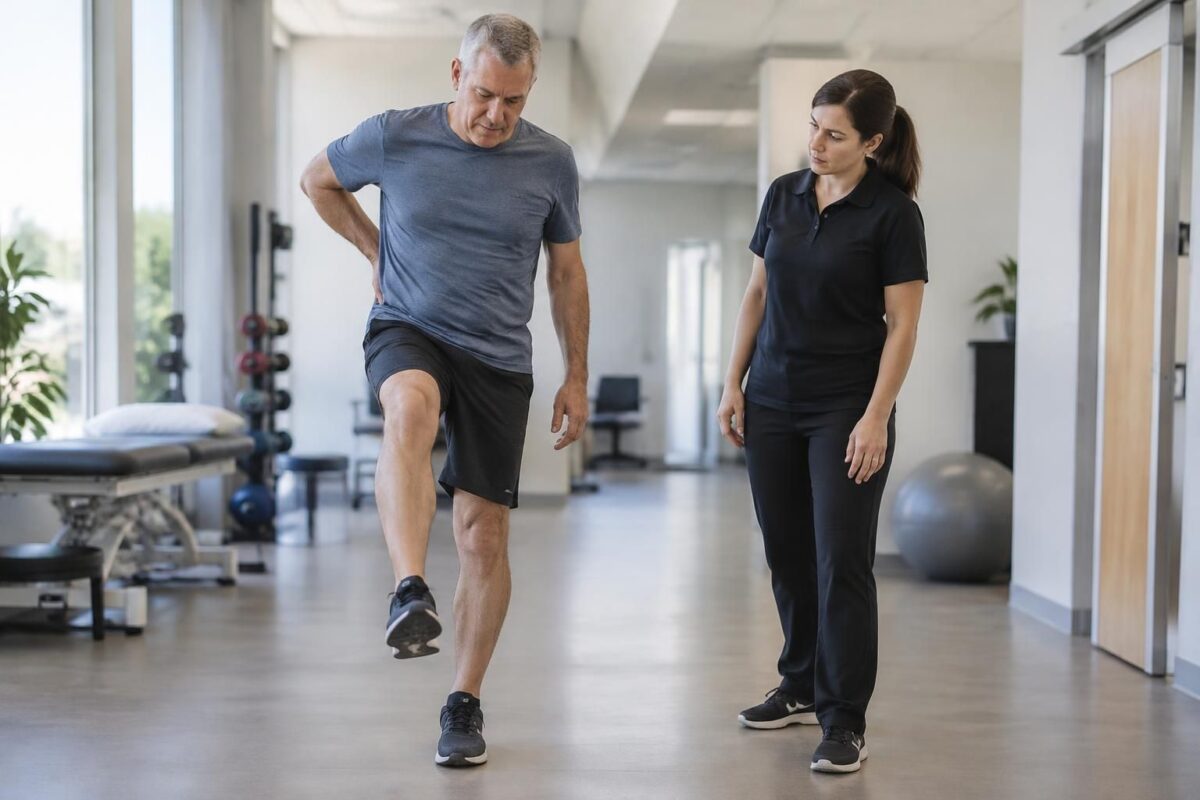
Sciatica in Terrebonne: L5 and difficulty lifting the foot
IN SHORT The L5 sciatica can cause pain or numbness on the side of the leg, the top of the foot, and the big toe, sometimes with difficulty lifting the foot. In Terrebonne, an evaluation compares strength, sensitivity, reflexes, and…
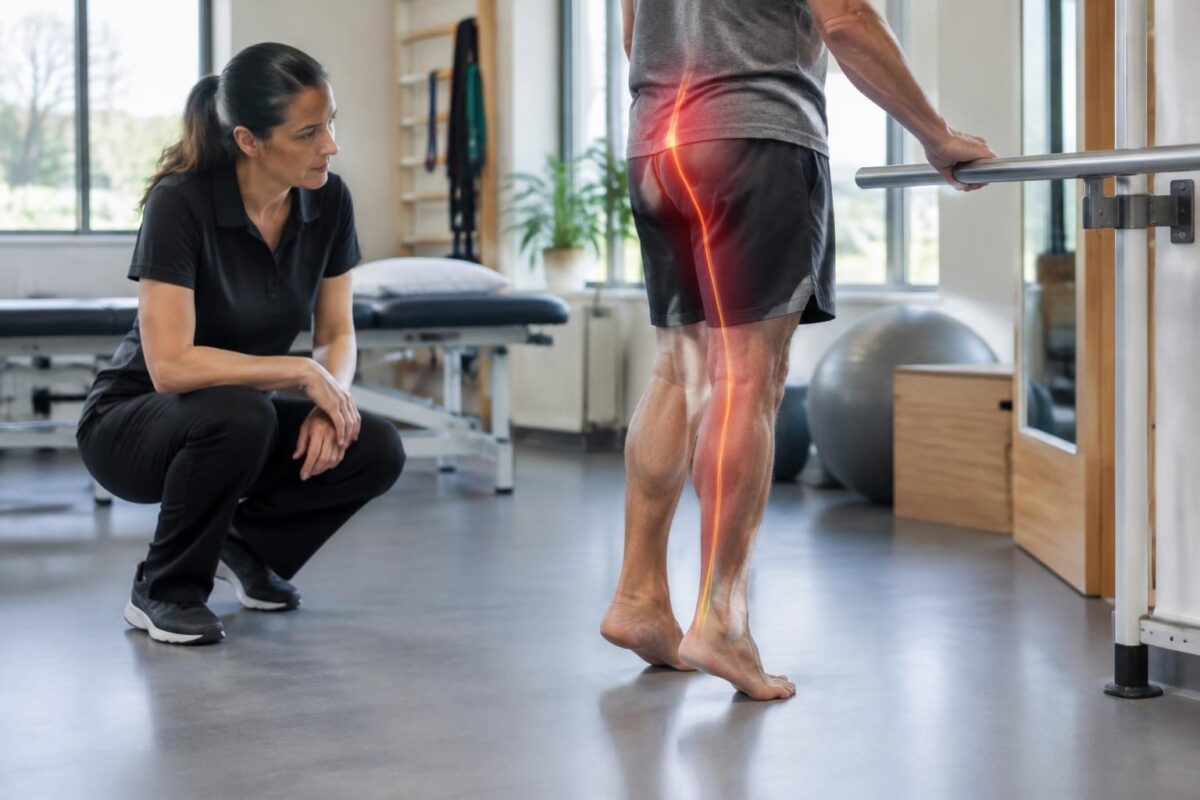
Sciatica in Terrebonne: S1 and difficulty standing on tiptoe
IN SHORT An S1 sciatica can irritate the nerve root associated with the calf and make it difficult to rise onto the balls of the feet. This sign should be evaluated with strength, sensitivity, reflexes, and walking: the pathway of…
Non-surgical treatment options
In Terrebonne, non-surgical options favor an approach adapted to your probable cause and your tolerance. Among the possibilities, motorized neurovertebral decompression, specific osteopathy and the precision striker can be considered after a thorough evaluation. It is important to note that the laser Medical and shockwaves are generally not used for sciatica-related pain in this context.
Advice and prevention
Associated measures can help reduce irritation and promote recovery: posture management, progressive and appropriate physical activity, maintaining a healthy weight and correct lifting techniques. Exercises should be personalized according to cause and tolerated without increasing symptoms. A gradual resumption of tolerated activities, under supervision, often improves mobility without increasing inflammation.

Sciatica in Terrebonne: L4-L5 and pain towards the top of the foot
IN BRIEF A L4-L5 sciatica can radiate to the outer side of the leg and the top of the foot, sometimes reaching the big toe. This pathway can guide the assessment, though it does not suffice to confirm the cause:…

Sciatica in Terrebonne: L5-S1 and symptoms in the calf
IN BRIEF A L5-S1 sciatica can cause pain that radiates down the calf, sometimes accompanied by tingling, numbness, or weakness. At Terrebonne, an assessment at the TAGMED Clinic helps to examine the symptom pathways, strength, and sensitivity, and then discuss…
When to consider surgery
Surgery is considered when the pain persists despite appropriate management, in the event of significant weakness or loss of urinary or intestinal control, or when a precise diagnosis justifies a targeted intervention. The surgical options vary depending on the cause (disk, stenosis, etc.) and remain discussed during a personalized evaluation in Terrebonne.

Sciatica in Terrebonne: pain in the big toe, L5 root or another cause?
IN BRIEF Pain in the big toe accompanied by pain in the buttock or leg may be compatible with irritation of the L5 root, but other causes are possible. In Terrebonne, the evaluation notably compares strength, sensitivity, and gait to…

Sciatica in Terrebonne: why the affected root changes the pain path
IN BRIEF Sciatica is a pain related to the irritation of a lumbar nerve root, the path of which varies depending on the affected root. Damage to L5 can radiate to the top of the foot, while damage to S1…
Tagmed Clinic in Terrebonne
The TagMed Terrebonne clinic offers a specialized assessment and non-invasive care for pain compatible with sciatica. Depending on your case, a suitable approach may include motorized neurovertebral decompression, specific osteopathy, or a precision striker. Our team works closely with you to define the most relevant plan, in order to allow you to resume your activities with as little pain as possible. Address and contact of the clinic in Terrebonne: 1150 rue Lévis, Suite 200, Terrebonne, QC, J6W 5S6. Telephone: 450-704-4447. Opening days: Monday, Wednesday and Friday.
Sciatica in Terrebonne: Understanding pain before choosing treatment
| Element | concise text |
|---|---|
| Definition and route | The pain follows the path of the sciatic nerve: lower back, butt and leg. |
| Common causes | Disc hernia, foraminal or spinal stenosis, bulge disc and osteoarthritis. |
| Typical signs | Unilateral, burning or throbbing irradiated pain, sometimes paresthesias or weakness. |
| Diagnosis | clinical examination; imagery or Electrodiagnostic tests depending on the symptoms. |
| Emergency and warning signs | loss of urinary/intestinal control, marked weakness, anesthesia in the stool; consult quickly. |
| Non-surgical options | Evaluation for Motorized neurovertebral decompression, Specific osteopathy or precision collector. |
| Prevention and lifestyle | Regular exercise, weight maintenance, good posture and lifting techniques; Avoid aggravating movements. |
| Procedure and recovery | often improvement in weeks; Reduced irritation and resumption of mobility; Surgery may be considered in some cases. |
“In Terrebonne, the sciatic pain was from lower back, crossed the buttock and descended to the back of my leg. I thought she would never pass. After a Clinical evaluation At the TagMed clinic, it was clarified that my sciatica came from a disc pinching and irritation of the nerve roots. The proposed plan was non-surgical and personalized: Motorized neurovertebral decompression and Specific osteopathy, supplemented by Adapted exercises and advice from posture. In a few weeks, the pain decreased and I regained my mobility.”
“While speaking in Terrebonne, I understood that the diagnosis is based on theclinical examination and, if necessary, results ofimagery. I was shown that my pain came from a nervous compression and that the cause could be linked to a Foraminal stenosis or a disc disease. The treatment favored non-surgical approaches such as Motorized neurovertebral decompression and an Specific osteopathy, supplemented by Cautious exercises and advice from posture. Today, I have found my walk and my joie de vivre, without surgery.”
“Sophie, an athlete in Terrebonne, discovered that it was essential to understand the cause before embarking on the exercises. The assessment identified nerve root irritation and not a serious injury. thanks to a combination of Precision striker, fromSpecific osteopathy and ofAdapted exercises, I was able to resume my activities and gradually return to my sport, with a much less present pain.
“Michael, active senior in Terrebonne, appreciated the graduated approach that favors non-surgical. I was shown how to understand the pain depending on the path of the sciatic nerve and neurological signs. The evaluation clarified the possible causes and directed towards non-invasive solutions, such as Motorized neurovertebral decompression and theSpecific osteopathy, associated with Adapted exercises and advice from posture. Since then, I have regained better mobility and less inflammation.”
sciatica is manifested by pain that follows the path of the sciatic nerve, starting from the lower back, passing through the buttock and frequently descending along the back of the leg. This pain can be burning, piercing or transient, and it is sometimes associated with tingling, numbness or weakness. The cause may be related to a slipped disc, to osteoarthritis projections, or narrowing of the spinal canal, but it can also come from other mechanisms. Understanding these mechanisms is essential for choosing the most suitable treatment.
In Terrebonne, the approach to the sciatic pain is based on a Patient education and a rigorous assessment that favors the prevention of aggravations and the maintenance of activity. The objective is to clarify the painful path, possible neurological signs and the mechanical factors that influence the pain, before considering therapeutic options. This approach is based on a Evidence-based approach and on an in-depth knowledge of the different pain profiles.
The diagnostic process associates clinical examination and, when necessary, imaging examinations or neurophysiological assessments to accurately identify the affected nerve root and the severity of the attack. The doctor seeks to distinguish common causes—such as a herniated disc or a stenosis—from other painful origins. This personalized assessment makes it possible to determine whether an approach non-surgical may be sufficient or if additional investigations are indicated.
For treatment, the goal is to Reduce the pain and improve mobility while protecting the nervous system. The team of Tagmed Terrebonne Clinic offers a range of non-surgical procedures, adapted to each profile, including theSpecific osteopathy, the Motorized neurovertebral decompression and the Precision striker. Each option is chosen after a Personalized biomechanical assessment and depending on the patient’s tolerance, with constant attention to the evolution of symptoms.
The Motorized neurovertebral decompression aims to relieve certain mechanical stresses on the discs and roots, when the clinical profile allows it, in order to limit nervous irritation and promote a return to walking and daily activities. This approach is combined with osteopathic interventions aimed at improving mobility and reducing tension on the column, while remaining in a logic non-surgical and personalized.
Lifestyle and prevention also play a key role: weight control, appropriate physical activity, central muscle strengthening and improvement of sitting and standing postures. Practical advice on rest positions, daily gestures and lifting techniques help minimize irritation and accelerate recovery, without climbing to more invasive treatments as long as the pain is manageable.
For cases that do not respond to interventions non-surgical Or when progressive neurological signs appear, surgical options may be considered after specialized evaluation. The objective remains a progressive and lasting recovery, with a suitable and secure resumption of activities. A personalized assessment thus makes it possible to determine the safest and most effective path for each patient.
In case of sciatic lumbar pain, careful evaluation and a graduated approach oriented by the signs and results of the examinations will guide the choice of treatment best suited. Make an appointment at the TagMed Terrebonne clinic for an approach focused on understanding your pain and on non-invasive and effective solutions.
This text guides you to understand the sciatica at Terrebonne And to choose, knowingly, the most suitable treatment. Starting from the natural path of the sciatic nerve and the main causes (herniated disc, stenosis, osteoarthritis), we explain how the diagnosis is made and why personalized evaluation is essential before engaging in therapy, whether non-surgical or surgical.
To manage a sciatica at Terrebonne, start by understanding where the pain is and why it radiates to the leg. In-depth clinical analysis, supplemented if necessary by imaging examinations or electrodiagnostic tests, helps to identify the precise cause and to avoid inappropriate treatments. This approach makes it possible to favor, when possible, non-invasive and non-surgical solutions that target the root of the problem.
According to the evaluation, options like the Motorized neurovertebral decompression, LSpecific osteopathy or the Precision striker Can be considered to reduce pain and preserve mobility without surgery. To learn more about these approaches to Terrebonne, check out these resources: Decompression#ATFP_CLOSE_TRANSLATE_SPAN# Motorized Neurovertebral, and general information about the sciatica on SOS#ATFP_CLOSE_TRANSLATE_SPAN# Sciatica. Other useful pages address the link between walking and sciatica and the possible causes and diagnoses: Sciatica#ATFP_CLOSE_TRANSLATE_SPAN# and walk: useful or aggravating, Causes#atfp_close_translate_span# and diagnosis, Pain#ATFP_CLOSE_TRANSLATE_SPAN# Calf and sciatica, Decompression#ATFP_CLOSE_TRANSLATE_SPAN# Neurovertebral and sciatica: Relieve without surgery, How long is a sciatica.
To access these services, the TagMed Clinic at Terrebonne offers a personalized evaluation and appropriate non-surgical care, with the following address: 1150 rue Lévis, Suite 200, Terrebonne, QC J6W 5S6. You can also make an appointment by visiting the dedicated page on the TagMed site or by calling the local number: 450-704-4447. To prepare your visit, you can also consult the education and prevention resources on the SOS Sciatica and other recommended resources: LE#ATFP_CLOSE_TRANSLATE_SPAN# Trauma – Sciatica, chiropractic#ATFP_CLOSE_TRANSLATE_SPAN# Terrebonne – Leg and sciatica, AMELI#ATFP_CLOSE_TRANSLATE_SPAN# – Consultation and treatment.

Dr Sylvain Desforges, B.Sc., D.O., N.D., osteopath, is the founding president of TAGMED and of the ACMA association. He dedicates his practice to chronic spinal pain, low back pain and symptoms compatible with sciatica, particularly when pain radiates toward the buttock, leg, calf, foot or toes.
Through SOS Sciatique, he publishes educational content on sciatica symptoms, possible causes such as disc herniation, disc narrowing, foraminal stenosis or irritation of a lumbar nerve root, as well as non-surgical approaches that may be considered according to the evaluation. At Clinique TAGMED, care may include, depending on the case, motorized neurovertebral decompression, specific osteopathic care or precision percussion.
For an evaluation related to sciatica treatment in Montreal / Mount Royal or sciatica treatment in Terrebonne, please consult the services available at Clinique TAGMED.
Medical disclaimer
The information published on SOS Sciatique is provided for educational purposes only and does not replace a consultation, diagnosis, opinion or treatment provided by a physician or another authorized healthcare professional. The author of this article is neither a medical doctor nor a specialist in a medical specialty recognized by the Collège des médecins du Québec. The osteopathic, manual medicine or functional support approaches described on this site do not constitute medical acts and are not intended to replace medical follow-up.
Consult a physician or emergency service in cases of loss of bladder or bowel control, anesthesia in the saddle area, significant or progressive weakness in the leg or foot, fever, recent trauma, severe pain or rapid worsening of symptoms. For more details, please read our Legal Notice.