How Osteopathy Improves Joint Mobility
27/06/2026
Relieve cervical pain with osteopathy
27/06/2026
In short |
| In short, theosteopathy is one Manual approach and holistic which aims to restore the balance of the body without resorting to pharmaceuticals. Its main benefits include pain relief (back, neck, head and joints), theImproving mobility and from the circulation, and strengthening theself-healing. It’s a solution natural and fresh For those who wish to avoid drug treatments. accessible to Montreal and its region, it offers global support without side effects and can complement other care approaches. |
theosteopathy looks like A natural alternative to treatments medicinal By betting on a holistic approach who considers the body as a whole. By techniques manuals and sweet, it aims to identify the root causes of the pain rather than just soothe symptoms, while promoting theself-healing natural body. It is particularly relevant for Chronic pain (backs, cervical, joints) and offers benefits such as improved mobility, better circulation and reduction of tensions, with Few or no side effects.Finally, it can be used in addition to other safe approaches, for well-being management focused on naturalness and prevention.
This presentation explains why osteopathy can be an alternative natural and non-drug for pain and well-being management. It describes a simple and effective approach, focused on the body as a whole, in order to limit the use of drugs and support the self-regulation of the patient.
Holistic approach and simplicity of care
Osteopathy considers the body as a unit. The practitioner assesses the links between muscles, joints and organs to identify possible causes of discomfort. The treatment aims to improve mobility and restore the harmony of systems, without being limited to an isolated symptom. This method favors precise gestures and adapted sweets that respect the natural mechanisms of the body.
No side effects and safety
Compared to Some drugs, osteopathy does not expose to major risks of addiction or systemic side effects. It offers an approach secure and tolerable For most people who are sensitive to drugs or who wish to avoid pharmacological treatments.
Reinforcement of self-healing of the body
Osteopathic work aims to support the body’s natural ability to repair itself. By improving circulation and reducing tensions, it promotes recovery and general well-being. This approach emphasizes self-regulation and prevention, rather than repeated pharmacological intervention.
Efficiency in managing chronic pain
For chronic pain, including lumbar, cervical and headache, osteopathy can provide significant relief. By favoring targeted and personalized techniques, it can reduce pain intensity and improve mobility, without systematically using drugs.
Who is osteopathy for and when to consider a consultation
It is suitable for a wide range of active people and patients looking for a Non-drug therapy. A consultation can be considered when pain, stiffness or postural imbalances disrupt everyday life and one wishes to explore a global and natural approach.
Integration and complementarity with other approaches
Osteopathy integrates well with other non-drug therapies and may be part of a global care protocol. It can be used in addition to options such as lifestyle, stress management and appropriate exercises, always under professional supervision.
Training, security and professional environment
Osteopathy professionals rely on recognized training, such as Numss, NAO, National University of Medical Sciences and National Academy of osteopathy. They practice in professional organizations such as ACMA and the College of Canadian Osteopaths. Osteopaths respect the safety rules and assess cases that require additional medical care.
Resources and useful links
For further information, you can consult resources on the following domains, in order to obtain additional information and clear points of comparison between osteopathy and other approaches:
- Benefits for postural pain on Sosciatica
- Differences between osteopathy and chiropractic on Sosciatica
- Osteopathy: natural treatment vs drugs On Reflexosteo
- Why osteopathy to avoid drugs On Red Review
- Complete guide to osteopathy On Osiad
- 5 reasons for an effective alternative On Osteopathie-France
- Osteopathy: alternative or supplement on osteopathy.guide
- Benefits for athletes on Sosciatica
- Osteopathy and stress-related pain on Sosciatica
- Postpartum benefits in women on Sosciatica
- Tagmed Clinic
- SOS SCIATIC
Medical Disclaimer: The information and advice provided on this site does not replace the health professional’s diagnosis or treatment. Please note that Dr. Sylvain Desforges osteopath is neither a doctor of medicine nor a doctor, and is not a specialist in a medical specialty as defined by the Collège des Médecins du Québec. Manual medicine, functional medicine and sports medicine as described on this site exclude any medical treatment or diagnosis made by a doctor or specialist doctor. Always consult your doctor for any medical questions. For more details, please read our full legal notice. »
- natural and without medication
- Security and high tolerance
- Few side effects
- Personalized approach Adapted to each patient
- holistic approach from the body
- self-healing and better circulation
- Reduced pain and improved mobility
- Prevention and quality of life improvement
- Integration with other therapies and healthy lifestyles

This article presents why theosteopathy is one natural alternative and non-invasive drug treatments, highlighting its holistic approach, its potential benefits on chronic pain and ways to get the most out of each session to support theself-healing of the body.
A practice that considers the body as a whole
Osteopathy assumes that structure and the function of the body are intimately linked and that the body has a natural ability toself-regulation. By focusing on the relationships between muscles, bones, joints and organs, the osteopath assesses tensions and imbalances that can generate various pains. This approach makes it possible to address the root causes rather than simply masking the symptoms.

How osteopathy improves the quality of life of active people
In short In short, theosteopathy is a global approach that Optimizes mobility and the function of the body of ACTIVE PEOPLE, for a better quality of life. It helps prevent injury and reduce Musculoskeletal pain While promoting the Sports recovery.…
Benefits from drug treatments
The main added value of osteopathy is to propose a Natural support which can reduce or avoid the use of pharmaceuticals. By limiting repeated exposure to substances, it can reduce the risk of side effects and addiction. For people who are sensitive to drugs or looking for an approach fresh and lasting, osteopathy offers an alternative way for the management of pain and muscle stress.
Reduced tensions and improved mobility
The manual techniques used aim to restore thebalance fabrics and to promote circulation Effective, which can reduce lumbar, cervical, muscular and cranial pain. By working on joint mobility and muscle tone, osteopathy can contribute to quality of life improved without the use of pharmaceutical products.

Osteopathy and sports recovery: prepare the body for lasting performance
In short In short, Osteopathy and Sports recovery is one Global manual approach that sustainably prepares the body for the effort by restoring mobility and circulation After the effort. It is a discipline that acts on the sinews, the joints,…
How to optimize the results
To maximize benefits, it is advisable to adopt a coherent plan around osteopathy sessions. This includes a adapted frequency Visits, advice fromlifestyle And gentle exercises to do between sessions. A complete initial assessment makes it possible to build a Personalized treatment plan which may change depending on the evolution of the symptoms.
Personal action plan
Before each session, write down your symptoms, their location and intensity. After the consultation, follow the osteopath’s recommendations regarding stretches, postures and activities to favor or limit. The results are often long-term when care is part of a global well-being approach.
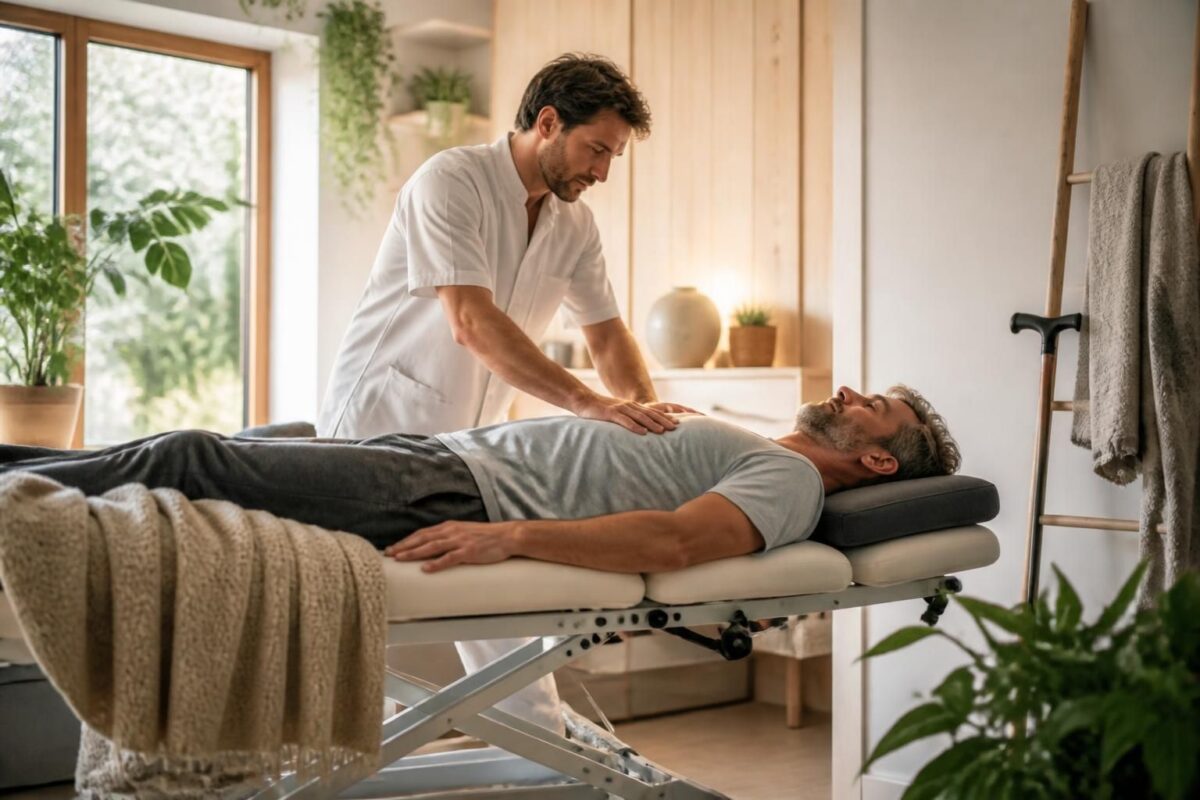
Why Osteopathy Is Essential For Recovery People
In short In short, Osteopathy in convalescence is an approach manual and holistic which helps to accelerate the recovery by restoring The balance, the mobility and a good circulation fabrics. it contributes to Reduce the pain, support the Back to…
When and for whom to practice
theosteopathy is aimed at a wide audience, especially those who suffer from pain chronicles or acute related to the musculoskeletal system, stress-related tensions or functional disorders. It can be considered in addition to other non-drug approaches and in support of an active lifestyle. A first consultation makes it possible to assess whether osteopathy is adapted to the situation and to establish a safe and effective care pathway.
General information
Consider osteopathy when looking for an approach natural, patient-centric and prevention-oriented. If pain persists despite lifestyle adjustments or if you are looking to reduce medication use, a consultation may be beneficial. In case of significant symptoms or rapid worsening, consult a doctor quickly.
| Aspect | concise text |
|---|---|
| Objective | Promotes theself-regulation and the return to thebalance without pharmaceuticals |
| Approach | holistic, body as a whole and relationship Structure–function |
| Mechanism | Targeted manual manipulations improving mobility and circulation |
| Side effects | very weak, absence of dependence and side effects medicinal |
| Typical indications | Chronic pain lumbar, cervical, migraines and musculoskeletal pain |
| Comparison with drugs | No daily intake, potential reduction in pharmaceuticals and their risks |
| Cost and accessibility | cost according to practitioner; access generally facilitated by Specialized clinics |
| Duration of effects | Improvement fresh and durable when combined with a adapted routine |
| precautions | pre-assessment, contraindications specific, medical follow-up if necessary |
| Expected result | reduction of the pain and improvement of mobility without dependence |

Osteopathic manipulations to strengthen post-traumatic muscles
In short In short, Osteopathic manipulations for Strengthen post-traumatic muscles constitute a gentle manual approach aimed at restoring the mobility, reduce the pain and facilitate the Functional rehabilitation After a injury. What is Is it? A series of precise gestures…
Testimonials on osteopathy: a natural alternative to drug treatments
Since I discovered theosteopathy, my lower back pain subsided without the need for pharmaceuticals. This natural alternative allowed me to resume my daily activities and regain restful sleep.
As a sportsman, I prefer theosteopathy For my recovery. The sessions improve my mobility and my recovery without depending on the pharmaceuticals, which allows me to stay on the ground longer and in better shape.
For my migraines, theosteopathy was a gentle and effective solution, without pharmaceuticals. I found days without pain and a serenity found on a daily basis.
My stress-related tensions decreased after several sessions ofosteopathy. It’s a natural alternative which acts on the body as a whole and which helps me to better manage daily life.
Following an accident, theosteopathy helped me to recover mobility and prevent relapses without having to takeanalgesic continuously. It’s a real approach natural and reassuring.
As a parent, I appreciate that theosteopathy can accompany my child towards comfort without medication. The techniques are gentle, adapted and child-centric, which reassures the whole family.
Regular practice ofosteopathy helped me to sleep better, to breathe better and to support my mobility on a daily basis, without dependence on pharmaceuticals. An experience that really changed my quality of life.
Osteopathy is a discipline that favors the body as a Living Unit. She presents herself as a natural alternative drug treatments, by focusing on gentle manual gestures that aim to restore the overall balance rather than masking the pain with substances. This approach starts from the postulate that musculoskeletal dysfunctions can influence all the systems — nervous, circulatory, hormonal and visceral — and that restoring mobility and circulation can reactivate the self-regulation mechanisms of the body. Osteopathy is thus part of a human approach, centered on listening to the patient and observing the links between posture, movement and well-being.
Its theoretical framework is based on simple principles:body unity as an interconnected functional system; The idea that The structure influences the function; and recognition of the natural ability toself-healing. This approach focuses on prevention and maintaining balance through targeted manipulations, lifestyle advice and appropriate exercises. In practice, osteopathy seeks to identify not only apparent pain, but also the tensions and restrictions that trigger them, in order to propose a personalized therapeutic strategy that respects the rhythm of the body.
Osteopathic techniques are mainly based on gestures textbooks : palpation, joint manipulation, stretching and mobilization, with an approach that can extend to visceral or cranial techniques depending on the context. They are based on fine listening to the body and on gestures adapted to each patient. Safety is at the heart of the practice: qualified professionals adjust the intensity and the treated areas and know how to direct medical advice when necessary. Used appropriately, osteopathy offers beneficial effects with little or no side effects, making it a popular option for those who wish to limit drug treatments.
For chronic pain — back, cervical, joint or stress-related — osteopathy can help reduce inflammation, improve mobility and restore postural harmony. By tackling root causes rather than symptoms alone, it can reduce pain and tension, promote more restful sleep and improve overall energy. In addition, by improving circulation and nervous functioning, it can facilitate recovery phases after exercise and minor injuries, while supporting overall well-being.
If it does not systematically replace prescriptions, osteopathy can reduce dependence on certain treatments and contribute to a gradual reduction in drugs when conditions allow. She registers as complementary medical care and can facilitate a more lasting approach to pain management, respecting the natural mechanisms of the body and promoting the patient’s autonomy in his care pathway.
Beyond clinical experience, osteopathy focuses on a perspective Bio-psycho-social health, where the patient’s body and environment interact. This vision encourages a therapeutic relationship based on listening, education and support, with results that go beyond the simple reduction of pain to affect everyday life, sleep and mobility. For people looking for a more gentle and respectful care path, osteopathy offers a support path that values the natural balance and autonomy of the body.
This article presents theosteopathy like a natural alternative and non-drug To manage pain and restore the balance of the body, by focusing on an approach holistic and on the potential ofself-healing of the patient.

Osteopathy and prevention of work-related musculoskeletal disorders
In short theosteopathy is one Manual approach that restores body balance and prevents MSD related to work. Its advantages: reduction of tension, improvement of mobility and prevention of chronic pain. She is preventive and healing, suitable for office and trades…
holistic and non-drug approach
Osteopathy considers the body as a functional unit where each system interacts with others. This perspective makes it possible to identify the root causes of pain and to develop personalized treatments that target the global function rather than mere symptomatic relief.
By favoring soft and adapted manual techniques, osteopathy offers a way natural To restore mobility, release tensions and promote better circulation. This approach non-invasive aims to minimize the risks of side effects and addiction, making it an attractive option for those who wish to avoid medication.

The benefits of osteopathy to treat muscle imbalances
In short theosteopathy is a manual approach to restore themuscle harmony and postural considering the body as a whole. Its main benefits include the reduction of aches and tensions, the improvement of the mobility and from the posture, and prevention…
Practical advantages and safety
Osteopathy sessions can help improve the mobility and reduce pain, whether for lower back, cervical pain, headache or migraines. In addition to other approaches, osteopathy is a solution secure when performed by qualified practitioners.
This method also offers a patient-centric approach, respecting its rhythms and lifestyle, which can promote more lasting recovery and better management of pain on a daily basis.
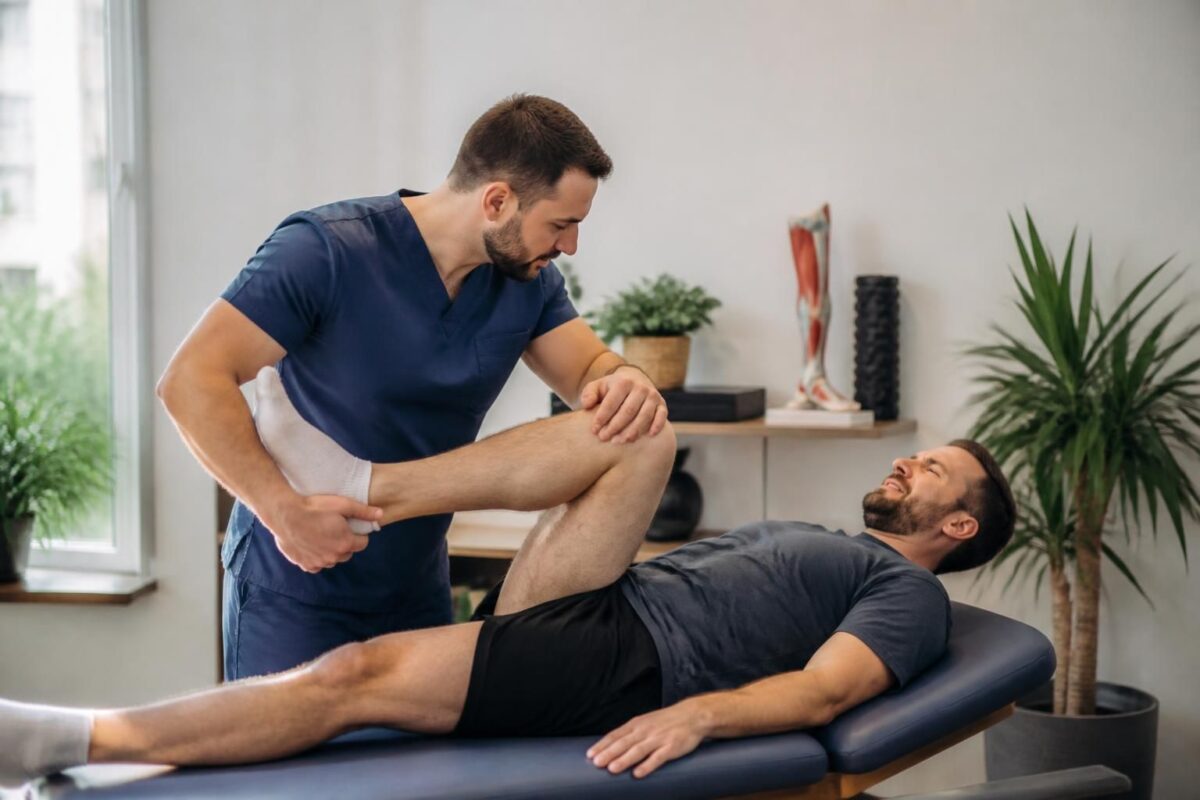
Osteopathy and chronic leg pain: regaining an optimal quality of life
In short In short, Osteopathy is one Global manual approach aimed at reducing Chronic leg pain and improve the quality of life. What is it? Non-drug therapy using the hands to identify restrictions and treat lesional chains. How does it…
Reinforcement of self-healing and quality of life
By improving the circulation And by reducing tensions, osteopathy supports the body’s natural repair mechanisms. This stimulation of self-regulation can contribute to a better quality of life, especially in people who are active or suffering from chronic pain.
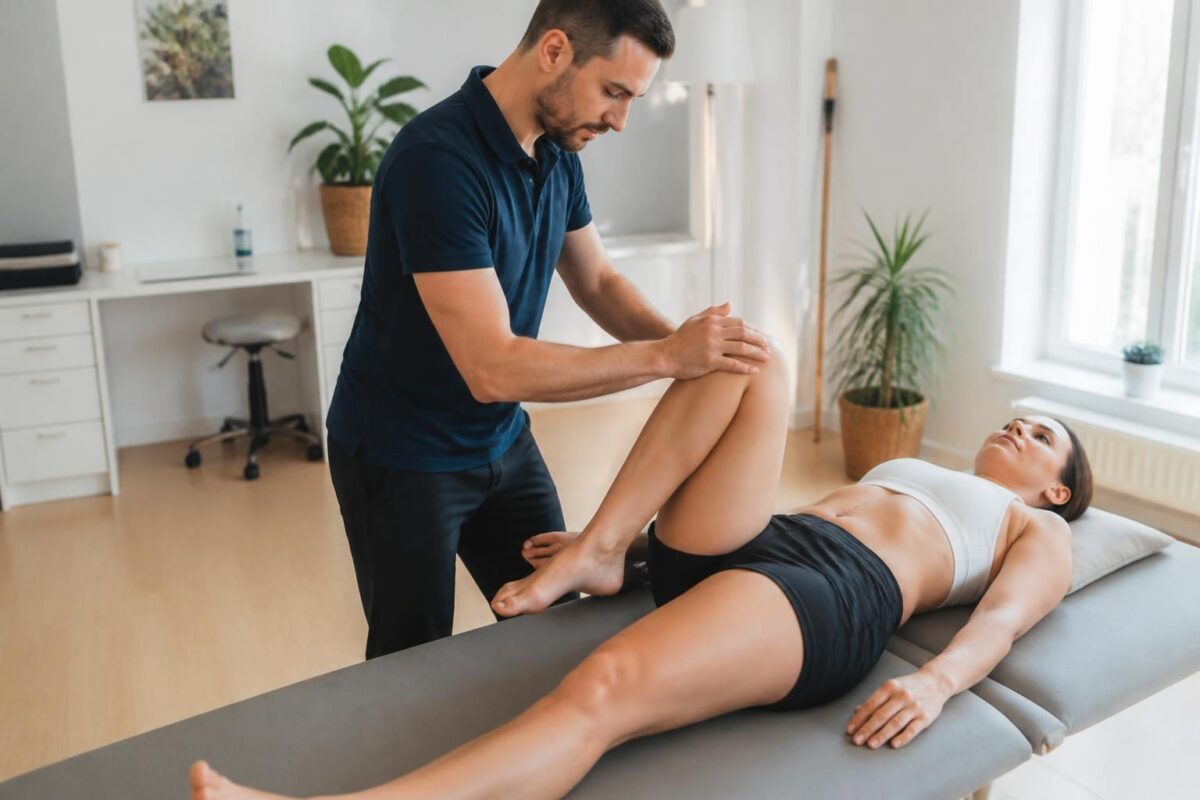
How osteopathy supports recovery after complex surgery
In short In short, Post-operative osteopathy is an approach fresh which supports the recovery After a Complex surgery. It helps to reduce the pain and the fatigue, improves the mobility and accelerates the healing thanks to a better vascularization and…
Applications and Resources
To deepen the foundations and benefits of this approach, discover the following resources: Osteopathy, a natural alternative to drug treatments and Why Osteopathy Is A Natural Option.
Additional information on practices and their security is available through specialized resources and practical guides: How is an osteopathy session and What is Visceral Osteopathy. For a general understanding of the principles and benefits, you can consult The principles and benefits of osteopathy.
To listen to discussions and practical advice, explore the podcast dedicated to manual medicine and osteopathy: Treatment of sports injuries with manual medicine and osteopathy. and for an institutional perspective on the safety of unconventional practices, see Unconventional health practices.

Dr Sylvain Desforges, B.Sc., D.O., N.D., osteopath, is the founding president of TAGMED and of the ACMA association. He dedicates his practice to chronic spinal pain, low back pain and symptoms compatible with sciatica, particularly when pain radiates toward the buttock, leg, calf, foot or toes.
Through SOS Sciatique, he publishes educational content on sciatica symptoms, possible causes such as disc herniation, disc narrowing, foraminal stenosis or irritation of a lumbar nerve root, as well as non-surgical approaches that may be considered according to the evaluation. At Clinique TAGMED, care may include, depending on the case, motorized neurovertebral decompression, specific osteopathic care or precision percussion.
For an evaluation related to sciatica treatment in Montreal / Mount Royal or sciatica treatment in Terrebonne, please consult the services available at Clinique TAGMED.
Medical disclaimer
The information published on SOS Sciatique is provided for educational purposes only and does not replace a consultation, diagnosis, opinion or treatment provided by a physician or another authorized healthcare professional. The author of this article is neither a medical doctor nor a specialist in a medical specialty recognized by the Collège des médecins du Québec. The osteopathic, manual medicine or functional support approaches described on this site do not constitute medical acts and are not intended to replace medical follow-up.
Consult a physician or emergency service in cases of loss of bladder or bowel control, anesthesia in the saddle area, significant or progressive weakness in the leg or foot, fever, recent trauma, severe pain or rapid worsening of symptoms. For more details, please read our Legal Notice.